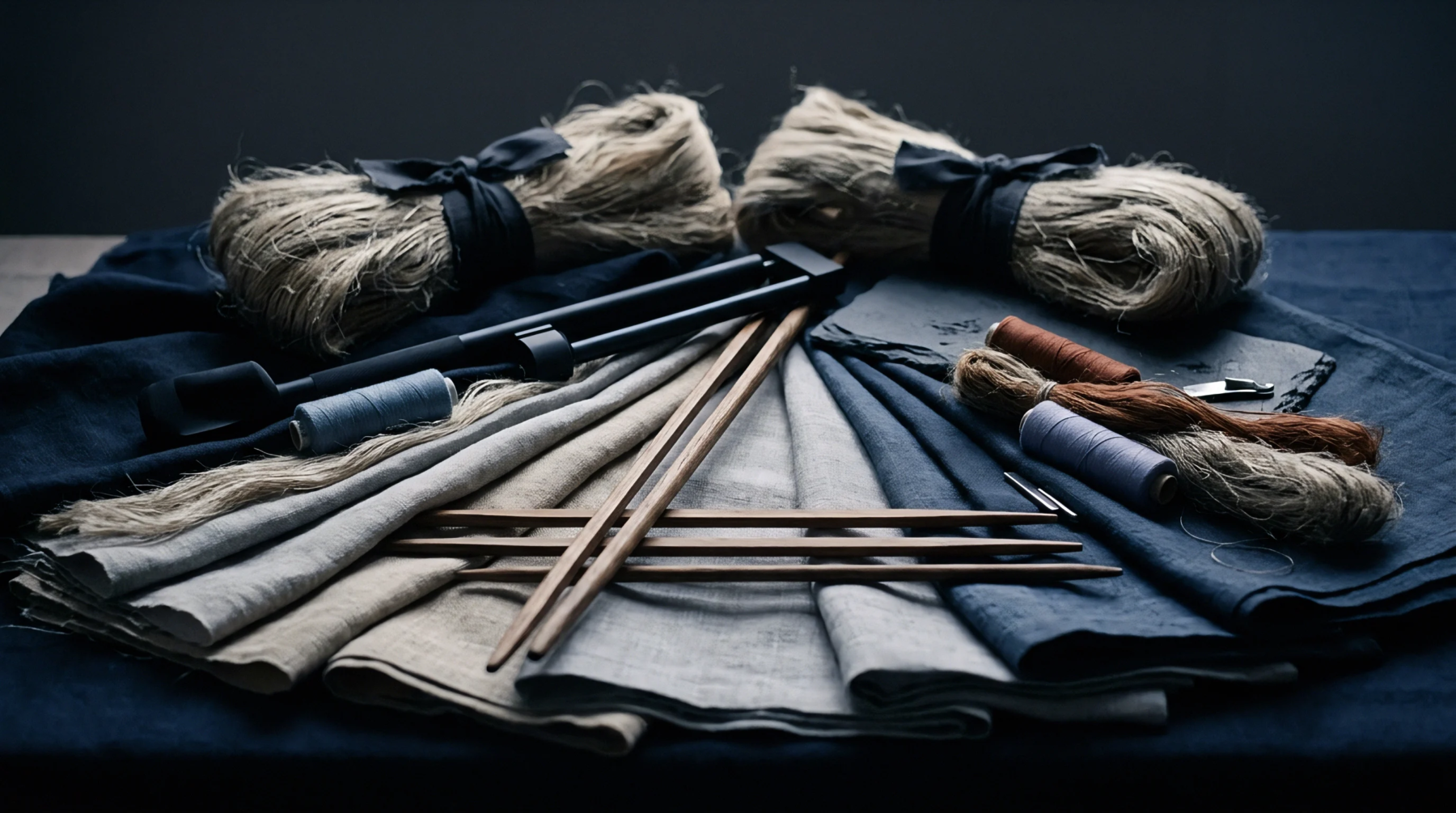
Determining Flax Rove Non-Cellulosic Mass Loss Rates
Determining flax rove non-cellulosic mass loss rates requires standardized chemical extraction to reconcile boiling yield shrinkage against certified origin records.

Determining flax rove non-cellulosic mass loss rates requires standardized chemical extraction to reconcile boiling yield shrinkage against certified origin records.

Optimizing air jet linen shedding requires asymmetric harness levelling at 26 millimetres to balance relay nozzle clearance with tension limits.

Wet-spun linen warps demand a minimum tenacity of 18.5 cN/tex with under 1.2% beaming stretch to maintain loom stop rates below 1.5 per 100,000 picks.
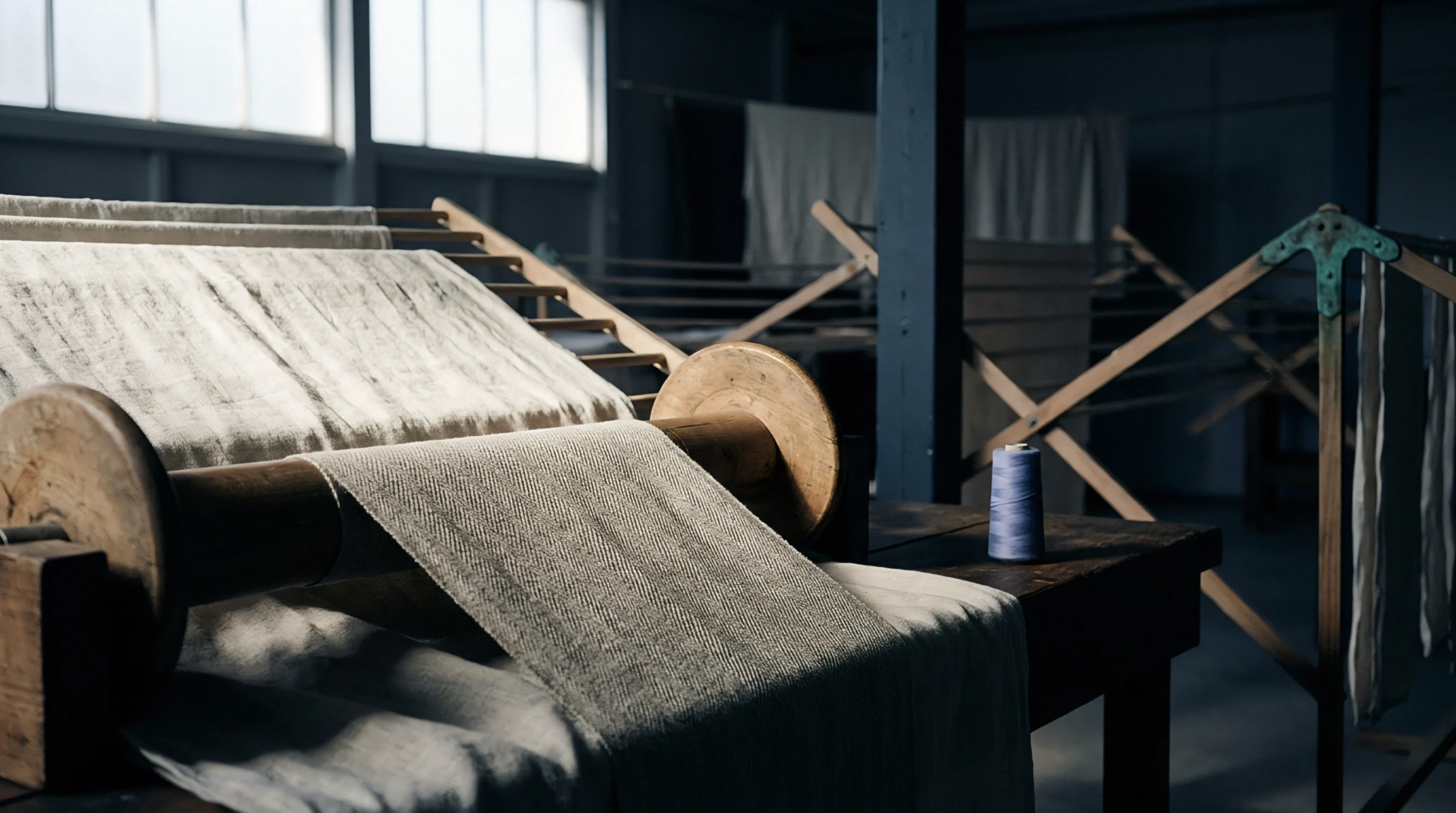
Warp take up ratio in grey plain weave determines true yarn length from cloth length, calculated via thread density, diameter, and crimp geometry.

Stable isotope ratio mass spectrometry validates European flax origin by measuring precipitation carbon and soil strontium signatures directly from fabric cellulose.

Ultrafine wet spun linen warps demand low-viscosity modified starches with acrylic binders at eight to ten percent size add-on and strict tension limits below one percent.

Gravimetric testing determines hackled flax sliver dry mass, moisture regain, and linear density to lock in fair commercial yarn pricing.

Cross-border mass balance reconciliation requires normalizing physical fiber weights to 12% moisture regain and deducting process losses at every node.

Validating European Flax transaction certificates across spinning mills demands reconciling mass balance ratios against certifier lot numbers and invoice weights.

Scutching confers non-preferential origin when mechanical decortication permanently transforms raw straw into clean fiber under verified mass balance audit dockets.

Dynamic friction limits in fine wet spun linen warps demand starch lubricant optimization and speed adjustments to prevent fibril breakage and machine downtime.
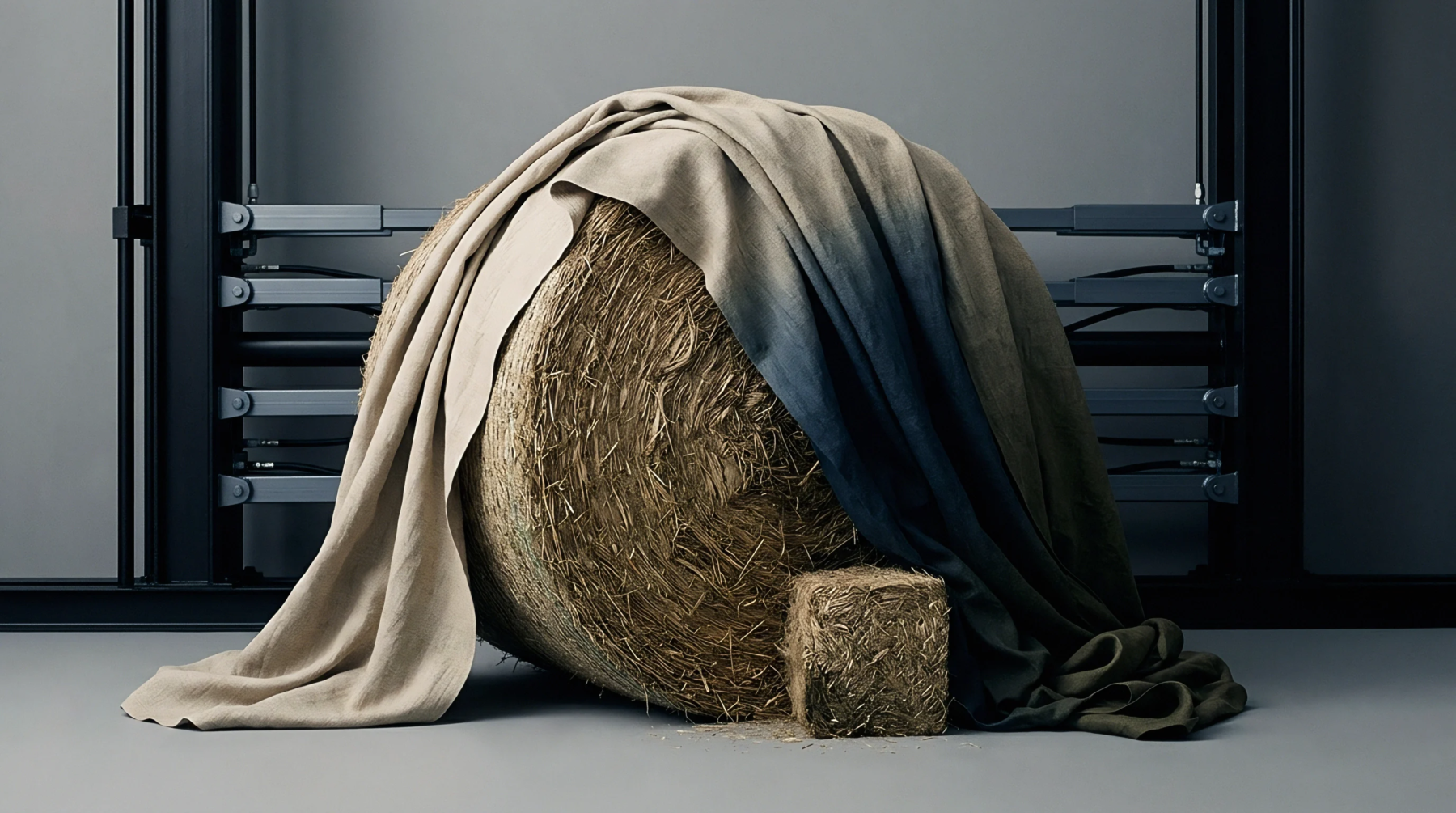
Classification of unprocessed raw agricultural fibers depends on mechanical decortication thresholds, residual shive content, and verifiable scutching mass balance records.

Comb array length analysis predicts hackling long-line yield, tow waste, and spinnable count limits to establish true landed cost per finished metre.

Bayesian isoscape analysis of multi-isotope ratios quantifies geographic constituent proportions in commingled yarn lots to catch fraudulent origin claims.

Fine linen warp break frequencies depend on single-end tenuity, size film flexibility, and shed opening geometry, directly governing loom efficiency and meter cost.

Commercial mass adjustment corrects delivered flax invoice weight by calculating bone-dry mass via oven drying and applying standard regain allowances.

Targeted enzymatic pectin digestion splits technical flax bundles to under 6 dtex, optimizing sliver cohesion for wet spinning yarn tenacities over 38 cN/tex.

Multi cycle linen contraction is resolved by increasing reed width and lowering loom pick density to allow structural crimp equilibrium before compaction.

Spectrophotometric galacturonic acid assays overestimate retting degree unless corrected for neutral sugar and phenolic background interference.

Process-induced carbon and oxygen isotopic shifts in bleached linen yarn require alpha-cellulose extraction and mass-balance corrections for origin verification.
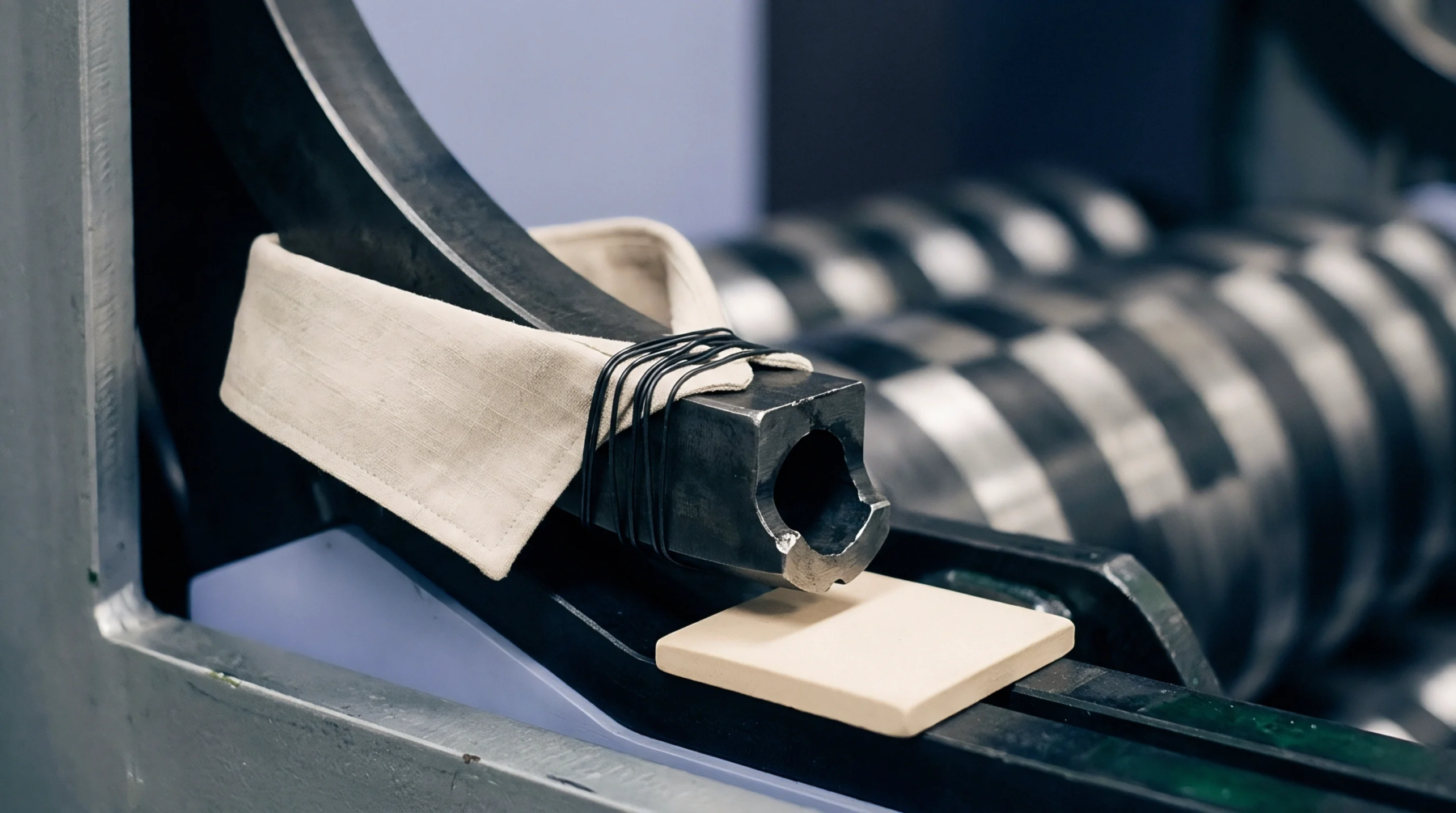
Air jet weaving of fine linen requires active back rest dampening and controlled sizing to hold dynamic tension peaks below yarn elastic limits.

Wet spinning hot water baths extract 2.5% to 5.5% dry pectin mass from flax rove, requiring gravimetric corrections to audit yarn counts and mass balance.

Dynamic ease-off spring tuning mitigates peak tension spikes in low-elasticity linen warps, preventing yarn failure and optimizing loom efficiency.

High speed scutching and drafting shear cell wall microfibrils creating dislocations that lower yarn tenacity and trigger lot rejections under technical contracts.

Raising backrest height creates asymmetric warp tension, clearing hairy flax shed openings without exceeding the breaking strain of inextensible linen yarns.

Hot ammonium oxalate extraction isolates calcium-bound middle lamella pectins to quantify sliver spinning limits and drafting cohesion.

Graduated hackling pin density increases flax sliver tenacity by splitting bundles until needle pitch falls below bundle diameter, causing fiber truncation.

Resolving gravimetric fineness disputes requires ISO 2370 extraction standards, n=50 bundle sample sizes, and contracted metric number tolerance bands.

Resolving customs provenance discrepancies rests on aligning mill mass-balance ledgers with isotopic fiber profiling across intermediate production lots.
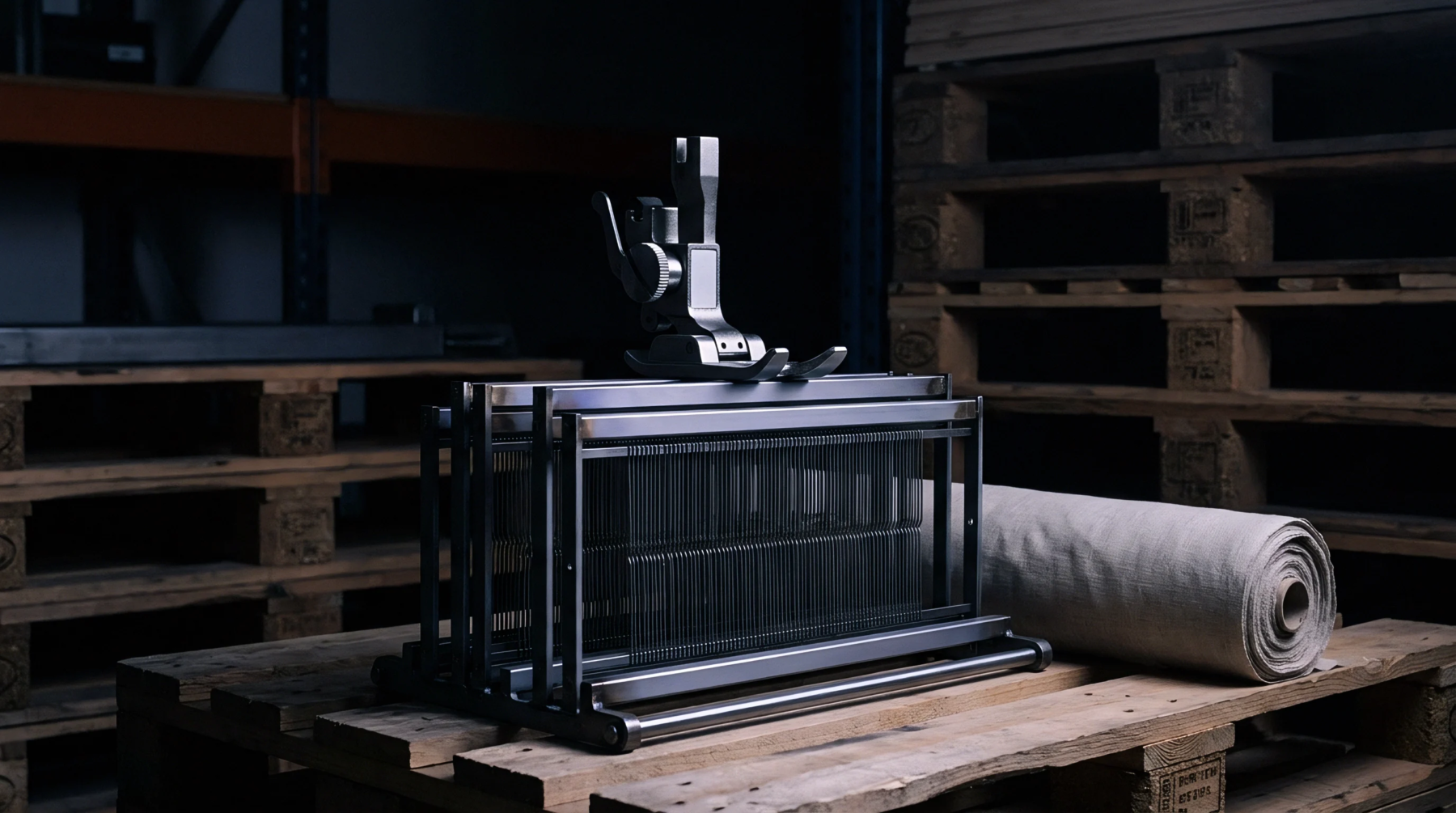
Optimize high density linen weaving by expanding harness leaves to minimize heald crowding and selecting reed counts that preserve open air space above forty percent.
Expertise is a utility, not a secret. sentiention™ publishes its working knowledge as open reference: intelligence layer covering the materials it sources, the markets it enters, and the reference that serves both.