Comb Array Staple Length Distribution Analysis for Hackling Yield Prediction
Comb array length analysis predicts hackling long-line yield, tow waste, and spinnable count limits to establish true landed cost per finished metre.
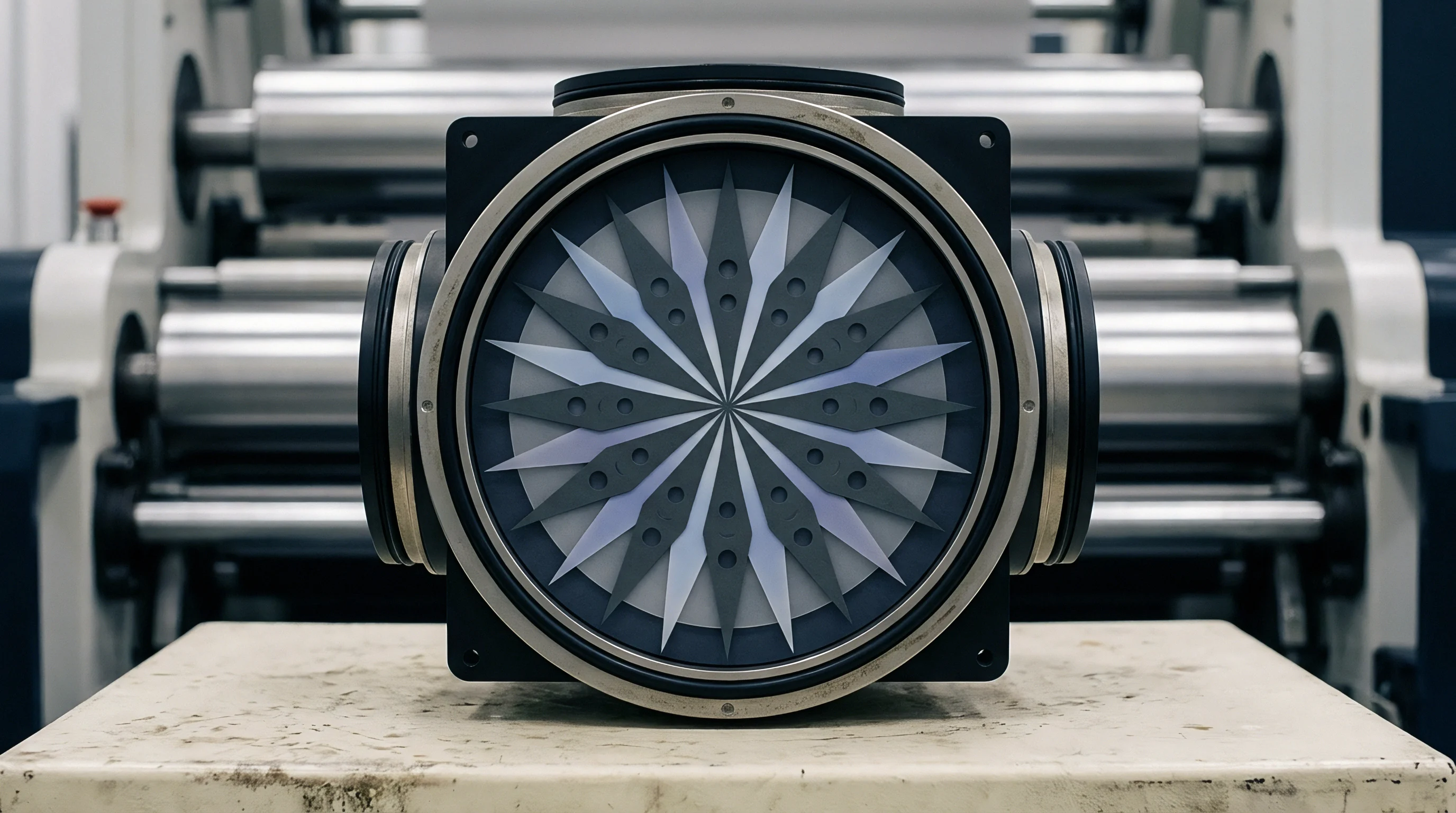

Comb
Sorting long-staple bast strands manually across parallel pin beds separates distinct fiber length fractions from scutched flax bundles. The testing setup uses a dual-bank sorter with lower and upper pin beds set at 5 mm intervals. Technicians take a representative 5-gram sample from hand-hackled scutched long flax and place the aligned root ends into the rear pins.
Successive draws pulled with padded forceps lay individual strands along a velvet-lined sorting board, sorting bundles into length classes from 500 mm down to 10 mm in 10 mm increments.
Weighing each fraction on an analytical balance precise to 0.1 mg converts the length groups into percentages of total sample weight. Plotting these mass fractions in sequence forms the cumulative mass frequency distribution. Scutched flax consists of irregular bundle structures held together by residual middle lamella pectins, so standardized sample preparation is needed to minimize cross-fiber tangling without breaking technical strands.
Accumulated static charge on the pins causes fine fibres to repel each other, distorting the recorded mass fractions.
Inconsistent pulling pressure or flawed sub-sampling skews the distribution curve, leading to inaccurate yield predictions on the hackling floor. Several physical sampling errors reduce array precision:
- Grip alignment offset occurs when forceps grasp fibre bundles at varying distances from the root apex, artificially shifting the recorded length spectrum downward by up to 15 mm.
- Pectin lock breakage happens when rapid hand-drawing exerts excessive shear force on coarse strands, fracturing technical fibres into secondary fragments and inflating the measured short fibre percentage.
- Friction charge accumulation develops under relative humidity conditions below 50 percent, causing fine bast strands to cling to metal pin walls and miss target sorting slots.
- Shive mass inclusion arises when unseparated woody decortication fragments remain trapped inside short length groups, adding dense deadweight that alters the mass fraction calculation.
Proper positioning of the fiber array within the sorter beds fixes the strands for precise measurement.
A sample size of 500 individual fibres drawn across four comb sorter arrays yields a mean staple length confidence interval within plus or minus 1.8 millimetres.
Poor array preparation that neglects static charges or bundle breakage produces a misleading length profile, which causes spinning mills to specify incorrect pin densities and run into higher raw material loss during initial comb passes.
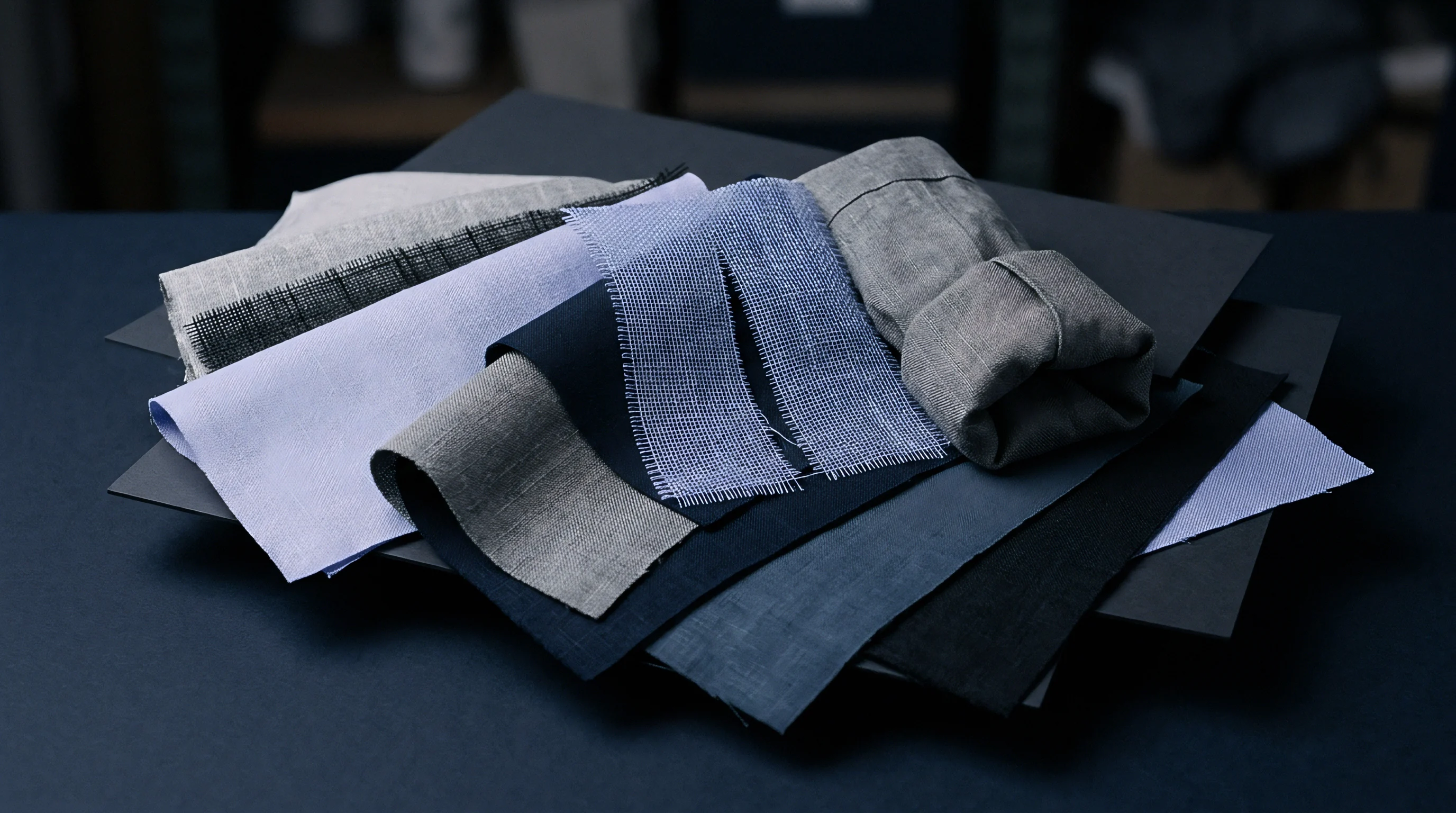
Fractile
Extracting distribution metrics mathematically from the cumulative mass curve defines the workable processing parameters of a scutched lot. The upper quartile length marks the point above which 25 percent of the fiber mass lies, serving as the benchmark for hackling bed clearances. Mean staple length reflects overall bundle integrity, while span lengths at 2.5 percent and 50 percent capture the spread between long and intermediate strands.
Short fiber content represents the cumulative mass percentage of strands under 40 mm. This threshold separates fibers that are too short to span adjacent hackling pin fields or drawing rollers. Retting chemistry determines the bond strength between technical fibers in the stem cortex; field-retted dew flax harvested in unstable weather shows wide variation in bundle cohesion, widening the gap between upper quartile length and mean length.
The extent of retting directly governs technical fiber tenacity and cohesion.
Water-retted flax processed in controlled immersion tanks produces tighter length groupings and fewer short fibers. Comb array testing of tank-retted French Normandy flax typically shows an upper quartile length near 310 mm and short fiber content below 7 percent. By contrast, dew-retted Heilongjiang stock often yields an upper quartile length around 220 mm with short fiber content exceeding 16 percent.
These parameters directly dictate drafting behavior during sliver preparation.
Compliance with ISO 2370 condition protocols requires a minimum 24-hour equilibration at 20 degrees Celsius and 65 percent relative humidity before sorting to prevent static-induced fibre crimp.
The table below summarizes staple length distribution parameters across major commercial flax origins and retting methods, established through multi-specimen comb array testing under standard atmospheric conditions.
| Fibre Origin and Retting Type | Upper Quartile Length (mm) | Mean Staple Length (mm) | Short Fibre Content Ratio (<40 mm %) | Length CV (%) |
|---|---|---|---|---|
| French Normandy Tank Water-Retted Grade 5/6 | 315 | 245 | 5.8 | 22.4 |
| Flemish Coastal Dew-Retted Grade 4/5 | 275 | 205 | 9.2 | 28.1 |
| Egyptian Delta Warm Water-Retted Grade 4 | 250 | 180 | 12.4 | 31.5 |
| Heilongjiang Dew-Retted Grade 3/4 | 215 | 145 | 17.6 | 38.2 |
Inherent variability across raw flax lots requires precise benchmark testing prior to processing.
Laboratory work shows that the 40 mm short fiber cutoff originates from 1980s hackling machine dimensions with 50 mm clamp-to-pin clearances. Modern high-speed hackling frames running 35 mm touch distances hold onto more 30 mm to 40 mm strands within the main sliver. Lowering the critical length threshold from 40 mm to 30 mm drops the calculated short fiber percentage by an average of 4.2 points on dew-retted lots.
Atmospheric fluctuations during field retting naturally alter cortex pectin breakdown beyond commercial control, driving broad length variances.


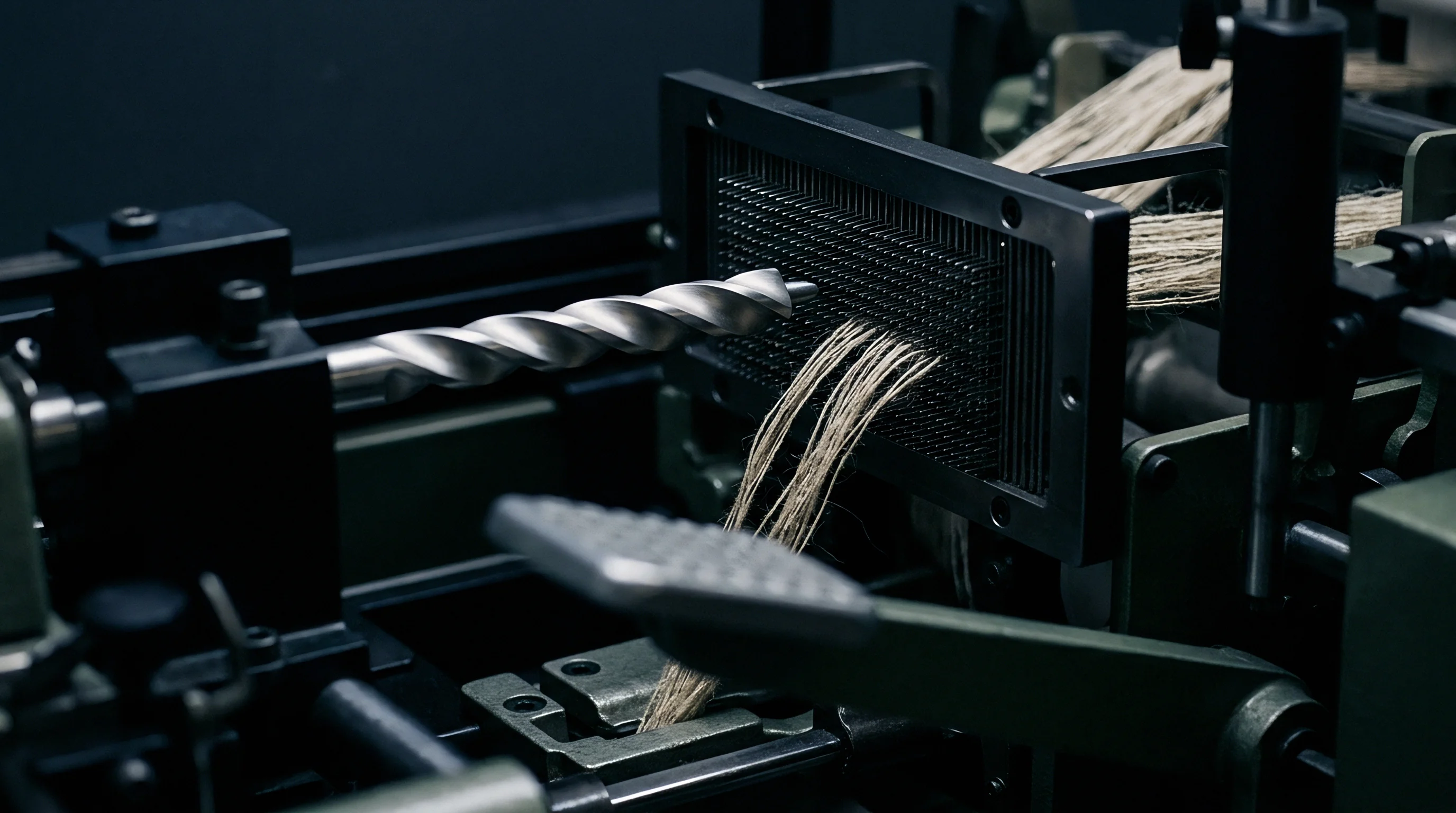
Pin
Hackling machines work scutched long flax by drawing clamped fiber bundles through a sequence of vertical pin fields with progressively finer needle spacing. Initial coarse hackle bars carry 1 to 2 pins per centimeter to open tangled bundle ends, leading into fine hackle bars packed at 12 to 16 pins per centimeter. This mechanical combing splits thick technical bast bundles into finer strands, removes residual cortical shive, and strips unaligned short fibers from the clamped strick.
Denser pin spacing increases mechanical holdback as the needles comb through the fiber bed.
Fibers held in reciprocating rubber-faced clamps drop into the path of rotating hackle aprons. Any strands shorter than the distance between the clamping edge and active pin entry lose mechanical support; moving hackle needles sweep these loose fibers down into the tow collection bin beneath the bed.
What Determines Retained Fibre Ratio during Pin Penetration?
The ratio of retained long-line fiber to extracted tow depends on how the fiber array length profile matches the machine’s touch distance. Setting a 40 mm touch distance on a fine hackling field lets pins comb within 40 mm of the clamp margin. Strands under 40 mm that lack sufficient frictional grip get pulled completely into the tow bin.
Unanchored short fibers are drawn out during the initial comb passes.
Proper clamp pressure prevents strick slippage under high needle drag.
Calibrating a hackling line for an incoming scutched flax lot follows a rigid physical alignment sequence to optimize yield:
- Measure the upper quartile length and 10 percent span length from the comb array laboratory report.
- Set the touch distance on the initial coarse hackle field to 60 percent of the measured mean staple length.
- Adjust the clamping bar pneumatic pressure to 0.55 MPa to prevent strick slippage under needle drag forces.
- Increase pin density incrementally across the 12 hackling stations, starting at 1.5 pins/cm and finishing at 14 pins/cm.
- Verify clearance between pin tips and channel guides at 1.2 mm across all comb bars using feeler gauges.
- Collect and weigh hackling tow from the first 100 kg test run to confirm alignment with predicted waste ratios.
Fine pin fields operating at 14 pins per centimetre generate excessive tow waste when the fibre array contains more than 18 percent short fibres.
How moisture regain affects pin penetration drag forces remains somewhat uncertain. Practical estimates assume a 3.2 percent rise in tow generation for every 10 mm decrease in upper quartile length under standard 12 percent regain conditions. Sourcing managers handle this by writing a mandatory 1.5 percent tow allowance into contracts whenever processing room humidity moves outside the 60 to 70 percent target range.
A standard procurement addendum specifies that if delivered long flax displays a comb array short fibre content exceeding 15 percent, the spinner holds the right to widen hackling touch distances by up to 8 mm at the seller expense without forfeiting raw material delivery schedules.

Model
Mathematical yield modeling links laboratory length array results directly to industrial line-sliver extraction rates. The hackling yield formula calculates expected long-line recovery from scutched flax input by integrating the cumulative comb array curve above the active touch length, using empirical adjustments for shive detachment and pin-impact fiber breakage.
The predictive model adopts the mathematical expression:
Y = A (UQL / Lm) (1 – SFC) – K
Where Y represents the long-line hackling yield percentage, UQL is the upper quartile length in millimetres, Lm is the mean staple length in millimetres, SFC is the short fibre mass fraction below 40 mm expressed as a decimal, A is the machine penetration efficiency coefficient typically calibrated to 88.5 for modern hackling frames, and K is the baseline shive mass removal factor averaging 4.2 percent across standard scutched flax grades.
Long-line recovery declines sharply when short fiber content rises.
Under-grid screens catch coarse woody fragments separated during hackling.
For a 10-tonne lot of Grade 4/5 Flemish dew-retted flax with an upper quartile length of 275 mm, mean length of 205 mm, and 9.2 percent short fibers (0.092), applying an efficiency coefficient of 88.5 and shive factor of 4.2 predicts a long-line yield of 67.2 percent ~ leaving 28.6 percent hackling tow and 4.2 percent shive waste. If short fiber content reaches 16.5 percent due to harsh decortication, predicted long-line yield falls to 61.8 percent on the same machine settings.
The model’s base efficiency coefficient of 88.5 comes from 120 controlled mill runs on double-apron hackling frames operating at 18 cycles per minute. Frame vibration or worn pin tips can drop this figure to 82.0, shifting up to 5 percent of long-line fiber into low-value tow bins.
| Input Lot Parameter | Lot A: High Uniformity | Lot B: Standard Commercial | Lot C: High Short-Fibre Content | |||
|---|---|---|---|---|---|---|
| Upper Quartile Length (UQL) | 310 mm | 265 mm | 210 mm | |||
| Mean Staple Length (Lm) | 240 mm | 195 mm | 140 mm | |||
| Short Fibre Content (<40 mm) | 5.2 % | 10.5 % | 18.2 % | |||
| Predicted Long-Line Yield (Y) | 71.4 % | 64.8 % | 55.1 % | |||
| Predicted Tow Fraction | 24.4 % | 31.0 % | 40.7 % | |||
| Max Spinnable Wet Count | Nm 60 | Nm 39 | Nm 26 | |||
| Landed Sliver Cost per Kg | 5.88 EUR | 6.48 EUR | 7.62 EUR | |||
| Model assumptions: Base scutched flax price set at 4.20 EUR/kg across all lots; hackling tow credit fixed at 1.10 EUR/kg; shive waste constant at 4.2 percent; machine operating cost fixed at 0.65 EUR/kg raw input. | ||||||
To qualify incoming flax shipments for target wet-spinning count allocations, technical buyers evaluate comb array dossiers using a defined threshold checklist:
- Upper quartile length threshold must exceed 260 mm for lots intended for wet spinning above Nm 39 line yarn count.
- Short fibre fraction ceiling must not surpass 11.0 percent to prevent excessive end-breakage rates on high-speed flyer frames.
- Length dispersion index defined as the ratio of upper quartile length to mean length must remain below 1.35 to ensure uniform drafting force during drawing.
- Shive content limit checked during sorting must remain under 3.5 percent to protect fine hackling pins from mechanical deflection.
Whether non-linear pectin degradation during wet-trough immersion can be fully offset by increasing draft ratios on long-line slivers possessing length dispersion ratios above 1.45 remains an open question in bast fibre mechanics.

Settlement
Commercial contracts for scutched flax tie final invoice pricing directly to comb array parameters. Fiber bought at a base rate of 4.20 EUR per kilogram requires solid yield performance to keep downstream spinning margins intact. If array testing reveals an upper quartile length below agreement, raw material consumption per kilogram of finished yarn goes up.
Converting long-line sliver into fine wet-spun yarns like Nm 60 demands consistent staple length to avoid strand slippage in the hot water trough.
Revenue from tow sales partially offsets raw material waste losses.
The target yarn count limits what grades can be used efficiently.
Hackling tow recovered during processing sells well below raw flax prices, currently averaging around 1.10 EUR per kilogram. Every percentage point shift from long-line sliver to tow raises net unit costs on the remaining fiber. A lot yielding 71.4 percent long line produces sliver at a net material cost of 5.88 EUR per kilogram after tow credits.
If yield falls to 55.1 percent from high short fiber content, net landed sliver cost jumps to 7.62 EUR per kilogram ~ a 29.5 percent penalty before spinning even begins.
Contractual settlement schedules enforce financial adjustments based on certified comb array test reports. The table below outlines standard price penalty and premium adjustments applied to raw flax invoices based on deviation from standard baseline array values.
| Comb Array Metric Deviation | Test Range | Price Adjustment per Kg Raw Flax | Impact on Metre Landed Cost (200g/m2 fabric) |
|---|---|---|---|
| Upper Quartile Length Premium | > 290 mm | + 0.25 EUR | + 0.08 EUR |
| Upper Quartile Length Baseline | 260 mm – 290 mm | 0.00 EUR (Contract Base) | 0.00 EUR |
| Upper Quartile Length Penalty Tier 1 | 230 mm – 259 mm | – 0.35 EUR | + 0.14 EUR (Yield Loss Offset) |
| Upper Quartile Length Penalty Tier 2 | < 230 mm | – 0.70 EUR or Rejection | + 0.32 EUR (Yield Loss Offset) |
| Short Fibre Content Penalty | > 14.0 % | – 0.05 EUR per 1.0% over limit | + 0.04 EUR per 1.0% over limit |
Longer staple bundles with tight length uniformity lower end-breakage rates on high-speed wet frames and reduce raw material consumption per finished metre.
Evaluating comb array reports before signing procurement contracts protects mills from unexpected tow volume and sudden yield drops. Baseline length uniformity sets practical limits on frame speed, drafting settings, and finished yarn strength throughout wet spinning.
Procurement teams achieve optimal cost stability by tying raw material purchase prices directly to certified upper quartile length brackets while maintaining fixed tow credit offsets in supply contracts.