
Calibrating Shed Humidity Control Parameters for High Speed Flax Weaving
Maintain localized shed humidity at 72-78% RH at 21°C dry bulb with 5-10 micron fogging to achieve 12% regain and prevent warp breaks in high-speed flax weaving.
Maintain localized shed humidity at 72-78% RH at 21°C dry bulb with 5-10 micron fogging to achieve 12% regain and prevent warp breaks in high-speed flax weaving.

Step gradient shedding equalizes warp strain across deep jacquard harness boards, preventing end breaks and clearing rapier sheds in dense linen damask.

Subcontracted linen cloth contracts require third-party bank guarantees and escrow retentions to allocate retroactive anti-circumvention duty liabilities.
High-density flax weaving requires precise active warp tension control, asymmetric shedding, and 10 percent size add-on to prevent peak load breaks.
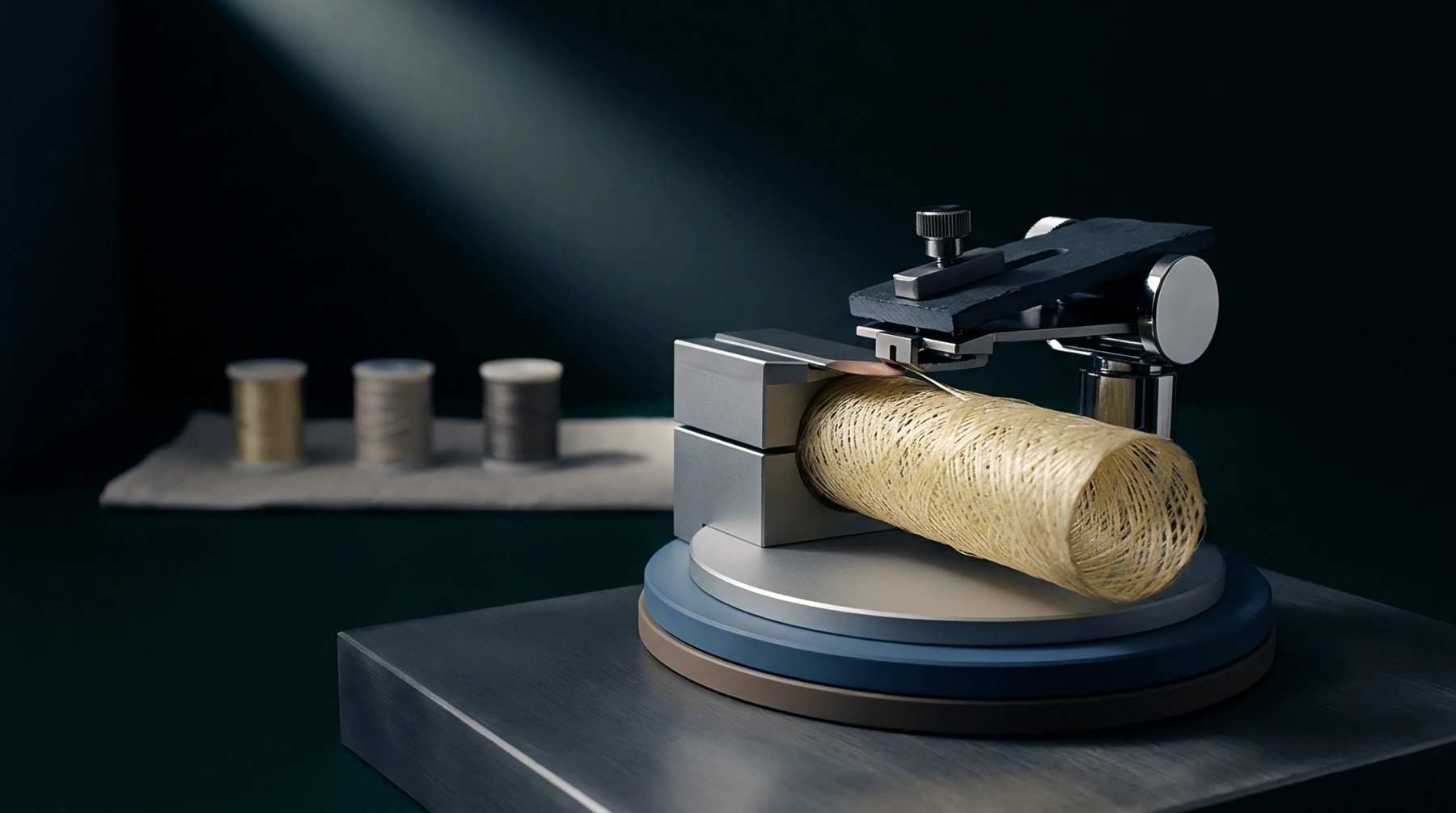
Optimizing temple grip and early shed timing minimizes flax yarn width contraction, securing finished width tolerances and reducing raw material cost per meter.

Dynamic backrest dampening absorbs peak shedding shock in fine bast weaving, cutting fatigue end breaks by seventy percent and lowering meter production cost.
Reconciling wet processed linen weight loss against loom hour billing requires adjusting greige pick counts for chemical extraction and structural shrinkage.

Optimizing flax wet pick-up between 80 and 95 percent balances film encapsulation with core penetration, minimizing loom warp breaks and sizing liquor cost.

Standardized four-point greige inspection prevents downstream finishing losses by enforcing objective ASTM D5430 defect scoring before cloth conversion.

Controlling peak dynamic warp strain in fine linen weaving requires balancing backrest roller damping, shed geometry, and moisture to prevent yarn fatigue.

Dynamic tension decay in sized wet spun flax yarns is minimized by controlling size penetration to 25 percent and keeping dynamic strain amplitudes below 1.2 percent.
Optimizing air-jet linen weaving requires reducing heald stroke height and dampening peak shedding tension to prevent dynamic fatigue breaks in low-elongation flax warps.

Target linen weight depends on yarn tex, ends, picks, and crimp contraction; calculating raw count without finishing shrinkage overshoots mass targets.

Evaluating raw flax yarn bundle morphology, pectin chemistry, and tensile metrics prevents high-speed warping breaks and protects loom hour efficiency.
Expertise is a utility, not a secret. sentiention™ publishes its working knowledge as open reference: intelligence layer covering the materials it sources, the markets it enters, and the reference that serves both.