Establishing Non Preferential Origin Criteria for Scutched Flax Moved across Multiple Customs Territories
Scutching confers non-preferential origin when mechanical decortication permanently transforms raw straw into clean fiber under verified mass balance audit dockets.


Classification
Tariff schedules divide raw unretted flax straw and mechanically scutch-separated fibres into distinct six-digit positions within Chapter 53. National customs authorities use these statistical subdivisions to apply duty schedules, anti-dumping measures, and non-preferential trade controls. The legal origin of processed bast fibre depends directly on whether mechanical decortication satisfies the origin rule defined for the destination entry territory.

Harmonized System Subheadings for Raw Fiber
Flax straw harvested and retted in the field enters international trade under tariff code 5301.10. Physical decortication transforms this raw agricultural stalk by breaking its woody cellular core to yield long scutched fibres assigned to heading 5301.21. Coarse short fibres and tangled waste generated during turbine processing fall under heading 5301.29 as flax tow.
Customs declarations must specify the exact processing stage because non-preferential origin criteria operate differently across unmanufactured agricultural products and processed textile raw materials.
A non-preferential origin declaration for scutched flax under heading 5301.21 holds validity only when documented scutching yields exceed 14 percent by weight from retted straw input.

Substantial Transformation in Mechanical Decortication
Customs authorities in major importing jurisdictions evaluate whether separating bast bundles from woody shives establishes a new origin. Under Article 60 of the Union Customs Code, non-preferential origin vests in the country where the goods underwent their last substantial, economically justified processing. Annex 22-01 of the UCC Delegated Regulation specifies that processing raw straw of heading 5301.10 into scutched flax of heading 5301.21 confers origin of the processing territory.
Physical decortication removes extraneous woody mass, alters material properties, and changes the tariff heading, meeting the threshold for substantial working.
| Customs Jurisdiction | Source Heading | Target Heading | Applicable Standard | Origin Determination Criteria |
|---|---|---|---|---|
| European Union | 5301.10 | 5301.21 | UCC Annex 22-01 | Change in tariff heading via scutching or complete mechanical separation of shives |
| United States | 5301.10 | 5301.21 | 19 CFR 102.21 | Tariff shift from raw straw to scutched fiber occurring entirely within a single country |
| United Kingdom | 5301.10 | 5301.21 | UK Rules of Origin Regulations | Specific working rule requiring decortication that permanently converts straw into textile fiber |
| China | 5301.10 | 5301.21 | GACC Origin Rules | Substantial processing threshold based on mechanical decortication and manufacturing value addition |
United States customs regulations under 19 CFR 102.21 enforce specific textile origin rules based on tariff shifting. Converting raw flax straw into scutched fibre within a single country satisfies the tariff shift rule, shifting origin from the agricultural growing country to the processing site. If straw crosses borders without undergoing full mechanical scutching, the origin remains attached to the cultivation territory.
Importers present complete decortication logs to establish that processing progressed beyond simple cleaning or baling.
Clause 14.2 of the International Linen Trade Standard Purchase Agreement transfers all non-preferential origin duty liabilities to the seller if customs authorities reclassify entry status under 5301.10.

Shive
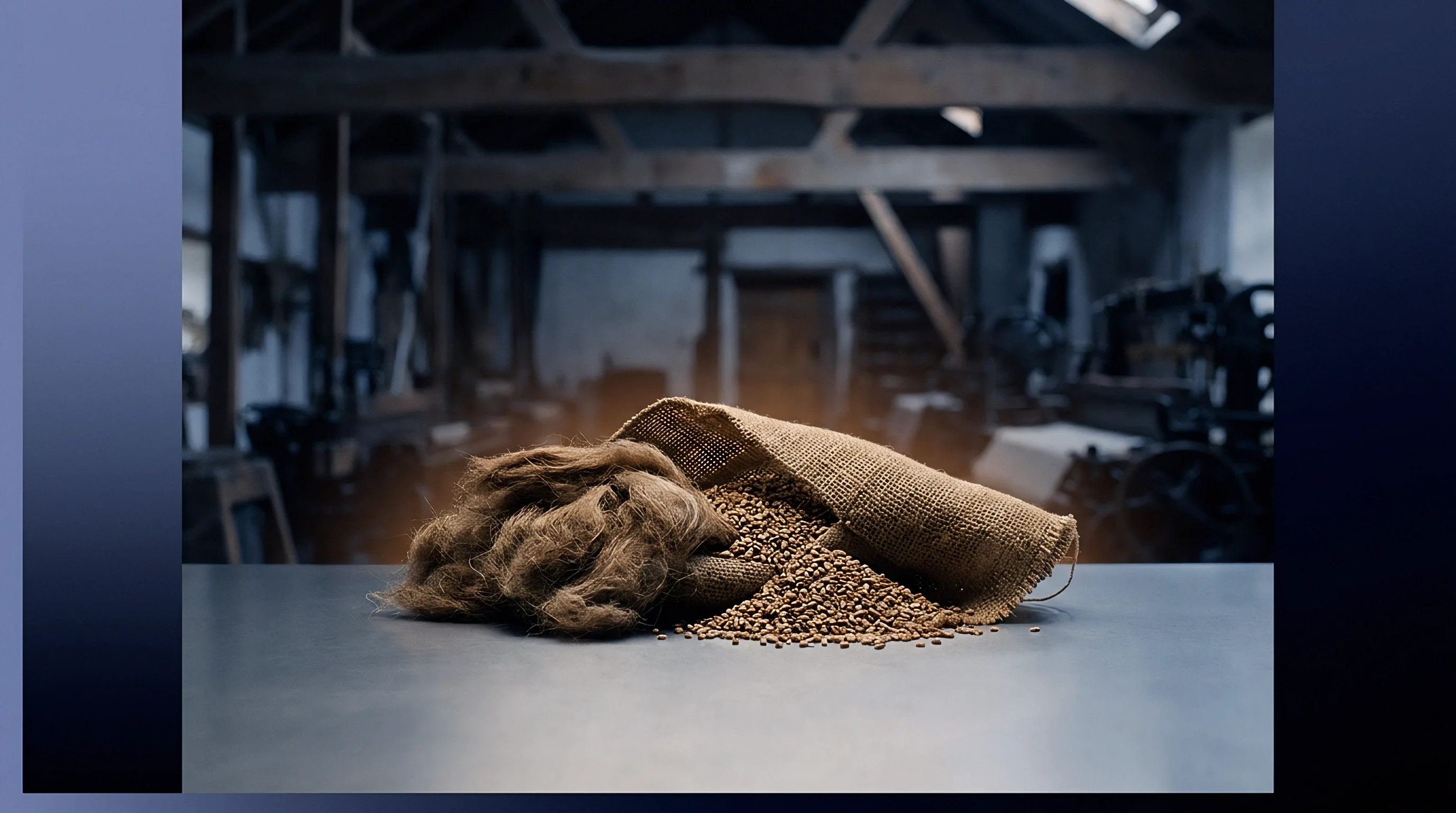
Cellular woody stems comprise roughly seventy percent of retted flax straw weight prior to turbine decortication. Mechanical scutching strips these unwanted core elements away from the peripheral phloem fibre bundles. The physical removal of non-textile mass forms the mechanical foundation of origin transformation arguments in processing audits.

Mechanical Separation Dynamics and Mass Balance
Flax straw fed into breaking rollers undergoes systematic crushing that cracks the rigid outer xylem. Fluted metal rollers fracture the stem core into microscopic slivers without severing the long continuous bast filaments running parallel along the stalk length. Revolving scutching turbines equipped with wooden or metal blades strike the suspended straw, knocking away the broken core pieces.
Separated core particles drop through floor grates into pneumatic collection chutes. The mass balance ratio of a scutching run tracks raw straw weight against three distinct output streams: long scutched fibre, short tow fibre, and waste material. Moisture loss during mechanical beating accounts for two to four percent of total batch weight fluctuations.
Processing 100 metric tonnes of field-retted flax straw typically yields 15 metric tonnes of long scutched fibre, 10 metric tonnes of scutched tow, 68 metric tonnes of shive waste, and 7 metric tonnes of dust and moisture loss. Customs authorities review these extraction ratios to verify that declared straw volumes match the physical capacity of the scutching mill.
Yield Degradation and Impurity Thresholds
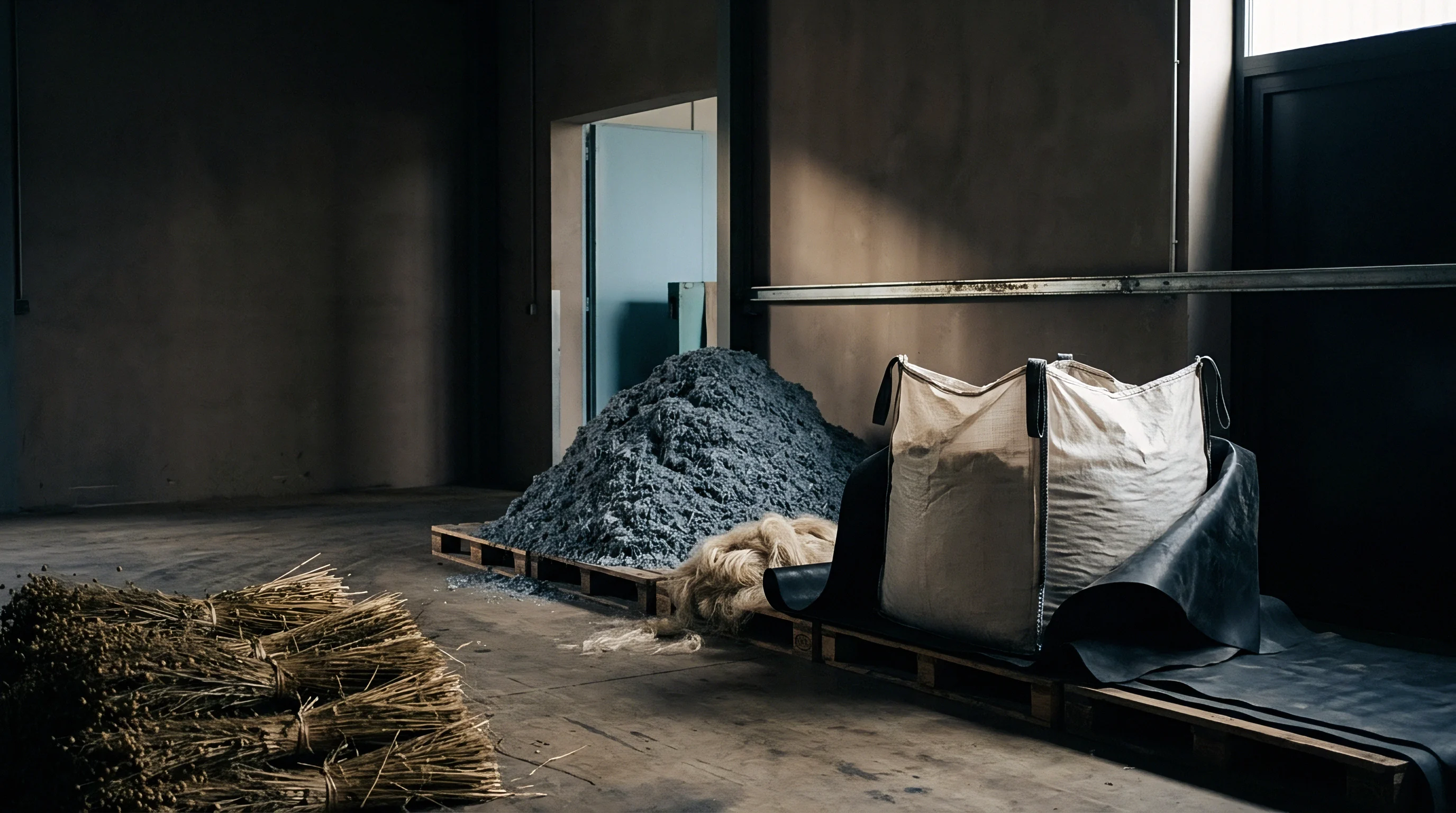
Excessive turbine speeds fracture long bast fiber bundles into short tow and fine particulate waste. Scutched flax destined for high-count yarn spinning demands a residual shive content under 1.5 percent by total fiber mass. High residual plant matter undermines spinning draft efficiency and reduces tensile fiber tenacity.
| Processing Output Stream | Target Weight Range (Percent) | Physical Composition | Verification Audit Standard |
|---|---|---|---|
| Long Scutched Fiber | 14.0 to 18.0 | Parallel bast fibers, full stalk length | Bale weighbridge tickets and fiber length distribution logs |
| Scutched Tow | 8.0 to 12.0 | Tangled short bast fibers, broken filaments | Secondary baling weight logs and coarse yarn mill receipts |
| Woody Core Particles | 65.0 to 72.0 | Fragmented stem xylem, non-textile cellular mass | Biomass fuel disposal dockets or particleboard sales invoices |
| Dust and Evaporative Loss | 5.0 to 8.0 | Particulate dirt, micro-shives, free moisture | Dust extraction hopper cleanout records and moisture meter logs |
Audit procedures verify the physical disposition of shive waste to validate origin claims. A facility alleging processing of raw straw must demonstrate corresponding volumes of byproduct core material. Disposing of hundreds of tonnes of woody fragments leaves visible commercial paper trails, including sales receipts to particleboard manufacturers or biomass boiler consumption dockets.
- Xylem Fragmentation Log documents the physical blade clearance settings and cylinder rotation speeds used during decortication.
- Pneumatic Extraction Receipt proves the removal and weighing of dry shive dust from the scutching chamber.
- Moisture Balance Worksheet calculates net dry weight shifts before and after breaking roller operations.
Failure to match weighbridge dockets with scutcher lot numbers invalidates non-preferential origin treatment under customs audit protocols.
Accepting improperly scutched lots containing over three percent shive impurity forces secondary mechanical cleaning at the spinning mill, exposing the importer to origin reclassification penalties and unexpected reprocessing costs.


Territory
Geographic boundaries crossed between harvesting fields and processing mills dictate which administrative laws govern non-preferential claims. Flax cultivation frequently occurs in one country while mechanical scutching facilities operate across a nearby national border. Customs documentation must reflect every stage of physical transit to preserve traceability.

Does Processing Retted Straw Alter Non Preferential Country Status?
Customs frameworks assign origin to the facility where raw straw undergoes decortication into usable fiber. Retted straw grown in France and transported directly to Belgium for scutching acquires Belgian non-preferential origin upon completion of mechanical decortication, provided the processing meets the substantial transformation rule of UCC Annex 22-01. The agricultural country of growth remains recorded for phytosanitary control, but non-preferential textile origin shifts to the scutching jurisdiction.
When unretted or dew-retted straw moves into a customs zone that performs only sorting, pressing, or re-baling, origin does not shift. Simple repackaging operations do not constitute substantial transformation. Customs authorities require proof that raw stalks underwent physical turbine scutching rather than simple commercial conditioning.

Cross Border Transit Dynamics and Customs Control
Physical movement of unretted or field-retted bundles across bond lines demands continuous sealing and dockets. Transit under T1 customs status within Europe ensures that unmanufactured agricultural products move to certified scutching plants without clearing domestic duty prematurely. Customs authorities reject generic papers.
- Bale raw straw at the farm gate with unique field identification tags and weighbridge scale receipts.
- Transport the lot across border customs checkpoints under sealed bond manifests referencing heading 5301.10.
- Deliver the unmanufactured straw to the registered scutching mill for intake weighing and moisture logging.
- Process the straw through mechanical turbine breakers to generate scutched fibre assigned to heading 5301.21.
- Issue a Certificate of Processing signed by local chamber authorities confirming decortication in the facility.
Traceability breaks down when straw from multiple country origins mixes in intermediate holding warehouses before decortication. Scutching mills operating mass-balance accounting systems must segregate incoming straw runs by origin territory to prevent contamination of origin declarations. Mixing French and Dutch raw straw prior to turbine processing yields blended lots that demand proportional origin calculation or risk rejection by port inspectors.
Documentation gaps are sometimes defended around arguments that field-retting in the farm territory represents the primary value addition, framing post-harvest mechanical scutching as a secondary cleaning step.

Discrepancy
Variations between declared harvest tonnage and finished fiber outputs trigger immediate scrutiny from customs auditors. Inconsistencies in batch weights suggest either fraudulent document substitution or undeclared mixing of third-country raw materials. Sourcing teams rely on rigorous reconciliation math to detect irregularities before customs entries are lodged.

Mass Balance Auditing in Scutching Operations
Verification teams calculate input weight against long fiber, short tow, and waste fractions. Mill logs must reconcile every kilogram of incoming straw against physical output. Discrepancies exceeding five percent between straw intake and total output weight signal improper inventory controls or unrecorded raw material dilution.
Audit protocols mandate physical inspections of mill bale stores. Scutched flax stored in export bays must display waterproof bale tags showing lot numbers that match the corresponding turbine run dockets. Serial numbers printed on individual bale covers must align directly with the packing list attached to the non-preferential certificate of origin.

Documentary Red Flags in Multi Country Invoices
Commercial bills showing origin declarations that contradict shipping manifests indicate high risk. Importers scrutinize bill of lading discharge ports against the physical location of the declared scutching plant. Scutched flax claiming Western European origin that shows shipping origin from transit ports lacking mechanical scutching infrastructure points directly to origin circumvention.
- Incompatible Yield Ratios indicates long fibre output volumes exceeding twenty percent of total raw straw intake weight.
- Unmatched Transit Dates reveals scutching processing certificates dated prior to the cross-border delivery of raw straw.
- Discrepant Tare Weights highlights differences between farm weighbridge tickets and mill intake scale dockets.
- Missing Waste Receipts shows an absence of commercial records proving the local disposal or sale of shive mass.
A scutching facility operating without continuous weighbridge calibration logs cannot defend origin claims against secondary customs audits.
What specific margin of yield variance will port entry authorities tolerate before detaining a shipment for destructive laboratory fiber analysis?


Deduction
Customs authorities calculate financial assessments based on tariff differentials between certified origin claims and raw unprocessed defaults. Importers facing origin reclassifications incur retroactive duty adjustments, administrative fines, and demurrage fees. Sourcing managers evaluate these potential losses when structuring cross-border supply chains.

Landed Cost Arithmetic and Duty Exposure
Evaluating financial risk requires mapping base ad valorem rates against administrative surcharge penalties. Non-preferential origin claims allow entries under standard Most-Favoured-Nation tariff rates. Reclassification of scutched flax to a non-qualifying origin triggers full general tariff rates along with trade defense surcharges.
A standard procurement model demonstrates the financial impact of origin failure. Take a 40-tonne shipment of scutched flax valued at 4.50 Euros per kilogram landed cost. Under valid non-preferential origin entries, the MFN duty rate stands at 0 percent within major European and North American customs territories.
Reclassification due to inadequate scutching proof forces entry under default non-cooperative tariffs, applying a 12 percent ad valorem duty plus punitive anti-circumvention assessments.
| Cost Parameter | Compliant Entry (Certified) | Reclassified Entry (Failed) | Net Financial Delta |
|---|---|---|---|
| Base Shipment Value (40 Tonnes) | EUR 180,000 | EUR 180,000 | EUR 0 | Standard MFN Duty (0 Percent) | EUR 0 | EUR 0 | EUR 0 | Reclassified Tariff Surcharge (12 Percent) | EUR 0 | EUR 21,600 | + EUR 21,600 | Customs Administrative Fine (20 Percent) | EUR 0 | EUR 36,000 | + EUR 36,000 | Port Storage and Demurrage (14 Days) | EUR 0 | EUR 8,400 | + EUR 8,400 |
| Total Landed Procurement Cost | EUR 180,000 | EUR 246,000 | + EUR 66,000 |
Penalties for Reclassification of Flax Imports
National revenue officers enforce strict financial fines when declared non-preferential certificates fail validation. Fines scale according to the degree of negligence or deliberate misstatement involved. Port authorities hold detained goods in bonded warehouses during administrative reviews, adding daily storage fees to the total landed cost burden.
- Certificate Of Processing provided by an accredited independent chamber of commerce located in the scutching country.
- Certified Weighbridge Intake Slip showing raw straw arrival weight, vehicle license numbers, and moisture percentage.
- Scutcher Machinery Operating Log detailing line speeds, turbine running hours, and lot-specific lot yield summaries.
Importers should maintain a minimum duty reserve buffer equal to thirty percent of landed fiber value whenever sourcing scutched flax through complex multi-country processing routes.

Warranty
Legal guarantees embedded within fiber supply contracts determine which entity carries financial liability during customs disputes. Sourcing organizations insist on binding warranty language that obligates sellers to maintain verifiable chain-of-custody documentation. Structured contracts insulate buyers from systemic origin failure across international borders.

Contractual Indemnification Clauses in Fiber Procurement
Purchase agreements include explicit holding terms that protect buyers from retroactively applied tariff liabilities. Sellers warrant that all scutched flax delivered under contract meets non-preferential origin criteria established by the destination country customs authority. Contracts mandate that sellers furnish complete mill audit files within five business days of a formal customs inquiry.
Indemnification clauses must extend beyond simple duty refunds. Sellers agree to cover all secondary expenses arising from origin disputes, including port demurrage, legal representation, and laboratory testing fees. Sourcing contracts stipulate that payment terms lock fifteen percent of total invoice value in escrow until goods pass customs clearance without origin challenge.

Verification Dossier Assembly for Sourcing Operations
Building a comprehensive origin record packet requires gathering documents from farm gate through decortication mill. Sourcing teams assemble standardized verification dossiers for every imported lot before shipping vessels depart the origin port. Completing this file before entry minimizes border detention risks.
A complete origin dossier contains the farm purchase agreement, transport dockets for raw straw, mill intake receipts, turbine scutching yield logs, and the formal non-preferential certificate of origin. Independent auditors verify these records against ISO 17065 certification standards for product certifying bodies. Maintaining complete digital copies of all batch records for seven years fulfills statutory customs retention rules across primary trade jurisdictions.