Classification Mechanics for Unprocessed Raw Agricultural Fibres
Classification of unprocessed raw agricultural fibers depends on mechanical decortication thresholds, residual shive content, and verifiable scutching mass balance records.

Straw
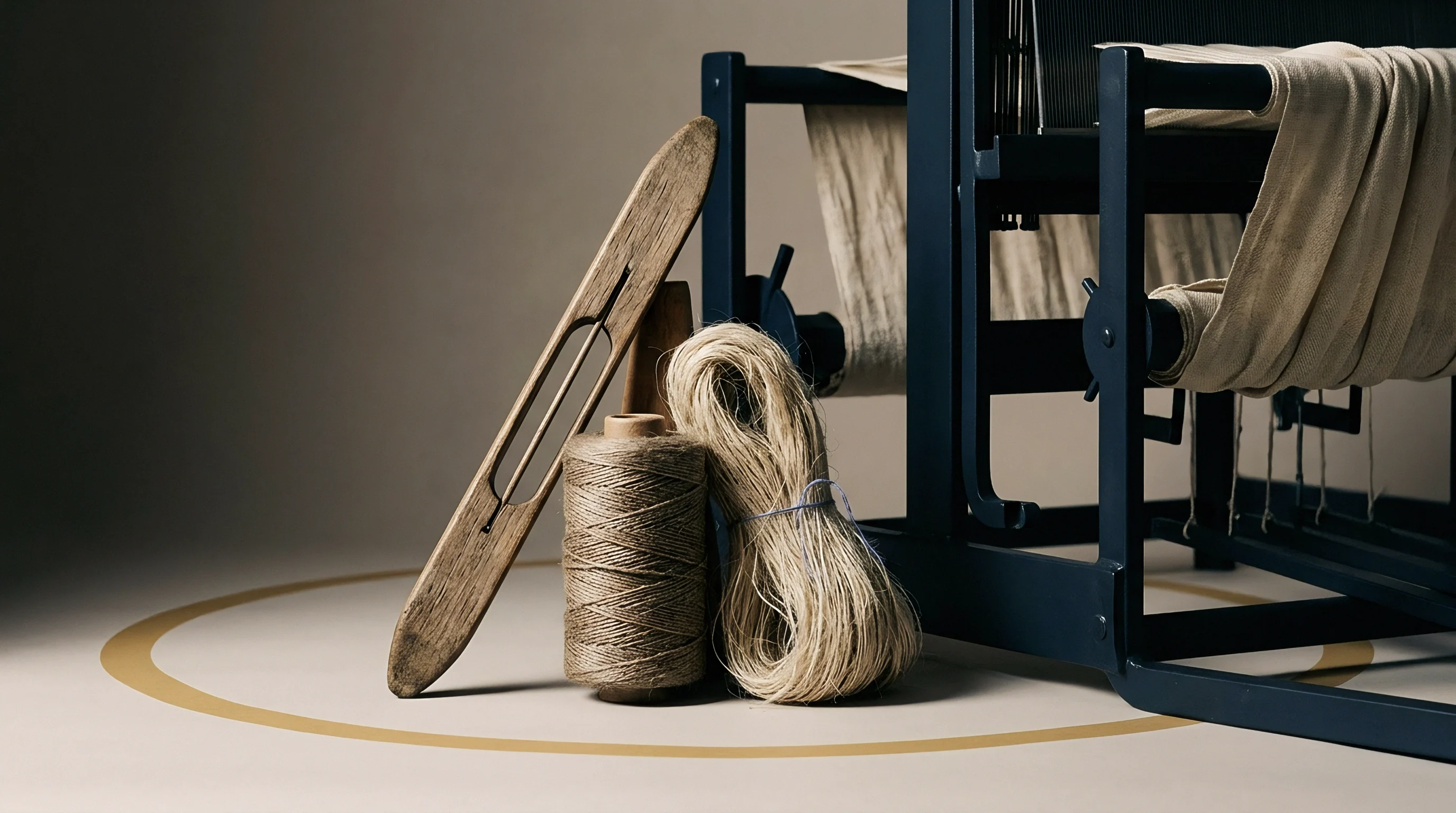
Unprocessed agricultural stems arriving at customs clearance points contain varying amounts of cortical tissue, woody core material, and bound fiber bundles. Tariff classification under international trade schedules depends primarily on whether harvesting has progressed into mechanical decortication or chemical retting. Flax straw entered immediately after pulling stays under raw agricultural tariff codes, as long as no mechanical breaking has stripped the outer bast layer from the stem core.

Morphological Structure and Decortication Stages
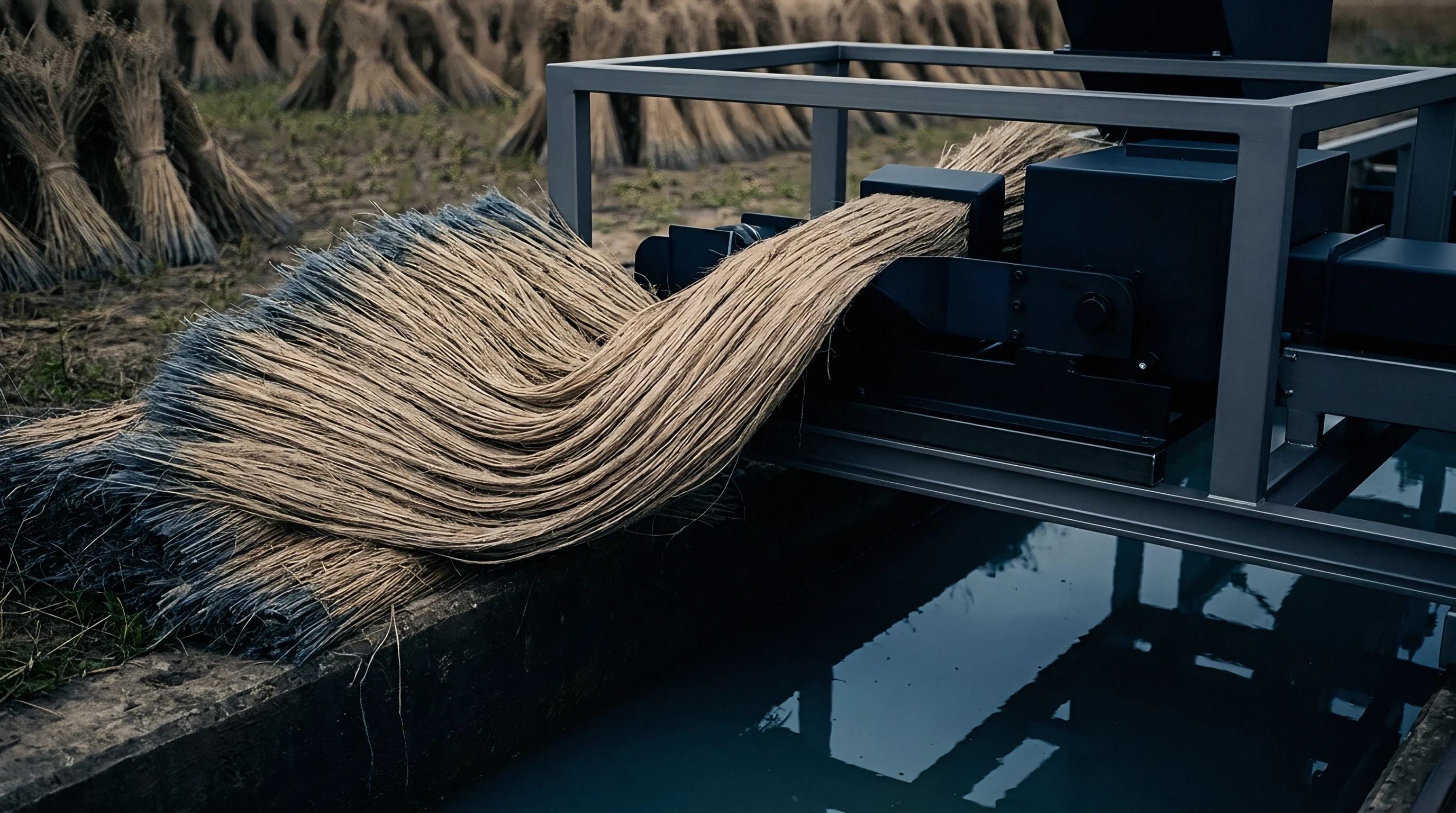
Stalks collected from field retting undergo initial mechanical breaking to loosen the outer phloem layer from the inner core, where pectin holds the bast bundles together. Water retting leaves a dark residue on the stalk, and the degree of xylem separation determines whether the raw material retains agricultural status or moves into semi-processed fiber headings. During decortication, fluted rollers break the brittle woody cylinder into small fragments called shive, after which scutching turbines beat the broken stems to eject loose shive while leaving long bast fibers intact.
When decortication occurs without prior retting, the resulting green flax retains high stiffness and heavy pectin encrustation. Customs laboratories measure residual pectin percentages to determine whether dew retting occurred in the field before mechanical processing. Dew retting relies on field fungi, primarily Cladosporium herbarum, to digest middle lamella pectins over three to six weeks.
Stalks pulled and baled without weather exposure maintain intact pectin matrices, which prevents clean fiber separation during carding.
Mechanical decortication separates the outer fiber bundles from the inner woody xylem without altering the underlying cellular polymer structure.
Classification disputes often arise when shipments contain mixed batches of green, dew-retted, and partially scutched material. Port officials draw core samples from dense agricultural bales using motorized sampling tubes so laboratory technicians can measure the ratio of intact stem segments to liberated fiber bundles. Batches showing over fifty percent detached fiber filaments by weight lose raw agricultural status and fall under processed bast classifications.
- Shive retention variations create classification ambiguities between raw agricultural waste and partially decorticated bast lots during customs sampling.
- Excessive moisture content swells weight calculations at import checkpoints, triggering tariff bracket adjustments for raw fiber shipments.
- Incomplete retting activity leaves heavy pectin layers that prevent uniform mechanical extraction, resulting in mixed-grade mill deliveries.
- Bale contamination introduces weeds and synthetic twine residues that invalidate sanitary inspection clearances at international ports.
Bale density directly influences sampling accuracy at entry terminals. High-density hydraulic pressing compresses raw stems and locks shive fragments inside fiber bundles, forcing inspectors to perform cross-sectional cuts to evaluate internal retting uniformity and check whether moisture has inflated declared weights. Sampling protocols require taking core samples from at least ten percent of bales in a consignment to establish average shive contamination levels.
Primary mechanical breaking produces coarse, unaligned fiber strands that retain high pectin levels and significant shive fractions.


Purity
Chemical analysis of unspun vegetable fibers establishes the boundary between raw agricultural biomass and processed textile material. Customs labs measure residual non-cellulosic components ~ mainly lignin, hemicellulose, and pectin ~ to verify declared processing stages. Raw flax straw contains approximately sixty-five percent cellulose, whereas fully scutched long flax reaches eighty to eighty-five percent cellulose purity once shive is extracted.
Analytical Testing Methods for Shive and Moisture Content
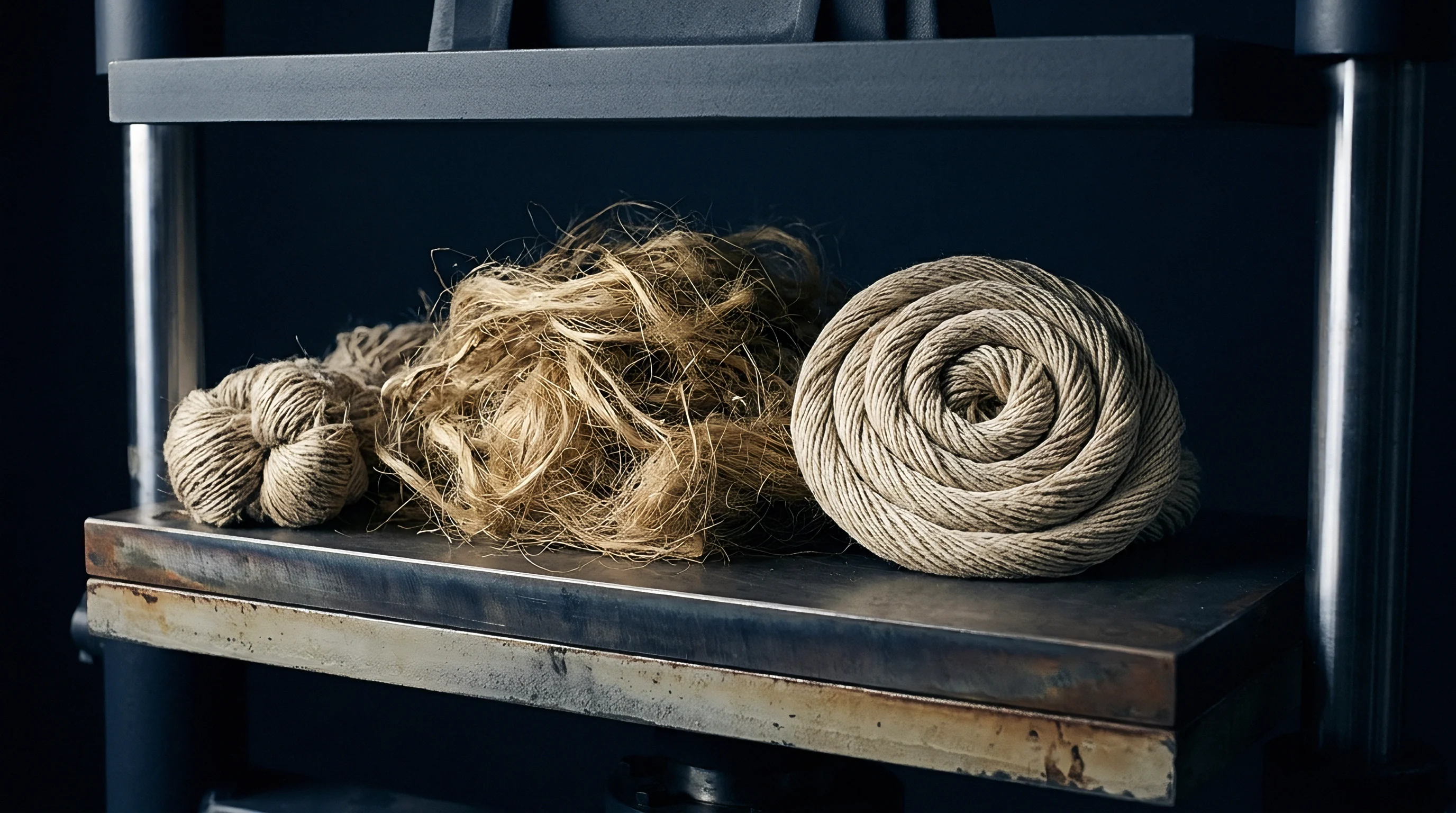
Gravimetric extraction in standard laboratory ovens quantifies water weight alongside residual plant remnants when inspectors weigh dry fiber. Analysts execute chemical Soxhlet extractions using petroleum ether to measure surface wax fractions, where high wax levels indicate unprocessed green bast and washed or boiled fibers show low lipid residues. ISO 2370 defines test parameters for determining flax fiber fineness by airflow methods, linking stem maturation with fiber diameter.
Moisture levels dictate gross billing weights in international shipments. Raw agricultural fibers absorb atmospheric humidity, fluctuating between seven and fifteen percent moisture regain during transit. The standard commercial allowance for flax fiber moisture content is twelve percent, and customs authorities apply corrected net weight formulas on imported lots to prevent tariff evasion through artificial wetting or drying.
| Subheading | Processing State | Maximum Shive Content (%) | Standard Moisture Limit (%) |
|---|---|---|---|
| 5301.10 | Flax, raw or retted | 45.0 | 12.0 |
| 5301.21 | Flax, broken or scutched | 15.0 | 12.0 |
| 5301.29 | Flax, hackled or otherwise processed | 2.5 | 10.5 |

Chemical Markers of Retting Efficiency
Pectin remaining in extracted bast bundles correlates directly with microbiological activity during field conditioning. Analysis uses enzymatic hydrolysis to break down polygalacturonic acid sequences within the middle lamella, followed by spectrophotometric measurement at 520 nanometers to quantify galacturonic acid concentrations. Unretted green flax straw yields galacturonic acid levels exceeding four percent total dry weight, whereas fully retted scutched flax measures below one point five percent.
Higher shive percentages push bast fiber shipments into lower raw agricultural customs categories.
Lignin distribution provides another analytical marker for distinguishing true flax from hemp or jute admixtures. Flax bast bundles contain minimal lignin within the secondary cell wall, typically under three percent, whereas hemp bast carries three to eight percent and jute exceeds eleven percent. Technicians apply phloroglucinol-hydrochloric acid staining to fiber cross-sections to visualize lignin localization under optical microscopy.
Because shive percentage governs tariff codes, clean bast bundles separated from woody core material move into higher processing categories as residual plant fragments decrease.


Manifest
Customs authorities classify unspun plant materials under Chapter 53 of the Harmonized System based on physical transformation benchmarks. Heading 5301 applies exclusively to flax, raw or processed but not spun, along with flax tow and waste. Correct subheading designation depends on mapping mechanical processing history to distinguish raw straw from broken, scutched, hackled, or carded fibers.
Where Does Green Scutched Flax Shift Customs Heading?
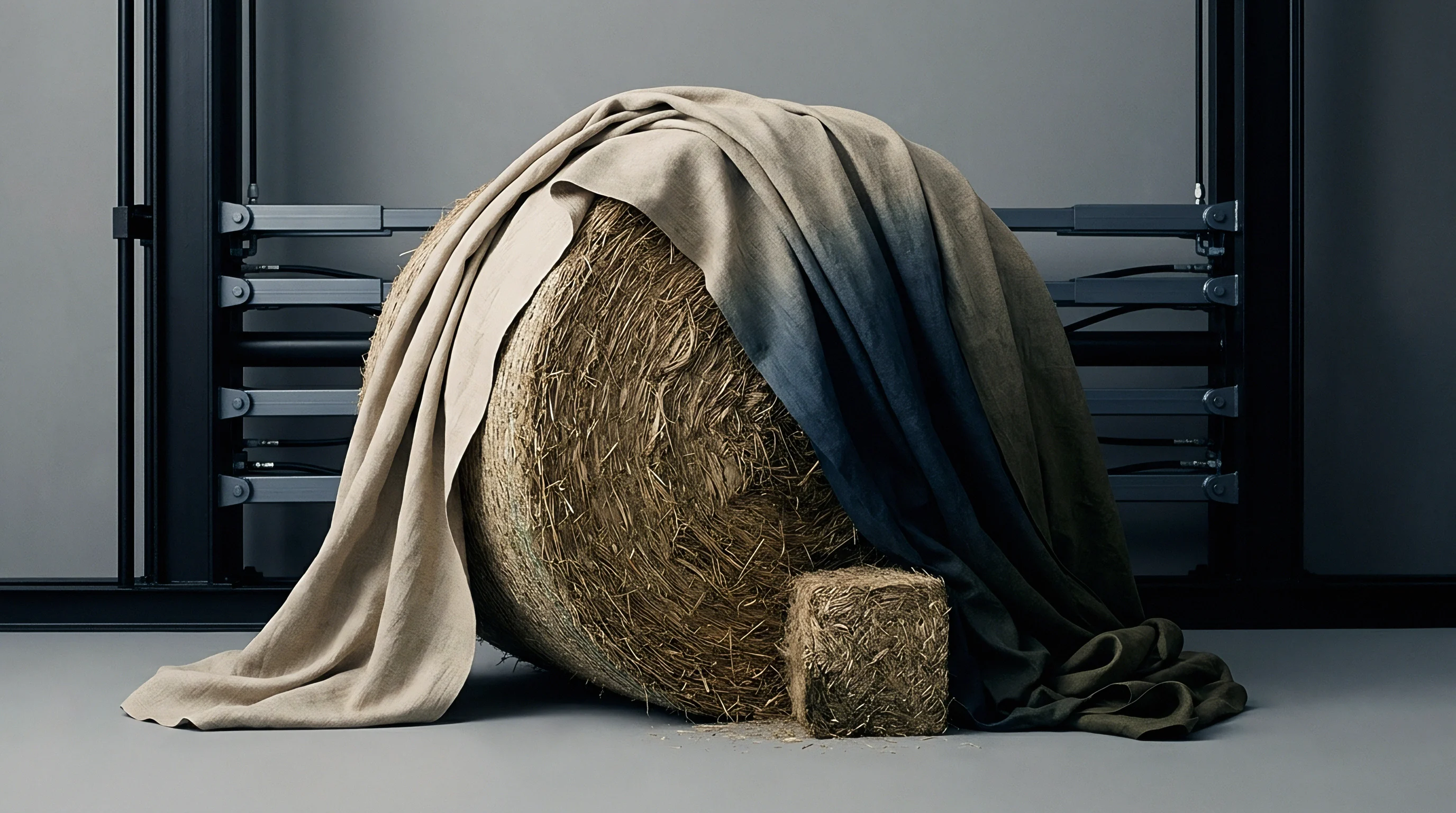
Unretted stalks processed through high-speed turbine decorticators cross the boundary from raw agricultural crops into primary textile fibers once they hit mechanical shive separation limits. Decorticated green flax falling below fifteen percent residual shive content shifts from subheading 5301.10 to 5301.21. Customs rulings in major import markets evaluate whether mechanical processing altered the parallel alignment of bast bundles, noting that scutching generates coarse tow while simple mechanical breaking without shive ejection leaves goods under raw flax categories.
Preferential trade arrangements demand strict compliance with origin rules governing agricultural transformations, whereas non-preferential rules specify that harvesting and field retting establish origin in the cultivation territory. Mechanical scutching alone does not confer an origin shift if raw straw moves across borders prior to turbine processing, unless specific bilateral agreements recognize primary decortication as substantial transformation.
- Verify harvest location certificates issued by agricultural regional authorities before export loading.
- Collect scutching mill lot numbers corresponding directly to raw stalk intake weights.
- Extract physical laboratory test sheets confirming shive percentage and moisture values.
- File non-preferential origin declarations matching foreign port export manifests.

Documenting Transformation under Non Preferential Origin Rules
Importing nations evaluate substantial process steps by inspecting machine operational records alongside weighbridge receipts. Scutching mills operating in non-cultivation countries must provide detailed yield logs proving that raw straw inputs match output ratios for long flax, tow, and shive waste. Failure to produce continuous mill intake logs results in customs reclassification back to the raw straw country of origin, triggering higher non-preferential duty tariffs.
Under non-preferential origin rules, simple mechanical cleaning without substantial decortication fails to confer country-of-origin status on imported raw agricultural fibers.
Transaction certificates issued by independent verification bodies validate physical fiber transfers across border checkpoints, where brokers present them for clearance. European Flax certification schemes demand traceable mass balance records from farm field to spinning mill entrance. Certifiers cross-check shipping container seal numbers against mill intake manifests to eliminate stock substitution with undocumented domestic fibers, and documents lacking verified batch lot numbers face immediate quarantine at import ports.
Section 301 origin rules in major destination ports reclassify simple decorticated stalks back to the harvesting territory unless substantial mechanical scutching occurs.
Audit
Chain of custody verification across cross-border processing plants relies on physical mass balance calculations. Scutching and hackling generate predictable waste fractions that auditors reconcile against raw input manifests. Discrepancies between declared stalk tonnage and finished scutched bale outputs highlight potential fiber blending or fraudulent classification claims.
Reconciling Fibre Mass Balance across Scutching Mills
Raw stalk inputs yield specific proportions of long fibre, short tow, shive dust, and moisture loss during mechanical extraction. Standard European dew-retted flax straw yields approximately fourteen percent long scutched fiber, eleven percent short tow fiber, forty-eight percent shive, and twenty-seven percent dust and moisture attenuation. Scutching mills operating outside primary growing regions must account for every output fraction when defending yield declarations before customs auditors.
Physical inspection of bale storage warehouses requires counting physical bale tags ~ which record batch numbers ~ against inventory management software records. Auditors track lot numbers printed on bale bands to verify origin claims back to original scutching runs. Because yield losses alter batch totals, any discrepancies trigger full manual audits, and unmatched bale tags indicate inventory leakage or unauthorized blending with lower-grade raw fibers.
| Processing Phase | Input Material | Primary Product | Typical Yield (% Input) | Mass Loss Type |
|---|---|---|---|---|
| Field Retting | Green Straw | Retted Straw | 82.0 – 88.0 | Soluble organic loss |
| Decortication | Retted Straw | Raw Tow / Shive | 20.0 – 25.0 | Woody xylem ejection |
| Turbine Scutching | Retted Straw | Long Scutched Flax | 10.0 – 14.0 | Dust and shive removal |
Worked Case Construction for Scutching Yield Discrepancy
Consider a 100-tonne consignment of field-retted straw delivered to a primary processing facility in Jiangsu Province. Assume the incoming straw carries twelve percent moisture content and forty percent shive fraction. Primary turbine scutching generates 13.5 tonnes of long scutched fiber at eleven percent moisture content, 10.5 tonnes of scutched tow, 52 tonnes of shive waste, and 24 tonnes of airborne dust and moisture loss.
If the processing facility submits customs documentation claiming 18 tonnes of long scutched fiber from that same 100-tonne straw batch, auditors apply the mass balance conversion equation, where the long fiber yield ratio equals finished fiber dry mass divided by initial straw dry mass. An eighteen percent long fiber recovery rate exceeds historical mechanical extraction thresholds for standard European straw cultivars, which top out at fifteen point five percent under optimal climate conditions. Laboratory tests resolve shive boundaries, leading the auditor to flag the excess 4.5 tonnes as unverified fiber and suspect local mixing with uncertified domestic stock.
A scutching mass balance yield exceeding fourteen percent long fiber from dry field straw indicates unrecorded blending with imported scutched inventory.
- Weighbridge calibration records confirm exact gross weights prior to mill intake processing.
- Lot segregation logs document physical isolation between European-grown straw and domestic Chinese harvests.
- Moisture attenuation adjustments align dry-basis fiber mass calculations with declared invoice totals.
- Transaction certificate cross-checks validate certificate numbers against issuing certifier databases.
Processing mills frequently attribute mass balance shortages to unmeasured moisture evaporation during dry autumn storage cycles.


Contract
Commercial agreements governing unspun vegetable bast materials assign classification failure liabilities between seller and buyer. Purchase contracts incorporating international commercial terms allocate customs clearance obligations, import duty risks, and penalties arising from tariff reclassifications. Specifying precise technical parameters within contract schedules prevents disputes when border authorities reclassify raw agricultural lots.
Land Cost Arithmetic and Customs Penalty Allocations
Reclassification by border inspectors from raw agricultural material to processed textile fiber increases applicable tariff duties while imposing administrative fines. Importing raw flax straw under HS 5301.10 carries zero to two percent duty rates in major markets, whereas processed flax under HS 5301.29 faces duty rates up to eight percent, and duty rates double without origin documentation. Retroactive tariff adjustments wipe out mill processing margins across large fiber consignments.
Contractual penalty clauses require sellers to reimburse buyers for demurrage fees, re-testing expenses, and duty differentials resulting from incorrect origin or processing declarations. Standard supply agreements specify that if customs authorities reject declared HS codes due to excess shive content or false retting assertions, the seller absorbs all port storage charges and lab re-testing fees, as origin shifts with mechanical work. Indemnity provisions secure financial recovery when misclassifications trigger broader customs audits across historical import shipments.

Drafting Commercial Warranty Clauses for Fibre Classification
Purchase orders specify strict chemical limits, origin documentation requirements, and mandatory lab test standards. Contract terms define maximum shive tolerances, moisture baselines, and certified decortication stages. Buyers incorporate explicit seller warranties confirming that raw fibers originate from certified agricultural regions and contain no undeclared synthetic or bastard hemp contaminants.
Legal dispute resolution provisions dictate arbitration venues and applicable trade association rules, such as those governed by the International Cotton Association or CIPALIN (Comité International du Lin et du Chanvre). Independent lab testing conducted at port arrival serves as binding evidence for resolving quality or classification claims. Contracts specify that sample testing by accredited ISO 17025 laboratories supersedes export quality certificates provided by the supplier.
Misclassifying raw agricultural fibers at border clearance leads to retroactive tariff assessments, seizure of shipments, and permanent forfeiture of preferential trade status.