Spatial Allocation
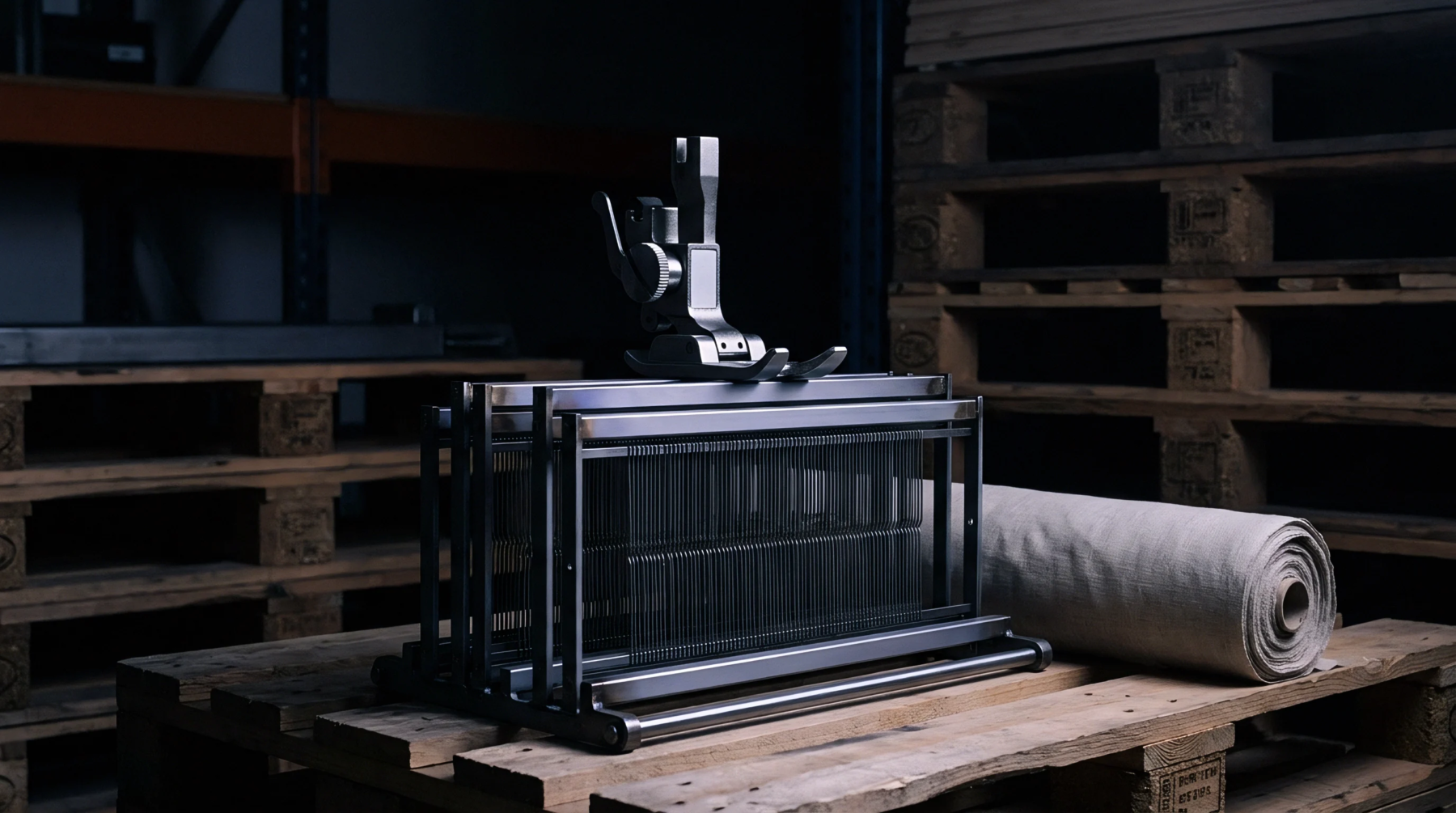
Flax yarn density across a mechanical weaving loom requires precise physical clearance for warp threads to cross without friction during production. Reed air space governs the precise millimeter distance between adjacent metal dents inside a spinning mill loom. Operators verify this measurement during pre-production setup on every new batch of woven linen cloth.
Chinese export facilities record the exact clearance on mill floor dockets before mass manufacturing begins. Mill acceptance criteria rely on this gap to prevent warp breakage while maintaining uniform fabric density throughout the export run.
Thread Clearance
Excess spacing causes loose warp alignment and irregular fabric surfaces on finished linen goods. Narrow gaps generate excessive friction during the rapid oscillation of the shuttle mechanism. Technicians adjust the metal dent spacing to accommodate specific yarn counts without damaging delicate natural fibres.
Production supervisors measure millimeter dimensions against buyer specifications to ensure compliance before bulk export approval. Fabric grades depend directly on consistent thread separation throughout the entire weaving process.
Export Tolerance
Export validation requires strict adherence to buyer contracts regarding final cloth density and structural integrity. Defective clearance values lead immediately to rejected shipments at the port inspection terminal. Mill standards supersede general guidelines when foreign buyers establish specific thread count parameters for luxury linen garments.
Quality control teams verify compliance by cross-referencing physical loom measurements with standard production tolerances. Strict adherence to spatial limits guarantees uniform textile quality across international trade shipments.