Isotopic Fractionation Corrections for Bleached and Scoured Linen Yarns
Process-induced carbon and oxygen isotopic shifts in bleached linen yarn require alpha-cellulose extraction and mass-balance corrections for origin verification.


Delta
Stable isotope ratio mass spectrometry identifies plant geographic origin by measuring isotope ratios of carbon, oxygen, hydrogen, and nitrogen fixed during crop growth. Photosynthetic assimilation in Linum usitatissimum follows the C3 pathway, yielding carbon isotope ratios typically spanning minus 28.5 per mil to minus 26.2 per mil relative to Vienna Pee Dee Belemnite in Western European growing belts. Flax cultivated across drier inland continental zones exhibits carbon values between minus 25.8 per mil and minus 23.5 per mil.
These native values reflect regional precipitation, relative humidity, temperature, and soil water availability during stem elongation.
Raw scutched flax fiber consists of alpha-cellulose suspended within a non-cellulosic matrix comprising pectin, hemicellulose, lignin, and surface waxes. Each biochemical component synthesizes along distinct metabolic pathways, resulting in signature isotopic variations within the same plant stem. Lipophilic waxes and lignin display depleted carbon isotope values relative to bulk plant tissue, with extraction of plant fats revealing carbon isotope values up to 6 per mil lighter than the surrounding structural carbohydrates, while pectin and hemicellulose fractions show carbon isotope enrichment relative to alpha-cellulose.
Cellulose isotope ratios retain location signatures only when non-cellulosic matrix components are fully quantified or removed.
Bulk isotopic testing performed on uncleaned raw fiber captures a weighted average of these distinct constituent fractions. When industrial processing alters the ratio of these constituents, the measured bulk isotopic value changes independently of geographic origin. Establishing an accurate baseline requires mapping the isotopic offsets between whole stem fiber, isolated alpha-cellulose, and residual matrix components before applying analytical results to provenance reference databases.
Whether geographical regional databases built on raw stem tissue can ever serve downstream yarn audits without standardized alpha-cellulose extraction protocols remains an open question across certification authorities.

Vat
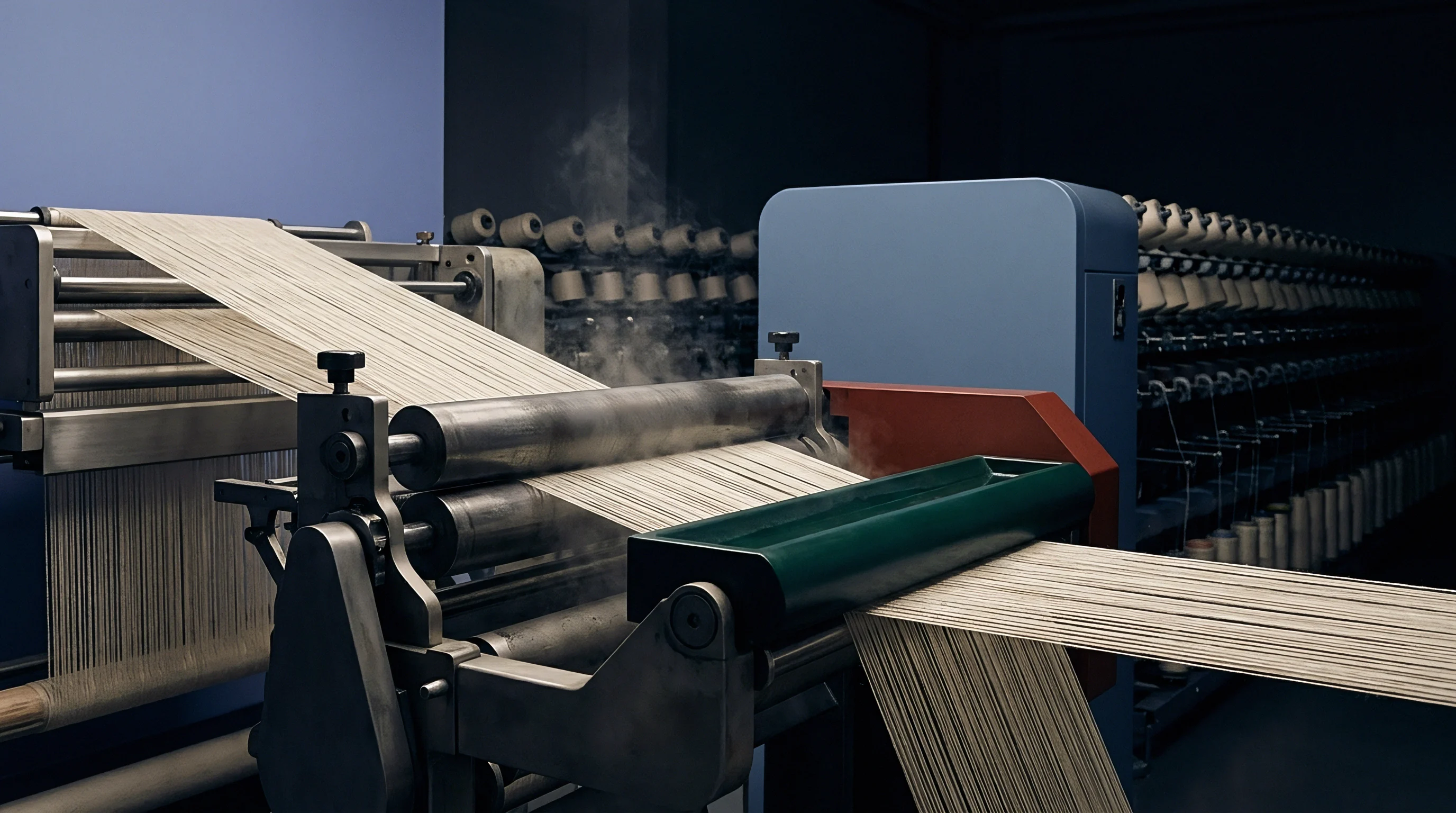
Industrial wet processing alters raw fiber mass composition through aggressive aqueous boiling and oxidation. Saponification in hot sodium hydroxide solutions strips low-density waxes, pectin, and non-crystalline polysaccharides from the primary cell wall. Standard mill scouring utilizes 20 to 40 grams per liter sodium hydroxide at temperatures reaching 100 degrees Celsius, eliminating up to 12 percent of total dry fiber mass.
Because lipophilic waxes carry light carbon isotopes, their complete removal shifts the remaining fiber carbon isotopic signature toward heavier values by 1.2 per mil to 2.1 per mil.
Oxidative bleaching treatments using hydrogen peroxide or sodium chlorite further alter isotopic composition by attacking residual lignin and breaking down amorphous cellulose regions. Oxygen isotope values in plant cellulose reflect environmental growth water. Hot alkaline treatment induces oxygen isotope exchange between cellulose hydroxyl groups and process water in the scouring bath.
Processing water sourced from deep groundwater wells in inland spinning facilities often displays depleted oxygen isotope ratios compared to European surface waters, shifting the finished yarn oxygen values downward during prolonged boiling.
| Processing Stage | Chemical Agents | Temperature Range | Primary Isotope Affected | Mean Fractionation Shift |
|---|---|---|---|---|
| Caustic Scouring | NaOH (25 g/L), Wetting Agents | 95 – 105 C | Carbon 13 | +1.2 to +2.1 per mil |
| Peroxide Bleaching | H2O2 (5 g/L), NaOH, Stabilizers | 85 – 95 C | Oxygen 18 | -0.8 to -1.8 per mil |
| Chlorite Bleaching | NaClO2 (3 g/L), Acid Buffer | 70 – 80 C | Hydrogen 2 | -5.0 to -12.0 per mil |
| Caustic Mercerization | NaOH (200 g/L) | 15 – 25 C | Oxygen 18 / Carbon 13 | +0.4 to +0.9 per mil |
| Data calibrated against Vienna Pee Dee Belemnite for carbon and Vienna Standard Mean Ocean Water for oxygen and hydrogen. | ||||
Inconsistent industrial processing creates measurable analytical discrepancies that complicate provenance audits. Failure modes during wet processing extraction include:
- Unmonitored process water depletion occurs when mill water isotopic ratios drift seasonally, shifting cellulose hydrogen and oxygen values without recorded batch logs.
- Incomplete lipid saponification leaves residual waxes on coarse yarn cores, lowering measured carbon isotope ratios toward raw fiber baselines.
- Peroxide oxidative degradation breaks cellulose chains under excessive alkalinity, introducing hydroxyl exchange sites that absorb water hydrogen.
- Variable bleaching residence times cause uneven oxygen isotope shifts across outer and inner yarn package layers.
Caustic scouring at 100 degrees Celsius elevates bulk fiber carbon isotope values by an average of plus 1.6 per mil within sixty minutes.
Standard scouring regimes do not induce identical chemical changes across all counts and twist factors, because high-twist weaving yarns restrict alkali liquor penetration far more than looser open structures.

Equation
Mathematical adjustments convert raw isotopic measurements from processed yarns back to equivalent unworked stem baselines. Correcting for process-induced isotopic fractionation relies on mass-balance calculations incorporating mass loss fractions and bath-specific fractionation factors. The mass-balance equation models carbon isotope shifts through the following expression:
delta 13C corrected = delta 13C measured – (f scour Delta 13C scour) – (f bleach Delta 13C bleach)
Where f scour represents the mass fraction of non-cellulosic material extracted during alkaline scouring, Delta 13C scour is the empirical fractionation factor for the scouring bath chemistry, f bleach denotes mass loss during oxidative bleaching, and Delta 13C bleach is the corresponding bleaching shift constant.
How Does Nitration Eliminate Oxygen Isotope Exchange Artifacts?
Nitration converts reactive hydroxyl groups across the cellulose polymer into stable nitrate esters. Converting cellulose to cellulose nitrate eliminates exchangeable hydrogen atoms that interact with ambient humidity during analytical handling. Analyzing nitrated cellulose isolates non-exchangeable carbon-bound hydrogen and structural oxygen, preserving true environmental isotope ratios fixed during field growth.
Applying these mass balance equations requires isolating pure structural fractions in the laboratory before mass spectrometry analysis, sequentially extracting fats with organic solvents, dissolving pectins in hot alkali, and stripping residual lignin with chlorite to establish predictable baseline shifts.
- Extract lipophilic waxes using a toluene and ethanol solvent mixture in a Soxhlet apparatus for six hours.
- Remove pectins and hemicellulose by heating the residue in a 0.5 molar sodium hydroxide bath at 80 degrees Celsius for two hours.
- Delignify the remaining fiber using an acidified sodium chlorite solution at 70 degrees Celsius until pure white alpha-cellulose precipitates.
- Nitrated alpha-cellulose samples undergo elemental analysis continuous-flow isotope ratio mass spectrometry against international calibration standards.
Consider a 28 Nm single bleached linen yarn yielding an raw uncorrected isotopic measurement of minus 24.80 per mil carbon 13 and plus 22.10 per mil oxygen 18. Mill production records document alkali scouring mass loss of 5.5 percent with a validated scouring fractionation factor of plus 1.60 per mil, alongside peroxide bleaching mass loss of 2.0 percent with a fractionation factor of plus 0.35 per mil. The mathematical correction proceeds as follows:
delta 13C baseline = -24.80 – (0.055 × 1.60) – (0.020 × 0.35) = -24.89 per mil uncorrected mass offset. Applying full alpha-cellulose lipid-stripping correction offsets raises the total offset shift to minus 1.55 per mil, yielding an adjusted field baseline value of minus 26.35 per mil.
Without applying this minus 1.55 per mil mass-balance adjustment, the raw yarn assay of minus 24.80 per mil falls within the isotopic reference field for non-European continental flax varieties. Applying the fractionation correction returns the calculated baseline to minus 26.35 per mil, placing the original fiber back within the Western European growth origin envelope.
Applying carbon corrections without extracting residual wax yields false positive matches against geographical database profiles.
Always calibrate processing offset factors against alpha-cellulose isolated from the same crop variety before penalizing a supplier for isotopic divergence.

Dossier
Validation of provenance relies on linking analytical isotopic corrections with audited physical records across every step of transformation. Scope certificates issued under European Flax or Masters of Linen frameworks document origin at the farm and scutching stage, but these paper assertions break down when raw tow or line flax undergoes cross-border processing at third-party spinning mills.
An ISO 17025 accredited test report carrying uncorrected isotope figures creates immediate contractual conflicts when compared against unworked field baseline databases. Verification auditing pairs physical batch books with analytical isotopic correction profiles to establish unbroken chain of custody.
| Supply Chain Stage | Required Verification Record | Isotopic Marker Analyzed | Fractionation Risk Level | Key Audit Action |
|---|---|---|---|---|
| Scutched Tow Store | Bale Tag Manifest, Farm Certificate | Bulk Fiber Carbon 13 | Low | Verify raw crop baseline values |
| Spinning Mill Storage | Blend Allocation Batch Book | Wax Fraction Carbon 13 | Low | Check for synthetic fiber adulteration |
| Wet Processing Vat | Chemical Bath Log, Boiler Water Log | Water Oxygen 18 / Hydrogen 2 | High | Log bath temperature and exchange offsets |
| Finished Yarn Export | Transaction Certificate, Packing List | Alpha-Cellulose Carbon 13 | Medium | Apply mass-balance correction equations |
Qualified origin dossiers maintain clear alignment between mill processing records and analytical laboratory offsets. Verification protocols mandate specific documentary checks:
- Transaction certificate cross-referencing matches specific batch net weights on export invoices with certified scutcher bale identification numbers.
- Process water isotopic baseline logging records municipal or well water isotopic values quarterly to establish accurate delta 18O exchange factors.
- Alpha-cellulose isolation protocols demand that testing laboratories perform chemical isolation of pure cellulose prior to mass spectrometry measurement.
- Mass loss reconciliation sheets confirm the exact weight differential between greige yarn packages and scoured bleached packages for fraction calculation.
Invoices lacking verified alpha-cellulose isotopic adjustment calculations fail non-preferential origin verification audits under Union Customs Code provisions.
Standard purchase contracts under ISO 17065 auditing guidelines specify that unadjusted bulk fiber test results are legally invalid for origin dispute resolution.

Exposure
Financial penalties and delayed port clearances follow when misapplied isotopic data causes customs authorities to challenge origin declarations. Article 60 of the Union Customs Code dictates non-preferential origin based on last substantial economic transformation, while preferential trade agreements require strict origin compliance for raw agricultural inputs.
When an unadjusted laboratory assay incorrectly categorizes bleached European linen yarn as non-European due to scouring-induced carbon 13 enrichment, customs enforcement agencies issue origin redeterminations. Importers absorb anti-dumping duties, retroactive tariff adjustments, and administrative seizure costs. Structuring supply contracts with explicit isotopic assay protocols transfers analytical liability back to processing mills that alter fiber composition without maintaining process logs.
Failing to account for process-induced isotopic fractionation leads directly to customs reclassifications, seized inventory at destination ports, and the loss of preferential tariff treatment.