Jacquard Linen Loom Capacity Allocation and Minimums
Locking jacquard linen capacity requires booking minimum warp beam lengths of 1,200 metres and balancing pick densities to protect low-elasticity flax yarns.
Locking jacquard linen capacity requires booking minimum warp beam lengths of 1,200 metres and balancing pick densities to protect low-elasticity flax yarns.

Cross border debit notes for linen contraction deficits evaluate landed fabric replacement, scrap escalation, and duty adjustments against ISO 139 metrics.

Usable cuttable width must be verified on tensionless cloth relaxed under ISO 139 conditions using ISO 22198, excluding pin marks, selvages, and edge distortion.

Derive broadloom linen reed space by calculating weft crimp and wet finishing contraction to guarantee minimum off-loom greige and finished commercial widths.
Resolve ultrafine flax warp fatigue by combining asymmetric low-lift shedding, core-penetrating starch-PVA sizing, DLC eyelets, and 70 percent shed humidity.

Maintain slasher exit moisture at 8 to 10 percent and weave shed relative humidity at 75 to 78 percent to prevent brittle linen warp breaks at high speeds.
Target dry size pick-up for wet-spun linen warps sits strictly between six and nine point five percent, calculated from bone-dry yarn mass and nip extraction.
Maintaining fine flax warp moisture above ten percent suppresses dynamic tension spikes and prevents high speed loom shedding failure.
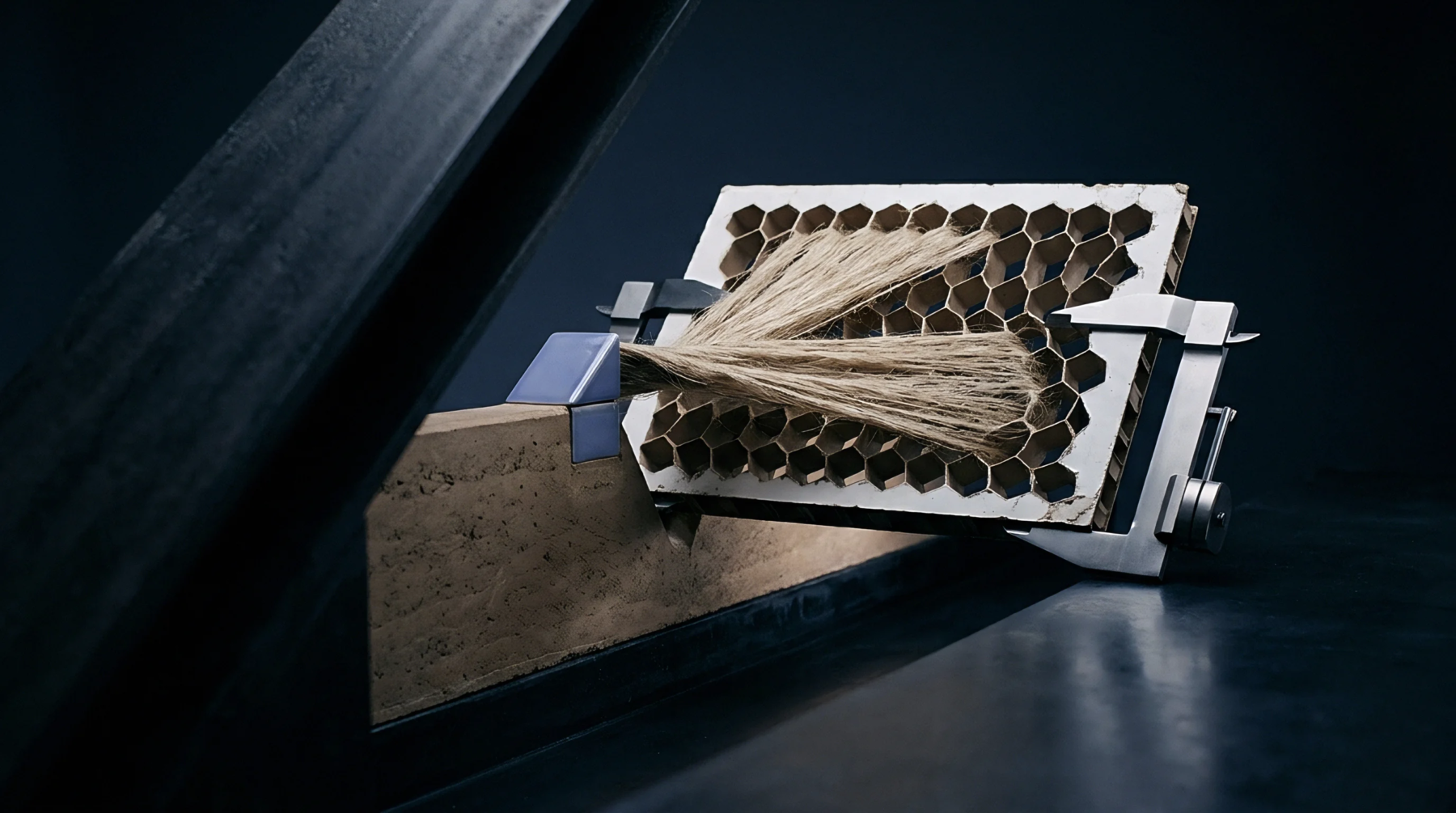
Dynamic shedding cycles degrade inelastic linen sizing films, inducing viscoelastic warp creep, starting marks, and avoidable stop frequency losses.

Optimizing bast fiber warp regain between 11.5 and 12.5 percent through targeted shed psychrometrics maximizes yarn elasticity, cutting warp breaks and loom downtime.
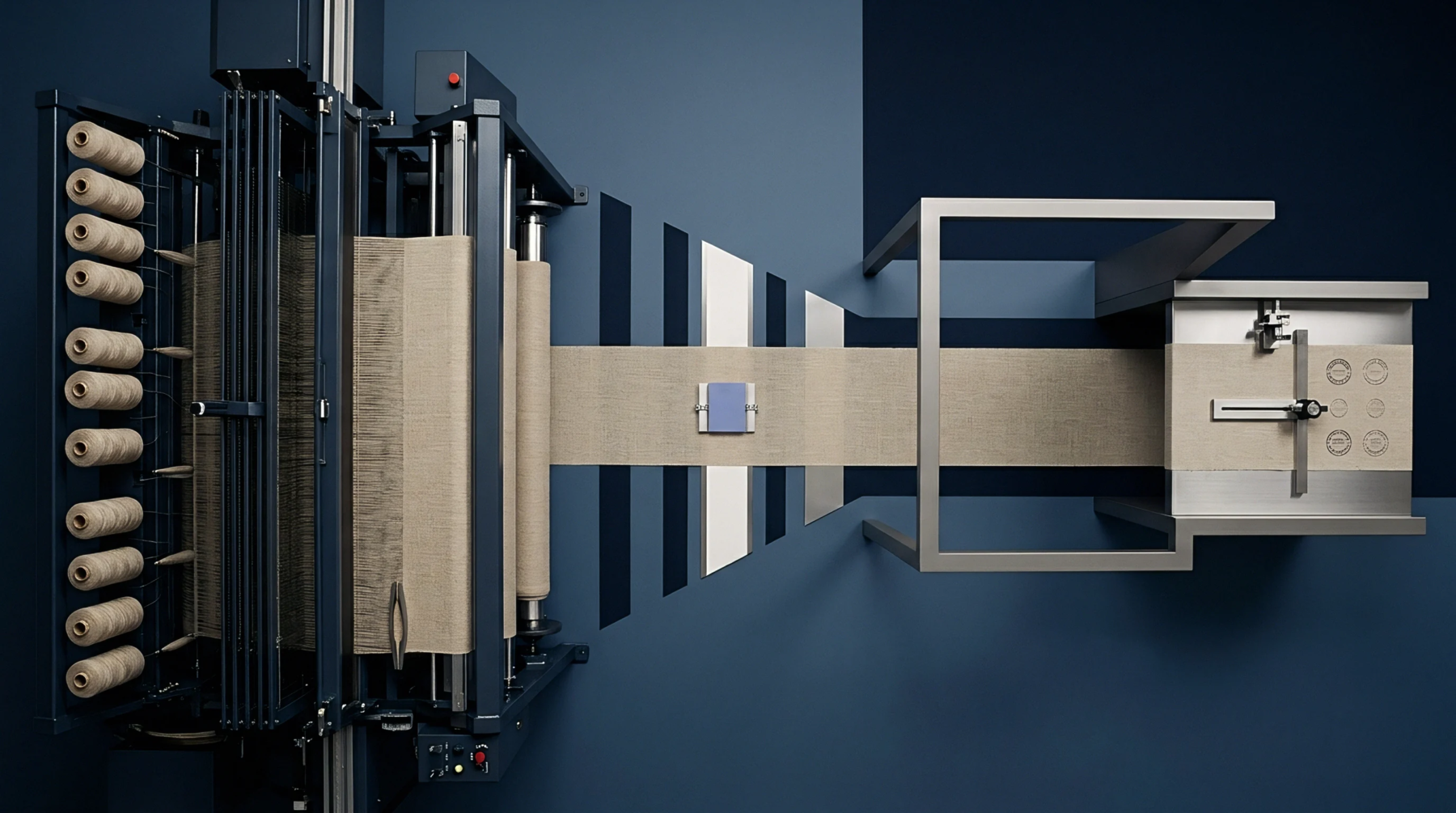
Compacting fine linen damasks demands 14-18% moisture, 135-145°C drum heat, and 2.2-3.4 kN/cm nip load to hold residual warp shrinkage under 2% without fibre damage.
Flax cell wall swelling widens microfibrillar helices and amplifies woven crimp paths, demanding planned warp take-up allowances on the loom beam.

Aqueous swelling reduces linen flexural rigidity, allowing tension-directed crimp exchange between warp and weft that dictates dimensional stability.
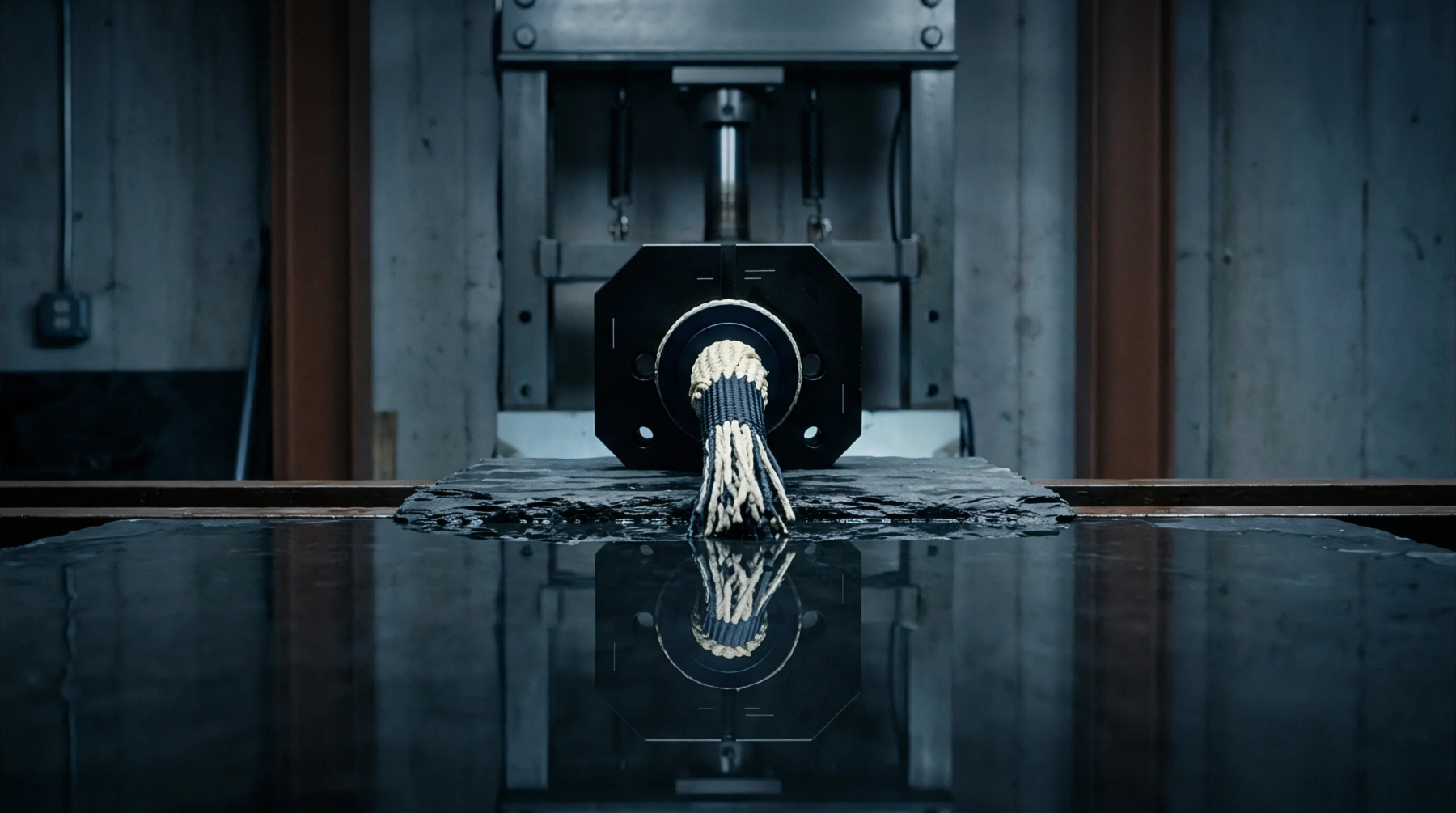
Dynamic viscoelastic friction transitions in wet bast yarns trigger severe stick-slip stops, demanding rigid moisture control to protect loom efficiency.
Expertise is a utility, not a secret. sentiention™ publishes its working knowledge as open reference: intelligence layer covering the materials it sources, the markets it enters, and the reference that serves both.