Identification of Line and Tow Flax in Ambiguous Commodity Quotes
Differentiating line from tow flax in ambiguous quotes requires verifying staple length over 500 mm, shive below 3%, and hackling yields above 50% by contract.

Differentiating line from tow flax in ambiguous quotes requires verifying staple length over 500 mm, shive below 3%, and hackling yields above 50% by contract.

Gravimetric digestion provides absolute mass baseline proof for bast defects, while optical scanning provides fast surface area sorting requiring lot calibration.

Hot water trough temperatures between 68°C and 74°C plasticize middle lamella pectins, preventing microfibril rupture and securing fine yarn counts up to Nm 80.

Mechanical scutching parameters govern flax fiber separation efficiency, yield ratios, customs origin transformation, and commercial batch verification.

Auditing scutched flax mass balances requires converting gross delivery weights into oven-dry mass adjusted to the standard twelve percent commercial regain.
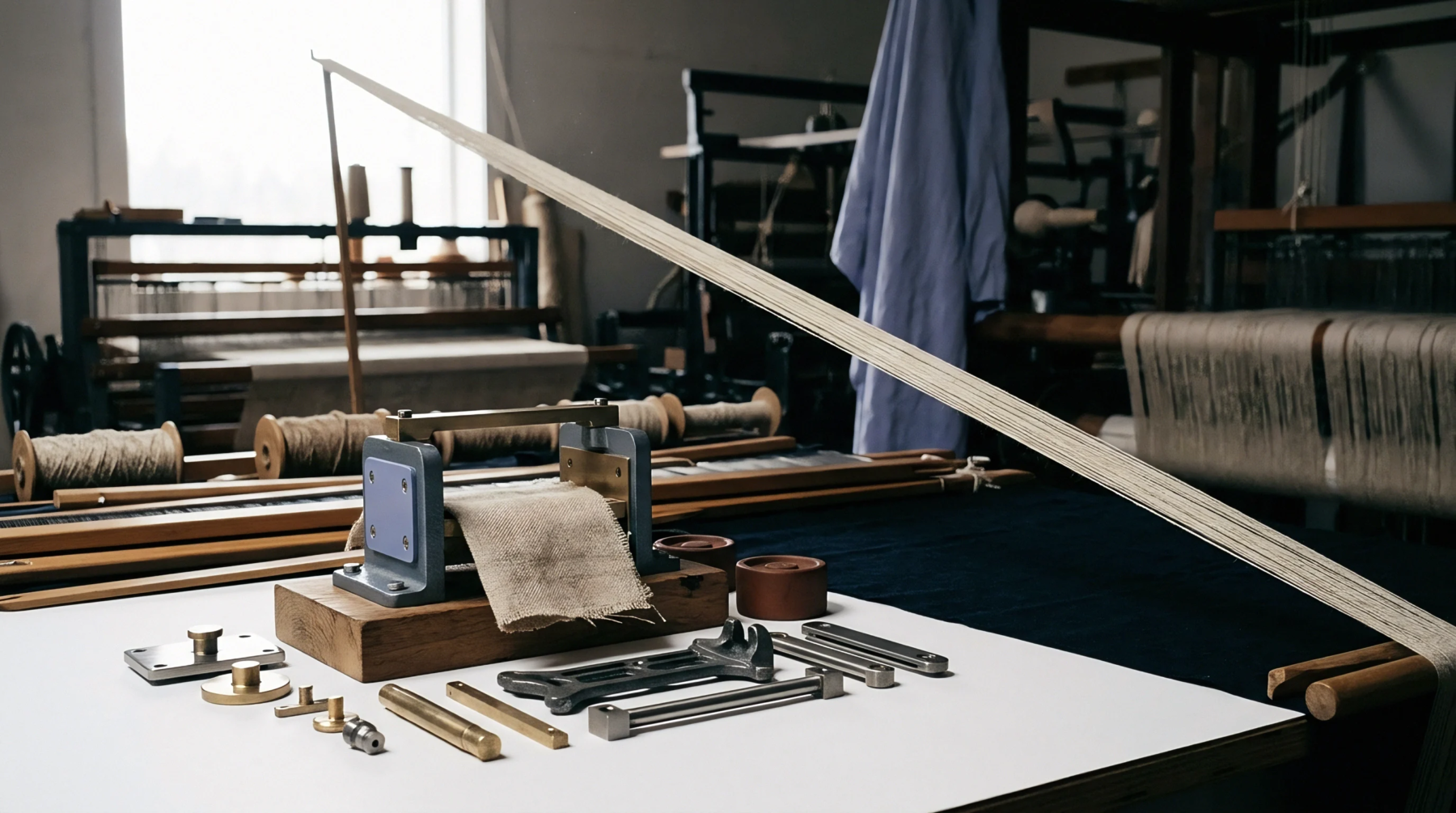
High-density flax weaving requires precise active warp tension control, asymmetric shedding, and 10 percent size add-on to prevent peak load breaks.
Optimizing temple grip and early shed timing minimizes flax yarn width contraction, securing finished width tolerances and reducing raw material cost per meter.

Standard moisture regain formulas adjust raw flax invoice mass by converting weighed tonnage into bone-dry weight plus contractual water allowances.
Calculating reed width requires multiplying target greige width by weft crimp and finish shrinkage allowances tailored to flax yarn modulus.

Real time microwave sensing and adaptive squeeze roll pressure tuning stabilize bast warp size add-on to maximize loom efficiency and cut yarn breaks.

Microscopic fiber differentiation resolves customs disputes by isolating fibrillar twist and middle lamella lignin through standardized staining and optical protocols.

Flax blend classification under Section XI Note 2 depends on commercial mass calculations after applying standard moisture regain percentages to dry fiber weight.

Classification under HS Heading 5309 requires verifying an 85% clean dry flax mass fraction after stripping non-cellulosic sizing and applying standard regain.

Cross-border linen audits require converting all gross transit weights to commercial dry mass under ISO 6741 and applying stage-specific chemical solubilization factors to prevent false yield variance flags.
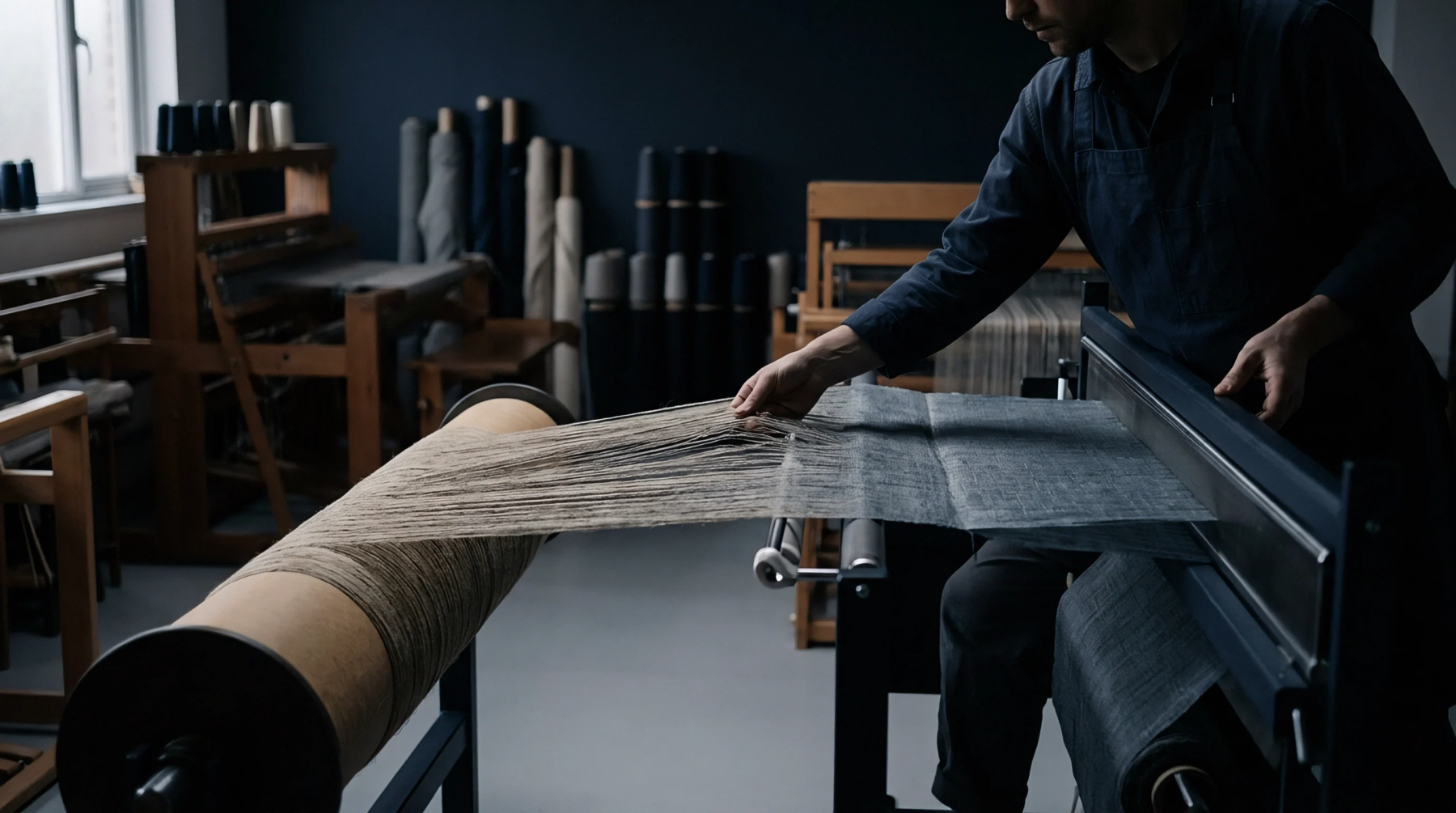
Wet spinning long line flax generates 35 to 40 percent mass yield loss from hackling shive ejection, hydrothermal pectin extraction, and ring frame waste.

Reconcile unretted flax straw weighbridge anomalies by converting gross incoming weight to a twelve percent ISO 6741 dry basis before mass balance auditing.

Cellulose microfibril angle dispersion drives transverse cell wall cleavage under pin shear, reducing dressed long line flax yield by up to 16 percentage points.

Intake moisture adjustment formulas normalize raw flax straw weights to twelve percent commercial regain to maintain mass balance integrity across scutching audits.
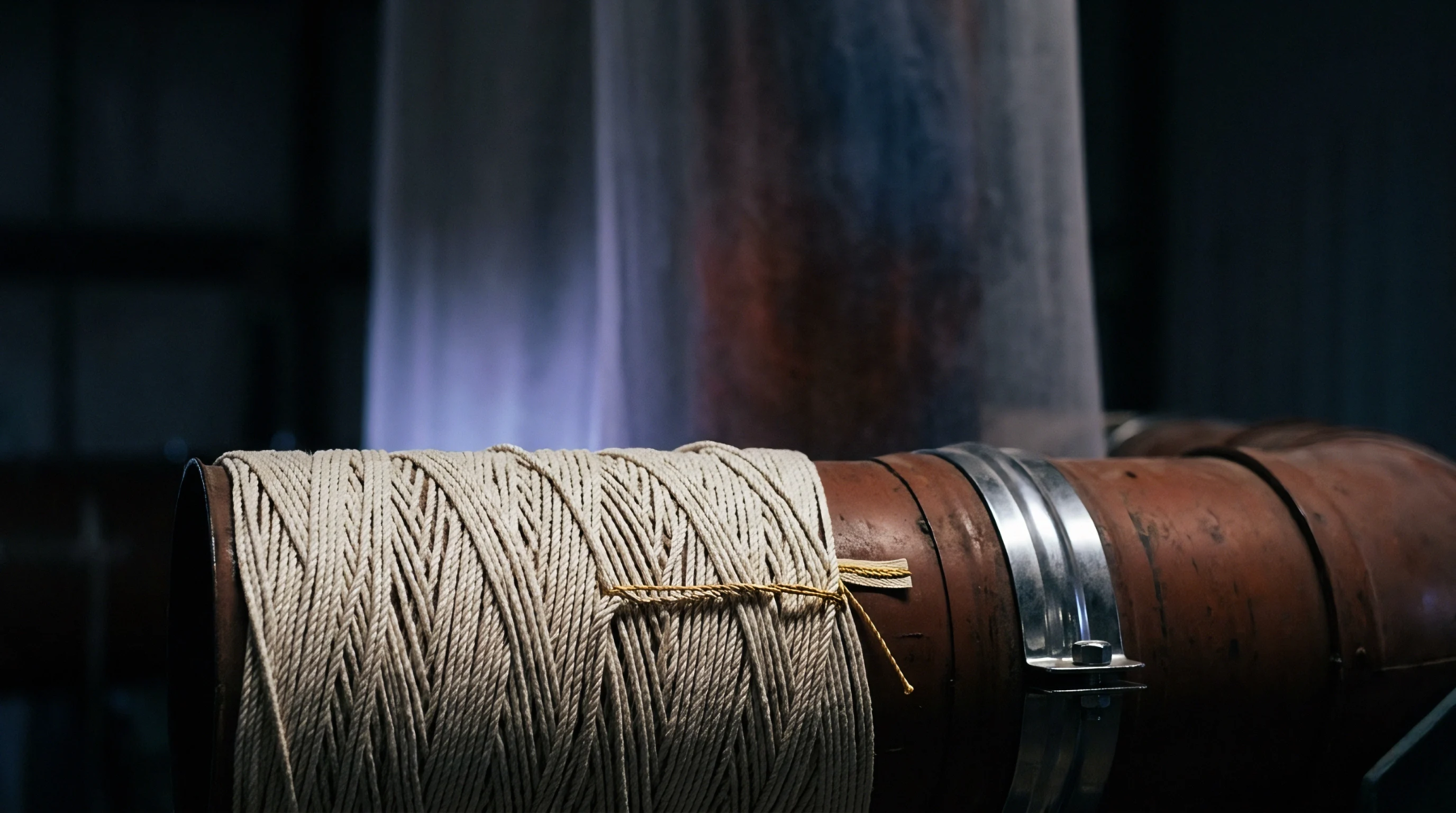
Active tension control and asymmetrical dobby dwell minimize stress spikes on low-stretch flax warps to prevent end breaks and starting marks.

Verifying dual-country greige fabric weaving claims relies on matching loom telemetry and sizing mass balance against customs entry documents.

Fine wet-spun flax yarn tenacity depends on controlled pectin softening in the trough, allowing technical bundles to divide into fine elementary cells during draft.

Substantial transformation audits in multi-country linen supply chains require linking lot-level transaction certificates from European flax fields to Asian spinning and weaving facilities to satisfy customs origin rules.

Azimuthal XRD peak deconvolution isolates microfibril angle and crystallite alignment, exposing climate-degraded bast fibers before mill processing.

Hemmed imported linen sourcing requires Chapter 63 classification, mandatory transaction certificates matching lot yields, and origin proof at weaving.

Heat and drought lower flax middle lamella pectin shear strength, reducing hackling long-line yield and dropping wet-spinning count caps from Nm 39 to Nm 26.

Adding synthetic edge finishes under Section XI Note 7 shifts tariff lines to made-up goods but fails to change non-preferential origin from base fabric weaving.

Proving substantial transformation in cross-border linen finishing requires matching chemical mill execution dockets to exact HS tariff shift rules.

Woven flax goods transition from Chapter 53 fabric to Chapter 63 made up status upon meeting edge hemming, cut-to-shape, or drawn-thread criteria under Note 7.

Physical segregation of certified Western European flax at high-speed drawframes demands dedicated creel tracks, line flushes, and mass balance audits.

Optimal fine bast yarn sizing requires balancing PVA and CMC polymers to achieve eleven percent dry add-on without causing warp brittleness.
Expertise is a utility, not a secret. sentiention™ publishes its working knowledge as open reference: intelligence layer covering the materials it sources, the markets it enters, and the reference that serves both.