Isotopic Provenance Validation Protocols for High Premium European Flax Woven Goods
Stable isotope ratio mass spectrometry validates European flax origin by measuring precipitation carbon and soil strontium signatures directly from fabric cellulose.


Soil
Western European flax cultivation occupies a narrow geographic belt along coastal France, Belgium, and the Netherlands. This maritime zone features environmental conditions that imprint stable isotope signatures into the cellulose of growing flax plants. Rainwater composition, underlying geology, atmospheric humidity, and soil fertilization together create a precise chemical baseline.
Testing these isotope ratios offers an objective way to verify geographical origin independently of shipping paperwork or trade declarations.

Coastal Precipitation and Photosynthetic Fractionation
Maritime air moving inland across Western Europe drops precipitation enriched with heavier oxygen isotopes. Coastal rainfall near the North Sea exhibits delta 18O values between minus four and minus six per mil against Vienna Standard Mean Ocean Water. Further inland across Eastern Europe or central China, Rayleigh distillation progressively strips heavy isotopes from atmospheric moisture.
Flax grown in these continental zones consequently incorporates rainwater with lighter delta 18O values, typically from minus nine to minus fourteen per mil. Hydrogen isotopes trace a parallel gradient, leaving delta 2H levels in coastal European straw markedly higher than those in fibers harvested across inland Asian belts.
Carbon isotope ratios reflect moisture stress and photosynthetic efficiency during growth. As a C3 plant, flax assimilates carbon dioxide through open stomata throughout the spring. Mild temperatures and high atmospheric humidity across Western Europe keep these stomatal pores open, reducing enzymatic discrimination against carbon-13 and yielding delta 13C values between minus twenty-six and minus twenty-eight per mil against Vienna Pee Dee Belemnite.
In drier or hotter regions, plants partially close their stomata to conserve water, restricting intracellular carbon dioxide exchange and shifting delta 13C values toward minus twenty-three per mil.
Rainfall isotope signatures shift delta 18O values in unretted flax straw by 1.8 per mil for every 100 kilometers of inland transport from the North Sea coast.

Lithological Strontium Ratios across Growing Belts
Local geology dictates the isotopic signature taken up by root systems during spring cell wall elongation. Strontium mimics calcium, entering the plant through soil water without significant metabolic fractionation. The ratio of radiogenic strontium-87 to stable strontium-86 directly reflects the age and composition of the underlying rock.
As a result, Cenozoic sedimentary soils across the Anglo-Paris Basin and Flemish coastal plains produce consistent strontium isotope ratios between 0.7088 and 0.7098.
Geologically ancient cratons yield markedly different signatures. Flax grown over Precambrian granites or metamorphic shields in Northern China exhibits elevated strontium 87 to 86 ratios exceeding 0.7150, whereas volcanic soils in East Africa drop below 0.7050. Nitrogen isotope ratios (delta 15N) introduce another dimension, varying with synthetic fertilizer application versus organic crop rotations.
Combining carbon, hydrogen, oxygen, nitrogen, and strontium ratios generates a multi-element profile specific to Western European harvest belts.
Whether regional shift patterns in rainwater oxygen isotopes remain stable as European summer rainfall volumes fluctuate under long-term climatic drift remains unmeasured across primary growing zones.


Assay
Measuring stable isotope ratios accurately requires isolating pure flax cellulose from other plant constituents. Raw fiber contains lignin, hemicellulose, pectins, surface waxes, and absorbed moisture, each carrying its own isotopic baseline. Testing uncleaned straw or grey yarn generates skewed figures that distort spatial discrimination models.
Standardized preparation protocols strip away these non-cellulosic components to isolate pure alpha-cellulose prior to mass spectrometry.
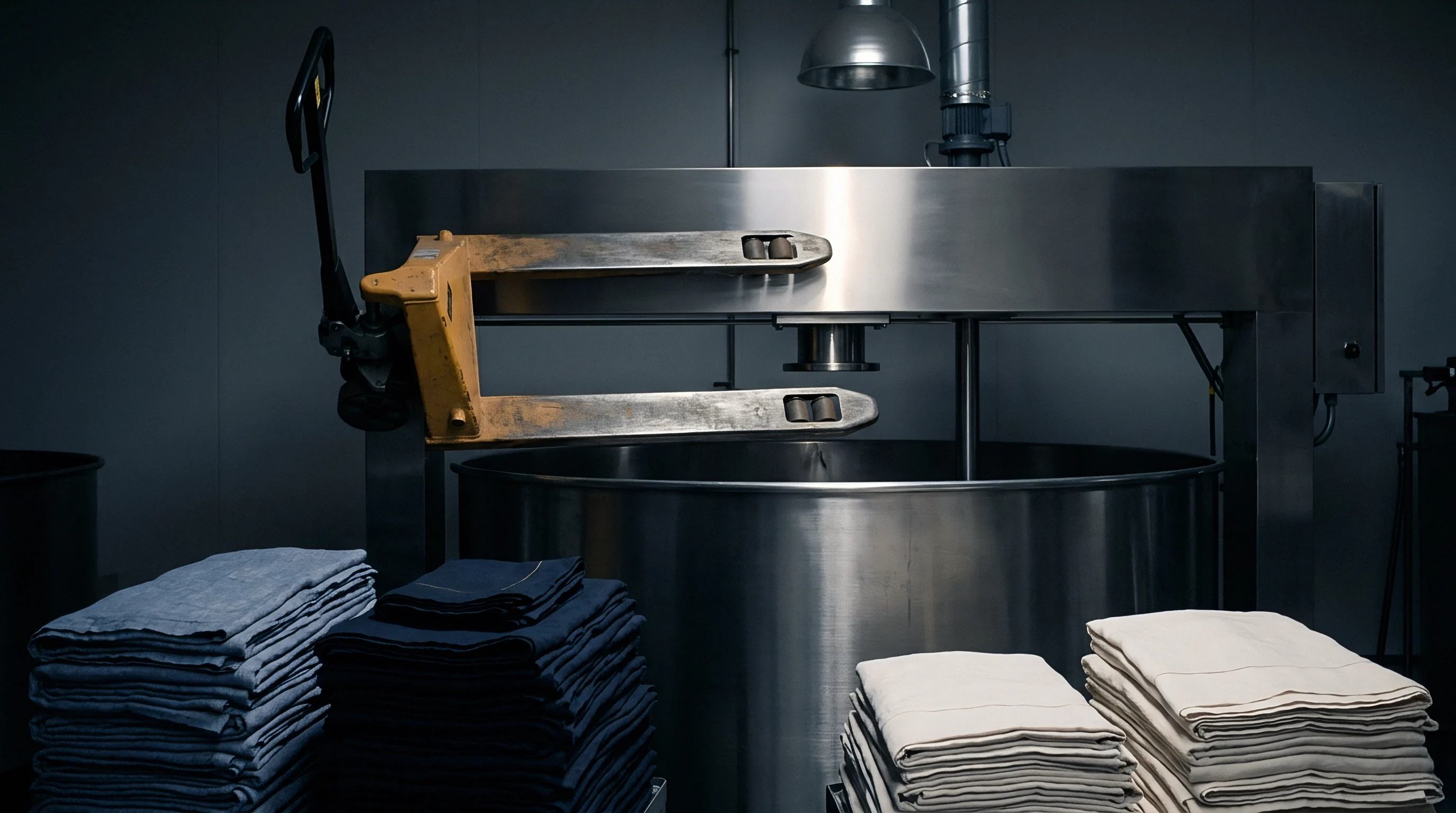
Cellulose Extraction and Non Exchangeable Hydrogen Control
Raw fiber samples undergo sequential Soxhlet extraction using toluene and ethanol to remove lipophilic waxes. Alkaline digestion in sodium hydroxide dissolves pectins and hemicellulose, followed by acidified sodium chlorite treatment to oxidize residual lignin. The resulting cellulose isolate is rinsed thoroughly with deionized water and dried under vacuum.
Because hydroxyl hydrogen atoms in cellulose exchange readily with atmospheric moisture, determining true hydrogen isotope ratios requires controlling these exchangeable sites. Samples undergo dual-water vapor equilibration, where two identical cellulose aliquots are held at fifty degrees Celsius in separate chambers containing water vapor of known, contrasting hydrogen compositions. Mass spectrometry measures total hydrogen ratios for both aliquots, allowing mathematical separation of exchangeable hydroxyl hydrogen from carbon-bound hydrogen.
Only the non-exchangeable delta 2H values reflect original growing conditions.
- Rinsing raw flax samples in a 2:1 toluene and ethanol mixture for six hours removes epicuticular waxes and residual plant lipids.
- Boiling the washed fiber in a sodium chlorite and acetic acid solution for two hours eliminates lignin residues while preserving structural cellulose.
- Treating the isolated cellulose with ten percent sodium hydroxide extracts hemicellulose fractions before triple rinsing with deionized water.
- Equilibrating dried cellulose powder in dual water vapor chambers of known isotopic composition controls hydrogen exchange on hydroxyl sites.
- Converting five hundred micrograms of dried cellulose powder at fourteen hundred degrees Celsius produces carbon monoxide and hydrogen gas for analysis.

Mass Spectrometry Calibration and Reference Standards
Isotope ratio instruments measure sample abundance relative to international standard reference materials. Thermal conversion elemental analysis continuous flow isotope ratio mass spectrometry (TC/EA-CF-IRMS) determines hydrogen and oxygen ratios simultaneously. Cellulose samples undergo pyrolysis over glassy carbon at fourteen hundred degrees Celsius within a helium carrier stream, converting organic oxygen to carbon monoxide and organic hydrogen to molecular hydrogen gas.
A gas chromatography column separates the two gases before they enter the mass spectrometer ionization chamber.
Carbon and nitrogen isotope ratios are measured via elemental analysis continuous flow isotope ratio mass spectrometry (EA-IRMS) through quantitative combustion at one thousand degrees Celsius in an oxygen-enriched environment. Determining strontium ratios requires total acid digestion using concentrated nitric and hydrofluoric acids inside Teflon microwave vessels. The digested solutions pass through strontium-specific ion-exchange resins to isolate clean fractions, after which thermal ionization mass spectrometry (TIMS) or multi-collector inductively coupled plasma mass spectrometry (MC-ICP-MS) measures strontium 87 to 86 ratios with precision beyond five decimal places.
| Origin Belt | delta 18O (per mil) | delta 2H non-ex (per mil) | delta 13C (per mil) | 87Sr / 86Sr Ratio |
|---|---|---|---|---|
| Western Europe (France/Belgium/Netherlands) | +27.5 to +31.5 | -45.0 to -62.0 | -27.8 to -26.2 | 0.7088 to 0.7098 |
| Heilongjiang Belt (Northern China) | +18.2 to +23.5 | -85.0 to -110.0 | -25.5 to -23.8 | 0.7145 to 0.7182 |
| Nile Delta Belt (Egypt) | +33.0 to +37.5 | -15.0 to -35.0 | -24.2 to -22.5 | 0.7072 to 0.7081 |
| Baltic Belt (Lithuania/Latvia) | +23.0 to +26.5 | -68.0 to -82.0 | -28.2 to -26.8 | 0.7112 to 0.7135 |
| Values reflect isolated pure alpha-cellulose measurements calibrated against IAEA reference standards. | ||||
Insufficient drying times during cellulose preparation lead to unstable hydrogen isotope readings as the material absorbs ambient humidity.

Baseline
Geospatial reference maps connect measured isotopic data to specific agricultural regions. Without verified geographical baselines, isolated laboratory readings offer limited commercial value. Building a reliable reference framework requires systematic sampling across flax-growing regions over multiple harvest years, collecting authentic straw directly from scutching mills in Normandy, Picardy, Flanders, and Zeeland.
Mapping these data points generates calibrated regional reference grids known as isoscapes.

Isoscape Interpolation and Multi Element Spatial Models
Kriging algorithms map isotopic values across continuous geographic surfaces by integrating meteorological data with physical harvest samples. These spatial interpolation models incorporate elevation, distance from the coast, mean annual precipitation, and surface water isotope trends. Multi-element models then layer oxygen, hydrogen, carbon, and strontium data into unified multi-dimensional probability density functions.
Evaluating an unknown linen sample involves calculating its multivariate statistical distance against regional isoscapes. Quadratic discriminant analysis (QDA) and Bayesian spatial assignment algorithms determine the probability that a sample originated within a declared zone. High confidence relies on multi-element consistency; for instance, a sample matching European carbon values but carrying Chinese strontium ratios results in immediate classification failure.

Inter Annual Climate Variance and Reference Set Drift
Summer temperature spikes and uneven precipitation during retting alter how carbon and oxygen isotopes incorporate into stem tissue. A drought in Western Europe increases evapotranspiration, elevating cellulose delta 18O values by up to 2.5 per mil compared to wet growth seasons. Reference databases must therefore capture inter-annual climate variations across a rolling five-year window to prevent false origin rejections during unusual weather years.
Comparing fabric test results against static, single-year baselines introduces analytical error. Quality control systems mitigate this by maintaining continuous sampling programs across certified European scutching lots during every autumn harvest. Updating reference databases annually ensures assignment algorithms evaluate commercial yarn and fabric against weather-adjusted regional parameters.

Are Multi Element Isotopic Signatures Required for European Flax Verification?
Single-isotope analysis yields overlapping delta 13C ranges between Western European stems and high-altitude Chinese harvests. Relying solely on carbon or oxygen creates statistical uncertainty that weakens commercial origin claims in legal disputes. In contrast, combining delta 18O, non-exchangeable delta 2H, delta 13C, and radiogenic strontium (87Sr/86Sr) forms distinct, non-overlapping multivariate clusters.
Strontium serves as an immutable anchor because underlying rock formations remain unaffected by weather fluctuations.
A provenance warranty citing ISO 17025 accredited isotope testing renders the seller liable for full lot re-testing costs whenever delta 18O values deviate beyond two standard deviations from the regional harvest baseline.
Isotopic deviations are often attributed to unrecorded microclimate variation in individual farming districts rather than fiber origin substitution.


Blend
Mixing fibers from different geographic origins produces composite isotope values proportional to the mass fraction of each component. Spun linen yarns frequently combine fiber lots during hackling or carding. Substitution risks arise when lower-cost non-European flax is introduced into premium Western European combed sliver prior to drafting.
Bulk mass spectrometry measures the weighted average isotope signature of the composite sample, which can conceal minor physical additions unless testing accounts for linear mixing dynamics.
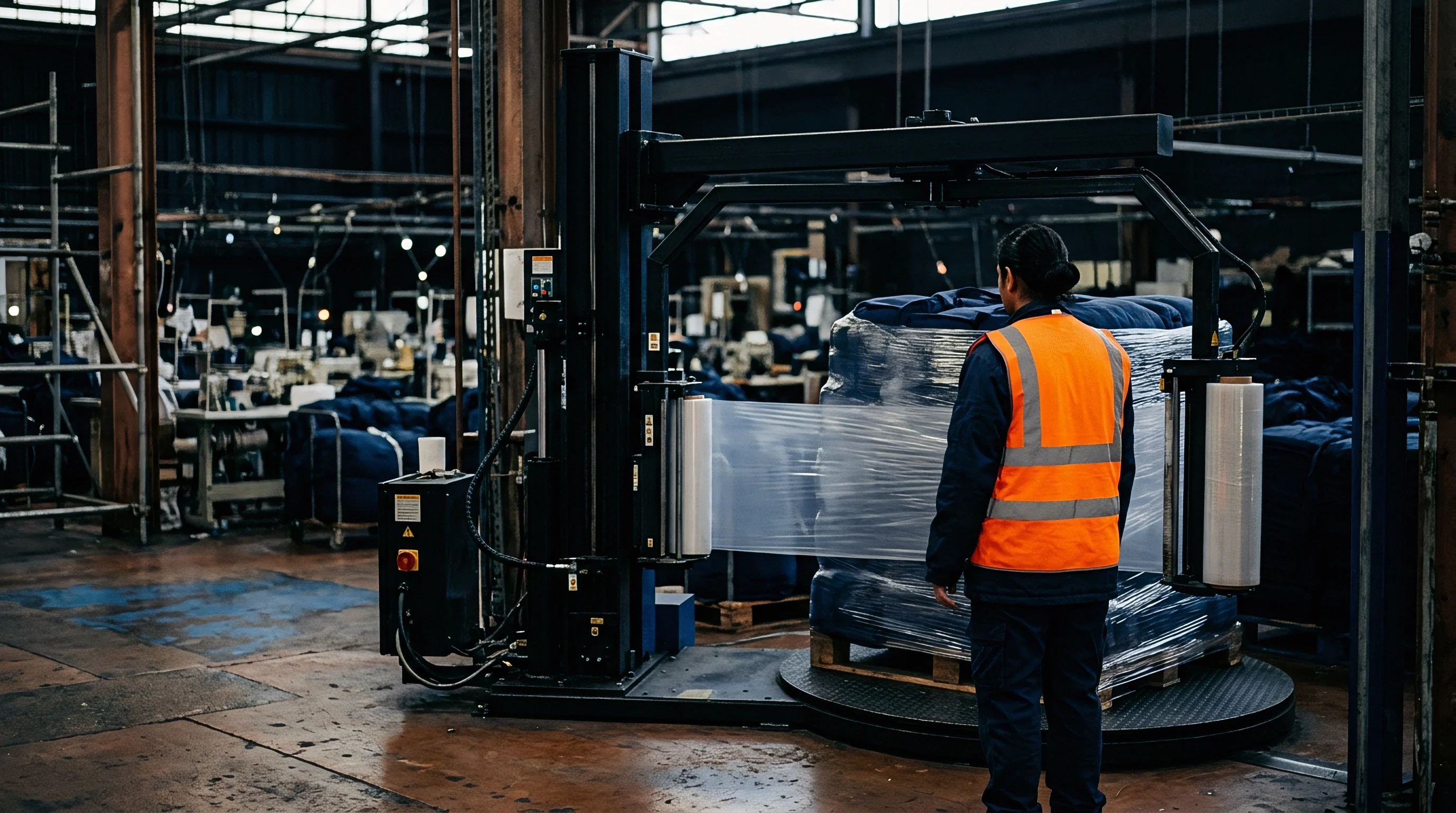
Linear Mixing Equations and Detection Thresholds
Determining component proportions in spun yarns relies on end-member isotope signatures. Linear mass balance equations model composite values based on mass fractions:
delta_composite = (fraction_A delta_A) + (fraction_B delta_B)
Here, fraction_A and fraction_B represent the mass fractions of European and non-European fibers, while delta_A and delta_B represent their respective isotopic baselines. Detecting unauthorized fiber additions depends directly on the isotopic distance between origin baselines and instrument precision limits.
Strontium ratios provide fine detection thresholds because of the stark signature differences between Western European sedimentary basins and ancient Asian cratonic soils. Blending fifteen percent Chinese flax straw into an eighty-five percent Western European combed sliver lot shifts the composite 87Sr/86Sr ratio from 0.7092 to 0.7103 ~ a shift exceeding five standard deviations of analytical uncertainty and triggering clear sample rejection.
| Admixture Level (Non-European) | Composite delta 18O (per mil) | Composite 87Sr / 86Sr | Shift From Baseline | Detection Status |
|---|---|---|---|---|
| 0% (Pure European Baseline) | +29.20 | 0.70920 | 0.00 | Verified European |
| 5% Addition (Heilongjiang) | +28.65 | 0.70955 | +0.00035 | Indeterminate Zone |
| 10% Addition (Heilongjiang) | +28.10 | 0.70990 | +0.00070 | Analytical Deviation Confirmed |
| 20% Addition (Heilongjiang) | +27.00 | 0.71060 | +0.00140 | Definitive Origin Non-Compliance |
| 30% Addition (Heilongjiang) | +25.90 | 0.71130 | +0.00210 | Definitive Origin Non-Compliance |

Audit Trail Reconciliation from Scutcher to Loom
Documentary tracking through processing stages connects field lot numbers to yarn spinning batches and woven rolls. Scutching operations generate physical delivery receipts that match declared acreage, while combing facilities record sliver mass balance calculations to confirm that outgoing tonnage aligns with incoming scutched fiber weight minus comb waste.
Chain-of-custody tracking can falter when processing steps cross international borders. European flax fiber shipped to offshore mills for spinning and weaving requires transaction certificates for every transit stage. Mass spectrometry testing verifies physical fiber characteristics against accompanying documentation, identifying undocumented substitutions at import points.
Bulk isotope mass spectrometry fails to detect non-European fibre additions below ten percent when soil strontium ratios match between origin regions.
- Unmatched weighbridge receipts create gaps where raw straw tonnage enters the scutching mill without batch registration.
- Spinning lot aggregation combines multiple grower deliveries into unified sliver runs without maintaining farm level identity.
- Greige cloth batching reassigns roll tags in the finishing house without linking grey fabric numbers to yarn spinning certificates.
- Inconsistent waste records mask the introduction of cheaper imported yarn by inflating reported combed sliver losses.
Accepting unverified yarn lots exposes weavers to commercial rejections if destination customs authorities test imported fabric shipments.

Settlement
Contractual agreements for premium linen goods establish formal protocols covering origin qualification, testing fees, and legal liability. European origin claims allow spinners and weavers to command price premiums between twenty and thirty-five percent over standard global market rates. Sourcing unverified fiber exposes brands to regulatory fines, customs delays, and reputational damage, leading sourcing managers to embed analytical testing specifications directly into commercial supply contracts.
Verification Surcharges and Analytical Cost Metrics
Integrating isotope mass spectrometry into quality control adds direct testing expenses and administrative overhead to landed fabric prices. A complete multi-element isotope profile (delta 18O, delta 2H, delta 13C, delta 15N, 87Sr/86Sr) costs between eight hundred and fourteen hundred Euros per batch sample at an accredited ISO 17025 laboratory.
Spreading analytical testing costs across large order volumes minimizes per-meter verification surcharges. A ten-thousand-meter order of loom-state linen fabric absorbs testing expenses at an added cost of roughly twelve European cents per linear meter. By contrast, a small batch of five hundred meters absorbs a surcharge exceeding two Euros per linear meter, requiring selective sampling strategies to preserve margin.
| Fabric Volume (Meters) | Testing Frequency | Analytical Expense (EUR) | Audit Fee (EUR) | Verification Cost Per Meter |
|---|---|---|---|---|
| 1,000 | 1 Composite Sample | EUR 1,200 | EUR 500 | EUR 1.70 / m |
| 5,000 | 2 Composite Samples | EUR 2,400 | EUR 750 | EUR 0.63 / m |
| 10,000 | 3 Composite Samples | EUR 3,600 | EUR 1,000 | EUR 0.46 / m |
| 25,000 | 5 Composite Samples | EUR 6,000 | EUR 1,500 | EUR 0.30 / m |

Customs Origin Verification and Contractual Indemnities
Customs authorities evaluate origin declarations under national trade compliance rules. Non-preferential rules determine tariff application, anti-dumping duties, and quantitative import quotas. Importing non-European flax mislabeled as European origin violates customs laws, exposing shipments to seizure and administrative penalties reaching up to three times the domestic value of the goods.
Purchasing contracts routinely incorporate formal indemnity clauses to protect buyers against fraudulent origin declarations. Purchase agreements mandate that suppliers submit accredited ISO 17025 isotope test certificates before payment release.
Customs authorities inspect isotopic test reports as non-preferential origin documentation during post-clearance audits of high-density linen fabrics.
- Defined testing frequencies specify the exact number of laboratory samples drawn per spinning lot or woven fabric batch.
- Explicit baseline thresholds declare the precise delta ranges and standard deviations accepted for Western European fiber qualification.
- ISO 17025 accredited laboratory designation names the qualified analytical facility authorized to perform mass spectrometry testing.
- Dispute allocation terms assign complete re-testing and shipping costs to the supplier upon analytical confirmation of misdeclaration.
Incorporating standard non-preferential origin warranty clause 14B into loom-state purchase agreements shifts ultimate customs liability to the seller upon documented isotopic failure.