Standard Sizing Parameters for Ultrafine Wet Spun Linen Warps
Ultrafine wet spun linen warps demand low-viscosity modified starches with acrylic binders at eight to ten percent size add-on and strict tension limits below one percent.
Bath
Liquor Chemistry for High Count Flax
Running high-count flax warps between Nm 50 and Nm 100 presents extreme flexural rigidity with very little structural elongation. Standard unmodified starches leave a rigid surface crust that flakes off under high-speed rapier shedding. Sizing formulations for ultrafine wet-spun flax instead combine low-viscosity carboxymethylated potato starch with fully hydrolyzed polyvinyl alcohol.
Carboxymethylation lowers the starch gelatinization temperature and prevents retrogradation inside the liquor trough, while polyvinyl alcohol provides high tensile film strength and flexible adhesion to high-purity bast fibers.
Adding synthetic acrylic binders at fifteen to twenty-five percent of total dry solids improves film elasticity. Because flax fibers lack cotton’s intercellular flexibility, the size film needs to yield under transient tension spikes without fracturing. Softening agents ~ typically hydrogenated tallow or ethoxylated fatty acid derivatives ~ lower the coefficient of friction on the dried thread, with tallow additions helping reduce overall yarn stiffness.
High yarn density on the creel demands lower sizing liquor viscosity to prevent neighboring warp ends from bonding together.
Rheology and Solids Target Selection
Maintaining a controlled concentration of eight to twelve percent dry matter ensures uniform film thickness across the full beam width. The sizing liquor is held at eighty-five degrees, as viscosity drops rapidly above ninety. Keeping viscosity between twenty-five and thirty-five milliPascal-seconds on a Brookfield viscometer at operating temperature prevents the liquor from soaking too deeply into the yarn core or building up excessively on the surface.
If liquor penetration exceeds thirty percent of the yarn’s cross-sectional area, the thread stiffens enough to cause brittle fractures during shedding. Target surface coverage sits at eighty to ninety percent of protruding ultimate fibers, securing loose surface hairiness without stiffening the yarn interior. Taking refractometer readings every thirty minutes keeps concentration consistent across multi-thousand-metre slashing runs.
| Yarn Count (Nm) | Modified Starch (%) | PVA Binder (%) | Acrylic Co-Binder (%) | Fatty Softener (%) | Solids Content (%) | Target Viscosity (mPa.s) |
|---|---|---|---|---|---|---|
| Nm 50 / NeL 80 | 60 | 25 | 10 | 5 | 11.5 | 35 |
| Nm 70 / NeL 112 | 50 | 30 | 15 | 5 | 10.0 | 30 |
| Nm 90 / NeL 144 | 45 | 35 | 15 | 5 | 9.0 | 26 |
| Nm 110 / NeL 176 | 40 | 40 | 16 | 4 | 8.0 | 22 |
Adding softeners beyond target ratios over-softens the film, causing sizing compound to rub off onto loom guides.

Slashing

Mechanical Settings on the Sizing Line
Passing thousands of fine bast threads through aqueous size requires precise mechanical balance across the slasher frame. Dual immersion rollers submerge the warp sheet into the liquor trough for thorough wetting prior to the squeeze nip. Synthetic rubber squeeze rollers rated at sixty-five Shore A deliver uniform pressure across the working width to regulate film thickness, while pneumatic nip pressure kept between fifteen and twenty-two kiloNewtons removes excess liquor for a target wet pick-up of seventy to eighty percent based on dry yarn mass.
Cold liquor leads to uneven film pickup, while excessive squeeze pressure forces size deep into the core. Holding trough temperature within a two-degree window avoids the viscosity fluctuations that skew pick-up values. Variable speed drives synchronize creel unwinding with squeeze roll rotation, keeping the threads aligned across the roller face.
- Fill the size trough with pre-heated liquor at eighty-five degrees Celsius and verify concentration using a calibrated hand refractometer.
- Thread the warp sheet from the creel through expander combs, ensuring end density per centimetre matches reed layout.
- Adjust pneumatic pressure on primary and secondary squeeze rolls to twenty kiloNewtons.
- Set slasher line speed to thirty metres per minute while monitoring wet pickup meters.
- Calibrate dry zone tension zones to maintain total warp stretch below zero point six percent.
Thermal Profiles and Tension Constraints
Drying cylinders arranged in temperature-controlled zones remove moisture without thermally shocking the starch film. The first zone runs at seventy-five degrees to prevent size from migrating to the outer yarn perimeter. Subsequent cylinders ramp up to one hundred and ten degrees to finish evaporating water before the yarn hits final cooling drums at sixty degrees.
Final moisture content in the dried warp sheet should land between seven point five and eight point five percent regain.
Warps dried below six percent moisture regain exhibit brittle fiber rupture during leasing when creel speed exceeds thirty metres per minute.
Because flax yarns lack natural elongation, strict draft limits are necessary to prevent irreversible fiber slip. Stretch control is the single most critical mechanical setting on the machine: total warp stretch exceeding zero point seven percent micro-fractures the pectin matrix binding the technical flax fibers. Digital load cells govern linear speed differentials between the wet nip roll and the headstock delivery roll, keeping total yarn tension under two hundred grams per warp end.
| Parameter | Nm 50 Warp | Nm 80 Warp | Nm 110 Warp | Tolerance Limit |
|---|---|---|---|---|
| Line Speed (m/min) | 40 | 32 | 24 | ± 2.0 |
| Squeeze Pressure (kN) | 22 | 18 | 15 | ± 1.0 |
| Maximum Stretch (%) | 0.70 | 0.55 | 0.40 | + 0.10 / – 0.00 |
| Moisture Regain (%) | 8.0 | 8.0 | 8.5 | ± 0.5 |
| Size Add-On (%) | 10.5 | 9.0 | 8.0 | ± 0.8 |
Improper moisture retention leaves the yarn severely brittle, causing immediate warp snaps on loom start and destroying shed efficiency.

Split

Lease Rod Mechanics and Film Fracture
Staggered chrome bars force adjacent threads apart, cleaving the continuous size bridges formed in the drying chamber. Fine ultimate fiber tips projecting from the wet-spun flax core interlock during sizing, creating adhesion bridges between neighboring warp ends. Splitting these at the lease rods subjects individual threads to combined shear and bending forces.
Arranging hard chrome-plated lease rods in a multi-tier profile reduces the entry angle of the warp sheet, softening peak tension spikes during separation.
Excess tension easily snaps dry bast fibers, while static built up during separation attracts airborne lint that causes secondary entanglements. Ionizing air bars placed directly ahead of the bust bar neutralize this charge. Separation force across the dry band scales non-linearly once size add-on goes above twelve percent.

Hairiness Suppression and Surface Smoothness
Protruding fiber ends along the yarn core tangle when adjacent ends cross in the shed. Effective size formulations coat these hairs and glue them flat against the main yarn axis, capping loose ends. Surface hairiness evaluations measure the index before and after slashing; a properly sized Nm 80 wet spun yarn drops from a hairiness index of six point eight down to below two point two.
- Lease Rod Pitch Radius setting controls the contact arc of individual warp sheets, keeping angular displacement below fifteen degrees to prevent shearing stress on newly dried binder film.
- Static Charge Dissipation Bar Placement situated five centimetres before the primary splitting zone prevents electrostatic attraction between adjacent ultrafine flax ends.
- Zone Temperature Differential Limits maintained within ten degrees between the final drying cylinder and the bust bar stop thermal shock micro-cracking of PVA polymer chains.
- Moisture Content At Bust Bar verified at eight percent prevents brittle fiber snapping during high-speed thread separation.
Grey cloth rejection under ASTM D5430 occurs when film flaking creates more than four yarn slubs per hundred square metres.
High break rates during dry separation often stem from inherent fiber length variations rather than excessive binder concentration.

Weave
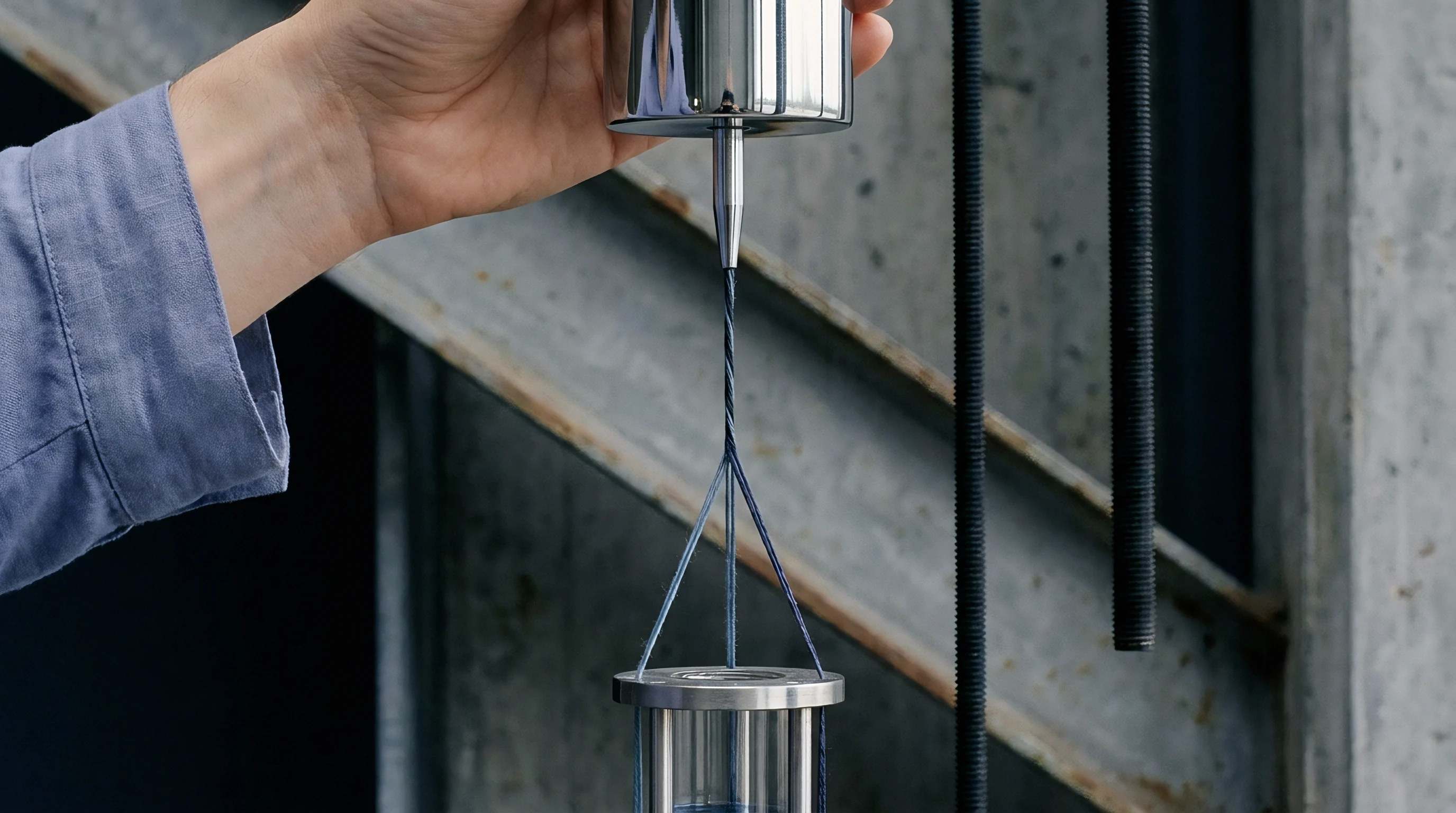
Why Do Fine Linen Warps Suffer High Breakage Rates?
Because flax fibers have virtually zero elastic recovery, sudden tension spikes directly exceed ultimate tensile strength. Unsized wet spun flax exhibits a breaking elongation of only one point8 to two point two percent. Sizing boosts tensile strength by twenty to thirty percent while slightly trimming raw elongation.
Friction from drop wires, heddle eyes, and reed dents quickly strips poorly adhered size, allowing loose ultimate fibers to migrate into adjacent warp ends and form fuzzy ball-up defects.
- Ball Up Defect Formation occurs when abraded surface fibers bundle together behind the drop wires, blocking shed opening and forcing neighboring ends into the path of the rapier head.
- Reed Marks From Heavy Sizing Film generate permanent structural lines in greige cloth when excessive size buildup on reed dents alters warp end spacing.
- Sticking Ends At Drop Wire Droppers cause continuous false loom stops when incomplete sizing film separation prevents free vertical movement of metallic drop wires.
- Shed Clear Distortion Under High Tension pulls ultrafine bast fibers past their yield point, permanently weakening the thread structure before weft insertion.
Shed Openings and Drop Wire Mechanics
Loom backrest settings dictate warp sheet geometry during harness movement, where asymmetric shed openings equalize tension peaks between top and bottom shed lines. Setting shed opening height to twenty millimetres minimizes linear thread displacement during frame travel, while light drop wires weighing zero point seven grams prevent excessive static depression on fragile Nm 90 and Nm 110 warps.
Reed selection calls for polished oval-wire dents with smooth clearance spaces, and reed density calculations must account for a three to four percent width contraction from reed width to off-loom greige width. For air-jet shedding systems, a smooth film surface is essential to keep airflow uniform across the main nozzle channel.
Loom Efficiency Worked Cost Calculation
Evaluating loom-shed output requires balancing sizing chemical consumption against machine downtime. The worked calculation below illustrates sizing material expenditure and shed productivity for a typical commercial production run of fine linen greige cloth.
Consider a production batch of 1,000 metres of plain weave linen fabric at 180 cm finished width using Nm 80 wet spun flax warp and weft. With sett established at 26 ends per centimetre and 24 picks per centimetre, total warp count equals 4,680 ends across a 188 cm reed width. Unsized yarn mass per metre of warp calculates to 58.5 grams.
A 9.0 percent size add-on adds 5.265 grams per metre, yielding a total sized warp mass of 63.765 grams per metre.
The sizing blend costs 1.45 EUR per kilogram of dry chemical (modified starch, PVA, and acrylic co-binder). Preparing 1,000 metres of warp consumes 52.65 kg of dry chemical, amounting to 76.34 EUR per beam. At a slashing speed of 30 metres per minute, processing takes 0.55 hours of slasher time including creel loading and beam doffing.
At 85.00 EUR per slasher hour, this adds 46.75 EUR in labor and energy.
The weaving shed operates rapier looms at 420 picks per minute. At 24 picks per centimetre (2,400 picks per metre), 1,000 metres takes 2,400,000 picks. At 100 percent efficiency, baseline weaving time is 5,714 minutes (95.23 hours).
Optimized sizing parameters keep warp end breaks below 1.2 stops per 100,000 picks, bringing practical loom efficiency to 86 percent and pushing actual weaving time to 110.73 loom hours. At a standard loom-hour rate of 14.50 EUR, weaving costs 1,605.58 EUR. A total sizing investment of 123.09 EUR (chemicals plus slashing time) enables this higher efficiency run, bringing total greige manufacturing cost to 1.728 EUR per linear metre before yarn cost.
Flax fibers lack natural crimp, transferring all shed tension directly to yarn joints.
Contractually specifying a maximum of two warp stops per hundred thousand picks shifts financial responsibility for breakage losses from the weaver to the sizing mill.

Testing

Laboratory Measurement of Size Add On
Desizing yarn samples through standardized solvent extraction reveals the precise weight percentage of dry chemical binder. The procedure uses ISO 7211-3 methods to isolate non-cellulosic material from the flax core: sized warp swatches are weighed, dried to constant mass at one hundred and five degrees, and treated with alpha-amylase enzymes to digest starch components. Hot water rinses then remove soluble PVA and synthetic polymers before final drying and re-weighing.
Near-infrared spectroscopy offers a fast, non-destructive way to estimate add-on directly on active slashing lines. While size film penetration depth is frequently cited at fifteen to twenty-five percent of yarn diameter, verifying this without cross-sectional electron microscopy is difficult. Buyers typically rely on warp abrasion testing per ASTM D3885 rather than penetration estimates, combined with single-end tensile testing on an Instron tester per ISO 2062 to verify strength gain and reduced elongation.
Desizing Efficiency and Wet Processing Impact
Enzymatic degradation breaks down modified starch films completely without damaging underlying cellulose fibers. Incomplete binder removal during greige desizing leaves resist spots that cause defects in subsequent bleaching and dyeing, while synthetic acrylic components require alkaline scours at ninety degrees with chelating agents to dissolve fully.
Wastewater biological oxygen demand depends heavily on binder selection: pure starch formulations increase organic loading in effluent, whereas PVA systems allow chemical recovery through ultrafiltration membranes. Finally, greige inspection under ASTM D4157 evaluates surface stability before committing full lots to commercial dyeing.
| Test Method | Property Measured | Acceptable Standard Range | Failure Impact |
|---|---|---|---|
| ISO 7211-3 | Size Add-On Mass Ratio | 8.0% – 10.0% dry weight | Excessive shedding or poor abrasion resistance |
| ISO 2062 | Single End Tensile Strength Gain | + 20% to + 35% vs raw yarn | High warp break rates during shedding |
| ASTM D3885 | Warp Abrasion Cycle Resistance | > 450 double rubs to rupture | Fibrillation and ball-up defect formation |
| ISO 10306 | Residual Size Content Post-Desize | < 0.3% total fabric mass | Unlevel dyeing, streakiness, blotches |
| Methodology Note: All physical testing conditioned at 20°C ± 2°C and 65% ± 4% relative humidity for 24 hours per ISO 139. | |||
Whether ultra-low viscosity synthetic binders can fully replace natural starches without compromising downstream enzymatic desizing remains an open question across European finishing mills.