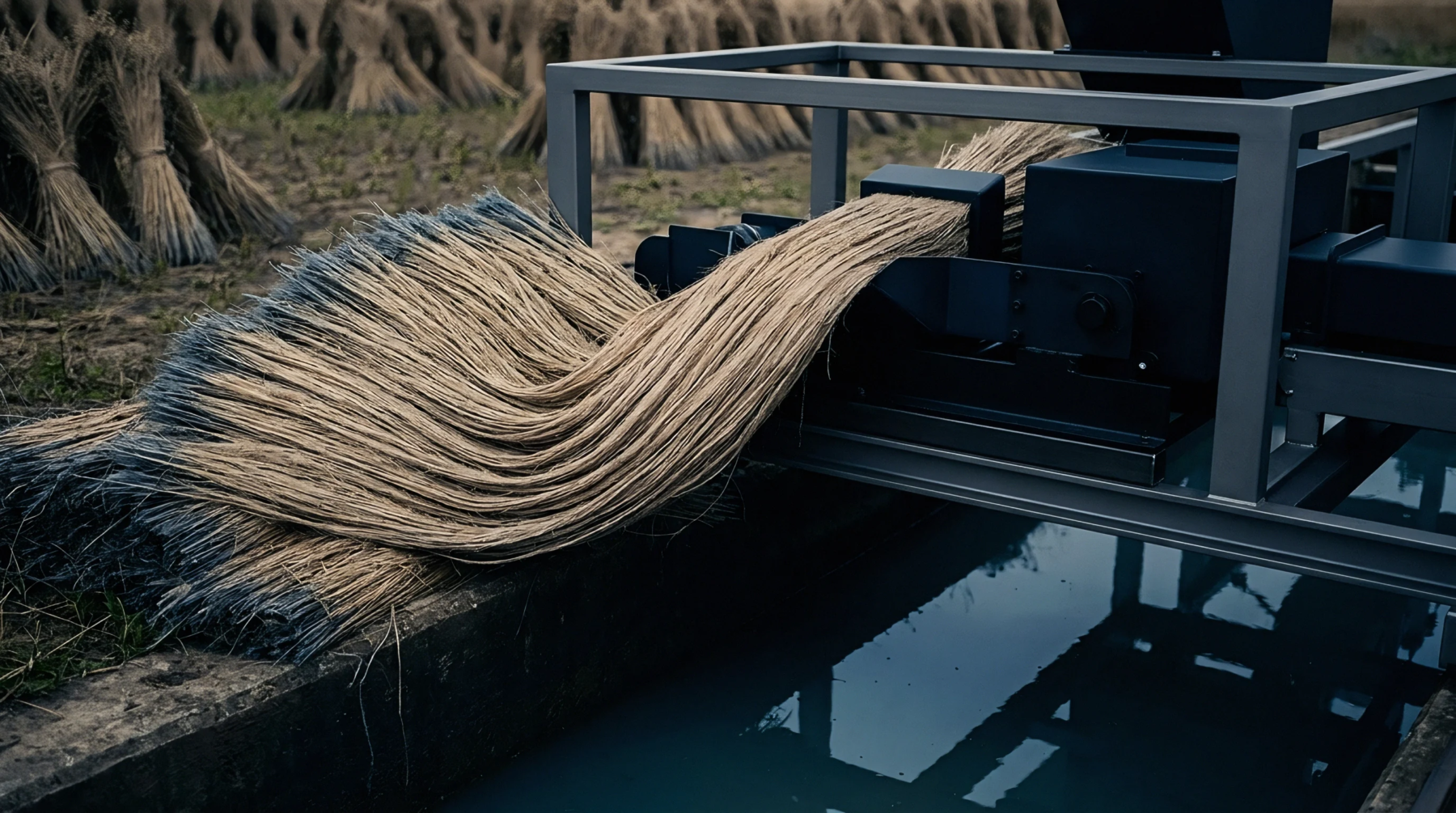
Fiber Dissolution
Alkaline pretreatment protocols govern the chemical degradation of bast fibers during preparatory extraction stages, applying sodium tetraborate digestion to dissolve non cellulosic cementing substances without degrading crystalline cellulose microfibrils. Flax harvesting yields coarse straw requiring careful chemical cleaning before mechanical carding operations can commence in commercial mills. Raw bast bundles contain hemicellulose fractions and pectin matrices that bind individual technical fibers together into rigid stalks.
Controlled boiling baths break down these gummy binding components so that mechanical hackles can separate the material into fine spinning elements.
Process Control
Reaction vessels regulate bath temperatures and chemical concentrations to prevent alkaline damage to cellulose chains during prolonged soaking periods. Mills maintain strict oversight of liquor ratios and alkali addition rates because excess alkalinity degrades the tensile strength required for high speed ring spinning frames. Temperature fluctuations alter reaction kinetics and lead to inconsistent degumming results across different processing lots.
Operators record bath parameters in production logs to ensure batch repeatability before passing cleaned fibers forward to drawing and roving departments.
Export Quality
Finished yarn batches undergo laboratory testing to verify residual gum content and fiber fineness before traders clear shipments for international apparel markets. Buyers establish maximum acceptable limits for alkali soluble matter in purchase contracts to guarantee fabric hand and dyeing affinity. Mill standards specify exact digestion times to meet these commercial thresholds without compromising yarn durability during subsequent weaving and finishing routines.
Final inspection certificates record compliance with buyer requirements prior to palletizing yarn cones for transport overseas.