
Flax Fiber Chemical Composition and Basic Retting Quality Evaluation
Optimal retting reduces residual pectin below 1.8 percent, allowing ultimate fiber separation to 3 tex and maximizing high-count line yarn yield.

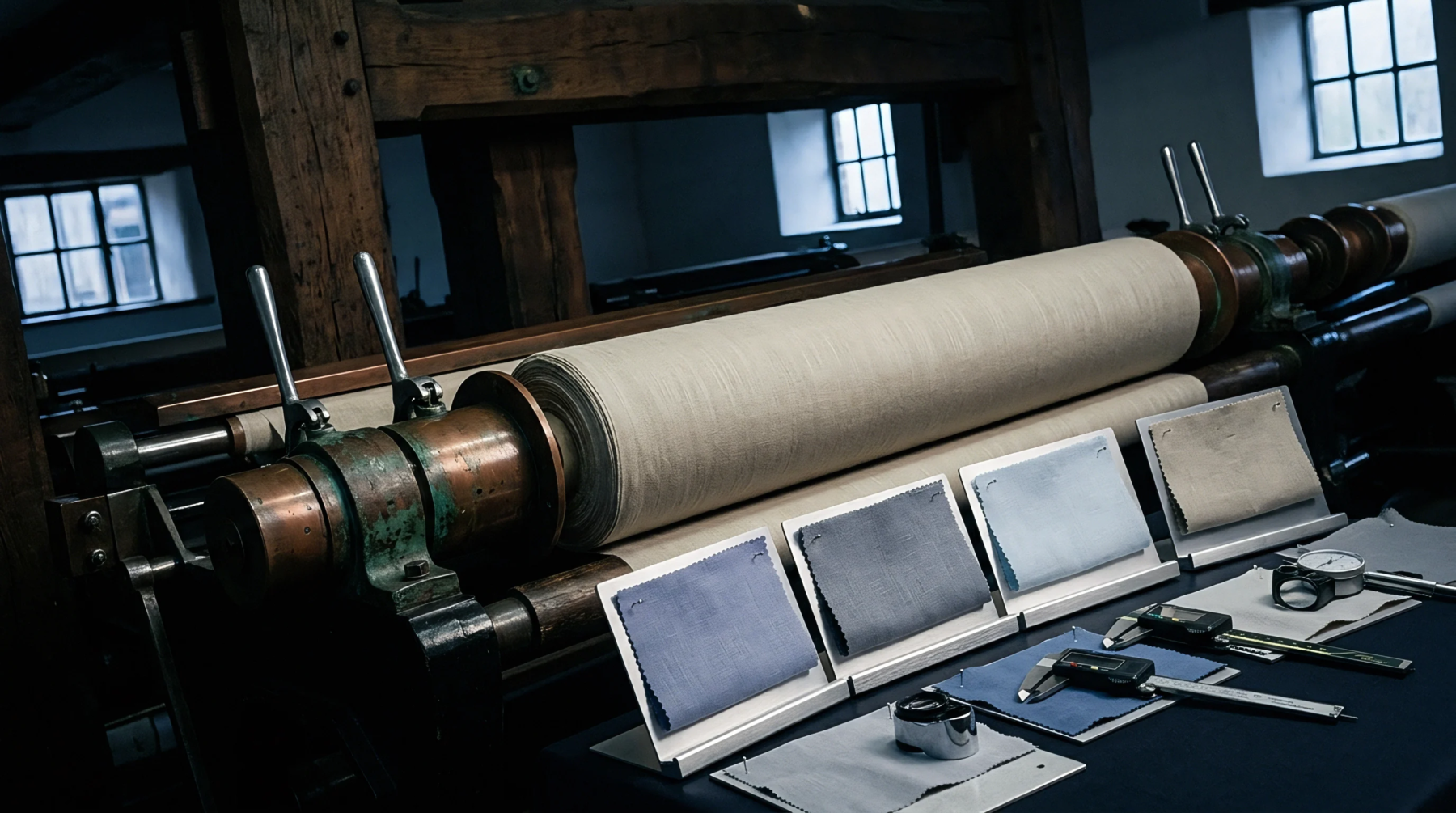
Line or tow, long-staple or blended. Flax grade decides the yarn before any weave is chosen, and with it the lustre, the strength and the price per metre. Linen is graded at the fibre, not the finish.

Optimal retting reduces residual pectin below 1.8 percent, allowing ultimate fiber separation to 3 tex and maximizing high-count line yarn yield.

Thermogravimetric analysis separates moisture from volatile extractives to enable exact hysteresis-corrected commercial weight settlements for bast blends.

Calculating standard moisture regain corrections for hackled flax corrects raw mass readings to 12% standard regain, securing true tex and metric count.
Verify dry mass through oven desiccation at 105C and apply a 12% moisture regain formula to protect mill yield and block transit water charges.

Calibrating wet spinning trough temperature and pH prevents pectin-induced draft rupture, lowering fine yarn end breaks and securing target tenor tenacity.

Flax wet bundle cohesion limits depend on pectin esterification, where levels between 38 and 48 percent optimize drafting resistance and yarn count.
Plain, twill, jacquard, damask. The weave carries the identity of the cloth and its loom time; pattern complexity is a cost question and a capacity question at once. Structure first, styling second.


Discrepancies resolve by synchronizing encoder positions, normalizing tension relaxation shrinkage, and weighting telemetry clusters against ASTM D5430 point bands.

Calibrating optical sensor demerits against loom stop telemetry eliminates false slub penalties by verifying mechanical fault codes against visual defects.

Automated fabric point calculations depend on spatial quantization accuracy, defect clustering logic, and width-normalized scoring to mirror ASTM D5430 standards.

Asymmetric shed geometry causes unequal warp sheet strain during beat-up, spiking dynamic tension and triggering end breaks at high speeds.

Asymmetric shed geometry and early crossover timing reduce flax peak tension, preventing end breakage on high-density linen warps without sacrificing speed.

Calculating maximum warp end density requires adjusting Peirce geometric jamming models for yarn compaction, reed clearance, and shed beat-up force limits.
Origin is what the linen buyer actually pays for. European Flax, Masters of Linen, field-to-fabric traceability: provenance is documented at every stage or it does not exist. This is the qualification gate.


Reconciling bast fibre customs entry deficits requires ISO 6741 gravimetric dry mass verification to prove hysteresis moisture loss over missing net fibre.

Sorption hysteresis alters landed fibre mass; import ledgers require ISO 6741-1 core dry-mass calculations to adjust raw invoice weights accurately.

Field weighment variances in cross border flax resolve by calculating true commercial dry mass from certified gravimetric core tests under ISO 6741 rules.

Flax transport reconciliation converts field scale weights to twelve percent commercial regain before scutchers log certified mass balance ledgers.

Auditing scutching intake tickets requires verifying axle scale calibration, applying standardized moisture and dockage deductions, and reconciling net straw mass.

Reconcile transoceanic linen weight discrepancies by deducting ambient sorption hysteresis mass using ISO 6741 dry mass tests and commercial debit terms.
Expertise is a utility, not a secret. sentiention™ publishes its working knowledge as open reference: intelligence layer covering the materials it sources, the markets it enters, and the reference that serves both.