Auditing Hot Trough Leaching Losses in Linen Mass Balance Verification
Auditing wet-spun linen mass balance requires subtracting a 3.5% to 7.0% dry leaching loss factor for trough pectin dissolution before calculating yield fraud.

Auditing wet-spun linen mass balance requires subtracting a 3.5% to 7.0% dry leaching loss factor for trough pectin dissolution before calculating yield fraud.

Cellulose microfibril angle variance above 2.0 degrees reduces wet-spun flax tenacity by up to 18 percent due to uneven stress distribution in the S2 layer.
Standard flax yarn linear density determination mandates motorized skein reeling under 0.5 cN/tex tension combined with ISO 6741 oven-dry commercial mass correction.

Elevated microfibril angles in climate-stressed line flax reduce fiber tenacity, lower hackling yield, and limit wet-spinning performance to coarse counts.
Verifying European Flax certificates in Chinese mills requires matching TC batch weights against raw bale intake logs and wet-spinning combed sliver yields.

European Flax certificates verify raw fibre origin, but US Customs non-preferential classification derives strictly from the country where yarn spinning or fabric weaving occurs.

Reconciling linen weight requires balancing chemical extraction losses against warp crimp contraction to hit target finished areal mass and dimensional stability.

Elevated growth temperatures alter flax microfibril angle, reducing wet-spun yarn linear tenacity and requiring adjusted drafting tension and fiber grade pricing.
Elevated microfibril angles reduce bast fibre tenacity by shifting load distribution from cellulose backbones to matrix shear, depressing hackling yields.

Linen non preferential origin follows exact HS tariff shifts where spinning yarn confers 5306 origin and weaving cloth confers 5309 origin under customs law.

Forensic microscopic and spectroscopic testing quantifies chemical degumming residuals, exposing invalid provenance claims on non-European linen yarn entries.

Harmonized System bast fiber classification relies on physical shive percentage, pectin degradation depth, and mechanical hackling status.
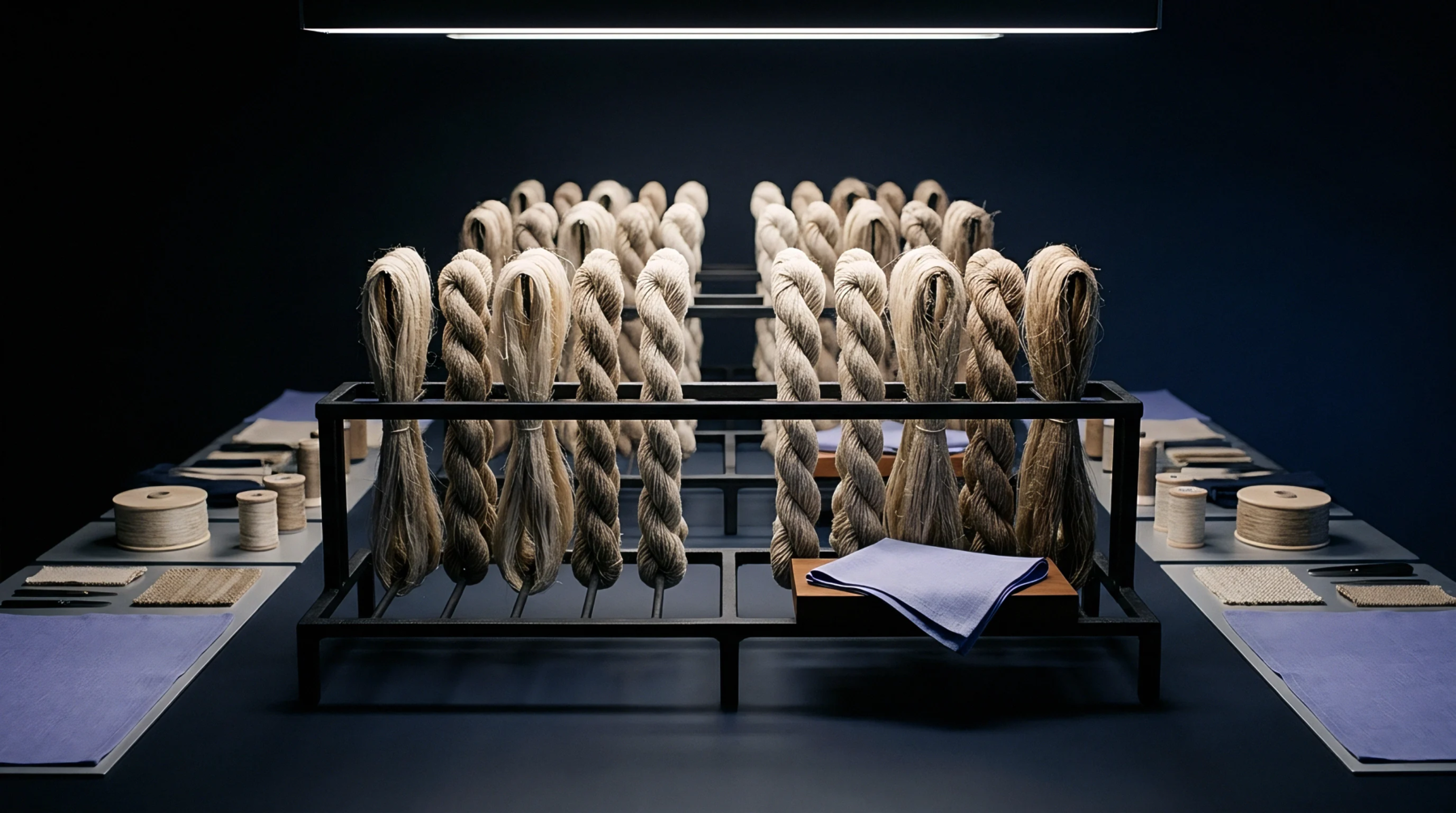
Isothermal thermogravimetry decouples non-cellulosic thermal degradation from moisture desorption, eliminating dry-mass underestimation and regain inflation in bast fibre trade.
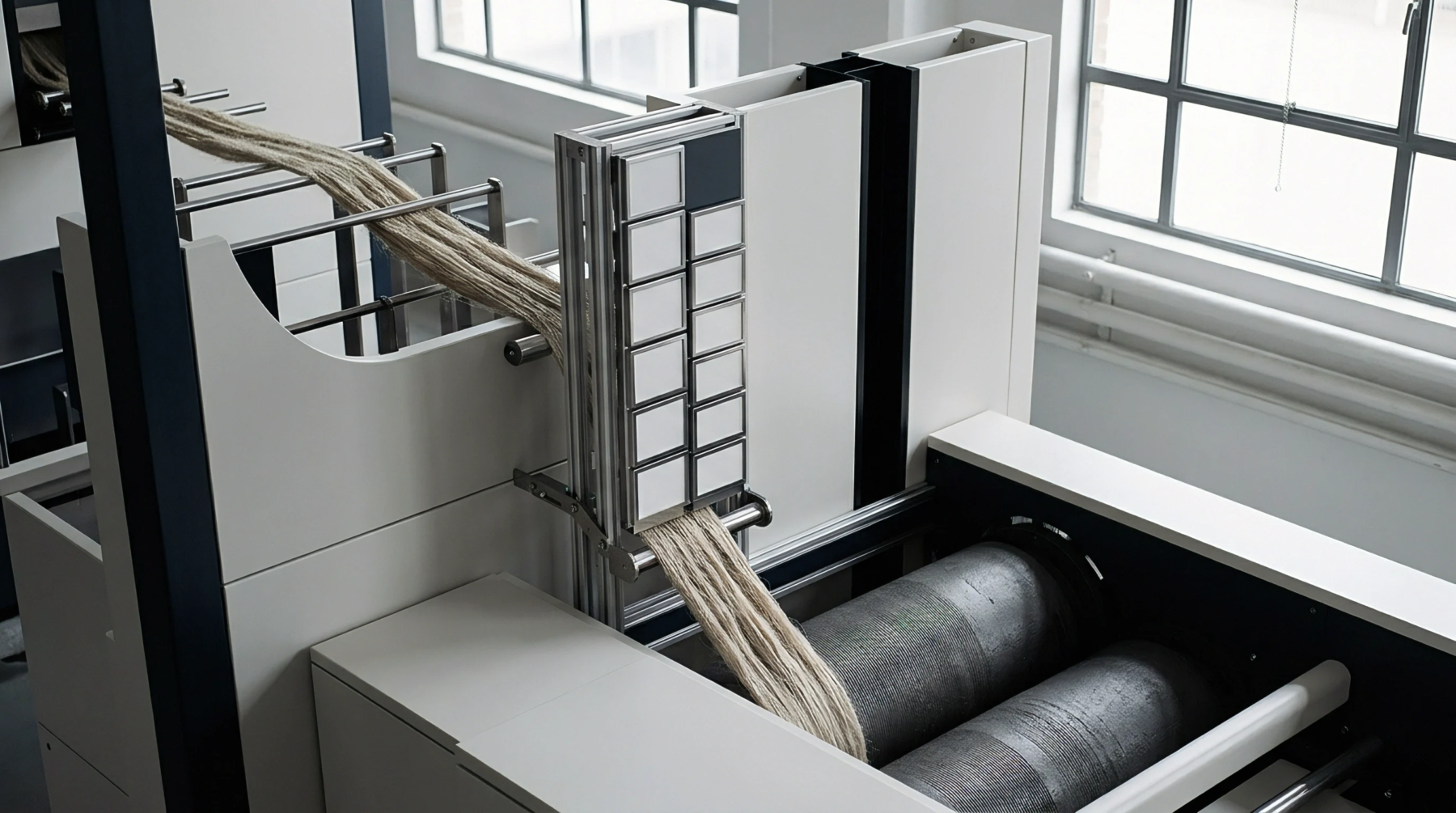
Dynamic weaver routing driven by stochastic queueing telemetry eliminates machine interference losses, raising loom efficiency by over seven percentage points.

Climate-driven microfibril angle increases lower bast fibre tenacity, requiring adjusted wet-spinning draft ratios and altered contract strength limits.

Reconciling wet spinning transaction weights requires adjusting bone-dry mass for 1.8 to 4.2 percent solubilized pectin loss measured via ISO 1833-22 extraction.

Optimal long line flax wet spinning recovery requires raw fiber Klason lignin held between 1.8 and 2.5 wt% to maximize hackling yield and prevent end breakage.
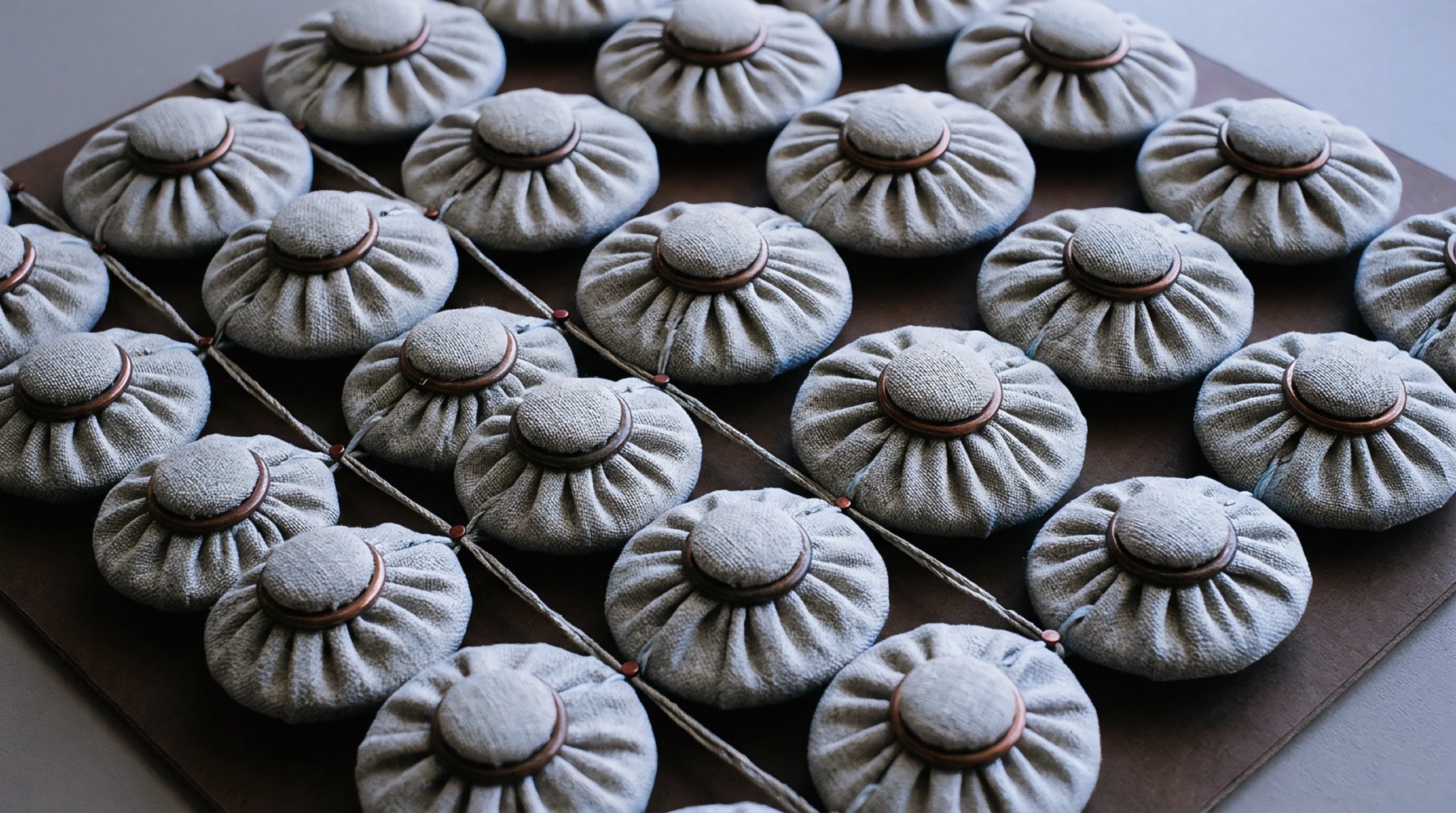
Fine wet spun linen warps perform best between 68 and 72 percent relative humidity, capping dynamic friction below 0.35 to prevent warp tension breaks.

Oven drying flax above 105°C degrades middle-lamella pectins into volatile gases, inflating reported moisture regain and damaging fiber spinning tenacity.

Dynamic intake tenacity calibration against climate-induced microfibril degradation requires Weibull-adjusted bundle testing to prevent severe hackling yield loss.

Fine wet spun linen warp yarns demand a minimum unsized tenacity of 19 cN/tex and a Weibull modulus above 9.0 to survive loom shedding strain without snap.
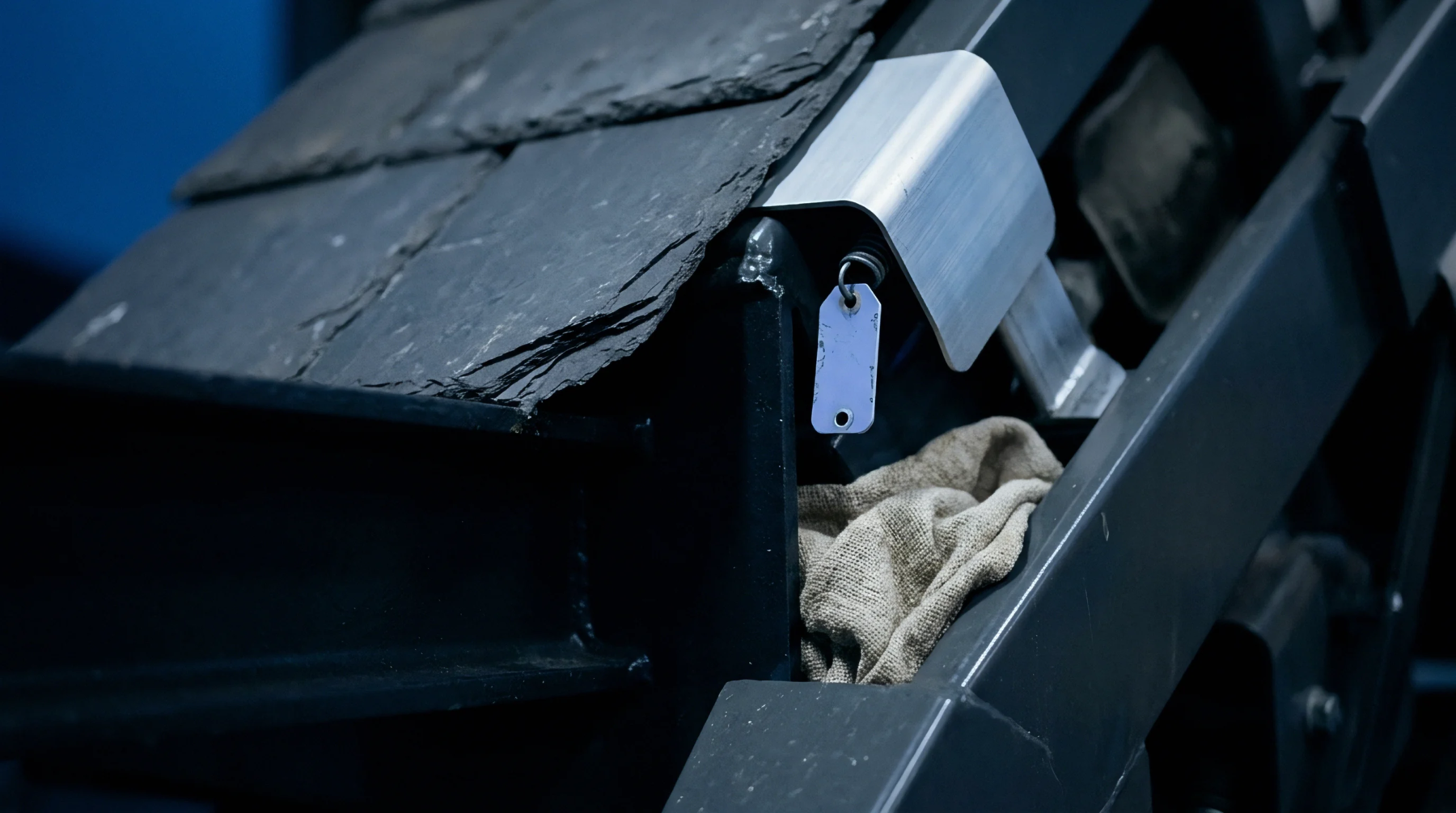
Mechanical scutching defect quantification relies on precise gravimetric or optical mass-balance analysis to measure residual shive and control long fiber yield.

Base moisture regain calculations adjust raw flax bale mass to standard commercial allowances, preventing buyers from paying fibre prices for ambient water.

Dynamic tension decay in sized wet spun flax yarns is minimized by controlling size penetration to 25 percent and keeping dynamic strain amplitudes below 1.2 percent.
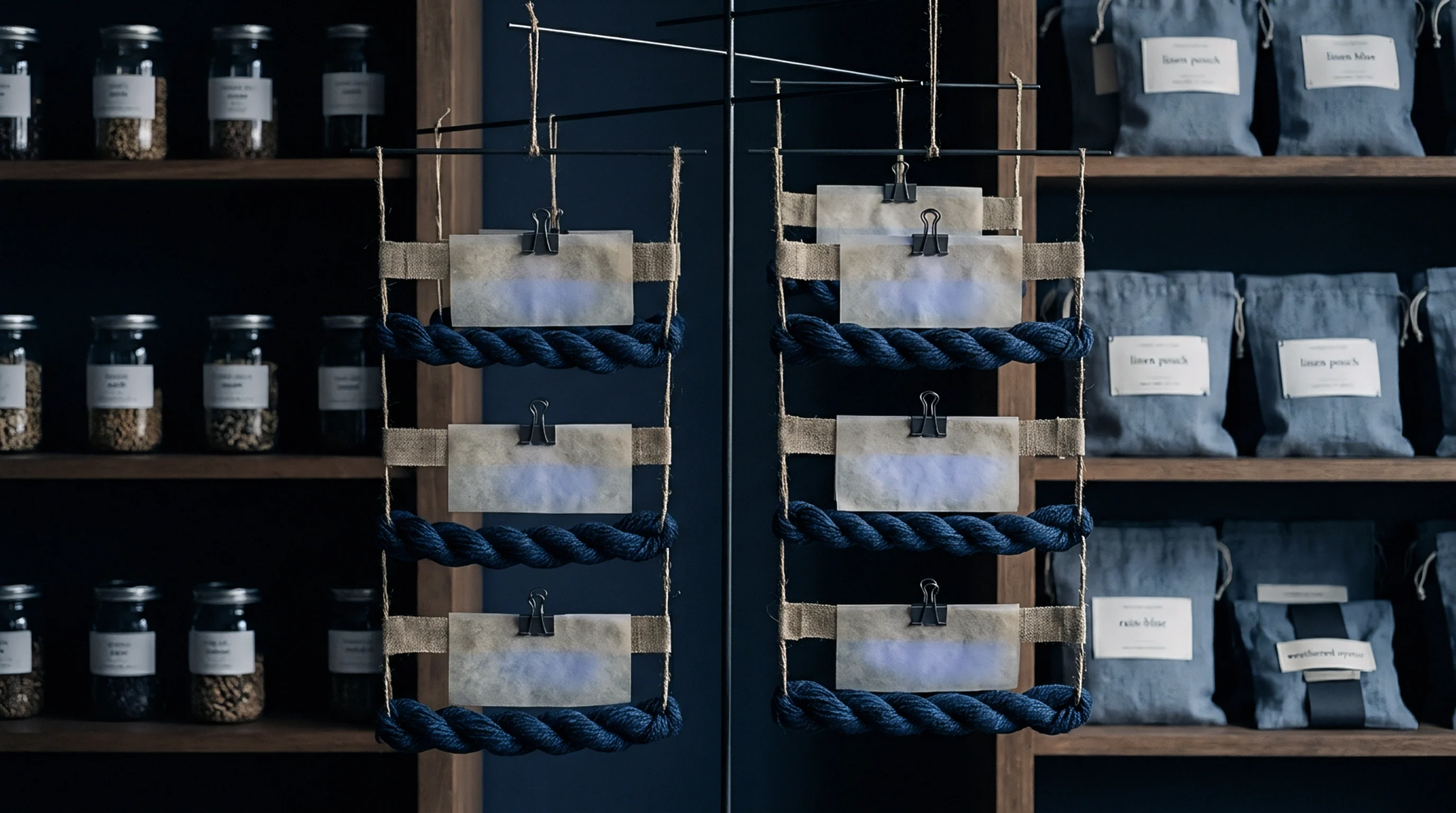
Harmonized System Chapter 53 classification of flax fabrics relies on an 85 percent mass threshold verified through dry-weight chemical analysis.
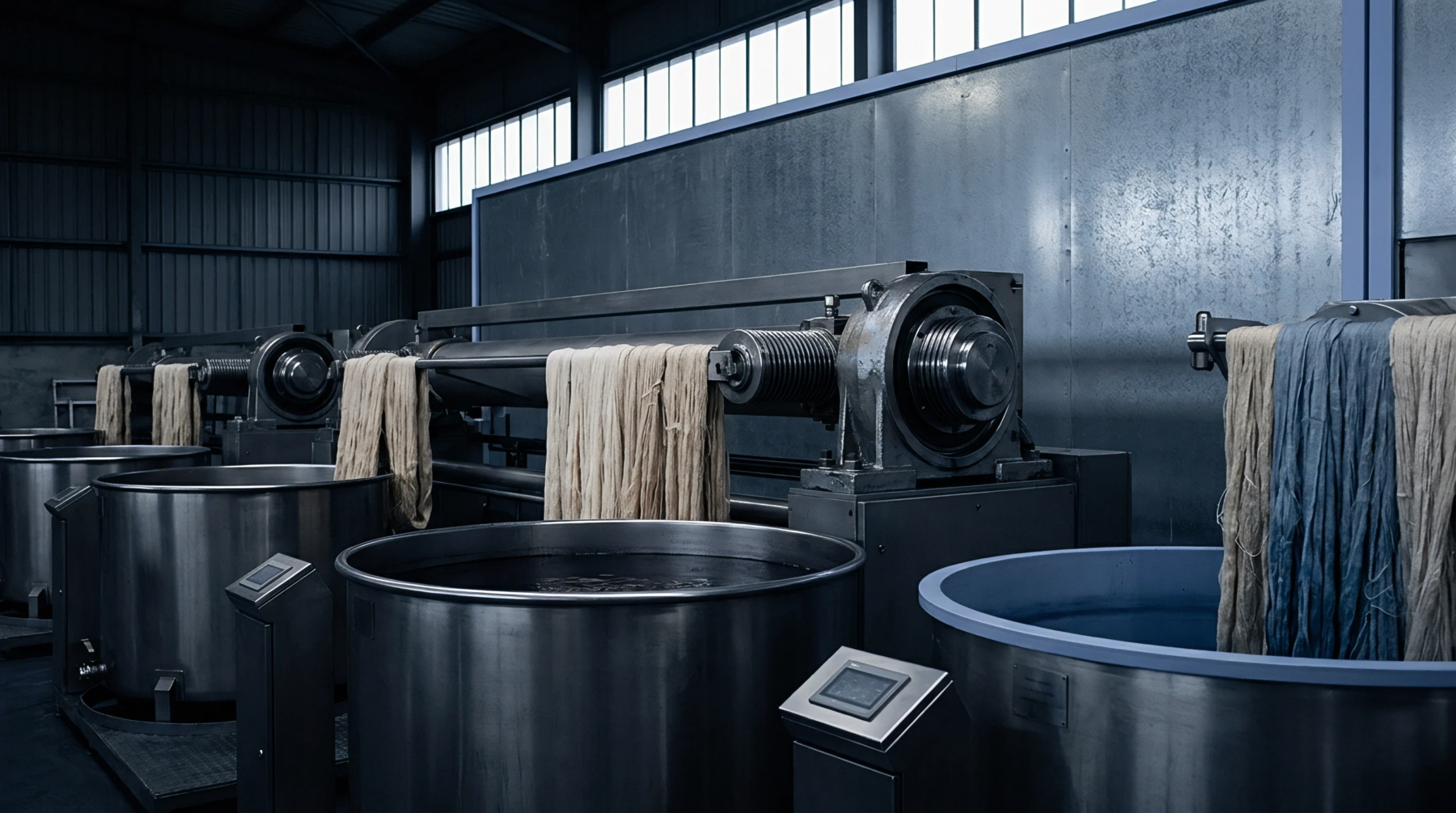
Reconciling wet spinning yield loss requires adjusting raw fiber weights for 12% regain, deducting 3.2-5.8% pectin extraction loss, and verifying comber tow sales.

Optimizing shed geometry on high-hook electronic jacquards balances stroke clearance against dynamic yarn strain to maximize loom speed and harness lifespan.

Non-cellulosic content above 3.5% lowers hackling line yield, increasing tow waste and landed line fibre cost per finished metre.

Intake weighbridge cross checking reconciles gross straw mass, core moisture regain, and soil tare against scutching manifests to verify net fibre yields.

Statutory non-preferential origin for hemmed linen bed and table linens remains attached to the weaving location under 19 CFR 102.21 and UCC Annex 22-01.
Expertise is a utility, not a secret. sentiention™ publishes its working knowledge as open reference: intelligence layer covering the materials it sources, the markets it enters, and the reference that serves both.