Dynamic Friction Limits in Fine Wet Spun Linen Warps
Dynamic friction limits in fine wet spun linen warps demand starch lubricant optimization and speed adjustments to prevent fibril breakage and machine downtime.
Tack
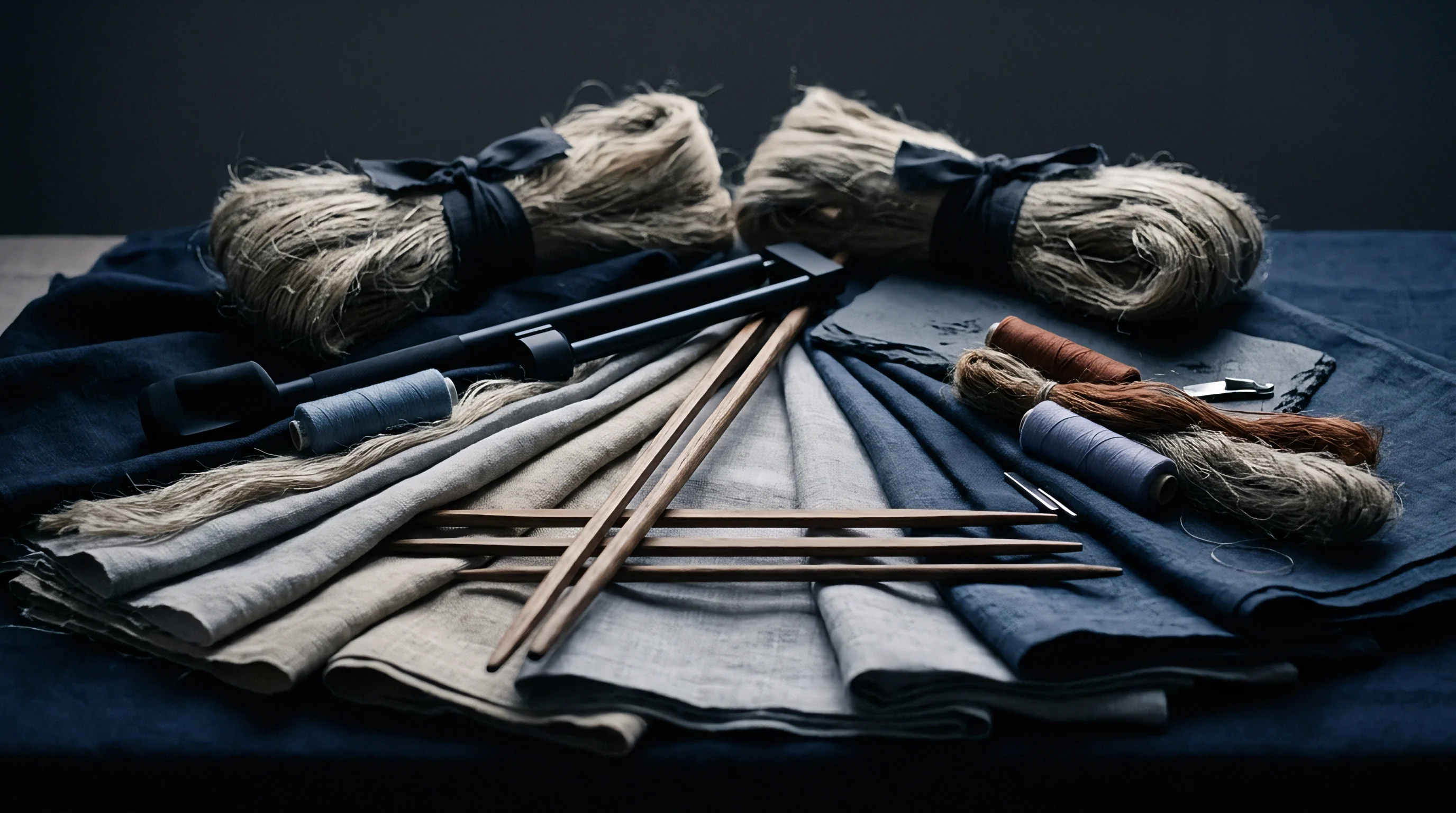
Fine wet-spun linen yarns spun from long-staple flax display distinct surface behaviors under mechanical tension. Unlike cotton or synthetic filaments, wet-spun flax relies on ultimate fiber bundles held together by intercellular pectins, hemicellulose, and residual lignins. Spun to fine counts between NeL 50 and NeL 100 (roughly 33 tex down to 16.5 tex), the yarn surface remains structurally irregular, covered in projecting fibril ends and nodes that create friction as the yarn runs through drop wires, heddle eyes, and reed dents at high speeds.
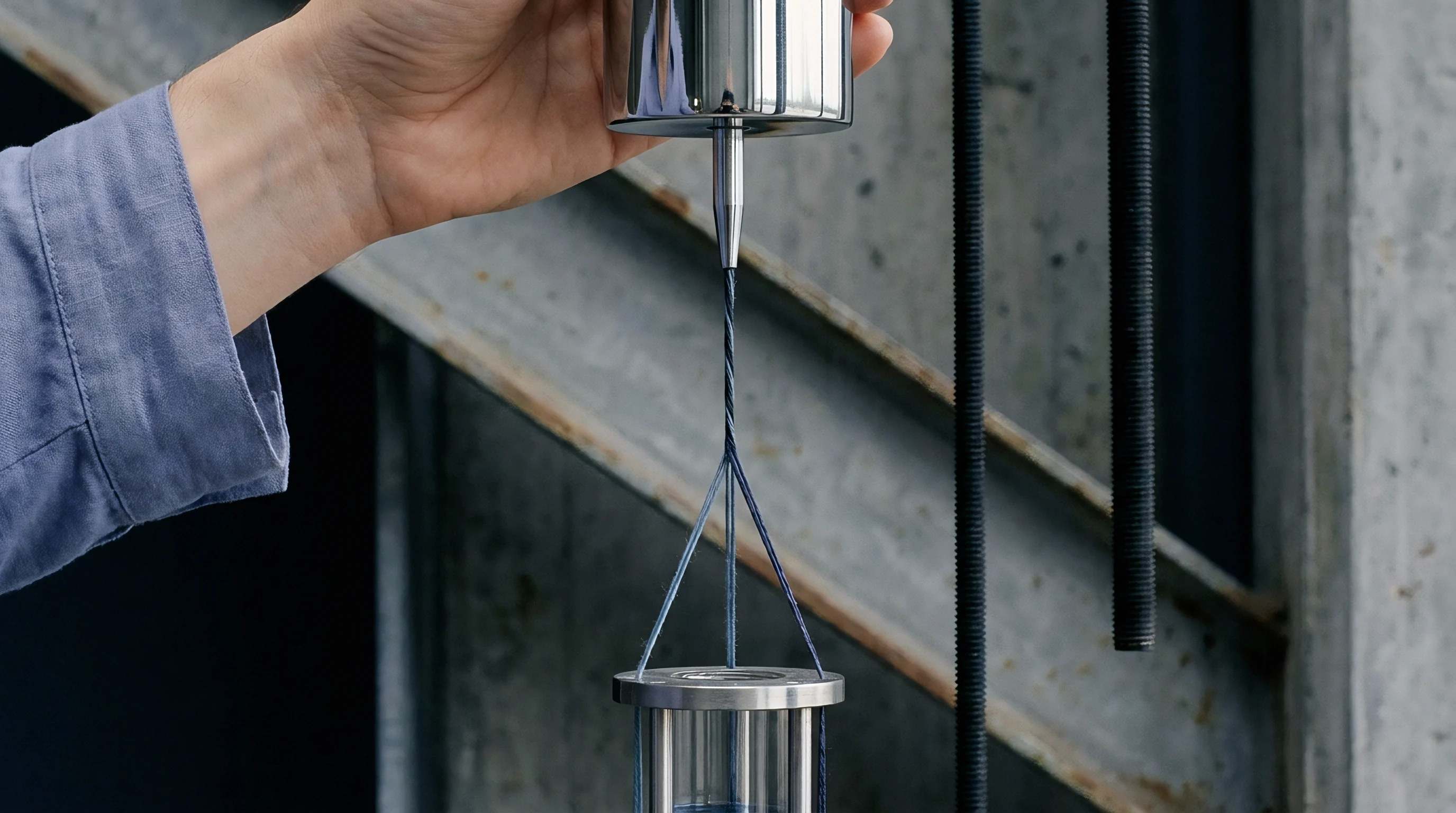
As sliding velocities pass 1.2 metres per second on modern rapier shedding frames, the contact regime between yarn and metal shifts quickly. Static friction measures between 0.20 and 0.25 on conditioned yarn, but dynamic friction surges under fast shed cycling, climbing past 0.45 once surface temperatures at contact points exceed 50 degrees Celsius.
Pectin Mechanics and Surface Energy in Fine Wet Spun Flax
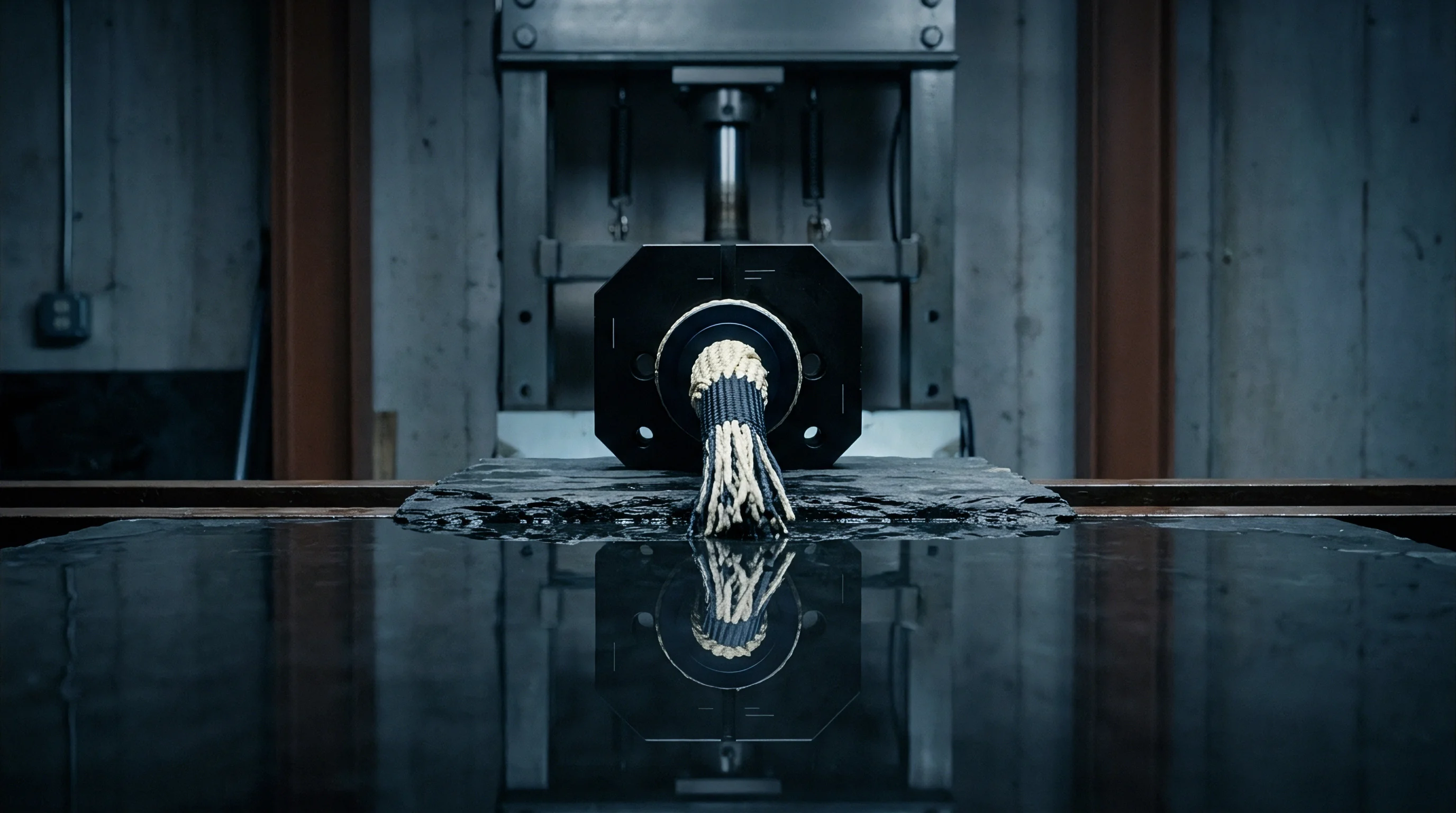
Bast fiber cell walls retain residual polysaccharides even after retting and spinning, leaving a portion of these native pectins on the yarn’s outer perimeter. At typical loom shed humidity levels (65 to 75 percent), the pectins draw in moisture and soften into a viscoelastic film. This increases the actual contact area where the linen strand meets smooth metal, raising surface tack and adhesive shear resistance.
Passing through dense reed setups, this tackiness creates substantial drag. Dynamic contact forces strip the softened pectin from the yarn core, leaving sticky debris in heddle eyes and reed gaps that hardens into gummy deposits. As following warp ends catch on these build-ups, tension across the beam becomes uneven, producing slack bands and inconsistent end tension.
Interfacial Shear Transients at High Boundary Velocities
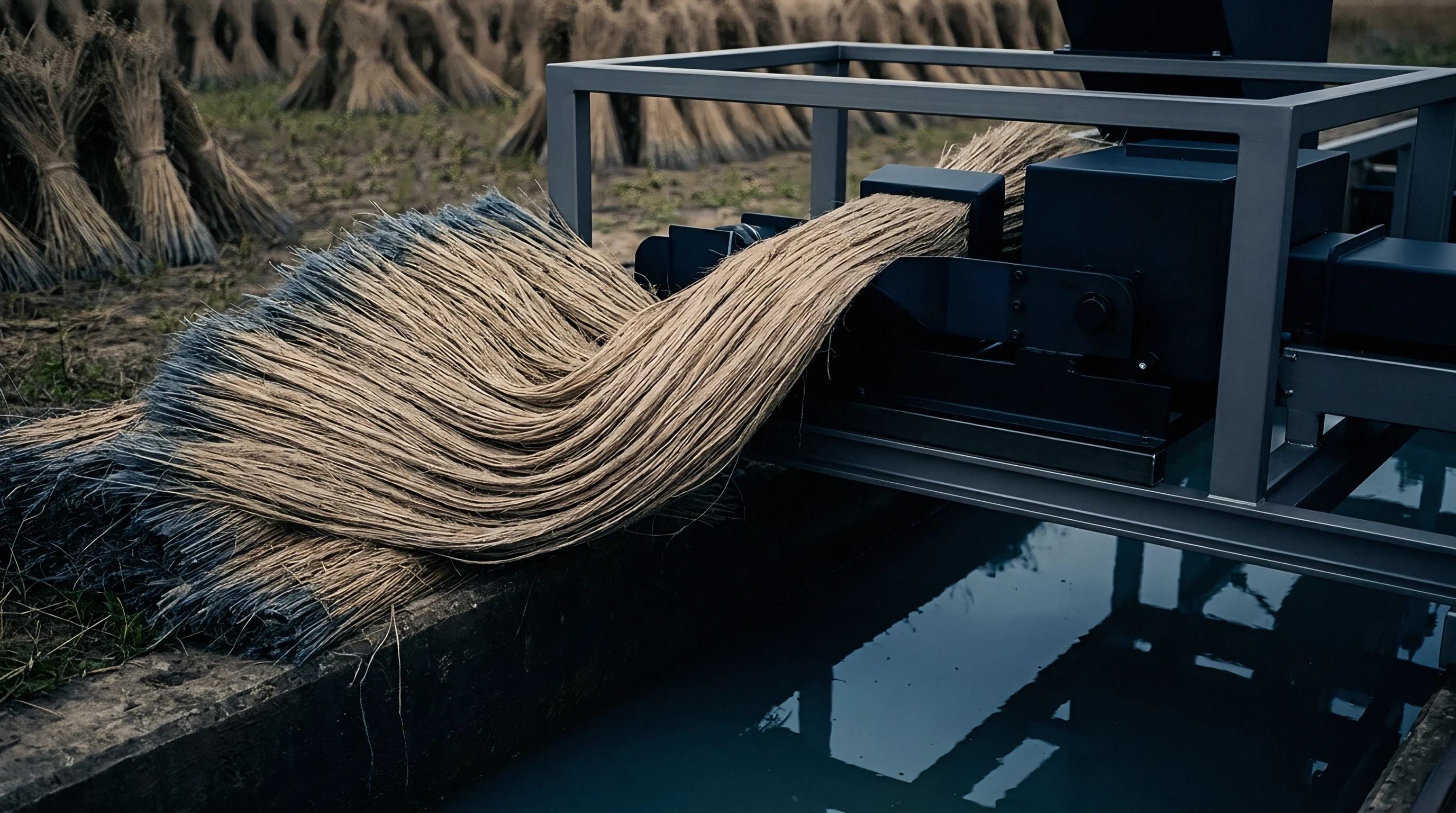
Rubbing against mechanical guides generates localized heat along the yarn surface. Dynamic speeds peak during rapid harness movements, reaching instantaneous velocities up to 2.4 metres per second. At these speeds, shear heating breaks down native waxes and thin-film lubricants, lowering film viscosity and forcing exposed flax micro-fibrils into direct contact with polished chrome or ceramic surfaces.
| Yarn Count (NeL) | Linear Density (tex) | Contact Material | Sliding Speed (m/s) | Dynamic Friction Coefficient (μd) |
|---|---|---|---|---|
| NeL 50 | 33.0 | Polished Steel | 0.8 | 0.24 |
| NeL 50 | 33.0 | Matte Ceramic | 1.8 | 0.38 |
| NeL 70 | 23.5 | Polished Steel | 0.8 | 0.27 |
| NeL 70 | 23.5 | Hard Chrome Heddle | 1.8 | 0.43 |
| NeL 100 | 16.5 | Hard Chrome Heddle | 1.2 | 0.35 |
| NeL 100 | 16.5 | Hard Chrome Heddle | 2.2 | 0.49 |
Measurements across different linear densities show that finer yarns develop higher dynamic friction at high sliding speeds. Because smaller cross-sections have lower flexural rigidity, the strand wraps tighter around small-radius guide surfaces. Localized normal pressure then climbs sharply under standard warp tension, driving the interface out of hydrodynamic lubrication and into high-wear boundary contact.
Whether chemical cross-linking of pectins during wet spinning can permanently lower dynamic friction without stiffening the yarn remains an open question in current mill trials.

Slip
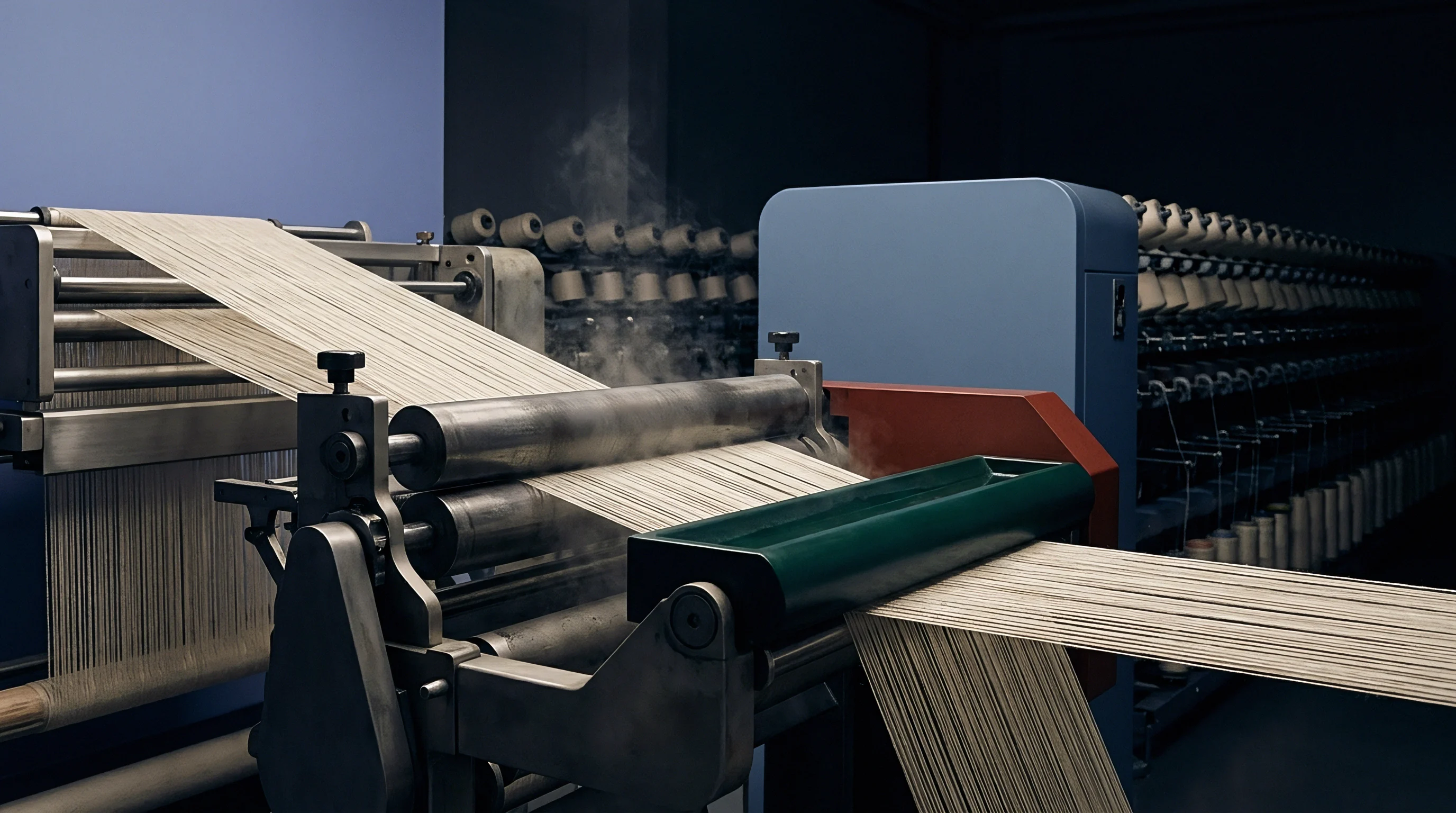
Applying polymeric sizing alters the friction boundary where yarn meets metal loom components. Sizing fine wet-spun linen calls for a careful balance between film strength, yarn flexibility, and surface lubricity. Raw flax strands have high tensile modulus but break under little stretch, often yielding below 2.5 percent elongation at peak load.
Sizing must bind protruding surface fibrils flat against the yarn core while forming a smooth outer film that dampens dynamic friction spikes during shed opening.
Dynamic coefficient of friction on NeL 80 wet spun flax peaks at 0.42 when sliding velocity across chrome heddles exceeds 1.8 metres per second at 65 percent relative humidity.
Standard potato or maize starches used without fatty additives leave dry films with high intrinsic surface friction against metal guides. When unlubricated sized warps run on high-speed rapier looms, impact shedding shatters this coating into microscopic flakes, exposing raw flax fibers directly to abrasion.
Starch Viscosity and Lubricant Film Migration
Modified starches form protective shells around fine yarn cores. Low-viscosity, thin-boiling starches penetrate the bundle to anchor individual flax filaments, whereas high-viscosity starches stay on the surface as a continuous coating. Formulations usually include 3 to 6 percent hydrogenated tallow, synthetic fatty esters, or wax emulsions relative to dry starch mass to adjust film lubricity.
Poorly dispersed waxes migrate outward as yarn dries on slasher cylinders. While surface wax improves low-speed lubricity initially, high contact forces inside drop wire boxes and harness assemblies scrape the soft layer away. The loose wax combines with starch dust, building dense deposits on heddle eyes and reed wires that distort yarn alignment, increase drag, and snap warp ends.
Velocity Limits on Modern Air Jet and Rapier Looms
Weft insertion on modern looms creates sliding speeds over two metres per second. Air-jet machines push weft through profile reeds where warp ends rest close to the reed tunnel, while rapier looms drive insertion arms directly through open sheds, making contact with the upper warp sheet. As loom speeds rise from 350 to 600 picks per minute, dynamic friction scales non-linearly with insertion frequency.
- Fibril Rupture Surface shear stress strips outer fibers from the yarn matrix, forming loose lint balls that cluster behind heddle eyes.
- Inter-Warp Cling Protruding surface fibrils on adjacent warp threads interlock during shed division, causing delayed shed clearance and mispicks.
- Dropper Choke Accumulated size fragments and fiber dust jam mechanical warp stop drop wires, causing undetected warp breaks and fabric defects.
- Reed Marking High friction forces cause localized heating and lateral displaced warp threads, producing longitudinal striping in finished greige fabric.
Excessive surface friction generates tension spikes that exceed the yield point of fine linen. Modern shedding systems must operate within defined friction limits to prevent rapid mechanical degradation across the warp sheet.
Improving size film elasticity promotes cleaner shed separation than dumping unemulsified waxes into the size kettle.


Pitch
Shed geometry governs thread displacement angles during shedding. Harness stroke, shed height, and the distance between back rest roller and cloth fell dictate bending radii and normal contact forces against drop wires, heddles, and reed dents. Fine wet-spun linen requires shallow shed openings to minimize peak strain on inelastic flax, though tighter openings increase the risk of warp end cling if surface friction gets too high.

Which Formulations Suppress High Velocity Friction Spikes?
Chemical formulations containing synthetic softeners help lower peak forces during rapid shed reversals. Sizing built on carboxymethyl cellulose and polyacrylamide copolymers resists mechanical shear while offering lower dynamic friction than pure starch. Adding 1.5 to 2.5 percent liquid tallow emulsifier directly to the cooker reduces yarn-to-metal dynamic friction below 0.28 at full shed speed.
Cooler shed ambient air preserves wax film viscosity and prevents warp fibril shedding during peak shedding strokes.
Slight adjustments in shed geometry dramatically alter contact dynamics. Raising harness stroke height from 50 millimetres to 65 millimetres increases normal pressure against heddle eyes by more than 35 percent. That added pressure shifts lubrication from stable boundary sliding straight into severe dry friction, causing rapid fibril breakdown.
| Shed Height (mm) | Harness Displacement Angle (°) | Normal Contact Pressure (kPa) | Peak Dynamic Friction (μd) | Warp Stop Rate (breaks/105 picks) |
|---|---|---|---|---|
| 48 | 12.5 | 14.2 | 0.26 | 1.8 |
| 54 | 14.1 | 18.6 | 0.31 | 2.9 |
| 60 | 15.8 | 24.1 | 0.39 | 5.4 |
| 66 | 17.4 | 31.8 | 0.48 | 12.1 |
Shed Opening Geometry and Harmonic Tension Spikes
Harness movement exerts cyclic strain on fine linen warp ends. As shedding cams turn, warp threads stretch during opening and relax upon closure. At high loom speeds, this cycling sends harmonic tension waves along the warp sheet.
If friction at guide points prevents these tension waves from dissipating along the yarn path, peak forces concentrate between the harness frames and the cloth fell.
- Beam Leveling Verify parallel alignment of warp beam gudgeons against back rest rollers to ensure uniform end path distances across full reed width.
- Denting Alignment Adjust reed height and lateral drop positioning relative to rapier race plates to eliminate mechanical scuffing during beat-up.
- Heddle Staging Set harness frame cross timing late, delaying shed closure until insertion elements clear warp sheets completely.
- Tension Profiling Regulate electronic let-off sensitivity to maintain average baseline tension within 15 to 18 cN per warp end for fine counts.
High friction turns harmonic tension waves into structural fiber fractures. Restricting harness stroke prevents localized tension spikes across delicate fine linen warps.
Poorly adjusted shed strokes trigger frequent warp breaks, hurting shed efficiency and forcing costly manual end-tying.

Wear
Repeated friction strips the primary outer wall from flax fibers, driving fibrillar breakdown. Wet-spun flax yarn relies on ultimate fiber bundles joined by pectin cross-links; mechanical rubbing peels these surface fibers from the core, creating fine fly waste and trailing micro-fibrils. Under magnification, abraded yarn shows heavy surface fibrillation as exposed fiber ends peel away from the main axis.
Compliance with ISO 13934 tensile specifications post-weaving demands that sizing pickup remains between twelve and fourteen percent by dry weight.
Ongoing surface damage gradually reduces residual tensile strength across fine linen warps. A NeL 70 strand subjected to continuous sliding friction against steel reed dents loses up to 22 percent of its strength after 10,000 cycles. Damage concentrates around knots and spinning thin spots, leaving weak points that snap when the shed opens.

Micro-Fibrillation and Reed Wire Heat Generation
Sliding friction generates localized heat at the reed interface. When 4,000 fine warp ends pass through a 165-centimetre reed at 500 picks per minute, continuous contact pushes reed wire temperatures above 65 degrees Celsius. This heat bakes residual size on the reed dents, hardening it into abrasive ridges that slice into passing strands.
| Yarn Linear Density (tex) | Sizing Pickup (%) | Abrasion Cycles (ISO 5470) | Residual Strength Retention (%) | Fibril Mass Loss (%) |
|---|---|---|---|---|
| 33.0 (NeL 50) | 10.5 | 5,000 | 88.4 | 1.2 |
| 33.0 (NeL 50) | 13.8 | 5,000 | 94.1 | 0.5 |
| 23.5 (NeL 70) | 11.2 | 5,000 | 81.2 | 2.4 |
| 23.5 (NeL 70) | 14.1 | 5,000 | 91.6 | 0.8 |
| 16.5 (NeL 100) | 12.0 | 5,000 | 74.5 | 4.1 |
| 16.5 (NeL 100) | 15.2 | 5,000 | 86.9 | 1.6 |
Surface Topography Changes under Continuous Abrasion
Yarn surface roughness flattens during initial weaving cycles before outer fibers start to lift. Size coatings smooth surface peaks early on, keeping friction low for the first few hundred picks. Once impact shatters this protective film, underlying fibrils peel back, driving surface roughness (Ra) up from 3.2 micrometres to 8.7 micrometres.
- Linear Density Uniformity Ensure single yarn coefficient of variation for mass (CVm) remains under 11.5 percent across the entire warp beam lot.
- Residual Pectin Content Verify raw yarn pectin concentration falls between 1.8 and 2.4 percent by dry mass prior to slash sizing.
- Sizing Film Continuity Confirm sizing film encapsulation covers minimum 92 percent of visible surface fibrils under microscope inspection.
- Tallow Emulsion Ratio Maintain exact 1:20 lubricant-to-starch ratios within cooked size solutions to prevent phase separation inside supply lines.
Preventing micro-fibril separation depends on keeping protective size films intact through repeated beat-up cycles.
Post-spinning fibril lifting stems either from mechanical reed misalignments or from inconsistent fiber retting.
Film
Humidity in the weaving shed directly affects how sized linen behaves. Flax fibers absorb up to 12 percent moisture by dry weight under standard conditions. Moisture regain plasticizes both native cellulose and applied starch films, shifting yarn mechanical properties.
Controlling relative humidity thus offers direct leverage over dynamic warp friction during production.
Excessive tallow lubrication compromises sizing adhesion and leads to micro-flaking inside the dropper box.
Relative humidity below 55 percent makes starch size coatings brittle, causing them to shatter during shed opening, roughening the yarn, and generating heavy fly. Conversely, humidity above 78 percent causes size films to absorb excess water and turn tacky. Softened size increases friction against metallic drop wires, driving up drag and warp breaks.

Humidity Control and Moisture Regain Optimization
Ambient vapor density dictates plasticizer levels in starch coatings. Maintaining dry bulb temperatures between 21 and 23 degrees Celsius with relative humidity set at 68 percent holds warp moisture regain between 9.5 and 10.8 percent. This balance preserves film flexibility while preventing surface tack during fast sliding contact.
| Relative Humidity (%) | Yarn Moisture Regain (%) | Dynamic Friction (μd) | Fly Waste Generation (g/kg yarn) | Loom Shed Efficiency (%) |
|---|---|---|---|---|
| 52 | 6.8 | 0.44 | 14.8 | 68.2 |
| 60 | 8.4 | 0.34 | 6.2 | 81.5 |
| 68 | 10.1 | 0.27 | 1.8 | 91.4 |
| 76 | 12.4 | 0.41 | 3.1 | 76.9 |
| 84 | 14.6 | 0.52 | 5.9 | 62.1 |
Chemical Additives for Boundary Shear Reduction
Emulsified fats and synthetic esters lower boundary drag without weakening size film cohesion. Modern additives replace tallow with polyoxyethylene monostearate or liquid paraffin micro-emulsions, which migrate to the film surface during cylinder drying to form a hydrophobic monolayer that reduces friction while preserving internal film strength.
Including ISO 13934 tensile retention clauses in greige purchasing contracts requires documented friction testing before warp beams are delivered.
Charge
Capacity planning for fine linen weaving must account for machine slowdowns caused by yarn friction. Purchasing loom hours rather than linear metres requires converting physical yarn behavior into landed cloth costs. When dynamic friction runs high, mills have to reduce operating speeds to keep warp breaks manageable and meet ASTM D5430 fabric inspection standards.

Loom Hour Accounting and Capacity Penalties
Loom operational costs accrue by the minute, regardless of running speed. Operating modern rapier looms incurs baseline shed costs around 18.50 EUR per hour, covering power, overhead, labor, and equipment amortization. When high dynamic friction forces a speed reduction from 550 down to 420 picks per minute on a fine count construction, total machine runtime per 100 metres increases sharply.
A look at a standard fine linen specification shows how friction limits affect commercial margins. Consider a 165-centimetre wide plain weave in NeL 70 (23.5 tex) wet-spun flax warp and weft, set at 38 ends per centimetre and 34 picks per centimetre, totaling 6,270 warp ends across the reed width.
Worked Financial Sensitivity for Fine Linen Weaving
A production run illustrates these cost differences across speeds. For a 5,000 metre order on a high-speed rapier loom running at 550 picks per minute and 88 percent efficiency, output reaches 14.55 metres per hour. The job requires 343.6 loom hours.
At 18.50 EUR per hour, machine processing totals 6,356.60 EUR, or 1.27 EUR per finished metre.
dynamic friction limits in fine wet spun linen warps, flax yarn lubricity, wet spun linen sizing, boundary friction flax fibers, yarn friction coefficient, heddle eye abrasion, reed dent drag, pectin surface energy, flax sizing formulations, rapier loom insertion speed, shed opening geometry, sizing pickup ratio, starch wax lubricants, fine count linen weaving, warp break rates linen, loom shed humidity control, ISO 13934 warp strength, ASTM D5430 fabric inspection, loom hour costing, landed cost fine linen
When high dynamic friction forces speed down to 420 picks per minute and efficiency drops to 74 percent from warp breaks, output falls to 9.32 metres per hour. The same 5,000 metre order now requires 536.5 loom hours, driving total machine costs to 9,925.25 EUR, or 1.99 EUR per metre. That adds 0.72 EUR per metre directly to landed greige costs, eroding profit margins if warp friction is not audited before beam setup.
This per-metre surcharge accounts for lost loom capacity and protects operating margins during peak mill runs.