Hackling Pin Density Effects on Long Flax Sliver Tenacity
Graduated hackling pin density increases flax sliver tenacity by splitting bundles until needle pitch falls below bundle diameter, causing fiber truncation.

Comb
A 1500-gram strick of scutched long flax enters the hackling bed at 12 percent moisture content under a 45-millimeter nip distance. Steel needles mounted on comb strips penetrate the hanging fringe, where initial engagement dictates whether technical fiber bundles split along pectin-rich middle lamellae or fracture across ultimate cell walls. Splitting the bundles increases surface area and mechanical interlocking in downstream drafting, raising sliver tenacity.
If needle density is too high in early treatment stages, mechanical shear forces its way into un-cleaved cores, chopping full-length technical fibers into short fragments.
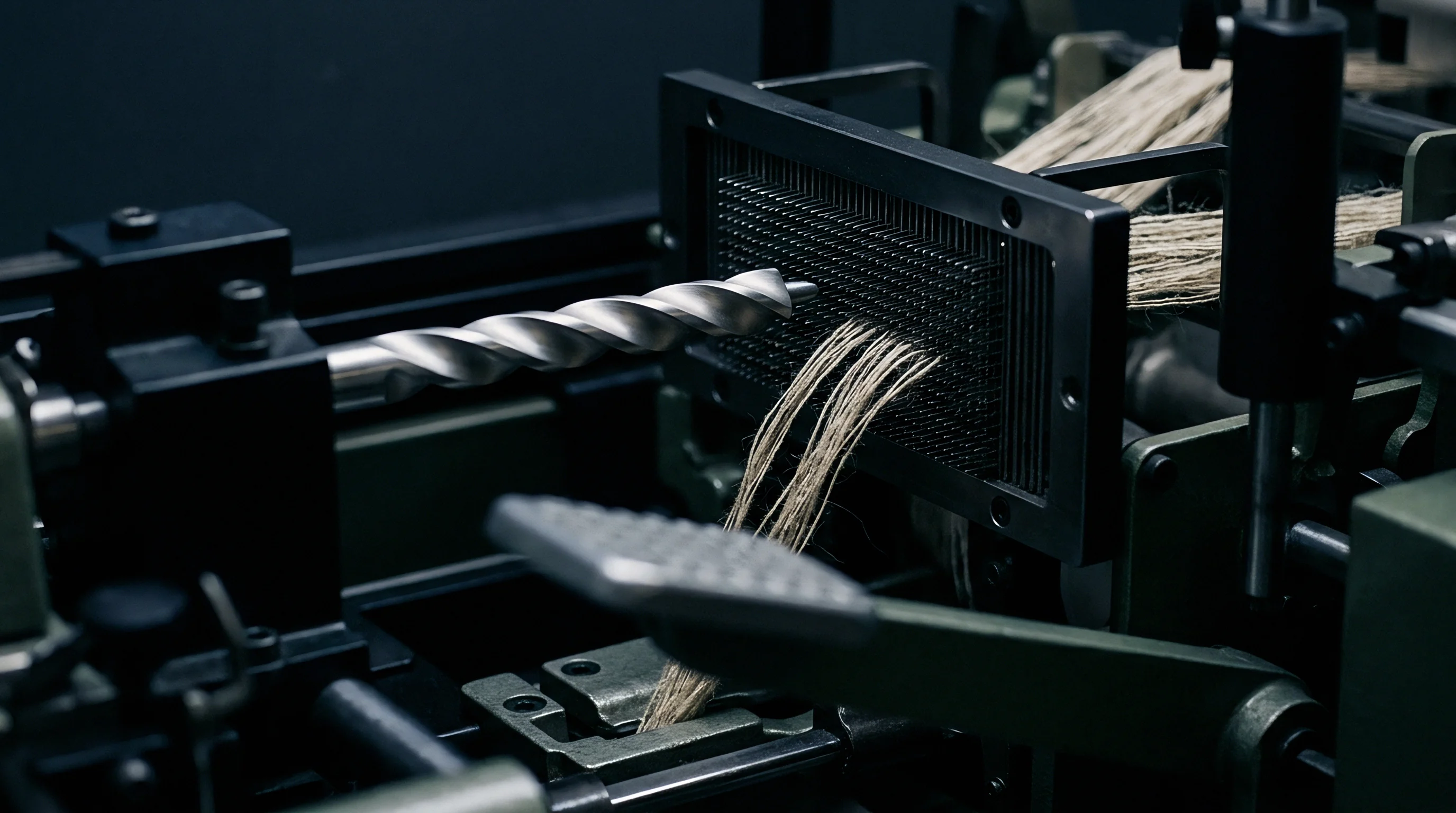
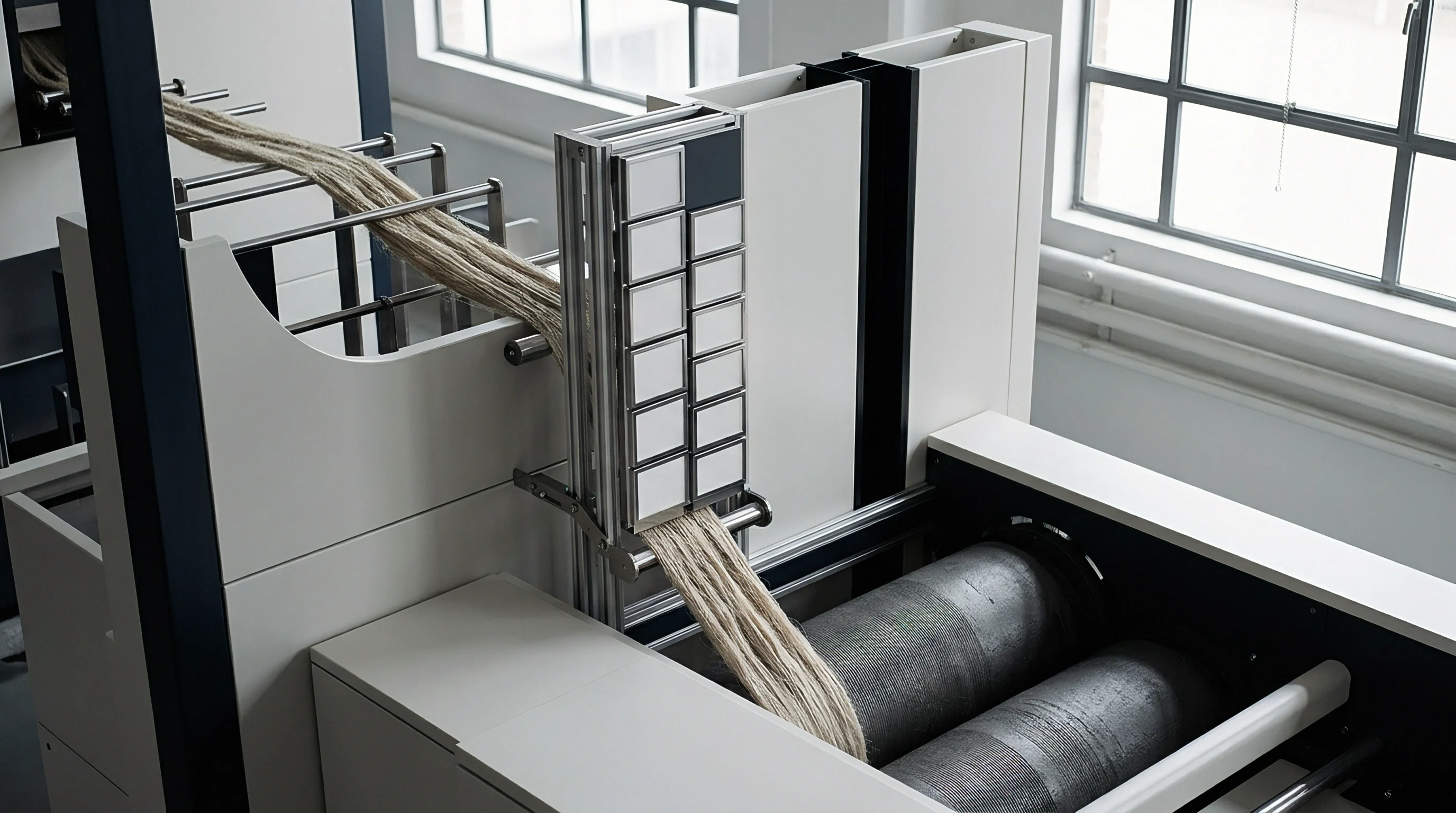
Pin density along the comb bar dictates the lateral friction exerted on flax stricks during each drop cycle. Standard industrial hackling machines operate with endless leather or synthetic belts carrying 12 to 24 tool fields. Passing through initial low-density fields allows large shive aggregates to drop free without tearing primary fiber bundles.
As pin density increases across subsequent comb sets, individual pins separate parallel technical fibers into finer units, bringing bundle linear density down from 80 tex to 15 tex.
Excessive initial pin density snaps long scutched bundles before middle lamella division occurs.

Mechanical Engagement in Flax Hackling
Penetration depth within rotating pin strips controls the shear stress along technical fiber bundles. Hackling beds maintain fixed clearance distances between opposing pin bars, ranging from 12 millimeters down to zero clearance at the finishing fields. Stronger penetration forces needles deeper into the dense strick core, accelerating the removal of un-retted bark remnants and weak short fibers.
When pin pitch is wide relative to bundle thickness, fibers slip past needle flanks without experiencing cleavage forces, leaving coarse technical fiber clusters intact.
Effective bundle splitting requires matching needle wire diameter directly to pin pitch. Coarse pins in early fields use wire diameters of 1.2 to 1.5 millimeters to absorb heavy mechanical impact without deflecting. Mid-stage pins drop to 0.8 millimeters, while fine finishing needles utilize 0.35 millimeter hardened steel.
Inserting high-density fine pin bars prematurely creates resistance that bends pins, deflects stricks, and causes catastrophic bundle breakage at the gripping nip.
Sliver Tenacity Dynamics across Density Gradients
Increasing needle concentration along successive pin bars alters the mechanical cohesion of drawn slivers. Sliver tenacity measures the maximum tensile force a fiber assembly withstands per unit linear density, expressed in centinewtons per tex (cN/tex). Fine pin density yields slivers composed of slender, highly parallel technical fibers.
These slender bundles maximize surface-to-surface contact area, enabling inter-fiber friction to carry tensile loads efficiently without premature slipping.
Reaching maximum sliver tenacity requires balancing fiber fineness against length preservation. Over-pinning breaks continuous technical fibers into hackling tow, reducing the delivery sliver’s mean fiber length from 650 millimeters to under 400 millimeters. Short fibers contribute zero tensile resistance during low-twist sliver testing because their ends slip before internal friction mobilizes full fiber strength.
An optimal pin density progression achieves peak tenacity by maximizing bundle splitting while keeping short fiber content below 12 percent by weight.
In industrial practice, maintaining hackling comb alignment and replacing worn needles takes precedence over running aggressive density profiles, as damaged or bent pins create localized fiber grouping that lowers sliver breaking force across every drawing pass.

Field
Graduated tool sets arrange steel needles at increasing spatial frequencies along the longitudinal bed axis. Modern flax hackling frames employ between 12 and 18 discrete fields per side to work scutched fiber stricks gradually. Early fields handle raw stricks containing un- retted epidermis and residual woody shive.
Intermediate fields execute primary bundle division, while finishing fields establish final fiber alignment and clean the tips prior to automatic spread-drawing into continuous sliver.
How pin density progresses across these fields dictates the total energy transferred to the flax. Linear schedules step up pin density by fixed increments, such as 0.8 pins per centimeter per tool field. Exponential schedules hold density low across the first six fields before doubling pin frequency over the final four fields.
Linear schedules reduce mechanical shock on weak, highly retted flax, whereas exponential schedules suit firm, under-retted European flax requiring intensive mechanical working.
Linear density reduction from 85 ktex down to 18 ktex requires graduated pin fields operating at 65 percent relative humidity.
Graduation Schedules across Hackling Beds
Coarse preliminary pins remove residual shive particles while orienting disordered strick heads. Tool set 1 typically carries 1.2 pins per centimeter, setting a baseline clearance that avoids immediate bundle cleavage. By Tool set 6, pin density reaches 4.0 pins per centimeter to initiate outer bundle separation.
Tool set 12 operates at 9.5 pins per centimeter, where inner core bundles split into sub-ten-tex technical fibers.
Abrupt steps in pin density introduce structural defects into the formed sliver. Jumping suddenly from 4.0 to 12.0 pins per centimeter subjects stricks to excessive impact speed, tearing bundle ends and generating high proportions of hackling tow. This creates a clear economic loss, as raw material worth 4.50 EUR per kilogram drops to a tow value below 1.60 EUR per kilogram.
Smooth graduation schedules preserve long flax yield while optimizing sliver strength.

Pin Wire Geometry and Penetration Dynamics
Needle diameter declines from 1.2 millimeters in early tool sets to 0.35 millimeters at the finisher stage. Taper length controls how pins wedge between adjacent fibers: long, gradual tapers soften initial impact forces and slide smoothly into fiber interstices to induce lateral cleavage, whereas short, blunt tapers strike bundle fronts directly and snap fibers transversely instead of splitting them lengthways.
| Hackling Parameter | Coarse Profile | Standard Graduated Profile | High-Density Profile |
|---|---|---|---|
| Initial Field Density (pins/cm) | 1.0 | 1.4 | 2.8 |
| Finishing Field Density (pins/cm) | 8.5 | 14.0 | 22.0 |
| Pin Wire Gauge Range (mm) | 1.4 – 0.6 | 1.2 – 0.4 | 0.9 – 0.25 |
| Hackling Tow Yield (%) | 14.2 | 18.5 | 27.8 |
| Mean Fiber Length (mm) | 580 | 510 | 390 |
| Short Fiber Content (<50mm %) | 6.8 | 9.4 | 18.6 |
| Sliver Tenacity (cN/tex) | 18.4 | 26.2 | 20.1 |
| Tenacity CV (%) | 14.8 | 9.2 | 17.3 |
Mechanical adjustments on hackling machines allow operators to change penetration depth dynamically across fields. Drop speed controls the rate at which comb bars fall into the hanging strick. Higher drop speeds increase impact energy ~ helpful for high-tenacity, under-retted scutched flax, but destructive to fine, over-retted material.
Adjusting field clearance, pin density, and drop speed simultaneously establishes the precise mechanical environment required for target sliver specifications.
Low sliver tenacity is frequently attributed to inconsistent crop retting levels rather than incorrect pin density schedules, with field speed modifications offered as a simple substitute for full comb bar re-pinning.

Splitting
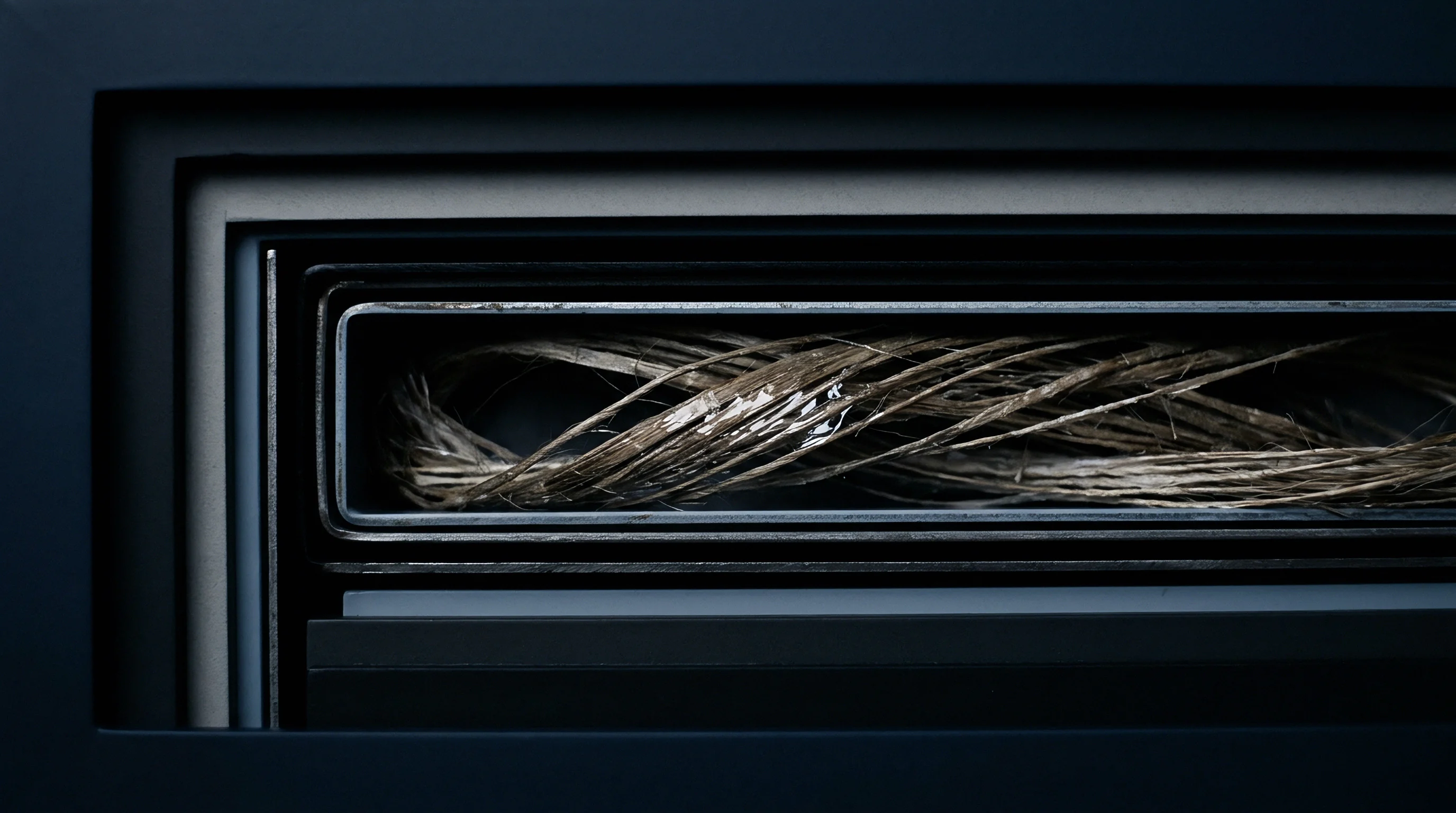
Pectic substances binding ultimate flax cells together undergo mechanical cleavage under controlled needle impact. Scutched flax consists of technical fiber bundles joined by an intercellular matrix composed of calcium pectinate, hemicellulose, and lignin. Splitting this composite structure along natural cell boundaries reduces fiber linear density without compromising the intrinsic tensile strength of individual ultimate cells.
Single ultimate cells reach tensile strengths between 50 and 80 cN/tex, whereas coarse un-split technical bundles display apparent tenacities below 15 cN/tex due to irregular stress distribution across their thick cross-sections.
Hackling needles act as mechanical wedges as they engage the strick. Entering a fiber bundle, a needle generates lateral displacement forces that exceed the shear strength of the middle lamella. Clean middle lamella cleavage exposes smooth, high-aspect-ratio technical fibers capable of packing tightly together during sliver formation.
When low pin density leaves middle lamella bonds intact, slivers exhibit thick places, draft unevenly, and fail prematurely under tensile load.
Improper pin selection or aggressive mechanical profiles induce several distinct structural defects during hackling:
- Transverse Fiber Fracture occurs when needle impact force exceeds ultimate cell tensile strength, snapping long technical fibers into truncated fragments.
- Nep Nucleation arises when fine pins work over loose ends and roll delicate technical fibers into dense spherical entanglements, doubling nep counts above density thresholds.
- Bundle Delamination Voiding takes place when high mechanical shear splits middle lamellae unevenly, leaving dangling lateral fibrils that block smooth drafting.
- Micro-Fibrillar Splintering happens when dry flax stems lose structural moisture, causing longitudinal tearing across ultimate cell walls.
Transitioning from coarse hackling beds to high-density finishing pins alters sliver cohesion more than drawing frame draft ratios.
Is Higher Pin Density Always Beneficial for Sliver Strength?
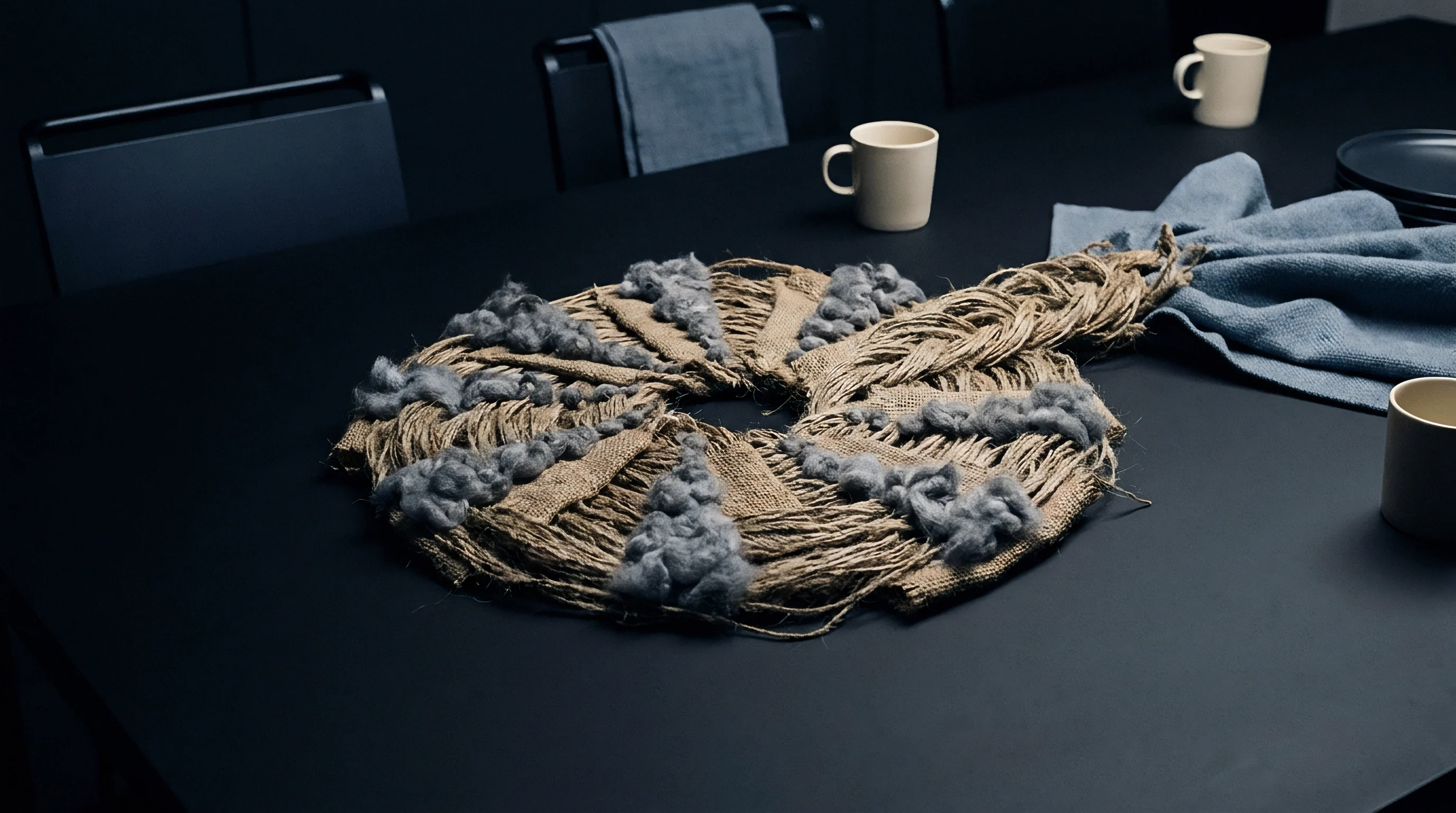
Excessive mechanical working degrades long technical bundles into fragmented short fibers. Higher pin density increases pin-to-fiber contacts per unit time, but past an optimal threshold, additional needle impacts yield diminishing bundle splitting while exponentially accelerating fiber fracture rates.
Peak sliver tenacity occurs where bundle fineness is maximized and short fiber generation remains suppressed. For standard European long flax, fiber length loss outweighs fineness gains once pin density passes 16 pins per centimeter, with tenacity peaking at eight pins per centimeter in preliminary fields. Sliver breaking tenacity drops sharply past this point because shorter fibers fail to generate sufficient friction during tensile testing, pulling out of the fiber matrix before reaching true material failure strength.
Cellular Cleavage and Short Fiber Generation
Middle lamella separation occurs along preferential structural planes within the bark tissue. Splitting pectic bonds requires precise mechanical force: insufficient force fails to separate fibers, while excessive force crushes cellular structures. Retted status dictates middle lamella friability, meaning warm water retted flax requires lower pin density to achieve target bundle fineness than dew retted flax because tank immersion systematically breaks down outer pectin layers.
Processing brittle, low-moisture flax under high pin density shatters ultimate cell structures, creating microscopic cracks along cell walls. These micro-cracks act as stress concentrations during spinning and yarn winding, causing end-breaks under lower operational tensions. Controlling room relative humidity between 65 and 70 percent softens the pectin matrix, allowing needles to cleave middle lamellae smoothly without triggering brittle transverse fractures.
Whether flax processors can develop automated optical sensing systems capable of adjusting comb bar pin density dynamically to match real-time bundle fineness variations across individual scutched stricks remains an open question in technical flax processing.

Tenacity
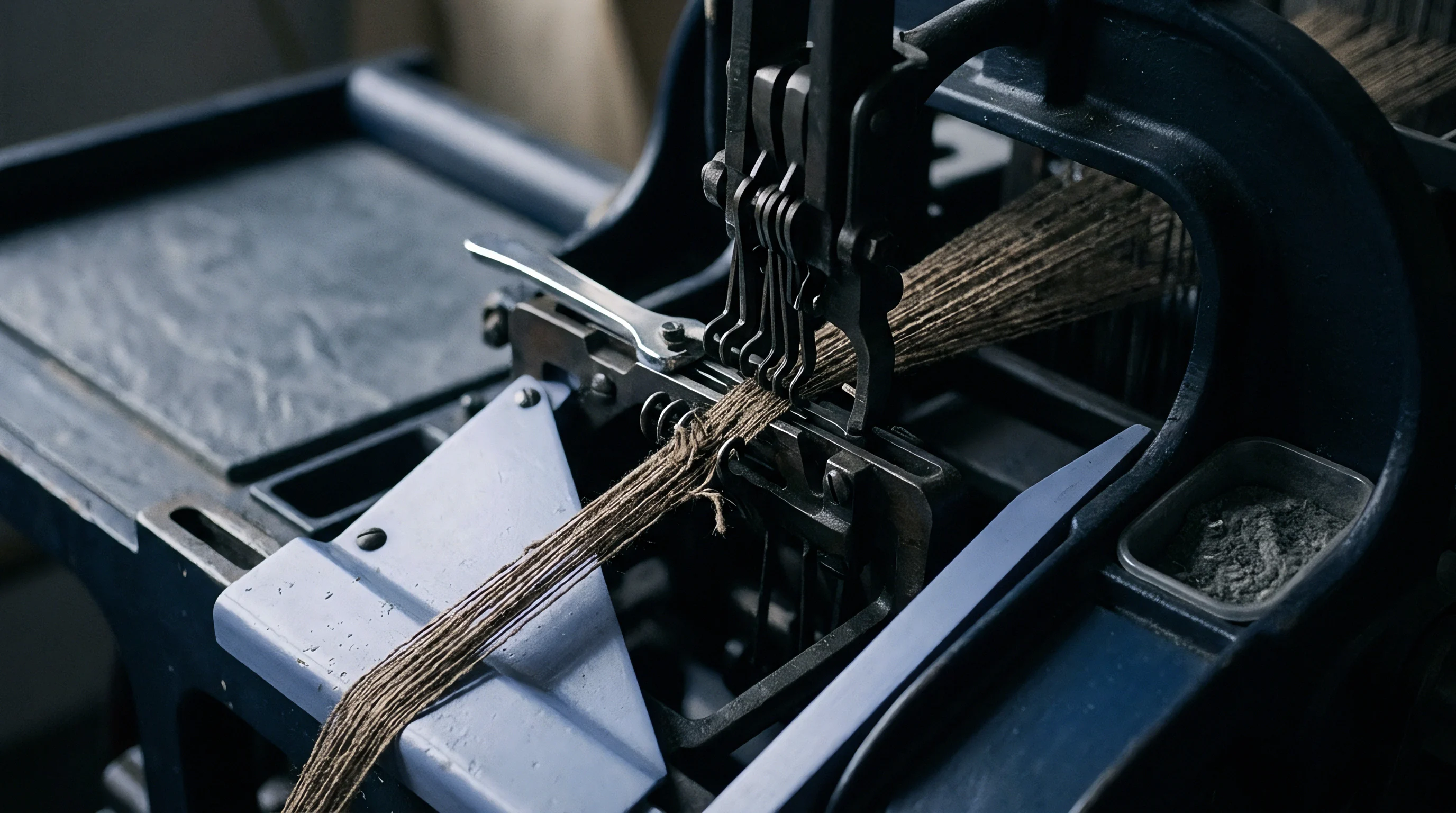
Tensile breaking force per unit linear density defines the structural integrity of long flax sliver. Testing sliver tenacity involves measuring the force required to pull an un-twisted assembly of parallel technical fibers to failure under ISO 3060 bundle testing standards. Because long flax slivers carry no twist, cohesion relies entirely on inter-fiber friction, fiber length, parallelism, and bundle fineness achieved during hackling.
Gauge length selection profoundly influences measured sliver tenacity values. At zero gauge length (clamp-to-clamp contact), tensile tests measure intrinsic fiber breaking strength. At 50 or 100 millimeter gauge lengths, tensile tests measure inter-fiber friction and bundle slip mechanics.
High hackling pin density improves 100 millimeter gauge length tenacity by increasing bundle fineness and contact points, provided fiber length truncation remains controlled.
ISO 3060 bundle test deviations above two percent trigger automatic lot re-sampling under standard European flax trade terms.

Tensile Measurement Protocols for Flax Sliver
Testing sliver strength requires precise gauge length control on specialized constant-rate-of-extension equipment. Clamping pressure must prevent fiber slippage inside jaw faces without crushing delicate flax stems. Pneumatic jaws equipped with vulkollan-coated clamps operating at 0.6 MPa gripping pressure provide uniform force distribution.
Test speed is held at 50 millimeters per minute across a sample population of at least 30 individual test strips taken across the sliver width.
| Linear Density (ktex) | Finishing Pin Density (pins/cm) | Gauge Length (mm) | Tenacity (cN/tex) | Cohesion Force (cN) | Fiber Fineness (dtex) |
|---|---|---|---|---|---|
| 20.0 | 6.0 | 0 | 38.5 | 110 | 32.0 |
| 20.0 | 6.0 | 50 | 12.2 | 110 | 32.0 |
| 20.0 | 6.0 | 100 | 6.4 | 110 | 32.0 |
| 15.0 | 14.0 | 0 | 42.1 | 185 | 16.5 |
| 15.0 | 14.0 | 50 | 24.8 | 185 | 16.5 |
| 15.0 | 14.0 | 100 | 18.2 | 185 | 16.5 |
| 12.0 | 22.0 | 0 | 31.0 | 130 | 11.2 |
| 12.0 | 22.0 | 50 | 16.5 | 130 | 11.2 |
| 12.0 | 22.0 | 100 | 9.1 | 130 | 11.2 |
Cohesion force measurements validate downstream drafting behavior. Slivers displaying high tenacity combined with low tenacity coefficient of variation (CV %) draft predictably during wet spinning preparation. Tenacity CV values above 12 percent cause draft waves, generating thin spots and yarn breaks in the spinning frame.
To qualify long flax hackling operations before releasing material for fine yarn spinning, quality engineers execute a structured evaluation:
- Raw Material Baseline Assessment records moisture content, retted score, and initial scutched strick length.
- Pin Schedule Cross-Verification verifies that pin pitch, needle diameter, and drop speeds match the target yarn tex program.
- Sliver Tenacity Profiling executes 30 tensile tests at 50 mm gauge length to map mean strength and CV percentage.
- Short Fiber Mass Reconciliation measures hackling tow mass against input scutched flax mass to ensure yield efficiency.

Tenacity Yield Optimization Calculation
A mill processing 10 metric tonnes of scutched long flax evaluates two pin density profiles to balance sliver strength against tow generation. Scutched flax raw material costs 4.80 EUR per kilogram. Target delivery yarn requires long flax sliver tenacity of at least 22.0 cN/tex at 50 millimeter test gauge length.
Under Profile A (Standard Graduated: 1.4 to 14.0 pins/cm), hackling tow yield is 18 percent (1,800 kg), leaving 82 percent long flax sliver (8,200 kg). Sliver tenacity tests average 24.5 cN/tex with an 8.5 percent CV. Hackling tow sells for 1.50 EUR per kilogram.
Net material cost per kilogram of produced sliver equals (10,000 kg 4.80 EUR – 1,800 kg 1.50 EUR) / 8,200 kg = 5.52 EUR per kilogram of sliver.
Under Profile B (Aggressive High-Density: 2.8 to 22.0 pins/cm), hackling tow yield increases to 28 percent (2,800 kg), leaving 72 percent long flax sliver (7,200 kg). Excessive fiber truncation reduces mean fiber length, causing sliver tenacity to drop to 17.5 cN/tex with a 16.2 percent CV. Net material cost per kilogram of produced sliver equals (10,000 kg 4.80 EUR – 2,800 kg 1.50 EUR) / 7,200 kg = 6.08 EUR per kilogram of sliver.
Selecting Profile B raises sliver production costs by 0.56 EUR per kilogram while producing sub-specification sliver that fails contractual tenacity thresholds, resulting in high yarn spinning end-breakage rates and ultimate lot rejection.


Surcharge
Commercial valuation of long flax sliver reflects both mechanical performance and chain-of-custody documentation. High-tenacity sliver produced from certified Western European flax commands price premiums in cross-border textile markets. Flax grown under European Flax or Masters of Linen certifications guarantees geographic origin, dew-retting compliance, and non-irrigation agricultural standards.
When a Chinese or Indian spinning mill imports long flax sliver, verification relies on unbroken lot documentation linking scutched flax bale IDs to comb routing logs and customs declarations.
Yield loss during hackling directly alters the landed cost of origin-certified sliver. Because certified European scutched flax carries a 20 to 30 percent price surcharge over non-certified origins, excessive hackling tow generation converts premium certified long flax into low-value tow. Milling engineers specify pin density schedules that preserve fiber length to protect both certified yield volumes and required tenacity specifications.

Mill Routing Documentation and Yield Verification
Batch records follow each scutched flax lot from initial hackling through drawing frame delivery. Line supervisors record hackling frame machine IDs, pin bar graduation serial codes, temperature, humidity, and measured tow mass per shift. Transaction Certificates issued by auditing bodies like Bureau Veritas or Control Union must match weighbridge receipts and hackling yield declarations within a 2 percent mass balance tolerance.
If an audit reveals that a mill processed 50 tonnes of European Flax scutched fiber but generated only 25 tonnes of certified long flax sliver alongside 25 tonnes of unaccounted tow, auditor flags suggest material substitution or undocumented blending with lower-grade fiber origins. Documented proof of hackling pin configurations demonstrates compliance with standard processing practices, protecting lot provenance integrity.
Contractual Tenacity Warranties and Origin Surcharges
Supply contracts specify minimum breaking force thresholds alongside certified Western European origin criteria. Fiber procurement agreements incorporate sliding-scale price adjustments based on delivered sliver tenacity and tenacity coefficient of variation, protecting downstream spinning performance through explicit technical quality guarantees in international purchase orders.
A standard quality protection clause in international long flax sliver contracts specifies: “Delivered long flax sliver lots shall exhibit a minimum mean tenacity of 22.0 cN/tex when tested in accordance with ISO 3060 at a 50mm gauge length, with a tenacity CV not exceeding 10.0 percent. Should delivered lots test between 19.0 and 21.9 cN/tex, a price penalty of 0.15 EUR per kilogram per cN/tex below specification applies automatically. Delivered lots testing below 19.0 cN/tex are subject to full buyer rejection at seller expense, including all round-trip ocean freight and customs import duties.”