Determining Financial Liability Limits for Yarn Friction Defects in Ultrafine Linen Warps
Yarn friction defect liability caps at 200 percent of raw yarn value based on verified ASTM D3108 friction test failures and digital loom stop records.

Yarn friction defect liability caps at 200 percent of raw yarn value based on verified ASTM D3108 friction test failures and digital loom stop records.

Customs tariff classification for flax requires precise verification of mechanical processing state, yarn twist insertion, and quantitative dry fiber mass composition.

Evaluating scutched flax length distributions using comb arrays identifies short fiber fractions and predicts hackling line yield before spinning.

Gravimetric cut-length linear density variance above twelve percent CV drives wet-spinning breaks and triggers contractual invoice debits up to lot rejection.

Optimal polyvinyl alcohol and starch size blends limit cyclic tensile stress decay in wet spun flax warp yarns below 15 percent, maximizing high-speed loom efficiency.

Multi-element EA-IRMS testing on extracted alpha-cellulose establishes statistical 95% confidence boundaries capable of verifying 15% non-European flax blending.

Fine linen weaving requires optimized PVA-starch sizing, tight humidity controls, and calibrated loom allocations to limit frictional warp breaks and prevent severe landed cost workload penalties.
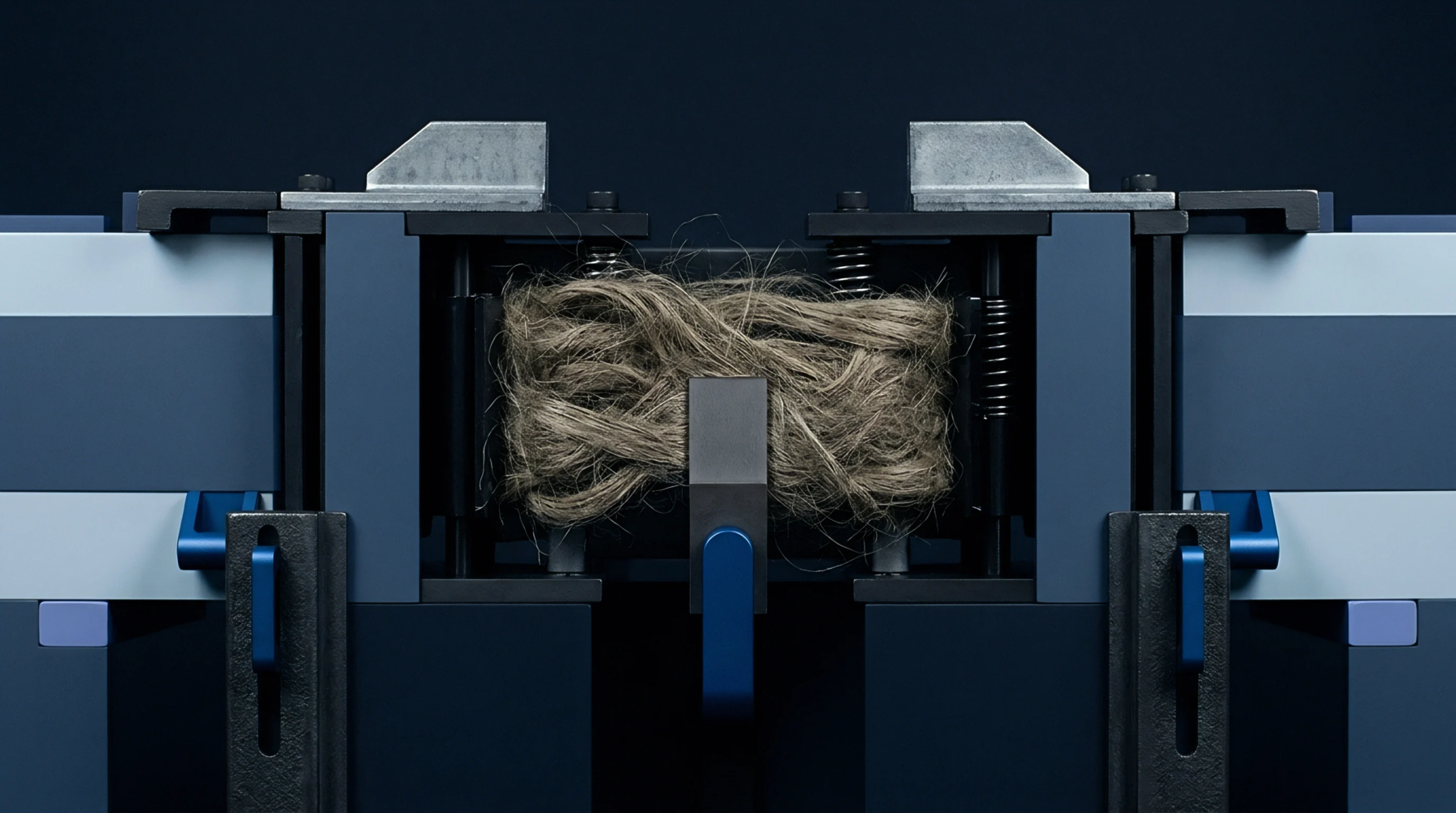
Detect short-staple flax blends in combed line sliver using comb sorter mass arrays and ISO 2370 air permeability tests to stop drafting breaks.

Non-cellulosic residue fractions in flax sliver govern drafting stability, spinnable metric count, and true yarn yield; residual pectin exceeding 1.8 percent spikes end breakage and erodes landed cost discounts.

Jacquard harness setup dictates woven repeat limits by mathematically mapping electronic hook capacity and comber board pitch against reed density and yarn crimp.

Wet spinning fiber mass balances require normalizing oven-dry weights against 12% standard moisture regain and deducting empirical pectin extraction losses.

Target linen weight equals yarn tex multiplied by thread density, adjusted for warp size, crimp, wet process mass loss, and area shrinkage factors.

Non-preferential origin for woven linen fabric assigns strictly to the country where yarn is woven into greige cloth on industrial looms under tariff shift rules.

Verify flax linear density using ISO 2370 cut length gravimetry on conditioned 50 mm bundles to prevent spinning end breaks and landed metre yield loss.

Auditing Chinese linen mills requires reconciling port customs weighbridge tickets against wet-spinning yield equations to expose false mass balance credits.
Linen yarn counts and cloth weight must be verified against dry fiber mass plus standard 12 percent moisture regain to eliminate costly moisture billing errors.
ASTM D5430 four-point scoring normalises greige defects per 100 square yards, capping penalties at four points per yard to decide lot acceptance.

Audit Jiangsu linen mills by reconciling dry-conditioned raw fibre intake against desized fabric output and verified scrap ledgers.

Long staple flax tenacity and scutcher loss dictate yarn spinning limits and processing economics, requiring standardized ISO gauge length testing and mill-level mass balance verification.

Unplanned linen warp breaks increase loom hour costs through weaver repair delays, reduced speed, and greige set marks that trigger four-point demerit downgrades.

Intake weighbridge data cross-checked against scutcher manifests and corrected for moisture regain prevents origin fraud and raw flax short-weight invoicing.

Cottonised short flax inside long-staple lots destroys wet-spinning stability; verify comb-sorter distributions under ISO 6989 before processing.

Classification between Chapter 53 flax and Chapter 63 made-up linen depends strictly on Section XI Note 7 edge finishing, sewing, and structural shape criteria.

Reconciling raw European flax dry mass against finished fabric metres out exposes certified fiber dilution, protecting buyers from origin fraud in Jiangsu mills.

Booking Chinese linen loom capacity requires evaluating warp preparation bottlenecks and machine hours rather than linear metre price quotes alone.

Transitioning hand-loom samples to automated looms requires increasing warp cover factor and tuning shed dynamics to withstand high-speed night-shift tension.

Mass balance credit allocations fulfill voluntary sustainability metrics but fail statutory non-preferential customs origin rules requiring physical transformation proof.

Controlling flax sliver non-cellulosic residue below 2.5 percent eliminates drafting stick-slip force spikes and holds wet-spun yarn air permeability variance under eight percent.

High sett warp contracts reconcile unplanned loom downtime and greige demerit credits by balancing loom hour overhead against four point defect penalties.

Resolving multi-site credit discrepancies requires separating voluntary mass balance ledgers from statutory physical batch origin declarations.
Expertise is a utility, not a secret. sentiention™ publishes its working knowledge as open reference: intelligence layer covering the materials it sources, the markets it enters, and the reference that serves both.