Determining Flax Rove Non-Cellulosic Mass Loss Rates
Determining flax rove non-cellulosic mass loss rates requires standardized chemical extraction to reconcile boiling yield shrinkage against certified origin records.


Substrate
Biochemical Components of Raw Unspun Sliver
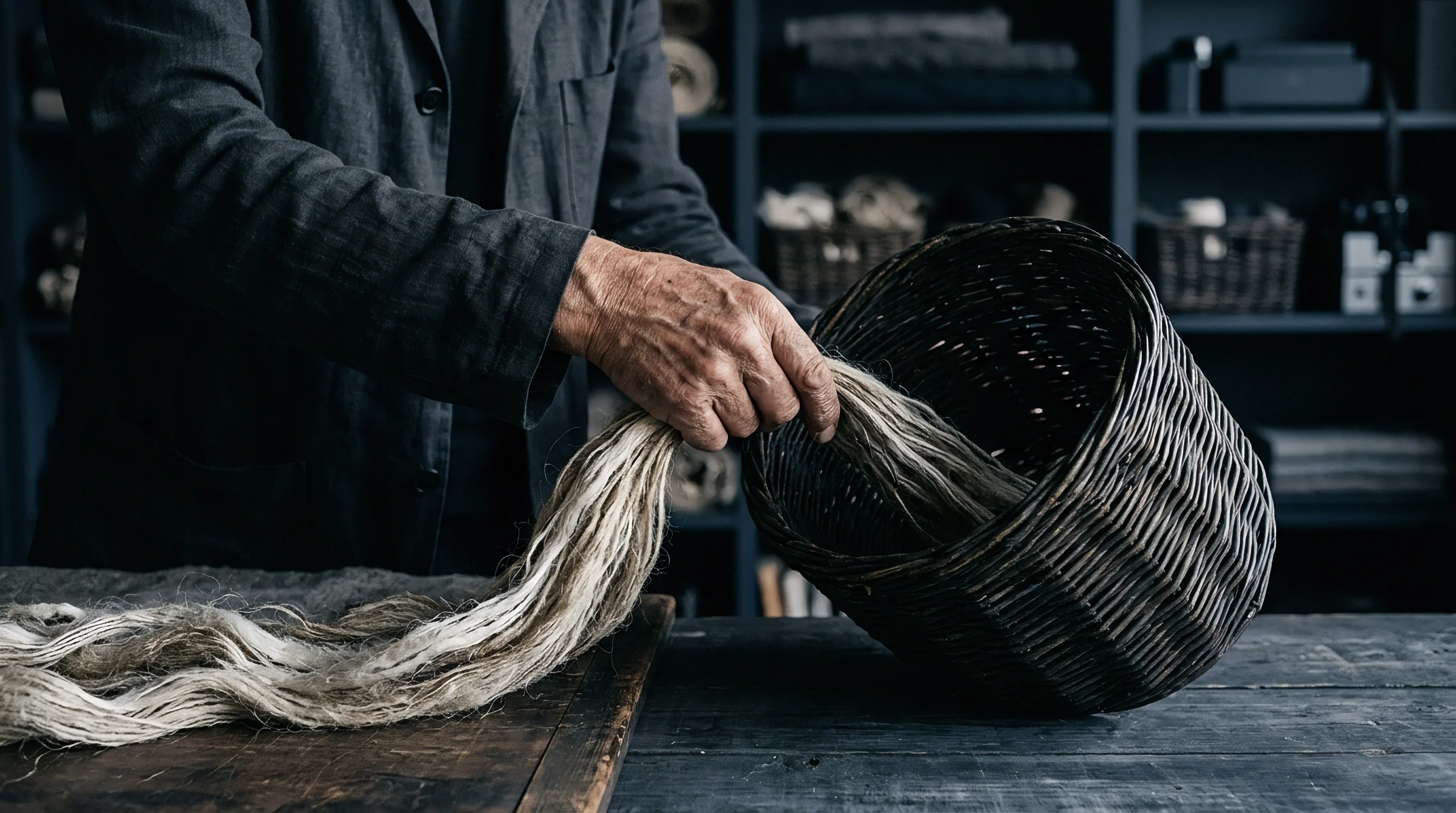
Flax fiber bundles in unspun roving consist of crystalline cellulose microfibrils encased within a matrix of non-cellulosic polymers. Pectins in the middle lamella serve as the primary structural adhesive, holding individual elementary fibers together into technical bundles. Hemicelluloses, dominated by xylan and glucomannan chains, form hydrogen bonds with outer cellulose surfaces, while lipophilic waxes and fats coat the perimeter to limit water absorption during growth.
Any residual lignin remains concentrated in the outer cell walls and middle lamellae of unretted or under-retted straw. Inorganic salts, proteinaceous debris, and epidermal fragments make up the remaining non-cellulosic fraction.
Measuring these non-cellulosic fractions sets the baseline mass that chemical wet-processing removes before fine spinning. Even when incoming lots share identical linear densities, their non-cellulosic content can swing widely based on field weathering, retting duration, and scutching severity. Dew-retted green flax fiber pulled in high-moisture conditions carries between eleven and eighteen percent non-cellulosic material by dry weight.
Water-retted or enzymatic flax fiber falls into a tighter band, typically between eight and twelve percent. Roving destined for wet spinning undergoes an aqueous alkaline scour to dissolve pectins and waxes, allowing elementary fibers to slide freely during drafting over the spinning frame reach.
Boiling unspun roving in alkaline liquors reduces total bundle diameter by removing inter-cellular pectin bridges.
Determining dry mass requires strict thermal equilibrium. Raw flax rove absorbs and sheds ambient moisture rapidly, masking small shifts in organic binder loss unless properly corrected. Standard testing protocol ISO 6741 defines flax fiber dry mass after conditioning at one hundred five degrees Celsius until consecutive weighings agree within zero point one percent.
Calculating non-cellulosic mass loss against this oven-dry baseline keeps ambient humidity fluctuations from skewing mass balance figures.

Impurity Distribution across Processing Stages
Non-cellulosic matter does not separate uniformly during mechanical roving preparation. Heavy shive fragments fall away during hackling and carding, but chemically bound pectins hold fast within the rove structure until wet treatment. Pectins soluble in warm water represent three to five percent of the total dry mass; insoluble calcium pectates require chelating agents or hot sodium hydroxide to undergo saponification and dissolution.
| Component Category | Chemical Structure | Dry Mass Range (%) | Solubility Characteristics |
|---|---|---|---|
| Alpha-Cellulose | Beta-1,4-D-glucan polymer | 72.0 – 82.0 | Insoluble in aqueous alkali; soluble in cupriethylenediamine |
| Hemicellulose | Xylans, glucomannans, glucuronoxylans | 10.0 – 14.0 | Soluble in hot alkaline solutions (5-10% NaOH) |
| Pectic Substances | Polygalacturonic acid salts, rhamnogalacturonans | 4.0 – 8.0 | Soluble in boiling sodium carbonate and chelating agents |
| Lignin | Phenylpropanoid polymer (guaiacyl-syringyl) | 1.5 – 4.5 | Partially soluble under oxidative alkaline conditions |
| Waxes and Lipids | Long-chain fatty acids, alcohols, esters | 1.0 – 2.5 | Soluble in organic solvents (benzene-ethanol, hexane) |
| Ash and Inorganics | Silica, calcium, potassium, phosphate salts | 0.8 – 2.0 | Water-extractable or acid-soluble residual minerals |
The thermal stability of non-cellulosic polymers dictates testing limits. Pushing beyond one hundred five degrees Celsius causes thermal degradation of hemicellulose chains, producing artificial weight loss that balances register as extracted impurities. Volatilization of fatty acids begins near one hundred fifteen degrees Celsius.
Reliable gravimetric methods isolate chemical extraction from thermal oxidation by keeping drying runs locked at one hundred five degrees Celsius under forced air ventilation.
Spinners in Europe and Asia continue to debate whether residual pectin below two percent by weight impairs fine yarn tensile strength during high-speed winding.
Digestion
Chemical Wet Extraction Procedures
Measuring non-cellulosic mass loss in the laboratory involves sequential chemical digestion, typically combining ASTM D1907 with the extraction principles of ISO 1833 to isolate the cellulosic core. The run begins by placing a ten-gram specimen of dried flax rove into a Soxhlet extraction apparatus charged with petroleum ether or an ethanol-toluene solvent mixture. Solvent extraction removes lipophilic waxes and surface fats over twenty reflux cycles.
Weighing the dried residue gives the solvent-extractable lipid yield, which normally falls between zero point eight and two point two percent of initial dry fiber mass.
Alkaline digestion follows wax removal to clear pectic substances and low-molecular-weight hemicelluloses. The degreased rove goes into a boiling bath of either twenty grams per liter of sodium carbonate or two to five grams per liter of sodium hydroxide, held at a liquor-to-goods ratio of twenty to one for uniform penetration through the package. The bath boils under reflux for sixty minutes.
Hydroxide ions cleave ester linkages in pectic acid chains, converting insoluble calcium and magnesium pectates into soluble sodium salts. Gravimetric weighing after rinsing with boiling deionized water and drying at one hundred five degrees Celsius reveals the combined pectin and hemicellulose loss rate.
Dry mass loss calculation applies a straightforward mathematical ratio to isolated sample masses:
Mass Loss Rate (%) = 100 (M_0 – M_1) / M_0
Where M_0 is the initial oven-dry mass of raw flax rove before extraction, and M_1 is the final oven-dry mass of the remaining cellulosic skeleton after solvent, alkaline, and mild acid washing steps. Flushing the sample with dilute acetic acid before the final water wash neutralizes retained sodium ions, preventing residual alkali salts from inflating the post-digestion mass reading.

Which Extraction Reagents Yield Reproducible Results?
Reagent selection alters the measured mass loss rate because different alkalis degrade different hemicellulose fractions during boiling. Standardized comparisons confirm that sodium hydroxide baths extract a higher percentage of short-chain xylans than sodium carbonate baths at equivalent temperatures. The table below compares four chemical extraction protocols run on identical dew-retted flax rove samples.
| Protocol ID | Chemical Reagents Used | Extraction Temp (°C) | Duration (min) | Mean Mass Loss (%) |
|---|---|---|---|---|
| ISO 1833-19 | Petroleum ether + Sodium carbonate (20 g/L) | 100 | 60 | 9.4 ± 0.3 |
| ASTM D2496 | Ethanol-Toluene (1:2) + NaOH (5 g/L) | 100 | 90 | 13.8 ± 0.5 |
| EN 12127 Mod | Hexane + Ammonium oxalate (5 g/L) | 85 | 120 | 6.2 ± 0.2 |
| GB/T 5707 | Ether + NaOH (10 g/L) + H2O2 (3 g/L) | 98 | 60 | 15.1 ± 0.4 |
Acid chlorite digestion serves as the secondary extraction phase when total lignin quantification is required alongside pectin mass loss. Chlorite solutions buffered to pH four point five with sodium acetate selectively oxidize phenolic lignin rings without attacking crystalline alpha-cellulose. Two hours of digestion at seventy-five degrees Celsius isolates the holocellulose fraction.
Subtracting the holocellulose yield from the post-alkali dry mass yields the native lignin content within the roving structure.
Handling extracted rove packages demands strict rinsing discipline. Retained sodium silicate stabilizers or surfactant residues add unextracted tare weight to the sample, obscuring actual organic mass loss. Technicians rinse until effluent electrical conductivity drops below five microsiemens per centimeter, matching the incoming distilled supply.
Oven drying occurs immediately after rinsing to prevent fungal or bacterial degradation of warm, moist fiber packages prior to final balance registration.
A ten-degree drop in digestion liquor temperature reduces pectin extraction efficiency by a third, leaving unreacted binders inside the fiber core.


Slippage
Industrial Roving Boiling and Yield Shrinkage
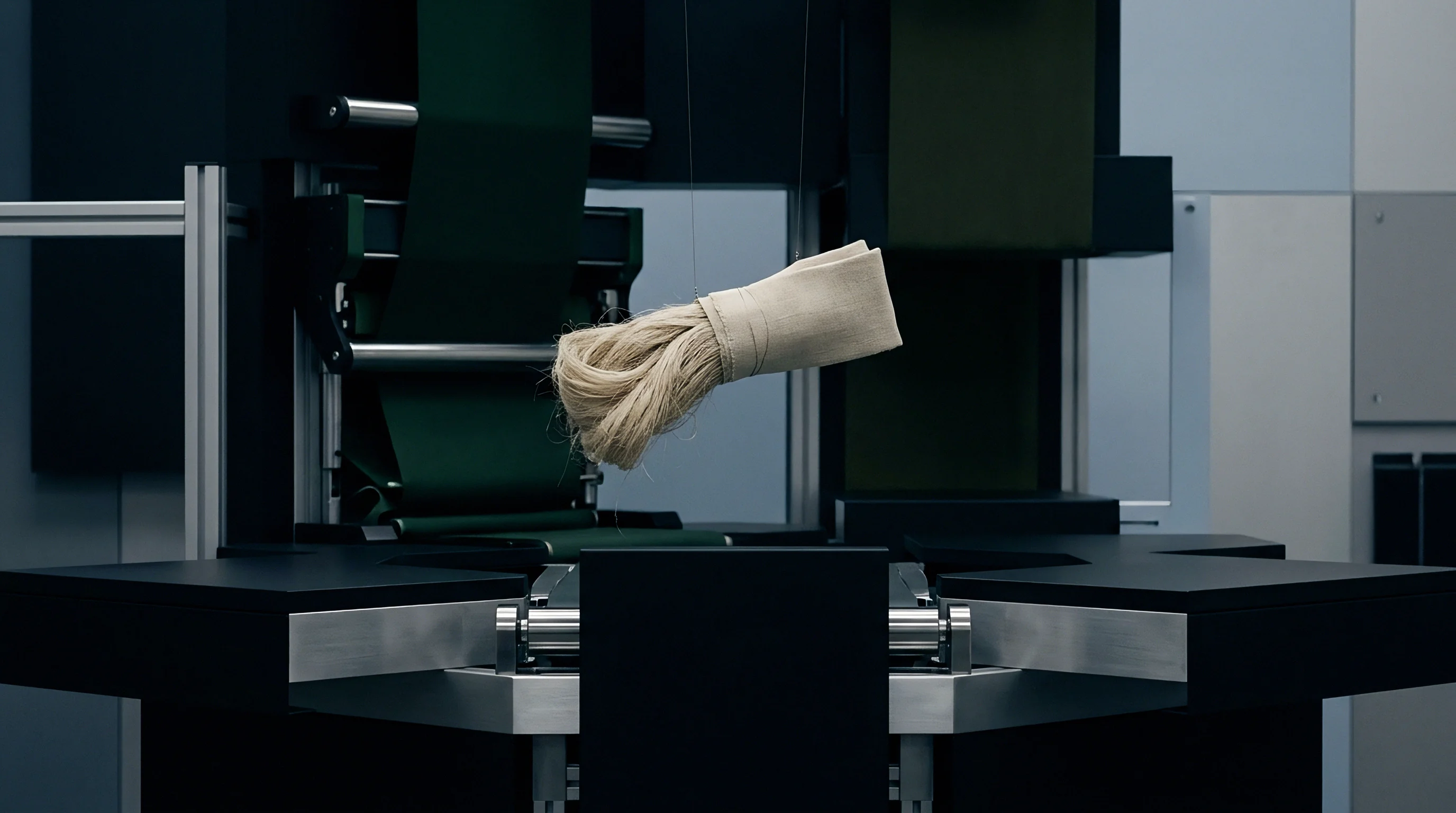
Commercial wet-spinning mills wind flax roving onto perforated stainless steel tubes inside pressurized dyeing vessels before sending it to the ring frames. Industrial rove boiling removes non-cellulosic impurities under controlled temperatures and chemical dosing to achieve target softness and drafting behavior. Mass loss occurring inside these kier vessels represents material purchased but never spun.
When a mill buys one thousand kilograms of raw flax rove, non-cellulosic extraction converts a predictable portion of that dry mass into dissolved effluent slurry.
Industrial rove boiling converts non-cellulosic fiber mass into dissolved organic effluent, causing irreversible dry mass shrinkage before spinning.
Tracking mass balance across a commercial wet-spinning batch illustrates the financial impact of mass loss. Consider an industrial order for spinning forty-metric-ton wet-spun flax yarn at NM 26 metric count. The mill purchases raw unspun flax roving certified at a moisture content of twelve percent.
Technical specifications require rove boiling to reduce non-cellulosic mass by twelve point five percent on a dry basis to achieve uniform drafting force over the spinning frame reach.
The step-by-step arithmetic walks raw input through dry fiber yields:
- Raw Fiber Tonnage Delivery ~ Nominal gross delivered mass equals 40,000 kilograms of raw flax roving at 12.0% moisture regain.
- Initial Dry Mass Calculation ~ Dry fiber mass = 40,000 kg (1 – 0.120) = 35,200 kilograms of oven-dry roving mass.
- Chemical Mass Loss Application ~ Non-cellulosic mass loss rate is established by digestion testing at 12.5% oven-dry mass loss. Extracted dry mass = 35,200 kg 0.125 = 4,400 kilograms of dissolved impurities.
- Net Clean Dry Fiber Remaining ~ Residual dry cellulose mass = 35,200 kg – 4,400 kg = 30,800 kilograms of structural fiber.
- Spinning Waste Allowance ~ Mechanical spinning waste (fly, thrum, and bobbin residue) accounts for an additional 4.0% loss of structural dry fiber. Fiber lost to spinning waste = 30,800 kg 0.040 = 1,232 kilograms.
- Final Yarn Dry Mass ~ Output dry yarn mass = 30,800 kg – 1,232 kg = 29,568 kilograms of dry flax yarn.
- Standard Commercial Regain Application ~ Applying the official commercial moisture regain for flax yarn (12.0%) yields total billable yarn weight = 29,568 kg / (1 – 0.120) = 33,600 kilograms of finished yarn.
Total mass conversion yield across this batch equals eighty-four percent of initial gross raw roving mass. The chemical extraction stage alone accounts for more than three-quarters of the total weight loss experienced between the bale store and the yarn packing hall.

Operational Causes of Unplanned Yield Deviations
Divergence between laboratory mass loss test values and bulk mill yield occurs when chemical concentration, liquor flow rate, or vessel bath temperature drifts during industrial rove boiling. Perforated tubes loaded unevenly inside boiling kiers cause channelling, where alkaline liquor bypasses dense roving packages to flow through soft winding zones. Under-boiled sections retain non-cellulosic gums, leading to erratic drafting resistance during wet spinning, frequent end-breaks, and irregular yarn linear density.
Over-boiling occurs when liquor circulation extends beyond process limits or sodium hydroxide concentrations climb too high. Excessive chemical strength strips structural hemicelluloses from cell walls, degrading elementary fiber tensile strength and generating heavy fly waste under the draft rollers. Removing too much non-cellulosic mass also shifts yarn metric count finer than target specifications, reducing total meterage produced per raw fiber ton.
Failing to measure and adjust for non-cellulosic mass loss before calculating spinning oil add-on rates leads to inaccurate lubricant concentrations on the dry yarn, causing yarn breakage during high-speed warping and loom weaving.

Sieve
Audit Standards and Scheme Alignment
Provenance documentation schemes rely on strict material mass balances to trace European flax fiber from field through spinning mills into finished fabric bolts. European Flax certification protocols, audited under ISO 17065 frameworks, track physical segregation and mass accounts across all conversion stages. Reconciling physical weight missing from raw rove inventories against certified transaction certificates remains a core audit challenge.
When audited mills show dry mass loss exceeding laboratory non-cellulosic benchmark figures, auditors must verify whether material was lost as chemical effluent or substituted with uncertified lower-grade flax fiber.
Transaction certificates issued by certifiers specify net dry fiber weights passed along the chain of custody. Mill auditors verify claims by comparing incoming raw rove weight against outgoing spun yarn weight, applying certified non-cellulosic mass loss rates as an allowable shrinkage factor. Audit protocols mandate that mills collect monthly gravimetric digestion data for every raw rove lot processed, keeping permanent laboratory records for three years.
Auditors disqualify mass-balance claims when mill yield loss exceeds declared chemical digestion rates without documented process justification.
Independent laboratories performing mass loss testing must hold ISO/IEC 17025 accreditation for textile chemical testing, specifically listing ISO 1833 or equivalent extraction methods within their accredited scope. Scope certificates issued to spinning mills become invalid if non-cellulosic extraction processes alter fiber chemical identity beyond established scheme boundaries without certified notification.
Discrepancies between Declarations and Laboratory Benchmarks
Spinning mills operating outside European oversight frequently account for mass loss discrepancies by submitting generic certification statements or non-standard laboratory reports. Common discrepancies identified during provenance audits include:
- Non-Standard Regain Assumptions ~ Calculating mass loss using ambient wet weight instead of oven-dry mass, masking up to four percent of non-cellulosic loss inside unadjusted moisture regain variances.
- Omission of Solvent Extraction ~ Skipping organic solvent wax removal before alkaline boiling, which underestimates total non-cellulosic mass loss by one to two percent by leaving wax residues on extracted samples.
- Unaccredited Testing Facilities ~ Relying on internal mill laboratory reports lacking ISO/IEC 17025 calibration documentation and missing secondary control sample verification.
- Extrapolated Batch Averages ~ Applying a single historical mass loss rate across multiple flax crops, ignoring seasonal variation in pectin content caused by field weather changes.
Unexpected yield losses reflect either natural variations in European fiber retting or process control failures and uncertified fiber blending.


Remedy

Commercial Adjustments and Landed Cost Mechanics
Flax rove purchase contracts must incorporate non-cellulosic mass loss thresholds to protect yarn spinners and downstream sourcing managers from paying fiber prices for removable impurities. Standard international purchasing agreements establish a baseline dry non-cellulosic mass loss allowance, typically fixed at eleven point zero percent by dry weight. When independent accredited laboratory assays reveal mass loss rates exceeding agreed contract tolerances, commercial price adjustment mechanisms activate automatically.
Contractual price adjustments use dry fiber mass yield formulas to recalibrate landed invoice totals. If a shipment of raw flax rove demonstrates a dry non-cellulosic mass loss of fourteen point two percent against a contract baseline of eleven point zero percent, the net dry fiber delivery falls three point two percent below specification. Contract clauses specify that the buyer deducts the full value of the missing dry fiber weight directly from the commercial invoice, alongside an additional processing surcharge for excess chemical consumption during mill boiling.
| Parameter | Contract Baseline | Assayed Lot Result | Variance Impact |
|---|---|---|---|
| Gross Delivered Weight | 20,000 kg | 20,000 kg | 0 kg |
| Declared Moisture Regain | 12.0% | 12.0% | 0.0% |
| Oven-Dry Fiber Weight | 17,600 kg | 17,600 kg | 0 kg |
| Non-Cellulosic Mass Loss Rate | 11.0% | 14.5% | +3.5% non-cellulosic mass |
| Clean Dry Fiber Yield | 15,664 kg | 15,048 kg | -616 kg clean dry fiber |
| Yarn Production Potential (NM 26) | 17,080 kg | 16,410 kg | -670 kg finished yarn yield |
| Base Fiber Price ($/kg dry) | $8.50 | $8.50 | $0.00 |
| Adjusted Lot Commercial Value | $133,144 | $127,908 | -$5,236 invoice deduction |
Customs duty classification under the Harmonized System depends on non-cellulosic content and processing status. Raw unspun flax roving falls under HS heading 5301, carrying specific duty rates based on retting state. Roving that has undergone partial chemical scouring or bleaching shifts tariff classification to HS heading 5306 or 5308 depending on twist insertion and linear density.
Misclassifying scoured roving as raw fiber to lower import tariff liabilities invites severe customs penalties and audit seizure in destination markets.

Contractual Protection and Enforcement Clauses
Buyers incorporate exact testing specifications and price settlement formulas into supply contracts before issuing purchase orders to foreign fiber merchants or spinning mills:
“Non-cellulosic mass loss rates shall be determined from composite samples drawn from five percent of delivered bales per lot, tested in accordance with ISO 1833-19 by an ISO/IEC 17025 accredited laboratory. If the dry non-cellulosic mass loss exceeds the agreed specification baseline of eleven point zero percent by more than zero point five percentage points, the seller agrees to compensate the buyer for the missing net dry fiber mass at contract unit rates and cover all secondary testing fees.”