Standard Bale Moisture Verification and Commercial Mass Adjustment
Commercial mass adjustment corrects delivered flax invoice weight by calculating bone-dry mass via oven drying and applying standard regain allowances.


Hygroscopy
Thermodynamic Water Binding in Bast Cell Walls
Flax bundles consist of porous, hydrophilic structures where crystalline cellulose microfibrils are embedded in an amorphous matrix of hemicellulose, pectin, and lignin. Atmospheric vapor enters the cell walls by hydrogen bonding with accessible hydroxyl groups; at elevated relative humidity, free water accumulates in the lumen cavity while bound water fills the intercellular voids. Equilibrium moisture content varies directly with ambient relative humidity and temperature, driven by the physical state of the bast polymer matrix.
Drying and re-wetting cycles exhibit thermodynamic hysteresis: a fibre lot desorbing moisture toward equilibrium retains a higher water fraction than an identical lot absorbing moisture from a dry state under matching conditions. Because scutched long flax bundles retain non-cellulosic shive and epidermal remnants, raw fibres display higher water affinity than hackled line slivers or thoroughly scoured yarns. Shive particles have open, porous cell structures that quickly trap liquid water during transit or damp storage, distorting simple surface measurements.
Bound water proportion in flax bast bundles shifts along sorption hysteresis curves between eight and twenty-two percent relative moisture depending on ambient dew point.
Moisture Regain versus Moisture Content Definitions
Commercial transactions depend on a precise distinction between moisture regain and moisture content. Regain measures water mass as a percentage of bone-dry fibre mass, whereas moisture content expresses water mass as a percentage of total moist fibre mass. Conflating the two can significantly distort valuations on commercial shipments.
| Fibre Processing State | Standard Reference Code | Official Regain Allowance (percent) | Equivalent Moisture Content (percent) |
|---|---|---|---|
| Raw Scutched Flax Fibre | ISO 6741-1 / CELC | 12.00 | 10.71 |
| Hackled Line Flax Sliver | ISO 6741-1 / CELC | 12.00 | 10.71 |
| Combed Flax Tow | ISO 6741-1 | 12.00 | 10.71 |
| Wet-Spun Linen Yarn | ISO 6741-2 | 12.00 | 10.71 |
| Dry-Spun Linen Yarn | ISO 6741-2 | 12.50 | 11.11 |
Converting between regain and content relies on exact arithmetic. When a lab report indicates a moisture regain of twelve percent, the corresponding moisture content reads ten point seven one percent. Billing errors occur when suppliers apply regain formulas directly to total wet weight without first converting to an oven-dry baseline mass.
Fundamental thermodynamic limits govern the rate at which bound water inside high-density flax bales reaches true equilibrium during transoceanic container transit.


Probe

Direct Resistance and Dielectric Field Measurements
Rapid field assessment relies on portable electronic meters inserted directly into compressed bales. Electrical resistance devices measure current flow between insulated metal pins driven into the bundle; absorbed water increases ionic conductivity, lowering resistance logarithmically across the measurement zone. Dielectric instruments project high-frequency electromagnetic fields into the bale to record permittivity changes caused by water molecule polarization.
Hydraulic pressing compresses scutched flax to densities between two hundred fifty and three hundred fifty kilograms per cubic metre. This tight packing increases contact pressure against measurement pins, artificially lowering electrical resistance and causing instruments to overestimate water content if density adjustments are ignored.
Standard dock inspection clauses void electronic needle readings if ambient container temperature strays outside the ten to thirty degree Celsius calibration window.
Bale Density Profiles and Penetration Error Patterns
Moisture distribution inside commercial flax bales is rarely uniform. Exterior zones adjust quickly to ambient air inside shipping containers, while dense inner cores retain moisture present during original packaging or absorb water that migrates under thermal gradients in transit. Penetration depth ultimately governs sampling validity.
- Pin Length Shortfall prevents sensor tips from reaching the core zone where water concentration frequently exceeds perimeter measurements by two to three percentage points.
- Bale Density Gradient creates variable electrical contact resistance along the needle electrode, introducing systematic errors in digital conductivity conversion algorithms.
- Surface Condensation Accumulation creates localized high-conductivity channels along outer bale skins, triggering false high-moisture alarms on handheld screen displays.
- Temperature Sensitivity Shift alters conductivity readings by roughly two percent per degree Celsius deviation from standard laboratory calibration points.
Failing to apply density-compensated probe protocols leads to improper lot acceptance, exposing spinning mills to hidden mold growth, rotting fibre, and severe draft variations in the hackling room.

Desiccation
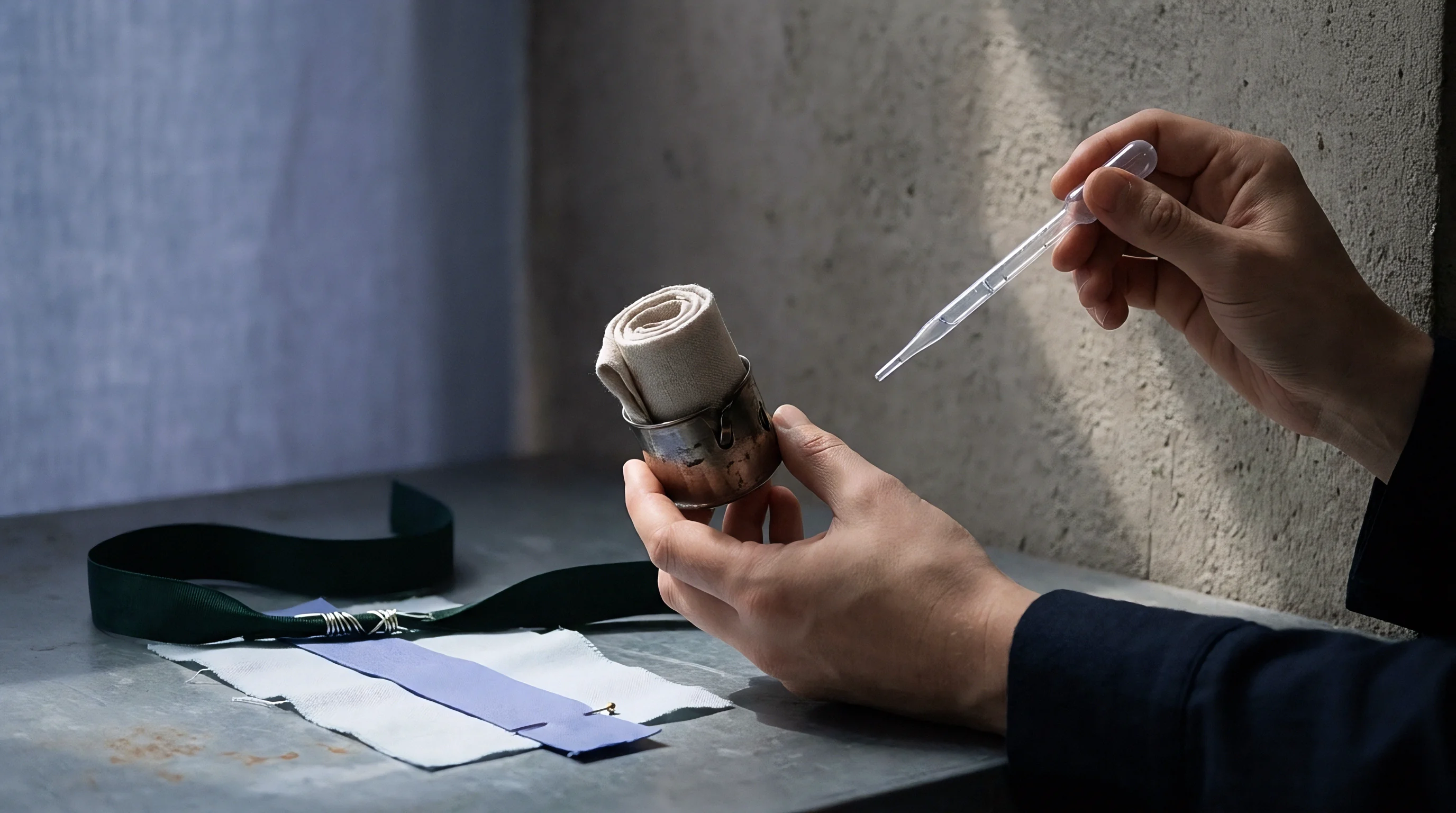
Oven Drying Reference Standards under ISO 6741
Gravimetric oven drying remains the decisive reference procedure for resolving moisture disputes. ISO 6741 specifies extracting representative core samples from randomly selected packaging units. Extracted test specimens are transferred immediately into hermetically sealed containers to prevent moisture exchange with ambient air before initial gross weighing.
- Weigh sealed specimen containers on a calibrated analytical balance to establish initial gross wet mass to an accuracy of zero point zero one grams.
- Transfer loose fibre bundles into a ventilated drying oven featuring forced air circulation operating at a controlled temperature of one hundred five degrees Celsius plus or minus two degrees.
- Expose specimens to continuous thermal drying for a minimum duration of three hours prior to executing initial dry mass weighing cycles.
- Perform successive mass measurements at fifteen-minute intervals until the mass change between consecutive weighings drops below zero point zero five percent.
- Record final stabilized dry weight and calculate absolute dry mass after deducting container tare values.
Standardized oven protocols ensure reproducible metrics across international commercial laboratories.

Do High Drying Temperatures Degradate Flax Fibres?
Thermal processing above one hundred five degrees Celsius volatilizes low-molecular-weight organic compounds alongside water. Pectin binders, natural waxes, and residual retting lipids soften or evaporate under prolonged thermal stress, artificially inflating measured moisture loss figures and overstating true water content.
Elevated laboratory oven temperatures drive off essential natural waxes, artificially exaggerating calculated moisture loss and penalizing the seller on final invoice mass adjustments.

Ledger
Commercial Mass Mathematical Frameworks
Raw invoice weight rarely matches true commercial weight. Commercial mass adjustments reconcile physical scale weight measured at the arrival port with standard official moisture regain allowances ~ typically twelve percent ~ recognized by global trade bodies.
Determining commercial mass relies on absolute dry mass derived from laboratory oven testing. Commercial mass equals absolute dry mass multiplied by one plus the official standard regain allowance divided by one hundred. If a shipment carries added spinning oils or sizing agents, the calculation incorporates additional official allowances for processing additives.
| Invoiced Net Mass (kg) | Tested Moisture Content (percent) | Calculated Dry Mass (kg) | Commercial Mass at 12% Regain (kg) | Financial Settlement Adjustment (EUR) |
|---|---|---|---|---|
| 20,000 | 10.71 (12.0% Regain) | 17,858 | 20,000 | 0.00 |
| 20,000 | 12.28 (14.0% Regain) | 17,544 | 19,649 | -1,579.50 |
| 20,000 | 13.79 (16.0% Regain) | 17,242 | 19,311 | -3,100.50 |
| 20,000 | 9.09 (10.0% Regain) | 18,182 | 20,364 | +1,638.00 |
A 20-tonne scutched flax shipment received at 14 percent actual regain contains 351 kilograms of excess billed water worth over 1,500 Euros at current market rates.

Commercial Mass Worked Calculation
Consider a commercial lot of raw scutched long flax with a delivered net scale weight of twenty thousand kilograms. Sampling according to ISO 6741 yields a laboratory-verified moisture content of thirteen point seven nine percent, corresponding to an actual moisture regain of sixteen point zero percent. The official commercial regain allowance for raw scutched flax is twelve point zero percent, with base contract pricing at four euros and fifty cents per kilogram.
Step one computes total dry mass by multiplying net scale weight by one minus moisture content expressed as a decimal: twenty thousand multiplied by zero point eight six two one equals seventeen thousand two hundred forty-two kilograms dry mass. Step two calculates commercial mass by applying the twelve percent standard regain factor: seventeen thousand two hundred forty-two multiplied by one point one two equals nineteen thousand three hundred eleven point zero four kilograms. Step three determines the mass reduction: twenty thousand minus nineteen thousand three hundred eleven point zero four equals six hundred eighty-eight point nine six kilograms of excess water.
Step four calculates the financial deduction: six hundred eighty-eight point nine six multiplied by four point fifty results in a credit adjustment of three thousand one hundred point thirty-two euros due to the buyer.
- Laboratory Test Certificate stating method-compliant sampling, measured initial mass, exact drying temperature, and final stabilized dry mass figures.
- Certified Weight Docket issued by an authorized weighmaster at the point of container unsealing recording exact gross, tare, and net scale mass.
- Contractual Regain Specification defining agreed allowance percentages for clean fibre, residual shive content, and non-cellulosic matter.
CELC Contract Clause 14 specifies that commercial mass calculated from accredited laboratory dry mass tests replaces scale mass as the sole basis for final invoice settlement.


Clause

Contractual Moisture Tolerances and Settlement Mechanisms
Commercial agreements set operational boundaries for moisture deviations before formal financial claims trigger. Contracts establish a neutral tolerance band, typically plus or minus zero point five percentage points from official regain allowances; readings falling within this window settle at full contract price without administrative adjustments.
Exceeding upper tolerance thresholds triggers automated billing debits or lot rejection. When delivered moisture content exceeds fifteen percent, long-staple flax faces severe risk of anaerobic bacterial degradation, fibre weakness, and localized rot during warehouse storage. Under these conditions, buyer options expand from direct invoice reductions to full lot rejection with redelivery compelled at seller expense.
A neutral moisture tolerance window prevents administrative billing disputes over minor environmental humidity fluctuations during transport.
Dispute Resolution and Independent Laboratory Protocols
Disagreements over field moisture tests compel joint re-sampling routines under formal arbitration standards. Independent accredited inspection agencies draw sealed counter-samples in duplicate during the joint opening of disputed bales: one specimen undergoes immediate referee testing at an agreed third-party laboratory, while the second stays in climate-controlled storage reserved for tribunal verification.
Settling claims requires strict adherence to standardized sampling timeframes. Independent testing costs fall entirely on the party whose initial measurements stray furthest from referee laboratory results, enforcing disciplined field testing across international shipping networks.