
Auditing Mass Balance Reconciliation across Offshore Linen Spinning Mill Operations
Mass balance audits across offshore linen mills require adjusting physical yields for moisture regain and accounting for secondary co-products.

Mass balance audits across offshore linen mills require adjusting physical yields for moisture regain and accounting for secondary co-products.

Secondary wall microfibrillar angle directly limits wet spun line yarn tenacity by setting crystallite load distribution before trough degumming.
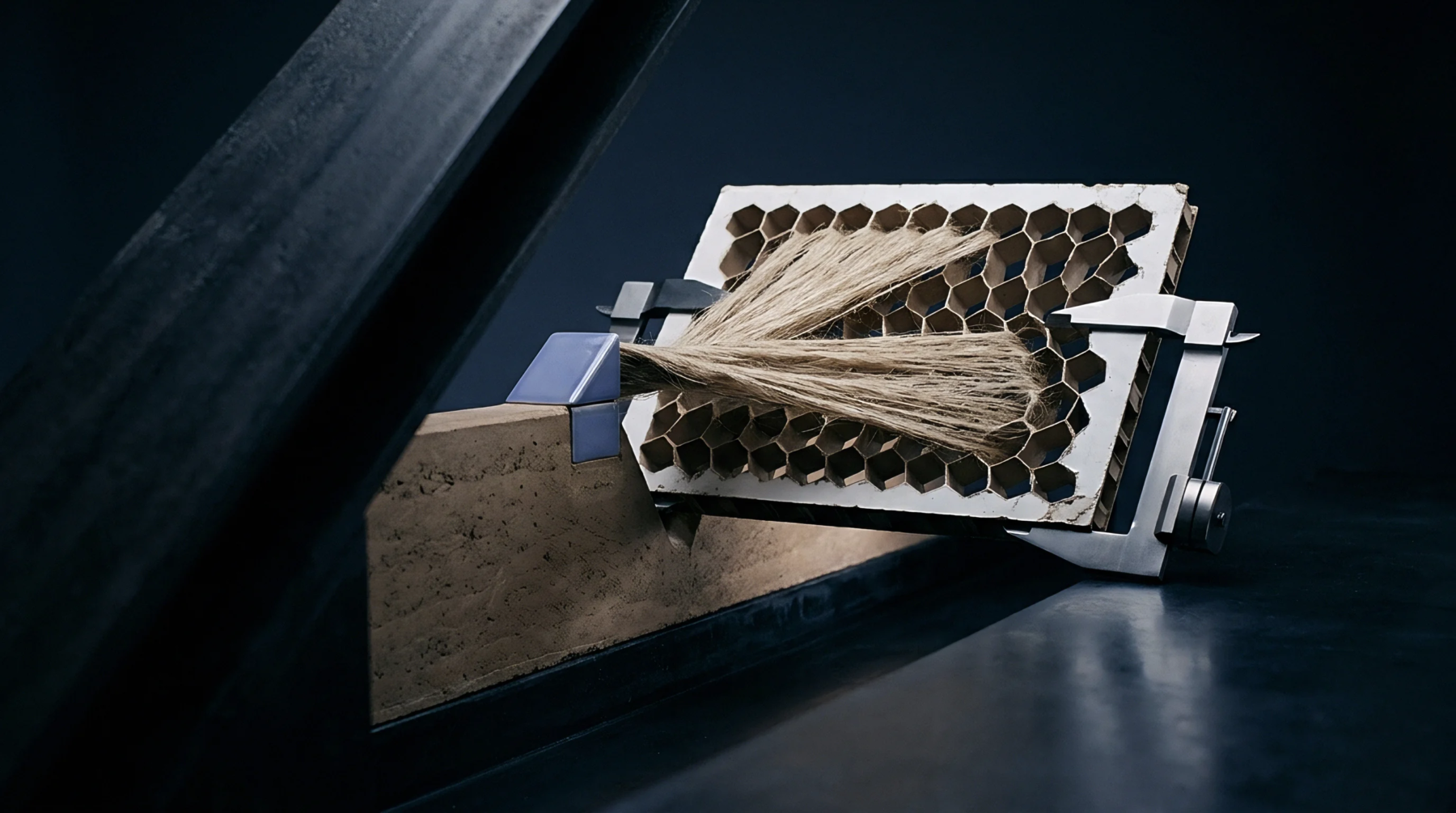
Narrow crystallite orientation dispersion below 14 degrees FWHM maximizes wet spinning yields and fine count limit up to Nm 60 in long staple flax.

Isotopic testing exposes flax origin by comparing carbon, oxygen, and strontium isotopes against mass balance records to prevent Asian spinning mill blending.

Widened microfibril angles reduce single fiber tenacity by increasing matrix shear stress, requiring X-ray diffraction checks to prevent yarn breakage.

Hackling yield limits govern origin proof: one hundred kilos of scutched flax produces fifty-eight kilos of line yarn, requiring tow mass tracking.

Moisture regain directly alters yarn linear density, requiring strict shed humidity control and ISO 2060 dry mass corrections to stabilize rapier weaving mechanics and landed cloth costs.

Non-preferential origin under Union Customs Code Annex 22-01 hinges on meeting primary processing rules or proving predominant constituent fiber weight.

Calculating linen warp sett and fabric weight requires converting Lea to Tex, applying cover factor limits, accounting for crimp, and factoring in finishing mass losses.

Linen Lea converts to Metric count via NeL multiplied by 0.604772, while direct Tex equals 1653.52 divided by NeL, adjusted for 12% moisture regain.

Isothermal volatilization modeling isolates water desorption from organic loss, preventing dry flax mass overestimation during gravimetric regain testing.

Predictive Weibull modeling identifies weak-link bast yarn flaws to optimize shed tension, preventing warp breaks and protecting high-speed loom yield.

Single strand tensile performance in wet spun linen dictates loom stops, dynamic failure rates, and landed cloth cost through gauge-length sensitivity and tenacity CV.

Non-preferential origin verification requires matching mill processing yield records against issuing chamber stamps and customs tariff shift rules.

Trapped shear modulus rises linearly with chemical cross-link density while interstitial woven constraint scales effective shear stiffness by factor 1.4 to 2.2.
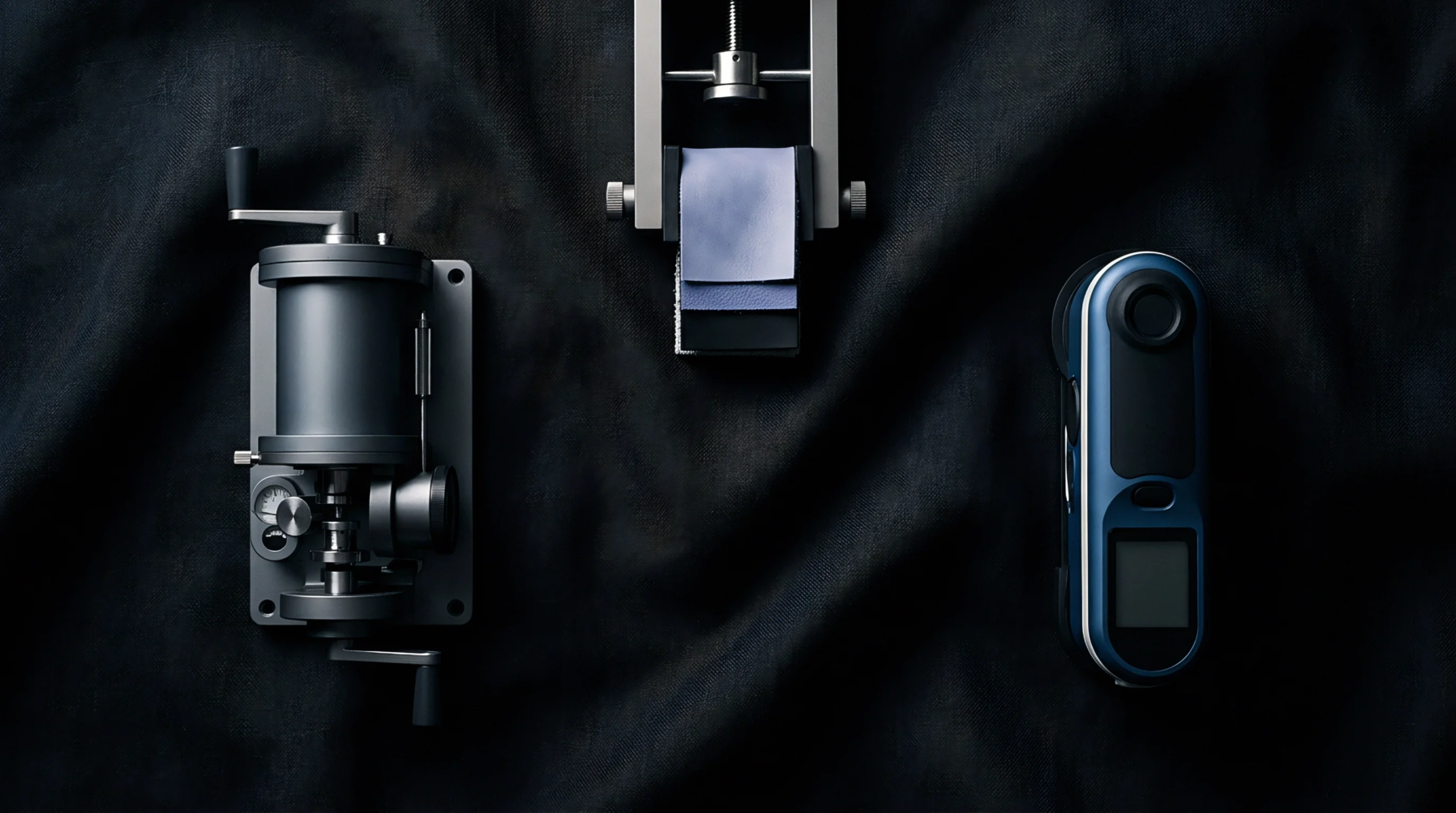
Evaluating unfinished linen crimp by ISO 7211-3 unstraightened thread ratios prevents yarn displacement faults and stabilizes post-scour finished fabric weight.

Controlling pectin dissolution kinetics via balanced chelation and temperature protects fiber tenacity while enabling smooth slip draft in fine flax spinning.

Non-cellulosic thermogravimetric kinetic analysis quantifies binder levels to prevent hackling yield losses and wet-spinning breakage.

Flax roving wet spinning attenuation defects stem from improper hot-water pectin softening and front roller nip slip, manageable through precise temperature and pressure control.

Statutory non-preferential origin depends on substantial processing steps, whereas voluntary chain-of-custody certificates track raw material identity.

Standard moisture regain in scutched flax fibre is set at 12.0% of bone-dry mass using ISO 6741-1 forced-convection oven drying at 105 degrees Celsius.

X-ray scattering and polarized Raman spectroscopy determine flax microfibril angles to project spinning performance and yarn tenacity.

Linen warps lose up to 30% of set tension during idle loom stoppages through viscoelastic creep, requiring automated reverse let-off to prevent pick barres.

Reconciling wet-spun long line flax demands subtracting hot-bath pectin extraction loss and comb waste from certified fiber transaction receipts.

Calibrating electronic let off parameters requires tuning PID loops and phase offsets to manage flax fiber rigidity and prevent dynamic tension spikes.

Warp streaks stem from localized end-spacing variations, tension differentials during beaming, linear density fluctuations, or unequal sizing penetration.

Resolving isotopic database gaps for multi-region blended flax requires multi-element isotope unmixing models coupled with mill mass-balance audits.
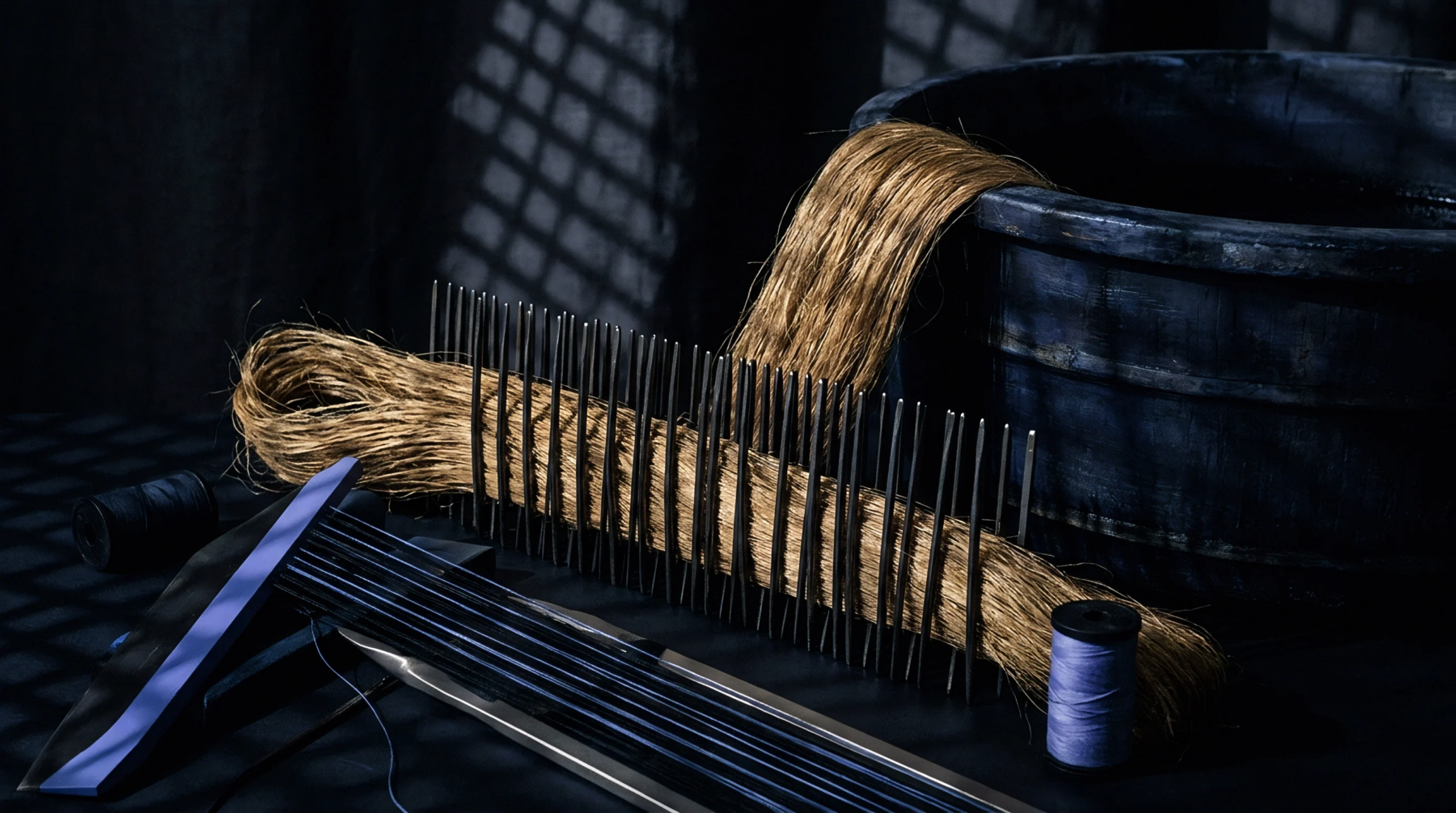
Low S/G monomer ratios in flax middle lamella increase lignin cross-linking, elevating wet drafting force variability and driving yarn count instability.

Controlled pectin extraction and asymmetric shed tuning enable stable air-jet linen weaving at 700 picks per minute while reducing landed fabric cost.

Off loom mass loss in linen greige averages 14 to 22 percent, requiring correction for sizing pickup, moisture regain, and non cellulosic scour extraction.
Expertise is a utility, not a secret. sentiention™ publishes its working knowledge as open reference: intelligence layer covering the materials it sources, the markets it enters, and the reference that serves both.