Weft Frequency
The count of transverse yarns inserted per unit of length in a finished piece of cloth defines the pick density. This measurement determines the tightness of the construction and the final weight of the textile produced on the loom. High values imply a tighter, firmer hand, while lower counts result in a more porous and lighter fabric structure.
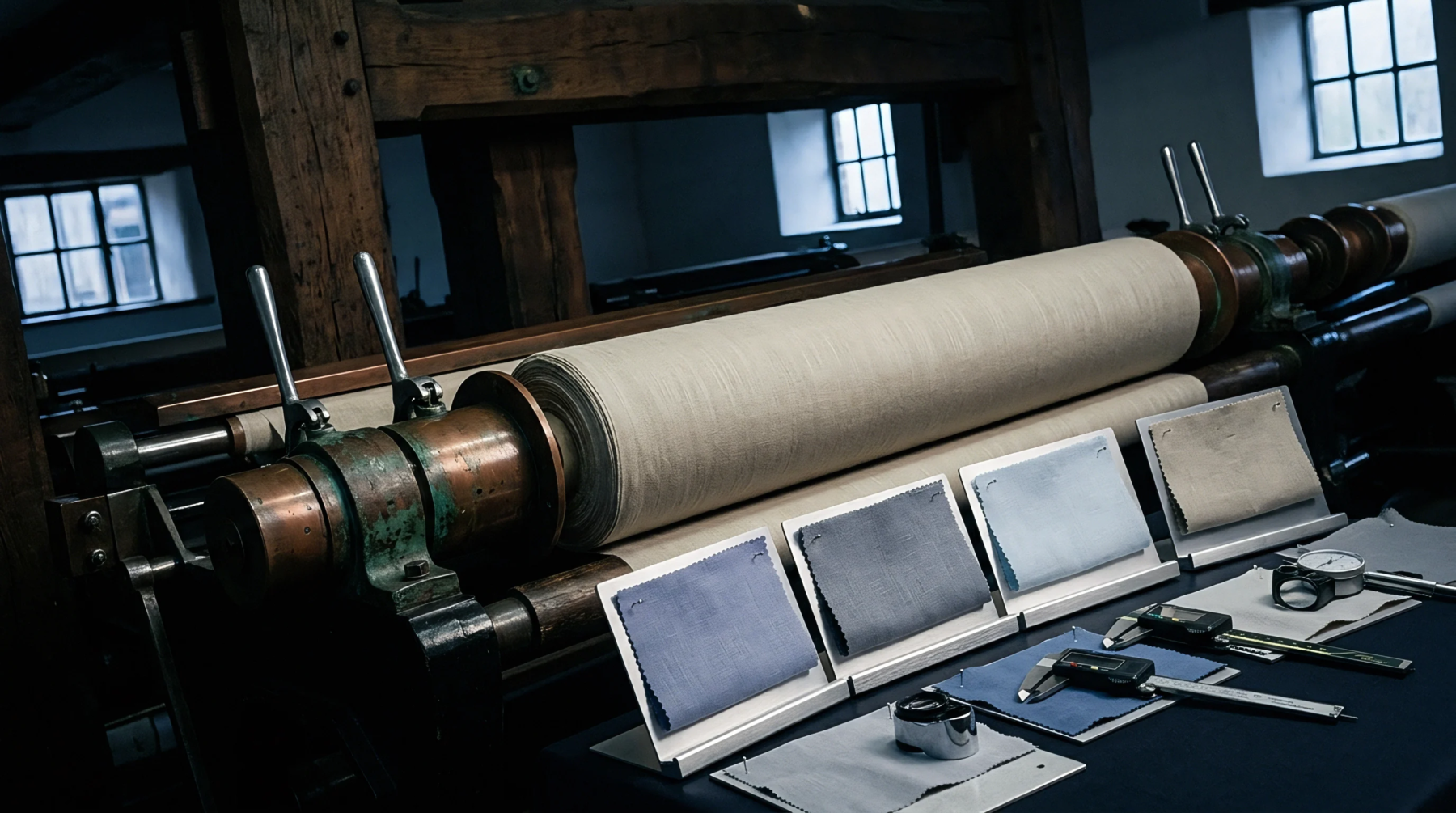
Analysts record this figure on the technical specification sheet during the quality control stage of finishing.
Production Logic
Weaving mechanics dictate that the reed force and the shed geometry constrain the maximum achievable insertion rate. A technician observes that yarn diameter limits how many horizontal elements fit within a measured centimetre. Excessive forced insertion causes yarn breakage or reed damage, which stops the production run immediately.
This physical barrier defines the upper bound of the construction parameters provided by the buyer.
Export Calibration
Customs and trade bodies utilize this count to verify the classification and dutiable weight of linen shipments entering international markets. Documentation presented at the point of origin must match the physical count found during random border inspections. Discrepancies between the stated density on the packing list and the tested result lead to reclassification or the assessment of additional tariffs.
Accurate measurement of this variable prevents shipment rejection at the destination port.