Evaluating Long Term Viscoelastic Creep and Stress Relaxation in Linen Warps under Idle Loom Tension
Linen warps lose up to 30% of set tension during idle loom stoppages through viscoelastic creep, requiring automated reverse let-off to prevent pick barres.

Strain
Flax yarns deform continuously over time when sustained mechanical tension acts on the warp sheet during loom downtime. Unlike synthetic filament yarns that display predictable entropic elasticity, bast fibers depend on a complex hierarchy of crystalline cellulose microfibrils bound within an amorphous inter-fibrillar matrix. Holding a warp beam under static tension during planned shutdowns or unexpected breakdowns initiates molecular shifts within this matrix.
Stress relaxation occurs as internal tensile forces decay under constant geometric extension, altering the tension profile across the reed width.

Microstructural Basis of Cellulosic Viscoelasticity
Bast fibers consist of highly oriented crystalline cellulose microfibrils embedded in an amorphous matrix of hemicellulose and pectin. Crystalline domains provide the initial high modulus and tensile strength, while amorphous zones contain hydrogen bond networks that rupture and reform under continuous load. When tension remains applied during idle loom hours, water molecules within the amorphous regions act as dynamic plasticizers.
Hydrogen bonds between neighboring hemicellulose chains slip under load, causing irreversible microfibrillar displacement that converts stored elastic energy into plastic strain and permanent tension loss.
Spinning methods further modify this viscoelastic response. Wet-spun linen yarns feature highly aligned fiber bundles bound by re-solidified pectin, yielding a rigid structure with a high initial modulus and low creep compliance. Dry-spun linen yarns retain a looser, less aligned bundle geometry, leaving them more susceptible to time-dependent extension.
Under continuous warp tension on an idle loom, dry-spun yarns experience higher creep rates than wet-spun equivalents of identical count. Polymer chain slippage accelerates in humid weaving sheds, reducing the residual mechanical energy available to pull weft yarns tight upon restart.
Sustained idle warp tension at 22 cN/tex causes a secondary creep strain rate averaging 0.04 percent per hour in 100 percent wet-spun linen yarns at 65 percent relative humidity.

Standard Linear Solid Modeling for Linen Warps
Mathematical models predict load relaxation by combining elastic springs with viscous dashpots in parallel and series configurations. The Maxwell model captures short-term relaxation but fails to represent long-term equilibrium stress, whereas the Kelvin-Voigt model accounts for delayed elastic strain but predicts unrealistic instantaneous stress jumps during rapid loading. Evaluating linen warp mechanics accurately requires a Standard Linear Solid model or a four-element Burgers model joining a Maxwell element in series with a Kelvin-Voigt element.
| Yarn Type | Yarn Count (Nm) | Instantaneous Modulus E1 (cN/tex) | Delayed Modulus E2 (cN/tex) | Viscous Retardation (cN·h/tex) | Relaxation Time (Hours) |
|---|---|---|---|---|---|
| Wet-Spun High Line | 26 | 485 | 120 | 1,450 | 12.1 |
| Wet-Spun Tow | 18 | 390 | 95 | 980 | 10.3 |
| Dry-Spun Line | 26 | 340 | 75 | 620 | 8.3 |
| Dry-Spun Tow | 14 | 260 | 50 | 410 | 8.2 |
The total strain response includes instantaneous elastic strain, delayed viscoelastic strain, and irreversible plastic flow. Instantaneous elastic recovery occurs immediately upon releasing warp tension. Delayed elastic recovery takes place over several hours as hydrogen bonds slowly re-establish baseline configurations within amorphous regions.
Plastic strain permanently alters yarn crimp, warp length calculations, and overall fabric cover factor.
Whether enzymatic pretreatments can selectively alter the amorphous pectin matrix to suppress secondary creep without compromising fiber tenacity remains an open area of inquiry.

Deflection
Loss of mechanical resistance along the warp line destabilizes shed geometry during extended stoppages. When a loom remains idle over a weekend, warp sheets lose up to twenty-five percent of set tension. This load loss causes heald frames, warp drop wires, and reed blades to shift out of baseline alignment.
The reduced tension allows backrest rollers to drift forward, changing warp line height relative to the race board and disturbing the shed opening balance.

Shed Line Equilibrium and Heald Frame Misalignment
The spatial geometry of the open warp sheet shifts as yarn tension dissipates over several hours. In dobby and jacquard shedding systems, top warp yarns experience higher tension than bottom warp yarns during an open shed stop. As viscoelastic relaxation proceeds, upper warp ends lose tension faster than lower warp ends due to higher initial stress levels.
This asymmetrical load loss destroys shed symmetry, forcing the warp sheet to sag toward the race board when shedding resumes.
When warp yarn tension drops below the mechanical threshold required to support metal drop wires, individual drop wires fall onto the contact bar, triggering false warp stop signals. Machine operators who override these stop signals risk weaving with un-tensioned ends, creating float defects, crossed warp ends, and severe pick density variations across the fabric width.
Defect Mechanisms Triggered by Idle Warp Relaxation
Loom stoppages alter the physical relationship between consecutive weft insertions upon restart. Mechanical relaxation in the warp sheet alters beat-up resistance at the fell of the cloth. The first weft pick inserted after restart meets lower warp resistance, allowing the reed to push the pick deeper into the fell than intended, producing a dark, high-density pick barre line across the cloth width.
- Dropper drop faults ~ Slackened warp ends lose sufficient downward resistance, causing mechanical drop wires to trip warp stop motions during restart attempts.
- Restart pick barres ~ Localized density shifts occur at the beat-up point due to uneven tension recovery across the width of the warp sheet.
- Shedding line imbalance ~ Upper and lower warp sheds drift from calibrated position, generating mispicks and floats in complex weaves.
- Crimp distribution skew ~ Relaxation shifts the balance between warp and weft crimp, causing local cover factor variations in finished goods.
Warp sheets held under static strain develop permanent set along the cross-binder threads, disrupting uniform widthwise tension distribution. When let-off motor systems fail to compensate for viscoelastic extension before engaging the main drive motor, the beat-up position drifts several millimeters, generating structural flaws that cannot be removed during textile wet finishing operations.
Prolonged warp relaxation without beam let-off adjustment guarantees density variation across the first twenty picks after loom restart.
Failing to compensate for warp slackness before initiating loom restart damages the reed blades and creates uncorrectable greige defects that cause full fabric rejection at the inspection table.

Metrology
Quantifying tension decay under static conditions requires continuous load cell measurement integrated directly into the warp path. Modern weaving trials utilize piezoelectric or strain-gauge sensors mounted beneath backrest roller bearings. These transducers capture real-time tension data at microsecond intervals, recording the transition from initial peak weaving tension to static relaxation equilibrium during loom stoppages.
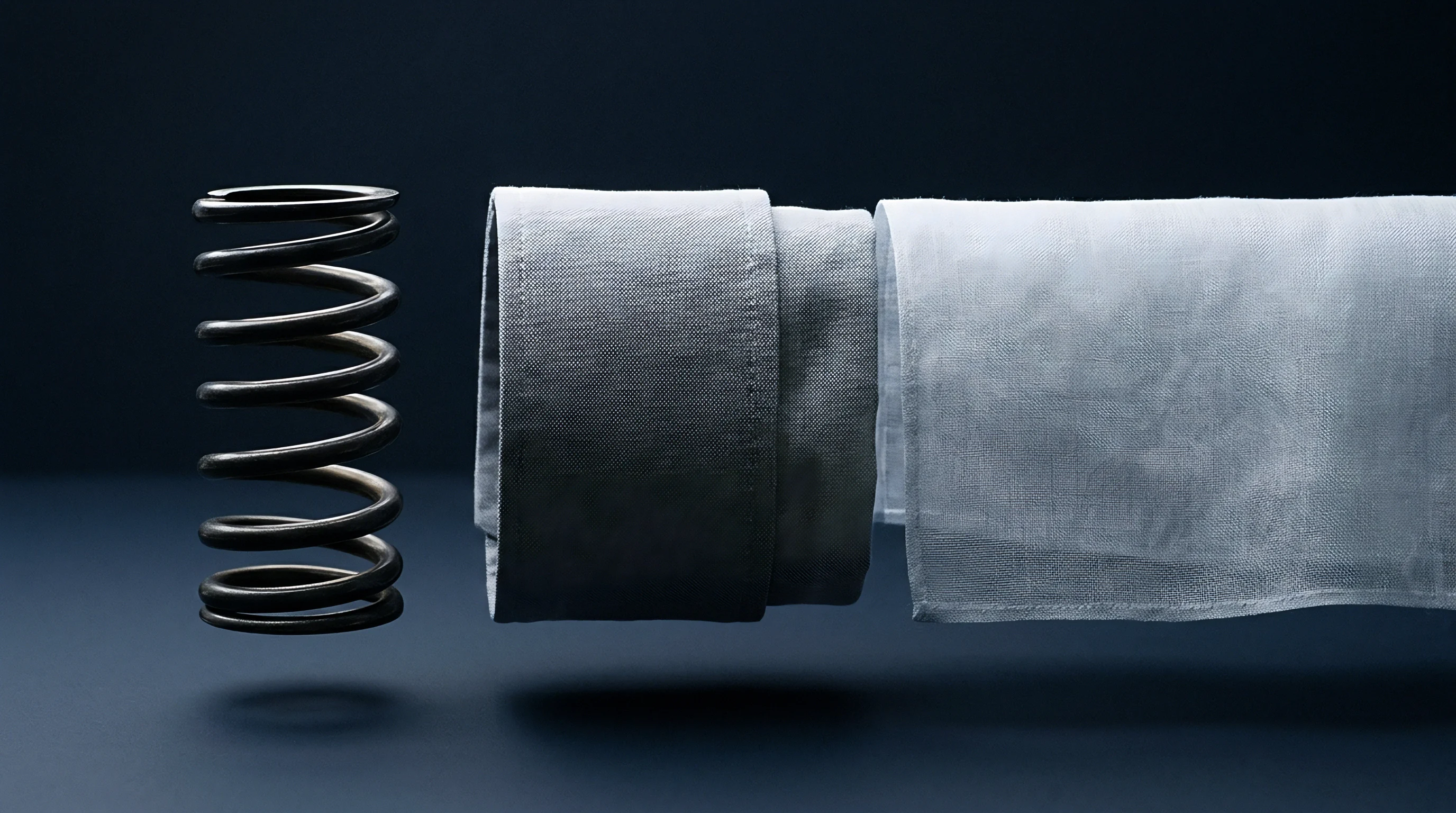
How Does Relative Humidity Alter Warp Relaxation Rates during Plant Shutdowns?
Ambient moisture acts as a potent plasticizer within the cellulosic microfibril network. Relative humidity directly dictates the rate and extent of stress relaxation in linen warps. At fifty percent relative humidity, flax fibers retain tight hydrogen bonding, exhibiting a moderate initial relaxation rate that plateaus after twelve hours.
When ambient humidity rises to seventy-five percent, water absorption swells the amorphous matrix, accelerating polymer chain mobility and increasing total load relaxation by over forty percent.
| Stoppage Duration (Hours) | Tension at 50% RH (cN/tex) | Load Loss at 50% RH (%) | Tension at 65% RH (cN/tex) | Load Loss at 65% RH (%) | Tension at 80% RH (cN/tex) | Load Loss at 80% RH (%) |
|---|---|---|---|---|---|---|
| 0.0 | 22.0 | 0.0 | 22.0 | 0.0 | 22.0 | 0.0 |
| 1.0 | 20.2 | 8.2 | 19.5 | 11.4 | 18.1 | 17.7 |
| 8.0 | 18.9 | 14.1 | 17.6 | 20.0 | 15.8 | 28.2 |
| 24.0 | 18.1 | 17.7 | 16.2 | 26.4 | 14.1 | 35.9 |
| 48.0 | 17.6 | 20.0 | 15.4 | 30.0 | 13.0 | 40.9 |
Shed temperature variations interact with relative humidity to alter relaxation behavior. Industrial plant shutdowns without automated climate controls experience rapid night-time temperature drops, causing relative humidity spikes that double the rate of warp relaxation during off-peak hours.
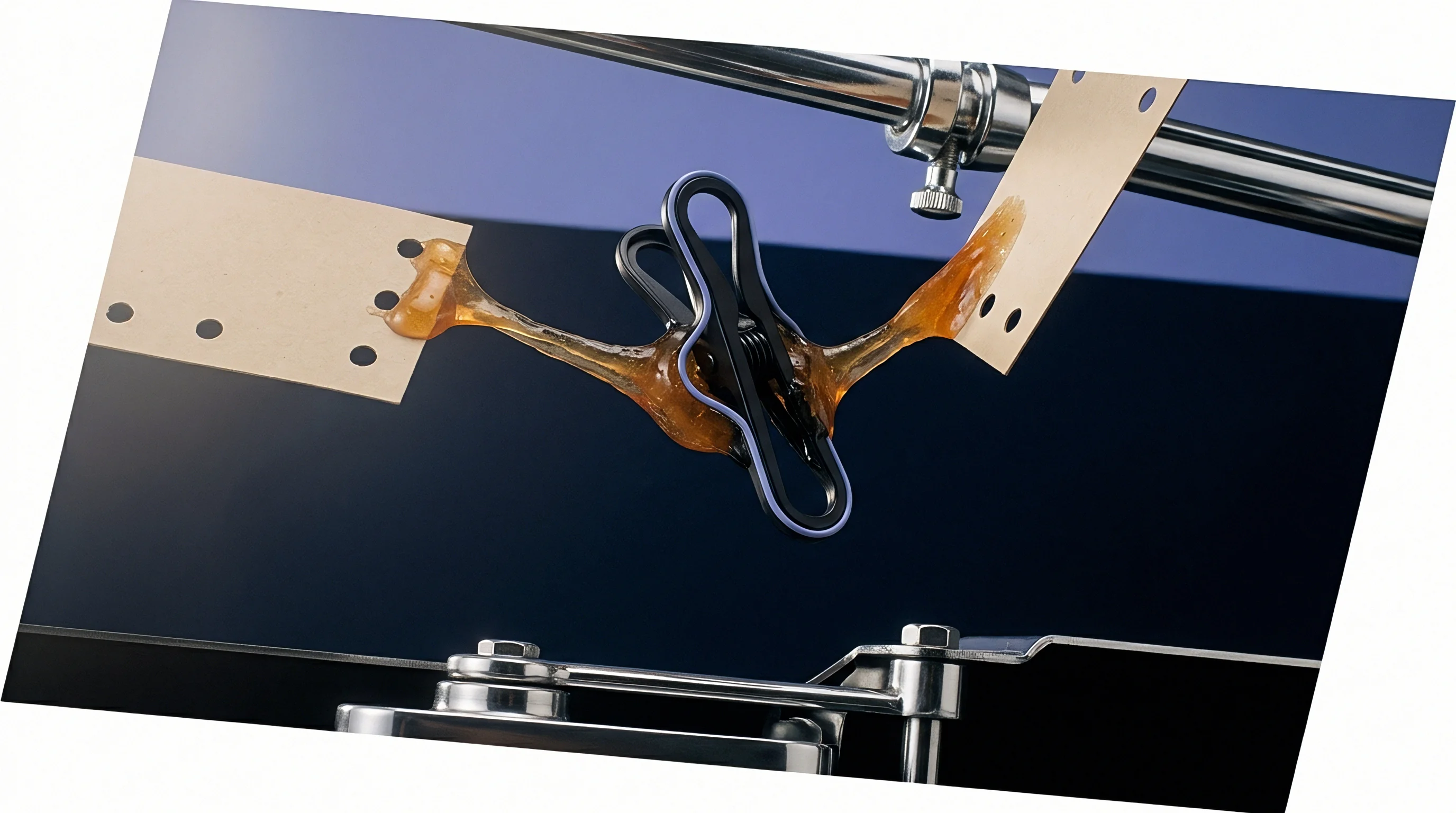
Benchtop Testing versus In-Shed Strain Measurement
Laboratory tensile instruments isolate single yarn dynamics under controlled climate enclosures. ISO 13934 testing protocols establish baseline elastic limits, but isolated single-strand tests fail to replicate warp sheet mechanics. On the loom, thousands of parallel ends interact with lease rods, heald eyes, drop wires, and reed dents.
Friction across these contact points restricts uniform strain distribution, creating localized high-stress zones where relaxation proceeds faster than predicted by single-thread laboratory models.
Warping specifications citing ISO 13934 require stress relaxation baseline limits measured at standard temperate atmosphere of 20 degrees Celsius and 65 percent relative humidity.
In-shed measurement requires arraying multiple sensors across the loom width. Edge warps experience different lateral forces than center warps due to selvage formation devices and temples. Measuring tension decay at five points across the reed width reveals significant relaxation gradients, proving that center warp ends relax up to eight percent faster than selvage ends during long idle periods.
Contracts specifying ISO 13934-1 compliance enforce maximum allowable load loss limits of fifteen percent over twenty-four hours of idle tension, shifting financial responsibility for stop mark rejections directly onto the yarn spinner.
Recovery
Restoring correct thread tension after a prolonged stoppage requires deliberate mechanical intervention before the weaving motor engages. Modern high-speed rapier and air-jet looms feature automated warp let-off and cloth take-up routines programmed into the loom control unit. These routines execute reverse motion pulses to pull the fell of the cloth back, compensating for viscoelastic extension before the beat-up reed strikes the fell.
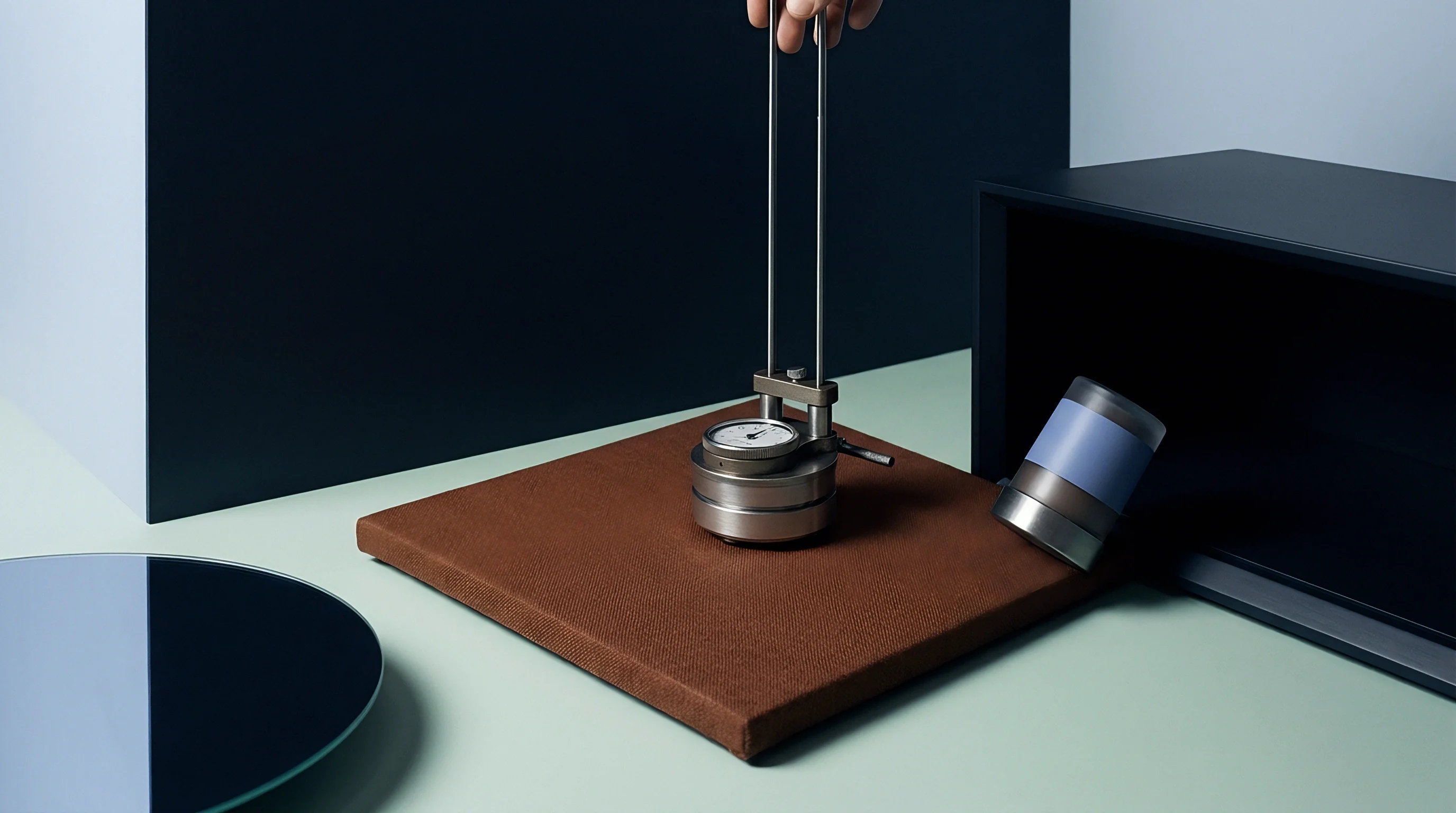
Shutdown Procedures for Idle Warp Management
Operating personnel execute systematic tension relief steps when looms stop for weekend periods. Reducing static warp load before initiating shutdowns prevents excessive polymer chain slippage within the flax fibers.
- Reduce warp beam tension by twenty-five percent using the electronic let-off controller five minutes prior to planned mill shutdown.
- Lower the heald frames to a level shed position to equalize stress across upper and lower warp sheets.
- Seal the weaving shed environment to maintain relative humidity between fifty-five and sixty percent.
- Execute a reverse let-off pulse of three millimeters before engaging the loom main motor at restart.
- Inspect the first fifty centimeters of woven cloth under tension before resuming full production speed.
Sizing chemicals penetrate the yarn bundle, binding outer microfibrils together and establishing a protective film that resists mechanical extension during weaving. Sizing formulation adjustments provide a powerful defense against static viscoelastic creep.
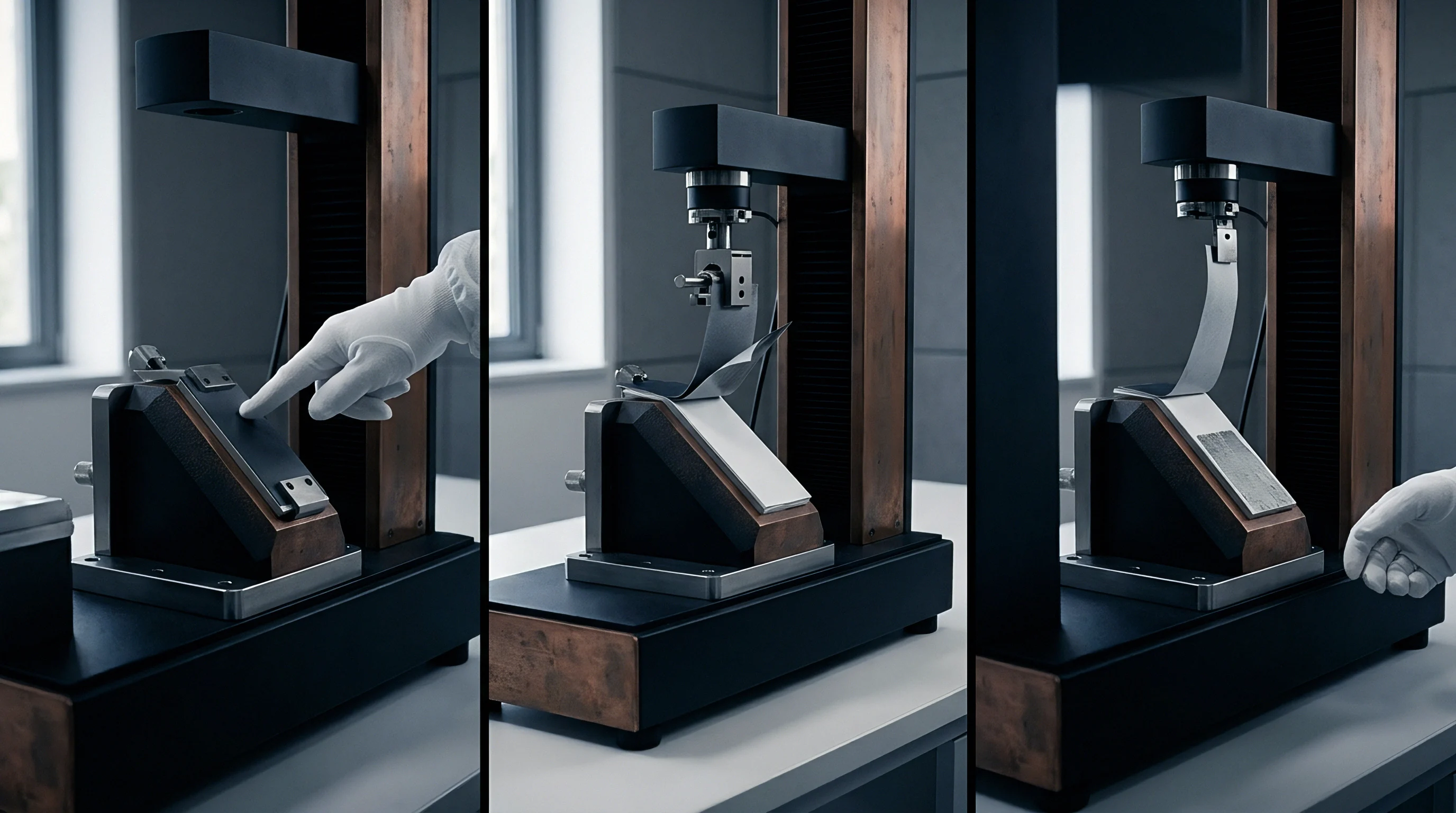
Sizing Formulations to Suppress Viscoelastic Compliance
Chemical coatings applied during warp preparation significantly alter yarn yield behavior under static loads. Sizing dockets must balance abrasion resistance against film elasticity and moisture sensitivity.
- Polyvinyl alcohol film formers ~ High molecular weight polymer chains increase cross-linking strength, reducing primary elastic compliance under static load.
- Modified corn starch binders ~ Starch retrogradation forms a brittle protective shell that suppresses yarn elongation during short idle intervals.
- Emulsified tallow lubricants ~ Excessive lubricant concentration increases fiber-on-fiber slippage, doubling viscoelastic creep rates under sustained warp tension.
- Hygroscopic humectants ~ Glycerol additives attract ambient moisture, accelerating molecular shear in bast fiber amorphous zones.
Sizing films with high moisture sensitivity accelerate polymer chain mobility and double the creep compliance of flax yarns during static stoppage.
Controlling size pickup percentage prevents microfibrillar slippage. Applying size solids at fifteen percent pick-up coats the yarn core without creating brittle surfaces, yielding optimum yarn stability during extended idle periods.
A warp beam stored under full weaving tension overnight produces cloth with visible density banding across every restart boundary.
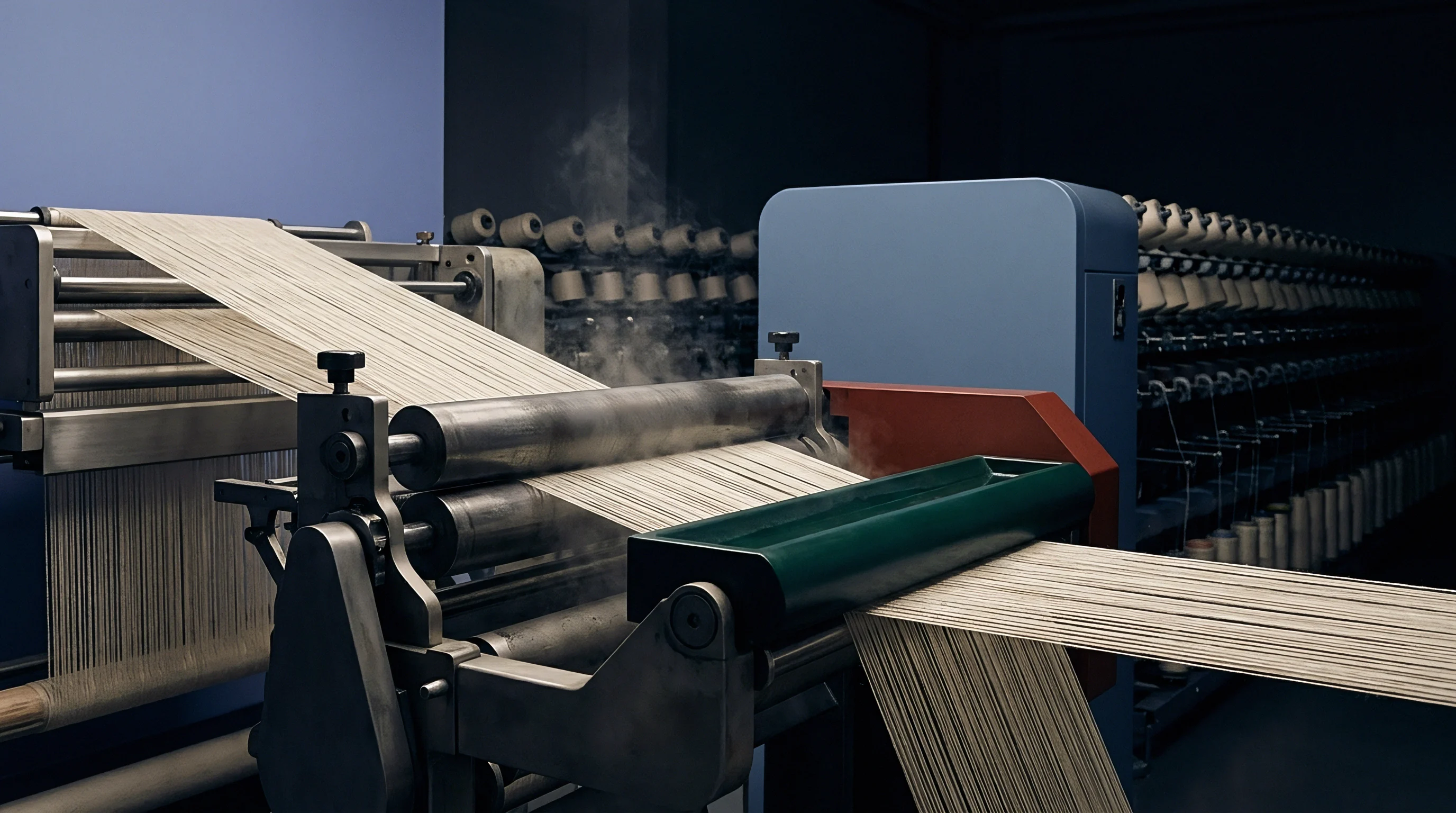

Tariff
Financial losses from warp relaxation manifest through reduced weaving efficiency, greige downgrades, and unrecoverable loom hours. When an uncompensated loom restart creates a restart barre, the resulting fabric segment loses commercial value under standard grading metrics.
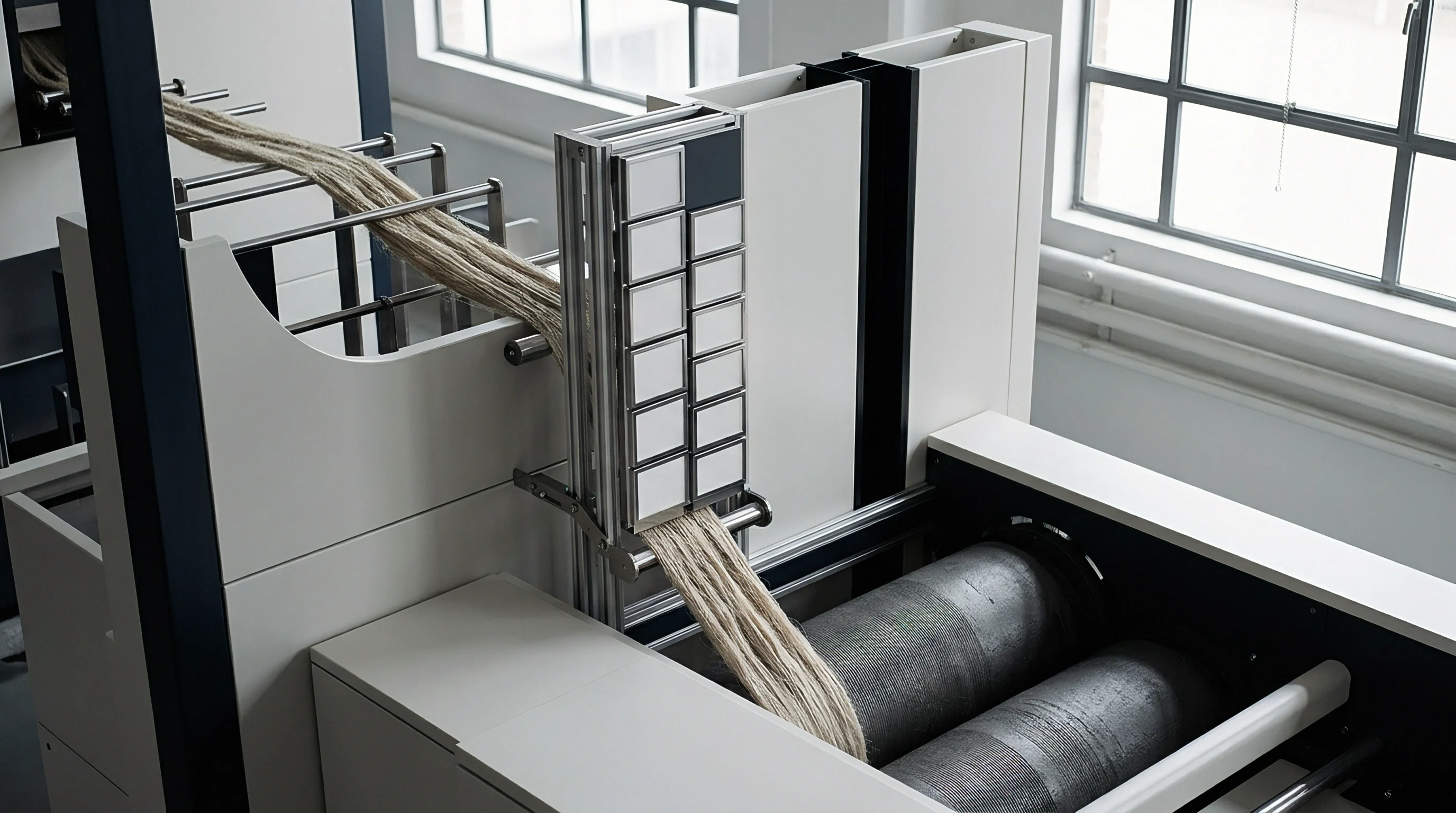
Greige Quality Downgrades under ASTM D5430
Fabric inspection standards penalize horizontal density variations under four-point defect scoring systems. ASTM D5430 assigns penalty points based on defect length and visibility. A restart barre extending across a two-meter cloth width scores four penalty points immediately.
Accumulating more than twenty penalty points per one hundred square meters downgrades the entire fabric roll from first-quality to second-quality tier, destroying profit margins.
| Parameter / Metric | Uncompensated Stoppage | Managed Tension Protocol | Commercial Variance |
|---|---|---|---|
| First-Quality Yield (%) | 91.2 | 98.6 | +7.4% Yield Improvement |
| ASTM D5430 Points / 100m² | 24.5 | 6.2 | -18.3 Penalty Points |
| Restart Scrap (Meters / Loom) | 1.8 | 0.2 | -1.6 Meters Saved |
| Efficiency Loss at Restart (Min) | 14.0 | 2.5 | -11.5 Minutes Recovered |
| Landed Cost Impact ($/Meter) | $0.48 | $0.04 | $0.44 Net Savings |
Loom capacity pricing reflects machine operating costs per hour. A 220 cm wide high-speed rapier loom running 100 percent linen operates at a baseline machine rate between $22.00 and $34.00 per hour, depending on power tariffs and capital depreciation schedules. Stoppages requiring manual warp re-tensioning, dropper clearing, and restart mark trimming add unrecoverable labor hours while decreasing net loom output.
Loom-Hour Cost Arithmetic and Capital Loss
Calculating true financial impact demands evaluating both direct fabric rejection and lost machine capacity. Consider a 100-loom weaving shed running Nm 26 wet-spun linen fabric at 22 picks per centimeter, producing 12 meters of cloth per loom hour. A 48-hour weekend shutdown without automated tension relief generates 1.8 meters of defective restart cloth per loom.
Across 100 looms, this yields 180 meters of degraded greige fabric.
- Maximum relaxation threshold ~ Specifications forbid stress relaxation exceeding eighteen percent over a forty-eight hour idle window under nominal weaving tension.
- Mandatory let-off kickback protocol ~ The weaving mill implements automated let-off backing parameters for all stoppages exceeding two hours.
- Defect allowance limits ~ Greige rolls containing more than two restart barres per one hundred meters trigger immediate tier-two price discounts.
- Moisture control standards ~ Sizing dockets certify film glass transition temperatures above ambient weaving shed operational thresholds.
Reclassifying 180 meters from first-quality price ($8.50 per meter) to second-quality price ($3.80 per meter) results in a direct revenue loss of $846.00 per weekend. Adding 23 loom hours lost to manual adjustments raises total loss to $1,468.00 per shutdown event. Commercial contracts incorporating specific viscoelastic performance caps eliminate ambiguities surrounding restart defect liabilities.
Mill managers who track warp relaxation metrics alongside mechanical downtime maintain tight control over greige yield and landed margin per metre.