
Hackling Yield Calculation and Landed Yarn Cost Sensitivity Modeling
Hackling yield directly establishes net fiber input costs, where a one percent yield gain lowers landed yarn expense by over two percent per finished meter.
Hackling yield directly establishes net fiber input costs, where a one percent yield gain lowers landed yarn expense by over two percent per finished meter.
Low S/G monomer ratios in flax middle lamella increase lignin cross-linking, elevating wet drafting force variability and driving yarn count instability.

Low cohesion flax slivers collapse under high draft ratios, requiring reduced trough temperatures, higher roving twist, and tight ratch settings to hold count.

Non-cellulosic content above 3.5% lowers hackling line yield, increasing tow waste and landed line fibre cost per finished metre.

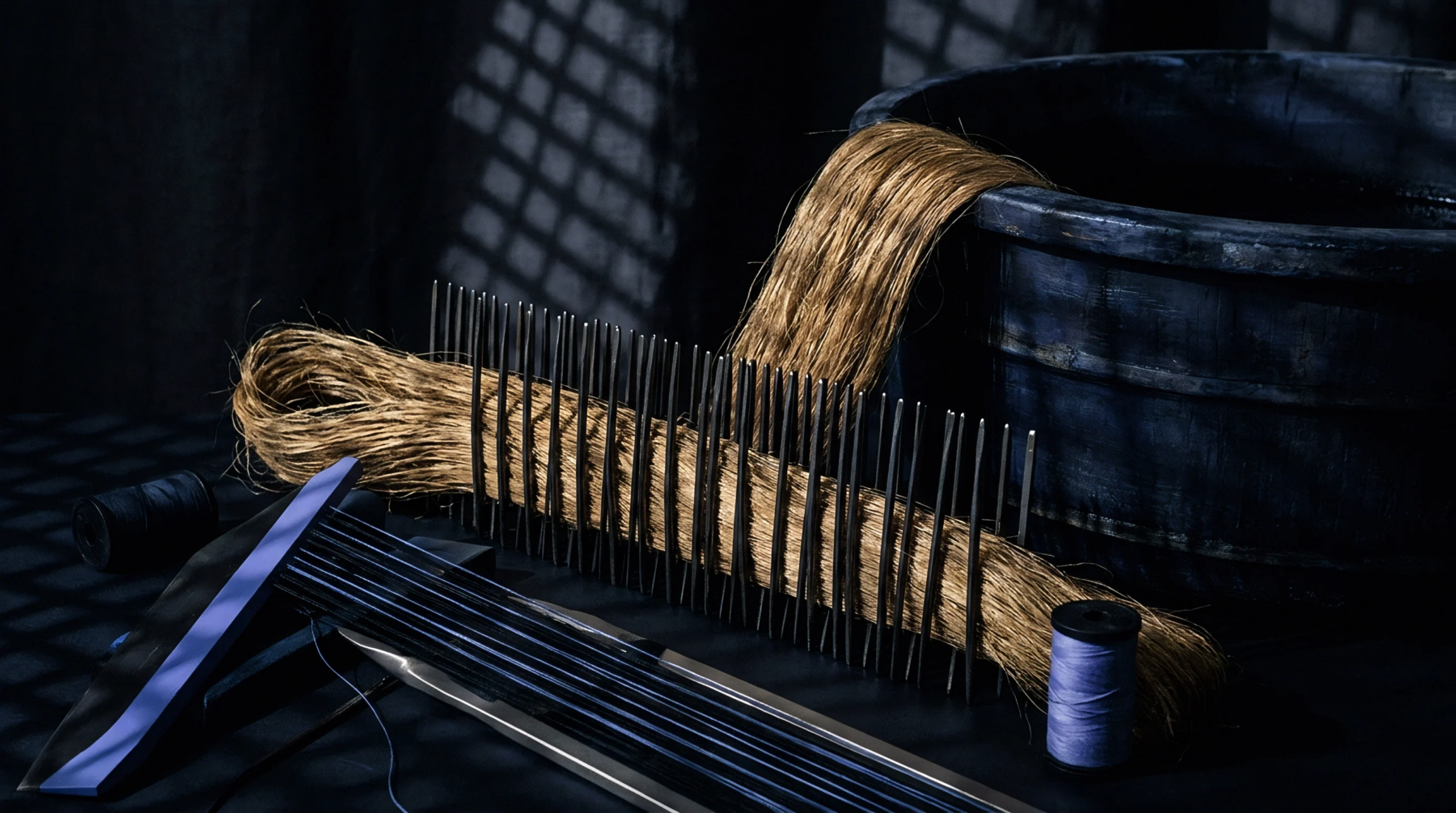
Evaluating scutched flax length distributions using comb arrays identifies short fiber fractions and predicts hackling line yield before spinning.

Non-cellulosic residue fractions in flax sliver govern drafting stability, spinnable metric count, and true yarn yield; residual pectin exceeding 1.8 percent spikes end breakage and erodes landed cost discounts.

Standardized air permeability methods convert differential pressure across compressed flax plugs into specific surface area to predict spinnable yarn counts.

Conditioned middle-cut bundle weighing under ISO 2370 delivers precise flax line fibre linear density data for wet-spinning count calculations.
Expertise is a utility, not a secret. sentiention™ publishes its working knowledge as open reference: intelligence layer covering the materials it sources, the markets it enters, and the reference that serves both.