Loom State
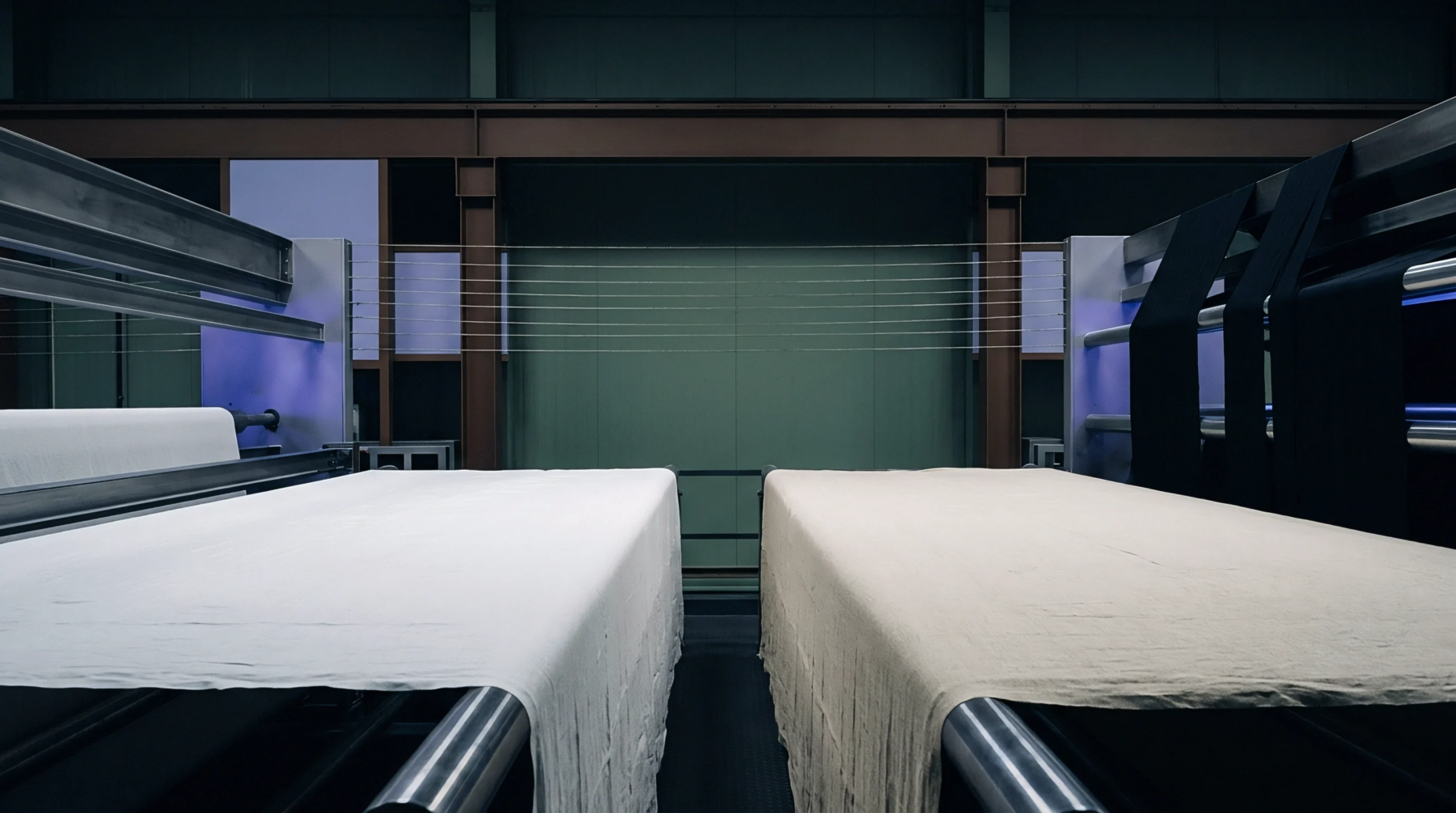
Raw flax yarn passes through multi-phase shedding cycles on heavy shuttle machinery to form plain weave linen cloth before any chemical treatment or bleaching occurs. Chinese manufacturing facilities evaluate this unrefined gray fabric immediately after it leaves the loom shed, recording warp density and fill counts on the official production log. Technicians examine the raw textile for broken filaments and inconsistent yarn tension that originate during the spinning phase.
Buyer acceptance criteria diverge sharply from internal mill standards during this initial inspection phase. Mills assess structural integrity using automatic optical scanners, whereas commercial purchasers inspect sample swatches for hand feel and drape.
Finishing Specification
Chemical scouring and peroxide bleaching operations transform the grayish gray-goods into bright white yardage within industrial textile plants located in Jiangsu and Zhejiang provinces. Operators monitor bath temperatures and alkali concentrations to prevent cellulose degradation during alkaline boiling runs. The commercial finishing order mandates specific dimensional stability limits and residual shrinkage percentages before export packing begins.
Laboratory technicians test conditioned specimens for tensile strength using grab test methods specified in the export contract.
Quality Grading
Finished fabric lot grading determines final pricing tiers and commercial disposition across international shipping destinations. Inspectors assign letter grades from premium export quality down to salvage stock based on total defect counts per hundred square meters of material. The official inspection certificate records both the fibre grade assigned at the spinning mill and the final fabric classification issued prior to rolling.
Export documentation relies on these verified grades to confirm that the textile meets agreed performance parameters without invoking price adjustments.