Modeling Non-Linear Crimp Interchange and Pectin Extraction Dynamics in High-Speed Air-Jet Linen Weaving
Controlled pectin extraction and asymmetric shed tuning enable stable air-jet linen weaving at 700 picks per minute while reducing landed fabric cost.
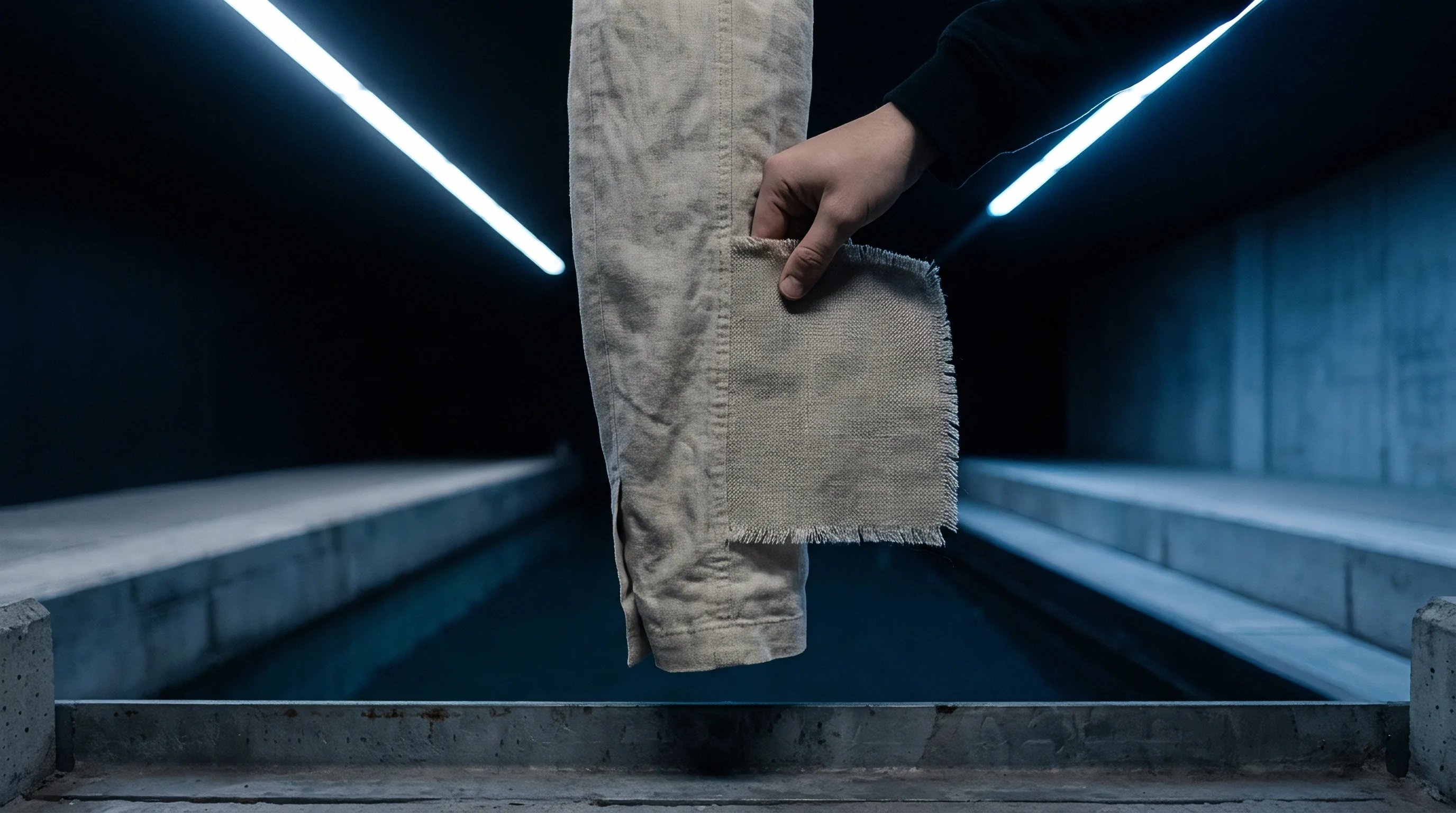

Kinematics
Low-strain deformation in woven bast fabrics strays from the classical linear geometry of Peirce’s model. Flax yarns have high initial flexural rigidity and noticeable structural non-uniformity along their length. When warp and weft intersect under the tension of high-speed air-jet shedding, crimp interchange does not form a symmetrical arc of constant curvature.
Instead, the inextensible ultimate bast fibers, bonded by an intercellular pectin matrix, force the crimp wave to concentrate deformation where flexural resistance is lowest. During shed opening and beat-up, the geometric transformation couples warp tension, weft bending, and cross-sectional ellipticity in a non-linear fashion.
Air-jet insertion speeds subject the weft yarn to acceleration pulses above 1000 metres per second squared. Under such inertial loads, the axial stiffness of linen yarn restricts immediate viscoelastic stress relaxation. Classical crimp balance equations assume that more warp crimp yields a directly proportional reduction in weft crimp along rigid arcs.
In fine linen constructions, however, the flax bundle’s non-linear modulus creates a dynamic threshold: crimp interchange stays negligible until warp line tension exceeds the bending yield point of the wet or sized weft yarn. Past this point, crimp shifts abruptly into the weft, displacing yarn at the fabric fell.
The non-linear bending resistance of flax yarns causes crimp interchange to occur in localized step changes rather than through continuous geometric transition during beat-up.
Quantifying this transition requires a constitutive model incorporating yarn bending hysteresis. In a standard plain weave linen fabric specified at 140 grams per square metre, with a warp sett of 24 ends per centimetre and a weft sett of 22 picks per centimetre, warp yarns are 20 Tex (50 Nm) dry-spun flax and weft yarns are 20 Tex wet-spun flax. Static warp crimp measures 3.2 percent against 6.5 percent in the weft.
When the loom accelerates to 720 picks per minute, dynamic warp tension swings from a shed-closed baseline of 18 centinewtons per end up to 42 centinewtons per end at peak shed opening.
To calculate the dynamic crimp interchange ratio, the cross-sectional major axis ratio of the yarn under peak beat-up force must be established alongside the instantaneous flexural rigidity. Dynamic mechanical testing demonstrates that the flexural rigidity of the 20 Tex flax yarn varies non-linearly with yarn strain, expressed as:
B(e) = B_0 (1 + alpha e^(-beta e))
Here, B_0 is the initial bending rigidity of 1.85 micro-Newton metres squared, e is instantaneous axial strain, alpha is a dimensionless packing coefficient equal to 2.45 for wet-spun linen, and beta is the strain-hardening exponent calibrated to 18.2. At peak shed opening during beat-up, effective warp strain reaches 0.038, driving instantaneous flexural rigidity to 2.72 micro-Newton metres squared. This rigidity forces the weft thread to absorb 82 percent of total crimp displacement under reed impact, pushing dynamic weft crimp to 8.1 percent while warp crimp compresses to 1.6 percent.
Miscalculating warp tension equilibrium by even 3 centinewtons per end produces severe directional modulus anisotropy in the finished fabric.
Internal shear stresses generated during this dynamic crimp displacement break un-extracted pectin bonds between elementary fibers. Flexure then forces individual fiber ends outward, increasing surface hairiness. Pinpointing where dynamic bending crosses from elastic crimp interchange into permanent structural damage within the yarn core is critical to high-speed linen physics.
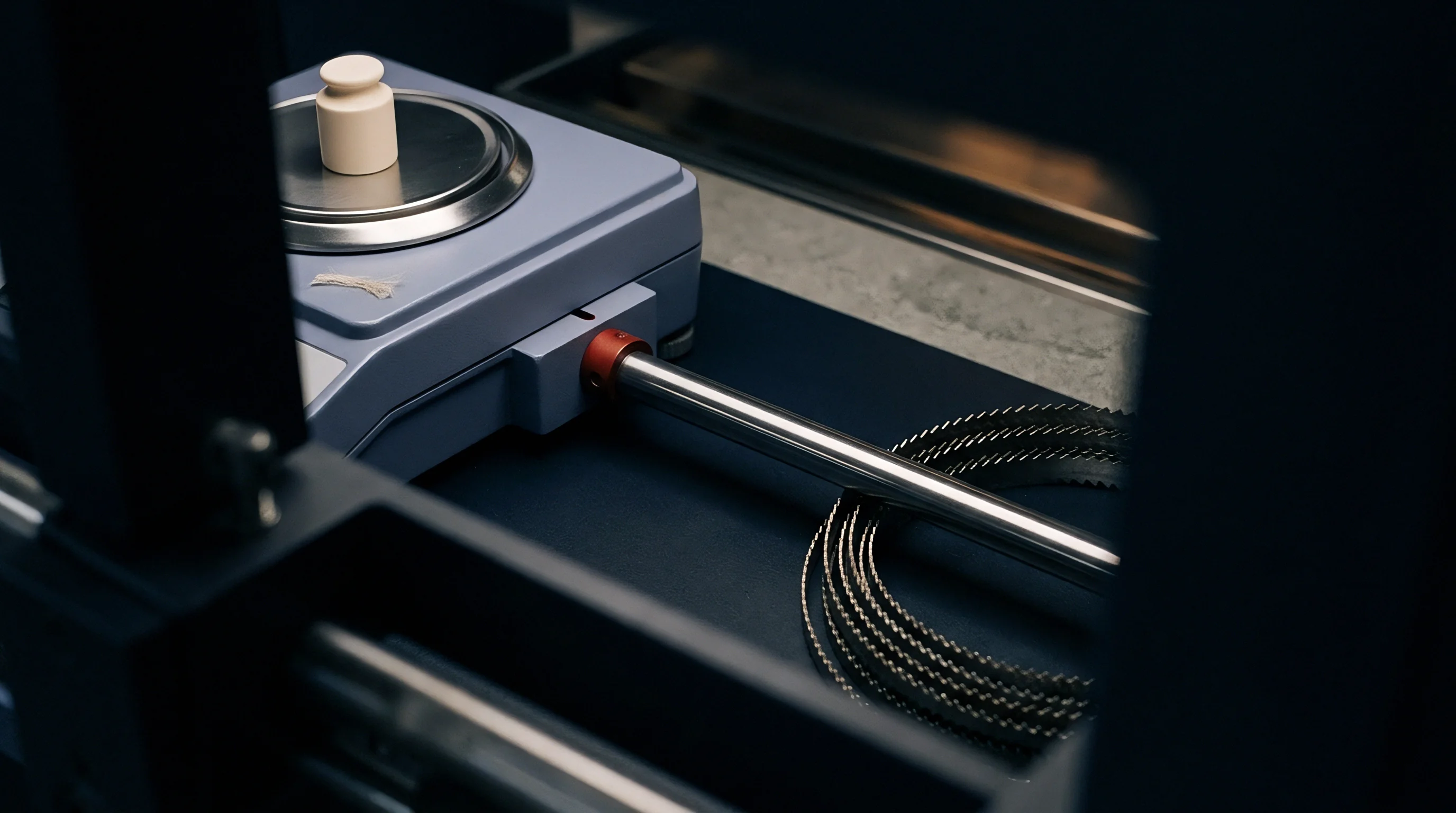
Extract
Pectin acts as the main structural adhesive in bast fiber bundles, binding individual ultimate flax cells into coherent technical fibers. Chemically, pectin consists of polygalacturonic acid chains partially esterified with methyl groups and linked to neutral sugars such as rhamnose, galactose, and arabinose. In raw flax, pectin accounts for 4.5 to 7.0 percent of dry fiber weight.
High-speed air-jet weaving requires controlled extraction of these pectins to achieve yarn compliance without compromising tensile strength. Insufficient pectin removal leaves yarns stiff, increasing flexural resistance and causing insertion failures in the air guide channel. Excessive extraction weakens bundle cohesion, leading to fiber shedding, clogged nozzles, and early warp end breaks under beat-up loads.
Pectin extraction follows a non-linear, two-stage thermo-chemical reaction during pre-weaving preparation. A rapid initial phase strips soluble, low-molecular-weight pectin from the outer walls of the fiber bundle, followed by slow hydrolysis of insoluble protopectin within the middle lamella. Sizing formulations applied during high-speed warping incorporate chelating agents and mild alkaline buffers to control pectin dissolution while applying protective film polymers.
Thermal pre-treatment profiles dictate the softening point of the non-cellulosic matrix inside the loom shed. Maintaining sizing liquor at 85 degrees Celsius and pH 8.2 reduces the degree of esterification from 65 percent to 38 percent over a 45-minute residence cycle. This chemical shift drops the glass transition temperature of the hydrated pectin-lignin complex from 68 degrees Celsius down to 42 degrees Celsius.
During weaving, heat generated by reed friction and sub-nozzle air compression keeps residual pectin in a softened, plasticized state, cutting yarn flexural rigidity by up to 58 percent and promoting fluid crimp interchange during beat-up.
| Extraction Phase | Residual Pectin (wt%) | Degree of Esterification (%) | Flexural Rigidity (uN m2) | Tenacity (cN/tex) | Air-Jet Insertion Drag Coefficient |
|---|---|---|---|---|---|
| Unprocessed Greige | 5.85 | 68.2 | 3.42 | 28.5 | 0.041 |
| Mild Pre-treatment | 3.20 | 51.4 | 2.15 | 27.1 | 0.052 |
| Target Air-Jet Optimum | 1.85 | 34.0 | 1.12 | 24.8 | 0.068 |
| Over-extracted Bast | 0.65 | 14.8 | 0.58 | 16.2 | 0.081 |
Monitoring extraction rates during yarn preparation relies on quantitative calcium-pectate gravimetric analysis or Fourier-transform infrared spectroscopy, tracking the ratio of ester carbonyl peaks at 1740 inverse centimetres to carboxylate peaks at 1600 inverse centimetres. Keeping residual pectin within the target range of 1.5 to 2.2 percent by weight preserves structural integrity while providing the flexural compliance needed for insertion speeds above 600 picks per minute.
Residual pectin levels below one percent by weight degrade bundle cohesion and triple yarn hairiness counts through mechanical fiber detachment.
Yarn flexibility gained in pre-treatment improves air-jet drag by allowing surface fibrils to align with the compressed air stream. Over-extraction, conversely, causes the yarn surface to expand as unbonded fibers spread, raising wall friction along the profile reed channel. Sustaining high-speed shed performance relies on balancing chemical extraction against surface film containment.
A yarn flexed beyond its matrix softening limit sheds its protective sizing film before reaching the halfway mark of the loom reed width.


Nozzle
Propelling stiff, low-mass linen yarns through an air-jet profiling channel involves complex fluid-structure interaction. Unlike continuous filament synthetics or uniform ring-spun cotton, linen yarn presents an irregular cross-section, high mass variance along its length, and variable hairiness from exposed bast fiber ends. Air-jet systems use a main nozzle alongside relay sub-nozzles distributed along the reed width to sustain yarn acceleration across widths up to 340 centimetres.
The drag force F_d exerted on the weft yarn by compressed air streams is defined by the governing fluid friction equation:
F_d = 0.5 rho (V_a – V_y)^2 A_s C_f
Where rho represents air density, V_a is air stream velocity, V_y is instantaneous yarn tip velocity, A_s is the exposed yarn surface area, and C_f is the skin friction coefficient. Skin friction depends directly on surface topography and micro-fibrillar alignment, both heavily altered by pectin extraction. Raw linen yarns with high pectin stiffness exhibit a low skin friction coefficient, requiring elevated tank pressure to achieve necessary acceleration.
Softened yarns with optimum residual pectin yield higher skin friction, allowing lower blowing pressure while maintaining target flight times.
Can Pectin Extraction Velocity Overcome Air Jet Drag Instability at High Weft Frequencies?
Pushing insertion frequencies to 800 picks per minute compresses the available insertion window below 45 milliseconds per pick, requiring main nozzle supply pressure to reach 0.55 megapascals. If pectin extraction has over-softened the yarn, initial shear from the air blast strips outer fiber bundles at the nozzle tip. This stripping forms micro-knots of clustered fiber that clog the profile reed tunnel and stop the loom.
Sub-nozzle pitch and firing timing must align with the velocity degradation profile of the linen yarn tip. Relay nozzles grouped in fours operate through fast-response solenoid valves. Delayed firing causes an air velocity drop that lets the stiff yarn tip buckle inside the shed, whereas firing too early subjects the tip to turbulent transverse forces that cause bending and buckle loops.
Achieving pneumatic stability requires precise synchronization between main nozzle acceleration profiles and sub-nozzle line pressures through the channel.
Main nozzle blowing pressure must scale inversely with the square root of yarn skin friction to prevent end-breakage during initial acceleration.
While profile reeds and multi-hole sub-nozzles are sometimes expected to process any natural spun yarn regardless of chemical pretreatment, and insertion problems are attributed solely to yarn count variation or sizing add-on rates, shed testing proves otherwise. Pneumatic stability cannot be maintained on un-extracted or over-extracted flax yarns without adjusting nozzle geometry, profile channel pitch, and air supply settings.
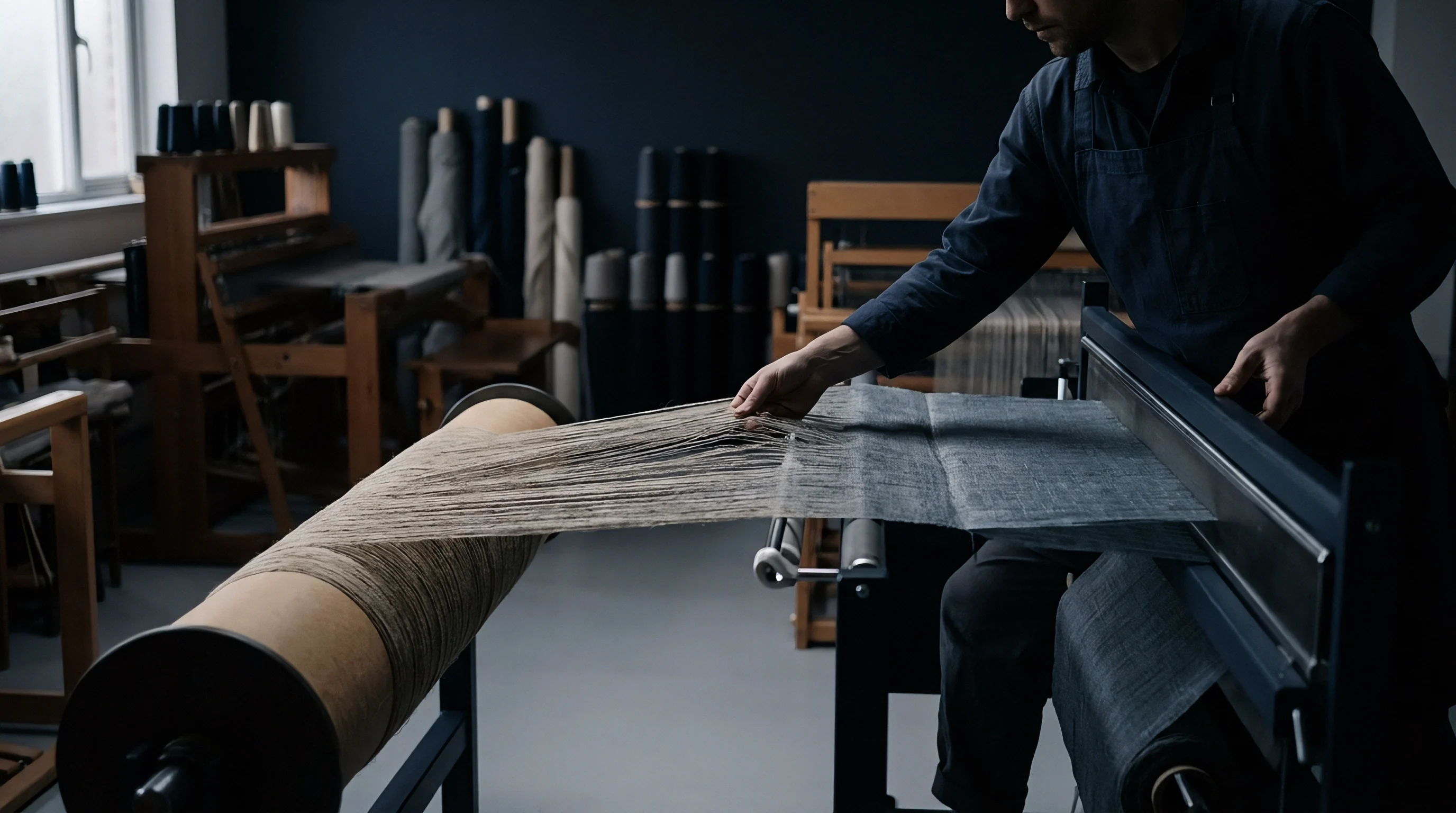
Draft
Shedding geometry and beat-up mechanics in high-speed air-jet weaving of linen operate under tight physical limits. High warp density in fine linen shirtings and home textiles generates severe friction between adjacent ends during shed crossing. Because flax lacks the elasticity of wool or synthetic staple fibers, shed opening angles must be kept small to cap peak warp tension.
However, small shed angles restrict spatial clearance for the profile reed to traverse the warp sheet without disturbing upper or lower threads.
Beat-up force equilibrium depends heavily on shed closing timing relative to crankshaft position. Closing the shed before the reed reaches front dead center traps the inserted pick early, locking it into the fabric fell under high warp tension to minimize dynamic crimp relaxation and yield a dense construction. Late shed closing allows the pick to bounce back from the fell due to the high flexural modulus of the yarn, producing uneven pick spacing and horizontal density bands.
| Loom Setting Parameter | Standard Rapier Baseline | Air-Jet Low-Pectin Setting | Air-Jet High-Pectin Setting | Operational Tolerance Limit |
|---|---|---|---|---|
| Loom Speed (ppm) | 380 | 720 | 650 | +/- 15 ppm |
| Main Nozzle Pressure (MPa) | N/A | 0.48 | 0.58 | +/- 0.02 MPa |
| Shed Opening Angle (degrees) | 32 | 24 | 28 | +/- 0.5 degrees |
| Asymmetric Backrest Offset (mm) | +10 | +25 | +15 | +/- 2.0 mm |
| Warp Line Baseline Tension (cN/end) | 35 | 22 | 30 | +/- 1.5 cN/end |
| Beat-up Peak Force (kN/m) | 4.2 | 6.8 | 5.9 | +/- 0.3 kN/m |
Establishing optimal shed conditions for a stiffness-varied linen warp requires a structured setup sequence.
- Mount the warp beam on the let-off frame, maintaining axis alignment within 0.5 millimetres across a 280-centimetre beam width to prevent skewed tension profiles.
- Thread warp ends through droppers, heald frames, and the profile reed according to the double-draft denting plan to distribute clearance evenly across the reed.
- Adjust backrest roller height to create an asymmetrical shed layout, raising the backrest 25 millimetres above the central breast beam axis.
- Calibrate electronic let-off baseline tension to 22 centinewtons per end for optimized low-pectin warps, preventing excessive elongation at maximum shed opening.
- Set shedding motion cam timing for shed crossing at 310 degrees of crankshaft rotation, locking in the pick 50 degrees before front dead center beat-up.
- Align profile reed height relative to the race board to ensure a minimum clearance gap of 1.2 millimetres between the lower warp sheet and the bottom edge of the profile channel.
- Set the electronic take-up pick density counter for the target greige construction, adding a 4.5 percent linear take-up allowance derived from offline crimp calculations.
Standard commercial contracts incorporating ISO 7211-2 testing mandates require delivered pick density across any 100-centimetre section to stay within plus or minus 1.5 percent of specification. Setting asymmetric shed geometry alongside precise let-off tension profiles ensures compliance with this clause by maintaining consistent crimp interchange geometry under high-speed beat-up.
Failing to balance asymmetric backrest height against dynamic warp extension results in heavy reed marks and localized cloth fatigue across the width of the loom beam.
Defect
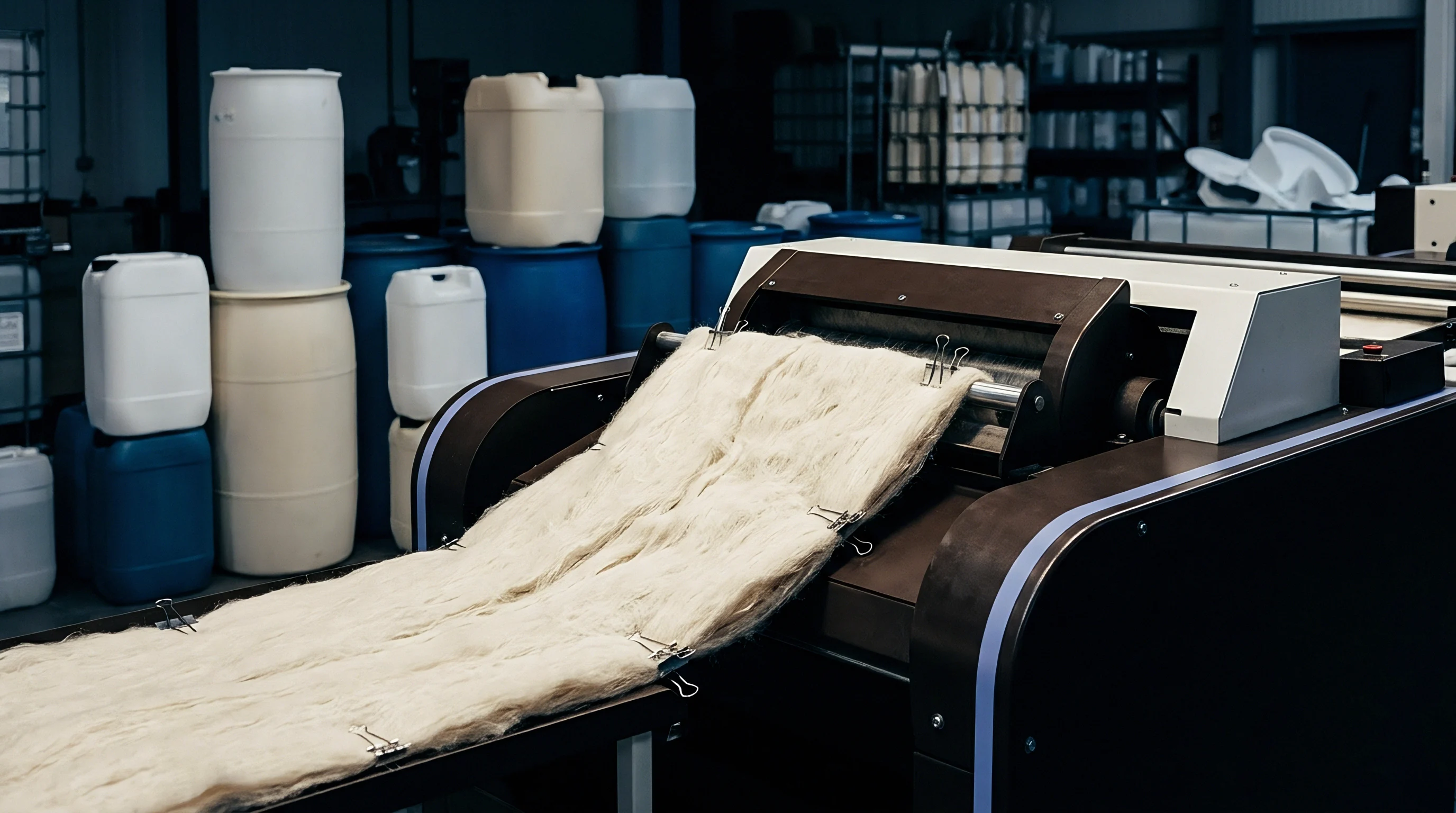
Incompatible crimp interchange dynamics and poorly controlled pectin extraction manifest as structural and surface defects in air-jet woven linen greige. Start marks ~ dense or thin horizontal bars across the fabric width after a stoppage ~ occur when viscoelastic recovery alters fell position during machine dwell time. Because linen recovers slowly compared to synthetics, the fabric fell migrates backward toward the heald frames while idle.
Upon restart, the first beat-up impact strikes off-target relative to the existing pick array, creating an instant sett error.
Pick variation and buckled weft insertion stem from inconsistent yarn friction within the profile reed. When residual pectin levels fluctuate along a spinning package, low-pectin segments accelerate rapidly under nozzle pressure, arriving early at the right-hand selvage channel where the yarn tip rebounds before the cutter closes, leaving loose loops and doubled picks. High-pectin segments drag in the channel and arrive late, causing short picks and selvage snapping.
Improper crimp interchange management yields severe fabric faults on air-jet looms:
- Warp Stripe Streaking arises from localized tension peaks across individual heald frames, causing differential crimp interchange that appears as longitudinal shade bands after piece dyeing.
- Selvage Snapping and Weft Pull-In occurs when high peak insertion tension snaps stiff, un-extracted weft tips, drawing ragged yarn ends back into the shed body during subsequent pick insertion.
- Reed Cut Abrasion results when stiff, raw flax fiber bundles repeatedly scour the internal teeth of the profile reed, generating micro-grooves that tear passing warp ends.
- Pilling and Slub Accumulation develops when over-extracted, degraded bast fibers strip off during air insertion, forming felted balls that weave directly into the fabric structure.
Fabric cover factor calculations must account for the non-linear flattening of linen yarns under tension. The classic Peirce cover factor K relies on the simple ratio of yarn diameter to pick and end spacing. For non-linear crimp interchange, Walzer’s modified cover factor provides better predictive accuracy by incorporating yarn ellipticity e_y and crimp amplitude c_y:
K_modified = (d_1 / p_1) sqrt(1 + c_1) + (d_2 / p_2) sqrt(1 + c_2) (1 – e_y)
Where d_1 and d_2 are warp and weft yarn diameters under baseline compression, p_1 and p_2 are end and pick spacings, and c_1 and c_2 represent dynamic crimp values. If the modified cover factor falls below 14.5 for plain weave shirting, dimensional stability post-finishing degrades rapidly. Washing tests under ISO 5077 show that fabrics woven without correcting crimp balance exhibit residual shrinkage exceeding 8.5 percent in the warp and 6.2 percent in the weft.
Fabrics constructed with non-linear crimp imbalance experience post-wash skewing exceeding ten degrees from perpendicular alignment.
Accepting unoptimized greige fabric with high crimp variance causes severe problems in garment manufacturing. Skewed panels cannot be aligned during spreading and cutting, while thermal fusing of interlinings on unbalanced linen panels releases stored structural strains, causing permanent surface distortion and total rejection at retail inspection.
Capacity
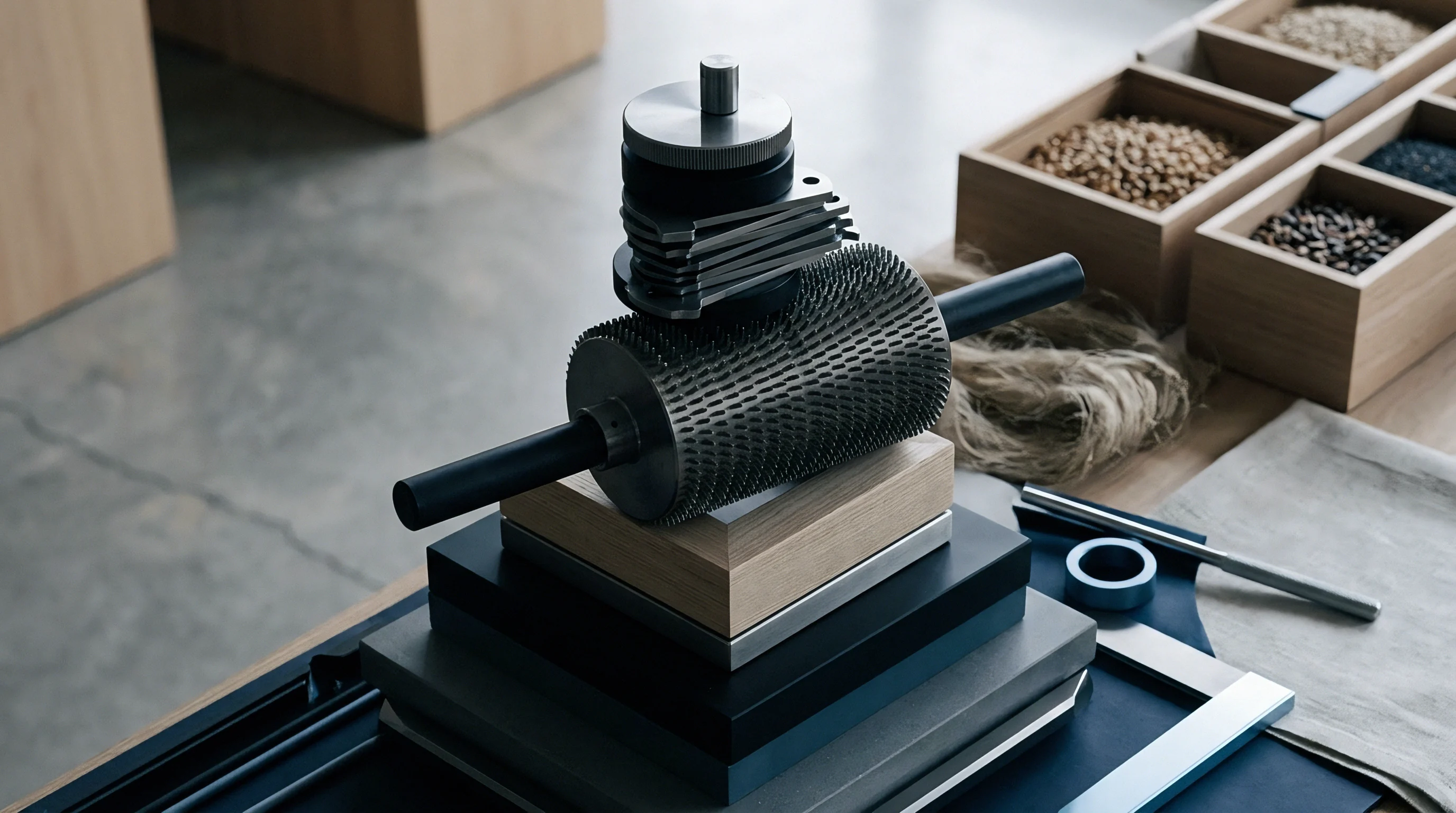
Committing weave shed capacity to linen on high-speed air-jet machinery involves a trade-off between machine output and warp preparation overhead. Air-jet looms running at 700 picks per minute produce more than double the daily linear metre output of traditional rapier looms operating at 350 picks per minute. However, air-jet weaving demands higher-grade wet-spun flax yarns, precise thermo-chemical pectin extraction, specialized sizing, and substantial compressed air power.
A detailed economic comparison highlights the financial balance between capital expenditure, energy demand, yarn quality requirements, and net loom-hour profitability across both weaving technologies.
| Cost Parameter (per 1,000 Metres) | Standard Rapier Loom (350 ppm) | Optimized Air-Jet Loom (700 ppm) | Commercial Variance Impact |
|---|---|---|---|
| Yarn Input Grade Requirement | Standard Wet-Spun (Nm 50) | Refined Pectin-Controlled (Nm 50) | +12.5% Premium for Air-Jet Yarn |
| Warp Preparation & Sizing Cost ($) | 185.00 | 310.00 | +67.5% Sizing and Pre-treatment Cost |
| Direct Electrical Energy ($) | 142.00 | 385.00 | +171.1% Air Compressor Energy Load |
| Loom-Hour Capital Cost ($) | 420.00 | 210.00 | -50.0% Loom-Hour Fixed Cost Savings |
| Labor Cost ($) | 160.00 | 75.00 | -53.1% Direct Operator Labor Reduction |
| Shed Overall Efficiency (%) | 88.5% | 78.2% | -10.3% Efficiency Penalty on Air-Jet |
| Net Landed Fabric Cost ($/m) | 3.85 | 3.42 | -11.2% Total Unit Cost Reduction |
Assessing shed feasibility requires evaluating specific commercial criteria before committing air-jet capacity to high-speed linen production.
- Raw Yarn Quality Certification demands single-yarn strength CV percentage below 11.5 percent and Uster hairiness index H below 4.2 to guarantee insertion reliability.
- Enzymatic and Sizing System Capability mandates high-precision temperature and pH control within the sizing box to stabilize pectin extraction rates across 5,000-metre warp sets.
- Air Compressor Station Efficiency requires variable-speed screw compressors capable of maintaining 0.7 megapascal header pressures at specific power consumption rates under 0.11 kilowatt-hours per normal cubic metre.
- Minimum Warp Order Volume sets the financial breakeven threshold at 12,000 linear metres per style setup to absorb elevated warping, sizing, and loom tuning fixed costs.
Shifting linen production from rapier to air-jet capacity relies on tight control over yarn chemistry and shed mechanics. When pectin extraction kinetics are managed to balance flexural rigidity with bundle tenacity, high-speed air-jet looms run cleanly at elevated insertion speeds. The resulting savings in loom hours and labor outweigh increased energy and sizing costs, delivering dense, high-grade linen fabrics at a competitive finished metre cost.