Single Strand Tensile Behavior and Mechanical Property Evaluation of Wet Spun Linen
Single strand tensile performance in wet spun linen dictates loom stops, dynamic failure rates, and landed cloth cost through gauge-length sensitivity and tenacity CV.
Strand
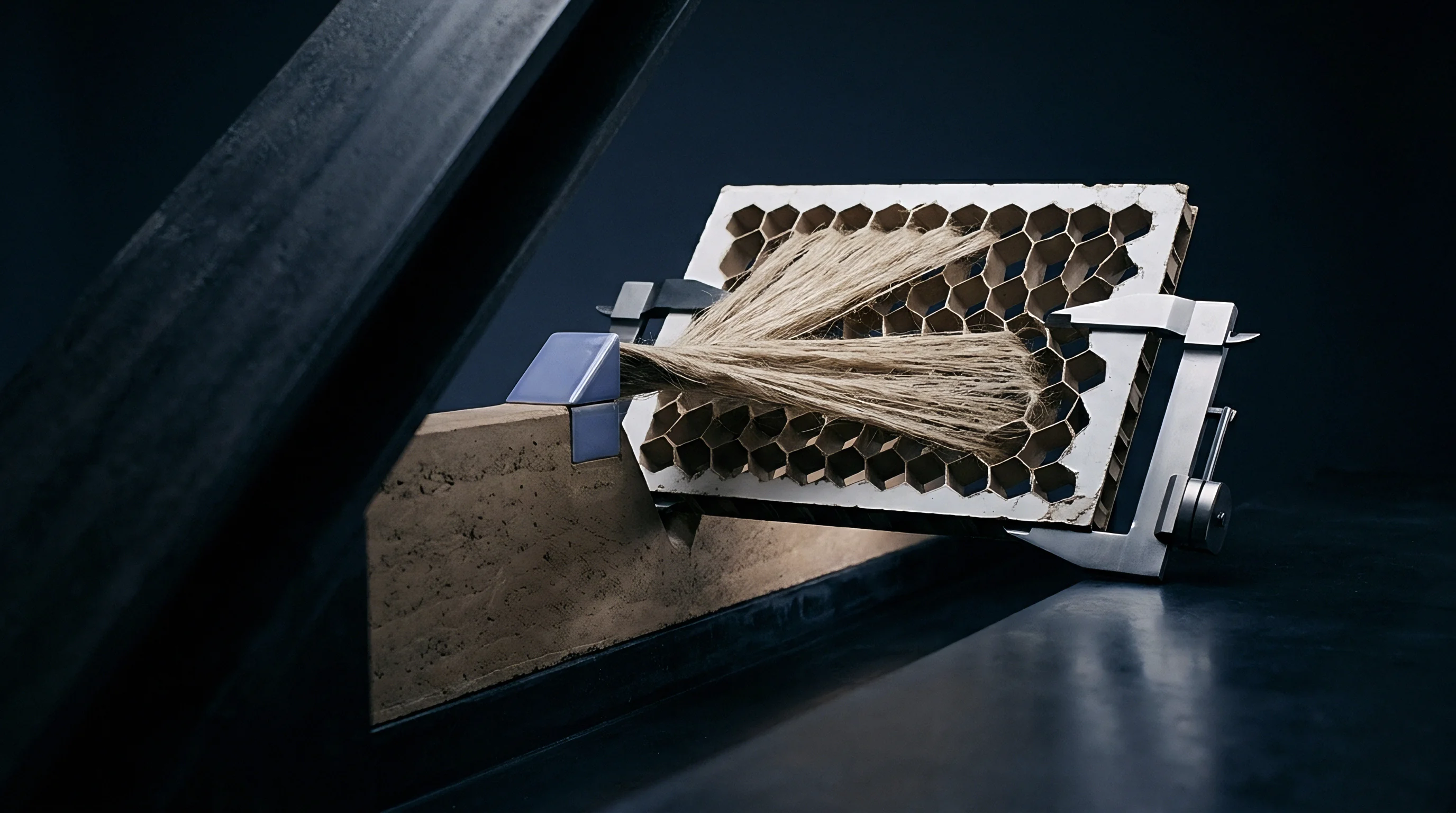
Extracted bast fibre bundles from Linum usitatissimum draw their dry strength from parallel cellulosic microfibrils held in a non-cellulosic matrix of pectins, hemicellulose, and residual lignin. In wet spinning, roving passes through a hot water bath kept at 60°C to 70°C. This softens the inter-cellular pectin bridges so individual elementary fibres, 10 to 40 millimetres long, can slide past each other under spindle draft. As the water evaporates, hydrogen bonds lock the aligned ultimates into a dense, crystalline cross-section.

Microstructural Mechanics of Wet Spun Flax Fibres
Cellulose microfibrils in flax ultimate cells align at a tight angle of 8 to 10 degrees relative to the longitudinal axis. That narrow microfibrillar angle gives the fibre its high initial modulus and low strain capacity in single end extension tests. By comparison, ring-spun cotton has microfibrillar angles between 30 and 40 degrees, yielding greater elongation before break but much lower tensile tenacity.
Wet spinning compresses the bundle diameter, raising yarn density to around 1.45 grams per cubic centimetre. Dry spun bast yarns keep larger air voids between bundles, dropping density to 1.15 grams per cubic centimetre and leaving the core prone to early shearing under low mechanical loads.
This cellular alignment creates a rigid tensile axis that resists lateral forces. Under an axial load, stress moves directly down the crystalline cellulose chains without the geometric dampening found in the helical crimp of wool or synthetics. Crystalline regions make up 70 to 80 percent of the total cellulose mass in high-grade European flax.
Pectin networks in the middle lamella carry shear stress between elementary cells. If moisture drops below critical equilibrium during spinning, these pectin bridges grow brittle, starting micro-cracks before the yarn reaches a warp beam.
Pectin Matrix Hydration and Ultimate Cell Alignment
Water acts as a plasticizer within the amorphous matrix around the crystalline microfibrils. Wet spun yarns tested at 12 percent moisture regain show higher breaking force than dry spun yarns conditioned under the same ambient conditions. Hydration lets the amorphous pectin deform slightly without fracturing, spreading the load across more ultimate cells in the cross-section.
Unconditioned, dry linen concentrates stress at localized defects, leading to step-by-step cell slippage and early yarn rupture at low loads.
Sudden drops in single yarn tenacity are frequently blamed on poor retting field conditions or inconsistent mechanical scutching, on the argument that uneven dew-retting degrades the pectin binder beyond what the hot water bath can fix. While raw material variation is real, improper draft settings and unstable bath temperatures in the spinning room produce the exact same tensile drops across a lot.
Tenacity
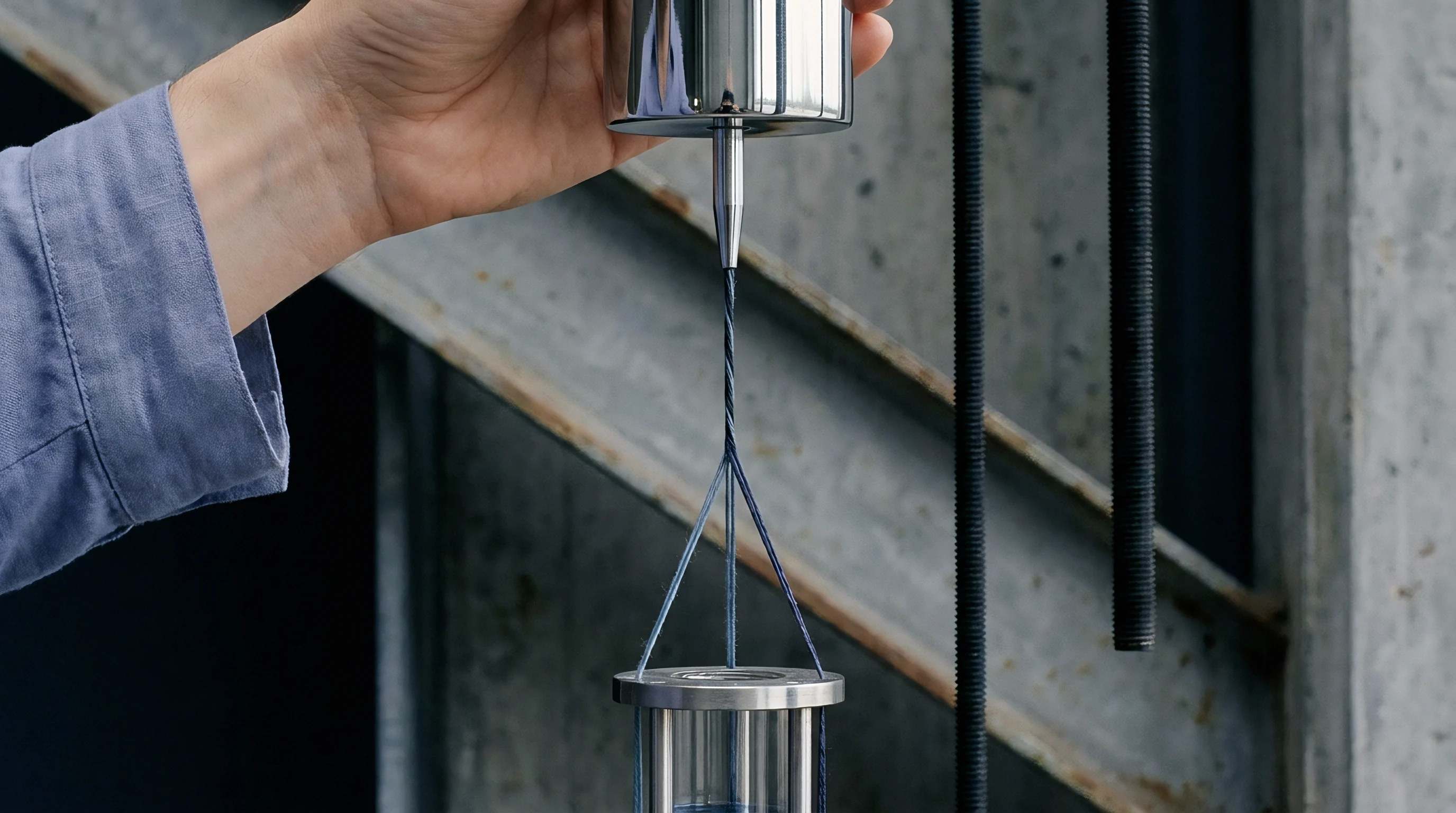
Mechanical testing of single end yarns demands tight control over test conditions, as bast fibre structures react strongly to gauge length and extension speed. Standard ISO 2062 protocols specify a 500 millimetre gauge length with a constant extension rate of 500 millimetres per minute. Testing wet spun linen at shorter gauge lengths gives artificially inflated tenacity values because the specimen length is less likely to contain a major weak point.
A 500 millimetre test gauge isolates structural weak points that 100 millimetre clamps routinely bypass during single end tensile verification.
Gauge Length Sensitivity in Single Yarn Breakage
Flax yarn shows pronounced weak-link behavior described by modified Weibull distribution models. In a long specimen, thin spots, thick spots, and low-twist zones sit in series along the tensile axis. The breaking load of the single end simply equals the force needed to rupture its single weakest cross-section between the clamps.
Dropping specimen length from 500 millimetres to 100 millimetres cuts the statistical odds of holding a major flaw between the jaws.
Single strand testing across various counts shows this length dependency clearly. A Lea 40 wet spun linen yarn tested at a 100 millimetre gauge length yields average breaking tenacity up to 22 percent higher than the same package tested at the standard 500 millimetres. Technical data sheets need to state the exact test length behind declared tenacity numbers, as non-standard short gauge settings often mask poor spinning control.
| Yarn Count (Lea) | Nominal Linear Density (tex) | Gauge Length (mm) | Crosshead Speed (mm/min) | Mean Breaking Force (cN) | Tenacity (cN/tex) | Elongation at Break (%) | Tenacity CV (%) |
|---|---|---|---|---|---|---|---|
| Lea 25 | 66.0 | 500 | 500 | 1452 | 22.0 | 2.10 | 14.8 |
| Lea 25 | 66.0 | 100 | 100 | 1742 | 26.4 | 2.45 | 11.2 |
| Lea 40 | 41.3 | 500 | 500 | 991 | 24.0 | 1.95 | 16.2 |
| Lea 40 | 41.3 | 100 | 100 | 1208 | 29.2 | 2.20 | 12.5 |
| Lea 60 | 27.5 | 500 | 500 | 701 | 25.5 | 1.80 | 18.5 |
| Lea 60 | 27.5 | 100 | 100 | 847 | 30.8 | 2.05 | 13.9 |
| Data derived under standard atmosphere conditions of 20°C ± 2°C and 65% ± 4% relative humidity after 24 hours pre-conditioning. | |||||||

Load Cell Calibration and Strain Rate Mechanics
Higher crosshead speeds during testing make wet spun linen appear stiffer. Rapid strain rates leave little time for polymer chains in the amorphous matrix to reorient under load. As a result, the load-elongation curve rises sharply in a straight line before failing in an abrupt brittle fracture with almost no yield zone.
Brittle failure modes dominate single end linen testing. Structural failure in high-tenacity flax yarns occurs through three concurrent physical actions:
- Inter-microfibrillar shear failure occurs when high axial force overcomes hydrogen bonding between adjacent cellulosic chains inside ultimate cells.
- Middle lamella fracture occurs when the inter-cellular pectin matrix shears, letting elementary fibres slide past each other prematurely.
- Transverse cell rupture occurs when high stress snaps individual elementary flax cell walls across their crystalline longitudinal axis.
Twist multiplier dictates which failure mode happens first. Low-twist wet spun yarns fail mainly through middle lamella fracture and fibre slippage. High-twist yarns compress elementary fibres tightly together, shifting the main failure mode to transverse cell rupture while reducing overall breaking strength because of oblique stress vectors relative to the yarn axis.
Short gauge test results consistently overestimate how the yarn will perform on high-speed looms.


Grip
Clamping wet spun linen yarns in automated tensile testers can create failure points directly at the jaw face. High initial modulus and low compressibility make linen prone to jaw breaks when flat pneumatic rubber-faced clamps are over-tightened. Smooth rubber faces allow strong yarn to slip during extension, yielding inflated elongation readings and skewed force curves.
Serrated metallic jaws crush the rigid fibre structure, setting up stress concentrations that snap the specimen early along the clamp line.
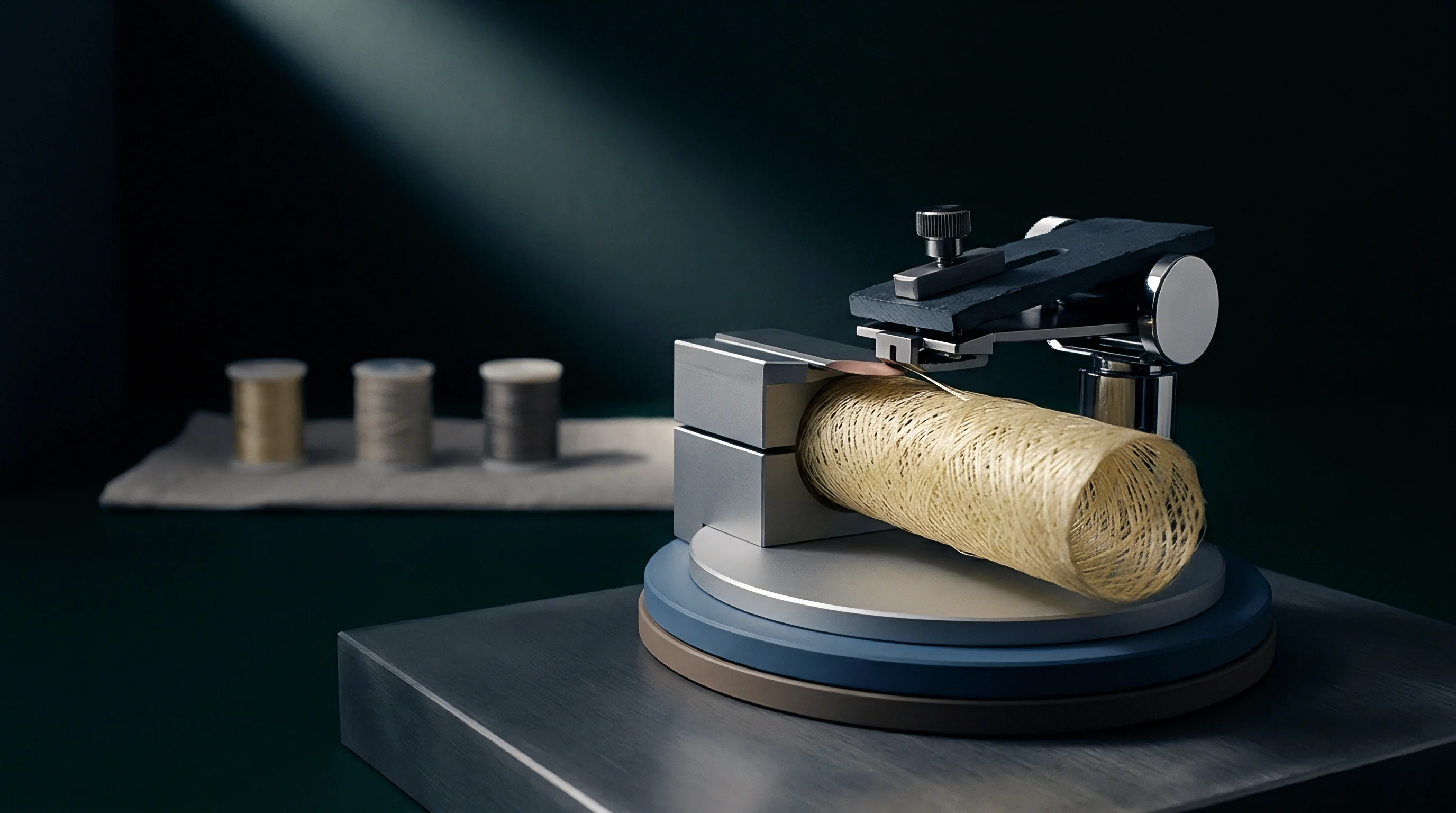
Capstan Clamping versus Flat Jaw Pneumatic Pressure
Capstan jaws eliminate stress spikes by wrapping the strand around a curved bollard before securing the tail in a secondary clamp. Friction along the curve reduces the axial tension reaching the main clamping point, determined by the wrap angle and the friction coefficient between flax and steel. Tension drops off exponentially along the contact surface following the Euler-Eytelwein relationship.
Pneumatic line-contact jaws fitted with smooth vulcanized leather or polyurethane inserts offer a practical alternative in high-volume testing labs. Air supply pressure to the clamps needs careful control: 0.35 to 0.45 megapascals prevents slippage without crushing outer fibre bundles in coarse strands. If jaw breaks exceed 10 percent of the tested single ends, standard quality control rules invalidate the entire test series.
Single end test runs with over 10 percent clamp-line fractures require full recalibration of clamping pressure and fresh specimen sampling.
ISO 2062 Compliance and Jaw Break Elimination
Standardized evaluation requires precise sample mounting to prevent pre-tensioning the strand before crosshead movement starts. The protocol follows a fixed sequence to ensure repeatable metrics.
- Mount a 100-Newton precision load cell on the upper crosshead of the tensile testing frame and calibrate zero points.
- Set upper and lower clamping distance to exactly 500 millimetres using an integrated steel calibration bar.
- Set crosshead extension velocity to 500 millimetres per minute on the control interface.
- Draw a single end sample from the package, threading it through pre-tensioning guides set to 0.5 centinewtons per tex.
- Secure the upper clamp first, letting the pre-tension weight align the strand vertically without twist or slack.
- Close the lower pneumatic clamp at 0.4 megapascals to secure the bottom of the specimen.
- Start crosshead travel, recording breaking force in centinewtons and percentage elongation at failure.
- Discard any break within 5 millimetres of either jaw face, logging it as a clamp failure.
- Repeat until 20 valid breaks are recorded for each yarn package under evaluation.
Delivery contracts for wet spun linen yarn routinely require acceptance sampling based on ISO 2062 test reports. Specifications should explicitly mandate capstan or leather-lined pneumatic jaws. Where capstan clamping is specified, test results showing jaw-line failure rates above 5 percent give the buyer grounds to reject the laboratory dossier and hold payment on the shipment lot.
Stress
Shedding, beating, and insertion on modern rapier and air-jet looms subject linen warp ends to cyclic tension peaks far higher than static tension settings suggest. A rapier loom running at 450 picks per minute puts the warp sheet through 450 shedding cycles every minute. Dynamic peak loads hit during shed opening and reed beat-up, when instantaneous tension on individual ends jumps to three times static off-loom levels.
With average elongation at break under 2.5 percent, wet spun linen offers almost no elastic buffer against these force spikes.
Why Does Wet Spun Linen Snap under Loom Dynamic Peak Load?
Unlike synthetic filaments or long-staple combed cotton, wet spun flax combines an extremely high elastic modulus with low work-to-break values. Total energy absorbed before failure equals the area under the load-extension curve. Because that extension curve ends below 2.5 percent strain, the actual energy required to snap a wet spun strand is low despite high breaking tenacity figures.
Peak dynamic tension hits the warp sheet as the shedding harness reaches top dead center. If tension across the sheet is uneven, ends carrying higher local strain cross their breaking limit instantly. Because elasticity in flax consists mostly of non-recoverable plastic deformation, each shed opening permanently weakens thin spots without adding overall length to the strand.

Warp Sizing and Moisture Equilibrium in the Shed
Protective sizing improves single strand abrasion resistance and binds surface fibers into the yarn core. Sizing formulations for wet spun linen use high-grade modified starches blended with polyvinyl alcohol and synthetic lubricants. The resulting film needs to encase the strand without making an already rigid yarn brittle.
Managing warp preparation involves several critical parameters:
- Size penetration depth controls the bond between internal fiber bundles and the outer starch coat.
- Film coat elasticity must meet or exceed the 2 percent elongation limit of the underlying linen yarn.
- Shed humidity control maintains relative humidity between 70 and 75 percent to keep the pectin matrix plasticized during weaving.
- Warp beam tension uniformity prevents local stress spikes across the full reed width at peak shed opening.
Weaving sheds running high-density linen fabrics need relative humidity kept at 72 percent minimum. Dropping below 65 percent causes rapid moisture loss from the fibre structure. As dry pectin matrices lose plastic flexibility, warp breakages surge and halt loom production.
Dry shed air embrittles the pectin matrix of flax, doubling warp stop rates within twenty minutes of relative humidity dropping below 65 percent.
Poor sizing or low shed humidity creates excessive friction in drop wires and heald eyes. When single strand tenacity drops below 18 centinewtons per tex under dynamic shedding stress, warp breaks climb past 4 stops per loom hour, wrecking weaving efficiency and inflating labor costs.

Variance
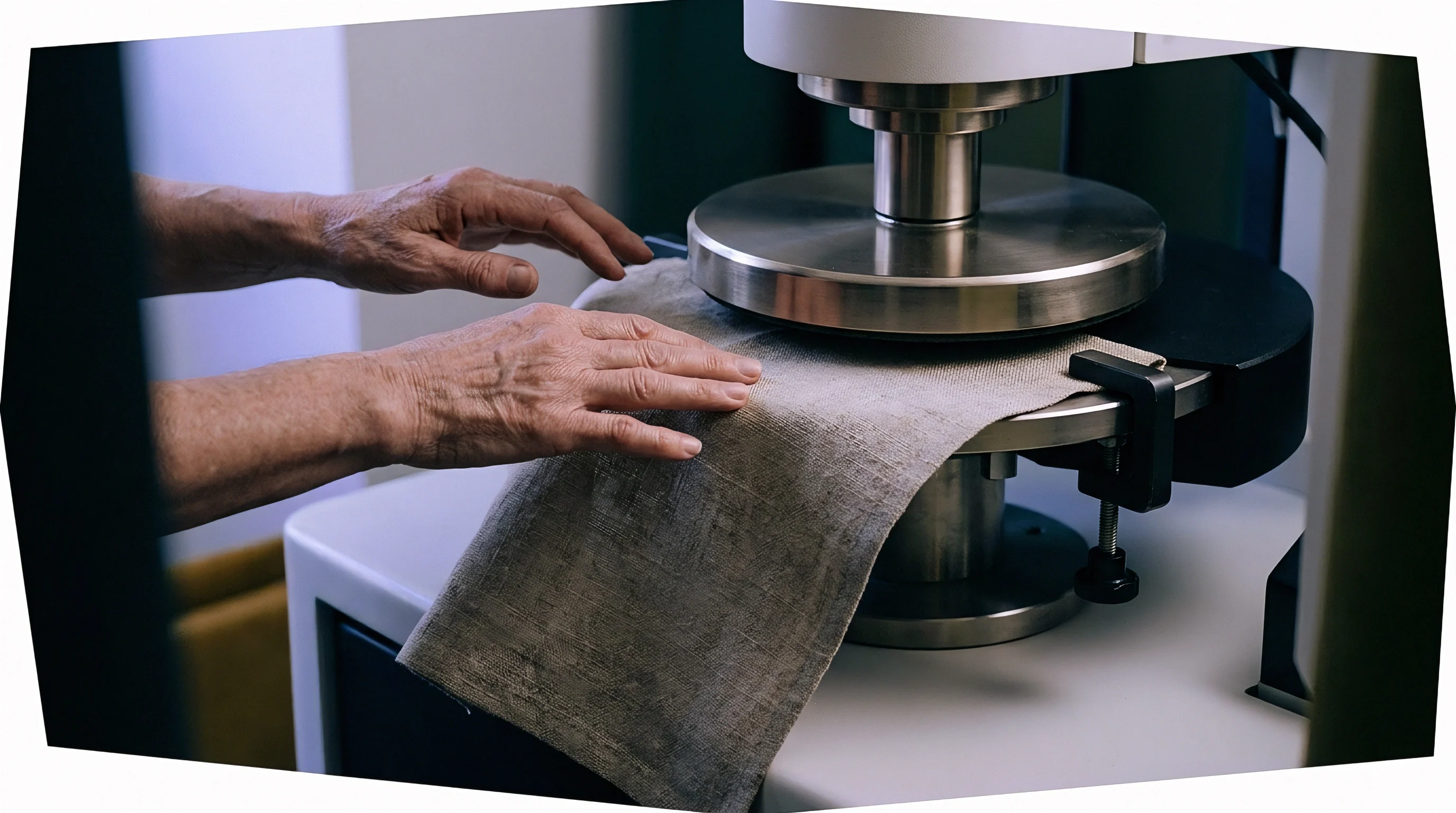
Mass irregularity along a wet spun linen strand correlates directly with tensile strength variation. Drafting during wet spinning inevitably produces mass fluctuations from sliver non-uniformity and mechanical drafting waves. These thick and thin spots are measured on capacitive yarn evenness testers and expressed as mass CV percentage.
Mass Irregularity Correlation with Tensile Fluctuation
Thin spots in wet spun linen yarn carry fewer elementary fibers in cross-section and collect less twist during spinning. Under axial load, tension concentrates immediately at these spots. A yarn package with a mass CV of 22 percent typically shows a tenacity CV over 18 percent across 50 single strand tests.
Spots measuring 40 percent below nominal diameter serve as primary failure sites.
Thick spots present a different problem. Although they contain more fibers, they hold less twist per inch because twist migrates into thin zones during ring spinning. These soft, low-twist thick sections fail through fiber-to-fiber slippage rather than ultimate cell breakage, yielding surprisingly low breaking force relative to their thickness.
Statistical Acceptability Thresholds for High-Speed Weaving
High-speed rapier looms require low tensile variance to run efficiently. Weaving specifications set firm upper limits on mass and strength variation. Yarn lots exceeding these limits cause constant warp stops, accelerated reed wear, and fabric surface flaws.
- Tenacity coefficient of variation must stay below 15.0 percent across a 10-bobbin sample lot.
- Thin places count at minus 50 percent must not exceed 15 incidents per 1000 metres of yarn.
- Thick places count at plus 50 percent must stay below 25 incidents per 1000 metres of yarn.
- Neps count at plus 200 percent must not exceed 30 per 1000 metres for fine counts above Lea 40.
Mass irregularity dictates failure probability, with 92 percent of tensile breaks occurring inside thin places measuring below 60 percent of nominal yarn diameter.
Requirements differ between plain weave constructions and twill or satin structures. Plain weave features the highest crossover frequency per centimetre, generating maximum mechanical friction on warp ends during shedding. Whether fine wet spun yarns finer than Lea 60 can maintain tenacity CV values under 12 percent without relying on prohibitively expensive fiber stock remains a central question in bast processing.

Cost
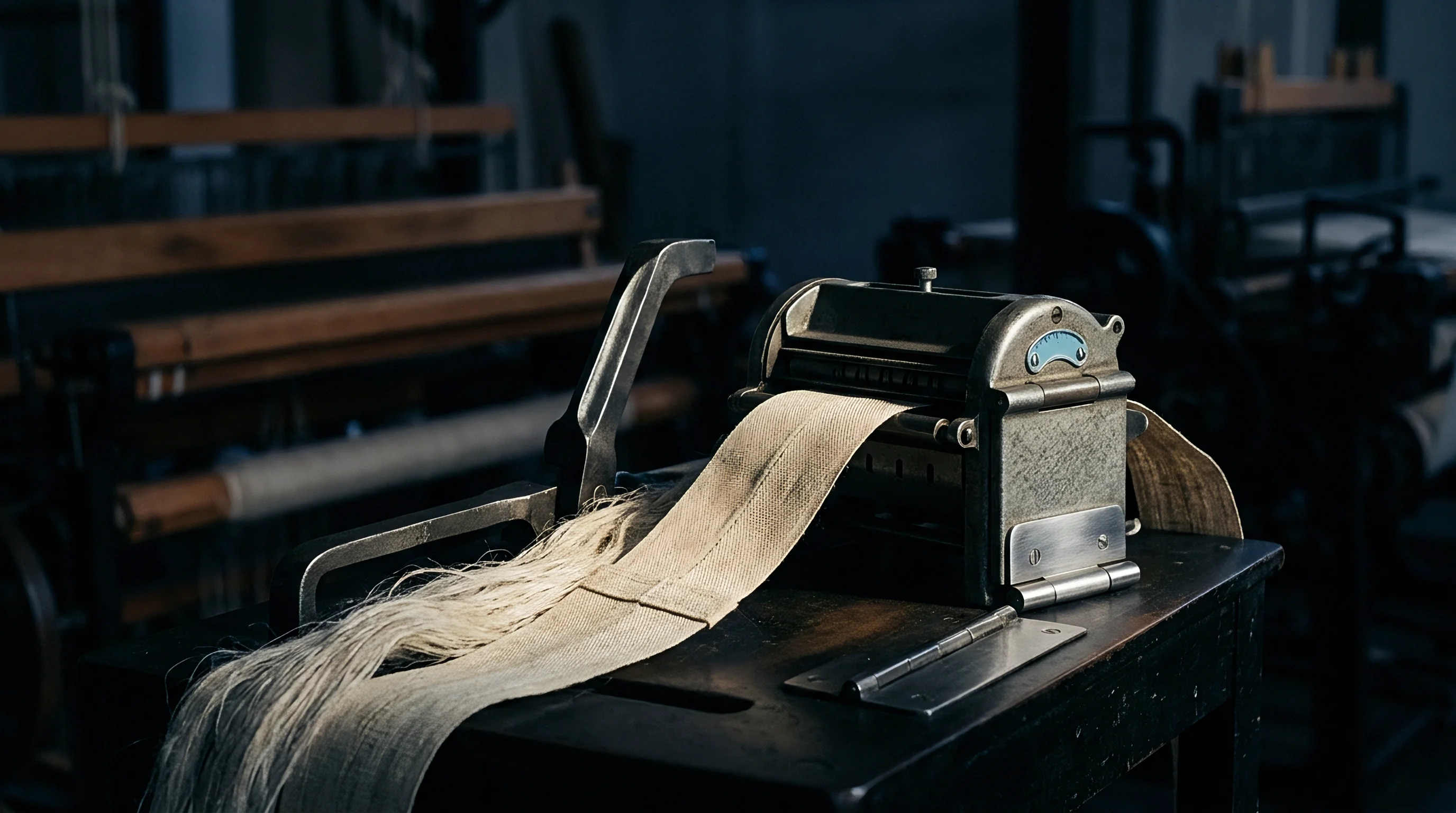
Single strand tensile performance directly dictates loom-hour productivity and finished fabric cost. Every warp stop on a modern weaving machine demands automated or manual intervention, halting output and leaving a starting mark in the greige fabric. The true cost of weak or variable yarn shows up in loom downtime, lower weaver allocations, and second-quality downgrades.
Warp Break Economics and Loom Downtime Calculations
A rapier loom running pure wet spun linen at 400 picks per minute yields a specific output based on pick density. Take a standard plain weave linen: 18 ends per centimetre, 16 picks per centimetre, at a reed width of 180 centimetres. At 100 percent theoretical efficiency, 400 picks per minute equals 24,000 picks per hour, or 15.0 metres of greige cloth per hour.
Actual efficiency depends on stop frequencies. Repairing a single warp break takes about 1.5 minutes to locate, fix, thread through drop wire and heald eye, and restart. If a lower-grade Lea 30 warp yarn runs at a tenacity CV of 20 percent, stops reach 3.5 per loom hour.
That adds up to 5.25 minutes of downtime per loom hour ~ an 8.75 percent loss in theoretical efficiency. Adding 3 percent for routine mechanical downtime brings actual efficiency to 88.25 percent, producing 13.24 metres of cloth per hour.
| Yarn Count (Lea) | Mean Tenacity (cN/tex) | Tenacity CV (%) | Warp Stops Per Loom Hour | Loom Operating Efficiency (%) | Cloth Yield Per Loom Hour (m) | Loom Hour Cost Rate ($) | Weaving Cost Per Finished Metre ($) |
|---|---|---|---|---|---|---|---|
| Lea 20 | 21.0 | 13.5 | 0.8 | 95.0 | 17.1 | 28.50 | 1.67 |
| Lea 25 | 22.5 | 14.0 | 1.2 | 93.5 | 16.8 | 28.50 | 1.70 |
| Lea 40 | 24.0 | 15.5 | 2.1 | 90.2 | 14.4 | 31.00 | 2.15 |
| Lea 60 | 25.5 | 17.5 | 3.8 | 85.5 | 12.8 | 34.00 | 2.66 |
| Lea 80 | 27.0 | 19.0 | 5.2 | 78.0 | 10.5 | 38.00 | 3.62 |

Landed Cloth Yield Analysis per Machine Hour
To see the financial impact across a 5,000-metre order, consider two Lea 40 wet spun warps. Warp Option A uses a premium yarn averaging 24.0 cN/tex tenacity with a 14.0 percent CV. Warp Option B uses discounted yarn of the same nominal count but with an 18.5 percent CV.
Assumptions for the financial calculation:
- Target order volume equals 5,000 finished metres at 180 centimetre width, requiring 5,300 metres of greige cloth to cover finishing shrinkage.
- Base loom hour rate is set at $31.00 per machine hour, including power, labor, overhead, and depreciation.
- Option A performance averages 1.2 warp stops per hour, running at 92.5 percent efficiency to deliver 14.8 metres of greige cloth per hour.
- Option B performance averages 3.8 warp stops per hour, running at 83.0 percent efficiency to deliver 13.28 metres of greige cloth per hour.
- Raw yarn cost is $18.50 per kilogram for Option A and $16.20 per kilogram for Option B.
Running Warp Option A takes 358.1 loom hours to weave 5,300 metres of greige. At $31.00 per hour, machine costs come to $11,101.10. At a fabric mass of 160 grams per square metre, the job consumes 1,526 kilograms of yarn.
At $18.50 per kilogram, yarn cost is $28,231.00. Combined yarn and weaving costs for Option A total $39,332.10, or $7.87 per finished metre.
Warp Option B requires 399.1 loom hours for the same 5,300 greige metres because of lower efficiency. Operating costs rise to $12,372.10 (399.1 hours at $31.00). Yarn cost for 1,526 kilograms at $16.20 comes to $24,721.20.
Combined yarn and weaving costs for Option B total $37,093.30, or $7.42 per finished metre.
Option B looks $0.45 per metre cheaper upfront. But frequent warp breaks leave starting marks and localized flaws that cause fabric downgrades. Under ASTM D5430 four-point inspection rules, Option B produces 12 percent second-quality fabric sold at a 35 percent discount, compared to just 2 percent seconds for Option A. The price penalty on Option B creates a revenue loss of $0.61 per metre across the order, turning the apparent yarn savings into a net loss of $0.16 per finished metre.
Calculating the true cost of linen yarn means incorporating single strand strength variance into weaving efficiency and fabric grading. Purchasing decisions based strictly on invoice price per kilogram miss the larger operating losses caused on high-speed looms.