Pectin Dissolution Kinetics in High-Draft Fine Flax Roving Spinning
Controlling pectin dissolution kinetics via balanced chelation and temperature protects fiber tenacity while enabling smooth slip draft in fine flax spinning.


Kinetics
Flax fiber bundles inside technical unspun roving consist of individual elementary fibers held together by an intercellular matrix dominated by pectins, hemicellulose, and structural proteins. Dissolution of this binder matrix governs fiber strand attenuation during fine wet spinning operations. High draft systems, operating at draft ratios between 10 and 25, require precise mechanical separation of elementary fibers without causing filament breakage or bundle fragmentation.
The degradation rate of calcium pectate complexes within the middle lamella sets the upper velocity limit of the roving draft zone.
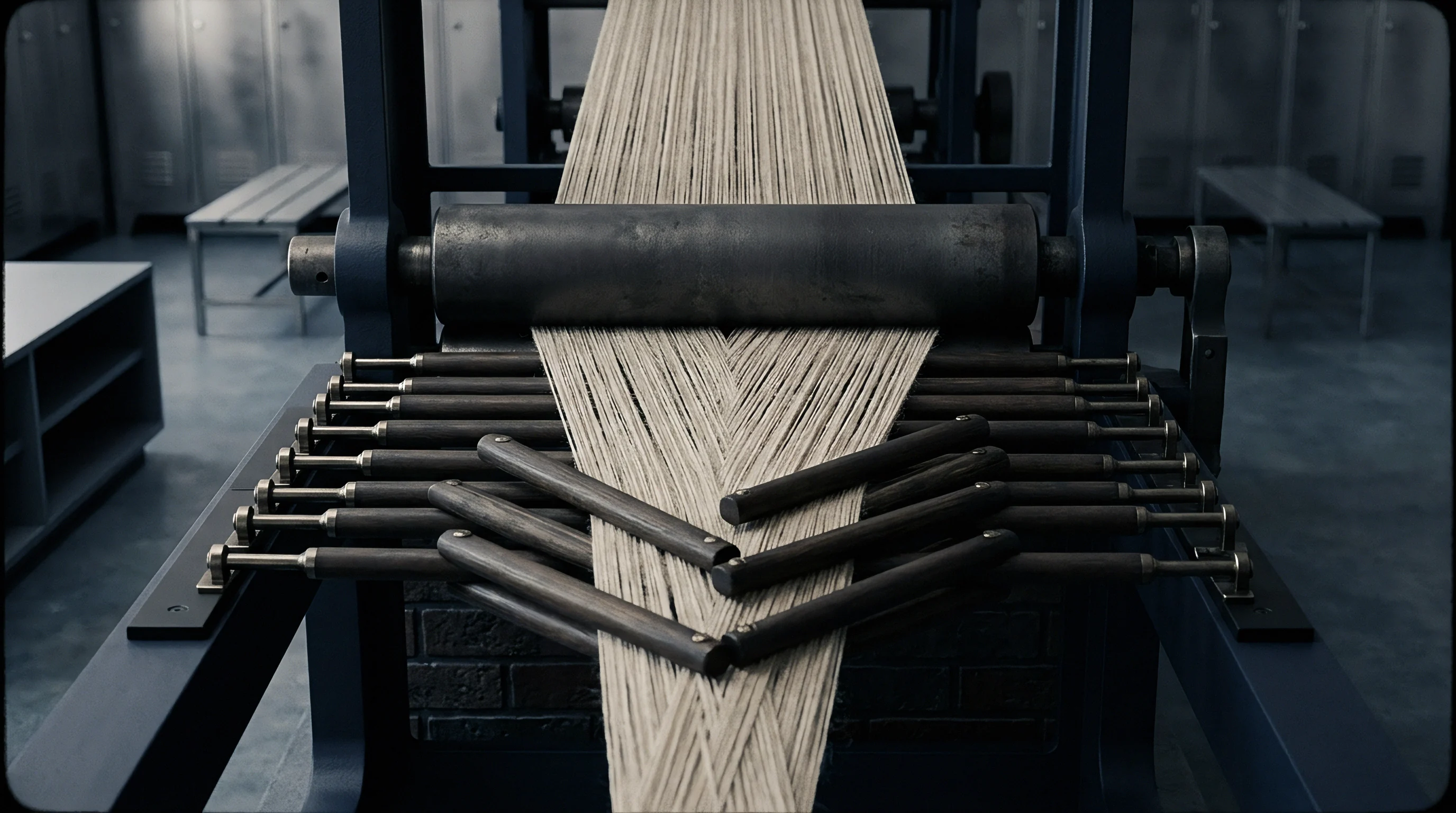
Polygalacturonic Acid Solubilization Mechanics
Elementary flax fibers remain locked within technical bundles through middle lamella layers rich in highly esterified homogalacturonans and rhamnogalacturonans. Under elevated temperatures, ester bonds in polygalacturonic acid chains undergo alkaline hydrolysis, shifting insoluble polymer networks into small, carboxylated fragments. Soluble pectins leach out rapidly, but divalent calcium cations bridging adjacent galacturonic acid residues form an insoluble egg-box lattice that resists mechanical attenuation during roller drafting.
Solubilization requires removing these ionic cross-links alongside chemical cleavage of the carbohydrate backbone.
Reaction rates for methyl ester hydrolysis follow pseudo-first-order kinetics when hydroxide ions exist in excess within the treatment bath. Hydrolysis kinetics depend heavily on reaction temperature, displaying an activation energy range between 48 kilojoules per mole and 62 kilojoules per mole depending on the initial degree of esterification. Native flax pectin exhibits esterification degrees between 55 percent and 75 percent.
Higher initial esterification accelerates the beta-elimination reaction under alkaline conditions, speeding backbone cleavage while reducing structural viscosity within the intercellular boundary.
Chelating agents remove divalent calcium ions from polygalacturonic chains to accelerate pectin dissolution.
De-esterification generates additional free carboxyl groups along the galacturonic polymer chain, increasing the negative charge density on the remaining fiber matrix. This electrostatic charge repulsion forces adjacent polysaccharide chains apart, swelling the intercellular matrix and admitting water molecules deep into the middle lamella. Without adequate chelation, released calcium ions immediately re-associate with newly exposed carboxyl groups, creating localized insoluble gels that halt drafting movement.

Thermal Activation and Chelating Reaction Rates
Temperature increases accelerate both the diffusion of chemical reagents into the dense roving core and the breaking rate of ester linkages. Below 65 degrees Celsius, pectin extraction relies almost entirely on slow ester saponification, leaving the calcium-pectate structural backbone largely intact. Raising the treatment temperature to 85 degrees Celsius doubles the solubilization rate constant, converting insoluble protopectin into water-soluble sodium pectates within a 45-minute processing window.
Chelation kinetics govern the detachment of cross-linking calcium ions from galacturonic structures. Aminopolycarboxylic acids, such as ethylenediaminetetraacetic acid and nitrilotriacetic acid, possess high stability constants for calcium complexes, pulling divalent cations out of the pectin matrix even at moderate temperatures. Organic hydroxycarboxylic acids, including citric acid and gluconic acid, require higher pH thresholds and elevated temperatures to achieve matching chelation efficiency.
The rate of calcium removal directly determines the softening rate of technical fiber bundles inside the wet spinning frame.
Failure to match chemical kinetics with roving speed causes severe draft resistance and mass variation across the resulting fine yarn. Unextracted pectin clusters form rigid points along the strand, forcing entire bundle fragments to pass through drafting rollers without separation. This mechanism generates thick slubs followed by thin, weak regions where individual fibers snap under excessive tension.


Bath
Process bath parameters control the thermodynamic equilibrium between bound protopectin inside the flax bundle and dissolved pectates in the liquid phase. Roving packages wound onto perforated stainless steel tubes undergo liquor circulation in pressurized or atmospheric liquor treatment machines. Continuous chemical contact maintains steady reactant concentrations across both the outer layer and inner core of the package, preventing radial drafting gradients.
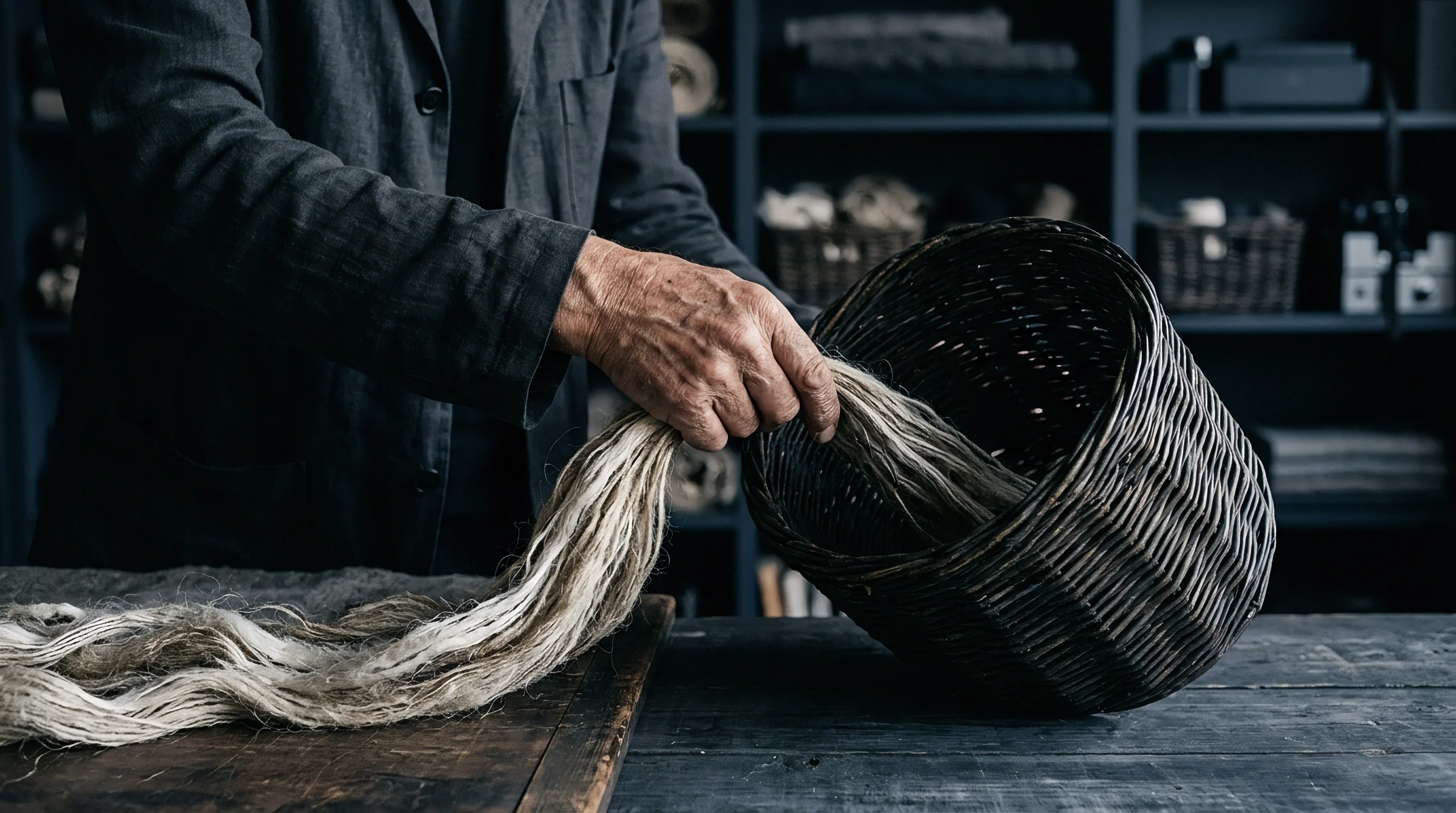
Alkaline Concentration and Chelant Stoichiometry
Sodium hydroxide solutions provide the hydroxyl ions needed to drive pectin ester cleavage and de-esterification inside the fiber bundle matrix. A bath concentration of 2.0 grams per liter to 4.5 grams per liter of sodium hydroxide maintains a stable pH between 10.5 and 11.8 throughout the cycle. Excessive alkali concentrations cause secondary swelling in cellulose crystalline regions, lowering overall fiber tenacity and causing significant weight loss in fine flax roving.
Chelant concentrations must directly reflect the molar equivalent of divalent calcium and magnesium ions present within the raw flax crop and process water. Raw flax contains between 0.3 percent and 0.8 percent calcium by dry fiber weight, requiring a minimum chelant concentration of 1.5 grams per liter in a 1:10 liquor ratio bath. Tetrasodium salt of ethylenediaminetetraacetic acid remains effective up to 90 degrees Celsius, whereas sodium gluconate exhibits superior calcium binding capability in concentrated alkaline media above 95 degrees Celsius.
| Chemical Treatment System | pH Range | Temperature Degrees C | Cycle Time Minutes | Residual Pectin Percent | Bundle Tenacity cN per tex |
|---|---|---|---|---|---|
| Sodium Hydroxide and EDTA | 10.8 to 11.5 | 85 | 45 | 0.85 | 28.4 |
| Sodium Carbonate and Citrate | 9.5 to 10.2 | 90 | 60 | 1.45 | 31.2 |
| Pectin Lyase Enzyme System | 7.0 to 8.0 | 55 | 90 | 1.10 | 33.6 |
| Sodium Hydroxide and Gluconate | 11.2 to 12.0 | 95 | 30 | 0.50 | 24.1 |
Enzymatic treatment protocols use pectin lyases to catalyze the beta-elimination cleavage of esterified pectin without attacking structural cellulose. Enzyme molecules possess higher molecular weights than sodium hydroxide, restricting their diffusion rate into dense, highly twisted fine rovings. Extended incubation periods or mechanical agitation overcome these diffusion limits, preserving maximum bundle tenacity while removing pectin selectively from fiber surfaces.

Liquor Flow Dynamics and Mass Transfer
Forced fluid flow through the porous roving bobbin supplies fresh reagents while flushing dissolved pectate fragments out of the fiber assembly. Reversing circulation direction every 5 to 10 minutes balances pressure drops across the bobbin thickness, while a differential pressure of 0.8 bar to 1.4 bar across the package wall maintains dynamic fluid movement without channeling or yarn dislodgement.
At a liquor ratio of 1:12 and 85 degrees Celsius, sodium hydroxide treatment reduces pectin content to 0.8 percent within 45 minutes.
Mass transfer rate dictates the overall kinetic performance of the bath. Diffusive flow within the fiber bundle operates under Fickian transport rules, where the effective diffusion coefficient depends on roving twist level and liquor viscosity. High roving twist restricts fluid penetration, producing an untreated core containing undissolved pectin that leads to end-breaks during high-draft spinning operations.
- Package channeling defects originate from excessive pump pressure causing liquor to cut paths through roving layers without penetrating technical fiber bundles.
- Localized re-precipitation occurs when bath pH drops below 8.0 before rinse cycles remove dissolved galacturonic acid fragments completely.
- Incomplete calcium extraction leaves rigid pectin cross-links intact, increasing drafting force requirements beyond spinning machine limits.
- Cellulose degradation happens when caustic concentrations exceed 6.0 grams per liter at temperatures above 90 degrees Celsius for longer than 60 minutes.
Prolonged boiling at high caustic concentration can achieve roving softness for fine counts, but excessive chemical exposure introduces structural variance that fine yarns cannot tolerate.

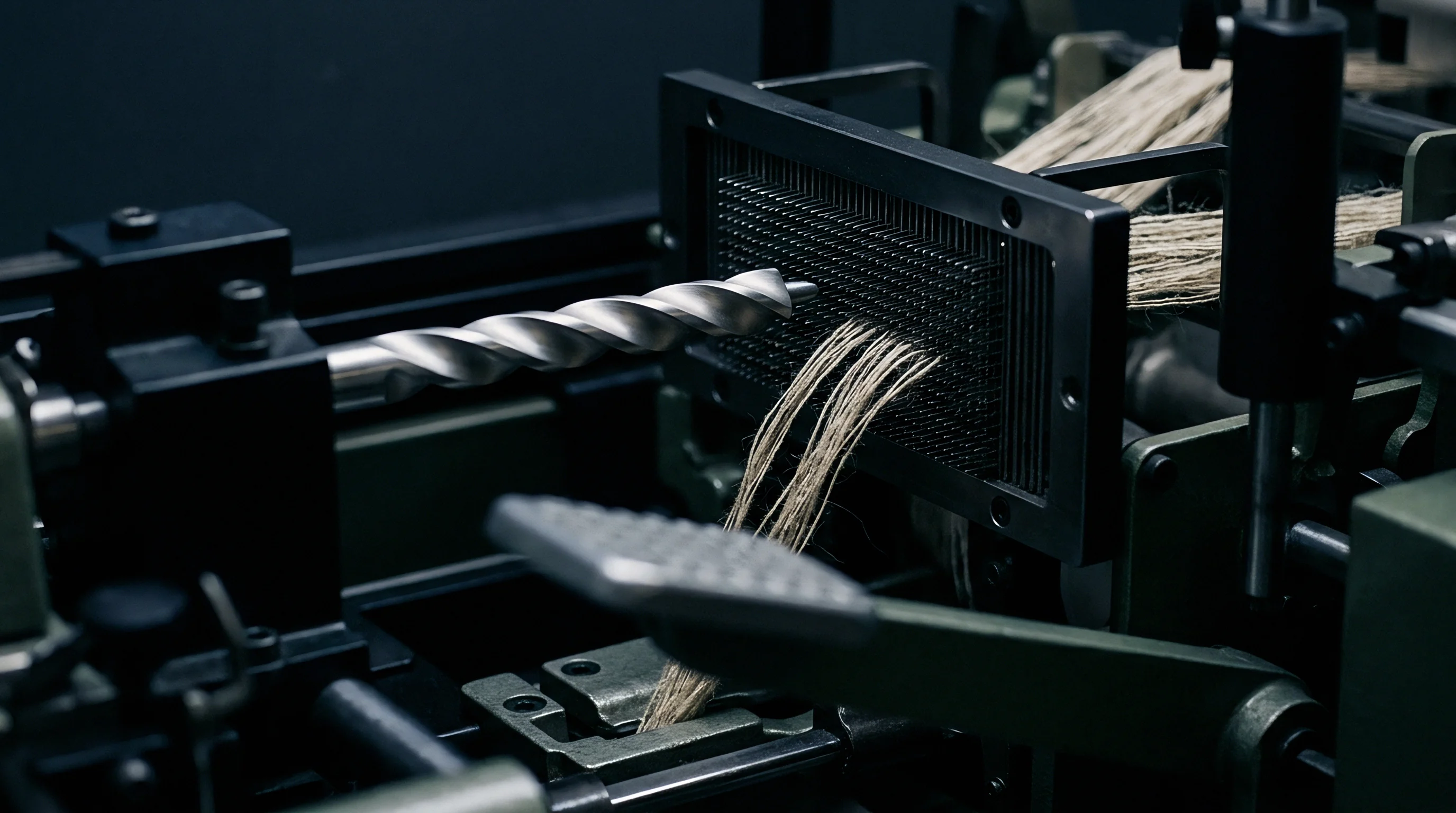
Slip
High-draft wet ring spinning frames draw fine flax roving through a hot water basin situated immediately behind the drafting zone. Water temperatures in this drafting trough range from 60 degrees Celsius to 75 degrees Celsius, maintaining residual pectin in a softened, semi-fluid state during mechanical attenuation. Draft ratios between 12 and 25 require continuous, predictable sliding of individual fibers past one another.

What Temperature Threshold Triggers Rapid Pectin Extraction?
Hot water immersion inside the spinning frame trough removes water-soluble pectin fractions that survived primary package boiling. Water flow through the trough sweeps away dissolved substances, preventing sticky deposits from accumulating on the drafting rollers. Inter-fiber friction drops dramatically as pectin softens, altering the stick-slip dynamic within the drafting zone.
Drafting force curves display a sharp reduction once pectin content falls below 1.2 percent by dry weight. Higher residual pectin concentrations increase the cohesive force between fibers, forcing front drafting rollers to apply excessive pressure to achieve attenuation. Excessive pressure crushes delicate elementary fibers, lowering final yarn strength and generating fly waste.
- Measure residual galacturonic acid concentration on roving samples before loading spinning creels.
- Adjust spinning frame trough water temperature to match the softening profile of the specific batch.
- Set back-roller and middle-roller nip gauge settings based on the average length distribution of liberated elementary fibers.
- Monitor drafting zone tension using digital force transducers to detect stick-slip oscillations.
- Drain and refill drafting trough water continuously to prevent concentration buildup of leached pectins.

Drafting Zone Friction and Inter-Fiber Cohesion
Fiber slip behavior inside the drafting zone depends on the equilibrium between inter-fiber friction and the applied drafting force. Softened pectin acts as a natural lubricant, allowing smooth movement of elementary fibers along their long axes. Undissolved pectin spots act as structural anchors, preventing fiber movement until force builds up sufficiently to snap the bundle abruptly.
Standard ISO 2060 specifies yarn linear density testing parameters to confirm structural uniformity following high-draft attenuation.
Control pins or leather aprons inside the drafting zone guide short fibers and prevent uncontrolled floating fiber acceleration. High-draft fine flax spinning demands tight pin control because liberated flax elementary fibers possess mean lengths between 20 millimeters and 45 millimeters. Without this guidance, uncontrolled floating fibers gather into slubs, creating periodic defects known as drafting waves.
Proper pectin removal establishes a low, uniform cohesion baseline where fiber sliding occurs at constant force inputs.


Defect
Yarn mass variation reflects the underlying structural uniformity of the drawn fiber strand. Non-uniform pectin removal produces distinct physical defects in fine flax yarn, measurable via capacitance-based or optical mass testing systems. Thin places occur when over-degummed fiber segments slide apart with minimal resistance, whereas thick places represent rigid fiber bundles that refused to draft.

Slub Formation and Mass Variation Roots
Periodic thick places, or slubs, stem directly from localized kinetic failures during roving bath treatment. When chemical reagents fail to penetrate dense roving regions, the middle lamella remains fully intact, retaining high cohesion. These rigid technical fibers pass through the drafting rollers as a single entity, drawing surrounding loose fibers along with them and generating massive yarn slubs.
Mass variation expressed as coefficient of variation percentage (CV%) escalates rapidly when residual pectin distribution shows high variance. Fine flax yarn of metric count Nm 60 demands a mass CV% below 16.5 percent for acceptable weaving performance. Residual pectin variations exceeding 0.3 percent across a single bobbin drive mass CV% values above 20.0 percent, causing high end-break rates on the spinning frame and loom shed.
| Yarn Count Metric Nm | Target Residual Pectin Percent | Mass CV Percent | Thin Places per 1000m -50 Percent | Thick Places per 1000m +50 Percent | Tenacity cN per tex |
|---|---|---|---|---|---|
| Nm 39 | 1.20 | 14.2 | 12 | 35 | 29.5 |
| Nm 50 | 1.00 | 15.1 | 22 | 48 | 27.8 |
| Nm 60 | 0.80 | 16.2 | 38 | 65 | 26.2 |
| Nm 80 | 0.55 | 18.4 | 85 | 110 | 22.4 |
Excessive pectin extraction causes opposite structural failure modes. When treatment baths strip hemicellulose and structural proteins alongside pectin, elementary fibers lose all mutual cohesion, leading to uncontrolled slippage, high fly generation, and severe tenacity loss in the finished yarn assembly.

Fiber Degradation and Tenacity Loss Boundaries
Fiber bundle strength drops in direct proportion to chemical treatment severity. Native flax fibers exhibit individual elementary tenacities reaching 60 cN per tex to 80 cN per tex, but spun yarn tenacity depends on inter-fiber friction and twist insertion efficiency. Over-treated roving produces weak yarn because individual fibers slip past each other under tensile load without transferring stress efficiently across the yarn cross-section.
Uncontrolled pectin degradation reduces fine yarn tenacity below the critical weaving threshold of 18 cN per tex.
Testing incoming roving for residual galacturonic acid content provides an empirical method to predict spinning performance. Spectrometric measurement following carbazole reaction or high-performance liquid chromatography determines absolute galacturonic acid mass fractions.
- Residual calcium content dictates necessary bath chelant ratio for complete middle lamella softening.
- Roving mass uniformity confirms absence of structural package density variation prior to boiling.
- Galacturonic acid fraction establishes exact degree of pectin removal achieved during bath processing.
- Elementary fiber length distribution indicates whether chemical treatment caused excessive bundle fragmentation.
Optimal kinetic management yields a precise middle lamella state, but trade discussions continue regarding whether chemical chelation or biological retting yields superior fiber longevity under commercial washing environments.

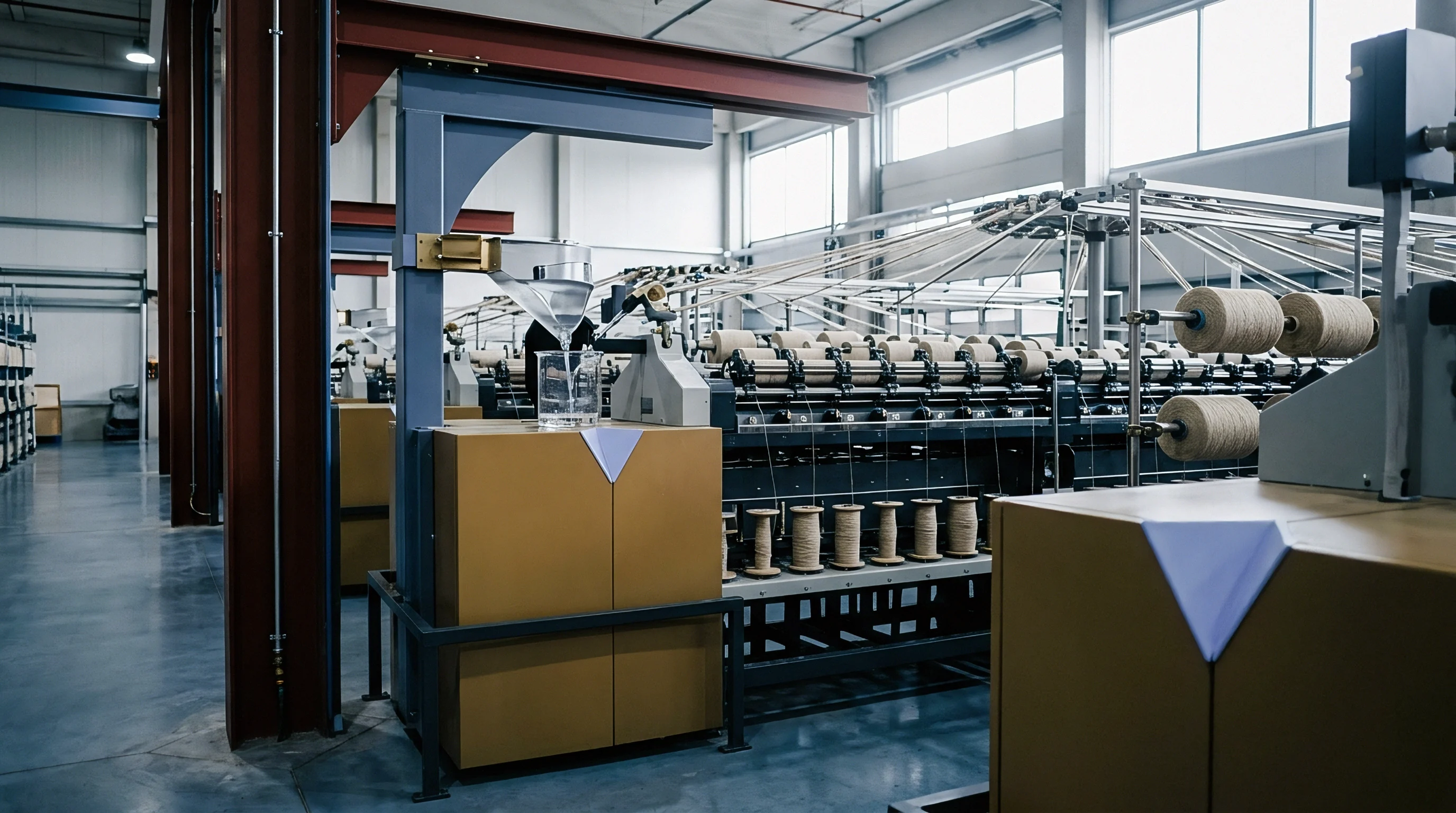
Ledger
Chemical processing costs directly alter the margin structure of high-count fine flax yarns. Raw flax fiber accounts for roughly 50 percent to 60 percent of yarn manufacturing cost, while wet treatment chemicals, energy, and effluent treatment form significant operational expenditure items. Higher draft capability enables mills to spin fine counts from less expensive long-flax raw material, offsetting chemical treatment costs.

Commercial Cost Impact of Chemical Processing
Sodium hydroxide, chelating agents, and wetting additives contribute directly to chemical bill of materials expenses. A standard EDTA-based treatment bath adds approximately 0.18 Euros per kilogram of roving processed, while specialized enzymatic treatments increase chemical costs to 0.45 Euros per kilogram. Energy required to heat treatment liquor to 90 degrees Celsius adds another 0.12 Euros per kilogram depending on heat recovery system efficiency.
Yield loss during boiling must enter all cost calculations. Extraction of pectin, hemicellulose, wax, and water-soluble compounds removes between 8 percent and 13 percent of initial roving dry mass. A mill starting with 1,000 kilograms of raw roving yields approximately 890 kilograms of spin-ready roving following treatment.
A worked calculation illustrates the financial impact of process optimization. Take a 10,000 kilogram lot of fine flax roving destined for Nm 60 wet spinning. Assuming raw roving costs 8.50 Euros per kilogram, initial material cost equals 85,000 Euros.
Processing the lot with an optimized chelant-alkali system yields an 8.5 percent weight loss, producing 9,150 kilograms of processed roving. Chemical and thermal energy costs total 0.32 Euros per input kilogram, or 3,200 Euros. Total investment reaches 88,200 Euros across the processed batch, establishing an effective material base cost of 9.64 Euros per kilogram of spin-ready roving.
If an unoptimized process increases weight loss to 12.0 percent due to cellulose degradation, available material drops to 8,800 kilograms, driving effective base material cost to 10.02 Euros per kilogram. This 0.38 Euro per kilogram difference eliminates profit margins on fine yarn contracts.

Provenential Documentation and Verification Audit
Origin claims for fine flax yarns require physical batch tracing coupled with chemical verification dossiers. Western European flax certified under European Flax or Masters of Linen standards travels through scutching and spinning stages with specific scope certificates. Processing unspun roving in non-European facilities requires strict transaction certificate matching to guarantee that European-grown fiber was not blended with lower-grade material during retting or roving prep.
Audit protocols mandate reconciliation between incoming raw fibre weight, scutcher delivery receipts, roving store registers, and finished yarn package weights. When a Chinese wet-spinning mill processes European Flax roving, verification inspectors cross-check weighbridge tickets against batch-specific pectin extraction reports. ISO 17025 accredited laboratory test reports showing residual pectin levels, galacturonic acid content, and fiber length distribution must match the declared processing lot number printed on package tags.
Supply contracts incorporate explicit warranty clauses regarding fiber origin, chemical processing limits, and mass variation tolerances. Standard procurement agreements mandate that sellers supply certified transaction papers alongside spectrophotometric pectin analysis for every 5,000 kilogram delivery lot. Failure to meet residual pectin specifications triggers price discount schedules or full consignment rejection, protecting buyers against downstream weaving failures.
Under Article 61 of the Union Customs Code, non-preferential origin determination for yarn spun from imported roving depends on the specific processing steps completed within the processing territory. When chemical pectin extraction and high-draft wet spinning occur in a secondary country, the resulting yarn acquires origin from that processing country only if the manufacturing process constitutes a substantial transformation under classification shift rules from HS heading 5301 to HS heading 5306.