
Optimizing Loom Shed Geometry Geometry Settings for High End Density Linen Warps
Asymmetric shed geometry and early crossover timing reduce flax peak tension, preventing end breakage on high-density linen warps without sacrificing speed.
Asymmetric shed geometry and early crossover timing reduce flax peak tension, preventing end breakage on high-density linen warps without sacrificing speed.

Moisture regain directly alters yarn linear density, requiring strict shed humidity control and ISO 2060 dry mass corrections to stabilize rapier weaving mechanics and landed cloth costs.

Dynamic multi-axis loom extension triggers rapid viscoelastic stress relaxation in wet spun flax through pectin matrix slip, requiring tuned backrest dynamics.

Resolving seasonal weaving displacements requires shifting warp warps across compatible air-jet looms using strict tension, reed, and sizing adjustments.
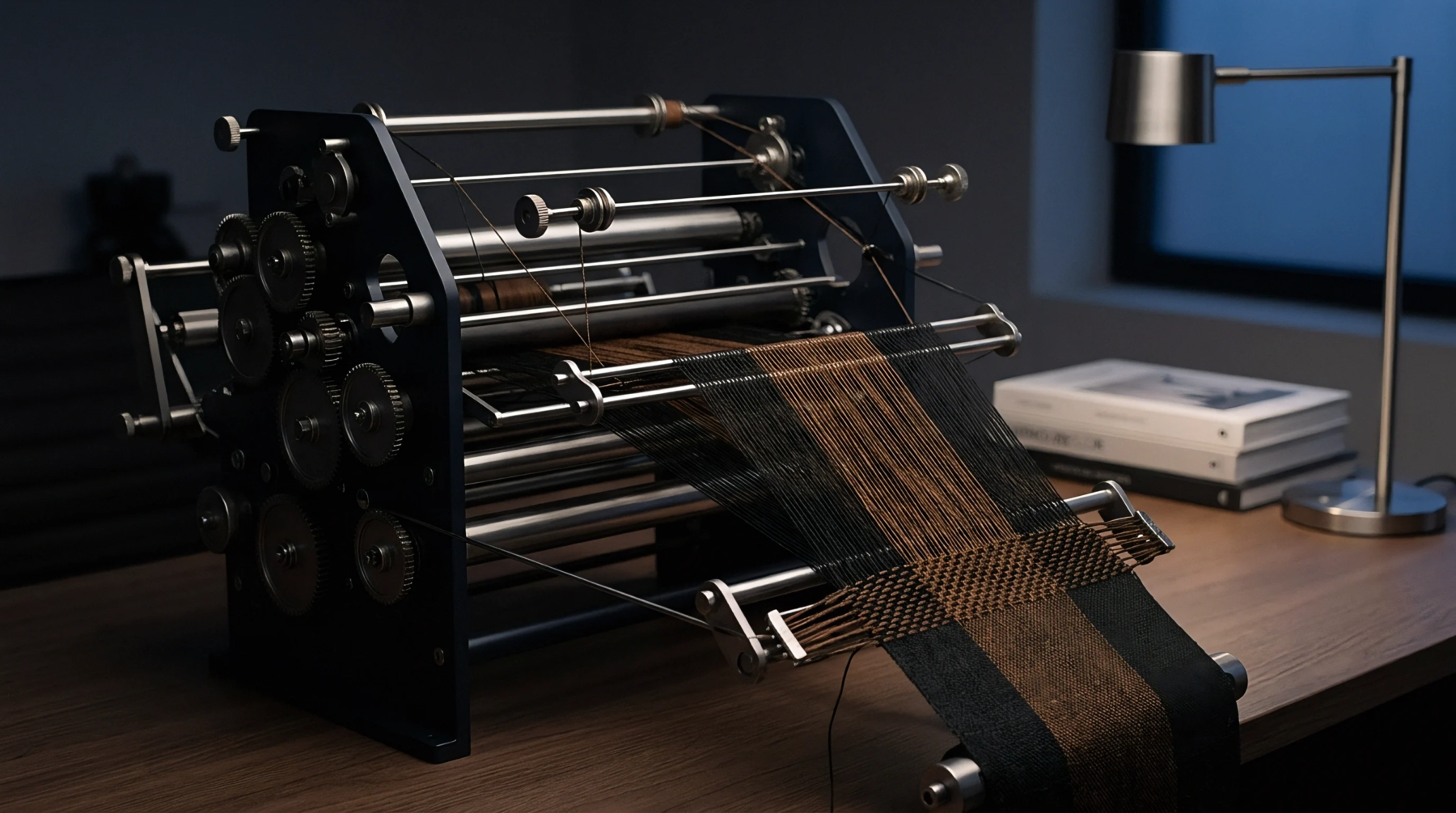
Seasonal Chinese loom allocation demands mapping construction pick counts into hourly machine costs to secure capacity before Q3 peak congestion.

Ultra-high-speed rapier insertion causes non-linear yarn dynamic degradation and micro-slippage that requires optimized clamping and sizing to prevent shed stops.

Managing off-loom flax warp crimp contraction requires precise reed denting allowances, ELO tension tuning, and size solubility control to hit target grey widths.

Differentiating spinning and sizing root causes requires cross-sectional microscopy and high-speed tensile testing to map size encapsulation against yarn mass variation.

Greige reed marks and starting marks map directly to reed wire spacing and loom stoppage dynamics, requiring electronic let-off adjustment to eliminate defects.

Dynamic friction in fine wet spun linen warps limits loom speed, demanding tailored size films, optimized shedding angles, and ambient humidity control.

ASTM D5430 four-point scoring normalises greige defects per 100 square yards, capping penalties at four points per yard to decide lot acceptance.
Expertise is a utility, not a secret. sentiention™ publishes its working knowledge as open reference: intelligence layer covering the materials it sources, the markets it enters, and the reference that serves both.