Fibre Performance
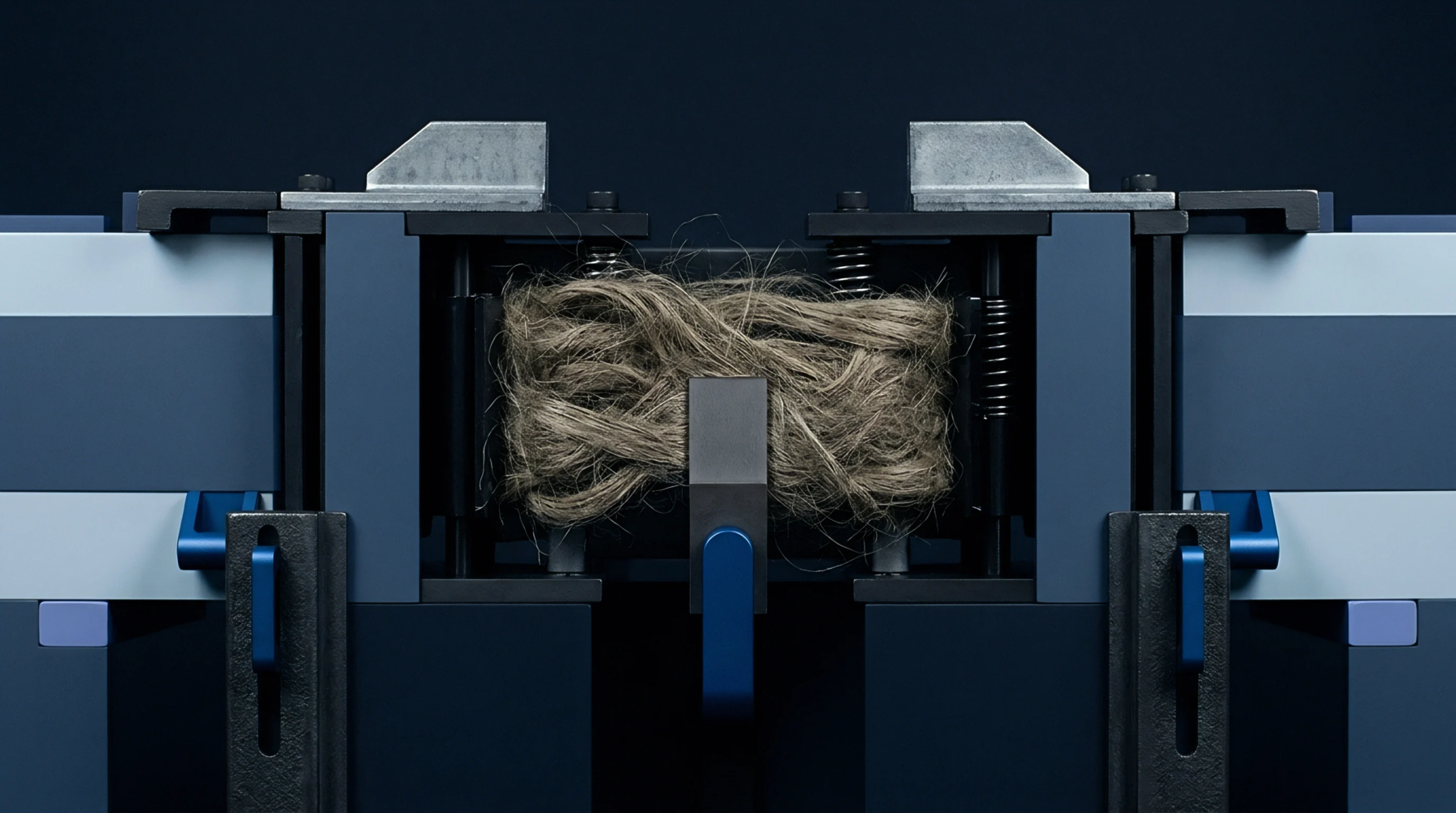
Stelometer testing constitutes an analytical procedure applied to raw flax staples to quantify the force required to fracture a specific bundle weight under tension. This diagnostic assessment measures the tenacity and elongation of individual flax fibres by applying a constant rate of extension to a clamped sample with a known span length. Laboratory technicians utilize the resulting data to establish the structural integrity of a harvest lot before the material enters the initial stages of mechanical processing.
The testing protocol remains bound to the assessment of dry fibre properties, excluding any evaluation of yarn regularity or processed fabric characteristics. By capturing the stress to break point, the measurement provides a reliable metric for predicting how the biological material behaves under the high tension loads found in automated spinning lines.
Breakage Threshold
Technical equipment records the precise Newton force necessary to cause a specimen failure, which establishes the absolute tensile limit of a batch. Operators prepare the flax by combing a small mass into a parallel alignment before securing the ends within the calibrated jaws of the instrument. The mechanism pulls the clamped fibres apart at a set velocity until the bundle snaps, allowing the device to register the maximum load applied.
Quality control managers compare these results against the minimum mill standards required to maintain production speeds without frequent line stoppages. Batches failing to reach the established gram force threshold undergo reclassification or require blending with stronger stocks to ensure downstream operational stability. This separation between raw material validation and final product grading prevents weak fibres from entering the high velocity drafting phase.
Validation Metric
Raw material procurement teams rely on the output of this measurement to distinguish between fibre lots intended for coarse industrial applications and those destined for fine textile production. The resulting data sits in the shipment file alongside moisture content and colour grading reports, providing a verified record of structural performance. Mills implement this assessment to safeguard their spinning equipment from the mechanical fatigue caused by brittle or damaged flax supplies.
Data collected through this process determines the financial value of the lot, as higher tenacity levels allow for increased yarn tensile strength. Accurate tensile quantification remains the primary determinant for the success of subsequent spinning operations.