Auditing Mass Balance and Lot Segregation in Chinese Linen Mills Processing European Flax Inputs
Auditing Chinese linen mills requires reconciling port customs weighbridge tickets against wet-spinning yield equations to expose false mass balance credits.
Provenance
Scope Boundaries of Alliance European Flax Standards
Audit protocols for Chinese wet-spinning facilities handling Western European raw materials begin with the exact boundaries of certification scope. The Alliance for European Flax-Linen & Hemp certifies premium bast fibre cultivated in France, Belgium, and the Netherlands. This certification guarantees regional identity, non-GMO status, natural retting without chemical intervention, and zero irrigation.
Documenting raw scutched flax (Harmonized System heading 5301.21) leaving European scutching plants requires an initial transaction certificate linked to a verified scope certificate. When raw bales reach port terminals in Ningbo, Qingdao, or Shanghai, custody becomes harder to police. Chinese spinning mills routinely process European long line flax alongside lower-grade domestic crops from Heilongjiang or imported tow fractions from Eastern Europe (HS 5301.29).
Traceability comes down to whether the receiving mill physically separates batches or relies on mass balance accounting.
Certification rules permit mass balance tracking within defined credit margins. Input allocations of certified European flax are logged into the mill ledger, and theoretical yield coefficients dictate how much certified yarn output can be booked out against them. Under pure credit systems, mills can run certified and uncertified fibre down the same carding and drawing lines.
That flexibility creates tangible commercial risks for fabric buyers: a mill on mass balance can legally blend 40 percent uncertified Russian tow flax into a run and still issue 100 percent European Flax transaction certificates for the yarn, so long as total ledger credits balance out. European Flax certification guarantees the physical origin of the fibre in the yarn only when the mill enforces physical lot segregation verified by point-of-entry audits.
Sorting out European Flax scope certificates from the Masters of Linen designation is essential before signing contracts. Masters of Linen requires every stage ~ scutching, spinning, weaving, and finishing ~ to take place inside European borders, excluding facilities outside Europe from holding the credential. Chinese mills work solely under European Flax chain-of-custody scope certificates, which permit processing outside Europe while preserving the raw material origin claim, provided every facility in the chain holds valid scope accreditation.
If a Shaoxing weaving mill invoices finished linen fabric under a European origin claim, that documentation warrants scrutiny. The claim covers only the raw fibre input, and defending it requires an unbroken chain of transaction certificates through spinning, doubling, and weaving.
Transaction certificates issued without matching mill weighbridge tickets represent accounting balance rather than verified physical fibre movement.

Operational Risk Profiles in Multi-Input Mills
Mills running multiple fibre inputs carry inherent vulnerabilities in provenance accounting, mostly through shared storage bays and unmonitored waste streams. Processing different grades requires high continuous volume to protect operating margins, and clearing lines for short production runs of certified European flax causes costly downtime. Auditors examine bale receiving bays, hackling line allocations, carding web collectors, and wet-spinning creels for mechanical partitions.
Without dedicated processing lines, high-grade European long flax mixes with short tow fibers during sliver drafting, degrading yarn quality and throwing off fibre length figures on technical datasheets.
- Virtual volume allocation allows a mill to buy 100 metric tons of certified flax, run 200 tons of mixed production, and allocate all certified credits to its highest-margin orders.
- Temporal mismatching of trade credits happens when transaction certificates from winter raw flax purchases are applied to summer yarn orders spun months earlier.
- Waste credit recycling occurs when mills sell short tow bypass as certified material without deducting process loss weights from their certified inventory.
- Subcontracted wet-processing transfers break the chain of custody when grey yarn leaves a primary mill for commission dyeing without transfer documentation.
Effective oversight requires cross-referencing physical bale stores directly against inventory ledgers. Unspun yarn from European flax exhibits distinct tensile and length properties under cross-sectional laboratory analysis. Normandy scutched long flax typically measures 500 to 700 millimetres in mean fiber length after hackling, whereas short tow flax and domestic Chinese crops fall below 250 millimetres.
When mill records declare pure long-line production, sampling roving bobbins exposes short-fiber contamination immediately. Physical fiber identity is established at the hackling frame; paper certificates cannot clean up mixed sliver.
Audit teams check the mill’s material control system (MCS) to determine how input batches map onto outgoing shipping manifests. A thorough audit connects every metric ton of yarn to specific bills of lading, container seal numbers, and port customs releases. Discrepancies between declared import weights and internal job sheets indicate that uncertified fiber was introduced.
Maintaining certified status demands unbroken batch isolation through hackling, carding, drafting, wet spinning, winding, and warping.
Physical separation of hackled sliver bands during peak autumn production idles three frame banks; mills therefore log certified European fibre into accounting ledgers while running continuous blended production batches.

Clamp

Physical Machine Touchpoints and Roving Contamination
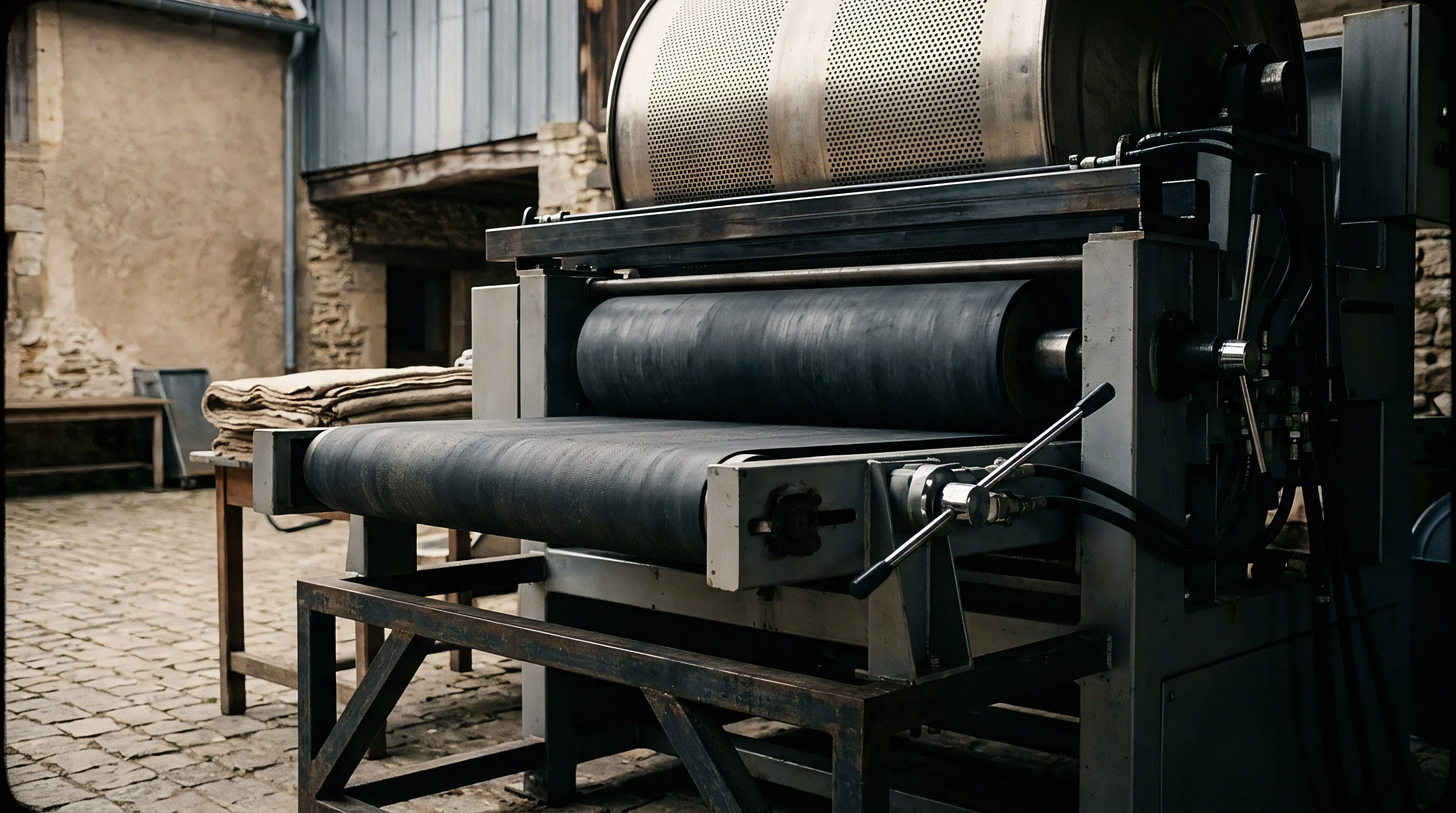
Converting raw scutched flax into wet-spun yarn presents recurring points of physical contamination across the factory floor. Bale breaking opens compressed flax units and feeds raw strands into manual or automated hackling frames. Hackling combs the fiber, aligning long strands into continuous sliver while shedding short fibers, shive, and dust as hackling tow.
Shared hackling lines represent the primary contamination point in Chinese mills: if European Flax lot A enters Hackling Line 1 immediately after non-certified domestic lot B, short fibers trapped in the comb pins contaminate the lead sliver cans of the certified lot.
Hackled sliver moves through drafting heads on gill boxes to uniform weight per metre and align individual fibers. Cans feeding these drafting frames gather airborne lint and fly waste from neighboring lines. In crowded spinning rooms lacking physical curtains or walls, floating flax lint drifts between adjacent frames.
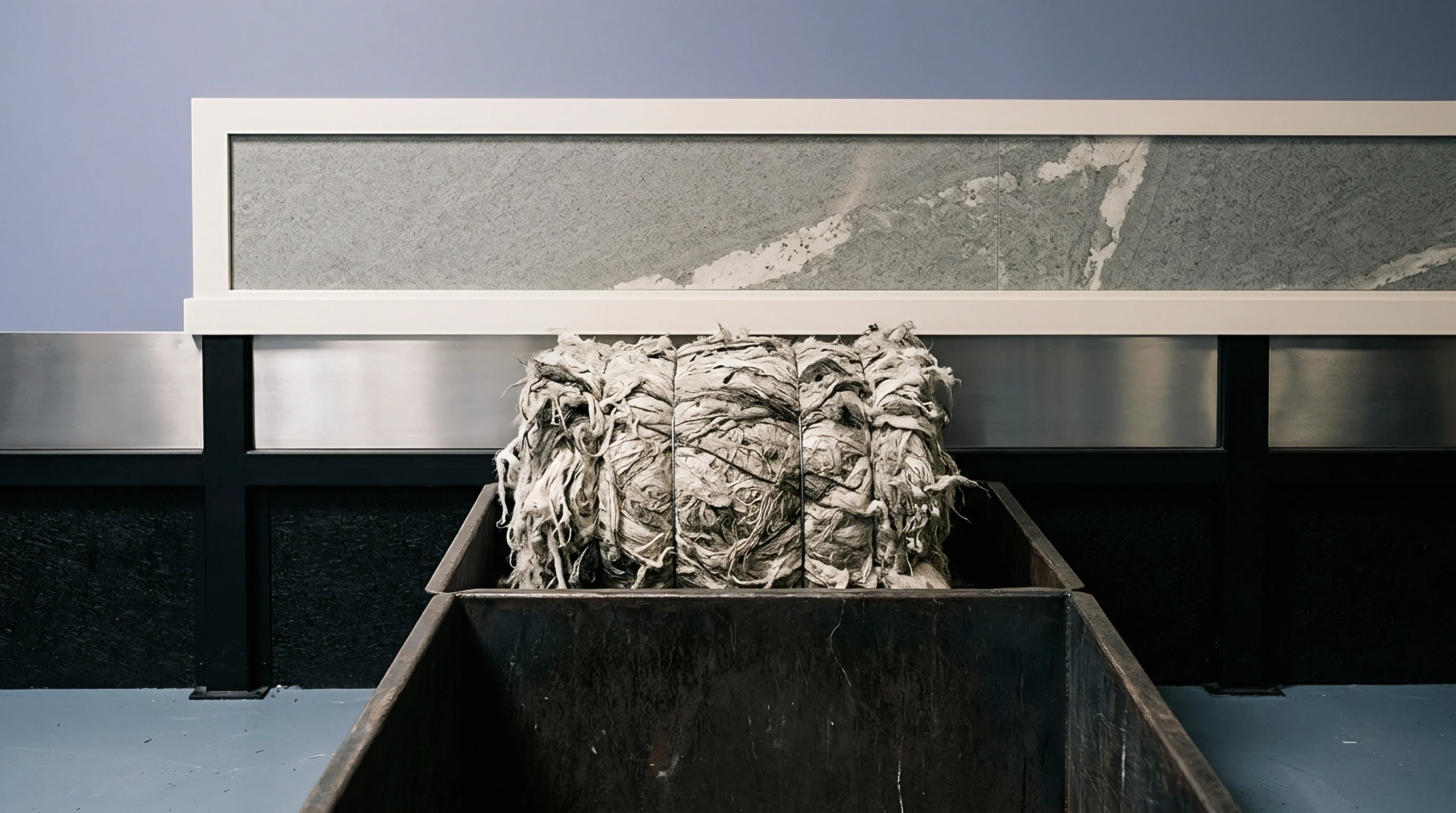
Drafting draws the sliver down to fine roving, which is wound onto wooden or plastic bobbins at the roving frame. Spindle clamps secure the roving packages before transfer to the wet-spinning room. Traceability frequently fails at the bobbin level, where unmarked flanges or mixed transport crates send uncertified roving directly onto wet-spinning creels.
Wet spinning is the primary transformation step for high-tenacity linen yarn. Roving bobbins sit on creel pins over warm water baths maintained between 60 and 70 degrees Celsius. The warm water softens pectin binding the ultimate fibers, allowing drafting rollers to draw the roving down to the target yarn count (Nm) before rings and travelers insert yarn twist.
Trough cleanliness and spindle isolation are critical: mills running continuous water troughs across adjacent creels risk loose roving ends floating across into neighboring production runs. Building physical bays around individual wet-spinning frames isolates the draft zones and prevents cross-contamination.
| Processing Stage | Primary Machine Type | Input Material | Output Product | Standard Loss Range (%) | Dominant Loss Mechanism |
|---|---|---|---|---|---|
| Scutching & Hackling | Hackling Comb Frame | Raw Scutched Flax | Hackled Line Sliver & Tow | 18 – 24% | Short fibre breakage and dust extraction |
| Carding & Combing | Tow Card & Comber | Scutched Tow & Short Flax | Combed Tow Sliver | 12 – 16% | Neps, trash removal, comber noils |
| Drawing & Roving | Gill Box & Roving Frame | Combed / Hackled Sliver | Roving Bobbins | 2 – 4% | Roller lap waste and sliver fly |
| Wet Spinning | Hot Water Wet-Spinning Frame | Roving Bobbin | Wet Spun Yarn (Cop) | 3 – 5% | Slub trimming, bath breakages, fly waste |
| Winding & Assembly | Auto-Winder & Doubler | Yarn Cops | Cone / Package Yarn | 1.5 – 2.5% | Yarn clearings, knotter tails, tension snaps |
| Weaving | Rapier / Air-Jet Loom | Cone Yarn (Warp & Weft) | Greige Linen Fabric | 2 – 4% | Sizing trim, warp break tie-ins, loom selvage cut |
Verifying lot segregation requires inspecting production lines step by step. Auditors cross-reference production logs directly at the wet-spinning frame against creel loading patterns and job cards. True lot isolation takes dedicated handling equipment, color-coded bobbins, separate sliver storage, and lot tags preserved from raw bale intake through to finished winding packages.
Spindle speeds directly affect yarn break rates.
- Inspect bale store intake bay to match shipping marks, container seals, and European Flax bale numbers against bill of lading entries.
- Tag designated hackling machinery lines with physical lot markers and verify complete purge of residual fiber in feed hoppers.
- Paint distinct color bands on roving bobbin heads before wet-spinning creel loading to trace lot identity on active spindles.
- Segregate wet-spinning bath troughs by dedicated production bays to prevent cross-contamination during sliver drafting.
- Stamp greige fabric bolt selvages with permanent lot serial numbers directly at the loom roll take-up motion.

Sliver Creel Separation and Bobbin Tagging
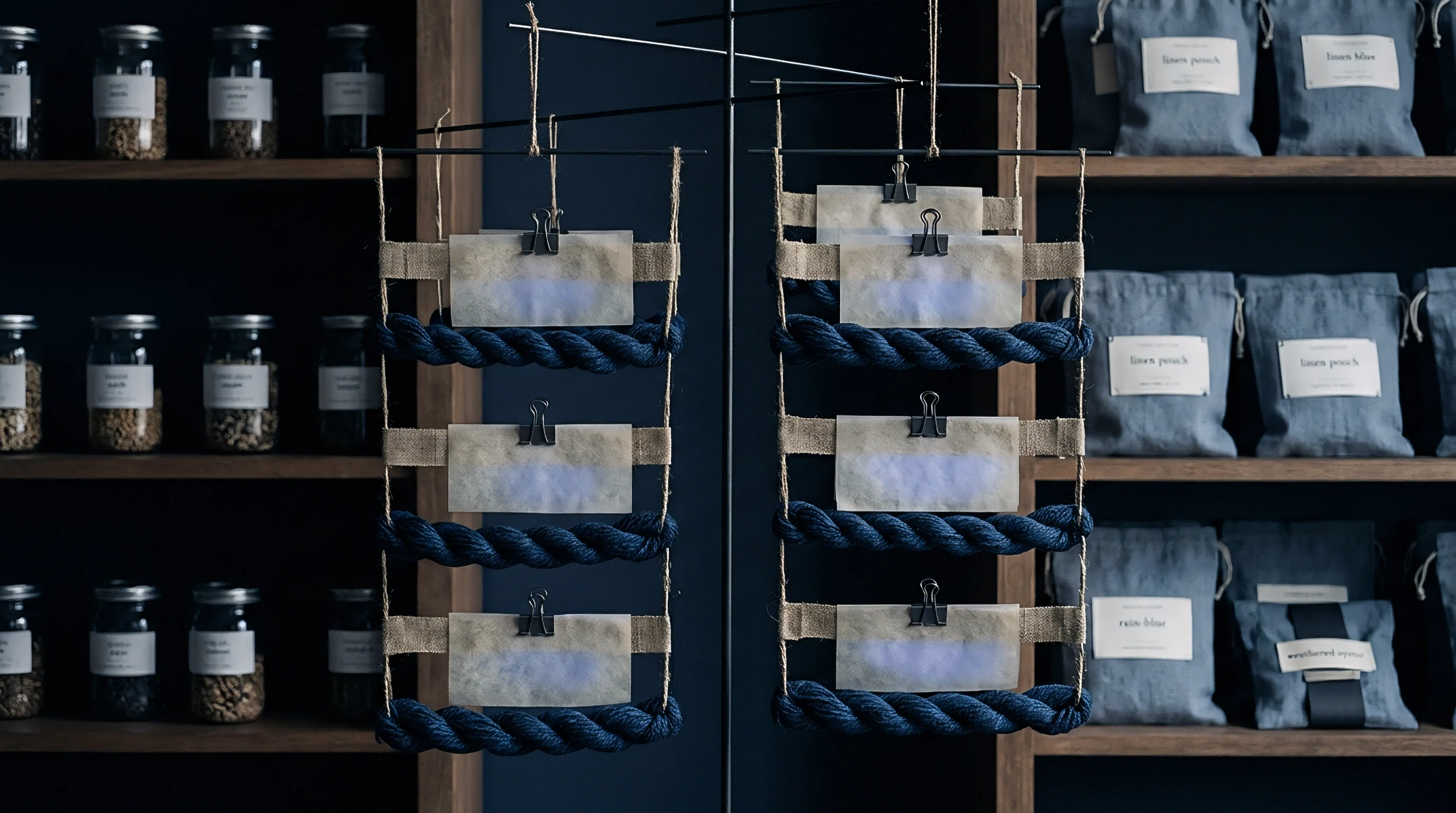
Controlling batch movement between roving and spinning frames depends on visible floor controls. Automated frames mark bobbin flanges during winding: certified European flax receives bright blue flanges, whereas non-certified or blended lots receive white or yellow markers. When bobbins reach wet-spinning creels, operators verify these color codes against active production boards.
Transparent vinyl curtains or rigid partitions erected between frame banks deflect airborne lint during high-speed drafting.
Winding converts wet-spun cops into dense yarn packages for weaving or knitting. Automatic winders equipped with optical clearers monitor strand diameter, cutting out slubs, thin spots, and stray fibers. Clearers calibrated for fine line yarns excise thick slubs generated by foreign short fibers.
Winder defect logs record these interventions continuously; an abnormal spike in cuts indicates lower-grade raw fibre inputs or improper draft ratios during wet spinning. Finished cones receive barcode labels recording yarn count, spinner identification, lot code, and certification status prior to packing.
Weaving mills processing certified linen yarn verify incoming cone packages against packing slips and transaction certificates. Creels supplying sectional warping machines hold up to 800 packages simultaneously. Introducing non-certified cones into a warping creel disperses unverified ends across the entire beam width, contaminating thousands of metres of greige fabric.
Identification tags on warp beams preserve cone lot codes to maintain traceability from loom take-up to inspected roll.
Greige bolts retain mill lot tags. Mechanical isolation of raw fibre store bays prevents accidental mixing long before roving packages reach wet-spinning creels.


Discrepancy

Why Do Wet-Spinning Mass Balance Records Diverge during High-Humidity Months?
Moisture content in raw flax shifts considerably between warehouse storage and wet processing. Flax bast fibres hydrate rapidly, and international standards (ISO 2060 and ISO 6741) establish official commercial moisture regain at 12.0 percent. Scutched flax bales dispatched from European ports reach coastal spinning hubs in Jiangsu and Zhejiang containing between 8.5 and 10.5 percent moisture.
Weeks spent inside maritime containers generate internal humidity shifts, and once bales are broken open in regional summer conditions ~ where relative humidity routinely exceeds 75 percent during monsoon months ~ the fibre absorbs ambient water. This inflates gross bale weight without adding a single gram of cellulose fibre.
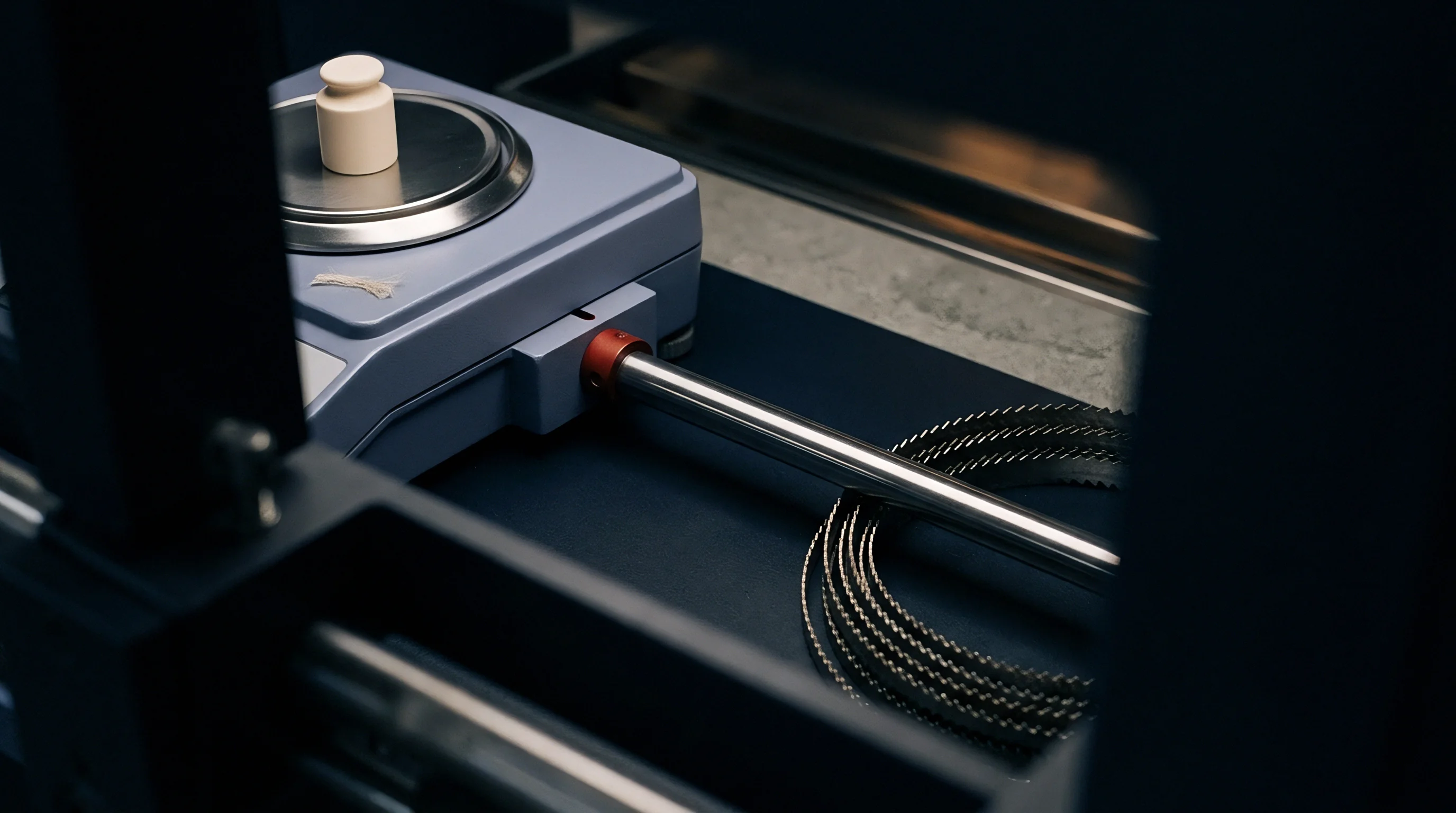
Weighbridge receipts record gross incoming weight, capturing absorbed atmospheric water. High humidity can cause an uncalibrated platform scale to register a 10,000 kilogram flax shipment at 10,450 kilograms. If mass balance software calculates allowable yarn yield from uncorrected gross receipts, it creates phantom credit balances.
The mill logs 450 kilograms of European flax input that exists purely as water weight, enabling the facility to blend in 450 kilograms of uncertified domestic tow while issuing 100 percent European Flax transaction certificates for the finished yarn.
Wet spinning introduces additional mass discrepancies through pectin extraction and hot-water dissolution. Hot water baths dissolve soluble matter, natural waxes, and residual shive, reducing dry fibre mass by 1.8 to 3.2 percent during drafting. Freshly spun cops discharged from ring frames hold upwards of 35 percent water weight and must pass through drying chambers to lower moisture back to commercial regain levels before winding.
Dryer settings govern final package mass: over-drying yarn to 9.0 percent moisture undercounts physical yield, while under-drying to 14.5 percent inflates output totals and generates artificial mass balance credits in the inventory ledger.
Commercial weight calculations based on 12.0 percent standard moisture regain alter physical output balances when incoming bales are weighed at 14.5 percent moisture in humid coastal warehouses.
Discrepancies in waste logs recur during summer environmental audits. Reconciling mass balance records requires converting raw inputs, intermediate roving, waste, and finished yarn packages to bone-dry mass. Subtracting oven-dry weight from gross scale weight isolates water content and exposes inflated figures.
Buyers rejected 14 metric tons of yarn after weighbridge reconciliation uncovered a 7.8 percent uncertified fiber injection. Mass balance balances paper, not fiber.

Mass Balance Yield Equation and Waste Losses
Accurate mass balance audits depend on mass conversion equations that account for actual yield losses. Standard coefficients in certification schemes are nominal factory averages, but real mill yield varies with fiber strength, hackling pin density, yarn count (Nm), and equipment maintenance. The basic mass balance equation across a wet-spinning cycle runs as follows:
Output Yarn Mass (Dry) = Input Scutched Flax Mass (Dry) – Hackling Tow Mass (Dry) – Carding Waste Mass (Dry) – Wet Spinning Trough Extraction Mass (Dry) – Winding Trim Loss (Dry) – Unaccounted Process Fly (Dry)
Applying standard moisture regain values converts dry mass balance balances back to commercial transaction weights. Standard commercial weight (Wc) calculation follows the formula:
Wc = Md (1 + Rc / 100)
Where Md represents oven-dry fibre mass and Rc represents official commercial moisture regain percentage (12.0 percent for linen yarn, 12.0 percent for hackled long flax, and 13.0 percent for raw scutched flax). Auditors compare actual recorded yield ratios against expected machine technical limits. Yields exceeding mathematical limits indicate unrecorded non-certified raw fibre injections.
Hackling long line flax for fine yarn counts (Nm 26 to Nm 39) produces substantial hackling tow ~ the shorter fibers combed out during processing. Typical long-line hackling yields 60 to 70 percent hackled sliver and 25 to 35 percent hackling tow, which gets routed into carding for coarse tow yarns (Nm 6 to Nm 14) or blends. Mass balance fraud happens when a mill credits full incoming raw bale mass against fine line yarn production while selling the byproduct tow as certified material to outside carding plants, double-counting the credit volume.
Comber tow yields vary by crop year. Auditing mass balance integrity requires tracking both primary long-line yarn outputs and secondary tow fiber streams across internal material transfer slips, ensuring uncertified inputs are not concealed within nominal yield assumptions. When waste streams leave the mill as uncertified low-grade byproduct, corresponding credit deductions must update inside the certified inventory account balance immediately.
The buyer absorbed a six thousand dollar re-testing charge when an audited spinning mill disputed yarn regain figures taken after three days of continuous summer rainfall in Zhejiang.


Dossier

Reconciling Customs Declarations and Mill ERP Records
Verifying chain of custody requires side-by-side alignment of import bills of lading, weighbridge scale receipts, and internal job cards. Auditors assemble a document trail matching physical shipments of yarn or fabric back to original European scutching certificates. European Flax Transaction Certificates (TCs) serve as official legal proof of origin transfers between supply chain partners.
A valid TC lists the issuing body (like Bureau Veritas or Control Union), certificate number, scope status of seller and buyer, net fiber weight, transport references, and specific lot numbers.
Customs filings offer independent verification of declared fiber volumes. Import declarations filed with China Customs specify Harmonized System codes: raw scutched flax clears under HS 5301.21, hackled sliver under HS 5301.29, and flax tow under HS 5301.30. Single linen yarns clear under HS 5306.10, while woven linen fabrics clear under HS 5309.11 or 5309.19 depending on weight and fiber purity.
Mismatches between imported HS codes and declared factory output point directly to anomalies. Importing low-grade tow under HS 5301.30 while reporting fine long-line yarn output under HS 5306.10 signals material substitution.
Enterprise Resource Planning (ERP) systems in modern Chinese mills log shop-floor transactions in real time. Digital job cards track raw bale intake at breaking hoppers, sliver weight across gill boxes, spindle allocations on wet-spinning frames, and finished package weights at automatic winders. Auditors match paper transaction certificates against digital ERP logs.
Gaps between digital material issue dates and paper certificate dates often expose credit banking, where old certified credits get applied to current uncertified production.
| Operational Stage | Source Document | Required Data Field | Discrepancy Threshold | Physical Audit Check |
|---|---|---|---|---|
| Fibre Import | Bill of Lading & Customs Declaration | HS Code, Gross/Net Weight, Seal Number | > 1.5% Weight Difference | Container seal verification & port scale receipts |
| Scope & Origin | Scope Certificate & Transaction Cert | Certificate Number, Issuer Expiry Date, Volume Credit | Unmatched Lot ID | Online certifier database lookup & TC volume debit verification |
| Intake Store | Mill Weighbridge Ticket & Bale Tags | Bale Tag Barcode, Moisture Regain %, Lot Code | > 2.0% Moisture Offset | Bale store physical count & portable moisture probe sampling |
| Mechanical Prep | Hackling & Carding Batch Sheets | Feed Weight, Output Sliver Weight, Waste Factor | > 3.0% Yield Offset | Hopper scale calibration records & waste bin weighing |
| Wet Spinning | Roving Card & Spindle Allocation Sheet | Bobbin Tare Weight, Spindle Count, Yarn Count (Nm) | > 2.5% Tare Variance | Spinning frame creel tag inspection & doffing weight logs |
| Finished Fabric | Loom Production Ledger & Packing List | Greige Piece Weight, Roll Length, Selvage Stamp | > 1.0% Yardage Variance | Automated fabric counter inspection & piece weight calibration |
Physical audit files consolidate document trails into verifiable evidence packages, preserving commercial claims in cases where customs brokers flag false declarations.
- Transaction certificate verification requires matching the explicit lot volume on the certificate to the landed net weight shown on port customs clearance documents.
- Weighbridge scale calibration logs must demonstrate ISO 9001 compliance with testing certificates dated within six months of raw fibre arrival.
- ERP mill lot assignment tracking should reveal continuous batch numbering from hackling hopper entry to final winding packages without gaps or manual overrides.
- Commission processing contracts must include non-commingling clauses signed by third-party dyeing and finishing facilities handling intermediate yarn coils.

Forensic Batch Reconciliation Procedure
Forensic reconciliation compares total certified input volumes purchased over a defined audit period against total certified product sales plus verified remaining inventory. Audits cover a 12-month rolling window to account for seasonal crop arrivals and processing lag. The reconciliation equation evaluates overall mill credit balance integrity:
Certified Input Credits Purchased – Certified Product Volume Sold – Certified Waste Credit Volume Issued = Verified Ending Certified Inventory + Allowable Unprocessed Credit Carryover
If calculated ending inventory exceeds physical bale stock in the warehouse, the audit logs a negative volume discrepancy. That gap proves certified product sales exceeded verified raw material purchases, which invalidates issued transaction certificates. Certification bodies suspend scope certificates when credit balances fail to reconcile.
Scutcher tags record raw bale weight. Verifying physical evidence requires on-site warehouse counts paired with barcode scanning. Bales packaged in France carry unique QR codes and sequential serial numbers linked to European scutching databases.
Scanning those tags in Chinese mill storehouses shows whether physical bales match active transaction certificate entries or are re-tagged domestic stock.
Audit teams continue to evaluate whether digital product passports using distributed ledgers can eliminate fraudulent transaction certificate re-use when intermediate processors operate across multiple non-integrated spinning sites.


Warranty

Commercial Pricing and Surcharge Structures
Certified European flax fiber commands a market premium over other origins, driving landed cost differences across linen yarns. Raw scutched long line flax from Western Europe trades between $4.80 and $6.50 per kilogram depending on crop year, grade, strength, color, and yield. Domestic Chinese scutched flax from Heilongjiang sells for $2.90 to $3.60 per kilogram, while secondary tow imported from Eastern Europe sits below $2.40 per kilogram.
That price gap creates strong financial incentives for blending in high-volume mills.
Mills pass certification overhead to buyers through itemized surcharges or embedded yarn premiums. Running certified European Flax under physical lot segregation creates real operational friction, so mills charge segregation fees from $0.35 to $0.60 per kilogram of spun yarn to offset downtime, lower efficiency, and dedicated storage. Third-party audit fees, transaction certificate charges ($180 to $350 per certificate), and lab testing add further overhead to finished fabric invoices.
| Yarn Count (Nm) | Certified Fibre Content (%) | Fibre Cost Delta ($/kg) | Segregation Overhead ($/kg) | Landed Fabric Impact ($/m) | Non-Compliance Legal Exposure |
|---|---|---|---|---|---|
| Nm 14 (Coarse Line) | 100% European Flax | +$1.40 | +$0.35 | +$0.52 | Mislabeling fines under EU 1007/2011 & FTC Rules |
| Nm 26 (Standard Weft) | 100% European Flax | +$1.85 | +$0.40 | +$0.68 | Seizure of imported goods for false origin documentation |
| Nm 39 (Fine Fine Line) | 100% European Flax | +$2.40 | +$0.55 | +$0.89 | Customer invoice cancellation & product recall indemnification |
| Nm 26 (Blended Tow) | 50% European / 50% Domestic | +$0.90 | +$0.60 | +$0.45 | Breach of contract claim under purchase order specification |
Surcharges scale with certified volume, and verification fees raise landed fabric costs. Landed price estimates for finished linen apparel or home textiles reflect both raw fiber premiums and auditing expenses. For instance, a 100 percent European Flax fabric at 180 grams per square metre carries roughly $0.68 per linear metre in fiber and segregation surcharges over uncertified cloth.
Legal Origin Regulations and Contractual Risk Transfer
Import rules in destination markets determine country-of-origin labeling for processed textiles. Under the European Union Customs Code (Regulation EU 952/2013, Article 60) and US Federal Trade Commission Textile Rules (16 CFR Part 303), spinning raw flax into yarn or weaving yarn into fabric constitutes substantial transformation. Fabric woven in China from European flax fiber is legally origin-marked as “Made in China” for customs clearance.
Marketing claims like “European Linen” on goods finished in Asia breach commercial labeling laws unless text clearly specifies that European origin applies only to raw fiber inputs.
Brands and sourcing agencies shift origin compliance liabilities onto Chinese manufacturing partners through specific contract clauses. Agreements with strict lot segregation warranties set financial penalties for missing or invalid transaction certificates. Standard contracts require matching transaction certificates from accredited certifiers before commercial invoices are released.
Missing certificates alter payment terms, allowing buyers to reject non-compliant shipments or deduct the raw material premium from the price.
Indemnification clauses protect buyers against regulatory fines, customer claims, and customs audits triggered by faulty origin paperwork. If authorities question fiber origin, the mill must produce full audit files ~ port documents, scale tickets, machine lot logs, and transaction certificates ~ within a set window. Failing to provide verifiable records opens the mill to financial remedies, contract cancellation, and recovery of audit costs.
Section 14.2 of the international linen purchase agreement stipulates that failure to provide matching transaction certificates within fourteen business days of container vessel discharge converts the contract price to uncertified market grade and automatically releases twenty percent of invoice value into buyer escrow.