Contraction Variance
Dimensional changes resulting from thread curvature around opposing yarn systems measure structural geometry in woven textiles. Fabric technicians measure crimp differential between warp and weft yarns in woven linen to evaluate mechanical balance and stretch behavior. The measurement compares the unraveled length of individual threads against the physical dimensions of the fabric sample under specified tension.
Application ceases on non-woven flax felts or unspun roving where yarn interlacing does not occur.
Loom Takeup
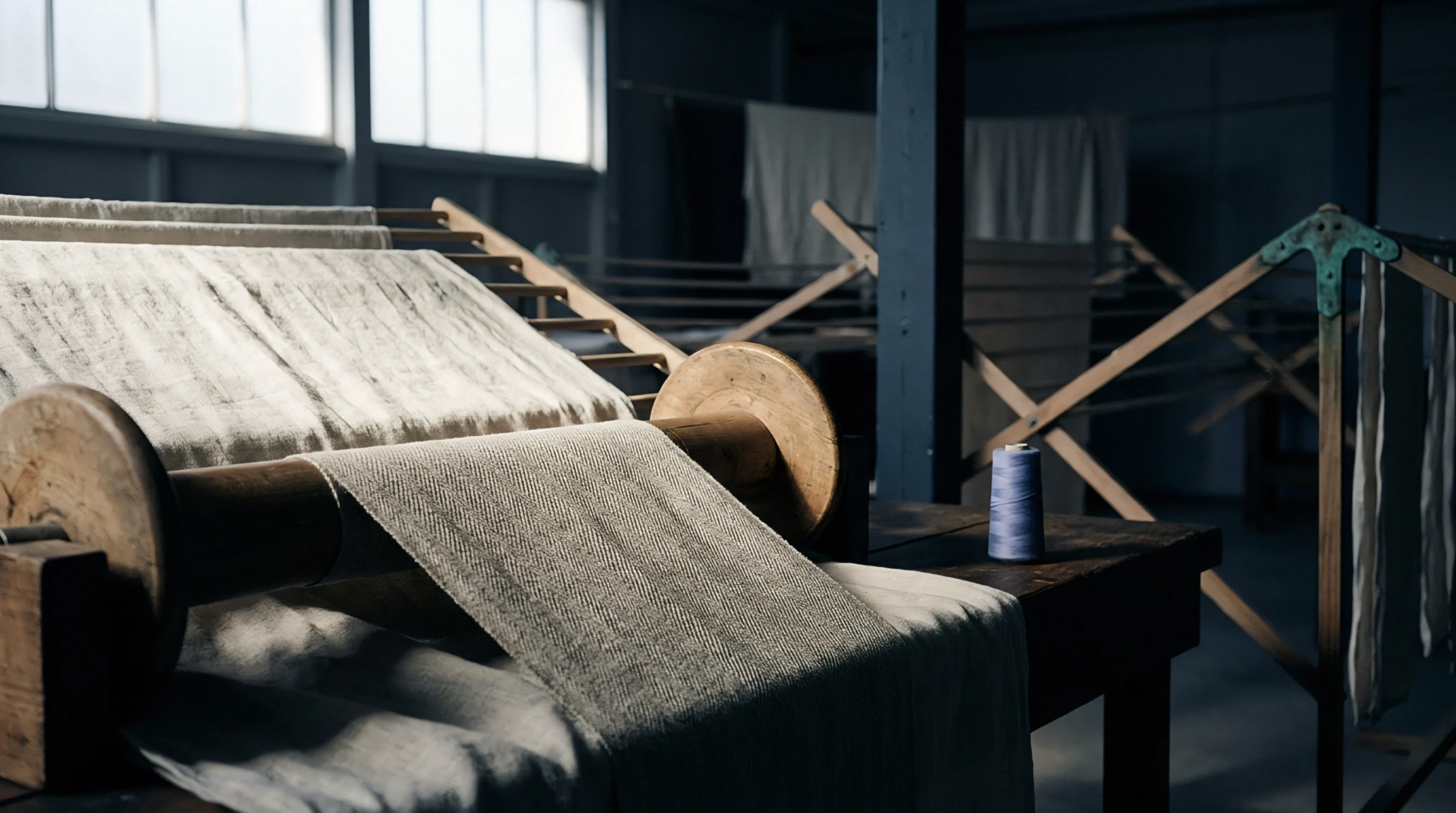
Processing stresses on the loom create unequal tension profiles between warp threads held under continuous mechanical pull and weft threads inserted into the open shed. Higher warp tension flattens warp yarns while forcing weft threads to bend around them, creating a pronounced crimp imbalance in greige fabric. Chinese weaving mills adjust warp let-off rates and take-up motion settings to manage crimp differential prior to wet finishing operations.
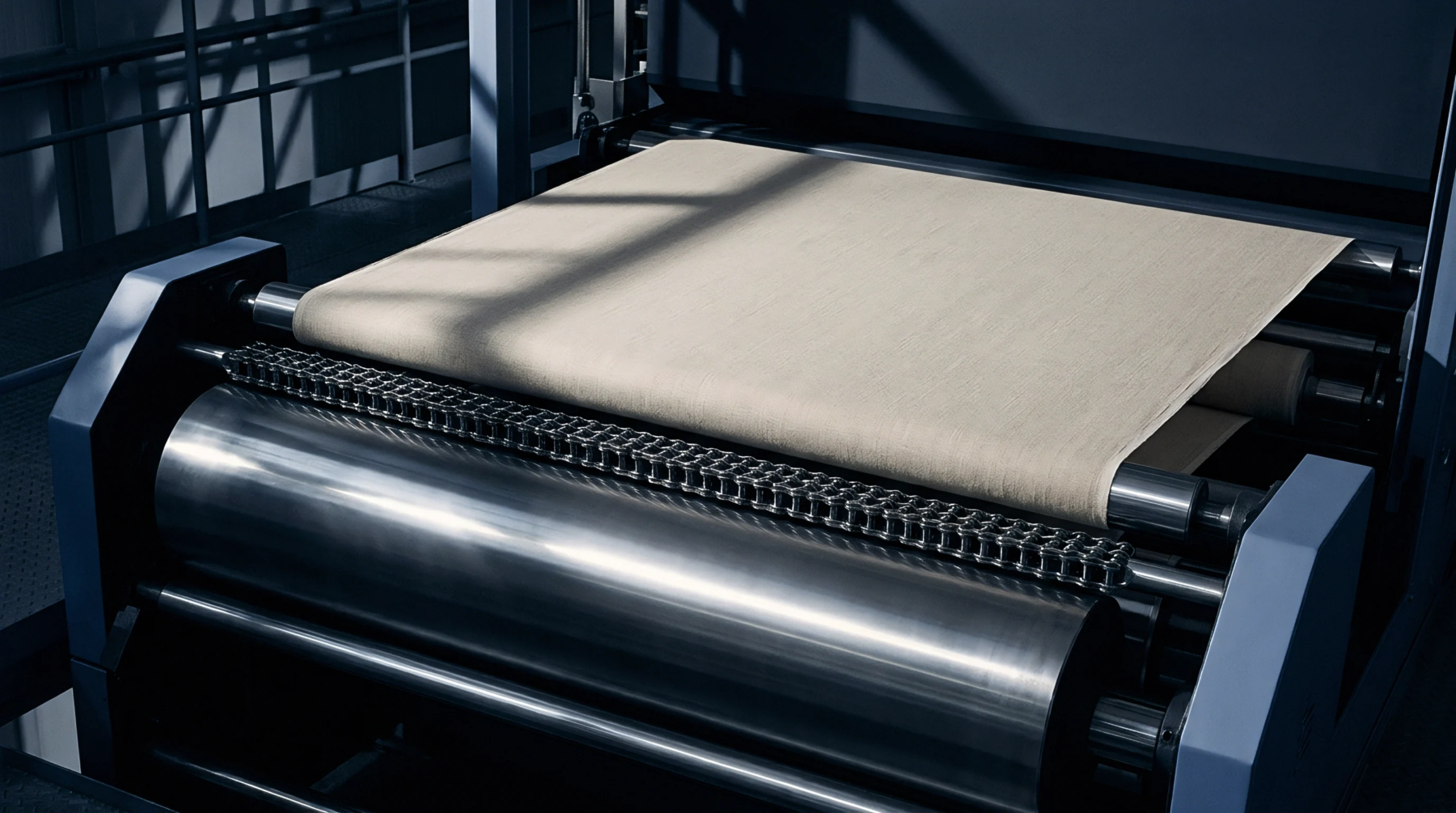
Unbalanced crimp causes uneven fabric shrinkage, skewed grain lines, and directional tear strength disparities during downstream laundering. Finishing plants compensate for thread contraction by passing fabric through tensionless drying machines and controlled mercerizing ranges to equalize yarn geometry.
Fabric Dimensionality
Finished linen specifications define acceptable crimp tolerances based on intended end uses like apparel or upholstery. Standardized test methods require conditioning fabric samples at constant relative humidity before unravelling threads. Lab technicians record force-elongation curves to determine true structural crimp values.