
Non-Preferential Origin Value Addition Threshold Determination for European Flax Wet Spun Yarns
Wet spinning raw European flax fiber in third-country mills confers origin to the spinning location under standard non-preferential customs rules.
Wet spinning raw European flax fiber in third-country mills confers origin to the spinning location under standard non-preferential customs rules.

Greige linen origin requires batch-level transaction certificates, strict weaving shed mass balance logs, and adherence to customs substantial transformation laws.

Non preferential origin for hemmed linen articles attaches to the country of fabric weaving, making simple cut and sew documentation insufficient.

Mass balance chain of custody requires dry-weight intake reconciliation, facility-specific yield factors, and valid transaction certificates at every border.

Tariff shift compliance for synthetic-edged hybrid linen requires aligning the non-originating trim weight with regional de minimis thresholds.

Section XI Note Seven creates Chapter 63 made-up articles via edging, but non-preferential origin remains anchored to where broadcloth was woven.

Non-preferential origin for woven flax fabrics under customs law is determined by the country of weaving rather than where raw flax fiber was grown.

Substantial transformation of imported greige linen requires multi-stage wet processing with double finish operations to satisfy tariff shift criteria.

Origin enforcement for made-up linen rests on tariff shift rules, mill mass-balance records, and statutory processing criteria across trading blocks.

Continuous woven linen fabric classification under HS Heading 5309 requires minimum 85 percent flax content by dry weight and uncut continuous roll edges.

Residual rules under UCC Annex 22-01 assign non-preferential origin for complex synthetics based on non-originating input value thresholds or primary extrusion.

Determining true linen yield across third-country conversions requires reconciling dry-weight mass loss at each mechanical stage against certified transaction quantities.

Customs clearance of imported foreign goods relies on validating issuing chamber authorization, matching physical invoices, and verifying mill trace records.

Misdeclared origin in imported linen blends triggers compounding Section 301 duties and statutory civil penalties that multiply unpaid duties up to fourfold.

Solvent extraction baselines for post-consumer linen require empirical correction factors to prevent degraded cellulosic loss from falsifying fiber content.

Non preferential origin for scutched flax depends on verifying where primary mechanical scutching transformed raw flax straw under specific tariff rule tests.
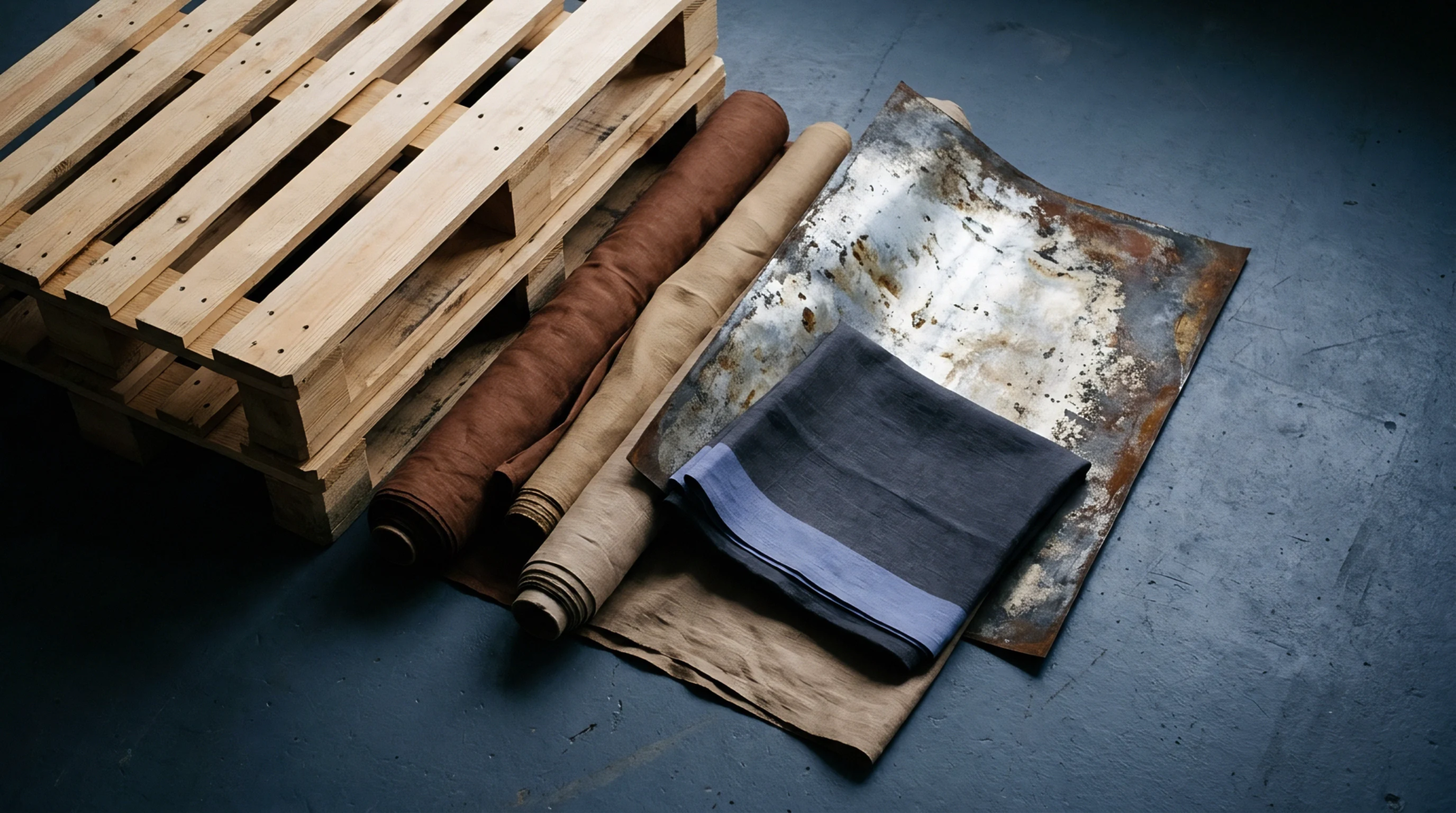
Establishing unspun flax origin requires reconciling scutching mass balances, valid Transaction Certificates, and isotope tests against strict customs rules.

Non preferential origin shift during flax scutching and combing requires verified mass-balance records and machine logs proving physical transformation.
Expertise is a utility, not a secret. sentiention™ publishes its working knowledge as open reference: intelligence layer covering the materials it sources, the markets it enters, and the reference that serves both.