Allocating Unplanned Loom Stoppage Overhead and Greige Demerit Credits in High Sett Warp Contracts
High sett warp contracts reconcile unplanned loom downtime and greige demerit credits by balancing loom hour overhead against four point defect penalties.
Sett
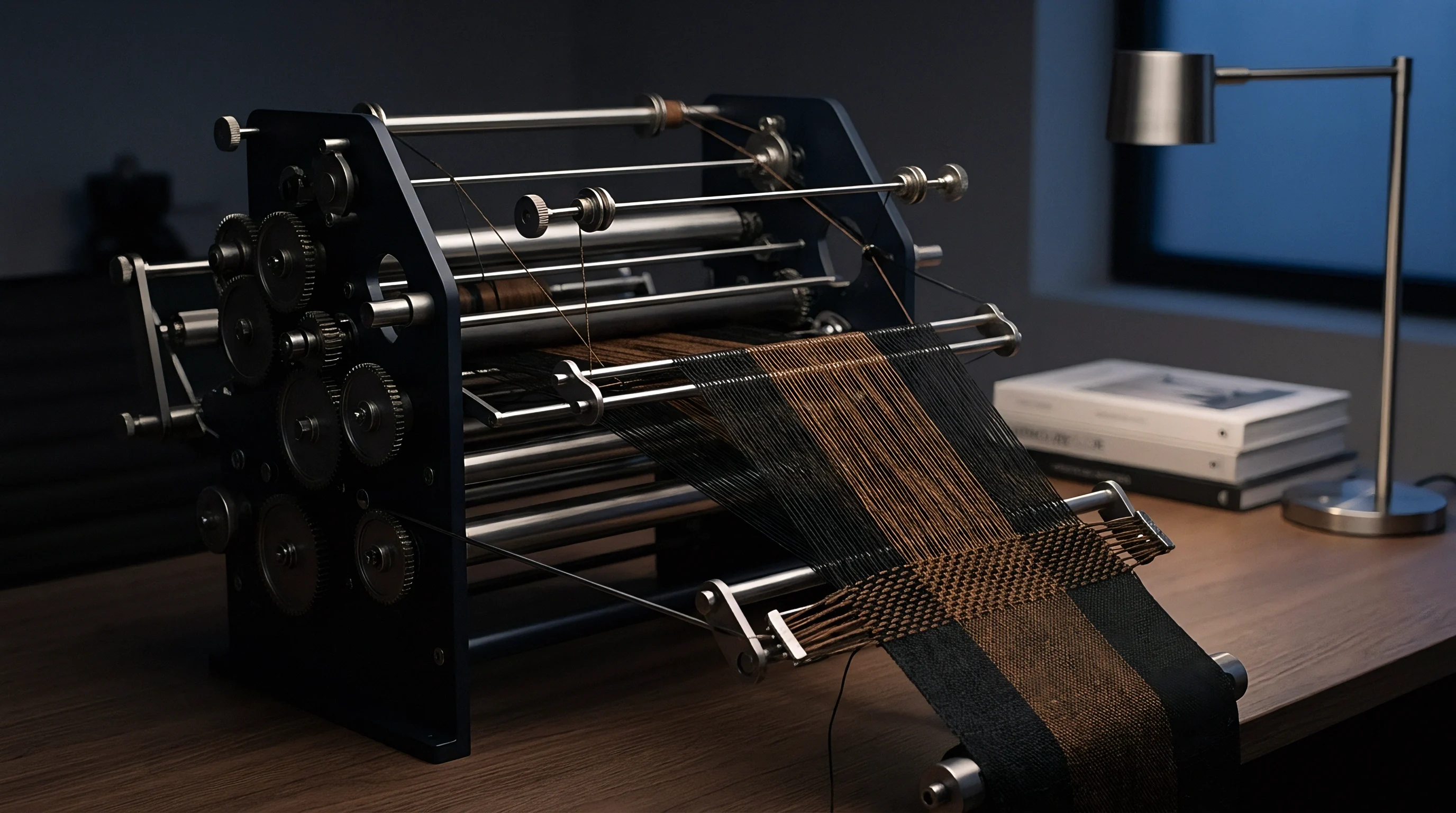
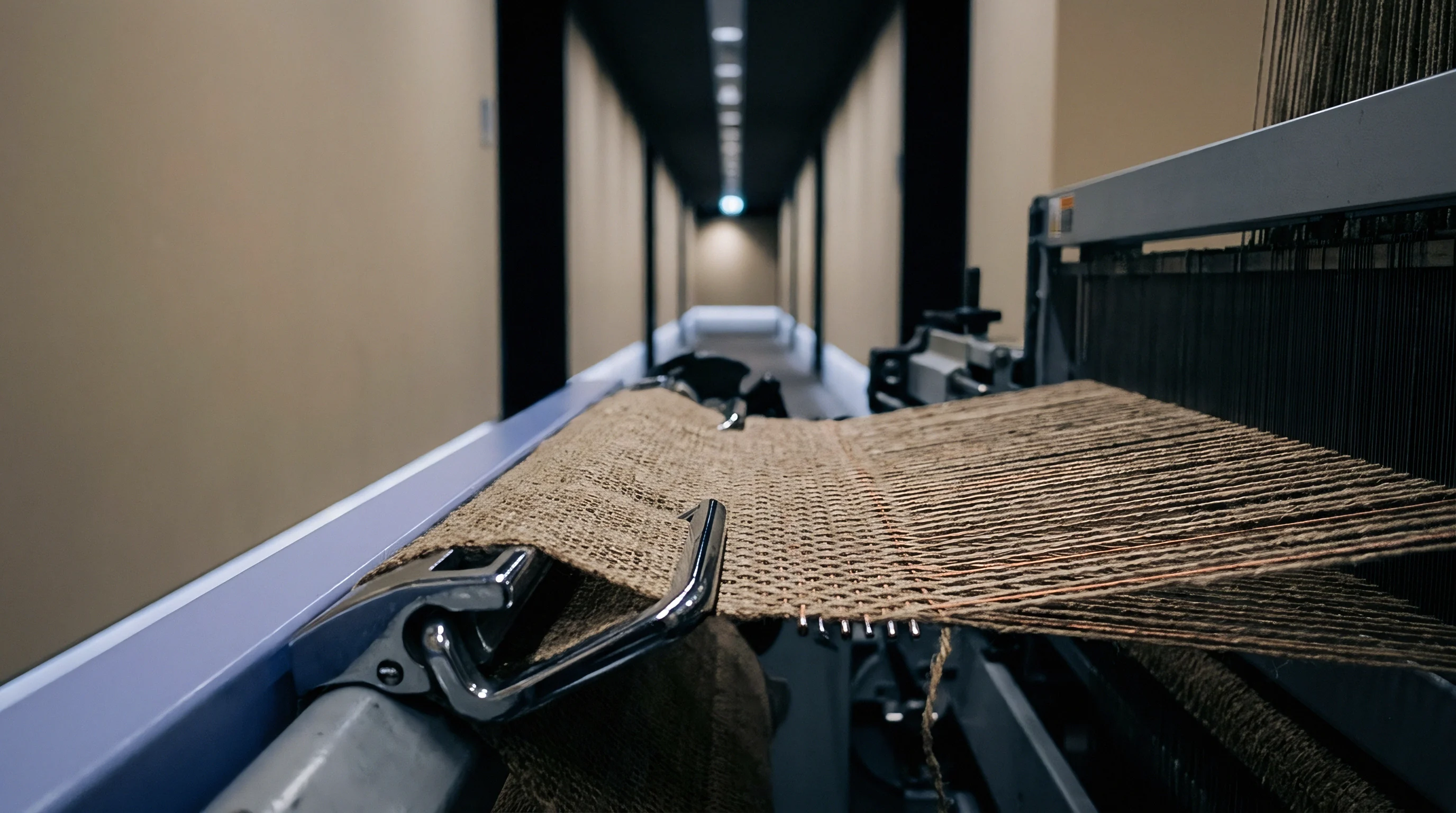
High warp end density fundamentally alters loom shed mechanics. Exceeding twenty-four ends per centimetre in wet-spun linen or forty ends per centimetre in combed long-staple cotton exhausts the physical clearance between adjacent warp threads. Under this compression, individual yarns drag across neighbouring strands with every shed opening.
That constant rubbing causes localized drops in micro-tenacity, strips protective sizing off yarn cores, and triggers frequent drop-wire stops. Contracts for high sett warps often fail commercially because production speeds were calculated against open-weave benchmarks instead of dense shed geometry.
Friction quickly degrades warp ends. When thread spacing tightens, fibers protruding from spun yarns interlock as harness frames cycle. These clingy fibers prevent clean shed separation, leaving slack ends right in the path of the rapier tape or air-jet payload.
A broken end on a high-density loom seldom stays isolated; before the drop wire can fall and strike the contact bar, the snapped thread entangles neighboring ends, causing a multi-end tangle that takes five to eight minutes for a weaver to clear.
Tension control grows unforgiving as density rises. Standard warp settings used for open constructions trigger severe breakage in dense warps. While high tension snaps the shed open cleanly, it pushes yarn stress past peak elongation limits.
Dropping beam tension to spare the fiber leads to the opposite problem: threads entangle, causing warp floats and mispicks. As end density increases, the working margin between tension-induced snapping and slack-induced entanglement narrows to almost nothing.
Sizing chemistry determines whether a dense warp can withstand continuous cyclic loading. Basic starch formulations lack the film elasticity required for high-frequency reed beat-up in crowded reeds. Formulations pairing polyvinyl alcohol with micro-wax lubricants reduce yarn abrasion, though too much wax interferes with downstream wet processing.
Sizing pick-up must remain tightly controlled between twelve and fourteen percent by weight. Drop below twelve percent and hairy yarn entangles in the shed; exceed fourteen percent and the brittle yarn loses flexural endurance, snapping right inside the heddle eyes.
The mechanical friction inside a crowded reed increases exponentially when warp end density exceeds thirty ends per centimetre.
Reed denting schedules directly affect warp stoppage rates. Crowding three or four dense ends into a single dent creates heavy friction against the stainless steel reed wires. On every forward beat-up, the wire scuffs the yarn, generating static electricity and shaving sizing dust off the surface.
Re-denting into a finer reed at two ends per dent doubles the clearance for knots, cutting warp breaks by thirty to forty percent on the same yarn lots.

High Sett Warp Friction Dynamics and Tension Peaks
Cyclic tension spikes hit maximum intensity as the lay recedes. During this backward stroke, warp threads experience abrupt stress surges up to eighty percent above static tension baselines. Open fabrics dissipate this force across wide yarn gaps, but tight thread-to-thread contact in dense warps amplifies the surge, focusing stress directly on weak splices and thin spots.
Adjusting loom speed provides an immediate way to curb friction-related stops. Pushing a rapier loom at five hundred picks per minute on high-density linen generates intense friction and heat at the drop wires and heddle eyes. Backing the speed down to four hundred twenty picks per minute keeps dynamic tension spikes safely below the yarn’s yield point.
The lower speed boosts continuous running efficiency, producing more net linear metres per day despite the slower rpm.
In audit trials on a 34 ends per centimetre flax construction, initial runs recorded forty-two warp breaks per hundred thousand picks. Lowering loom speed by twelve percent reduced break rates to fourteen stops per hundred thousand picks. Output per shift increased from one hundred eight metres to one hundred twenty-six metres as total downtime fell from two hundred minutes to forty-five minutes per shift.
Downtime accumulates quickly. Every warp stop triggers an emergency braking cycle that halts the main drive motor within a fraction of a pick revolution. That sudden mechanical stop shocks the yarns clamped between the back rest roller and the fabric fell.
Over time, repeated emergency stops fatigue the warp section sitting between the harness frames and reed, making those specific threads far more likely to break in subsequent cycles.

Shedding Mechanics and End Entanglement Factors
Harness motion profiles govern shed clarity. Achieving a clean opening requires exact synchronization of frame height, stroke length, and crossover timing. Running an asymmetric shed ~ keeping the top shed line flatter than the bottom ~ eases tension on the upper warp.
This setup allows filling insertion elements to sweep through the dense lower warp layer without scraping the upper ends.
Dropper pin weight directly impacts stop motion response and yarn failure rates. Heavy drop wires fall fast, making immediate electrical contact and stopping the loom before a severed end drifts into the harness frames. However, excessive wire weight imposes continuous vertical drag on delicate spun yarns, fatiguing fibers at the eyelet.
Lighter wires preserve the yarn, but static electricity or high warp tension can hold a snapped thread suspended among neighboring ends, preventing the light wire from dropping onto the contact bar.
Static build-up accelerates in dry weave rooms, particularly with synthetic or bast fiber blends. High end density multiplies frictional static charges as yarns continuously rub against drop pins, heddles, and reed wires. Static causes adjacent threads to attract or repel, pulling them out of alignment and creating crossovers that snag insertion rapiers.
Keeping relative humidity between sixty-five and seventy-two percent dissipates this charge, stabilizing warp geometry during long runs.
Variable yarn elongation rather than excessive harness lift height drives repeated warp stops.


Overhead
Calculating the real financial impact of loom downtime requires an accounting model that separates fixed shed overhead from raw material costs. Standard cost models fall short in high-density weaving because they treat downtime merely as lost labor efficiency. A modern rapier or air-jet loom represents significant capital tied up in a climate-controlled, energy-heavy facility.
When a warp break stops a loom, fixed overhead continues to accumulate every minute the machine sits idle.
Fixed shed depreciation drives downtime cost calculations. An automated weaving machine equipped with electronic dobbies or jacquard heads, warp stop sensors, and automatic yarn feeders represents an installed investment of eighty thousand to one hundred fifty thousand dollars per unit. Amortizing that outlay over a seven-year window generates a fixed hourly depreciation charge that ticks away whether the pick counter moves or not.
Two hours of downtime during a shift means two hours of capital amortization lost without producing a single metre of cloth.
Power consumption during stops requires its own accounting logic. Disengaging the main drive motor stops the loom, but auxiliary systems remain running. Suction fans, electronic controllers, telemetry systems, and room humidification continue drawing power.
Accurate downtime chargebacks require distinguishing between full-load running kilowatts and standby idling kilowatts.
Labor costs stack up quickly during complex warp repairs. Modern weaving sheds run lean operator ratios, often assigning twenty to forty looms to one weaver. When high-density warps drive stoppage rates past five stops per loom hour, that workload collapses.
Multiple looms sit idle waiting for attention, shifting weaver labor from routine monitoring to constant, reactive knotting and threading ~ driving up unit labor costs for every linear metre woven.
Climate control represents a substantial slice of fixed overhead. Holding a fifty-thousand-square-foot weave shed at seventy percent relative humidity and twenty-two degrees Celsius requires constant power for chillers, boilers, and air handlers. Dividing monthly facility utility bills by total installed loom hours yields an overhead baseline that running looms must absorb.
Unplanned downtime reduces fabric output, concentrating those fixed climate control costs onto the remaining yield of greige cloth.
| Machine Type | Running Speed (PPM) | Capital Depreciation ($/Loom Hr) | Facility Energy ($/Loom Hr) | Allocated Labor ($/Loom Hr) | Total Fixed Overhead ($/Loom Hr) |
|---|---|---|---|---|---|
| High-Speed Air-Jet | 750 | 4.85 | 2.10 | 3.50 | 10.45 |
| Flexible Rapier | 480 | 3.60 | 1.45 | 3.50 | 8.55 |
| Heavy Projectile | 350 | 2.90 | 1.15 | 3.00 | 7.05 |
| Wide Jacquard Rapier | 400 | 5.20 | 1.80 | 4.20 | 11.20 |

Fixed Shed Depreciation and Power Allocation
Allocating downtime overhead accurately depends on evaluating lost machine hours correctly. If a commission contract targets eighty-five percent loom efficiency, operating models account for nine hours of planned and unplanned downtime per week on a continuous run. When severe warp breakage drops efficiency to sixty-two percent, the loom loses thirty-eight hours of output per week.
Lost volume inflates fixed costs per metre. On a dense linen contract producing eight metres per loom hour at target efficiency, losing thirty-eight hours cuts three hundred four metres of output per loom each week. The overhead incurred during those thirty-eight idle hours must be absorbed elsewhere, pushing up the unit cost on remaining fabric unless terms shift that liability back to the yarn supplier or warp preparation plant.
Depreciation calculations should also reflect mechanical wear from constant stopping and starting. Emergency braking exerts heavy shock loads on drive clutches, brake bands, and reed gearboxes. Sustaining thirty warp stops per shift degrades components far faster than continuous running, requiring higher maintenance allowances for replacement brake pads, drop wires, and heddle bands.

Operator Interventions and Down-Time Accounting
Tracking operator downtime relies on monitoring systems tied directly to electronic stop motions. Modern shed networks record the exact millisecond a drop wire hits the contact bar, logging it as a warp stop. The system tracks the interval from initial stop to operator arrival, repair, and restart ~ clearly separating mechanical downtime from operator response delays.
Weaver efficiency plummets when stop frequencies exceed manageable limits. In standard weaving, clearing a warp stop averages forty-five seconds. On dense high sett warps, locating a fallen end, drawing it through the drop wire, threading the heddle eye, and re-denting the reed takes up to three minutes.
That fourfold increase in repair time quickly overwhelms the operator.
Unplanned downtime overhead costs on high density rapier looms accumulate at a rate exceeding eight dollars and fifty cents per idle machine hour.
Linking loom monitor data to accounting records establishes clear accountability. When logs indicate sixty percent of downtime comes from clearing warp breaks while operator response remains under thirty seconds, liability points to yarn failure or warp preparation rather than weaver performance. Overhead chargebacks can then be calculated directly by multiplying recorded downtime hours by the agreed hourly overhead rate.
Unallocated downtime frequently causes friction between commission weavers and converters. When yarn defects push stops beyond agreed limits, weavers seek to bill buyers for lost loom capacity. Buyers generally reject those charges unless the master service agreement explicitly specifies baseline stop frequencies per hundred thousand picks and sets a fixed hourly downtime rate.
Unallocated downtime charges accounted for twenty-four lost loom hours during the 32 ends per centimetre linen warp validation trial.


Demerit
Greige fabric grading uses point-scoring systems to convert visual defects into commercial credits. High sett warps are particularly vulnerable to stop marks and related flaws. Whenever a loom halts for a warp break, the sudden loss of tension ~ and the subsequent mechanical adjustments upon restarting ~ leaves visible surface anomalies.
Demerit scoring systems must reflect how these defects appear in high-density constructions.
The Four-Point System under ASTM D5430 is the standard method for scoring fabric defects. Under this framework, penalty points are assigned according to defect length rather than structural severity. Flaws up to three inches long receive one point; three to six inches, two points; six to nine inches, three points; and over nine inches, four points.
No single linear yard or metre can accumulate more than four points, regardless of how many individual flaws occur within that segment.
Calculating demerit points per hundred square yards or square metres standardizes quality comparisons across varying roll widths and lengths. To score a roll, inspectors multiply total defect points by thirty-six hundred and divide by the roll width in inches times the length in yards. Scores below twenty points per hundred square yards indicate first-quality cloth, while scores above twenty-eight trigger price deductions or rejection of the lot.
High end density turns minor mechanical stops into severe visual defects. In coarse weaves, a loom restart mark might appear as a faint variation in pick spacing. In dense warps, heavy tension across thousands of closely spaced ends causes the fabric fell to slip backward during a stop.
When the loom restarts, the reed beats the first pick into an offset fell, leaving a sharp, high-contrast density bar across the entire width.
| Defect Category | Physical Description | ASTM D5430 Point Range | Acceptable Frequency Threshold | Commercial Penalty Credit ($/100m) |
|---|---|---|---|---|
| Heavy Start Mark | High-density pick line across full width | 3 to 4 Points | Max 2 per 100m | 15.00 |
| Light Start Mark | Low-density pick gap across full width | 3 to 4 Points | Max 2 per 100m | 12.00 |
| Warp Float Cluster | Unwoven warp thread group spanning multiple picks | 2 to 4 Points | Max 1 per 100m | 22.00 |
| Reed Line Streak | Continuous longitudinal warp gap from displaced reed wire | 4 Points (Continuous) | Zero Tolerance | 45.00 |
| Broken End Mispick | Missing warp end extending over 10cm fabric length | 2 to 3 Points | Max 3 per 100m | 18.00 |

ASTM D5430 Defect Point Thresholds in High Density Cloth
Defect severity in high sett fabrics directly affects downstream finishing. A start mark that looks minor on greige cloth often becomes far more obvious after wet processing, dyeing, and calendering. During piece dyeing, local pick density variations cause uneven dye absorption.
A compressed start mark absorbs less dye per unit mass, showing up as a distinct light stripe across the finished roll. For dense warps, greige inspection standards must grade minor start marks strictly.
Continuous longitudinal defects require immediate machine shutdown. A bent reed wire in a dense warp leaves a continuous gap down the full length of the roll. Under ASTM D5430, continuous defects accrue four points for every yard or metre traversed.
Running a loom with a damaged reed for just one fifty-metre roll yields a demerit score hundreds of points above rejection limits, making the roll useless as first-quality goods.
Demerit credit frameworks tie visual defect scores directly to invoice adjustments. Rather than rejecting entire production lots for minor quality slips, commercial contracts apply a sliding credit scale. Scores between twenty and twenty-four points per hundred square metres trigger a two percent credit against the invoice.
Scores from twenty-four to twenty-eight points yield a five percent credit. Anything over twenty-eight points gives the buyer the right to reject the roll or apply a twenty percent credit.

Mechanical Origin of Stop Marks and Density Bands
Stop marks stem from the elastic behavior of warp yarns. When a loom stops abruptly, tightly tensioned yarns relax over time. Simultaneously, the woven cloth on the take-up roller slackens, allowing the fabric fell to drift away from the beat-up line.
How far the fell shifts depends on stop duration, yarn elasticity, and ambient shed conditions.
Modern electronic let-off and take-up drives use automated stop-mark prevention routines. When a loom stops, the controller steps the let-off motor forward or back based on downtime duration. At restart, the take-up adjusts the fell position before the first pick inserts, offsetting yarn relaxation.
However, if these micro-step algorithms are poorly calibrated for a dense warp construction, the corrective adjustment itself creates noticeable density bands.
Fault modes in high density greige fabric originate from distinct mechanical and material failures during the weaving cycle:
- Start mark density shifts appear as narrow bands of high or low pick density caused by inaccurate let-off compensation when restarting.
- Reed wire displacement streaks create continuous warp gaps running down the roll due to bent or misaligned reed wires.
- Warp float clusters form when unseparated warp threads allow filling yarn to pass under several ends without interlacing.
- Slub entrapment knots produce dense spots where large yarn slubs wedge inside drop wires or heddles, buckling the thread.
- Mispick line gaps leave open transverse channels where a broken filling yarn failed to carry all the way across the shed.
Operator restart technique directly affects stop mark severity. After repairing a broken end, the weaver must clear damaged pick fragments and ensure the motor reaches full operating speed on the first stroke. Restarting without properly tensioning the newly tied end leaves a slack thread that creates a warp float right next to the restart mark, doubling the demerit penalty for that single repair.
Contractual greige demerit credits shall be calculated using ASTM D5430 four-point inspection standards, with total penalty deductions capped at twenty-five percent of individual roll invoice value prior to absolute lot rejection.
Quality audits require defect mapping across every roll inspected. Demerit credits cannot be claimed on rough estimates or visual impressions. Inspectors log the exact linear coordinate, length, and classification of every flaw on the frame.
This log provides the documentation needed to substantiate credit deductions against commission weaving invoices.
The procurement contract specified that any greige roll with more than three full-width start marks per fifty metres automatically forfeits first-quality status under section four of the master terms.

Frame
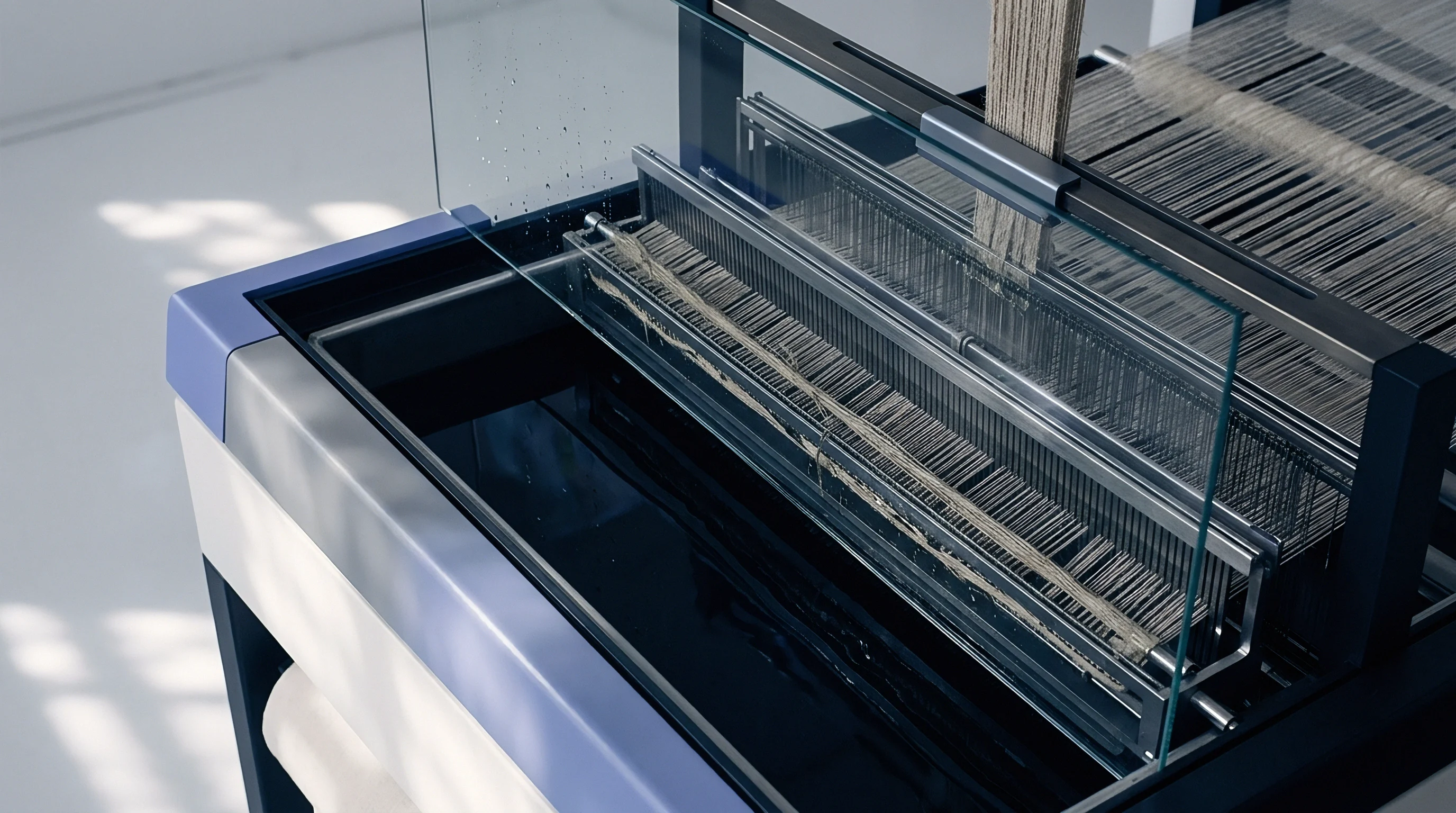
Inspection frame grading links loom telemetry directly to invoice adjustments. Monitoring systems record stops and downtime electronically, but physical inspection determines the visual and structural severity of defects in the roll. Reconciling loom logs with inspection records ensures that downtime chargebacks and demerit credits match actual fabric faults.
Modern inspection frames use variable-speed drives, reversible rolling, and dual lighting banks. Inspection speeds for dense warps should not exceed fifteen metres per minute; higher speeds create motion blur that obscures faint start marks and narrow reed lines. Overhead lighting must provide at least fifteen hundred lux across the inspection board, backed by under-table panels to highlight light transmission variations in heavy weaves.
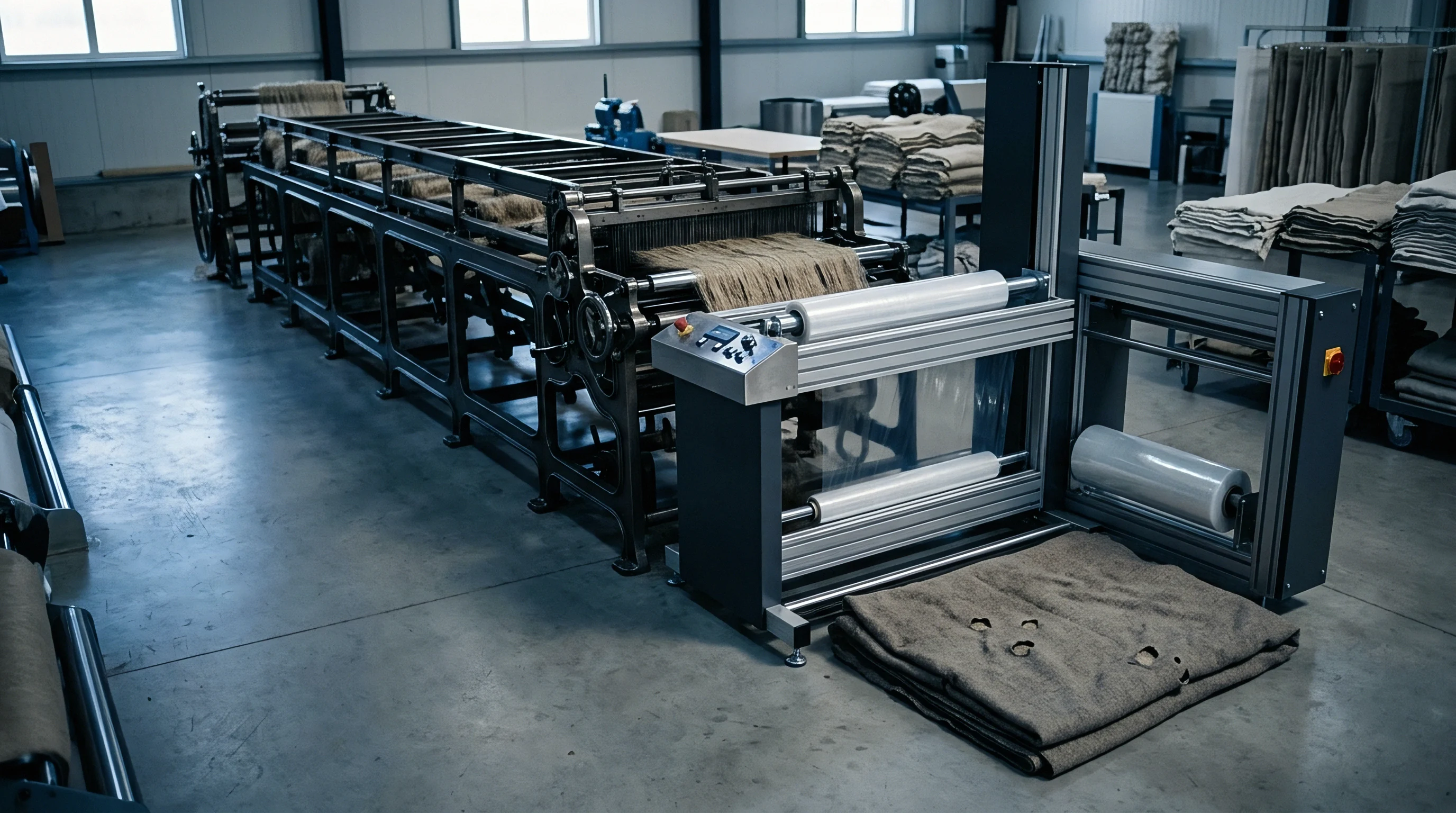
Stop motion diagnostics provide the initial dataset. Modern stop motions use segmented contact bars to split the loom width into diagnostic zones. When a wire drops, the system logs the timestamp, pick count, and lateral zone.
Matching zone data against physical defects found on the inspection table verifies whether a recorded stop created a visible flaw.
Audit procedures check physical rolls against loom history logs. Rolls woven on monitored looms carry barcodes linking them to production records. When an inspector finds a cluster of defect points, the software queries the machine log at that exact meterage.
Confirming a prolonged stop at that position establishes warp breakage as the root cause rather than handling damage.
- Mount the greige roll onto the let-off spindle and engage pneumatic core clamps to keep the roll from slipping during unwinding.
- Calibrate the digital length counter against a reference tape and confirm light levels on overhead and under-panel banks.
- Advance the cloth at twelve metres per minute, using low-angle surface light to bring out transverse start marks and reed lines.
- Record each visual defect into the digital inspection log with its linear coordinates, defect code, and ASTM D5430 point value.
- Cross-reference defect clusters against loom stop logs retrieved through the roll’s barcode.
- Calculate total demerit points per hundred square metres and compare against contract thresholds to assign final roll grade.
Warp Stop Motion Sensor Diagnostics and Signal Logs
Log accuracy relies on clean sensors and straight drop wires. Oxidized bars, lint buildup, or bent wires produce false signals or delay grounding, creating gaps between recorded data and actual machine stops. Maintenance routines should require weekly cleaning of contact bars with conductive solvent wipes and periodic response checks on drop wire circuits.
Linking loom telemetry with shop-floor accounting automates downtime cost allocation. When monitoring software detects stop frequencies exceeding contract limits, it flags a quality alert. That notification prompts supervisors to check the loom for sizing issues or harness misalignment before hundreds of metres of defective fabric are woven.
Proper illumination and slow frame speed are necessary conditions for accurately mapping minor start marks in dense greige cloth.

Verification Protocols on the Inspection Table
Inspection table ergonomics directly affect defect detection. Boards set at an incline of forty-five to sixty degrees optimize visual contrast for faint surface defects. Low-angle grazing lights running parallel to the fabric plane cast micro-shadows across raised warp floats and slubs, making them easier to catch.
Measuring pick density across restart zones confirms start mark severity. Inspectors use digital pick counters or optical gauges to check picks per centimetre right at the mark and at a reference point ten centimetres away. A density variance over five percent across two picks qualifies as a major start mark, incurring a three- or four-point ASTM D5430 penalty regardless of color contrast.
Cross-referencing loom monitor logs against off-loom inspection rolls verifies fault origins.
Whether automated vision systems can reliably distinguish between yarn slub stop marks and mechanical brake lag marks remains a subject of ongoing industry debate.

Arithmetic
Financial settlement on high sett warp contracts requires combining downtime overhead and greige demerit credits into a single reconciliation model. Handling downtime claims and quality credits separately creates friction between buyers, weavers, and yarn suppliers. A unified formula balances overhead charges and defect credits against contractually agreed liability limits.
The core settlement formula relies on four variables: base contract price, unrecovered downtime overhead, demerit credit adjustments, and yarn quality allowances. Base price equals the commission weaving rate per linear metre multiplied by total delivered yardage. Net payable amounts to base price minus demerit deductions and weaver-caused downtime penalties, plus overhead chargebacks billed to the buyer when sub-spec yarn causes machine stops.
Evaluating shedding motion timing against drop-wire response speeds clarifies technical liability.
The calculation of unrecovered loom downtime overhead follows a precise mathematical structure:
Overhead Charge = (Tactual stop – Tallowed stop) × Rloom hour
Where Tactual stop represents total recorded warp stop downtime hours across the production run, Tallowed stop represents contractual baseline downtime hours calculated from target loom efficiency, and Rloom hour represents the agreed fixed loom overhead rate per hour.
| Accounting Parameter | Scenario A: Normal Run (Low Stops) | Scenario B: Moderate Stop Spike | Scenario C: High Stop / High Defect |
|---|---|---|---|
| Delivered Greige Volume (m) | 5,000 | 5,000 | 5,000 |
| Base Weaving Commission ($/m) | 2.50 | 2.50 | 2.50 |
| Base Contract Value ($) | 12,500.00 | 12,500.00 | 12,500.00 |
| Actual Loom Efficiency (%) | 86.5% | 72.0% | 58.0% |
| Excess Downtime Hours | 0.0 | 28.5 | 62.0 |
| Overhead Rate ($/Loom Hr) | 8.50 | 8.50 | 8.50 |
| Downtime Overhead Charge ($) | 0.00 | 242.25 | 527.00 |
| Avg Demerit Score (Pts/100m²) | 14.2 | 22.5 | 34.8 |
| Demerit Credit Percentage (%) | 0.0% | 2.0% | 20.0% (Lot Rejection Threshold) |
| Demerit Credit Value ($) | 0.00 | 250.00 | 2,500.00 |
| Net Payable Invoice ($) | 12,500.00 | 12,007.75 | 9,473.00 |

Do Warp Stop Counter Logs Bind Financial Settlement?
Loom monitor logs hold legal weight in commercial arbitration only if the service agreement specifies logging standards and calibration schedules. If a weaver produces logs claiming seventy hours of downtime but lacks drop wire calibration records, logging errors can invalidate the financial claim. Contracts should require bi-weekly telemetry audits signed by both mill managers and buyer representatives.
When stop rates exceed contract limits because of buyer-supplied yarn quality issues, the weaver has the right to charge back unrecovered downtime. If supplied flax yarn shows a tenacity variance more than fifteen percent off specification, the resulting stop spikes produce downtime that is fully billable to the buyer at the contracted hourly loom rate.
Demerit point caps are written directly into purchase specifications.
A sample calculation illustrates how net commercial settlement works in practice. Consider a contract for five thousand linear metres of high sett wet-spun linen at a base rate of two dollars and fifty cents per metre, giving a base value of twelve thousand five hundred dollars. Terms set target loom efficiency at eighty-two percent on flexible rapier looms with a fixed overhead rate of eight dollars and fifty cents per loom hour.
Demerit credits follow a standard scale: zero below twenty points per hundred square metres; two percent between twenty and twenty-four points; five percent between twenty-four and twenty-eight points; and twenty percent above twenty-eight points.
During production, monitoring logs record forty-two downtime hours against an allowance of thirteen point five hours, leaving twenty-eight point five excess downtime hours. Inspection yields an average demerit score of twenty-two point five points per hundred square metres, placing the lot in the two percent credit tier. Excess downtime generates an overhead chargeback of two hundred forty-two dollars and twenty-five cents (twenty-eight point five hours at eight dollars and fifty cents per hour), while quality defects trigger a two hundred fifty dollar credit (two percent of twelve thousand five hundred dollars).
Subtracting both from the base gives a final net payout of twelve thousand seven dollars and seventy-five cents.
Evaluating commercial settlement options requires reviewing specific risk conditions before finalizing contract terms:
- Base efficiency threshold establishes the baseline machine running percentage below which excess downtime charges begin to accrue.
- Maximum allowable demerit points sets the absolute boundary between acceptable greige fabric subject to price credits and non-conforming fabric subject to complete lot rejection.
- Overhead chargeback rate defines the fixed monetary value assigned to each lost loom hour based on documented shed operating costs.
- Yarn quality variance cap specifies the allowable limits for yarn tensile strength and hairiness variations before downtime liability shifts from weaver to yarn supplier.
A balanced settlement formula offsets weaver downtime overhead against buyer demerit credits to establish a net payable invoice value.
Net Settlement Calculations for High Sett Warp Contracts
Settlement calculations must avoid double-counting penalties. A severe warp break causes both lost loom time and a physical start mark. Master contracts must clarify whether a buyer can charge both downtime overhead and a demerit credit for the same incident, or if the larger penalty takes precedence during reconciliation.
Dispute resolution clauses should define rounding rules and reconciliation intervals. Weekly settlement cycles prevent large disputed balances from building up over multi-month runs. Reconciling downtime and demerit credits weekly stabilizes cash flow and allows prompt adjustments in sizing or loom setup before losses multiply.
Higher warp end density shifts financial risk away from weaving labor toward yarn preparation consistency.

Adjustment
Contractual terms determine how commercial liabilities split between buyers, weavers, and yarn suppliers when dense warp runs encounter downtime or quality defects. Standard procurement agreements rarely carry the technical detail needed for high-density weaving. A solid master service agreement ties technical targets directly to commercial remedies, establishing clear liability boundaries before warps are tied onto the loom.
Bilateral risk-sharing offers a practical way to manage borderline yarn lots. If a buyer supplies dense linen warp yarn meeting count specs but showing high hairiness, downtime risks spike. A risk-sharing clause sets a shared corridor: the weaver absorbs the first ten percent efficiency loss below target, while the buyer covers subsequent downtime overhead through an adjusted commission rate.
Master weaving agreements require explicit terms governing stop measurement, monitoring data integrity, inspection frame standards, and credit caps. Setting numerical tolerances prevents arbitrary claims when performance drops, while defining fault categories eliminates guesswork during fabric grading.
Liability caps shield weaving mills from severe financial exposure on dense warp runs. Without caps, combined downtime charges and demerit credits can exceed the total value of the weaving commission. Standard agreements cap combined penalty deductions at twenty to thirty percent of invoice value, unless inspection proves gross negligence or unauthorized machine alterations by the mill.
The contract language governing warp stoppage overhead chargebacks must state: “If recorded warp stop downtime exceeds the baseline allowance by more than fifteen percent due to buyer-supplied yarn quality variations exceeding specification limits defined in Annex B, the weaver shall bill the buyer for all excess idle loom hours at the documented shed overhead rate of eight dollars and fifty cents per loom hour, provided that automated loom monitor telemetry logs are submitted weekly alongside physical yarn test dossiers.”
Resolving disputes between yarn suppliers, commission weavers, and buyers calls for a structured arbitration process. When greige fabric fails inspection for excessive start marks, deciding whether the fault lies in loom brake tuning or sizing degradation requires lab testing. Retaining yarn samples from the warping beam and preserving raw monitor logs allows arbitrators to reconstruct the exact failure sequence.
Contracts should also address beam waste allowances. Dense warps require substantial tail-end lengths for threading and tensioning. Agreements normally cap acceptable warp waste at two to three point five percent of beam length.
Waste exceeding those limits because of frequent break-outs must be reimbursed to the buyer at raw yarn replacement cost.
Long-term sourcing partnerships depend on transparent metrics rather than constant penalty enforcement. Holding quarterly reviews to evaluate efficiency trends, break rates, and demerit scores lets both parties solve problems collaboratively. Engineers and sourcing teams can refine sizing formulas, denting plans, and loom speeds together, eliminating downtime drivers and pushing first-quality yields higher.
Settlement clauses must clearly define the timeframe for submitting demerit credit claims following delivery. Standard terms require buyers to complete inspection and issue debit notes within thirty calendar days of roll delivery at the finishing plant. Claims filed after thirty days are automatically waived, providing financial closure for the weaver.