Cyclic Tensile Stress Decay in Wet Spun Flax Sized Warp Yarns
Optimal polyvinyl alcohol and starch size blends limit cyclic tensile stress decay in wet spun flax warp yarns below 15 percent, maximizing high-speed loom efficiency.

Mechanics
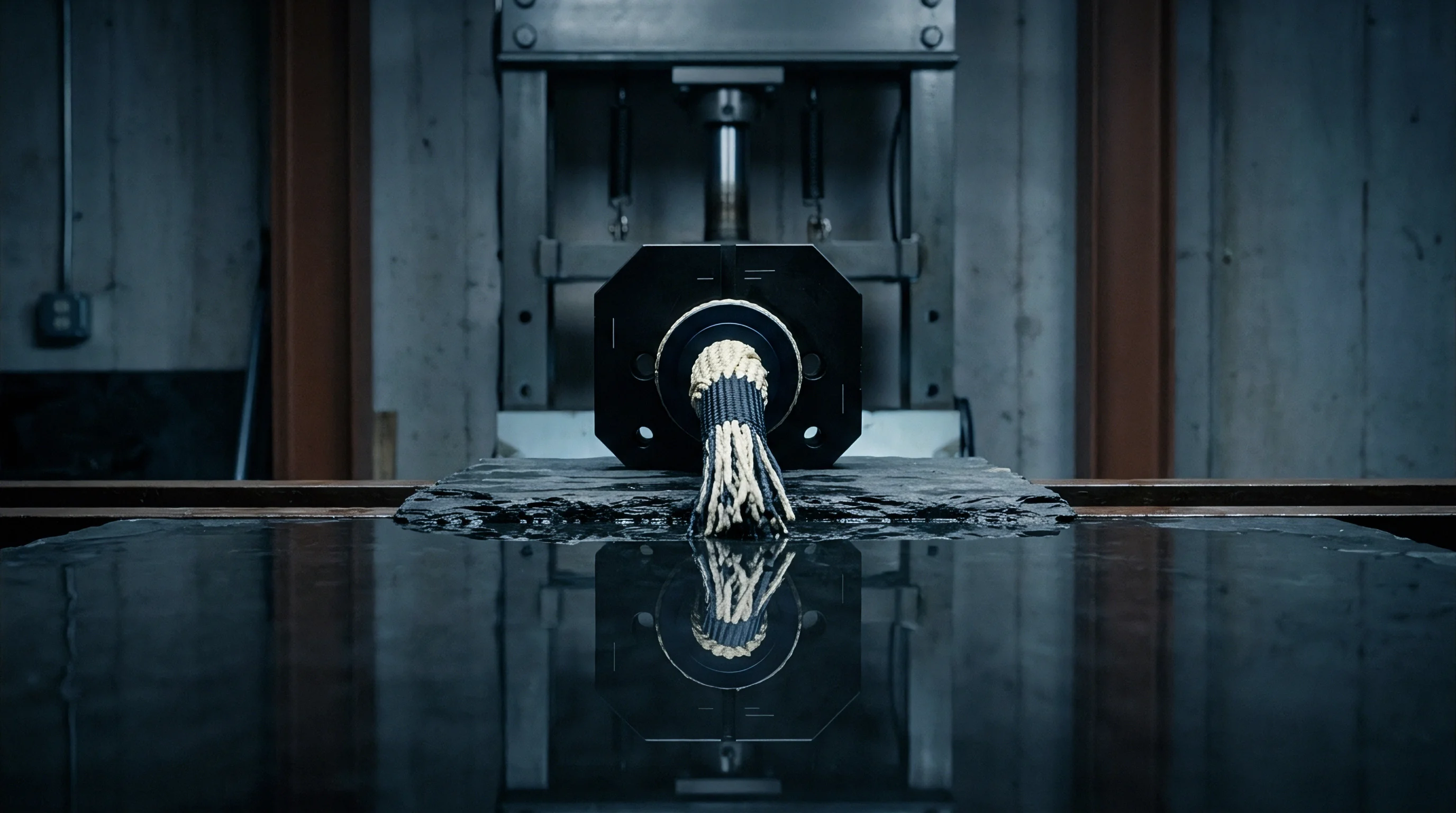
Flax fibers possess a hierarchical crystalline structure composed of cellulosic microfibrils embedded within an amorphous matrix of pectin and hemicellulose. Wet spinning aligns these elementary fibers along the yarn axis, yielding high initial tensile stiffness. Cyclic loading on a high-speed loom forces these bundles through repeated elastic and plastic deformations.
Under continuous stress cycling, the amorphous pectin phase undergoes viscoelastic stress relaxation, leading to cumulative structural decay. The primary decay mechanism manifests as micro-slippage between individual ultimate fibers within the technical fiber bundle. This slippage reduces the effective load-bearing cross-section and degrades yarn tenacity during weaving operations.
Sizing agents coat the outer yarn boundary and penetrate the interstitial core to restrict internal fiber mobility. When sized wet spun flax yarns experience cyclic extension, the sizing film absorbs a significant fraction of the peak mechanical load. Inadequate size film cohesion causes premature film fracture, accelerating the rate of cyclic tension loss.
Modern weaving sheds running rapier or air-jet machines expose warp threads to peak cyclic tensions ranging between 12 and 22 centinewtons per tex at rates exceeding 600 cycles per minute.
Cyclic tension losses exceeding 18 percent of initial load within the first 3000 shedding cycles signal inadequate size film elastomeric recovery.
Stress decay behavior follows a non-linear decay curve characterized by an initial rapid drop in peak tension during the first 500 cycles, followed by a secondary steady-state relaxation phase. Yarn structural breakdown accelerates rapidly once cumulative strain exceeds the yield point of the internal pectin network. Controlling yarn regain levels between 8.5 percent and 10.5 percent stabilizes the viscoelastic response of the amorphous region, dampening the amplitude of tension decay under continuous mechanical extension.
Viscoelastic Fiber Relaxation Dynamics
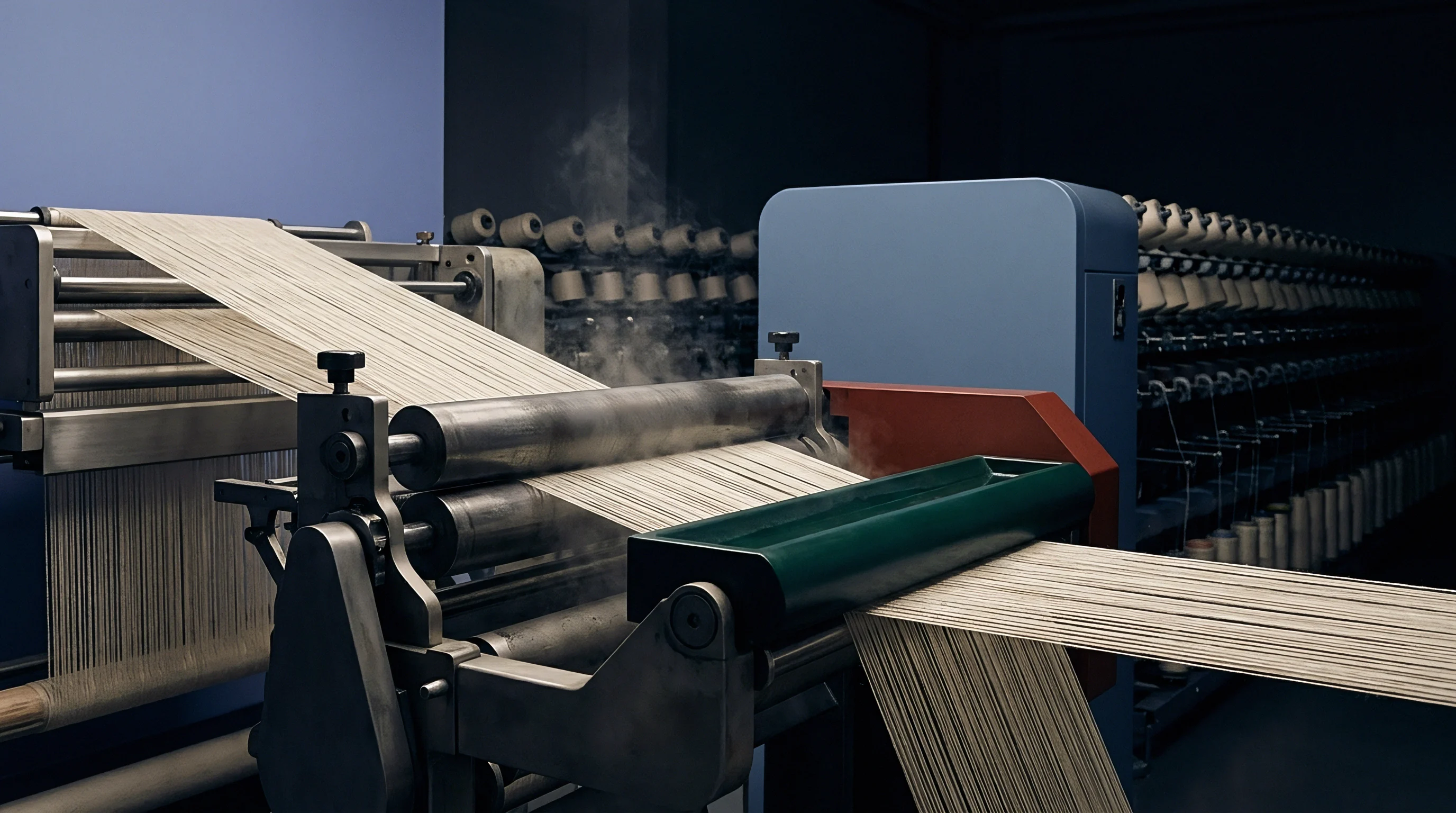
Cellulosic microfibrils exhibit time-dependent elastic behavior when subjected to dynamic tension profiles. The high degree of crystallinity in wet spun flax, often exceeding 70 percent, gives the yarn its characteristic initial modulus. Repeated elongation forces the non-crystalline domain to realign continuously along the stress vector.
The alignment process dissipates kinetic energy as micro-heat, weakening hydrogen bonds between adjacent hemicellulose chains. The yarn structural diameter contracts under repeated tension, forcing sizing polymers to shear along the fiber interface.
Shedding geometry directly governs the stress amplitude applied to each warp thread during the weaving cycle. Backrest roller oscillation and heald frame movement subject the yarn to cyclic peak strains between 1.2 percent and 2.8 percent elongation. Sized flax yarns exhibiting high cyclic stress relaxation show increased lint generation, higher hairiness numbers, and eventual end breaks on high-speed looms.
Chemistry
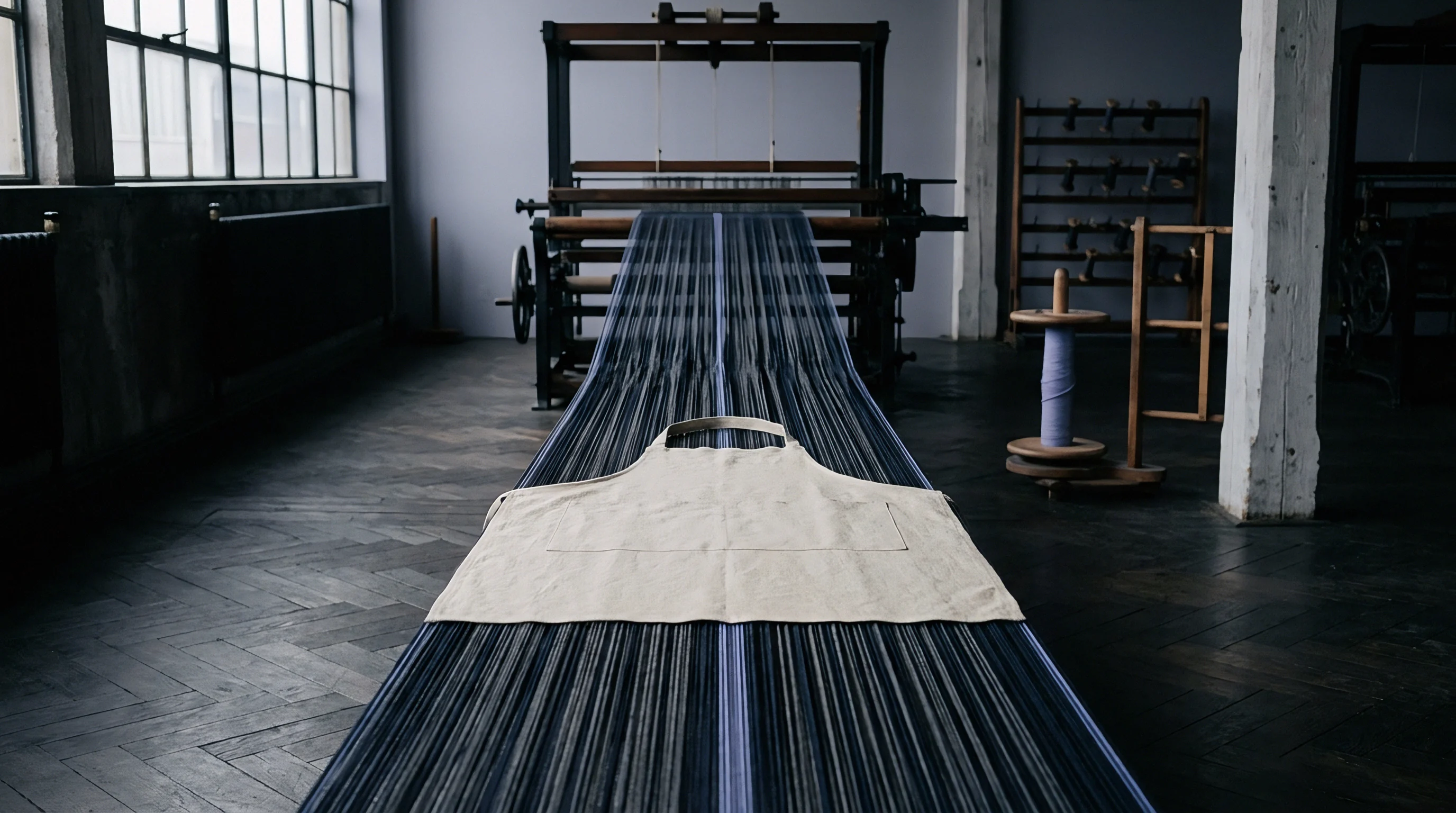
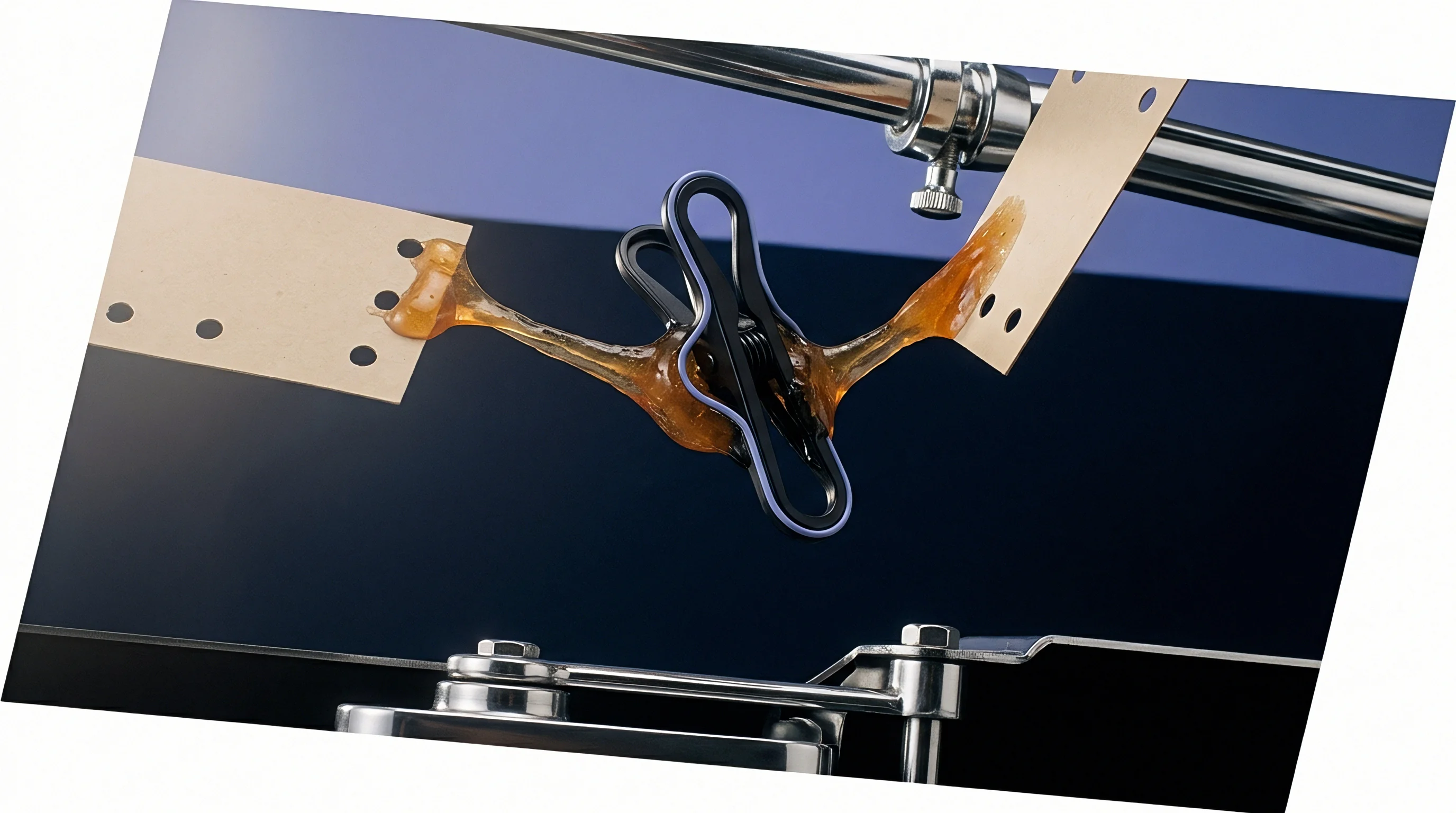
Formulating size recipes for wet spun flax warp yarns requires precise balance between film toughness, adhesion energy, and moisture retention capability. Native starches provide high surface coverage but lack the structural flexibility necessary to absorb continuous cyclic stress. Modified starches combined with polyvinyl alcohol polymers create a co-polymer matrix capable of dissipating dynamic strain energy.
Polyvinyl alcohol with a degree of hydrolysis between 87 percent and 89 percent delivers optimal elastic recovery while maintaining solubility during desizing.
Carboxymethyl cellulose additives enhance solution stability and film elasticity, preventing film brittleness under low ambient humidity. Synthetic acrylic binders further increase adhesion between the size film and the smooth surface of wet spun bast fibers. Plasticizing agents such as hydrogenated fats or wax emulsions reduce internal film stress, preventing micro-crack propagation through the size envelope under repeated bending and tension cycles.
| Recipe Component | Concentration (g/L) | Film Tensile Strength (MPa) | Elongation at Break (%) | Cyclic Decay Reduction (%) |
|---|---|---|---|---|
| Modified Corn Starch | 65 | 22.4 | 3.1 | 11.2 |
| Polyvinyl Alcohol (88% Hydrolyzed) | 35 | 41.8 | 8.5 | 24.6 |
| Acrylic Co-Polymer Binder | 15 | 18.2 | 14.2 | 18.9 |
| Esterified Wax Emulsion | 4 | 6.1 | 22.0 | 7.4 |
| Performance measured at 20 degrees Celsius and 65 percent relative humidity with 10 percent size pick-up on 26 Nm wet spun flax yarn. | ||||
Size pick-up levels must be controlled between 8 percent and 12 percent dry weight gain. Excess size add-on creates a rigid exterior shell that cracks under cyclic flexing, exposing raw fibers to abrasion against heald wires and reed dents. Insufficient size add-on leaves internal fiber bundles unprotected, allowing inter-fiber slippage to proceed unchecked during high-frequency shedding cycles.

Polymer Film Elasticity Limits
Adhesion energy between the sizing polymer and the hydrophilic flax bundle depends on hydrogen bonding density. Hydrolyzed polymers form dense molecular bonds with flax surface hydroxyl groups, resisting shear detachment during cyclic tension peaks. Hygroscopic softeners retain bound water molecules within the size film, lowering the glass transition temperature of the polymer blend below shed operating temperatures.
Optimizing viscosity between 25 and 40 mPa·s at 85 degrees Celsius ensures uniform liquor penetration into the core of the yarn without forming heavy surface build-up. Proper penetration anchors the outer sizing film to inner fiber structures, preventing film peel-off under harsh reed impact forces.
Bench
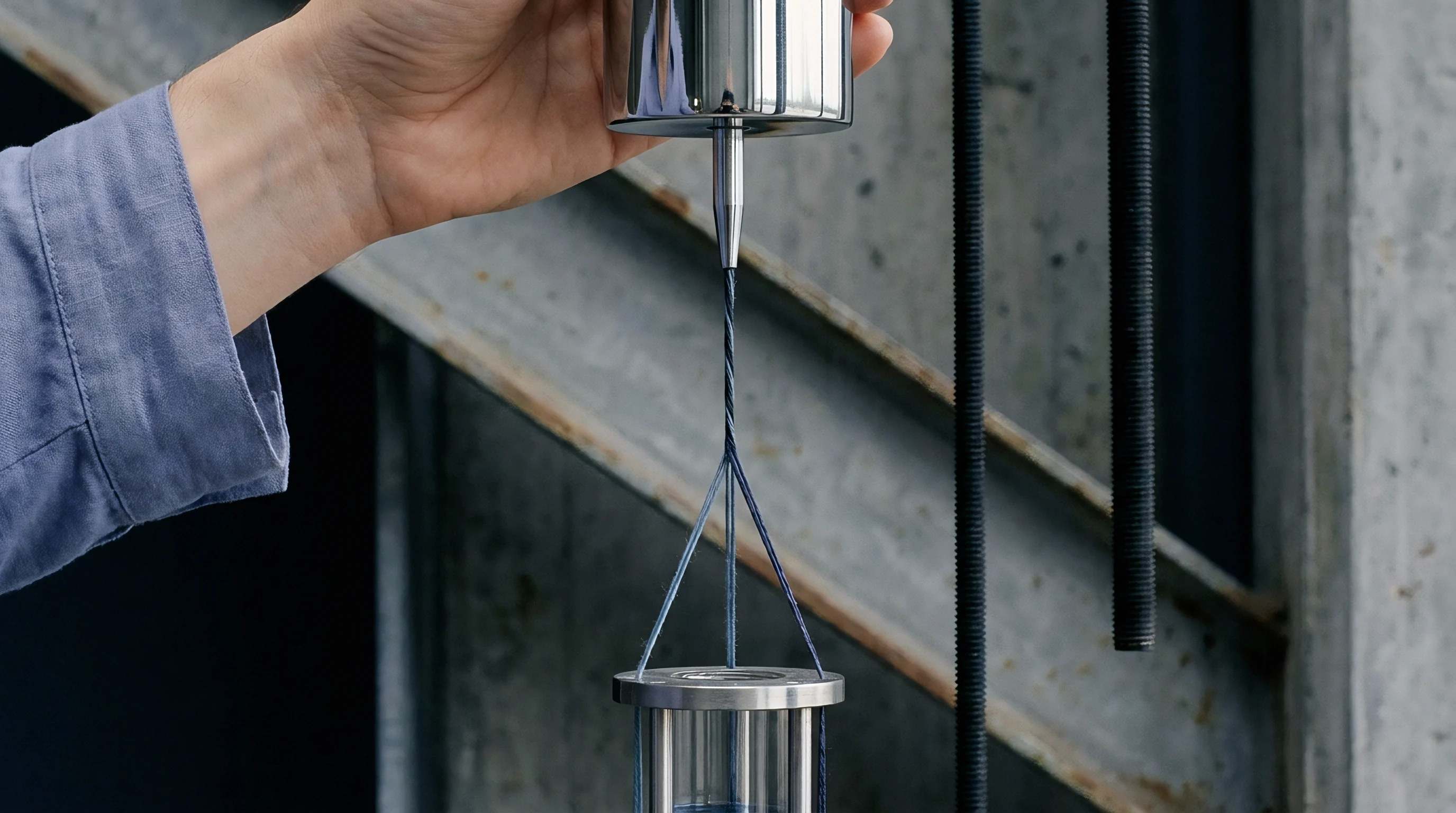
Laboratory evaluation of cyclic tensile stress decay relies on specialized dynamic tension testing equipment. Standard tensile tests using single-break procedures fail to capture the progressive structural degradation caused by repetitive low-amplitude stresses. Dynamic testing machines clamp a yarn specimen at fixed length, applying sinusoidal strain patterns at controlled frequencies to record tension decay profiles in real time.
Testing parameters must replicate actual loom conditions, utilizing strain amplitudes between 1.5 percent and 2.5 percent at frequencies between 5 Hz and 10 Hz. The testing environment requires strict atmospheric control at 20 degrees Celsius and 65 percent relative humidity according to ISO 139 standard conditions. Deviations in relative humidity alter yarn regain, distorting force decay measurement data.
ISO 13934-1 testing under cyclic loading confirms that un-sized wet spun flax yarn loses 34 percent of its initial load capacity after 5000 extension cycles.
Data acquisition systems capture peak tension values for every loading cycle, generating continuous stress relaxation curves. Key output parameters include initial peak stress, residual peak stress after 5000 cycles, total energy dissipation per cycle, and cumulative elastic modulus loss. These figures establish predictive benchmarks for shed performance and yarn break propensity.
- Specimen Conditioning takes place inside a climate chamber at 20 degrees Celsius and 65 percent relative humidity for 24 hours prior to clamping.
- Gauge Length Adjustment fixes the distance between pneumatic grips to exactly 500 millimeters under a initial pretension of 0.5 centinewtons per tex.
- Cyclic Loading Protocol subjects the yarn to 10000 sinusoidal extension cycles at a constant stroke frequency of 8 Hz and 2 percent stroke strain.
- Data Extraction records force values at peak displacement points every 10 cycles to plot the tension decay trajectory.
Testing Standard Compliance Parameters
Inter-laboratory test comparability requires strict adherence to standardized test configurations. Pneumatic grip pressure must be regulated to prevent jaw slippage without crushing delicate flax yarn structures. Line contact grips lined with vulcanized rubber minimize stress concentrations at the clamping boundary, preventing premature breaks within the grip zone during cyclic extension runs.

Transit
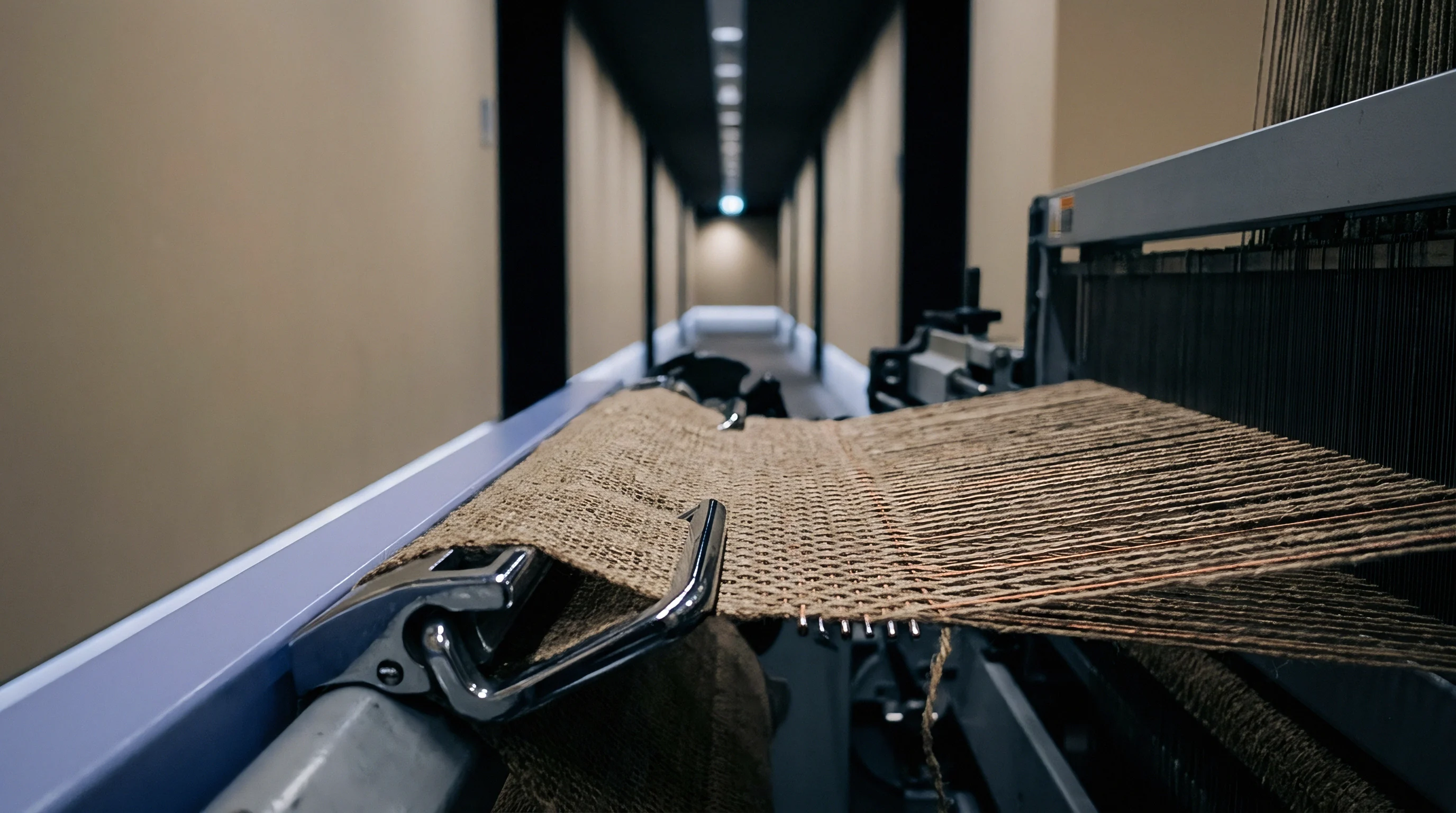
Dynamic stress decay on the loom direct impacts shed performance, warp stop rates, and loom efficiency metrics. Warp yarns undergo thousands of load cycles between the warp beam and the cloth fell before being integrated into the woven structure. High cyclic stress decay leads to progressive slackness in individual warp ends, creating irregular shed openings, mispicks, and machine stoppages.
Weaving machines operating at high insertion speeds generate complex stress wave interactions along the warp line. Sized wet spun flax yarns with high decay rates fail to damp these mechanical waves, creating localized stress peaks that exceed yarn break strength limits. Maintaining balanced warp line geometry reduces maximum cyclic tension spikes during shed opening movement.
- Excessive Dropper Drop Rate caused by warp slackening under continuous relaxation results in high false-stop frequency on automatic looms.
- Reed Abrasion Fraying occurs when relaxed size films shed micro-particles, exposing unprotected fibers to dent friction.
- Heald Eye Chafing strips broken fiber ends into small neps that cling to adjacent warp ends, causing shed clear failures.
- Cloth Fell Drift stems from continuous yarn elongation, shifting the beat-up line position and causing pick density variation.
Optimizing loom settings mitigates the impact of stress relaxation on yarn performance. Lowering backrest roller height reduces shed asymmetry, balancing peak tension between top and bottom shed lines. Setting shed closing timing later in the loom cycle decreases peak dynamic loading, protecting sized flax warps from severe cyclic fatigue.
| Loom Speed (RPM) | Peak Warp Tension (cN/tex) | Size Add-On (%) | Cyclic Decay Rate (%/10k cycles) | Warp Stops per Loom Hour |
|---|---|---|---|---|
| 450 | 14.2 | 8.0 | 21.5 | 2.8 |
| 550 | 16.8 | 10.0 | 16.2 | 1.4 |
| 650 | 19.5 | 10.0 | 18.9 | 2.2 |
| 650 | 19.5 | 12.0 | 14.1 | 0.9 |
Shed Structural Balance Adjustment
Equalizing warp tension across the full loom width prevents localized band relaxation and streak formation in finished cloth. Electronic warp let-off systems continuously adjust beam feed speed based on tension sensor feedback, compensating for cyclic stress decay and gradual beam diameter changes. Precise tension control limits maximum yarn relaxation during extended machine idle times.

Ledger
Managing cyclic stress decay yields quantifiable commercial returns in weaving mill efficiency, greige cloth quality grades, and reduced sizing chemical costs. Uncontrolled stress decay increases warp stop rates, directly reducing loom output and increasing direct labor costs per woven meter. High stop rates generate weaving faults such as start marks and pick bars, degrading fabric commercial value.
Optimizing size formulation costs requires balancing high-performance synthetic polymers against standard modified starches. Polymer cost increases are offset by efficiency gains on high-speed rapier and air-jet looms. Evaluating total landed warp cost involves analyzing chemical consumption, warping room energy usage, and weaving machine capital efficiency.
Standard mill calculations show that reducing warp stops from 2.5 to 1.0 per loom hour increases shed net efficiency by 4.2 percent on 220 cm wide rapier looms.
Calculating the true financial impact of sizing recipe optimization involves tracking loom stop frequencies, sizing chemical costs, and greige fabric penalty deductions. High quality size formulations reduce chemical usage through lower pick-up percentages while providing superior mechanical protection against cyclic stress relaxation.

Cost Calculation Model for Warp Preparation
A standard production order of 10000 meters of 100 percent wet spun linen fabric requires 2400 warp ends of 26 Nm yarn on a 220 cm reed width. Implementing an optimized polyvinyl alcohol and modified starch blend increases size chemical cost by 0.04 USD per meter. The resulting drop in warp breaks reduces loom downtime, adding 18.5 available loom hours back into production schedules for every 10000 meters woven.
Reduced downtime lowers fixed overhead allocation costs by 0.07 USD per meter, generating a net commercial saving of 0.03 USD per meter produced. Fabric quality yield increases simultaneously, raising the percentage of first-quality rolls delivered to finishing plants and reducing commercial dispute exposure under international fabric inspection standards.