Cottonised Flax Sitting inside a Declared Long-Staple Lot
Cottonised short flax inside long-staple lots destroys wet-spinning stability; verify comb-sorter distributions under ISO 6989 before processing.
Contamination
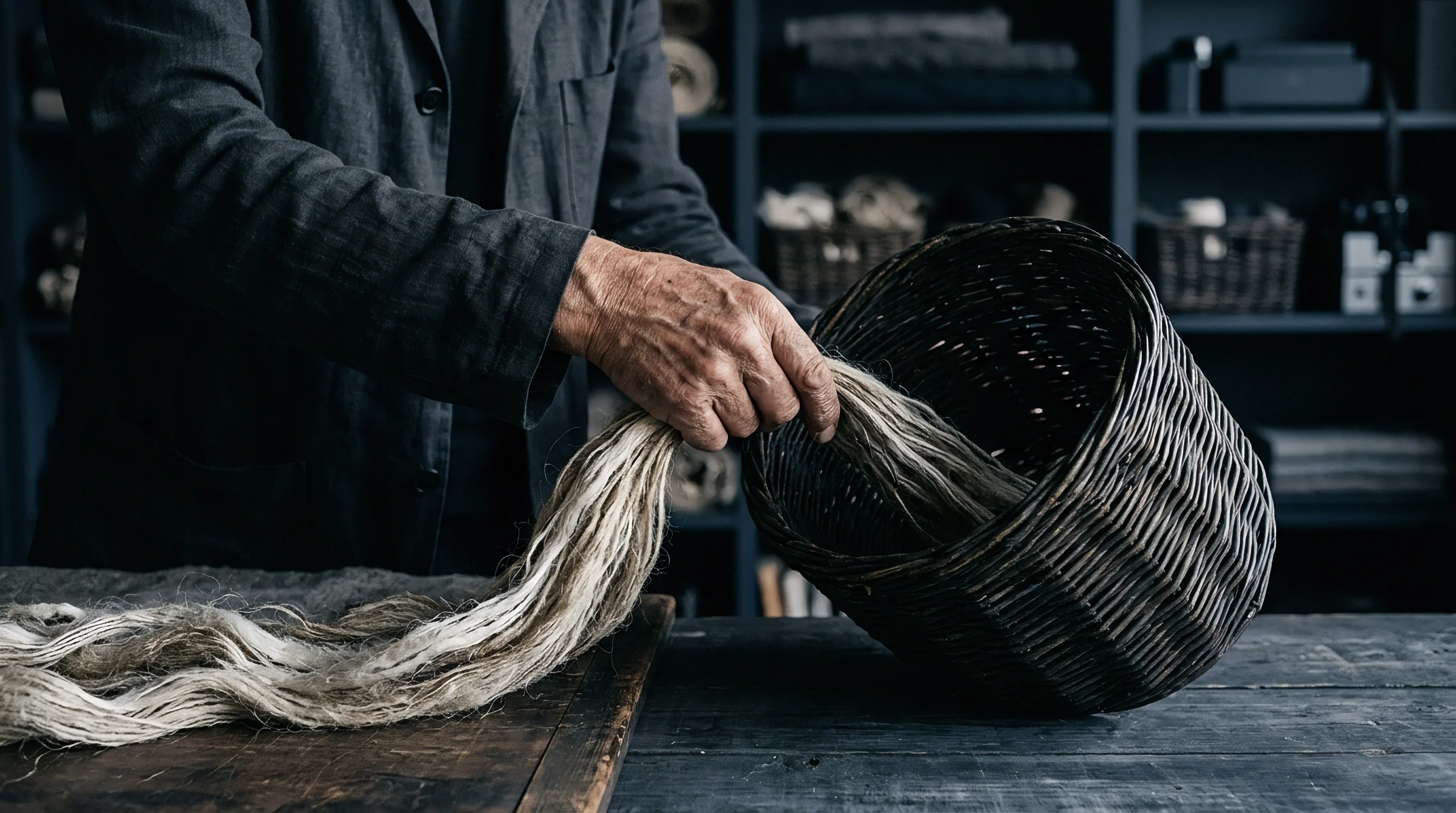
Opening a 250-kilogram bale of declared long-staple hackled flax on the inspection table sometimes uncovers an immediate physical contradiction. High-grade long-staple line flax consists of parallel, cohesive technical fibre bundles measuring between 500 millimetres and 900 millimetres long, with a crisp, waxy lustre and a firm feel driven by naturally occurring middle lamella pectins binding ultimate cells together. Slipping a hand beneath the top layers, however, can reveal soft, matte, woolly clumps without structural alignment.
This is cottonised flax ~ shortened fibre produced when aggressive chemical or mechanical processing strips out structural binder resins. Introduced into a declared long-staple lot, these short elementary fibres ruin drafting efficiency, weaken yarn strength, and dull the surface finish of wet-spun yarn.
The distinction between genuine line flax and cottonised fibre stems from plant anatomy. Flax, derived from Linum usitatissimum, forms multi-cellular technical bundles inside phloem tissue. Scutching and hackling remove woody core shives while preserving these long, unbroken bundles.
Cottonisation, by contrast, subjects low-grade scutched tow or decorticated crop waste to concentrated sodium hydroxide solutions, enzymatic digestion, or steam explosion. These treatments dissolve middle lamella pectins and lignins, reducing technical bundles to isolated elementary cells 25 millimetres to 45 millimetres long with a linear density around 1.5 dtex to 2.5 dtex. While cottonised flax allows ring or rotor spinning on standard cotton equipment, its physical profile fails under long-staple wet spinning.
Incoming scutched and hackled slivers should be inspected on the draw-frame receiving table before starting any spinning trial. Suppliers occasionally blend cottonised tow into combed line slivers during gilling to inflate volume without making short-fibre content immediately obvious. Lacking the structural length of hackled line bundles, cottonised fibre behaves as uncontrolled floating fibre in the drafting zone.
During wet spinning, as roving passes through a hot water trough at 60°C to soften remaining pectins, short cottonised fibres detach from the core, floating into the bath, wrapping lower drafting rollers, or clustering into dense, nep-like slubs inside the yarn core that cause the yarn to snap.
Trade economics drive this substitution. Scutched long-staple line flax commands prices above 5.20 EUR per kilogram on European markets, depending on retting quality and hackling yield, whereas cottonised short-staple flax ~ often derived from secondary scutching tow or low-grade Asian crop imports ~ trades between 1.80 EUR and 2.40 EUR per kilogram. Blending 15 percent cottonised fibre into a declared long-staple lot cuts raw material costs for the scutching mill while passing severe processing penalties downstream.
The buyer pays for combed line flax and receives an unstable composite that fails at the drafting frame.
Structural Morphology of Line Flax against Degummed Short Fibre
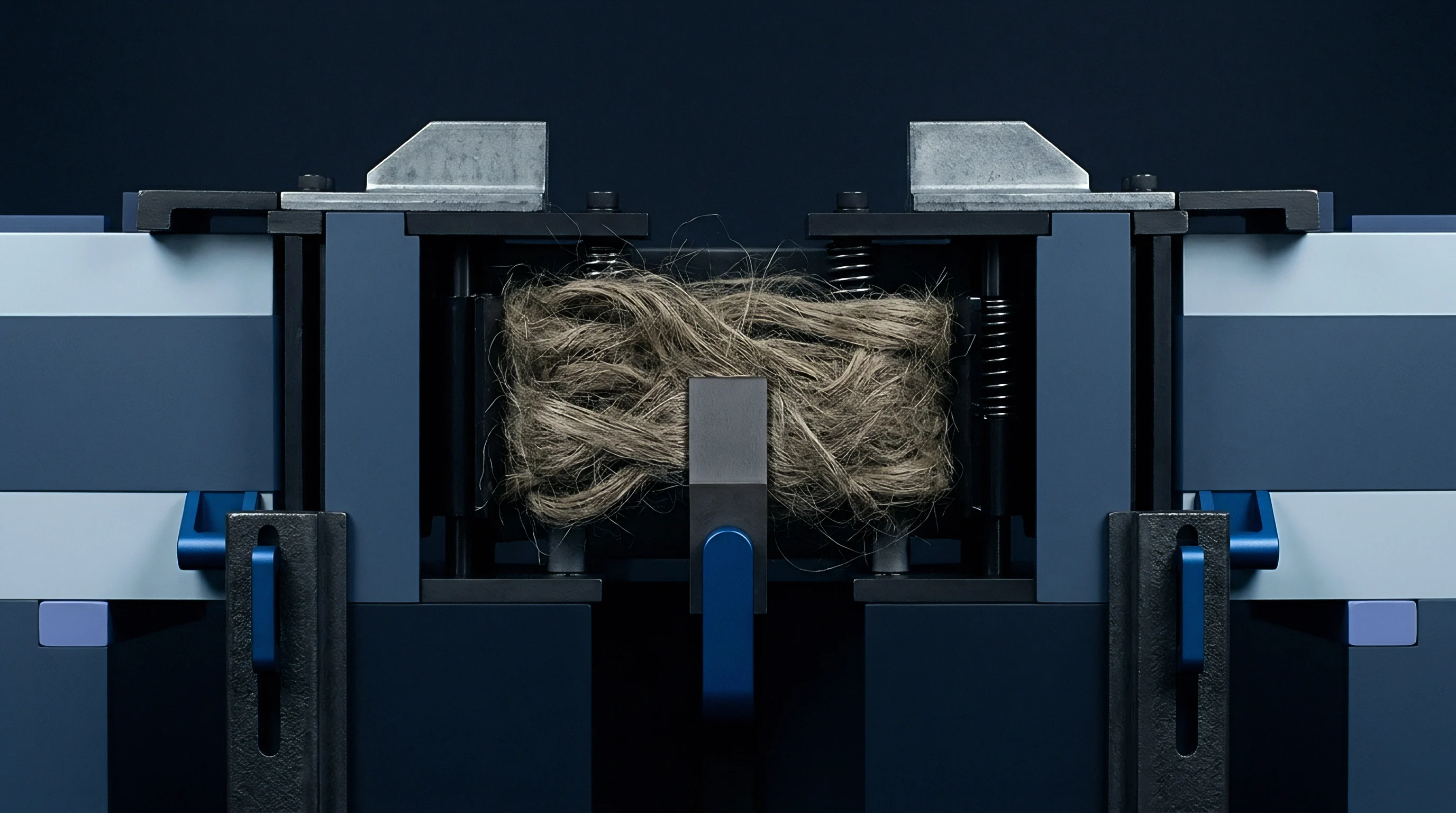
Under a light microscope, structural differences appear immediately. Pristine long-staple line flax exhibits smooth, continuous longitudinal striations where ultimate cells overlap within an intact pectin-lignin matrix. Cross sections reveal distinct polygonal cell walls surrounding tight lumina, arranged in compact bundles of 10 to 40 ultimate cells.
Cottonised flax shows separated, solitary cells with blunt, chemically etched, or mechanically crushed terminal ends ~ devoid of structural pectins, leaving individual cellulose filaments without cohesion.
Chemical processing alters surface energy and fibre crimp. Intact line flax carries a natural wax coating of 1.5 percent to 2.0 percent by weight, providing essential lubrication during hackling and drafting. Chemical degumming strips these surface lipids, raising dry inter-fibre friction and causing severe fibre collapse when wet.
When cottonised fibres hit hot water in a wet-spinning trough, they absorb liquid rapidly, swell sideways, and lose drafting cohesion. Drafting rollers lose control of the strand, yielding uneven yarn with wide mass variations.
| Fibre Classification | Mean Staple Length (mm) | Linear Density (dtex) | Residual Pectin Content (%) | Tenacity (cN/tex) |
|---|---|---|---|---|
| Combed Hackled Line Flax | 600 to 850 | 18.0 to 28.0 | 2.8 to 4.2 | 45.0 to 62.0 |
| Combed Scutched Tow | 120 to 250 | 8.0 to 14.0 | 2.2 to 3.5 | 28.0 to 38.0 |
| Chemically Cottonised Flax | 28 to 42 | 1.6 to 2.4 | 0.3 to 0.8 | 16.0 to 24.0 |
These physical numbers explain why blending compromises spinning operations. A lot declared as pure long-staple line flax carrying 12 percent cottonised fibre suffers a steep drop in mean fibre length and a sharp rise in short fibres below 50 millimetres. Standard hackling line slivers keep short-fibre content under 4.0 percent, but with cottonised fibre present, that figure rises above 14.0 percent.
Drafting equipment designed for long staple cannot control this short fraction, causing irregular roving mass and frequent end breaks at the flyer.
Spinnable yarn count drops sharply under contamination. Pure hackled line flax spins smoothly to fine counts up to Lea 80 or Lea 100 (around 13.5 Nm to 16.9 Nm equivalent wet-spun counts) at commercial strength thresholds. Adding short, degummed cottonised fibre caps fineness to coarse or medium counts below Lea 25.
Without continuous technical bundles, twist cannot build adequate inter-fibre friction, causing the yarn to draft apart at the flyer tip under minimal tension.
Adulterating combed long-staple line flax with short-staple cottonised fibre violates raw material purity benchmarks established under ISO 2370 and increases drawing waste across wet-spinning preparation lines.
Lustre degradation is another operational warning sign. Long-staple linen yarn owes its characteristic sheen to parallel, smooth technical bundles that reflect light uniformly. Short cottonised fibres introduce millions of loose fibril ends along the yarn axis, scattering light and turning a glossy yarn flat, dull, and fuzzy.
No amount of downstream calendering or chemical softening restores the specular reflectance lost when continuous bundles are broken.
Sourcing managers need to examine physical sliver structure before releasing payment for long-staple raw material. Visual inspection alone misses low-level cottonised additions when sliver is condensed in cans. Manual tuft drawing ~ slowly pulling a bundle apart between thumb and forefinger ~ exposes short-staple drops immediately.
If short, soft fibres fall out like lint, cottonised material is sitting in the sliver.
Aggressive hackling pin schedules can crush brittle, over-retted straw into fine fragments during combing, generating short-fibre spikes in declared long-staple shipments.

Strand
Processing long-staple line flax through intersecting gill boxes demands precise control over drafting forces, pin density, and roll spacing. When a sliver with hidden cottonised fibre enters the faller field, drafting dynamics shift immediately. Intersecting gill boxes rely on pins penetrating the moving sliver to restrain individual bundles as drafting rollers draw the strand forward.
Long technical bundles span multiple faller bars to hold stable tension, whereas short cottonised fibres under 40 millimetres slip cleanly between faller pins without mechanical restraint.
When setting drawing pin densities for high-count Lea yarns, adjusting faller bed speed helps accommodate natural bundle length variations. Uncontrolled short fibres aggregate inside the pin bed rather than moving forward uniformly, forming dense, tangled neps that periodically purge through the front drafting rollers. These clusters enter the drawn sliver as massive thick places, driving the mass coefficient of variation across 10-metre lengths from a normal 2.5 percent up to 8.0 percent or higher.
That variation at the drawing frame translates directly into yarn count instability at the spinning frame.
In wet spinning, roving passes through a heated water trough before entering drafting zones. Water temperatures between 60°C and 70°C soften residual middle lamella pectins, allowing technical bundles to slip internally and slide into thin, uniform strands under twist. Long-staple technical bundles retain enough structural binder to preserve integrity through drafting.
Chemically cottonised fibres, stripped of pectins during degumming, break down in hot water. The bath washes out short fibres, filling the trough with cellulosic sludge that clogs circulation filters and fouls drafting rollers.
Yarn hairiness spikes as a direct physical outcome of short-fibre contamination. In wet spinning, flyer twist binds individual technical bundles into a tight helical structure. Short cottonised fibres lack the length to be caught at both ends by flyer twist, flinging one end outward under centrifugal force.
Testing yarn hairiness on an Uster Tester reveals a sharp rise in H-value, often doubling the baseline hairiness index of pure line yarn. This surface fuzz causes severe sticking in the weaving shed, driving up warp breakage on high-speed air-jet and rapier looms.
The following failure modes occur during wet spinning when short cottonised fibres are present in declared long-staple roving:
- Frequent drafting zone strand separation occurs when short fibres lack sufficient length to bridge the distance between back press rollers and front drafting rollers.
- Accumulation of cellulosic sludge inside wet-spinning water troughs causes continuous clogging of circulation pumps, temperature probes, and drainage lines.
- High flyer lap formation develops as loose surface fibres detach from the wet strand and wrap tightly around lower rubber drafting cots.
- Severe yarn count variance manifests across spinning bobbins due to uncontrolled periodic purging of short-fibre clusters from drawing faller beds.
- Loss of wet tensile strength prevents flyer twist from establishing continuous tension, causing yarn breakage directly at the thread guide.
Tensile behavior under dry and wet conditions provides clear evidence of adulteration. Pristine wet-spun line flax yarn exhibits high single-strand tenacity, regularly exceeding 48 cN/tex dry and rising to 55 cN/tex when wet as hydrogen bonds reorient within crystalline cellulose regions. Yarn with cottonised fibre shows lower baseline tenacity, often dropping to 22 cN/tex, and drops further when wetted as swollen short fibres lose surface friction and slide apart under minimal load.
Roving frame twist factors are often increased to hold contaminated slivers together during bobbin winding. While higher twist solves immediate transport stability, it creates a severe drafting barrier at the wet-spinning frame. The extra twist prevents hot water penetration in the trough, forcing undrafted roving slivers through drafting rollers into the yarn, where they form thick, hard slubs that jam clearers during winding.
Uncontrolled floating fibres inside intersecting faller beds generate periodic mass spikes that destroy wet-spun yarn levelness.
Neither rotor nor dry ring spinning can turn contaminated line roving into premium long-staple yarn. Dry ring spinning lacks the hot water softening needed to draft technical line bundles, relying solely on mechanical draft. When short cottonised fibres sit alongside stiff technical bundles, the short fibres migrate outward while the rigid line bundles stay in the core.
The resulting yarn displays low elongation, poor abrasion resistance, and heavy surface pilling during finishing.
Weavers spot short-fibre contamination quickly during warp sizing and beaming. Sizing agents like polyvinyl alcohol and modified starches penetrate long technical bundles cleanly, laying surface fibres flat in a smooth protective film. Short cottonised fibres absorb excess size, forming brittle surface crusts that flake off during high-speed weaving.
This size shed clogs reed wires and dropper boxes, triggering false loom stops every few hundred picks.
Excessive flyer lap formation on wet-spinning cots serves as a quick operational indicator of short-fibre contamination on the mill floor.

Verification
Proving that a declared long-staple lot contains cottonised flax requires rigorous analysis. Visual inspection and hand classing flag suspicious slivers, but commercial arbitration demands quantitative test reports. Laboratory verification relies on three complementary streams: comb-sorter fibre length distribution analysis, gravimetric pectin/lignin content assays, and high-resolution optical or scanning electron microscopy of cell-end morphology.
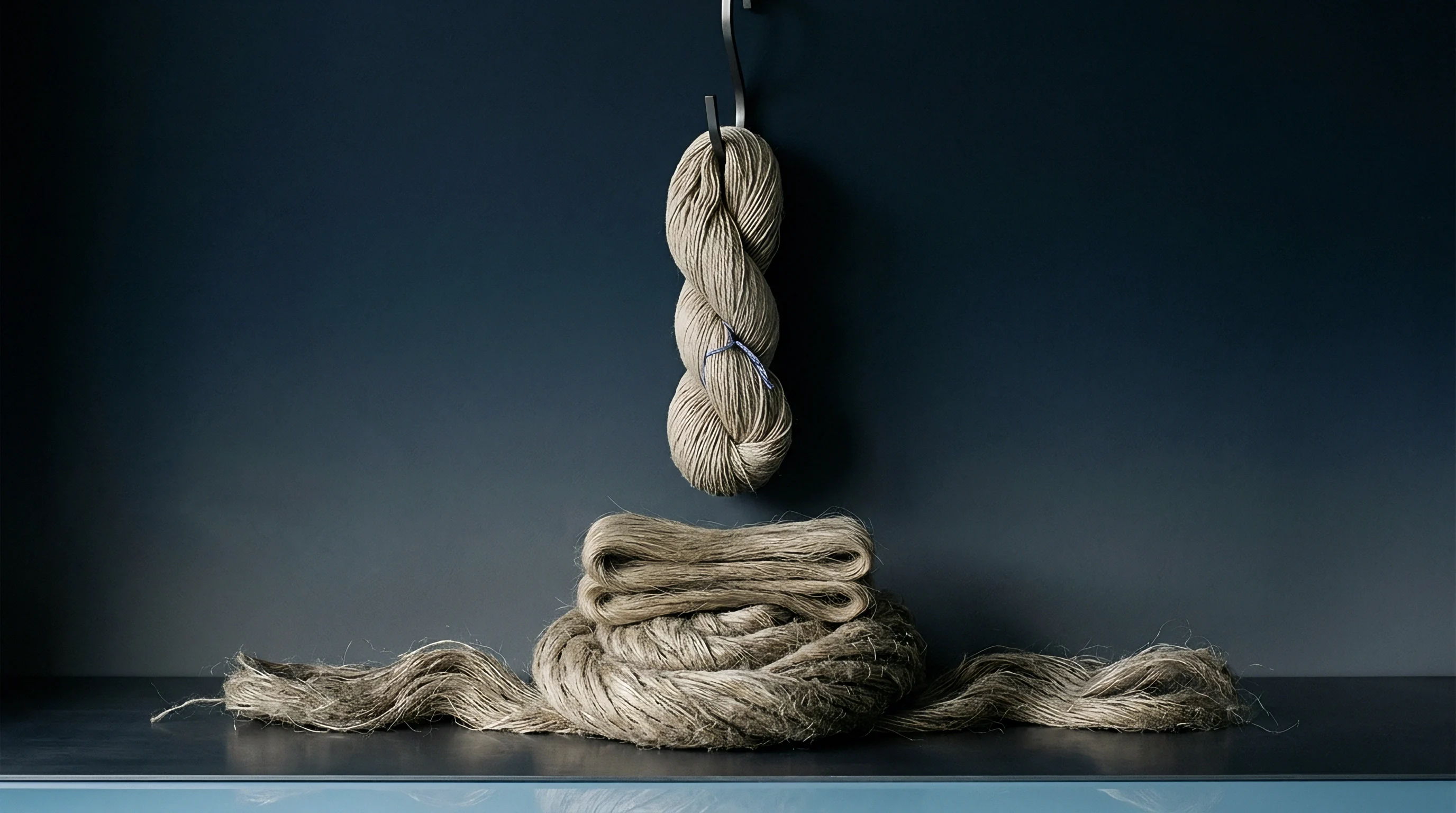
Isolating short-fibre fractions within long-staple slivers requires careful sample preparation to avoid breaking technical bundles. Testing follows ISO 6989 for fibre length determination using comb-sorter equipment modified for long bast fibres. A representative 20-gram sliver sample is conditioned at 20°C and 65 percent relative humidity for 24 hours before testing.
The comb sorter separates fibres into 10-millimetre length groups, which are weighed on an analytical balance to plot a cumulative frequency diagram.
Comb-sorter curves reveal clear structural differences between pure and contaminated lots. Pure hackled line flax produces a broad, smooth curve from 300 millimetres to over 800 millimetres, with under 3.0 percent total mass below 50 millimetres. When cottonised flax is present, the cumulative curve displays a sharp step-change peak between 25 millimetres and 45 millimetres, representing 10.0 percent to 25.0 percent of total sample mass.
This bimodal distribution confirms short-staple material was blended into the sliver.
- Condition raw sliver samples at standard atmosphere of 20°C temperature and 65 percent relative humidity for a minimum of 24 consecutive hours.
- Extract a 20-gram test specimen across the full sliver cross-section using manual tuft alignment to preserve bundle integrity.
- Mount the specimen into the upper comb bed of a long-bast comb sorter, securing root end alignment against the zero-datum gauge wire.
- Lower comb teeth sequentially, drawing long technical bundles outward using wide-jaw gripping clamps, laying sorted lengths onto velvet boards.
- Collect short-fibre drops remaining in lower comb beds, sorting residual fibres into 10-millimetre increment trays.
- Weigh each length fraction on a calibrated analytical balance accurate to 0.001 grams, calculating mass percentages relative to total specimen mass.
- Plot cumulative mass curves against length increments to identify bimodal distributions indicative of short-staple additions.
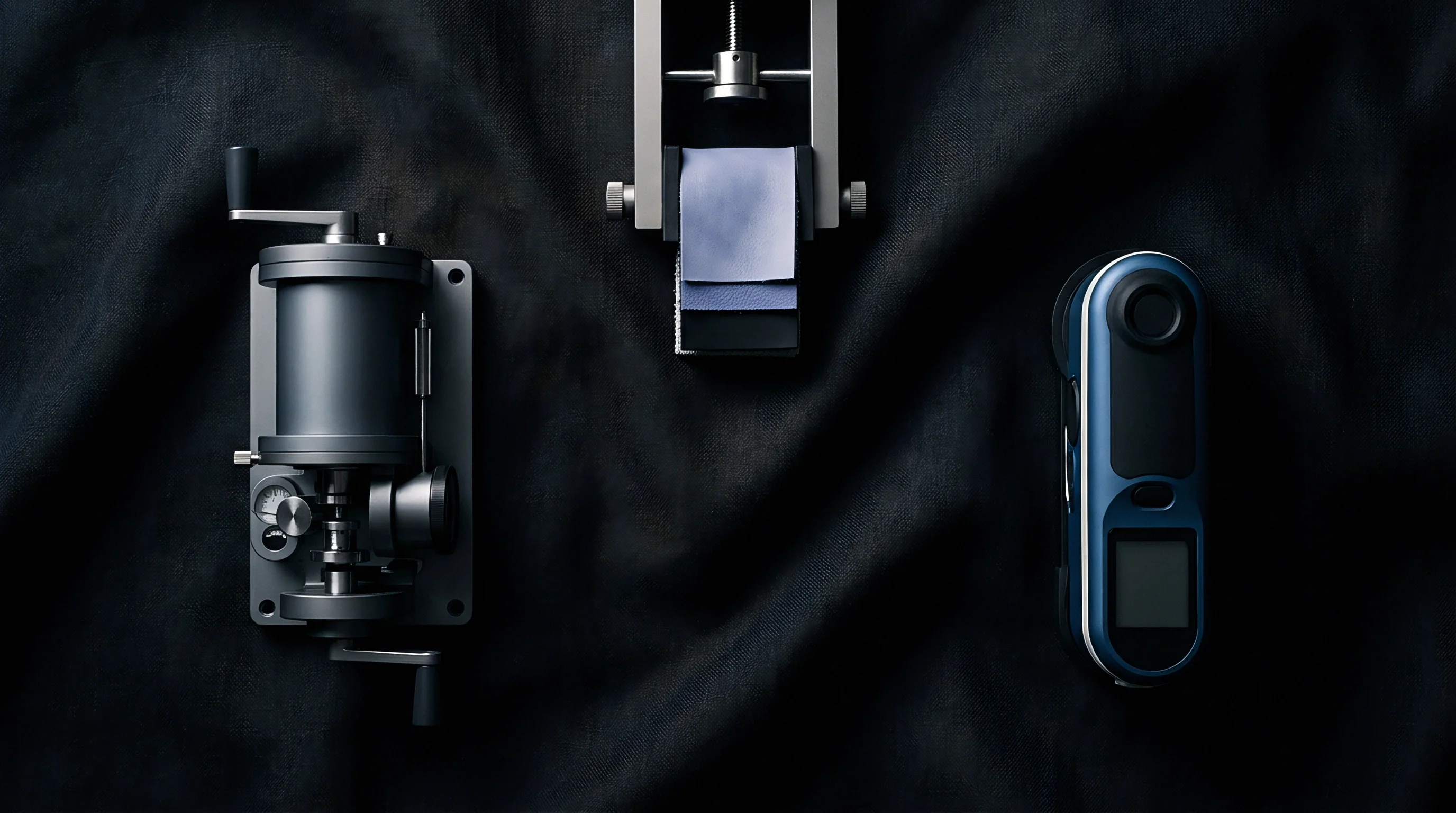
Where Does Elementary Fibre Extraction Truncate Long Technical Bundles?
Elementary fibre extraction truncates long technical bundles during chemical degumming, when hot alkaline baths or enzymatic reagents break down the middle lamella matrix. In natural line flax, middle lamellae contain structural pectins, hemicelluloses, and lignin that lock individual ultimate cells into continuous strands. Degumming aimed at producing cottonised flax breaks these pectin bonds completely, collapsing multi-cellular bundles into single elementary cells averaging 25 to 35 millimetres long.
Gravimetric analysis of residual pectin content confirms degumming history. The procedure involves extracting waxes and lipids with a 2:1 ethanol-toluene mixture in a Soxhlet apparatus for six hours, followed by hot ammonium oxalate extraction (0.5 percent concentration at 85°C for four hours) to isolate middle lamella pectins. Pure long-staple line flax retains between 2.5 percent and 4.2 percent pectin by weight, maintaining bundle stability.
Chemically cottonised flax carries residual pectin levels below 0.8 percent by weight, proving structural binders were stripped prior to blending.
| Test Metric | ISO / Test Standard | Pure Line Flax Target | Adulterated Lot Threshold | Rejection Action Limit |
|---|---|---|---|---|
| Short Fibre Mass (<50 mm) | ISO 6989 | < 3.5 % | 5.0 % to 12.0 % | > 8.0 % |
| Residual Pectin Content | ISO 6741 / Gravimetric | 2.5 % to 4.0 % | 1.2 % to 2.0 % | < 1.8 % |
| Yarn Mass Variation (CVm) | ISO 16549 / Uster | 11.5 % to 13.5 % | 15.0 % to 19.0 % | > 16.5 % |
| Wet Single-Strand Tenacity | ISO 2062 | 45.0 to 58.0 cN/tex | 28.0 to 38.0 cN/tex | < 35.0 cN/tex |
| Elementary Cell Ends (%) | Microscopy / Image Analysis | < 2.0 % | 8.0 % to 22.0 % | > 12.0 % |
Microscopic inspection under polarized light provides clear morphological identification. Intact long-staple line flax bundles show continuous longitudinal fibrillar orientation with characteristic transverse node markings spaced along the bundles. Under cross-polarized light using a retardation plate, line flax exhibits uniform extinction angles.
Cottonised fibres show frequent ruptured, rounded, or chemically dissolved cell ends. Quantitative image analysis calculates the ratio of intact bundle cross-sections to single elementary cell ends; a single-cell-end ratio above 5.0 percent signals cottonised contamination.
In Baltic wet-spinning operations, Lea 40 yarn tenacity drops by 14 percent when short-fibre content exceeds six percent.
Scanning Electron Microscopy (SEM) provides surface visual data for dispute resolution. At 1,000x magnification, pure line flax technical bundles display clean, parallel ultimate cells bound by intact lamellar matrix ribbons. Cottonised fibres show complete microfibrillar separation, severe surface pitting from caustic chemical attack, and a total loss of intercellular cementing materials.
SEM micrographs alongside comb-sorter distribution graphs form a strong technical evidence package during arbitration.
Laboratory testing under ISO 6989 proving short-fibre mass below 50 millimetres exceeds 8.0 percent triggers immediate lot rejection rights under standard international bast-fibre trading terms.
Fourier Transform Infrared Spectroscopy (FTIR) offers rapid chemical screening without Soxhlet extraction. Spectrum analysis of pure line flax features distinct absorption bands at 1735 cm⁻¹ (carbonyl C=O stretching in pectin ester groups) and 1505 cm⁻¹ (aromatic skeletal vibrations in lignin). In cottonised flax, chemical degumming attenuates or eliminates these pectin and lignin peaks.
FTIR spectral ratioing provides a non-destructive pass/fail check on incoming slivers within 15 minutes of sample intake.
Inter-laboratory calibration trials demonstrate high reproducibility across these combined testing protocols. When comb-sorter short-fibre mass correlates directly with FTIR pectin peak attenuation, proof of material substitution is clear. Suppliers facing paired FTIR and comb-sorter data packages rarely dispute formal rejections.
Under standard contract terms published by the Confederation European du Lin et du Chanvre, raw material specifications incorporating ISO 6989 short-fibre limits allow buyers to cancel outstanding delivery tranches upon proving short-fibre fractions exceed contract thresholds.

Dispute
Commercial claims arising from contaminated long-staple flax orders hinge on clear financial quantification of manufacturing losses. When a spinner receives a lot containing hidden cottonised short fibres, costs compound across multiple processing stages: excess waste at draw frames, reduced spinning frame efficiency, degraded yarn sales value from count limits, and higher weaving rejection rates. Commercial arbitration requires converting these physical processing failures into audited monetary claims.
Purchasing managers must calculate total landed yarn cost adjustments when cottonised fibre forces a count reduction. For instance, a mill buying hackled line flax at 5.50 EUR per kilogram intends to wet-spin fine Lea 40 yarn selling at 14.20 EUR per kilogram. If short-fibre contamination forces a drop to coarse Lea 20 (selling at 8.80 EUR per kilogram), the expected margin vanishes.
The mill pays full long-staple raw material costs while producing low-value coarse yarn.
Tracking raw material price movements across Western European scutching mills helps calibrate baseline clean-sliver valuations. Hackling room yield drops sharply when contaminated sliver enters production. Hackling machines separate short fibres into tow drops, retaining long parallel bundles as line sliver.
Standard hackling converts 65 percent of scutched flax into line sliver and 25 percent into hackled tow, with 10 percent dust and shive waste. When cottonised fibres are present, line yield drops below 45 percent as short fibres are combed into low-value tow bins. Because hackled tow sells for less than half the price of long line sliver, this creates a major yield loss for the spinner.
| Adulteration Level (%) | Hackling Line Yield (%) | Spinnable Limit (Lea Count) | Yarn Production Loss (EUR) | Landed Cost Increase per Metre (EUR/m) |
|---|---|---|---|---|
| 0.0 (Pure Line) | 66.5 | Lea 40 | 0.00 | 0.000 |
| 5.0 (Minor Blending) | 58.2 | Lea 30 | 1,420.00 | 0.085 |
| 12.0 (Moderate Blending) | 48.0 | Lea 22 | 3,650.00 | 0.210 |
| 20.0 (Heavy Blending) | 38.5 | Lea 14 | 6,880.00 | 0.445 |
Calculating the landed cost increase per finished woven metre shows the full downstream impact. A standard plain-weave linen fabric measuring 140 grams per square metre requires approximately 0.165 kilograms of Lea 40 yarn per square metre, including weaving waste. Base production cost sits around 3.20 EUR per running metre using pristine line flax yarn.
When short-fibre adulteration increases count variance and forces weaving speeds down from 450 picks per minute to 280 picks per minute, loom efficiency drops from 92 percent to 68 percent. Fixed loom overheads and higher repair labor costs drive finished fabric costs up to 3.85 EUR per metre.
Incoming lot acceptance requires a strict mill verification workflow before releasing raw material into processing lines:
- Verification of formal lab certificates accompanying each bale lot to ensure compliance with ISO 6989 staple length limits.
- Execution of comb sorter sampling on three randomly selected bales per 5,000-kilogram delivery tranche upon mill arrival.
- Rapid FTIR spectrum checking to confirm pectin peak ratios match pure line reference standards.
- Running a 100-kilogram spinning trial on a dedicated test frame to quantify end-break frequency and wet-tenacity performance.
- Quarantine holding of whole tranches until lab verification confirms short-fibre content remains under 3.5 percent.
Commercial claims succeed only when supported by detailed, chronological documentation. Spinners need to retain unspun sliver samples from disputed lots, sealed in airtight bags and co-signed by an independent cargo surveyor. Submitting yarn test reports alone is rarely sufficient; suppliers often argue that poor spinning frame maintenance or incorrect trough temperatures caused strength failures.
Providing matching FTIR reports, comb-sorter distribution graphs, and sealed raw sliver samples from original unopened bales removes those defenses.
Contract terms must explicitly define rejection conditions, short-fibre limits, and testing protocols inside the purchase agreement. Relying on vague trade descriptions like “high-grade combed line flax” leaves buyers exposed during arbitration. Purchase contracts should state explicit maximum allowable short-fibre percentages below 50 millimetres, minimum residual pectin levels, and name an accredited testing laboratory as the final binding arbitrator.
Raw material substitution directly inflates fabric landed costs by degrading spinning frame limits and reducing loom weaving efficiency.
Reclaiming monetary losses through international arbitration panels ~ such as those operated by the International Cotton Association or European bast-fibre trade bodies ~ requires strict adherence to notification timelines. Buyers must register formal notice of claim within 14 working days of material receipt at the mill. Delaying testing until material enters production forfeits rejection rights, leaving the spinner with no remedy beyond negotiated price rebates.
A Lithuanian wet-spun batch incurred a 12,000 EUR claims loss when testing was delayed past the contract notification window.

Penalty
Structuring purchase contracts with clear, enforceable financial mechanisms deters suppliers from introducing cottonised short fibres into long-staple shipments. Standard commercial contracts often rely on simple price adjustments when raw material strays from agreed parameters, but simple rebates fail to compensate spinners for lost machine hours, degraded yarn value, and loom stop penalties. Contracts need exponential penalty scales that increase chargebacks as short-fibre contamination scales up.
Contractual penalty structures should combine direct raw material rebates with full reimbursement of mill processing costs incurred on rejected lots. A robust clause establishes that any shipment exceeding 4.0 percent short-fibre content below 50 millimetres triggers an immediate 10 percent price discount. If short-fibre content exceeds 7.0 percent, the buyer retains full rejection rights, with the supplier paying return freight, laboratory testing fees, and a fixed processing penalty of 1.50 EUR per frame-hour for lost wet-spinning production time.
Compiling a complete rejection claim package requires specific commercial and technical documentation to survive legal scrutiny:
- Independent survey report signed by an accredited cargo inspector verifying sample collection from sealed delivery bales.
- ISO 6989 comb sorter certification issued by a third-party accredited textile testing laboratory showing short-fibre percentage curves.
- FTIR spectroscopy analysis report confirming residual pectin degradation below agreed contractual thresholds.
- Mill spinning log extract documenting end-break frequency, lap formation rates, and wet tenacity losses during trial runs.
- Audited financial calculation sheet detailing direct labor waste, machine downtime costs, and yarn downgrading margin losses.
Suppliers facing thorough claim documentation frequently attempt to settle through future delivery discounts rather than cash refunds. Sourcing managers should reject deferred rebates from non-compliant suppliers. Accepting future discounts locks the buyer into an ongoing relationship with a supplier that breached baseline specifications, exposing the mill to repeated interruptions.
Immediate cash debit notes against outstanding invoice balances provide the only effective protection.
Standardized purchase contract language must embed exact technical parameters into the primary material specification block rather than burying criteria in fine-print annexes. Contracts should state that delivered slivers contain pure, unadulterated bast fibre derived exclusively from long-staple hackled line flax, completely free from chemically degummed, mechanically decorticated, or enzyme-treated cottonised fibre fractions. Specifying test standards directly alongside numeric limits eliminates ambiguity during dispute resolution.
Insurance coverage for raw material adulteration remains complex across international supply chains. Standard marine cargo policies cover physical damage, fire, and transit loss, but explicitly exclude loss caused by intrinsic vice, material substitution, or supplier fraud. Spinners cannot rely on trade insurance to cover losses from cottonised short-fibre contamination.
Financial risk management rests entirely on strict incoming laboratory verification, rigorous contract drafting, and immediate commercial chargebacks.
Long-term sourcing strategies must prioritize full supply chain transparency back to European retting yards and scutching mills. Purchasing through unverified intermediaries or secondary spot-market brokers increases exposure to material adulteration, as lot blending frequently occurs during consolidation in regional warehouses. Establishing direct, audited relationships with reputable scutching operations ensures complete traceability, consistent hackling parameters, and verified material purity from field to spinning bobbin.
Whether future automated near-infrared sensor systems mounted directly on draw-frame sliver inlets can detect short-fibre degummed contamination in real time before slivers reach the wet-spinning frame remains an open technical challenge for the industry.