
Auditing Scutched Flax Fiber Quality and Moisture Content
Audit scutched flax mass using ISO 6741 gravimetric drying to enforce the 12% standard regain adjustment and verify lot tags against scheme scope certificates.

Audit scutched flax mass using ISO 6741 gravimetric drying to enforce the 12% standard regain adjustment and verify lot tags against scheme scope certificates.

Viscoelastic size film failure under high frequency air jet shedding stems from dynamic glass transition shift and energy dissipation limits.

Audit conditioned mass at each subcontract gate to separate tow carding waste from wet chemical extraction losses.

Optimizing starch and PVA size rheology balances shear-thinning viscosity for precise core penetration, reduced warp stops, and maximum air-jet loom output.

Moisture regain shifts distort linen origin audits; normalizing scale weights to bone-dry fibre mass prevents origin claim revocation and retroactive tariffs.

European Flax yarn import verification requires matched scope certificates, lot-tied transaction certificates, and audited mass-balance yield calculations.

Mastering yarn count conversions and warp sett calculations enables technical buyers to optimize cover factor, greige yield, and loom-hour costs precisely.

Microscopic cellulosic fine surface kinetic audits detect short-staple fiber blending and chemical surface manipulation across multi-tier linen spinning chains.

Gravimetric extraction combined with stable isotope profiling verifies European dew-retted flax origin and detects blended Asian mill yarn batches.

Residual pectins in wet spun flax undergo thermal mass loss at 105 degrees Celsius, creating up to 1.8 percent dry weight errors in commercial mass verification.

Flax retting breaks down stalk pectin to separate spinnable fibers, requiring strict moisture control and scope-verified chain of custody to secure origin.

Alkaline scouring degrades flax yarn strength when cellulose degree of polymerization drops below 900, requiring strict intrinsic viscosity controls during package processing.

Unmanaged hydrolytic degradation gradients across dense roving bobbins create radial tenacity drops that compromise yarn yield and invalidate origin claims.

Real-time spectroscopic carbon analysis of textile wastewater provides tamper-proof chemical telemetry required for EU Digital Product Passport validation.
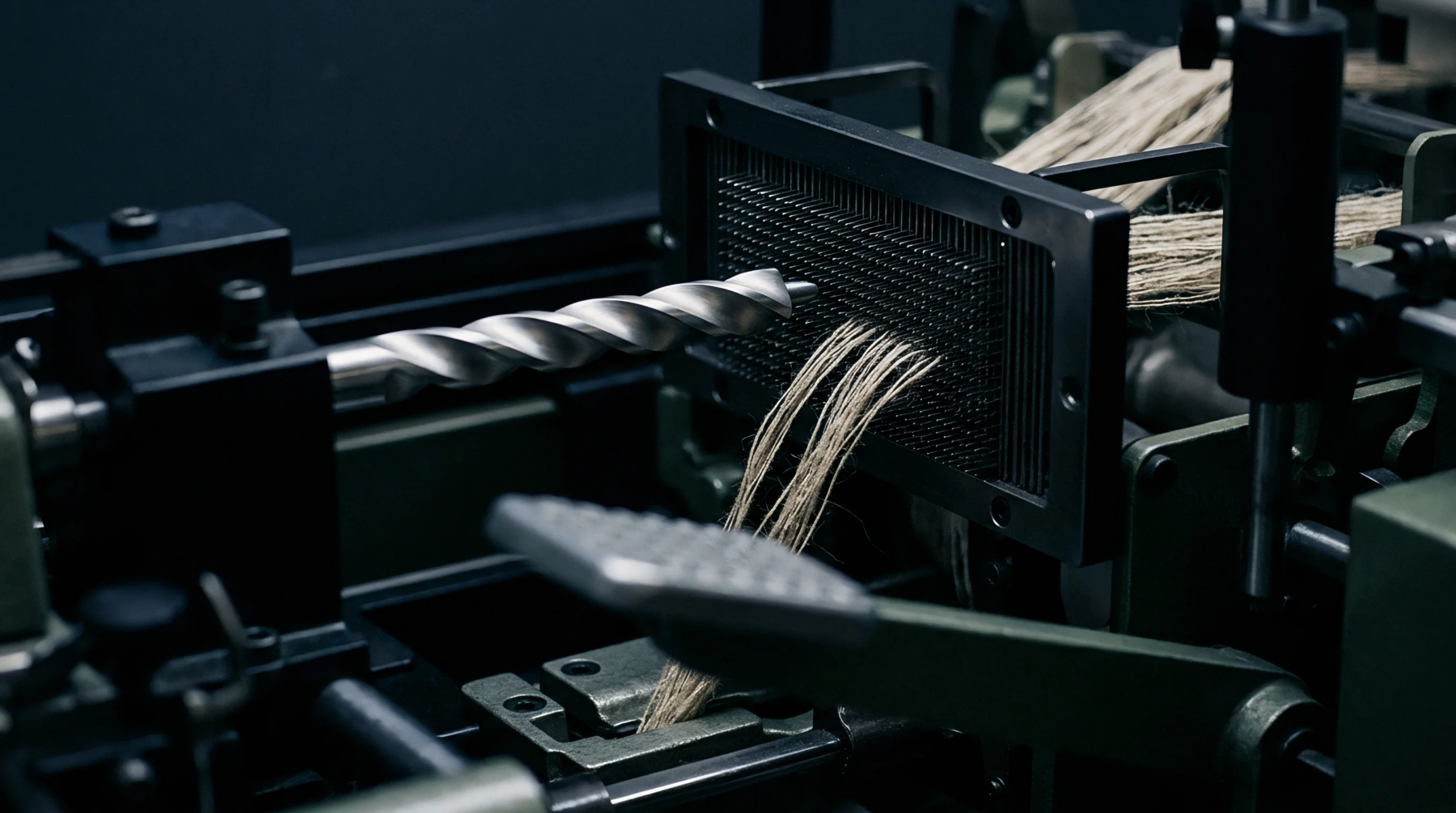
Flax bundle tex governs hackling outturn: finer bundles yield over 50 percent long line sliver, cutting net sliver cost and unlocking counts above Nm 50.

Radial viscosity gradients dictate fibre separation dynamics in wet drafting; unsoftened core bundles generate severe mass irregularity at speeds over 200 m/min.

Commercial moisture regain recalculations convert received damp flax mass to clean dry mass plus standard allowances, eliminating paid water weight from invoices.

Exceeding 70 degrees Celsius in wet spinning troughs hydrolyzes middle lamella pectin excessively, dropping Nm 60 linen single yarn tenacity below 15 cN/tex.

Standard woven linear density testing reconciles cloth mass per linear metre with desized, straightened yarn tex under controlled humidity.

Residual pectin above 3 percent prevents fiber bundle flattening, inducing premature mechanical yarn jamming that cuts rapier loom efficiency by 19 percent.

Fine linen wet spinning demands trough water at 65 to 75 degrees Celsius with controlled surfactants to dissolve middle lamella pectins before the drafting nip.

Scouring linen increases GSM despite mass loss because wet viscoelastic crimp interchange condenses thread count faster than non-cellulosic extraction lightens yarn.

Deriving greige linen count requires dividing target finished linear density by chemical yield and adjusting for warp crimp, reed spread, and sizing loss.

Resolving inter-laboratory bias in flax comb sorting requires strict humidity control, calibrated clamp pressure, and master reference sliver standardization.

Dynamic weaver dispatch using Hawkes process intensity modeling cuts linen warp stop wait times by seventy percent and secures eighty-nine percent shed efficiency.

Comb sorter diagrams define the true upper quartile length and short-fibre mass of hackled flax, setting frame ratch distances and determining wet-spun yields.

Manual comb sorting isolates true flax bundle length arrays, determining Upper Quartile Length and Short Fibre Content to set mill drafting ratches.
Expertise is a utility, not a secret. sentiention™ publishes its working knowledge as open reference: intelligence layer covering the materials it sources, the markets it enters, and the reference that serves both.