Resolving Yield Loss Discrepancies from Subcontracted Wet Processing and Tow Blending in Third Country Mills
Audit conditioned mass at each subcontract gate to separate tow carding waste from wet chemical extraction losses.

Tare
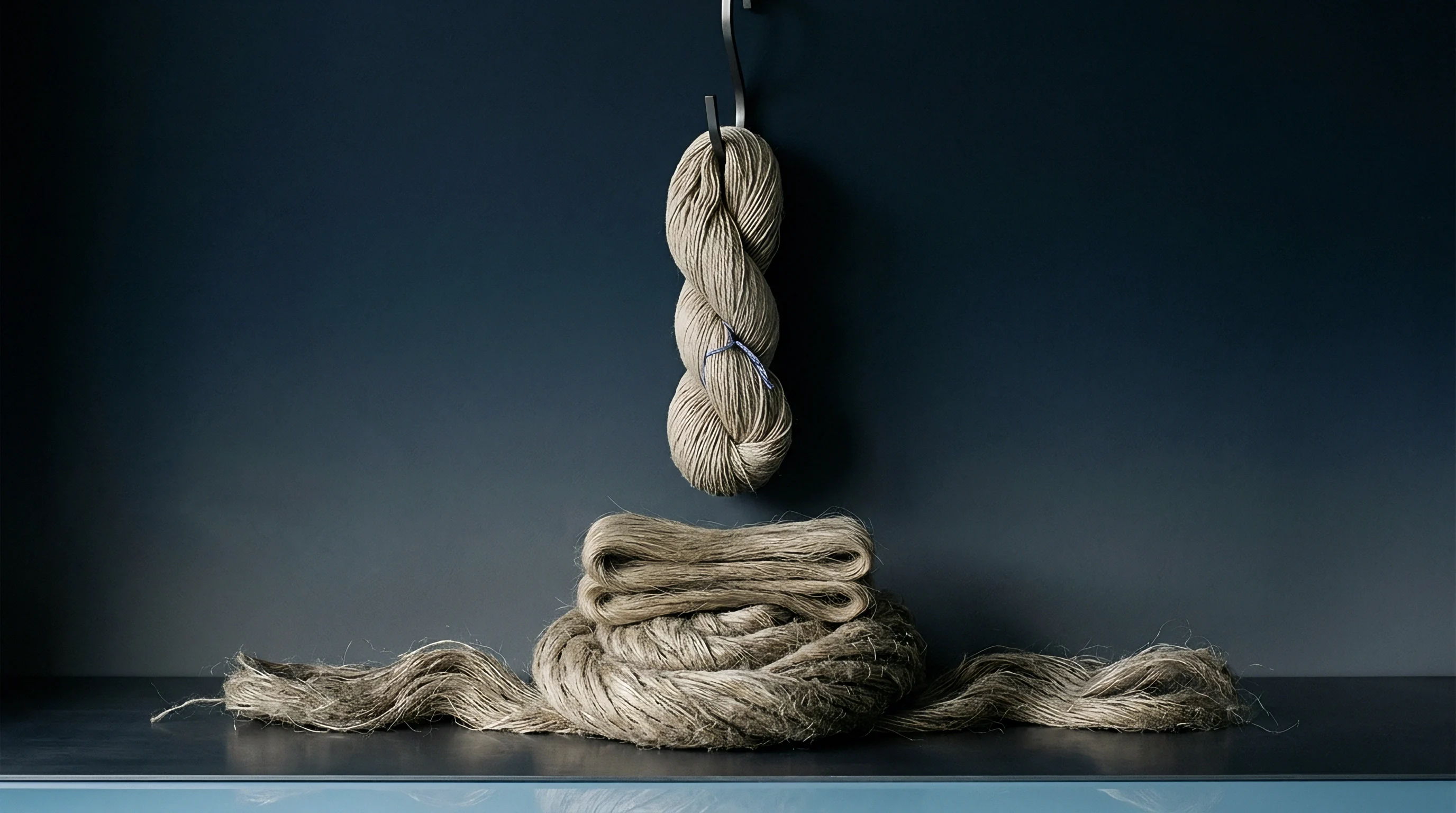
Invoiced weight discrepancies begin at the weighbridge before raw bast fibre enters a carding can or drawing frame. Consignments of certified European hackled flax arrive at coastal Asian spinning facilities in compressed bales wrapped in polypropylene sheeting, strapped with high-tensile steel wire. Mill receiving logs routinely record total gross weight while applying standardized pallet deductions that overlook packaging moisture absorption during ocean transit.
High atmospheric humidity inside shipping containers elevates the mass of outer wrappers and timber skids by four to seven percent. When receiving clerks deduct only nominal dry tare weights from gross container tallies, the spinning mill books phantom line fibre into its inventory ledger. That paper fibre cannot be found on the comb.
Bale moisture content constitutes the primary variable in raw material mass verification. Hackled line flax leaves Western European scutching cooperatives at ten to twelve percent moisture content under standard conditions. Ocean freight through equatorial maritime routes exposes containerized cargo to ambient relative humidity exceeding eighty-five percent.
Commercial agreements define the legal mass of flax by applying an official regain figure to the oven-dry weight of the shipment. ISO 6741-1 establishes the commercial allowance for flax yarn and raw scutched fibre at twelve percent regain. Third country spinning facilities frequently bypass drying oven tests upon container devanning.
Receiving clerks log incoming container mass as net fibre mass directly from commercial bills of lading.
Consignments tested under ISO 6741-1 yield discrepancies exceeding four percent when ocean transit humidity shifts bale moisture past nominal invoice allowances.
Moisture changes mass. Dry flax absorbs water fast. When the spinning room processes damp fibre, initial processing weights read deceptively high.
The fiber dries during opening and hackling room operations where climate systems maintain fifty-five percent relative humidity to control static accumulation. As free water evaporates into exhaust plenums, the batch sheds gross weight without losing a single cellulose chain. Mill accounting systems register this loss of environmental water as mechanical waste.
The mill claims a process yield loss against the foreign fibre merchant. This discrepancy originates entirely from uncorrected moisture differentials between the port of discharge and the combing line.

Conditioning Calculations at Spinning Store Receiving
Accurate baseline inventory balances depend upon immediate extraction of core samples from incoming bales using pneumatic coring tubes. Technicians collect representative specimens from outer, middle, and interior bale segments within two hours of container destuffing. The operator dries test specimens in ventilated drying ovens at one hundred and five degrees Celsius until consecutive weighings at fifteen-minute intervals show zero mass variation.
The dry mass multiplied by 1.12 establishes the conditioned invoice weight under standard commercial allowance. Third country mills running commission spinning lots avoid running oven tests on raw arrivals. Skipping oven drying saves fuel costs and laboratory labour while preserving an unverified moisture margin in mill accounts.
- Unconditioned Weighbridge Receipts generate paper inventories that exceed real dry cellulose content by four to six percent during monsoon deliveries.
- Standardized Pallet Allowances underestimate water-logged timber base weights, causing raw stock inputs to be overstated on spinning ledgers.
- Container Sweat Evaporation produces localized drying along exterior bale edges that distorts hand-held electronic probe readings across perimeter layers.
- Delayed Intake Sampling permits ambient spinning room conditions to alter core bale moisture prior to formal inventory entry.
Processing dry scutched line flax through preparation machines produces mechanical fallout alongside moisture fluctuations. Hackling combs separate parallel long fibres from tangled short elements. The short fibrous material drops beneath the machine pins as hackling tow.
Spinners under commercial contract to produce pure long-line wet-spun yarn routinely blend portions of this low-cost hackling tow back into drawframe slivers. The spinner invoices the client for hundred percent long-line fibre consumption. Meanwhile, the spinner records excessive combing drop-out on machine sheets to rationalize the missing long-line material.
The extracted prime scutched flax gets redirected into domestic market apparel programs. Commission spinning managers routinely attribute this inventory shortfall to natural dry matter variation within foreign crop years.
Tow
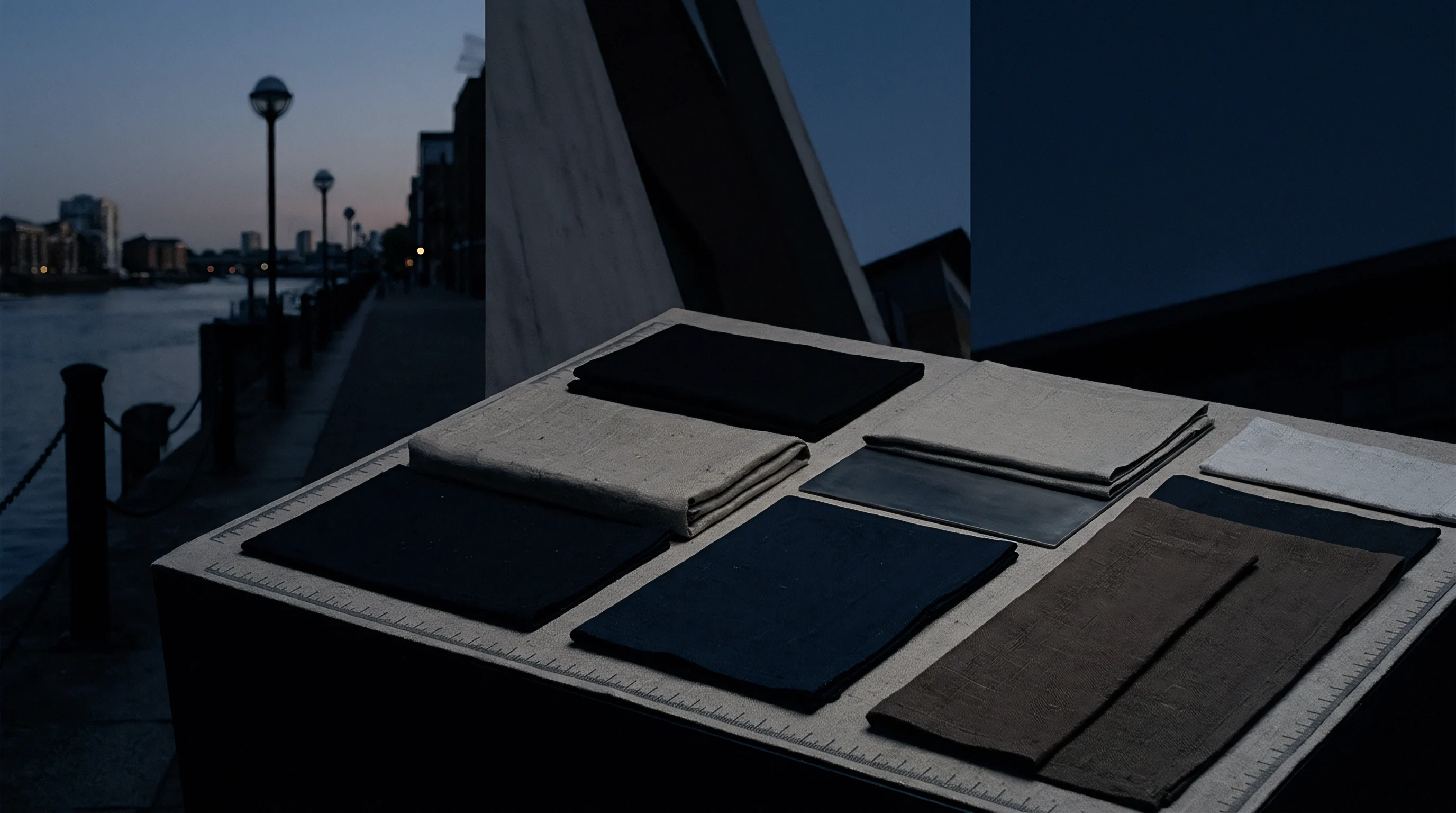
Short fiber inclusion introduces structural yield losses that amplify through subsequent wet spinning preparation. Scutched long line yields parallel fiber bundles averaging seventy to ninety centimeters in length with minimal epidermal bark. Hackling tow and scutching tow consist of short fragments ranging from four to fifteen centimeters carrying high concentrations of coarse shive, residual cuticular waxes, and non-cellulosic encrustations.
Incorporating thirty percent tow into a declared long-line sliver destabilizes draft control in gill boxes. Short fibers lack the cohesion required to track smoothly between faller bars and drafting rollers without falling into suction flutes.
Carding and combing stages treat line and tow fibers differently. Long line sliver passes through spreading, drawing, and roving frames with mechanical fiber drop rates rarely exceeding seven percent. Tow requires intensive carding across revolving flat cards or roller-top units to break down coarse bundles.
Carding machines eject short fragments, epidermal flakes, and tangled neps as card waste. Adding tow into long-line batches increases card room fly and under-machine waste to twenty percent or higher. Third country mills blend low-cost tow to depress raw material costs, then charge the resulting mechanical fallout to the contracted long-line yield allowance.
Line fiber drafted without tow admixture generates minimal mechanical drop under gill fallers.
Short fibers drop under cards. Tow contains elevated shive. The physical geometry of the yarn shifts when tow enters the preparation stream.
Ring spinning spindles running pure long line maintain high rotational velocities with low end-break frequencies. Tow admixtures cause irregular mass distribution along the yarn axis, creating thin spots that break under spinning tension. Every roving break forces the operator to piece ends, producing waste yarn that drops into collection troughs.
Mills invoice the customer for the full mass of consumed long line roving while concealing the fact that tow contamination drove break frequencies past acceptable industrial parameters.

Is Alkaline Degumming Loss Separable from Tow Carding Waste?
Chemical analysis of mechanical waste deposits provides clear verification of tow substitution. Pure long line hackling waste contains less than two percent woody shive by dry mass. Waste collected beneath drawframes running tow admixtures exhibits shive percentages between six and twelve percent.
Testing laboratories use acid digestion under ASTM D584 standards to isolate lignified shive particles from cellulosic bast fibers. Identifying high lignin ratios in preparation room drop waste confirms that coarse tow was fed into the machinery, disproving supplier claims that mechanical losses arose from brittle European long line fiber.
| Fiber Category | Mean Length | Lignin Fraction | Carding Fall | Roving Break Loss |
|---|---|---|---|---|
| Scutched Long Line | 780 mm | 1.8 percent | 4.2 percent | 1.1 percent |
| Hackling Tow Grade 1 | 140 mm | 3.6 percent | 11.8 percent | 3.4 percent |
| Scutching Tow Mixed | 65 mm | 5.9 percent | 18.5 percent | 6.2 percent |
| Line and Tow 70:30 | 420 mm | 2.9 percent | 9.6 percent | 2.8 percent |
| Line and Tow 50:50 | 280 mm | 3.8 percent | 14.1 percent | 4.7 percent |
Fiber bundle length dictates drafting stability across drawing passages. Inserting short tow fragments into wet spinning roving packages creates structural weak points that dissolve into slubs during hot water trough immersion. The wet spinning frame softens inter-fiber pectin matrices using hot water baths maintained at sixty-five degrees Celsius.
Long line fibers slide smoothly under drafting rollers without breaking bundle continuity. Short tow fibers wash out into the trough water, accumulating as sticky cellulosic sludge at the bottom of the spinning trough. Clean long line lots leave minimal trough deposit.
Heavy sludge accumulations confirm extensive tow adulteration.
Boil
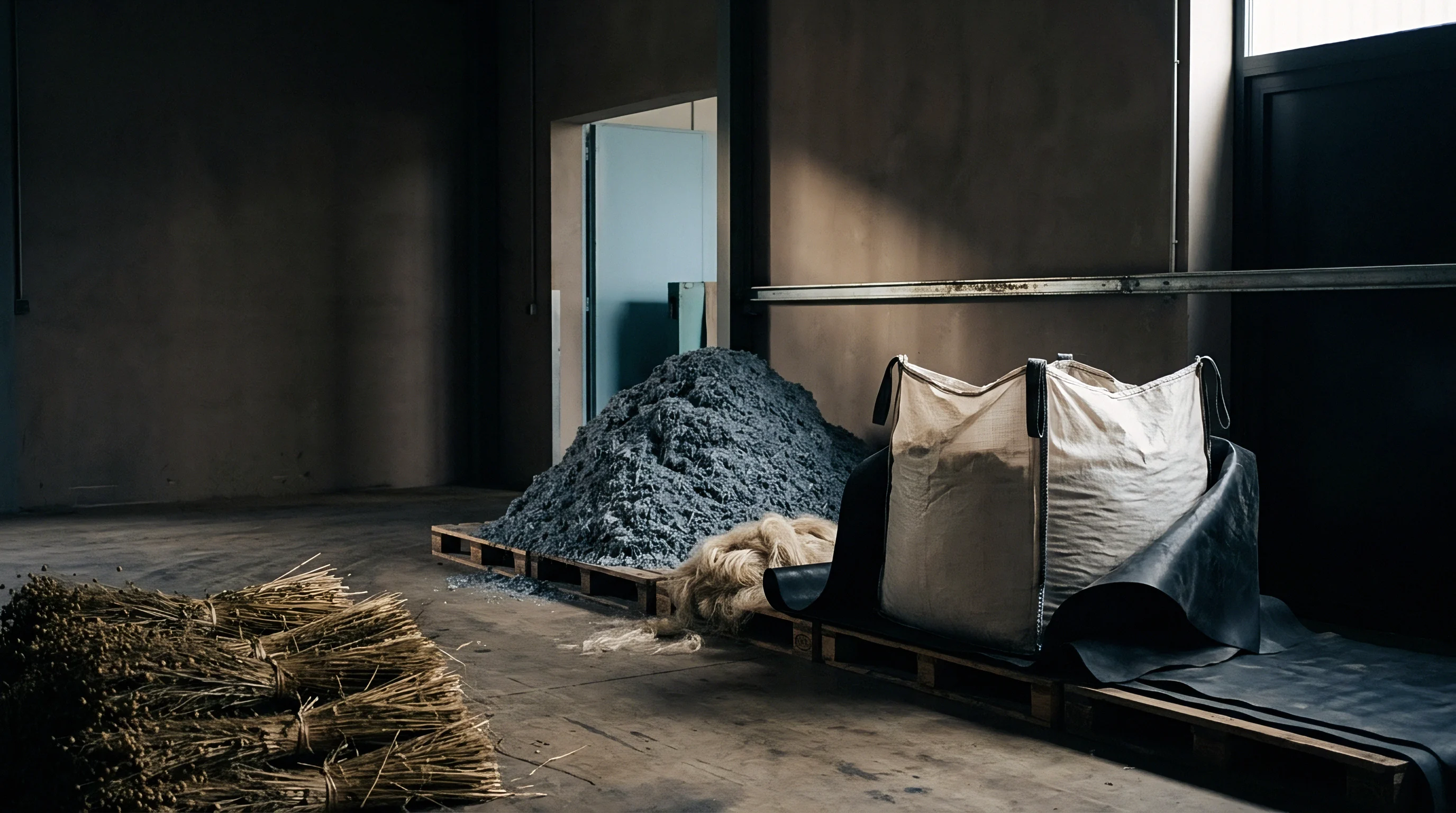
Subcontracted wet processing facilities execute chemical transformations that alter the dry mass of grey bast textiles. Grey linen woven from wet-spun yarns contains significant quantities of natural impurities alongside applied weaving sizes. Native flax comprises seventy to seventy-five percent cellulose, with the remainder consisting of pectins, hemicelluloses, lignin, natural waxes, and mineral ash.
Weaving preparation introduces potato starch, polyvinyl alcohol, or acrylic sizing agents that add four to eight percent dry weight to warp yarns. Commission dyehouses strip these sizing polymers and extract non-cellulosic encrustations using aggressive chemical boil-off sequences.
Caustic scouring represents the most destructive stage regarding physical mass loss. Subcontract finishers charge kier boilers or continuous rope washers with sodium hydroxide solutions at concentrations between twenty and forty grams per liter at temperatures exceeding one hundred degrees Celsius. Hot alkaline liquors hydrolyze ester linkages in pectin macromolecules, solubilizing them into polygalacturonic acid sodium salts.
The liquor strips intercellular gummy matrices that cement ultimate fiber cells together within the bast bundle. Pure long line linen loses eight to eleven percent of its greige dry mass during hot scouring. Tow-heavy textiles lose fourteen to nineteen percent due to the elevated surface area and higher initial pectin concentration of short tow filaments.
Alkaline extraction under standard industrial parameters strips twelve percent dry weight from pure long line textiles while dissolving eighteen percent from tow-rich constructions.
Pectins dissolve in hot alkali. Hemicellulose strips out under heat. When subcontracted finishers execute boiling without strict time, temperature, and concentration controls, cellulose chains undergo hydrolytic scission.
Subcontracted dyehouses operate under tight scheduling pressures, often compensating for shortened dwell times by raising caustic concentrations and bath temperatures. This uncontrolled processing degrades low-molecular-weight cellulose fractions, flushing them down the drain as soluble oxycellulose. The mill records this dissolved mass as normal scouring loss, leaving the foreign brand to absorb an inflated yardage shrinkage figure on the final invoice.
- Enzymatic Desizing Failure leaves residual synthetic size on yarn exteriors, skewing initial dry mass measurements prior to alkaline boiling.
- High Temperature Scouring Degradation attacks amorphous cellulose domains, stripping five percent more fiber substance than controlled low-temperature treatments.
- Hydrogen Peroxide Over-Bleaching cleaves primary cell wall cellulose through uncontrolled hydroxyl radical generation in unbuffered alkaline baths.
- Acid Demineralization Leaching dissolves structural calcium and magnesium pectate complexes, reducing total dry mass without improving whiteness.
- Effluent Mass Accounting Evasion obscures the real balance between dissolved natural impurities and hydrolyzed textile cellulose.
Subcontract wet processors rarely run separate bath recipes for line goods and tow-containing textiles. Operating personnel run continuous open-width bleaching ranges with uniform chemical feed rates regardless of fiber provenance. When tow-blended textiles enter a caustic bath formulated for clean long line linen, the high chemical concentration strips away excessive tow mass.
The resulting finished linen emerges with lower tensile strength, thinner handle, and an unbudgeted finished weight deficit. The subcontract finisher bills the commission client for full processing fees based on incoming greige kilograms, while returning finished yardage that falls short of technical contract expectations.
| Processing Phase | Bath Chemistry | Temperature | Pure Line Loss | Tow 40% Loss |
|---|---|---|---|---|
| Water Pre-Wash | Surfactant 1 g/L | 60 °C | 1.2 percent | 2.1 percent |
| Enzymatic Desize | Amylase 2 g/L | 70 °C | 3.5 percent | 4.8 percent |
| Caustic Scour | NaOH 30 g/L | 100 °C | 7.8 percent | 12.4 percent |
| Peroxide Bleach | H2O2 8 g/L | 95 °C | 2.4 percent | 3.9 percent |
| Acetic Acid Sour | CH3COOH 2 g/L | 40 °C | 0.5 percent | 0.9 percent |
| Values represent cumulative dry mass loss percentages verified by laboratory gravimetric analysis following sequential rinsing and drying. | ||||
Failure to quantify chemical extraction losses against raw fiber input leads directly to unrecoverable margin erosion across offshore garment manufacturing programs.


Slub
Yarn defects, spinning slubs, and structural unevenness introduce mechanical waste during warp preparation and weaving operations. Greige linen weaving requires sizing applications to protect low-elongation flax yarns from abrasive friction against loom reeds and heddle eyes. Pure long line yarns possess smooth surfaces with low hairy projection counts, picking up uniform size films that rinse away completely during desizing.
Tow yarns feature irregular diameters, protruding fiber ends, and thick slub formations that absorb uneven amounts of sizing liquor.
Thick slubs retain dense sizing deposits that resist standard desizing baths. During weaving, oversized slubs strike drop wires and reed dents, generating warp yarn breaks. Each warp stop creates loom downtime and produces defective fabric strips that weavers cut away as loom waste.
In commission weaving operations, mills assign high waste allowances of five to eight percent to account for warp breaks. In pure long line production, warp waste remains below two percent. Weavers blend low-grade tow into warp systems to maximize yarn margin, later attributing the resulting loom stops to poor sizing quality or climatic variations in third country weaving sheds.
Dry spinning yields rougher yarn. Yarn count shifts with humidity. The structural unevenness of tow-admixed yarns manifests as widespread linear density variation across finished bolts.
Finished cloth weights fluctuate between bolt headers and bolt centers when spinning mills fail to control tow distributions during drawing sliver preparation. When commission processors run these goods through tentering and sanforizing ranges, high mechanical tensions stretch thin yarn sections while tearing thick slub zones. Tentering waste escalates as operators trim torn selvages, discarding metres of cloth that disappear from client production ledgers.
Whose Moisture Standard Controls Commission Finishing Invoices?
Contractual reconciliation between third country spinning mills, commission finishing houses, and overseas buyers depends upon establishing enforceable testing protocols. Subcontract finishing plants operate under tolling agreements that charge customers on incoming greige weight rather than delivered dry meters. Finishers routinely take advantage of moisture regain discrepancies by weighing incoming dry winter cloth, processing the yardage, and then packaging finished bolts at artificially elevated moisture regain levels.
By dispatching linen bolts wrapped in sealed polyethylene with moisture contents exceeding fourteen percent, the finisher masks real chemical fiber loss while billing for full finished poundage.
- Certified Desizing Tolerances state exact dry-to-dry mass retention benchmarks across standard enzymatic treatment sequences.
- Standard Oven-Drying Verification establishes net finished mass through standardized gravimetric testing of representative bolt swatches.
- Loom Waste Allocation Thresholds restrict acceptable warp and filling scrap allowances to two percent for specified long line grades.
- Tensile Strength Verification Metrics identify chemical degradation through standardized grab break tests conducted across warp and weft directions.
Clear toll processing agreements eliminate moisture gaming by binding invoicing to absolute oven-dry mass plus official international commercial regain under ISO 6741-1. The contractual term reads: Finished piece weight settlements shall be calculated exclusively on oven-dry mass verified by laboratory swatch testing plus official commercial regain of twelve percent, invalidating any gross shipping weight measurements recorded under variable atmospheric factory humidity.

Tally
Reconciling yield loss disputes demands systematic tracing of dry cellulose mass across the entire subcontracting circuit. Raw fiber inputs, spinning wastes, wet processing boil-off rates, and finished fabric deliveries form a closed mass-balance loop. When discrepancies arise, buyers must audit the chain of custody between the primary spinner and external processing subcontractors.
Subcontract finishing facilities often lack formal chain-of-custody accreditations, creating documentation gaps where physical substitution occurs undetected. A rigorous audit maps every kilogram of scutched flax from the initial port arrival weighbridge ticket through the final finished textile packing slip.
Discrepancies in delivered finished yardage trace directly to undocumented tow additions at the spinning frame combined with excessive chemical scouring losses at the subcontract dyehouse. In a standard production scenario starting with 10,000 kilograms of certified European scutched line flax, an honest long-line process yields approximately 7,800 kilograms of finished bleached linen cloth after accounting for legitimate mechanical hackling drop (ten percent), roving spinning waste (three percent), weaving preparation scrap (two percent), and controlled chemical boil-off (seven percent). When a third country mill incorporates thirty percent low-grade tow, finished output drops to 6,400 kilograms.
This gap generates financial friction.
The spinning mill frequently hides this 1,400-kilogram deficit by submitting inflated waste declarations from the subcontract finishing plant. Dyehouse invoices report exaggerated boiling losses, claiming that low-grade European crop conditions required extra caustic boiling to achieve client whiteness standards. Without independent laboratory verification of incoming greige composition, the buyer cannot disprove the mill’s explanation.
The commission dyer billings differ. Invoiced weight often exceeds dry mass. Quantitative chemical testing using formic acid and zinc chloride dissolution methods isolates pure cellulose content, revealing whether delivered goods reflect the declared input quality.
Verification audits confirm that third country processing chains leak value whenever subcontract finishing agreements lack clear gravimetric accountability. Traceability protocols that track transaction certificates across corporate entities frequently fail to audit physical mass balances within commission finishing plants. A paper transaction certificate confirms that certified fiber entered a mill gate.
It provides zero protection against fiber substitution during unmonitored spinning operations or mass destruction during subcontracted caustic boiling. Settling yield loss claims requires structural auditing of machine-level waste logs, chemical bath parameters, and conditioned laboratory weighings across every transition point.
Process yield reconciliation stands as a physical mass verification challenge rather than a paperwork administration exercise. Whether international certification schemes will evolve to mandate continuous, mass-spectrometric or chemical marker tracking across commission wet processing operations remains an unanswered operational dilemma.