Purification Stage
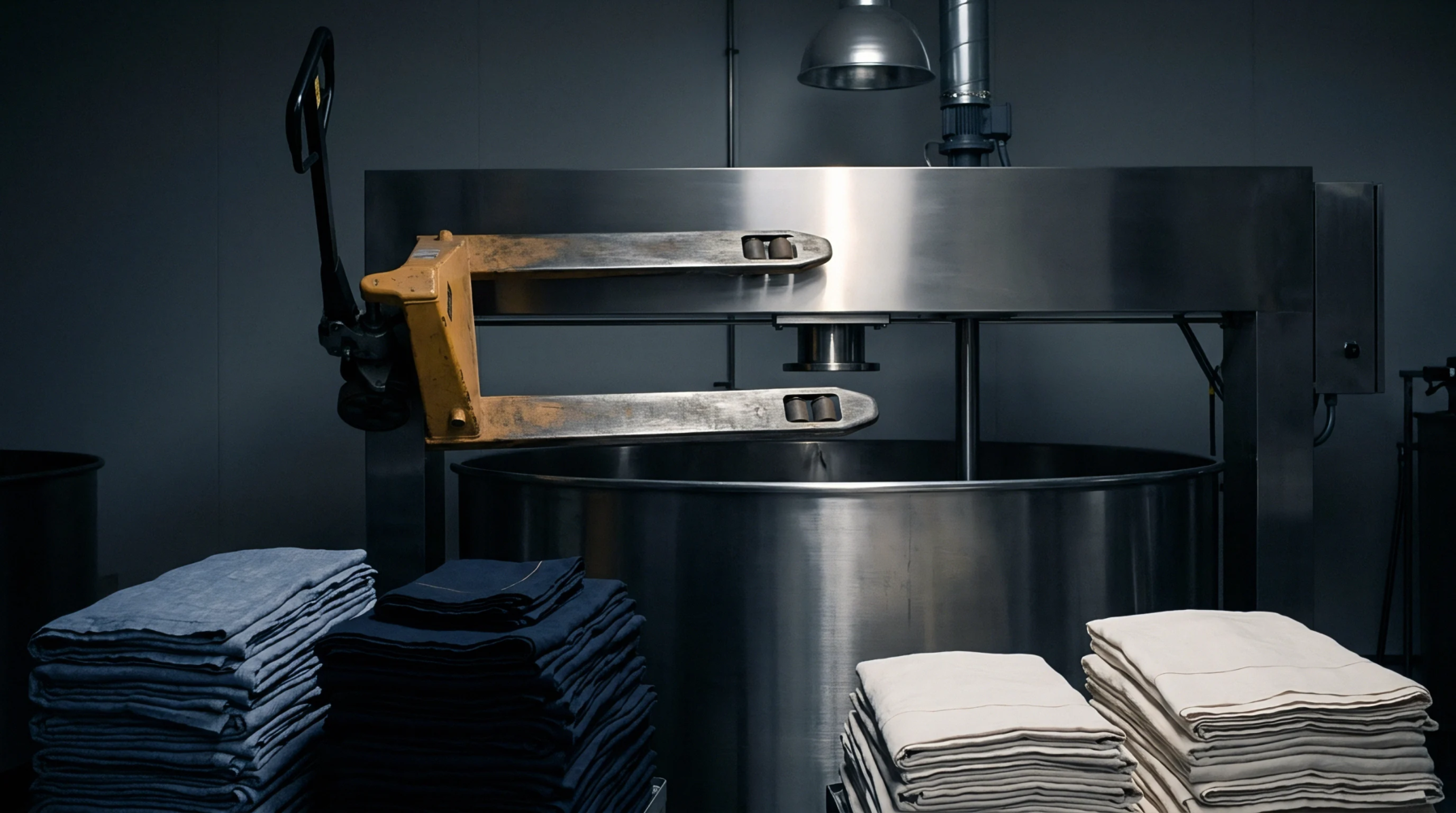
Wet chemical pretreatment of raw bast fibers removes non-cellulosic impurities to prepare the material for spinning and dyeing. Industrial flax scouring uses hot alkaline solutions to extract natural waxes and hemicelluloses from the fiber bundles. This extraction increases the absorbency of the linen yarn and ensures uniform dye uptake in subsequent finishing steps.
The process terminates when the residual wax content reaches the target threshold specified by the spinning mill.
Processing Protocol
Standardized washing parameters regulate chemical concentrations and temperature profiles to preserve the structural integrity of the cellulose. For coarse tow and fine line fibers, flax scouring demands careful control of sodium hydroxide levels to avoid degrading the primary fiber walls. Process technicians measure bath alkalinity and treatment duration to ensure consistent cleaning across different fiber batches.
This mechanical control prevents over-processing which leads to fiber weakening and excessive waste during carding. Spinners record these variables in production logs to maintain batch-to-batch consistency and trace any downstream spinning failures to bath deviations, allowing immediate adjustment of chemical dosing systems.
Yield Influence
Material loss occurs during the removal of non-cellulosic substances, directly affecting the final weight of the processed fiber batch. High-intensity flax scouring reduces total fiber mass while yielding a softer fiber bundle. This loss must be calculated to balance the softness demanded by buyers against the financial yield of the spinning plant.
Spinners optimize this trade-off to meet quality benchmarks at minimum cost.