Standard Testing Methods for Determining Woven Fabric Linear Density
Standard woven linear density testing reconciles cloth mass per linear metre with desized, straightened yarn tex under controlled humidity.
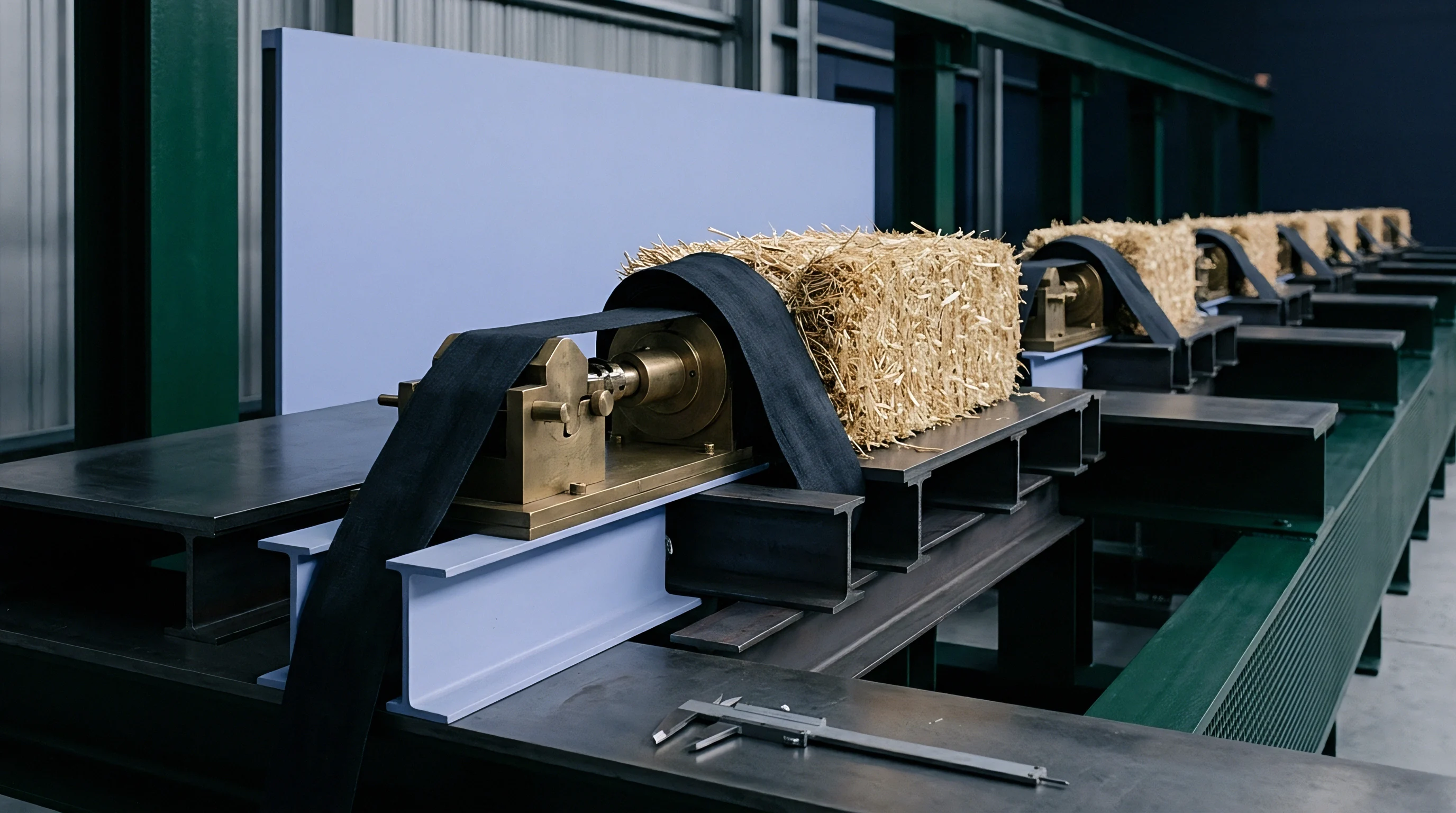
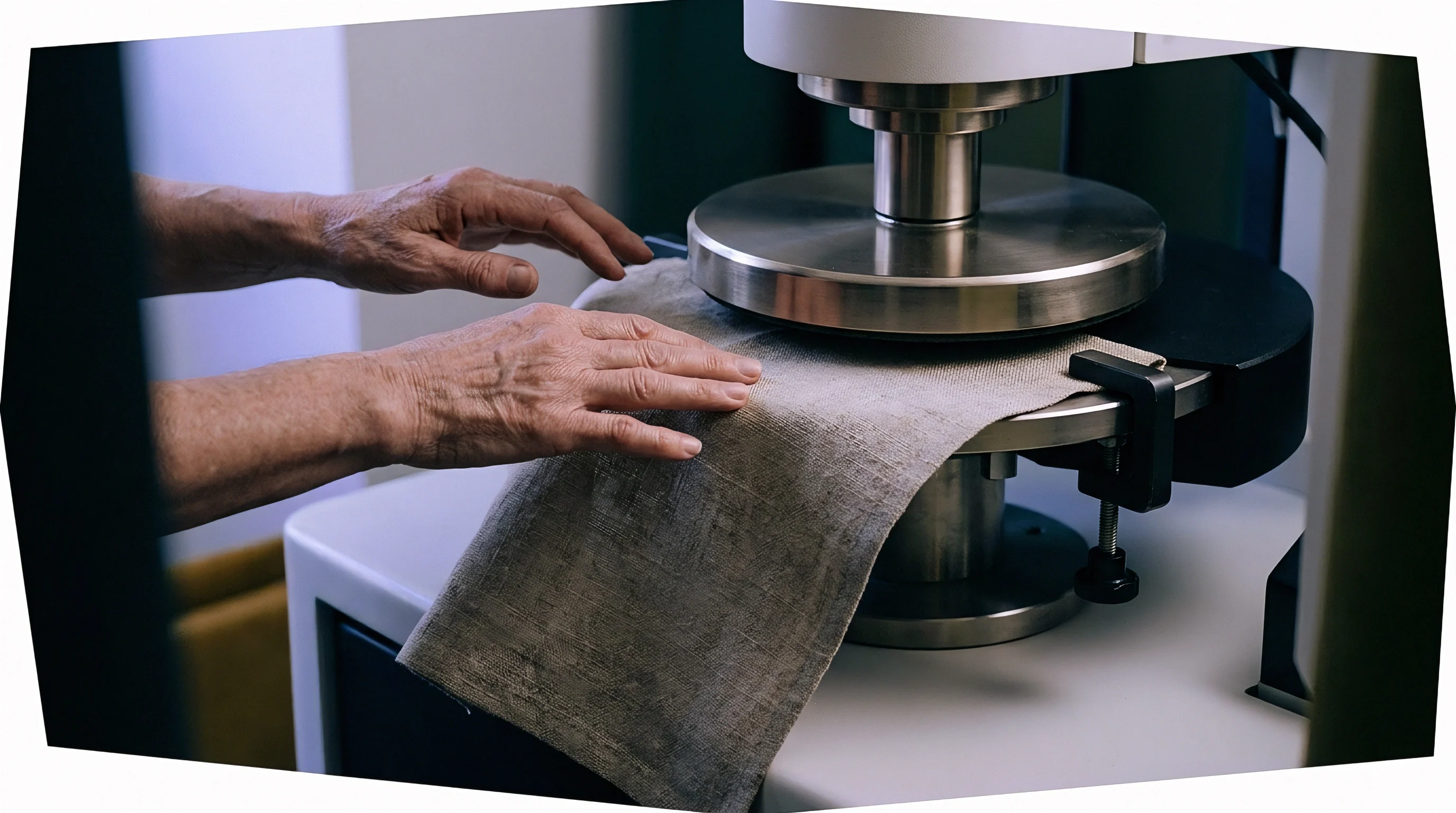
Specimen
Incoming inspection frames can run rolls past optical sensors at thirty metres per minute, but benchtop verification of linear density only begins once the lot stops moving. Fabric mass per unit length controls finishing uptake, cutting-room yields, and customs declarations, so testing demands clean swatches brought to standard equilibrium. Both ISO 3801 and ASTM D3776 call for full-width sample extraction and discard the first full metre of the roll to bypass winding tension from the take-up heads.
Because greige goods absorb moisture readily, uncontrolled ambient air shifts scale readings before shears ever touch the piece.
Controlled conditioning levels out disputed lots. ISO 139 sets the test atmosphere at twenty degrees Celsius and sixty-five percent relative humidity, while ASTM D1776 allows twenty-one degrees Celsius at that same humidity, both holding a two percent tolerance window. Swatches remain in the chamber until weighings spaced two hours apart show less than a tenth of one percent shift in mass.
Skipping this step generates discrepancies over four percent on hygroscopic bast fibers like flax or hemp, which draw ambient vapor until internal equilibrium stabilizes.
- Sample excision proceeds across the full usable width of the roll, cutting perpendicular to the selvedge at least one metre inward from either roll end.
- Specimen trimming removes protective selvedges when calculating bare body mass, utilizing template dies calibrated to three decimal places.
- Equilibrium stabilization suspends individual cut pieces on perforated stainless steel racks inside the conditioned room for twenty-four hours.
- Gravimetric verification logs conditioned weights on analytical scales reading to a precision of one milligram.
Cutting geometry determines how reliable the numbers turn out. Circular four-blade cutters take quick swatches of one-hundred square centimetres, but their arced travel clips diagonal yarn ends along twill lines, shedding loose filament fragments that corrupt the tare. Rectangular swatches cut fifty centimetres along the warp yield far more dependable linear mass figures.
These broad strips span the density profile from edge to center, capturing reed draw variations and fluctuating pick tension across projectile or rapier looms.
Warp sizing also inflates greige linear density. Potato starches, polyvinyl alcohol, and acrylic binders shield warp ends from friction across heald frames and reed dents during shed changes, adding between three and twelve percent dry weight to raw cloth. Isolating the real structural mass requires wet desizing under ISO 1833, stripping water-soluble polymers in enzymatic baths or neutral detergent washes before recording baseline mass.
Unwashed greige samples reflect chemical size add-on rather than true yarn yield.
Field verification succeeds when samples reflect the stable equilibrium of the production lot rather than the microclimate of the shipping container.

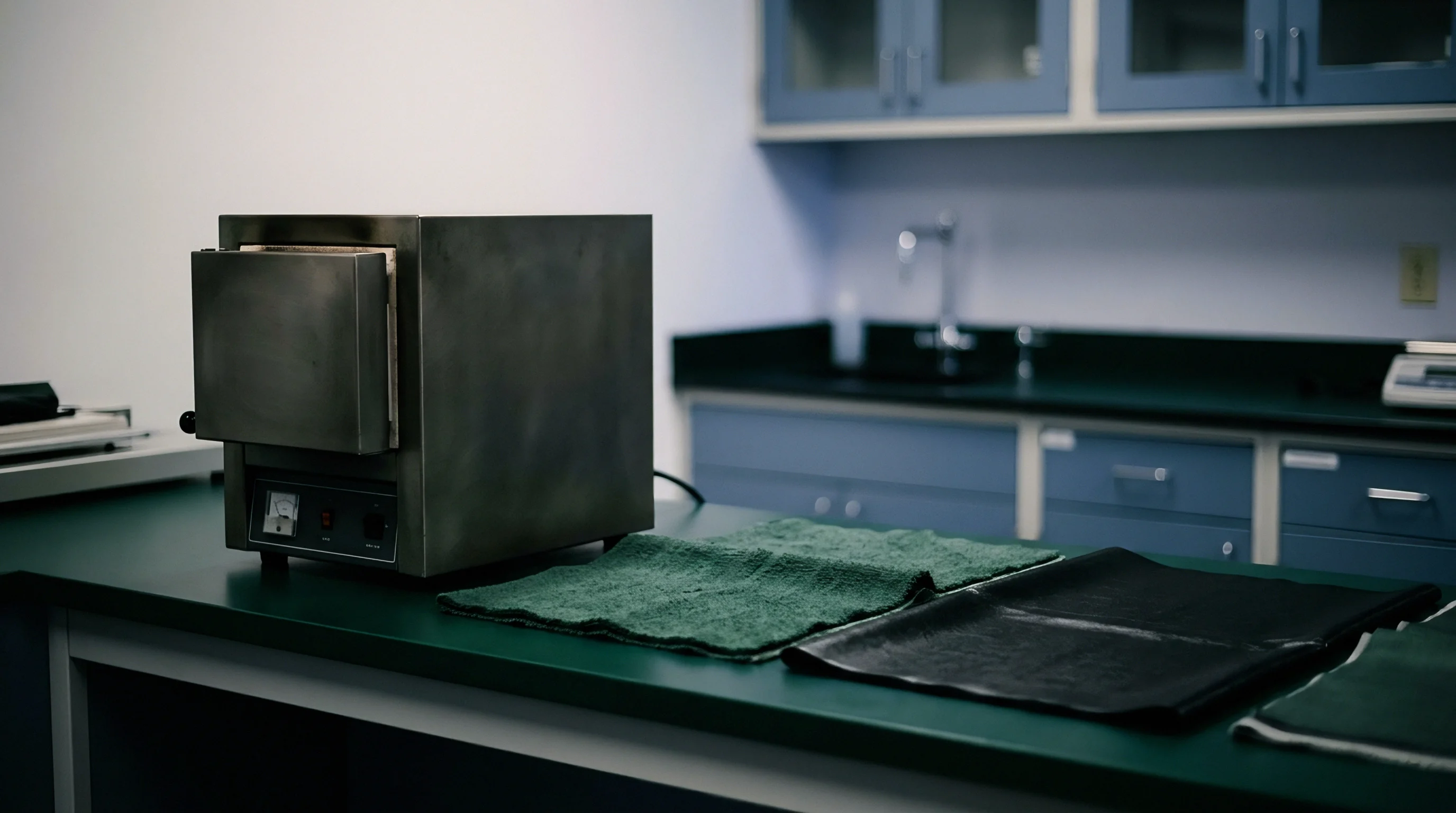
Tension
Isolating yarn linear density from woven cloth runs straight into yarn crimp. Warp and weft do not sit flat in the weave; they bend around orthogonal yarns, shortening their straight reach relative to the cut boundary. Under ISO 7211-3 and ISO 7211-5, technicians unpick these strands and straighten them under a designated pretension.
Slack loads leave crimp waves in the fiber, while excessive pull draws out the bundle and skews the calculated count artificially light.
Under ISO 7211-3, technicians apply a straightening pretension of 0.5 centinewtons per tex with an allowable variance of ten percent.
Setting this pretension demands care. Spun yarns of short flax fibers slip internally past their mechanical yield point, while continuous filaments extend elastically and distort the denier or dtex calculation. Standard balances use counterweighted arms or motorized load cells to exert force matched to nominal count.
When analyzing unknown yarns, technicians work iteratively: apply an estimated load, measure straightened length, derive an interim tex, and reload fresh strands under the corrected tension.
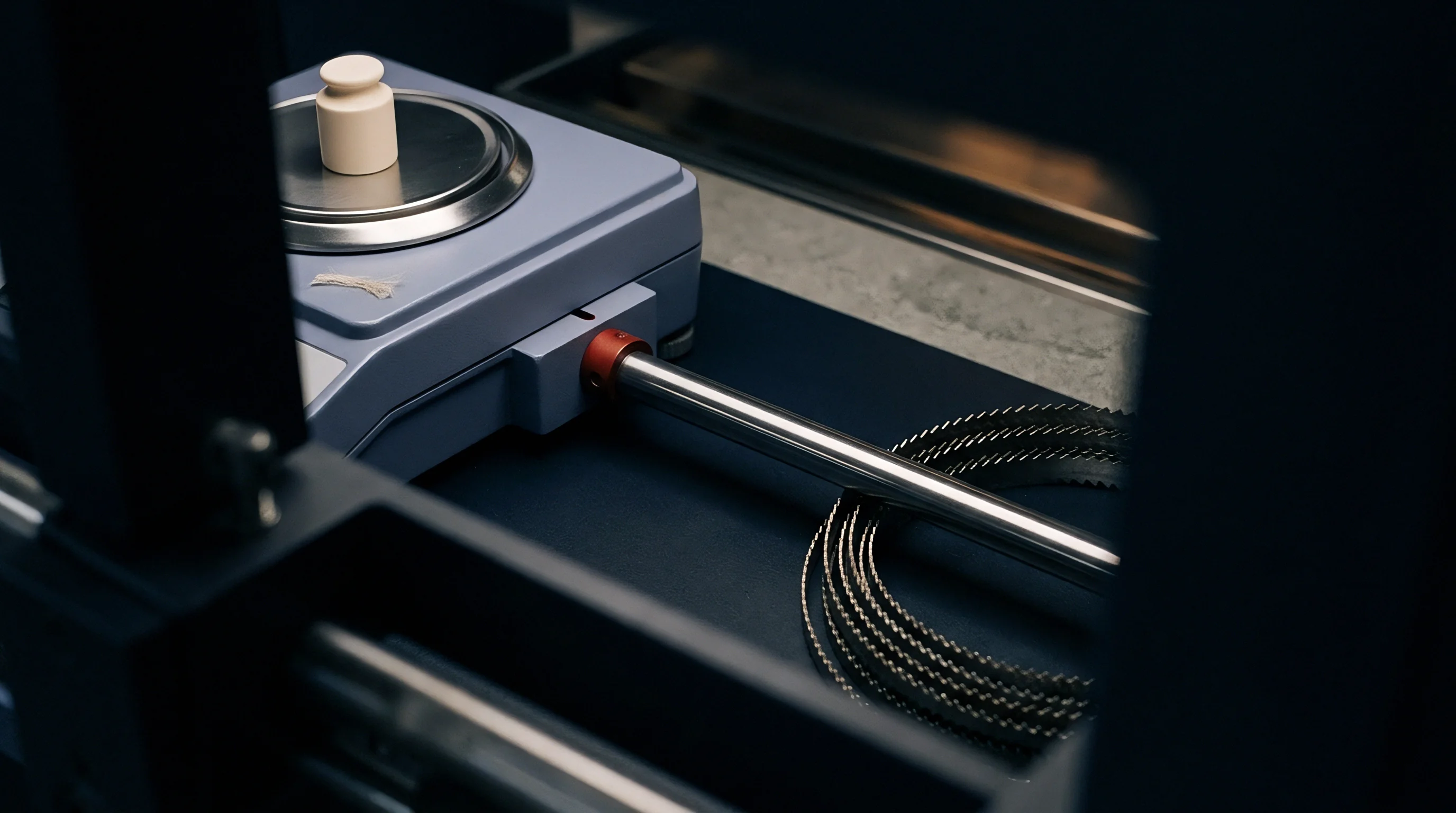
Does Pretension Bias Measured Yarn Tex?
Applied mechanical load alters calculated yarn count directly by expanding the recorded length divisor. In the metric tex system, linear density represents the mass in grams of one thousand metres of straightened yarn. If an operator stretches a crimped hundred-millimetre strand to one hundred and eight millimetres under heavy clamping load, the calculated mass per unit length drops eight percent.
That overextension turns a nominal twenty-tex yarn into an apparent eighteen-point-five tex reading, prompting auditors to suspect shorted fiber when the flaw sits in gauge calibration.
| Standard Designation | Specimen Dimension | Pretension Setting | Primary Metric | Measurement Target |
|---|---|---|---|---|
| ISO 7211-3 | 500 mm strip | 0.5 cN/tex | Crimp percentage | Warp and weft take-up |
| ISO 7211-5 | Selected strands | 0.5 cN/tex | Direct tex (g/km) | Removed yarn linear density |
| ASTM D1059 | Short length swatches | Specified clamp load | Yarn number (Ne, tex) | Dissected yarn linear count |
| ISO 3801 Method A | Full piece length | Zero clamp load | Grams per linear metre | Bulk rolled material mass |
| ASTM D3776 Option B | Full roll width sample | Zero clamp load | Linear yard weight | Commercial yardage mass |
Jaw mechanics introduce their own errors. Pneumatic clamps lined with vulcanized rubber spread force across fine yarns without jaw-edge shearing. Serrated steel clamps pinch dry linen, crushing surface filaments until strands part prematurely.
Modern crimp units use non-contact optical sensors to follow yarn extension as stepping servomotors draw the carriage at twenty millimetres per minute; pulling strands by hand introduces sudden dynamic shock loads that invalidate the sample run.
Whether testing laboratories can harmonize crimp pretension limits for low-twist slub yarns without creating artificial elongation remains unresolved across international standardization working groups.
Mass
Fabric linear density measures total mass per unit of running length, recorded as grams per linear metre, distinct from area density in grams per square metre. Linear mass links construction metrics to production output, tying reed width, pick density, and selvedge trim directly to invoiced yardage. For full-bolt checks, ISO 3801 Method A weighs the continuous roll on calibrated floor platform scales and divides that mass by the measured, tensionless piece length.
A contract line specifying ISO 3801 Method B obligates the testing laboratory to report total roll weight minus moisture allowance adjustments.
Shifting between area density and linear density depends strictly on usable fabric width. A plain weave weighing three hundred grams per square metre with a trimmed width of one hundred and fifty centimetres delivers four hundred and fifty grams per linear metre. Edge cuts, stentering spread, or reed necking immediately alter that relation.
Because width shrinkage concentrates fabric mass, finishing treatments that shrink greige goods from one hundred and sixty centimetres down to one hundred and forty centimetres leave linear density intact while area density rises.
Regain variations regularly spark commercial disputes. Dry cellulosic fibers take up atmospheric moisture up to twelve percent of their dry weight, which is why ISO 3801 allows calculating linear density from oven-dry mass adjusted by agreed commercial regain allowances. An unconditioned testing room in a humid plant can record an artificially heavy linear weight during wet weather, triggering invoicing penalties against a spinner whose nominal yarn delivery actually met specification.
- Width verification measures usable cloth width excluding pin-tenter holes and heavy auxiliary selvedges.
- Oven drying cycles bake swatches at one hundred and five degrees Celsius until mass stabilization confirms absolute dry state.
- Commercial allowance applies agreed regain percentages back to the bone-dry mass before computing landed linear density.
- Length measurement verifies unstressed piece run using flatbed inspection tables without roll-feed pulling tension.
Failing to account for atmospheric regain shifts the recorded weight across container shipments, triggering customs audits, rejected product dossiers, and contractual re-invoicing penalties across border checkpoints.


Dissection
Direct yarn dissection confirms whether the loom shed was dressed with the contracted warp and weft counts. Following ISO 7211-5, technicians fringe the perimeter of a conditioned fifty-centimetre square swatch, drawing single yarns out with angled needles onto a velvet mounting board to stop air currents from blowing them away. Rough handling snaps brittle fibers during separation, dropping fragments before they ever hit the weighing dish.

Is Desizing Mandatory Prior Weighing?
Unwashed yarns pulled straight from loom-state greige carry sizes, winding oils, and waxes that skew linear density readings high. Warp strands hold polyvinyl alcohol and modified starches to handle heald friction, while weft yarns pick up paraffin and lubricants across tensioners. Running fifty thousand metres of tight canvas deposits hundred-kilogram chemical loads across the warp sheet.
Scouring yarns in standard enzymatic baths strips those coatings down to bare fiber before weighing.
| Yarn System | Extracted Count (tex) | Crimp Take-Up (%) | Construction Sett (ends/cm) | Structural Weight Contribution (g/m) |
|---|---|---|---|---|
| Warp (Greige) | 42.5 | 7.2 | 22.0 | 100.2 |
| Warp (Scoured) | 38.2 | 7.2 | 22.0 | 90.1 |
| Weft (Greige) | 40.0 | 3.5 | 20.0 | 82.8 |
| Weft (Scoured) | 39.1 | 3.5 | 20.0 | 80.9 |
Unpicking dense jacquards or hard-beaten plain structures takes patience. Strands clamped hard at intersections shred under dissecting points, and unboiled flax splits into technical fibrils when needle friction strips away pectin binders. Technicians bundle fifty warp and fifty weft strands inside tared pans to weigh them collectively; weighing short single cuts magnifies scale rounding errors beyond the actual mill count variation.
A coarse yarn count extracted with broken filament ends inevitably registers lighter than the nominal spinning draft.
- Fiber breakage splits strands when dissecting needles pull cross-overs without sufficient fringe release.
- Static attraction scatters short filament debris away from glass weighing vessels during dry winter conditions.
- Incomplete size extraction leaves polymer coatings adhered to fiber surfaces, skewing conditioned counts toward coarse tiers.
- Twist migration untwists staple fiber bundles during manual extraction, expanding the yarn profile under gauge clamps.
Dissected weights showing fine counts across the central fabric body frequently clash with assertions that spinning count variances remain inside allowable trade tolerances.

Invoice
Linear density links loom capacity directly to final billing. Weaving sheds quote production on pick rates and operating speed, but contracts settle on delivered running metres. When a buyer orders five thousand metres of two-hundred-and-eighty-gram-per-linear-metre fabric, the mill commits a matching mass of spun fiber.
If the yarn runs three percent fine, the finished goods miss target weight, risking rejection over poor handfeel or inadequate insulation. If the yarn runs coarse, the mill gives away raw fiber without payment.
Commercial acceptance clauses outline how to handle linear mass variations. Purchase orders routinely reference ASTM D3776 or ISO 3801 benchmarks, allowing a three to five percent tolerance window for crop differences and warehouse humidity swings. Variances beyond five percent prompt re-invoicing against actual fiber delivered.
Certified lab reports also provide legal backing during tariff disputes, where customs authorities classify goods as industrial duck or light apparel fabrics based on grams per linear metre.
Clean contracts bind settlement to conditioned mass tested under ISO 3801 rather than raw dock delivery weights.
Loom time dictates price: when a weaver must pack extra picks per centimetre to offset fine yarn and hit running weight, output drops. An air-jet loom running eight hundred picks per minute at twenty-four picks per centimetre delivers thirty-three point three centimetres of cloth each minute. Raising that sett to twenty-six picks per centimetre to salvage an underweight lot drops throughput to thirty point seven centimetres per minute, adding forty-two loom hours across a ten-thousand-metre order.
Commercial contracts stipulate that when certified linear density falls more than four percent below specified contract limits under ISO 3801 Method A, the buyer receives a prorated rebate equivalent to the missing yarn mass.