European Flax Fiber Import Verification Procedures for Third Country Spinners
European Flax yarn import verification requires matched scope certificates, lot-tied transaction certificates, and audited mass-balance yield calculations.

Scope
Qualifying third-country yarn spinners under Western European linen traceability frameworks demands strict separation between raw material provenance and manufacturing location. Western European cultivation producing scutcher fiber operates under the governance of the Alliance for European Flax-Linen & Hemp. While downstream spinning facilities operating outside the European Union cannot qualify for Masters of Linen status, these mills qualify to spin certified fiber provided every physical transfer maintains continuous chain of custody documentation.

European Flax Standards and Scheme Boundaries
The primary governing specification allows raw fiber grown in France, Belgium, or the Netherlands to enter processing plants in Asian or South American jurisdictions without losing certified status. Third-country yarn manufacturers receive, process, and re-export this raw material under clear operational boundaries. Scope certificates expire annually.
Processing rules state that every entity buying, storing, spinning, or selling certified raw fiber or yarn holds an active qualification issued by an accredited auditing agency under ISO 17065 principles.
The European Flax standard mandates that every intermediary in the spinning supply chain maintains an active scope certificate issued by an accredited ISO 17065 certification body.
Certification status rests on dual documentary legs. First, the facility qualification verifies operational capability, inventory segregation infrastructure, and administrative controls. Second, shipment tracking documents record the movement of precise physical fiber volumes between qualified sellers and buyers.
Missing either leg breaks the traceability chain, turning certified raw material into generic fiber under international customs and commercial trade rules.

Scope Certificates versus Transaction Certificates
A manufacturing facility qualification remains valid for twelve months from the date of issue. That document names the spinning company, lists approved processing sites, states covered product categories, and references the applicable standard version. Facility qualifications alone do not prove that a specific shipment of yarn contains certified fiber.
Spinners often present valid facility documents while delivering yarn produced from non-certified raw stock.
Shipment validation requires an individual transfer document issued by an authorized certification body for every lot leaving the mill. Transaction certificates validate individual lots. Transfer documents state the seller, buyer, gross weight, net fiber weight, commercial invoice reference, and unique raw material batch codes.
Buyers matching incoming yarn deliveries against purchase orders inspect the transfer document to verify that the certified volume equals or exceeds the invoice quantity.
Standard contract clause 14.2 of the Alliance certification manual establishes that yarn delivered without a matching transaction certificate within sixty days of invoice date forfeits certified status and defaults to standard uncertified flax yarn rates.


Store
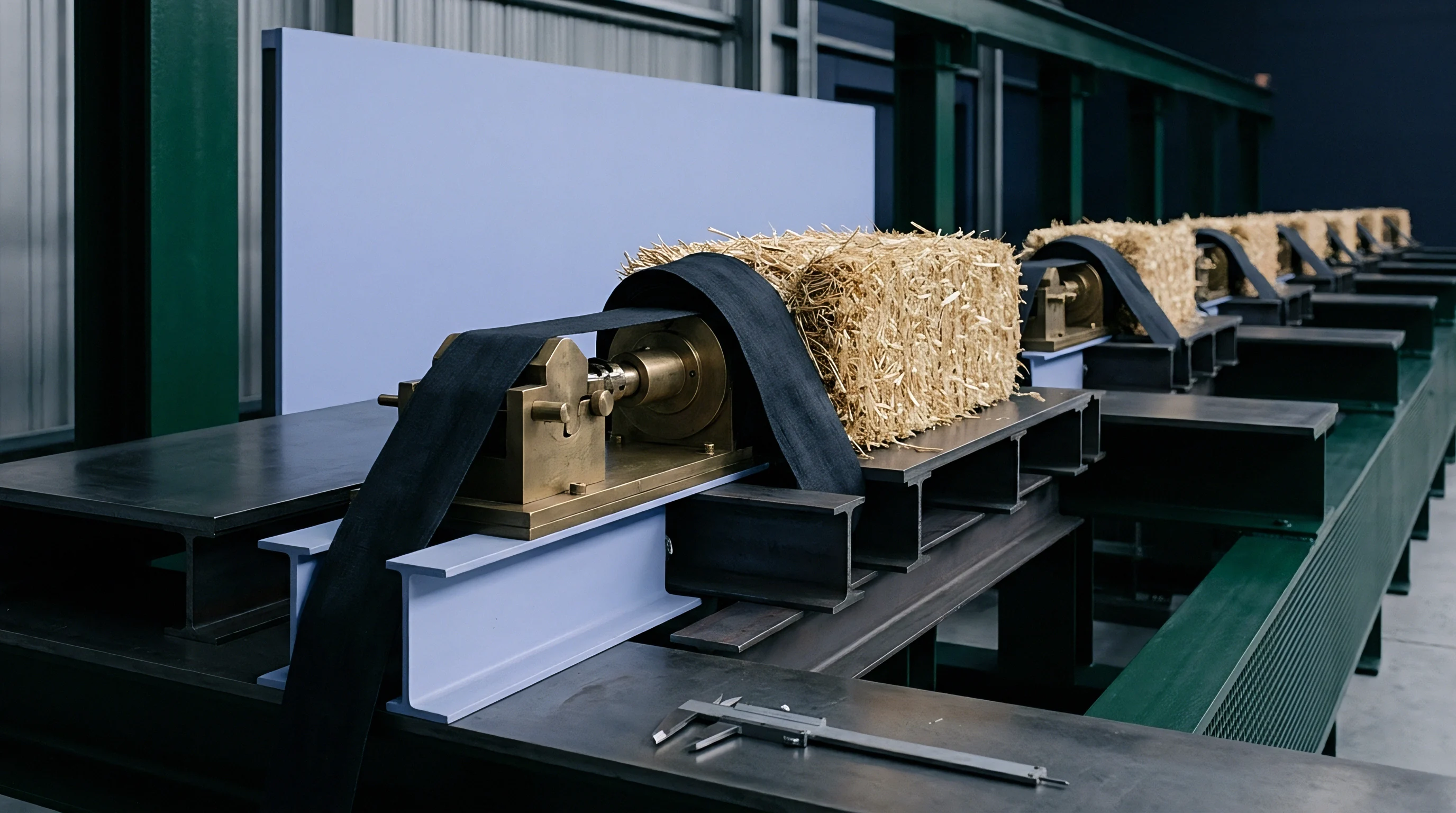
Receiving imported fiber at third-country spinning mills creates the primary physical audit point for provenance verification. Scutcher flax arrives packed in dense pressed bales, banded with steel strapping, and wrapped in protective covers. Verification procedures begin on the unloading dock before raw material enters general mill inventory.
Steel strapping secures incoming raw fiber bales.

Physical Intake and Scutcher Bale Tag Audits
Inspectors verify raw fiber batches by examining weather-proof identification cards attached directly to individual bale straps. Each official tag displays a scutching lot number, grower identification code, net weight, press date, and moisture reading at press time. Discrepancies between physical tag numbers and incoming shipping manifests indicate potential batch substitution or lot mixing during ocean transit.
Verification protocol dictates checking minimum sampling ratios across incoming container loads. Auditors select five percent of received bales for physical tag extraction, cross-referencing batch numbers against the seller transaction certificate. Weight discrepancies exceeding two percent trigger re-weighing of the entire shipment on calibrated weighbridges prior to customs clearance acceptance.
| Inspection Parameter | European Flax Standard Spec | Discrepancy Indicator | Audit Action |
|---|---|---|---|
| Bale Tag Format | Barcoded plastic tag with grower lot code | Paper sticker or missing barcode tag | Isolate lot and demand grower manifest |
| Fiber Moisture Level | 12.0% to 14.0% regain weight | Exceeding 16.0% moisture content | Reject weight and calculate dry weight adjustment |
| Bale Banding | High tensile steel or heavy polymer straps | Broken straps or double-band rewrapping | Inspect core fiber for moisture mold or mixing |
| Scutching Yield Mark | Standardized scutcher mill stamp | Faded, overwritten, or absent stamp | Cross-examine bill of lading against packing list |

Warehouse Segregation in High Volume Spinning Facilities
High capacity spinning plants handling both certified European fiber and uncertified regional flax isolate certified stock within dedicated inventory zones. Physical segregation prevents accidental blending during early mechanical processing steps such as carding, hackling, and combing. Facilities assign dedicated rack spaces, clearly painting floor boundary lines to delineate certified inventory.
Unlabeled bales indicate immediate risk.
Audit failures at third-country mill sites concentrate in specific operational areas during raw material intake and staging:
- Unlabeled bale clusters staged in receiving bays without batch tracking cards present high substitution risks during rapid shift changes.
- Shared bale opening lines running certified and non-certified fiber back-to-back without complete duct purging leave residual uncertified fiber in carding machinery.
- Missing weighbridge tickets for individual container loads make verification of actual landed raw fiber weights impossible during annual balance audits.
- Informal tow storage where combings and hackling waste accumulate in unassigned bins leads to untracked blending into coarser yarn lots.
When questioned about missing lot tags on raw fiber inventory, third-country mill managers routinely claim that moisture exposure during marine transport detached original labels, forcing warehouse staff to re-tag bales manually using local internal numbers.


Reconciliation
Mass balance accounting forms the mathematical core of yarn verification, balancing raw material intake against total output over a specified spinning window. Auditors track fiber weights entering hackling machines against spun yarn, saleable short fiber, and unrecoverable mill dust. Any facility declaring yarn production exceeding mathematically achievable yield limits faces immediate license revocation.

Fiber Loss Ratios in Wet and Dry Spinning Operations
Mechanical transformation converts long scutcher flax into fine spun yarns through multi-stage processing. Yield metrics differ significantly across processing techniques. Hackling aligns parallel fibers.
Carding removes tangled tow. Wet spinning operations submerge roving in hot water baths to soften pectin binders, allowing high drafting ratios that produce fine, smooth yarns. Wet spinning softened pectins extract easily.
Dry spinning bypasses hot water treatment, producing coarser yarns suitable for industrial textiles and heavy upholstery.
A wet spinning mill processing long scutcher flax yields approximately 68 percent spun yarn, requiring 1.47 kilograms of raw fiber for every kilogram of certified yarn produced.
Conversion metrics vary by equipment type. Wet spinning long flax fiber generates an average yarn conversion rate between 65 and 70 percent, with short tow waste accounting for 22 to 26 percent and unrecoverable dust or moisture loss representing the remaining volume. Dry spinning yields conversion rates ranging from 72 to 78 percent due to lower pectin extraction and reduced fiber breakage during drafting.

Worked Conversion Analysis for Long Flax Tow Lots
To demonstrate verification arithmetic, assume a Chinese spinning mill purchases a 20,000 kilogram lot of certified long scutcher flax under transaction certificate TC-EU-88492. The mill processes this lot into wet-spun Nm 26 yarn. Operational loss factors dictate expected material balances across processing stages.
Hackling converts the 20,000 kilograms of raw fiber into 13,600 kilograms of hackled long line flax and 5,200 kilograms of hackling tow. Unrecoverable hackling dust accounts for 1,200 kilograms. Preparation, drafting, and wet spinning of the 13,600 kilograms of hackled line fiber yield 12,240 kilograms of finished yarn package weight, with 1,360 kilograms lost to spinning waste and bath solids.
The auditor verifies that transaction certificates issued for downstream yarn sales against lot TC-EU-88492 do not exceed 12,240 kilograms of fine yarn and 5,200 kilograms of secondary certified tow yarn. If yarn sales invoices claim 14,500 kilograms of certified Nm 26 yarn from this single raw fiber lot, the mill has blended 2,260 kilograms of uncertified flax or synthetic fiber into the lot, violating certification rules.
Reconciling input and output balances across complex spinning runs requires systematic auditing steps during physical site visits:
- Examine incoming weighbridge slips and raw fiber inventory ledgers to establish total certified intake volume for the audit period.
- Extract machine production logs for hackling, combing, roving, and spinning frames allocated to certified production runs.
- Calculate total net weight of finished yarn packages packed, weighed, and entered into finished goods storage.
- Weigh saleable secondary short fiber, tow waste, and carded sliver held in waste staging areas.
- Subtract combined finished yarn weight and secondary waste weight from initial raw fiber intake to determine absolute processing loss percentage.
- Compare calculated processing loss against standard mill technical tolerances to identify unrecorded inventory injections.
A mass balance calculation showing raw fiber input perfectly equaling finished yarn weight indicates fraudulent record keeping, as mechanical spinning processes inevitably generate short fiber waste and dust losses.


Customs
Importing flax yarn or fabric into destination markets requires navigating a clear division between commercial fiber provenance claims and official international border rules. Border clearance requires complete paperwork. Border agencies clear goods based on tariff nomenclature and legal origin rules rather than commercial voluntary certifications.
Importers who confuse commercial certification with legal origin expose shipments to border seizures and anti-circumvention penalties.

Substantial Transformation and Non Preferential Origin
Under Union Customs Code regulations and United States Customs and Border Protection rules, textile products derive non-preferential origin from the country where the last substantial economic process occurred. Tariff shift determines legal origin. Customs entry forms require exact HS codes.
Converting raw scutcher flax (classified under Harmonized System heading 5301) into spun yarn (classified under heading 5302) constitutes a tariff shift that confers origin on the spinning country. Yarn spun in China from raw flax grown in France holds Chinese origin for official import customs declarations.
Customs non-preferential origin determinations follow the site of substantial transformation, while commercial fiber claims track the physical field source of the raw material.
Non-preferential origin determines duty rates, trade remedies, quota restrictions, and official country of origin labeling. A fabric woven in Vietnam from yarn spun in China using French fiber carries Vietnamese origin on customs entries, despite commercial advertising highlighting French flax heritage. Declaring European origin on customs documentation for yarn spun in third countries constitutes tariff misclassification.
| Tariff Heading | Description | Required Import Document | Legal Origin Rule |
|---|---|---|---|
| HS 5301.10 | Flax, raw or retted | Phytosanitary certificate, grower certificate | Country of harvest |
| HS 5301.21 | Flax, broken or scutched | Scutching mill invoice, European Flax TC | Country of scutching |
| HS 5302.10 | Flax yarn, single | Spinning mill TC, Certificate of Origin | Country of spinning frame processing |
| HS 5309.11 | Woven fabrics of flax, unbleached | Weaving mill TC, Mill specification sheet | Country of loom insertion and weaving |

Does Third-Country Processing Void European Flax Status?
Offshore processing preserves private brand certification claims while altering official origin status. Fiber certified at European scutching mills retains its private trademark identity when spun in Asia, provided every transaction links back through matching transaction certificates. Third-country spinners operating within the chain of custody re-export certified yarn accompanied by certification body transaction documents, preserving brand-level market claims.
Audit dossiers compiled for import compliance clearance contain specific core verification documents:
- Scope certificates for all entities verifying active ISO 17065 qualification status for the seller, spinner, weaver, and finisher.
- Linked transaction certificates detailing every commercial hand-off from Western European scutching plants to the final export agent.
- Bills of lading matching transaction weights confirming physical transit between certified locations without intermediate uncertified stops.
- Commercial invoices listing certified batch codes ensuring clear identification of certified fiber volume on trade financial documents.
Submitting invalid country of origin documentation during border entry triggers customs audits, resulting in retroactive duty assessments, punitive monetary fines, and administrative blacklisting of import licenses.


Enforcement
Maintaining regulatory and commercial integrity across global supply lines requires active surveillance mechanisms beyond passive paper reviews. Regulatory frameworks such as European Union Regulation 1007/2011 and the United States FTC Textile Fiber Products Identification Act mandate accurate fiber composition and origin labeling. Third-party certifiers conduct routine physical inspections, data spot-checks, and forensic laboratory testing to uncover unauthorized fiber blending.

Third Party Audit Cycles and Unannounced Inspections
Certification agencies operate structured inspection regimes to verify compliance at overseas spinning plants. Annual scope renewal involves comprehensive physical site audits, machine capacity verification, software accounting reconciliations, and warehouse inventory counts. Auditors inspect raw bale intake areas, comb sliver staging, spinning frames, package winding lines, and finished goods shipping bays.
Unannounced audits catch batch mixing.
Unannounced site visits complement scheduled annual audits, targetting high-volume mills operating in elevated risk jurisdictions. Auditors arrive on site without advance notice, demanding immediate access to raw material store rooms and spinning logs. Unannounced spot-checks compare current machine production orders against active transaction certificates, catching unrecorded fiber substitution during peak production seasons.
Specific operational anomalies trigger immediate suspension of facility scope certificates during audit reviews:
- Discrepancies exceeding three percent between declared fiber intake and verified yarn output volumes indicate unrecorded fiber mixing.
- Inability to present transaction certificates matching raw material bales stored in physical inventory during unannounced site checks.
- Use of unapproved subcontractor facilities for hackling, carding, or spinning without formal scope certification inclusion.
- Failure to maintain clean machine purging logs during fiber switches on shared spinning lines.

Analytical Testing Methods for Isotopic Provenance
Documentary chain of custody verification faces increasing support from physical testing techniques that evaluate fiber samples directly. Stable isotope ratio mass spectrometry analyzes structural hydrogen, oxygen, carbon, and strontium ratios within plant cellulose. Isotopic testing measures soil signatures.
Soil chemistry, rainfall isotopic composition, and geographic latitude impart distinct isotopic signatures into growing flax stalks, creating a regional fingerprint retained through chemical retting and spinning.
Laboratory testing compares unknown yarn samples against reference isotopic maps compiled across European growing regions. Discrepancies between declared European origin signatures and measured isotope ratios expose fiber grown in non-European regions, regardless of fraudulent transaction documentation presented by intermediate traders. DNA marker technology provides additional traceability, applying invisible molecular tags to raw fiber at European scutching mills that survive spinning, weaving, and wet finishing processes.
Whether isotopic fingerprint databases can achieve sufficient geographic resolution to distinguish Western European flax from Eastern European or Central Asian harvests under industrial processing conditions remains subject to ongoing field validation.


Surcharge
Procuring certified flax yarn incurs price premiums that reflect both raw material scarcity and administrative compliance overhead. Certified fiber carries direct market premiums. European scutcher fiber commands higher base prices than regional non-certified raw flax due to fiber length, tensile strength, and eco-friendly farming standards.
Sourcing practices quantify certified yarn premiums when calculating landed manufacturing costs.

Certified Fiber Premiums and Transaction Costs
Raw fiber cost differentials form the largest component of finished yarn price variations. Certified Western European scutcher flax carries a premium ranging between 15 and 30 percent over uncertified regional flax fiber. Third-country spinners pass this premium directly to yarn buyers, adding administrative fees to cover certification maintenance, annual audit charges, and transaction certificate issuance fees.
Transaction certificate issuance fees assessed by certification bodies average between 50 and 150 Euros per certificate. Spinners processing small lot orders spread fixed certification fees across fewer kilograms, elevating per-kilogram yarn costs. High-volume yarn purchases absorb transaction administrative charges with negligible impact on unit prices.
Uncertified yarn batches substituted into certified fabric production cancel the provenance standing of the entire export consignment.

Commercial Risk Allocation in Yarn Purchase Contracts
Contracting yarn purchases from offshore spinners requires explicit allocation of provenance failure risks. Standard purchase agreements incorporate penalty clauses that protect buyers when delivered yarn fails audit verification or lacks matching transaction certificates. Clauses stipulate that non-compliant yarn deliveries receive automatic price adjustments down to standard uncertified market rates, alongside seller reimbursement of third-party audit fees.
Commercial contracts mandate that sellers provide verified transaction certificates prior to final payment release. Holding back twenty percent of contract value until document validation completes protects buyers against missing paperwork. Withheld balances preserve financial leverage.
When transaction validation fails, buyers offset administrative remediation costs against withheld invoice balances, maintaining commercial leverage over non-compliant spinning mills.