Calculating Commercial Moisture Regain Corrections for Industrial Linen Yarn Procurement
Commercial moisture regain recalculations convert received damp flax mass to clean dry mass plus standard allowances, eliminating paid water weight from invoices.

Oven

Drying Standards and Anhydrous Mass Determinations
Linen yarn procurement contracts operate on invoiced weight corrected to an agreed commercial moisture regain. A consignment of flax yarn delivered from spinning mills holds an unstable volume of ambient water. Cellulose bast fibers absorb and desorb atmospheric vapor depending on relative humidity, storage temperature, and packing material.
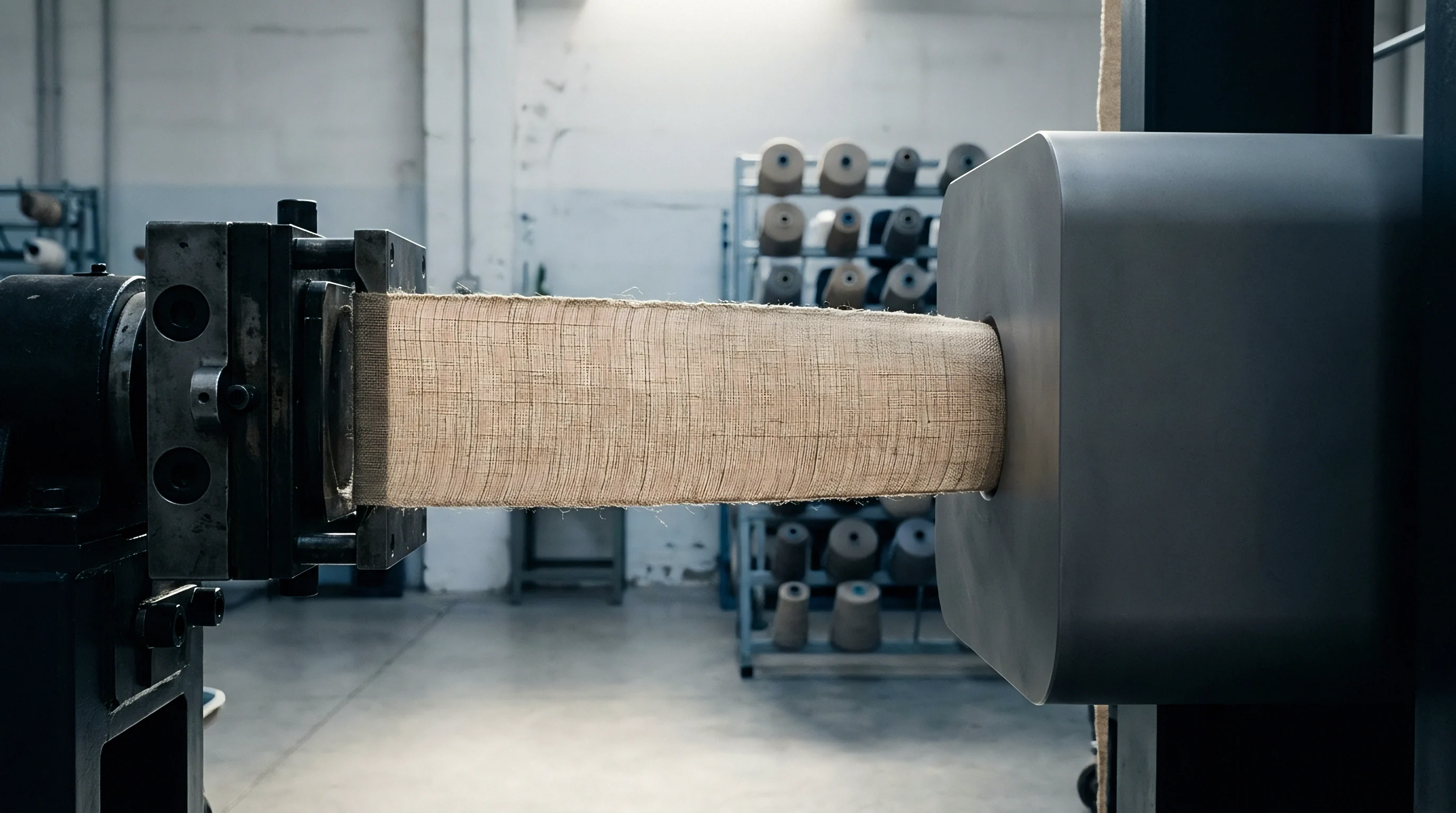
Liquid content changes the scale reading without altering the quantity of clean cellulose fibers present. Procurement specifications establish base weight on the clean, bone-dry state through ventilated drying chambers governed by ISO 6741 standards. The extraction sequence heats test skeins or core package borings to 105 degrees Celsius with continuous dry-air circulation.
Desiccation continues until consecutive weighings spaced fifteen minutes apart show a mass variance below 0.05 percent. This stable terminal value represents the anhydrous fiber mass.
Standard drying protocols require sample mass equilibrium at 105 degrees Celsius within a tight 0.05 percent variance tolerance.
Dry mass forms the fixed denominator for every commercial calculation. Spinning oils, winding waxes, and natural pectins alter the oven-dry mass balance when laboratory testing applies uncorrected solvent extractions. When yarn contains extractable processing lubricants exceeding normal trade levels, chemical scouring precedes the thermal drying cycle.
The laboratory records both the raw dry mass and the scoured dry mass. Industrial yarn orders specify whether commercial regain applies to raw deseeded flax, boiled yarns, or bleached production lots. Clean dry mass isolates the paid fiber from water weight.

Will Ambient Relative Humidity Alter Tare Weights?
Package packaging components absorb moisture alongside the wound yarn packages. Cardboard cones, pressed-paper tubes, plastic bobbins, corrugated cartons, and wooden pallets shift mass in transit. The gross weigh-in at the receiving dock captures this extraneous water unless tare components undergo separate oven desiccation or strict mechanical tare stripping.
- Pressed Paper Cones gain up to three percent mass in high-humidity transit environments and distort net fiber calculations when using generic tare values.
- Plastic Polymer Tubes resist hygroscopic shifts while retaining variable residual winding oils on inner cylinder walls.
- Solid Timber Pallets absorb several kilograms of atmospheric moisture inside unsealed cargo containers during ocean transit.
- Polyethylene Wrapping Films trap internal condensation pockets that create uneven package-to-package surface readings during dock inspection.
Dock receivers strip yarn completely from selected sample cones to verify dry tare weights against nominal supplier tare allowances. Subtracting the actual packaging mass yields the true net wet weight. Inaccurate tare values compound fiber moisture errors, generating unearned supplier premiums across multi-tonne deliveries.
Ignoring packaging moisture shifts transfers freight and material costs directly onto the processing mill ledger without recourse.


Formula

Official Commercial Regain Allowances for Flax
Commercial moisture regain values represent agreed commercial figures rather than natural biological equilibrium states. International trade bodies, including BISFA and ISO, codify legal regain percentages across distinct processing states of flax yarn. Natural grey wet-spun linen retains a higher official commercial regain than dry-spun yarns or chemically bleached packages.
These standard percentages normalize invoicing across changing weather conditions, sea freight routes, and seasonal storage shifts.
| Processing State | Spun Method | Commercial Regain Percentage | Applicable Standard Reference |
|---|---|---|---|
| Raw Grey Yarn | Wet Spun | 12.00 | ISO 6741-1 |
| Raw Grey Yarn | Dry Spun | 10.50 | BISFA Rules |
| Boiled Linen Yarn | Wet Spun | 11.50 | BISFA Rules |
| Bleached Linen Yarn | Wet Spun | 10.00 | ISO 6741-2 |
| Dyed Package Yarn | Wet Spun | 10.50 | Commercial Standard |
The table establishes the exact percentages applied during billing recalculations. Applying the raw wet-spun value of 12.00 percent to bleached yarn overcharges the buyer by two percent on total lot mass. Clear contract lines state the processing category before yarn lots leave the spinning plant floor.
Contractual commercial regain rates drop by two full percentage points between grey wet-spun and bleached yarn classifications.

Governing Equations for Commercial Invoiced Weight
Converting oven-dry fiber mass into legal commercial mass follows a direct mathematical equation. Let anhydrous mass be D, commercial regain percentage be R, and commercial mass be C. The basic relation defines commercial mass as anhydrous mass multiplied by the factor of one plus the commercial regain divided by one hundred. The equation runs: C equals D multiplied by the quantity one plus R divided by one hundred.
When billing adjustments calculate directly from received net mass without desiccation ovens, moisture testing devices establish the actual moisture content or moisture regain of the lot. Moisture content expresses water mass as a percentage of total damp mass. Moisture regain expresses water mass as a percentage of oven-dry mass.
The conversion from received moisture regain to commercial mass follows a corrective ratio. Let received net mass be M, delivered moisture regain percentage be R_act, and standard commercial regain percentage be R_comm. The corrected commercial weight equals M multiplied by the fraction with numerator one hundred plus R_comm and denominator one hundred plus R_act.
Consider an industrial procurement batch of nominal 10,000 kilograms wet-spun grey linen yarn. The laboratory sample reveals an actual moisture regain of 14.50 percent against the official standard of 12.00 percent. The calculation applies the ratio directly.
One hundred plus 12.00 equals 112.00. One hundred plus 14.50 equals 114.50. Dividing 112.00 by 114.50 yields a multiplier of 0.978166.
Multiplying 10,000 kilograms by 0.978166 produces an adjusted commercial weight of 9,781.66 kilograms. The supplier invoiced for 10,000 kilograms. The buyer pays for 9,781.66 kilograms.
The financial difference eliminates 218.34 kilograms of billed water.
Calculated commercial yarn mass matches physical fiber value when water fractions leave the balance sheet.


Dispute

Sources of Divergence in Certified Weights
Disagreements between spinning mills and weaving mills originate in environmental measurement conditions. Bast fibers display pronounced sorption hysteresis. A flax package exposed to high humidity and subsequently dried to an ambient point retains more water than an identical dry package brought up to that same ambient point through moisture absorption.
Certificates issued in spinning conditioning rooms under high atmospheric pressure diverge from receiving tests performed in dry destination warehouses.
- Hysteresis Discrepancies emerge when yarn lots approach ambient equilibrium along the desorption branch rather than the absorption curve during pre-shipment conditioning.
- Thermal Gradients across tightly packed shipping pallets create higher internal moisture retention in center cones compared to perimeter units.
- Extraction Tool Errors happen when core drills generate frictional heat that drives off volatile moisture during laboratory sample collection.
- Atmospheric Delays between package bag opening and gross dock weighing introduce uncontrolled water mass shifts.
Sorption hysteresis causes moisture retention differences of up to 1.8 percent between absorption and desorption paths under identical ambient humidity.

Should Buyers Accept Mill Conditioning Records?
Mill conditioning certificates reflect floor conditions at the spinning site rather than delivered realities at the port of entry. Spinning operations run conditioning chambers with ultrasonic atomizers or high-pressure sprays. Inadequate exposure times leave yarn packages dry at the core and saturated on outer yarn layers.
Surface moisture sensors register target regain values while package centers fall short.
Independent testing by accredited laboratories resolves discrepancies between dispatch and receipt documentation. Standard procurement contracts define which testing house holds arbitration authority. The contract sets an actionable threshold, commonly 0.5 percent deviation, before activating third-party core testing.
If testing reveals a supplier overcharge beyond the tolerance band, the spinning mill pays the laboratory fees alongside the weight credit.
The yarn left our warehouse at the certified moisture standard, so transit atmospheric changes remain the customer responsibility.

Scale

Lot Sampling Logic and Core Extraction
Representative sample collection protects testing accuracy on large multi-pallet consignments. ISO 6741-1 governs the statistical selection of yarn packages from container shipments. Technicians select packages across stratified levels of pallets, including outer corners, top tiers, and deep interior layers.
Packages travel immediately into airtight moisture-proof metal canisters or heat-sealed polymer bags. Rapid enclosure prevents moisture exchange with inspection dock air.
Core boring tubes extract cross-sectional fiber plugs through the entire package build from outer wrap down to the center winding tube. Combining equal mass plugs from twenty separate bobbins creates a composite testing specimen. Laboratory balances record the gross initial mass to an accuracy of 0.001 grams before heat exposure.
| Parameter Stage | Physical Reading | Calculation Base | Commercial Result |
|---|---|---|---|
| Gross Inbound Mass | 21,450.00 kg | Total delivered mass on truck scale | Raw transport weight |
| Packaging Tare Mass | 1,450.00 kg | Tubes, cartons, pallets, wrapping | Deducted packaging |
| Net Received Mass | 20,000.00 kg | Gross minus packaging tare | Base damp yarn mass |
| Core Sample Wet Mass | 500.000 g | Composite specimen at dock opening | Test sample start |
| Core Anhydrous Mass | 436.681 g | Dried to stable mass at 105 °C | Bone-dry sample fiber |
| Calculated Regain | 14.50 % | (500.000 – 436.681) / 436.681 100 | Delivered regain rate |
| Target Standard Regain | 12.00 % | Contractual standard for wet-spun grey | Legal regain baseline |
| Total Anhydrous Lot Mass | 17,467.24 kg | 20,000.00 kg / (1 + 0.1450) | True dry fiber delivered |
| Invoiced Commercial Mass | 19,563.31 kg | 17,467.24 kg (1 + 0.1200) | Authorized billable mass |
| Commercial Mass Variance | -436.69 kg | 19,563.31 kg – 20,000.00 kg | Credit adjustment due |
| Testing governed by ISO 6741 core extraction standards. Base yarn price: 14.50 USD per kilogram. Total invoiced credit: 6,332.01 USD. | |||
The table shows the sequence from raw scale receipt to credit claim generation. The calculation recovers thousands of dollars on a single sea container load. Moisture regain accounting ensures that payment covers clean cellulose fibers rather than excess water.
The commercial mass determination clause of the purchase contract dictates that invoiced weights adjust to certified moisture regain values established by ASTM D2495 oven desiccation protocols.


Settlement

Commercial Invoice Adjustment Mechanics
Financial execution of moisture recalculations takes place via formal debit notes or ledger deductions against pending trade payables. Yarn invoices present an initial gross charge based on nominal dispatch weights. The procurement office withholds final settlement until receiving laboratory dossiers arrive.
When moisture regain tests demonstrate an over-conditioned lot, accounting calculates the adjusted unit price or reduces the payable kilogram volume.
Spinning mills occasionally resist volume reductions due to inventory count alignments in enterprise resource software. The procurement team adjusts the unit rate per kilogram while holding billing mass constant. Both methods yield identical net financial outlays.
The mathematical equality preserves cash balances without violating cross-border customs declarations.
Contract balance payments remain frozen until receiving dock desiccation certificates confirm true net dry mass.

Operational Yield and Sizing Consumption Consequences
Moisture regain variances disrupt downstream production calculations across warping and sizing departments. Flax yarn count systems, such as Lea or metric count, depend on mass-to-length relationships. A yarn lot delivered with excessive water appears coarser than its true structural dry count.
Warping calculations based on damp mass misjudge the total linear meterage available on each cone.
Water content shifts sizing chemistry absorption. Moist yarns absorb less aqueous starch or polyvinyl alcohol size liquor inside the sizing box. Insufficient binder penetration leads to warp yarn fuzzing, shedding, and end breaks under high loom tensions.
Excess water in the incoming package disrupts chemical pick-up balance across thousands of running ends.
Unaccounted yarn count deviations distort pick density, finished grams per square meter, and cloth shrinkage rates during wet finishing operations.
How do cross-border shipping delays in unheated marine containers alter moisture distribution across tightly wound cross-wound packages?