Impact of Non Cellulosic Pectins on Oven Dry Weight Verification in Wet Spun Flax
Residual pectins in wet spun flax undergo thermal mass loss at 105 degrees Celsius, creating up to 1.8 percent dry weight errors in commercial mass verification.


Gum
Wet spun flax yarns arriving at inspection frames carry significant proportions of non-cellulosic intercellular binders within their fiber bundles. Flax bundles retain binder compounds. During industrial wet spinning, roving passes through a hot water bath maintained between 50 and 70 degrees Celsius to soften the pectin-rich middle lamella.
This thermal treatment permits individual ultimate fibers to slide past one another during drafting, producing a fine, uniform, smooth yarn structure. The wet spinning process does not remove the non-cellulosic pectin complex. Calcium pectates, polygalacturonic acids, hemicelluloses, and associated lipophilic waxes remain embedded within the spun yarn matrix, accounting for 2.5 to 5.0 percent of the unbleached yarn mass by weight.
When laboratories verify commercial weight through standard oven desiccation at 105 degrees Celsius, these residual non-cellulosic binders alter mass readings through two distinct physical mechanisms. Moisture binding remains chemically complex. The amorphous gel network of pectin holds bound water through hydrogen bonding far more tenaciously than crystalline cellulose microfibrils.
Standard drying cycles fail to liberate this bound hydration water without initiating chemical thermal degradation. Concurrently, temperature exposure above 100 degrees Celsius causes low-molecular-weight pectin polymers to undergo partial pyrolysis, volatile decarboxylation, and mass degradation. Oven temperatures drive volatile loss.
Standard gravimetric procedures record total weight loss as moisture loss. The recorded mass reduction combines actual surface water evaporation with volatile organic loss from degrading binder compounds. Mass errors distort commercial invoicing.
When yarn weight determines invoiced mass, yarn count in tex, or cover factor targets for weaving looms, this analytical discrepancy introduces undetected errors into landed material values and warp preparation specifications.
Commercial mass verification for wet spun flax suffers systemic distortion when non-cellulosic binder fractions undergo thermal decomposition during standard drying cycles.
In yarn sourcing contracts, commercial weight calculation applies a standardized moisture regain allowance, set at 12.00 percent for linen under commercial rules, to the measured oven-dry mass. If the measured dry weight is artificially low due to pectin volatile degradation, the calculated commercial weight drops below true physical value. Conversely, if unevaporated bound water remains trapped within the pectin gel, the measured dry mass inflates, forcing the buyer to pay pure yarn prices for unevaporated moisture.
The exact boundary where non-cellulosic thermal degradation halts and true moisture loss begins remains poorly defined across varying crop years.

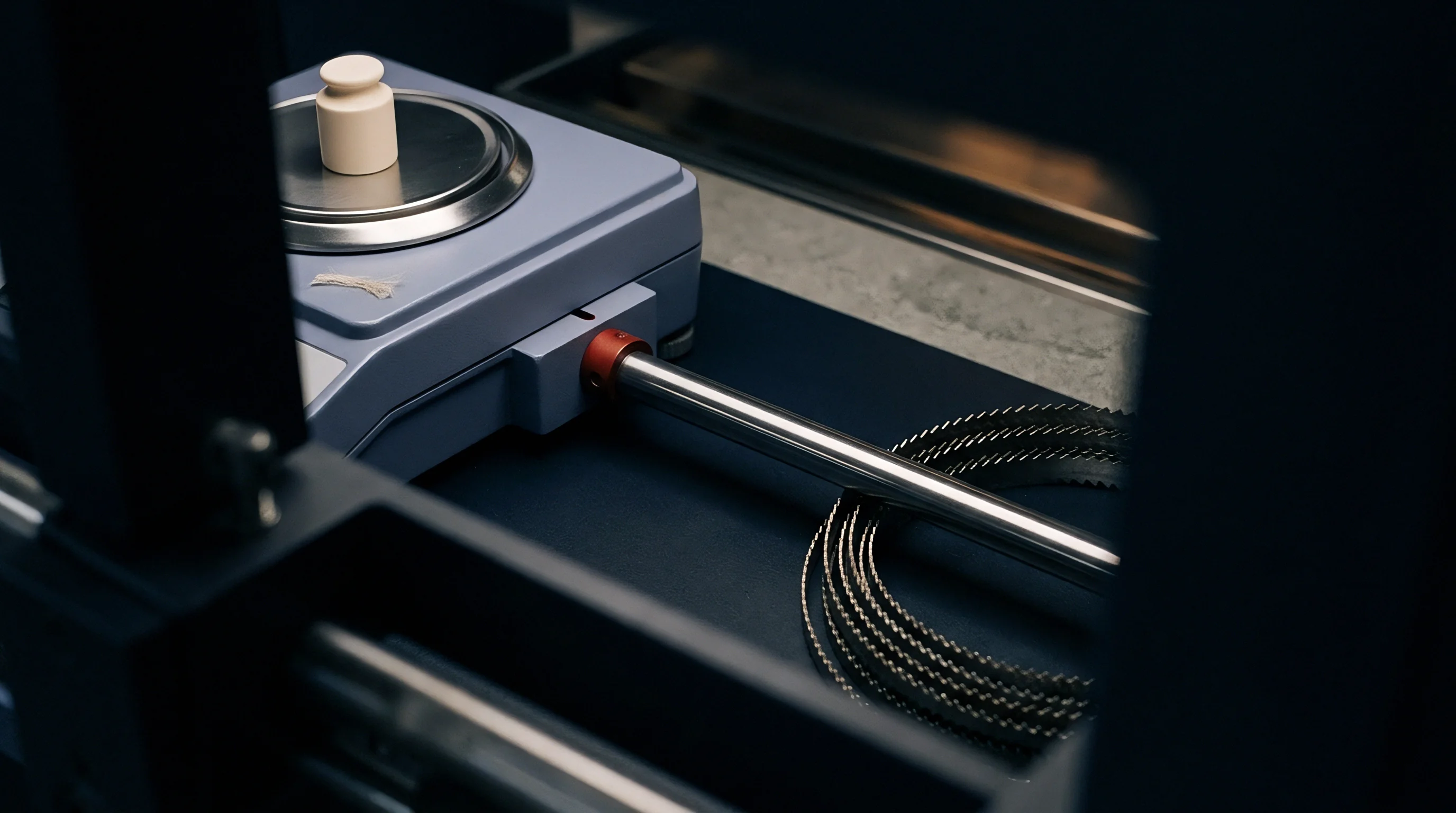
Heat
Standard desiccation chambers operating at 105 degrees Celsius induce complex structural changes in raw flax polymers beyond simple evaporation of surface water. The temperature threshold of 105 degrees Celsius, established in standard methods like ISO 6741-1 and ASTM D2495, was formulated around pure cotton cellulose. Cotton possesses minimal non-cellulosic impurities.
Flax fiber stems from bast plant tissues where cellulose microfibrils reside inside a dense pectin matrix. Bound water resists simple evaporation.

Where Do Residues Distort Standard Dry Weight?
Thermal gravimetric analysis reveals that polygalacturonic acid chains begin losing chemical structural mass at temperatures as low as 95 degrees Celsius. Pectin chains degrade above boiling. Between 100 and 110 degrees Celsius, carboxyl groups on the galacturonic acid units undergo slow thermal decarboxylation, evolving gaseous carbon dioxide and trace organic volatiles.
Volatile losses mimic moisture release. Simultaneously, calcium and magnesium pectate salts retain coordinate water molecules that require temperatures above 120 degrees Celsius for complete removal, a point where cellulose itself begins oxidative degradation. Clean fibers maintain mass stability.
The chemical state of the yarn determines the magnitude of this analytical shift. Greige wet spun yarn exhibits the highest discrepancy due to intact pectin structures. Rove-bleached or alkali-scoured yarns experience lower mass distortion because industrial chemical processing strips away soluble pectin fractions prior to spinning or drying.
| Processing State | Residual Pectin Content (%) | Thermal Mass Loss at 105°C (%) | Bound Water Retention (%) | Net Dry Weight Discrepancy (%) |
|---|---|---|---|---|
| Unbleached Greige Wet Spun | 3.80 to 4.80 | 1.20 to 1.60 | 0.60 to 0.90 | -0.60 to -0.90 |
| Rove Bleached Wet Spun | 1.50 to 2.20 | 0.40 to 0.70 | 0.30 to 0.50 | -0.10 to -0.20 |
| Boiled Alkali Scoured Yarn | 0.60 to 1.10 | 0.15 to 0.30 | 0.10 to 0.20 | -0.05 to +0.10 |
| Enzymatically Softened Greige | 2.10 to 3.00 | 0.70 to 1.00 | 0.40 to 0.60 | -0.30 to -0.40 |
| Tested per ISO 6741-1 desiccation for 4 hours at 105°C ± 2°C; non-cellulosic content quantified via ammonium oxalate extraction. | ||||
The interaction between thermal degradation and bound water retention creates an inconsistent test baseline. Long drying times exacerbate pectin breakdown. Short drying cycles leave bound water inside the sample core.
- Calcium Pectate Dissociation Breaks down under prolonged thermal exposure, releasing bound hydration water that registers as yarn regain.
- Polygalacturonic Chain Decarboxylation Releases gaseous carbon dioxide and volatile organic fragments during desiccation cycles exceeding 100 degrees Celsius.
- Lipophilic Wax Migration Softens at elevated drying temperatures, volatilizing low-molecular-weight fractions into the drying cabinet airflow.
- Hemicellulose Cross-Linking Shifts Induces mass loss through structural degradation while altering the hygroscopic capacity of the remaining matrix.
Unbleached wet spun yarns exhibit up to 1.8 percent non-moisture mass loss when desiccated at 105 degrees Celsius for four hours.
Test laboratories attempting to standardize results must monitor drying cabinet residence times with extreme precision. Variations in ambient humidity prior to testing further complicate oven drying curves. Scoured and thoroughly washed yarns yield far more consistent oven dry results than raw unbleached greige lots.

Rinse
Chemical pretreatment of test samples before oven exposure removes interfering non-cellulosic compounds to isolate pure cellulosic mass. Extraction dissolves soluble pectin salts. Standard testing protocols in commercial trade frequently skip chemical extraction due to cycle time constraints.
Standard tests omit chemical wash. Omitting pre-extraction leaves the gravimetric balance vulnerable to pectin degradation variables.
To eliminate non-cellulosic interference, analytical standards recommend a solvent extraction sequence prior to final drying. Treating the sample with boiling ammonium oxalate solution selective dissolves pectin complexes without attacking insoluble cellulose microfibrils. Subsequent rinsing with hot distilled water removes soluble sugars, hemicellulose residues, and extracted pectin salts.
Cellulose purity stabilizes dry mass.
- Prepare three ten-gram yarn specimens from conditioned sample hanks using analytical balance precision.
- Treat specimens in a hot aqueous solution of ammonium oxalate at 80 degrees Celsius for forty-five minutes.
- Wash specimens repeatedly with deionized water until filtrate runoff reaches neutral pH.
- Transfer washed specimens into ventilated weighing bottles for standard thermal desiccation.
Removing pectin matrix components alters the physical dimensions of the yarn bundle. Fiber cohesion drops noticeably once intercellular gums disappear. For laboratory verification, pre-extracted specimens yield true cellulosic mass values, providing an absolute reference point for commercial regain calculations.
Pre-extracting non-cellulosic gums converts unpredictable gravimetric testing into an absolute measure of true cellulosic yarn weight.
In industrial mill operations, chemical pre-extraction adds two hours to testing turnaround times. Mills running high-speed air-jet or rapier looms require rapid moisture verification to adjust warping tension and sizing bath pickups. Skipping the chemical wash saves laboratory hours but introduces weight uncertainty into landed yarn shipments.
Failing to account for non-cellulosic mass extraction in greige specifications leads directly to disputed landed cloth weights and rejected shipment lots at customs inspection.

Assay
Quantitative determination of commercial yarn weight relies on gravimetric measurements transformed through standardized regain equations. Invoice weights depend on dry mass. Uncorrected figures pad seller profits.
Calculated regain dictates final payment. Small mass shifts create huge losses.
Consider a commercial purchase order for 10,000 kilograms nominal weight of unbleached greige wet spun flax yarn (33 tex / NeL 25). The landed price is set at 14.50 EUR per kilogram. Upon arrival, the receiving mill draws representative sample hanks for laboratory oven drying per ISO 6741-1.
The uncorrected laboratory test records an oven-dry sample mass corresponding to 8,800 kilograms dry fiber mass across the total lot, suggesting a 12.00 percent moisture content. Applying the standard linen commercial regain allowance of 12.00 percent to this measured dry mass yields a commercial invoiced mass of exactly 9,856 kilograms.
Chemical analysis of the dried sample residue reveals that 2.20 percent of the measured “dry” weight loss (193.6 kilograms equivalent across the lot) resulted from pectin volatile decomposition and unevaporated matrix moisture rather than free water evaporation. The true cellulosic dry mass of the shipment equals 8,606.40 kilograms. Applying the 12.00 percent commercial regain allowance to the corrected cellulosic dry mass yields a true commercial weight of 9,639.17 kilograms.
| Parameter | Uncorrected Test Basis | Pectin-Corrected Basis | Commercial Variance |
|---|---|---|---|
| Measured Dry Mass (kg) | 8,800.00 | 8,606.40 | -193.60 kg |
| Applied Regain Factor (%) | 12.00% | 12.00% | 0.00% |
| Calculated Commercial Mass (kg) | 9,856.00 | 9,639.17 | -216.83 kg |
| Landed Unit Price (EUR/kg) | 14.50 | 14.50 | 0.00 EUR |
| Total Invoiced Value (EUR) | 142,912.00 | 139,767.96 | -3,144.04 EUR |
The uncorrected test method generates an overbilling of 3,144.04 EUR on a single 10,000 kilogram yarn shipment. Across annual loom-shed consumption of two hundred metric tons, this verification gap drains over 62,000 EUR in direct material overpayment.
- Specimen Mass Uniformity Ensure sample weight matches balance calibration ranges to eliminate measurement scale distortion.
- Desiccation Temperature Control Maintain drying cabinet heat within strict laboratory tolerances to limit volatile decomposition rates.
- Desiccant Mass Balance Store dried specimens inside sealed weighing vessels with fresh silica gel prior to balance readings.
- Extraction Mass Correction Apply pre-determined non-cellulosic deduction factors when evaluating unbleached greige wet spun lots.
Standard commercial regain terms applied to uncorrected dry weights force buyers to pay pure yarn prices for volatile pectin mass lost up chimney stacks.
Yarn spinners frequently claim that residual binder material represents structural fiber mass that rightfully belongs inside the invoiced net weight of the yarn shipment.

Allowance
Commercial yarn supply agreements specify exact tolerances for non-cellulosic content to prevent financial losses during weight verification audits. Contracts define billable mass limits. Standard clauses protect buyer margin.
Audits expose hidden mass inflation. Clear terms prevent delivery disputes.
To establish commercial protection, procurement contracts must define the precise testing route used to verify oven-dry mass. Inserting explicit solvent extraction requirements or non-cellulosic deduction factors into the purchase order converts arbitrary mill testing into a legally binding verification framework. When purchasing greige wet spun flax, experienced buyers specify maximum allowable non-cellulosic extractable percentages, typically capping residual pectin mass at 3.00 percent for standard weaving yarns.
Where laboratory extraction testing is impractical for routine batch receiving, contracts establish fixed numerical correction coefficients. A contractually agreed pectin deduction coefficient of 1.50 percent, subtracted from raw oven-dry mass readings prior to regain multiplication, aligns commercial invoicing with physical cellulose delivery. Dispute resolution clauses outline secondary testing procedures using certified third-party laboratories executing ammonium oxalate extraction.
Incorporating ISO 6741 subclause 4.3 into yarn purchase contracts binds the seller to deduct non-cellulosic solvent extractables from oven-dry weight before calculating billable mass.