Quantitative Correlation between Package Depolymerization Kinetics and Spun Yarn Strength Losses in Scouring Systems
Alkaline scouring degrades flax yarn strength when cellulose degree of polymerization drops below 900, requiring strict intrinsic viscosity controls during package processing.


Kinetics
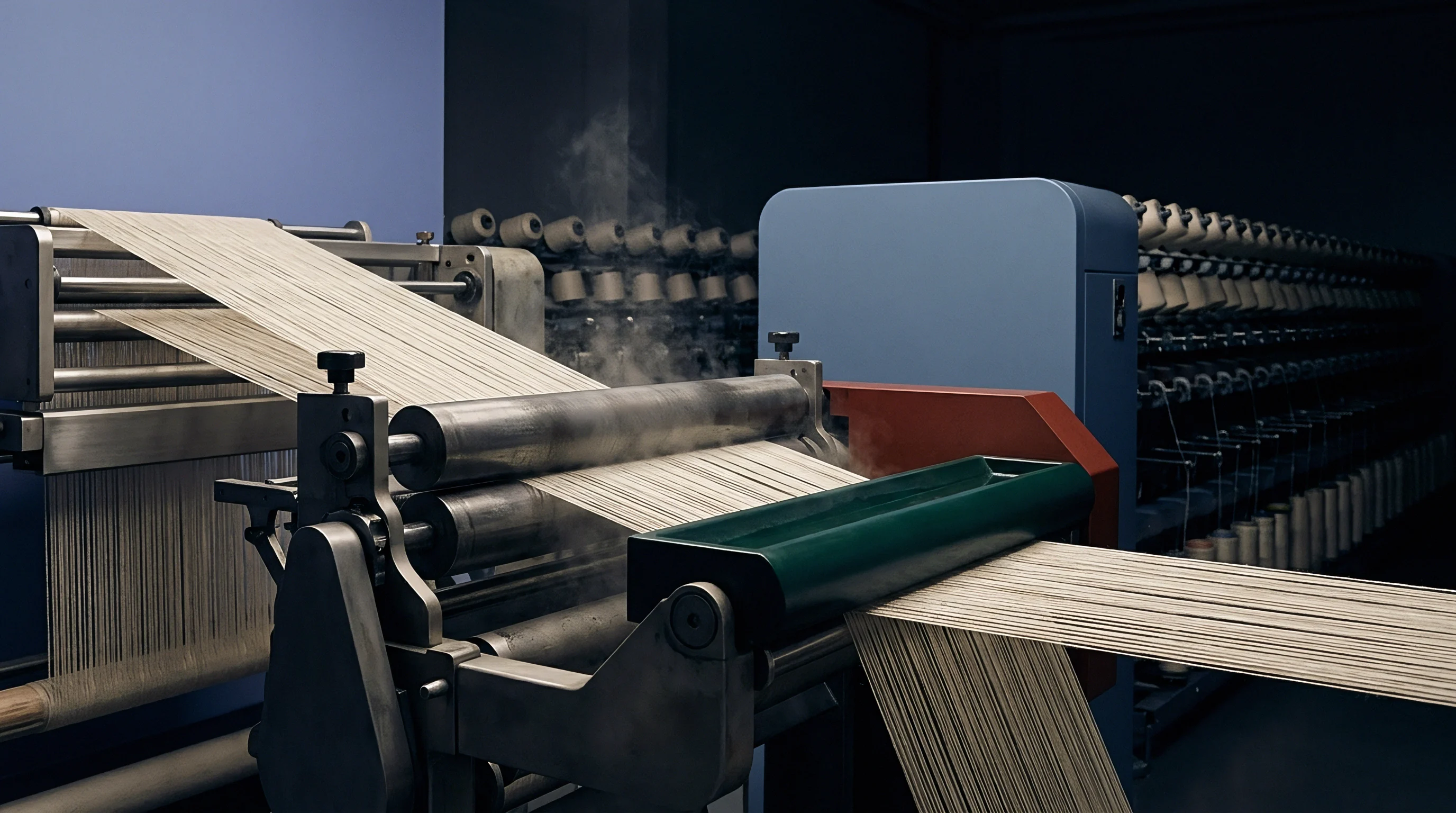
Glycosidic Bond Cleavage in Alkaline Baths
Cellulosic macrochains in raw flax fibre undergo hydrolytic and oxidative cleavage when exposed to elevated temperatures and alkaline pH during package wet processing. Primary structural degradation occurs along the beta-1,4-glycosidic linkages within amorphous regions of the cell wall. Alkaline baths strip hemicellulose.
The initial number-average degree of polymerization, typically ranging between 2000 and 3000 in unrefined bast fibre, drops systematically as aqueous sodium hydroxide or sodium carbonate penetrates the fiber cell wall.
Chemical cleavage follows pseudo-first-order action when processing liquors operate under constant thermal and pH conditions. Fiber bonds snap under heat. The Ekenstam relation models this rate of chain breakage, where the reciprocal of the degree of polymerization at a given time minus the reciprocal of the initial degree of polymerization correlates directly with the kinetic rate constant multiplied by exposure time:
1 / DP_t – 1 / DP_0 = k_d t
In this expression, DP_t represents the average degree of polymerization at time t, DP_0 signifies the unrefined starting polymer length, and k_d denotes the depolymerization rate constant in reciprocal hours. Temperature dependence follows the Arrhenius model, showing an acceleration in bond cleavage rates above 85 degrees Celsius.
The depolymerization rate constant of flax cellulose increases by a factor of 2.8 for every 10-degree Celsius rise in scouring bath temperature between 80 and 110 degrees Celsius under a constant sodium hydroxide concentration of 10 grams per litre.

Oxidative and Hydrolytic Degradation Paths
Degradation mechanisms vary between pure alkaline boiling and oxygen-assisted scouring baths. Unassisted hot alkaline baths promote end-wise peeling alongside random chain scission. Peeling reactions strip individual glucose units from the reducing ends of cellulose chains, generating organic acids that gradually consume bath alkalinity without causing severe chain length contraction.
Random scission breaks the main polymer backbone, causing precipitous drops in molecular weight. Dissolved oxygen or residual peroxides inside closed package machines convert hydroxyl groups into carbonyl and carboxyl functional groups. These keto and aldehyde sites create alkali-sensitive beta-elimination zones that cleave rapidly under hot alkaline conditions.
| Sodium Hydroxide Concentration (g/L) | Bath Temperature (degrees C) | Treatment Duration (minutes) | Rate Constant k_d (1/hr x 10^-5) | Final DP (v) Range |
|---|---|---|---|---|
| 2.0 | 85 | 60 | 1.12 | 1850 – 2100 |
| 5.0 | 95 | 60 | 3.45 | 1400 – 1650 |
| 10.0 | 105 | 45 | 8.90 | 1050 – 1250 |
| 15.0 | 115 | 30 | 18.30 | 750 – 920 |
Thermal energy drives chemical reactants into the highly ordered crystalline microfibrils once amorphous swelling reaches equilibrium. The rate of chain scission accelerates when bath alkalinity exceeds a pH of 12.5 at temperatures above 100 degrees Celsius.
Engineers evaluate primary degradation modes to identify specific points of chemical attack across the yarn bundle:
- Hydrolytic Scission targets glycosidic linkages in water-accessible amorphous zones, causing immediate reduction in the average molecular mass of cellulose.
- Oxidative Degradation introduces carbonyl sites along the glucan ring that trigger secondary beta-elimination scission during hot alkaline rinses.
- Peeling Reactions consume terminal glucose residues, decreasing overall solid mass yield while leaving the core degree of polymerization relatively intact.
- Pectinase Extracts isolate non-cellulosic encrustants without breaking primary cellulosic backbone bonds when bath thermal profiles remain below 60 degrees Celsius.
Whether non-cellulosic polysaccharide removal alters the local activation energy of hydrolytic cleavage inside dense package cores remains open to experimental verification.


Liquor
Radial Mass Transport and Hydraulic Gradients
Aqueous transport through dense package bodies depends on forced fluid movement driven by reversible centrifugal pumps. Fluid circulation alternates between inside-out and outside-in directions to standardize chemical distribution across the package radius. Pressure drops across yarn walls.
Non-uniform flow resistance creates local variations in chemical concentration and fluid velocity between the innermost yarn layers touching the perforated stainless steel tube and the outermost layers exposed to the main vessel chamber.
Hydraulic resistance scales with package winding density, typically maintained between 0.32 and 0.40 kilograms per cubic decimetre for spun flax yarn. Higher winding density restricts radial fluid velocity. When liquor velocity drops below 15 litres per kilogram of yarn per minute, mass transfer becomes diffusion-limited within the interior yarn layers.

Thermal and Chemical Non-Uniformity
Temperature differentials across the package wall exacerbate kinetic variations in chain depolymerization. Outer layers flush primary impurities. During rapid heating cycles, outer package layers reach setpoint temperatures up to 12 degrees Celsius faster than inner layers.
Inner package layers retain heat. This thermal lag creates a kinetic gradient where outer layers undergo extended chemical reaction times at peak temperatures.
Continuous alkaline consumption by acidic pectin residues creates a localized pH gradient. Fresh liquor entering from the core tube carries maximum sodium hydroxide concentration, while liquor reaching outer layers shows depleted alkalinity and elevated levels of dissolved non-cellulosic impurities. Reversing flow direction counteracts this spatial pH drift, though brief transition pauses allow local fluid stagnation.
To calibrate flow uniformity and minimize radial DP variance across yarn packages, processing facilities execute a standardized preparation sequence:
- Confirm package winding density measurements sit within a narrow tolerance band of 0.34 plus or minus 0.02 kilograms per cubic decimetre across all spindle locations.
- Set vessel pump differential pressure to 1.8 bar for inside-out cycles and 1.5 bar for outside-in cycles to offset package compression effects.
- Program liquor circulation cycle times to four minutes inside-out and two minutes outside-in during the main thermal ramp.
- Maintain a heat rate of 1.5 degrees Celsius per minute from 40 degrees Celsius up to the final scouring temperature to prevent radial thermal lag exceeding 3 degrees Celsius.
- Inject sodium hydroxide dosing lines directly into the main circulation loop over a 15-minute window rather than applying a single bolus addition.
Mills frequently claim that yarn strength variations arise entirely from native fibre strength distributions along the raw flax stem rather than uneven chemical treatment inside the scouring package.


Rupture
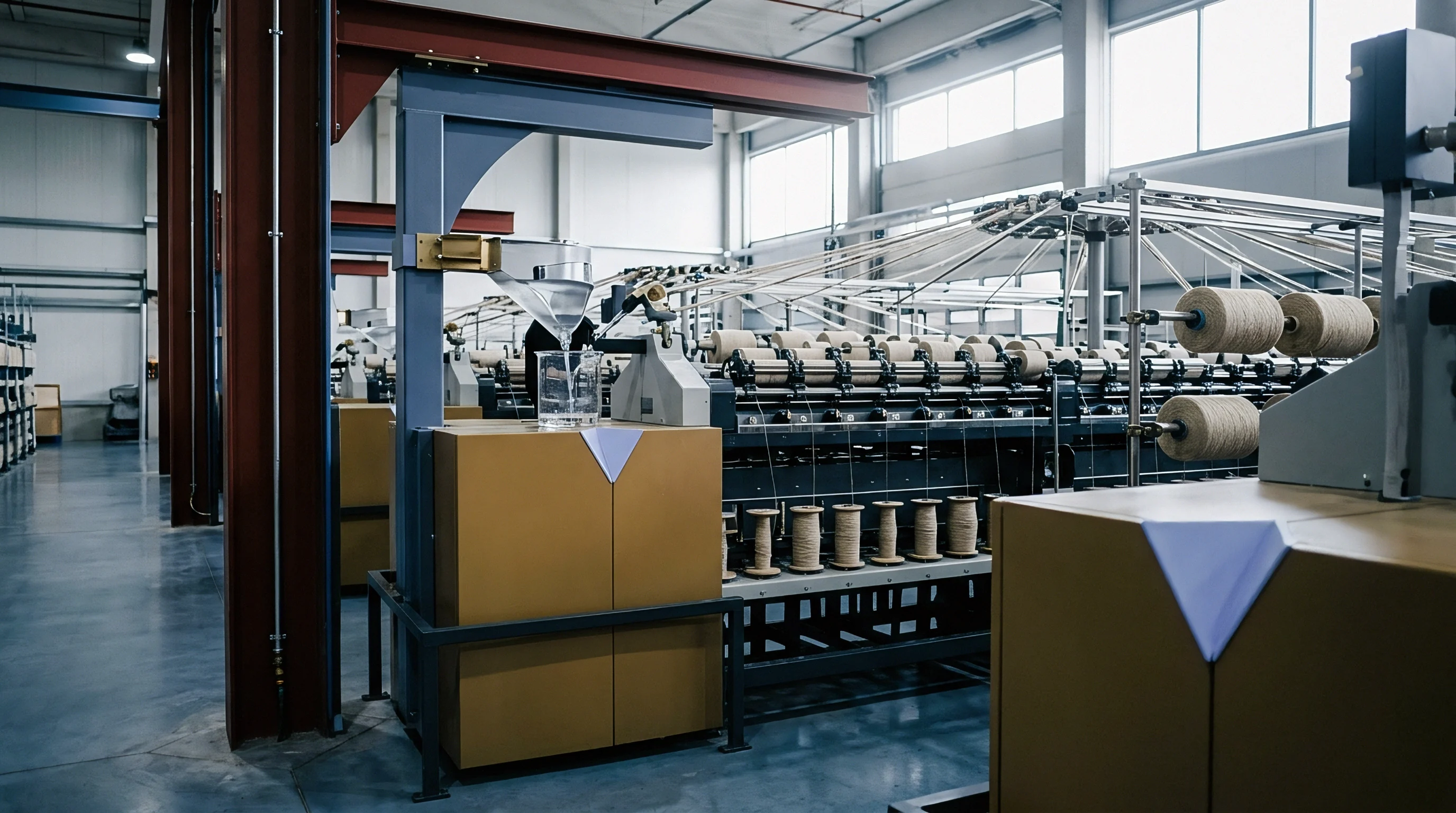
Tensile Decay Mechanisms in Cellulosic Yarns
Mechanical strength in spun flax yarn derives from two distinct structural levels: individual elementary fiber intrinsic strength and inter-fiber frictional coherence held together by residual pectin and lignin matrices. Solvent flow governs chemical transfer. Depolymerization attacks the primary cell wall and secondary wall cellulose chains within the elementary fibers, reducing individual fiber breaking tenacity.
Pectin removal alters fibre friction.
Single-strand tenacity correlates directly with the viscosity-average degree of polymerization once DP drops below a critical molecular threshold. Unrefined flax fibers exhibit single-strand tenacity values between 35 and 55 cN/tex. When alkaline scouring reduces cellulose DP from 2200 down to 1200, individual fiber breaking tenacity remains relatively stable due to load sharing among long polymer chains within crystalline domains.
Standardized yarn strength tests per ISO 2062 confirm that spun flax yarns lose more than 35 percent of their ultimate tensile strength when cellulose viscosity-average degree of polymerization drops below 850.
Below a DP threshold of 900, chain length becomes shorter than the critical length required for efficient stress distribution along microfibrils. Amorphous regions fail under lower tensile loads, leading to microvoid formation and ultimate fiber fracture under external strain.

When Does Depolymerization Cross Tensile Thresholds?
Yarn strength loss accelerates rapidly once chemical processing strips structural encrustants and reduces cellulose chain lengths below critical limits. Lea product measurements, expressed as Count Strength Product, capture both single-strand failure and inter-fiber slip mechanisms. Tenacity falls past critical thresholds.
Cold water arrests thermal damage.
| Viscosity-Average DP (v) | Single Strand Tenacity (cN/tex) | Tenacity Retention (%) | Lea Product (CSP) | Primary Failure Mode |
|---|---|---|---|---|
| 2100 | 42.5 | 100.0 | 2450 | Inter-fiber slippage |
| 1650 | 41.0 | 96.5 | 2380 | Inter-fiber slippage |
| 1200 | 38.2 | 89.9 | 2210 | Mixed slip and fiber break |
| 850 | 27.1 | 63.8 | 1540 | Elementary fiber rupture |
| 600 | 16.8 | 39.5 | 920 | Brittle chain cleavage fracture |
Systematic depolymerization alters the fundamental load-elongation curve of spun linen yarns. High-DP yarns demonstrate substantial plastic deformation and energy absorption before breaking. Low-DP yarns exhibit brittle fracture characteristics, showing low work-to-break values and sharp, clean rupture points under tensile load.
A failure to limit cellulose depolymerization below a DP threshold of 900 reduces yarn weaving efficiency on high-speed air-jet looms by increasing warp end breaks above 4.5 stops per loom hour.
Thermal degradation during improper package drying steps compounds chemical kinetic damage incurred in the scouring bath. Exceeding wet package core temperatures of 105 degrees Celsius converts residual moisture into steam, triggering rapid localized hydrothermal degradation that destroys remaining yarn tenacity.
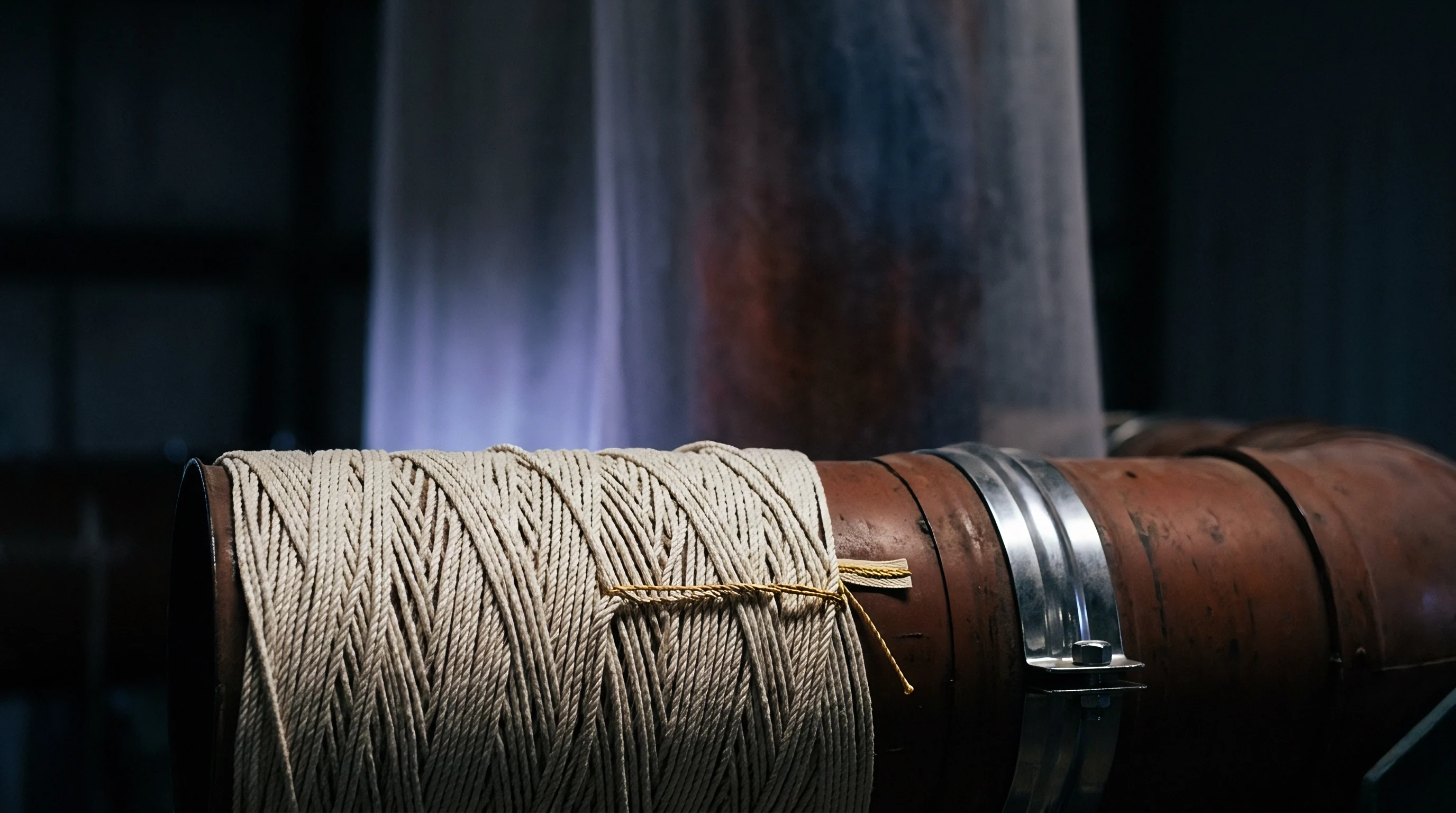

Assay

Viscometric and Tensile Testing Protocols
Quantifying chemical damage requires precise viscometric measurement of cellulose dissolved in specialized metal complex solvents. Standard tests isolate molecular weight. Cupriethylenediamine (CED) hydroxide solution dissolves purified cellulose samples without inducing further oxidative chain cleavage when testing proceeds under nitrogen atmosphere according to ISO 5351 procedures.
Intrinsic viscosity measurements yield the viscosity-average molecular mass through the Mark-Houwink-Sakurada equation, where K equals 1.33 x 10^-2 mL/g and exponent a equals 0.905 for cellulosic solutions:
= K (M_v)^a
Calculated viscosity values translate directly to degree of polymerization. In parallel, mechanical evaluation relies on ISO 2062 pneumatic single-strand yarn testing using a constant rate of extension testing machine operating at 500 millimetres per minute gauge length.
| Standard Methodology | Measured Parameter | Sample Size | Standard Deviation (1 sigma) | Detection Limit |
|---|---|---|---|---|
| ISO 5351 (CED Viscometry) | Intrinsic Viscosity (mL/g) | 0.25 grams | 8.5 mL/g | DP 250 |
| AATCC 82 (Cuam Fluidity) | Fluidity (Rhes) | 0.50 grams | 0.4 Rhes | DP 400 |
| ISO 2062 (Single Strand) | Tenacity (cN/tex) | 100 breaks | 1.8 cN/tex | 0.1 cN/tex |
| ASTM D1444 (Bundle Strength) | Pressley Index (lb/mg) | 6 mg bundles | 0.25 Index units | 1.0 Index unit |
Viscosity drops signal polymer decay. Standard mechanical strength testing alone fails to detect early chemical damage when residual encrusting pectins maintain artificial friction between fibers, masking intrinsic polymer chain cleavage until downstream bleaching or laundry steps strip those temporary binders.
Audit verification depends on comprehensive documentary evidence and precise laboratory testing protocols across every lot:
- Intrinsic Viscosity Certificates must specify the exact test method, solvent concentration, run temperature, and nitrogen purge validation per ISO 5351.
- Package Sampling Matrix requires taking yarn specimens from three distinct package locations: outer rim, middle layer, and inner core tube surface.
- Mass Balance Records reconcile raw flax bale input weights against finished package output volumes to detect over-scouring material losses.
- Transaction Documentation maps scope certificates directly to mill lot numbers and commercial invoice lines to secure chain-of-custody verification.
Commercial specifications relying on ISO 5351 intrinsic viscosity limits require a minimum threshold of 620 mL/g for scoured greige linen yarns intended for high-stress weaving applications.
Under standard commercial arbitration terms in accordance with IWTO rules, a buyer receiving yarn lot test results that fall below contracted intrinsic viscosity parameters retains the absolute right to reject the non-compliant delivery or apply mandatory price adjustments based on verified strength loss percentage.

Recourse

Chain of Custody and Provenance Verification
Maintaining clear provenance records protects buyers from accepting chemically damaged or structurally compromised linen yarns. Yield losses escalate with time. European Flax and Masters of Linen certification programs mandate detailed tracking of fibre origin, but these scope certificates do not inherently guarantee chemical integrity during overseas wet processing.
A scope certificate confirms fiber cultivation origin; a transaction certificate confirms batch transfers across intermediate processors.
When raw European fiber ships to third-country facilities for package scouring and dyeing, provenance chains face significant document gaps. Chinese or Indian processors operating under non-preferential origin rules frequently mix certified European fiber lots with local low-DP fiber stocks to reduce processing costs. Clean records prevent customs delays.
Traceability requires reconciling mill weighbridge receipts, scouring machine bath logs, and yarn viscosity test records against final export documents.
Audit scope limits commercial exposure. A documented chain of custody must link every finished package lot back to its initial scutcher bale tags, proving both geographical origin and process compliance. When test data reveals severe depolymerization caused by aggressive scouring, commercial contracts assign financial liability back to the wet processing mill.
Unverified scouring claims clear customs only until spot viscometry tests reveal depolymerization below contract limits, shifting all replacement and loom downtime costs back onto the importer of record.