
Separating Viscoelastic Crimp Interchange from Biochemical Mass Loss in Scouring
Scouring linen increases GSM despite mass loss because wet viscoelastic crimp interchange condenses thread count faster than non-cellulosic extraction lightens yarn.
Scouring linen increases GSM despite mass loss because wet viscoelastic crimp interchange condenses thread count faster than non-cellulosic extraction lightens yarn.

Viscoelastic tension relaxation in sized bast warps creates fell line migration and set marks unless controlled by active electronic let-off compensation.

Optimal hydromechanical control of ultra-dense flax warps relies on balancing pectin plasticization against radial swelling to minimize shear locking.

Optimize high-density linen warping via low-drag ceramic creels, 7-degree drum cones, 10% PVA-starch add-on, and 8-tier splitting to keep loom stops below 1.5.

Calculating linen warp sett and fabric weight requires converting Lea to Tex, applying cover factor limits, accounting for crimp, and factoring in finishing mass losses.

Off loom mass loss in linen greige averages 14 to 22 percent, requiring correction for sizing pickup, moisture regain, and non cellulosic scour extraction.
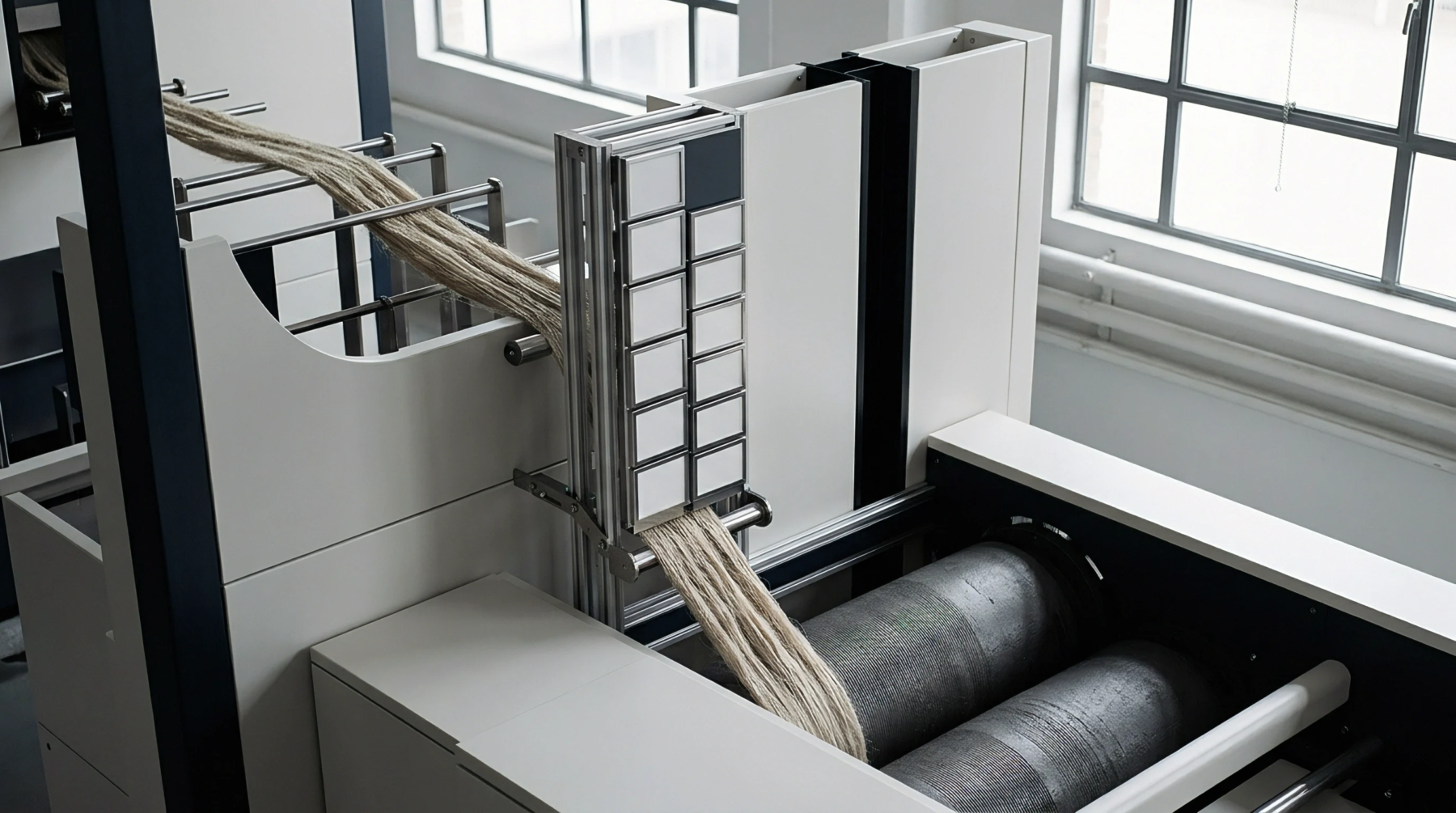
Adjusting weaver loom allocations based on high-density flax warp end-break rates maximizes loom-hour output and prevents stop-mark quality losses.

Deriving finished linen weight from greige density factors requires adjusting thread counts for dimensional contraction while subtracting non-cellulosic scour loss.

Dynamic ease-off spring tuning mitigates peak tension spikes in low-elasticity linen warps, preventing yarn failure and optimizing loom efficiency.

Dynamic multi-axis loom extension triggers rapid viscoelastic stress relaxation in wet spun flax through pectin matrix slip, requiring tuned backrest dynamics.

Width dispute mechanics enforce area deductions and loom-hour penalties based on conditioned usable cuttable width versus contract tolerance limits.

Controlled size encapsulation and 10 percent moisture regain suppress linen warp breaks, preserving high loom efficiency and direct landed metre margins.
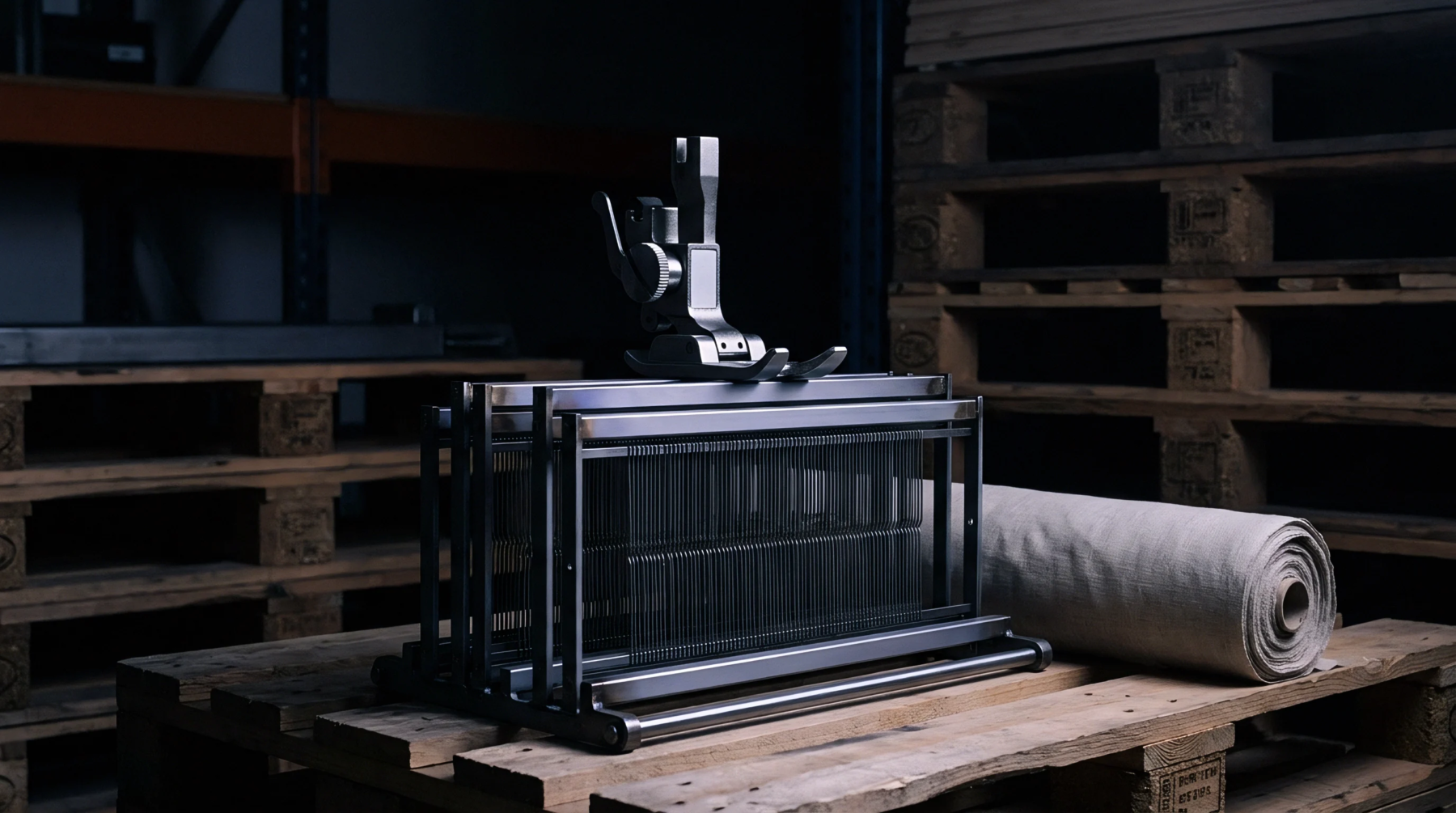
Jacquard repeat limits scale with hook count and warp density, where systematic harness casting-out maintains uniform cord pull angles across the comber board.

Converting hand-loom swatches to rapier loom specs requires rebalancing warp crimp, sizing single yarns, and setting weft brakes to hold cover factor at speed.

Managing off-loom flax warp crimp contraction requires precise reed denting allowances, ELO tension tuning, and size solubility control to hit target grey widths.

Standard flax yarn linear density determination mandates motorized skein reeling under 0.5 cN/tex tension combined with ISO 6741 oven-dry commercial mass correction.

Reconciling linen weight requires balancing chemical extraction losses against warp crimp contraction to hit target finished areal mass and dimensional stability.

Reconciling warp crimp and waste factors prevents yarn budget deficits by capturing cumulative process losses across landed fabric cost models.

Engineering accurate linen fabric specifications requires coupling loom crimp take-up equations with wet process shrinkage factors to fix finished GSM and width.

Target linen weight equals yarn tex multiplied by thread density, adjusted for warp size, crimp, wet process mass loss, and area shrinkage factors.
Expertise is a utility, not a secret. sentiention™ publishes its working knowledge as open reference: intelligence layer covering the materials it sources, the markets it enters, and the reference that serves both.