Mechanical Setting
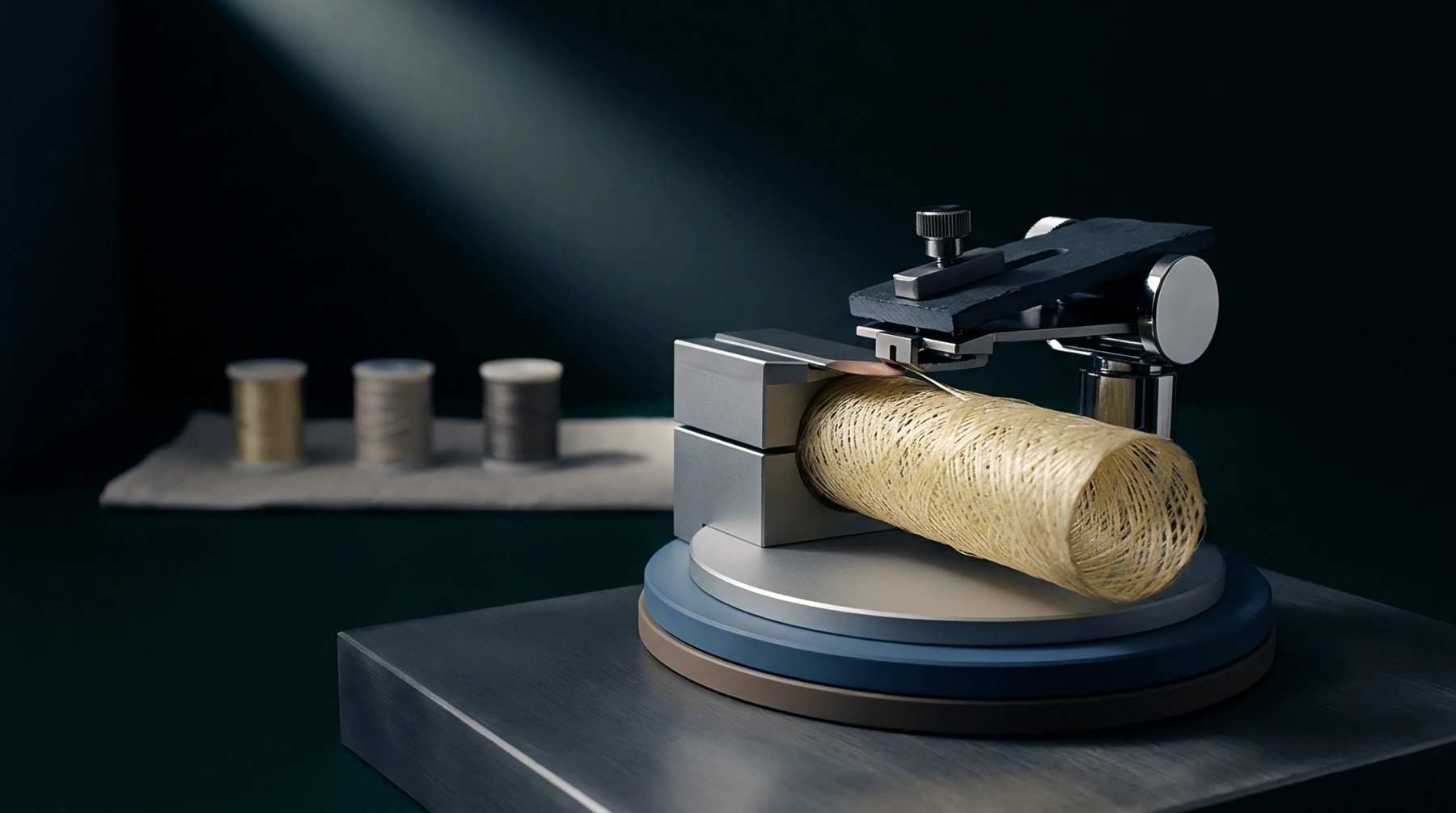
Geometric alignment angles measured relative to the hackling drum perimeter determine the aggressiveness of comb pin insertion into raw flax fiber bundles. Mill mechanics adjust pin angle orientation to balance fibre separation against bundle breakage during hackling and drafting operations. Coarse flax strands require inclined pin entry to prevent excessive fibre snapping under high mechanical resistance.
Machine setup sheets specify exact angular degrees for pin bars across progressive hackling zones.
Fibre Separation
Steeper pin entry angles apply greater combing force that removes short fiber tow and residual cortical tissue from long flax stricks. Optimizing pin angle orientation ensures that fine flax filaments separate without suffering transverse structural damage. Differential pin angles across consecutive machine heads create a gradual refining process for high-quality wet spinning preparation.
Worn pin bars alter contact angles, resulting in incomplete separation and increased nep formation in drafted sliver. Maintenance schedules mandate regular checking of pin bar alignment using precision gauge tools. Correct angular setup maximizes long fiber yield while maintaining consistent sliver weight per meter.
Alignment Limit
Excessive pin inclination causes fiber wrapping around faller bars and disrupts smooth sliver delivery. Incorrect pin angle orientation generates high nep counts that appear as defects in finished linen fabric. Processing logs document pin angle changes whenever processing raw flax from different agricultural origins or retting lots.
Stable mechanical geometry guarantees uniform sliver quality across extended spinning runs.