Verification Metrics for Greige Fabric Weaving Location Claims across Dual-Country Processing Contracts
Verifying dual-country greige fabric weaving claims relies on matching loom telemetry and sizing mass balance against customs entry documents.


Origin
Customs authorities in major import markets evaluate textile provenance based on where the specific, tariff-shifting transformation takes place rather than where final finishing occurs. In dual-country subcontracting arrangements, raw yarn spun in one facility travels to a secondary site for weaving, followed by shipment to a third location for bleaching, dyeing, or waterproofing. Under non-preferential origin guidelines, the conversion of spun flax yarn into unfinished woven fabric establishes the economic nationality of the product, regardless of where the raw flax straw grew or where the finished bedding or apparel gets packed.

Tariff Classification and Substantial Transformation Mechanics
Under the Harmonized System, raw flax roving entering a facility at code 5306 shifts to code 5309 only when looms interlace warp and weft into greige fabric. This conversion represents the substantial transformation threshold defined in Article 60 of the Union Customs Code and Section 102.21 of the United States Code of Federal Regulations. When intermediate processing splits across borders, buying organizations frequently confuse agricultural certification with customs origin.
European Flax certification confirms that raw flax fibre originated from farms in France, Belgium, or the Netherlands, yet it does not confer European tariff origin if that fibre undergoes spinning and weaving in Asian facilities.
| Customs Jurisdiction | Tariff Heading Transition | Mandatory Physical Operation | Verification Metric Required |
|---|---|---|---|
| European Union (UCC Art. 60) | HS 5306 to HS 5309 | Complete weaving process from yarn to greige cloth | Loom shed production logs and yarn batch invoices |
| United States (19 CFR 102.21) | HS 5306 to HS 5309 | Weaving of greige fabric within single territory | Beam records and mill power telemetry |
| United Kingdom (HMRC Trade Tariff) | HS 5306 to HS 5309 | Formation of woven fabric structure from yarn | Delivery notes for spun yarn and greige roll tags |

Certification Scope Vs Customs Origin Definitions
Voluntary industry standards like European Flax certify the agricultural location of flax straw harvest, accompanying the fibre as raw material through cross-border trade. Masters of Linen goes further by requiring yarn spinning and fabric weaving to occur entirely within European territory. A common risk in subcontracted supply chains develops when trading entities buy European Flax certified yarn, ship the material to a non-European loom shed for greige weaving, and subsequently re-export the unfinished cloth back to a European finishing plant.
The finished bolt retains its European Flax material pedigree but carries non-preferential tariff origin from the country where the looms operated.
European Flax scope certificates lose continuous chain-of-custody validity when uncertified subcontracted weaving facilities process intermediate yarn without issuing individual batch transaction certificates.
Discrepancies between trade certificates and customs declarations create regulatory exposure during port audits. The paperwork chain breaks when intermediate weaving sub-contractors fail to maintain chain-of-custody documentation or issue scope-aligned transaction certificates for each specific yardage shipment. Importers must cross-reference scope coverage against physical mill locations prior to submitting customs declarations.
- Omission of intermediate mill registration occurs when trading houses channel European-spun yarn through unlisted third-party weaving sheds without updating scheme participant registries.
- Mismatched tariff shifting documentation surfaces when import declarations cite greige cloth forming in one jurisdiction while mill bills of lading indicate unfinished fabric exports from a secondary country.
- Post-weaving chemical treatments mask local loom absence by claiming finishing plant operations represent the primary value-add phase under regional processing threshold rules.
- Subcontractor roll blending happens when regional weaving operations aggregate uncertified local yarn with certified imported lots to meet order volume thresholds.
Misattributing greige creation to finishing plants exposes buyers to retroactive tariff penalties, cargo seizure at the port of entry, and regulatory fines exceeding triple the saved duty.

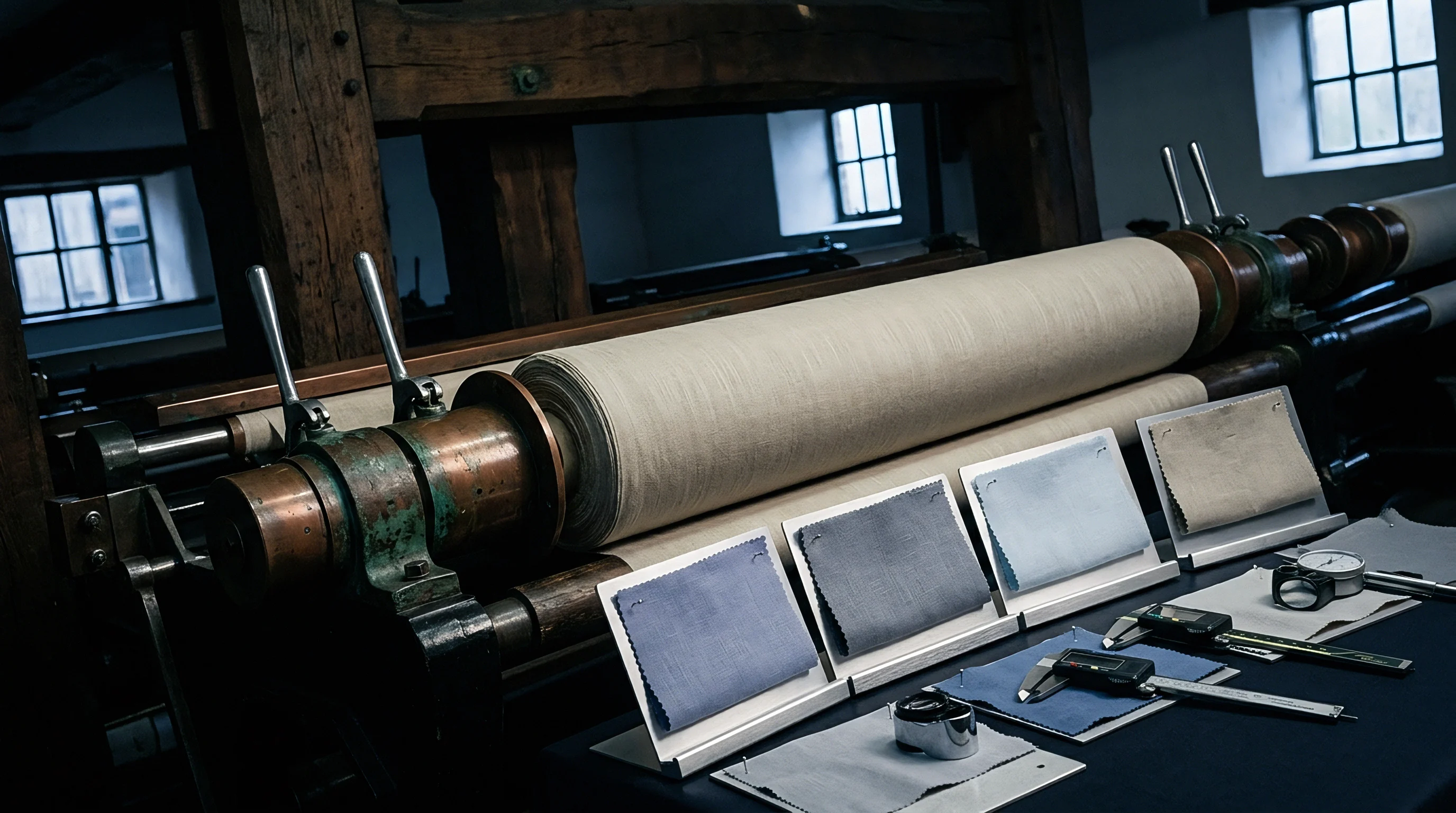
Telemetry
Validating weaving site claims without a continuous presence at the mill requires matching machine activity directly against declared fabric volumes. Modern industrial weaving sheds generate continuous operational data through building management systems, main power sub-meters, compressed air monitors, and loom automation panels. Comparing electric power signatures against declared loom operating hours uncovers subcontracting practices where an audited facility claims to weave fabric that was actually purchased ready-woven from external regional sheds.

Loom Power Consumption and Utility Discrepancies
Air-jet and rapier looms weaving heavy flax yarn draw substantial electrical power continuously to operate warp let-off drives, shedding mechanisms, and main motor shafts. High-speed rapier looms processing 100 percent linen yarns draw between 1.8 and 3.5 kilowatt-hours per machine operating hour, depending on reed width and loom speed measured in picks per minute. When a mill declares a production run of 50,000 metres of greige linen cloth over a two-week window, the electrical energy consumed by the designated loom bank reaches predictable mathematical thresholds.
| Physical Metric | Expected Consumption Value | Observed Discrepancy Signal | Origin Risk Evaluation |
|---|---|---|---|
| Active Power Draw | 1.8 to 3.5 kWh per loom hour | Sub-kW utility billing during declared peak run | Fabric woven at unapproved alternative shed |
| Sizing Chemical Mass | 40 to 60 kg per tonne yarn | Inadequate starch purchase invoices | Greige rolls imported ready-woven from external mill |
| Compressor Metering | 0.6 to 1.2 cubic metres per minute | Zero air compression activity logged | Off-site weaving on unmonitored vintage machinery |

Sizing Chemical Balance and Warp Takeoff
Warp yarns undergo sizing prior to mounting on the loom beam to resist abrasive stress from reed movement during shed formation. Linen weaving requires sizing formulations containing modified starches, polyvinyl alcohol, and lubricating waxes, applied at pickup rates ranging between 4 percent and 7 percent dry weight gain relative to bare yarn mass. A legitimate weaving operation consumes specific quantities of raw sizing chemicals matched to the total warp yarn volume processed across its slashing machines.
A mill running legitimate greige weaving operations leaves a clear trail of sizing chemical purchases matching its warp beam production logs.
Tracing utility and chemical consumption forms a dual-verification mechanism that uncovers synthetic balance sheet adjustments. An auditor cross-references sizing agent delivery invoices against slashing tank logbooks and compares these figures against total beam sets mounted on the loom shed floor. Missing purchasing invoices for sizing compounds combined with flat electrical utility bills during high-volume production windows indicates that the facility served merely as a transit warehouse for pre-woven fabric.
- Warp beam mounting logs detailing date, loom serial number, yarn lot code, and total end counts for every mounted set.
- Weave shed electricity meter records isolate power consumption for specific loom banks over the contracted manufacturing timeframe.
- Sizing batch compounding sheets verify chemical additive purchases and liquid size pickup weight relative to processed yarn mass.
- Greige roll inspection tickets timestamped at the loom output frame showing raw roll weight, reed width, and pick counts per centimetre.
Mill operators often explain missing loom power data by citing unmetered shared generators or regional electrical grid bypasses during contract production runs.


Audit
Physical site reviews establish whether a manufacturing facility maintains the operational capacity required to weave declared cloth volumes. On-site verification protocols move beyond administrative paperwork review to inspect physical machinery, examine shift staffing rosters, sample yarn remnants, and extract automated machine telemetry directly from equipment controller memory cards. Auditing engineers evaluate whether the physical plant floor layout matches the schematics on file with regional environmental authorities and export compliance bureaus.

Which Mill Telemetry Records Validate Physical Loom Occupancy?
Inspectors cross-reference electronic machine logs against active pick counter readings to confirm that contracted looms physically ran during specified shifts. Modern loom controllers record micro-stoppages, warp break frequency, operator intervention codes, and total reed beat-up cycles in non-volatile memory chips. Extracting this raw data provides objective proof of machine occupancy that factory management cannot easily alter post-production.
A 200-loom weave shed operating at 85 percent mechanical efficiency yields approximately 14000 linear metres of standard density linen fabric per 24-hour day.
Executing an effective origin audit demands systematic examination of internal factory logs from raw material intake through greige output staging. The following sequence guides the qualification assessment of dual-country weaving facilities:
- Review yarn intake invoices against mill weighbridge receipts to confirm physical entry of declared spun lots.
- Inspect warp sizing logs and compare chemical consumption rates against industry standard size pickup percentages.
- Extract loom automation computer logs for the specific machines assigned to the contract production order.
- Correlate daily kilowatt-hour sub-metering data for the weaving shed against the calculated electrical draw of active looms.
- Verify greige roll storage records and outgoing transportation bill of lading weights against total finished fabric output.
Cross-checking electronic machine records against external transport invoices identifies inconsistencies where output quantities exceed physical machine capacity limits. When audited facilities operate under capacity constraints, unscrupulous suppliers may subcontract weaving to unregistered third-party sheds without buyer authorization. Establishing continuous verification metrics prevents unapproved supply chain leakage.
Whether digital machine logs can remain tamper-proof when exported through uncertified local factory networks remains a persistent challenge for remote origin verification.
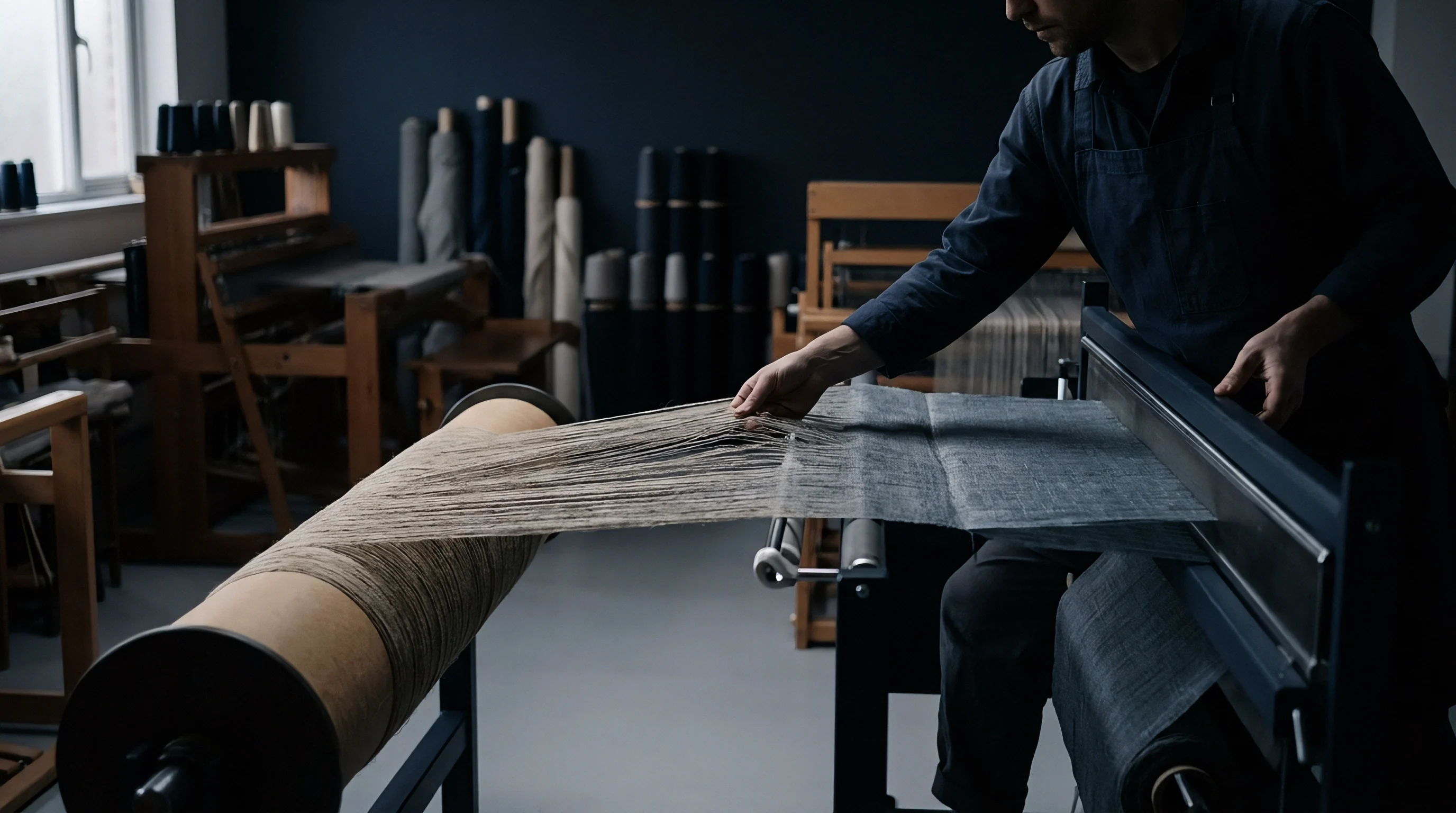

Shed
Quantifying yarn inputs against finished greige roll mass reveals whether raw materials were transformed into cloth on site or substituted elsewhere. Material balance accounting applies precise engineering conservation principles to the weaving process. Calculating total yarn kilograms purchased, less process scrap and selvedge trim, establishes the absolute ceiling for produced greige cloth yardage.

Mass Balance Calculations across Production Stages
Converting spun yarn into woven cloth involves measurable material losses during warping, sizing, loom setup, and fabric trimming. Standard wet-spun flax yarn processing incurs between 1 percent and 3 percent non-recoverable waste during warping and weaving operations. Conversely, sizing application adds dry chemical mass to warp yarns.
Reconciling incoming yarn weights against outgoing greige roll weights requires adjusting for size addition, moisture regain content, and selvedge trimming allowances.
| Process Phase | Standard Material Loss Range | Maximum Permissible Deviation | Primary Cause of Variance |
|---|---|---|---|
| Warping and Creeling | 0.5% to 1.2% | 1.5% | Yarn end breakage and bobbin residual waste |
| Sizing Application | +3.0% to +6.0% (Net Gain) | +7.5% | Starches and lubricants added to warp ends |
| Loom Weaving Waste | 1.0% to 2.5% | 3.0% | Fringe trimming, catch cords, and warp snap breaks |
| Greige Inspection Defect Cut-Offs | 0.8% to 1.8% | 2.2% | Slub removal and weaving fault cut-outs |
Consider a contract manufacturing run for 40,000 linear metres of greige linen fabric with a specified target weight of 220 grams per square metre and an off-loom reed width of 1.60 metres. The total net fabric mass required calculated in dry terms equates to 14,080 kilograms of finished greige cloth. Assuming a standard sizing starch pickup of 5.0 percent on the warp yarns (which constitute 52 percent of total fabric mass), the bare yarn content within the finished fabric equals 13,714 kilograms.
Factoring in a baseline 2.0 percent non-recoverable process waste factor across warping, creeling, and loom fringe trimming, the mill must consume 13,994 kilograms of bare spun flax yarn to produce the target batch. If incoming weighbridge receipts and spinning lot movement certificates show only 11,500 kilograms of yarn delivered to the weaving facility, a deficit of 2,494 kilograms exists. This shortfall indicates that approximately 17.8 percent of the contract yardage originated from alternative, undocumented fabric stocks woven elsewhere.
- Yarn weight balance verification comparing net imported yarn kilograms against net produced greige cloth weight after adjusting for size pickup.
- Loom reed density matching ensuring reed width and picks per centimetre on greige rolls correspond exactly to contract loom setup sheets.
- Subcontracted processing threshold checks verifying local transformation costs exceed required percentage thresholds under regional trade agreements.
- Batch-level transaction certificate tracking tying yarn lot numbers through intermediate warp beams to specific greige roll numbers.
Physical yarn loss always leaves a measurable waste trail that no balance sheet adjustment can synthetically recreate.


Duty
Commercial contracts covering dual-country textile processing assign financial liabilities when trade authorities reject declared origin documentation. Importers bear statutory liability under customs regulations for duty underpayments, interest assessments, and regulatory fines resulting from improper origin claims. Structuring procurement contracts with explicit origin warranties and indemnification obligations protects buying organizations against financial losses caused by supplier subcontracting defaults.

Origin Warranty Clauses and Import Non-Compliance Remedies
Structuring cross-border processing agreements demands explicit financial allocation for potential customs tariff reclassifications. Standard purchase terms must specify that suppliers maintain comprehensive mill-level telemetry records, sizing logs, and yarn traceability dossiers for a minimum of five years post-importation. Furthermore, terms must establish immediate audit access rights for buyer-designated third-party inspectors without prior facility notice.
Customs authorities inspect physical weaving records up to five years after cargo entry, making retroactive tariff claims a lingering commercial liability for importers.
When custom inspectors challenge origin claims, defending the declaration requires submitting verified mill dossiers containing original loom telemetry, sizing receipts, and weighbridge logs. Failure to provide these records results in retroactively applied non-preferential duty rates, punitive anti-dumping tariffs where applicable, and administrative seizure of non-compliant inventory. Enforceable supplier agreements link final invoice settlement to origin dossier verification.
Incorporating standard customs indemnification clause 14B shifts retroactive duty assessments, port storage fees, and legal defense costs directly onto the selling counterparty upon origin certificate rejection.