Harmonized System Mixture Rules for Flax Fiber Blends under Section XI Note 2
Flax blend classification under Section XI Note 2 depends on commercial mass calculations after applying standard moisture regain percentages to dry fiber weight.


Statute
Under Section XI of the Harmonized System, customs classification for flax blends follows a strict statutory hierarchy. Note 2 to Section XI governs mixtures composed of two or more textile materials, classifying the entire product as if it consisted solely of whichever textile material predominates by mass over every other individual component. This sets a single-material plurality standard rather than an absolute majority.
A fabric made of 40 percent flax, 35 percent cotton, and 25 percent polyester classifies under Chapter 53 as flax fabric because flax is the single largest component by mass, even though non-flax fibers together account for 60 percent of the total.
Applying Note 2(A) requires following the procedural order in Note 2(B), which governs multi-fiber blends through specific sorting rules:
- Chapter Predominance Isolation determines the Chapter first by evaluating the combined mass of all fibers falling within that Chapter before comparing individual headings within it.
- Synthetic Filament Grouping combines all synthetic staple fibers and filaments into a single collective mass calculation for the purpose of primary Chapter selection.
- Artificial Fiber Aggregation sums cellulosic man-made fibers including viscose, lyocell, and modal into one consolidated weight category when evaluating man-made staple fiber thresholds.
- Generic Entry Consolidation treats references within a single Chapter heading that name multiple textile materials as a unified single material for threshold calculations.
Non-relevant Chapters drop away sequentially. When customs officers decide between Chapter 53 and Chapter 55, they total the fibers falling under each prospective Chapter. The Chapter with the greatest aggregate mass takes the initial classification.
Only then is the heading selected, applying the same predominance principle exclusively among the fibers belonging to that winning Chapter. Other Chapter 53 bast fibers, such as ramie or hemp, combine with flax when weighing Chapter 53 against competing fiber chapters.
| Fiber Category | Standard Botanical or Chemical Class | Official Moisture Regain Rate (%) | Governing ISO Analysis Reference |
|---|---|---|---|
| Flax and Hemp | Bast vegetable fibers | 12.00 | ISO 1833-1 |
| Cotton | Seed vegetable fibers | 8.50 | ISO 1833-1 |
| Viscose and Lyocell | Regenerated cellulosic fibers | 13.00 | ISO 1833-3 |
| Polyester | Synthetic polymer filaments or staple | 1.50 | ISO 1833-11 |
| Wool and Fine Animal Hair | Protein animal fibers | 18.25 | ISO 1833-4 |
Quantitative determination of fiber fractions for statutory classification never relies on raw dry laboratory weight. Statutory weight under Section XI means commercial mass: the oven-dry mass of the fiber cleared of non-fibrous matter, increased by the official moisture regain percentage designated for that specific fiber class. Because flax carries an official regain rate of 12.00 percent while polyester carries a regain rate of only 1.50 percent, the calculation of commercial mass systematically shifts the mass ratio in favor of flax compared to raw oven-dry laboratory measurements.
Customs declarations that fail to apply standard moisture regain adjustments risk immediate reclassification upon customs audit laboratory testing.
Commercial mass determinations under Section XI Note 2 combine oven-dry fiber mass with official statutory regain values rather than unadjusted ambient weight.
Improper aggregation of man-made staple fibers with natural fibers represents a frequent compliance exposure point. Synthetic fibers like polyester and polyamide group together under Chapter 55 rules, whereas natural vegetable fibers like flax and cotton remain strictly separate individual categories during Chapter selection. Importers facing multi-component blends must calculate each fiber’s adjusted commercial mass prior to lodging formal customs entries.
Compliance with Note 2 dictates precise accounting for every percentage point of fiber weight at the port of entry.
Sliver
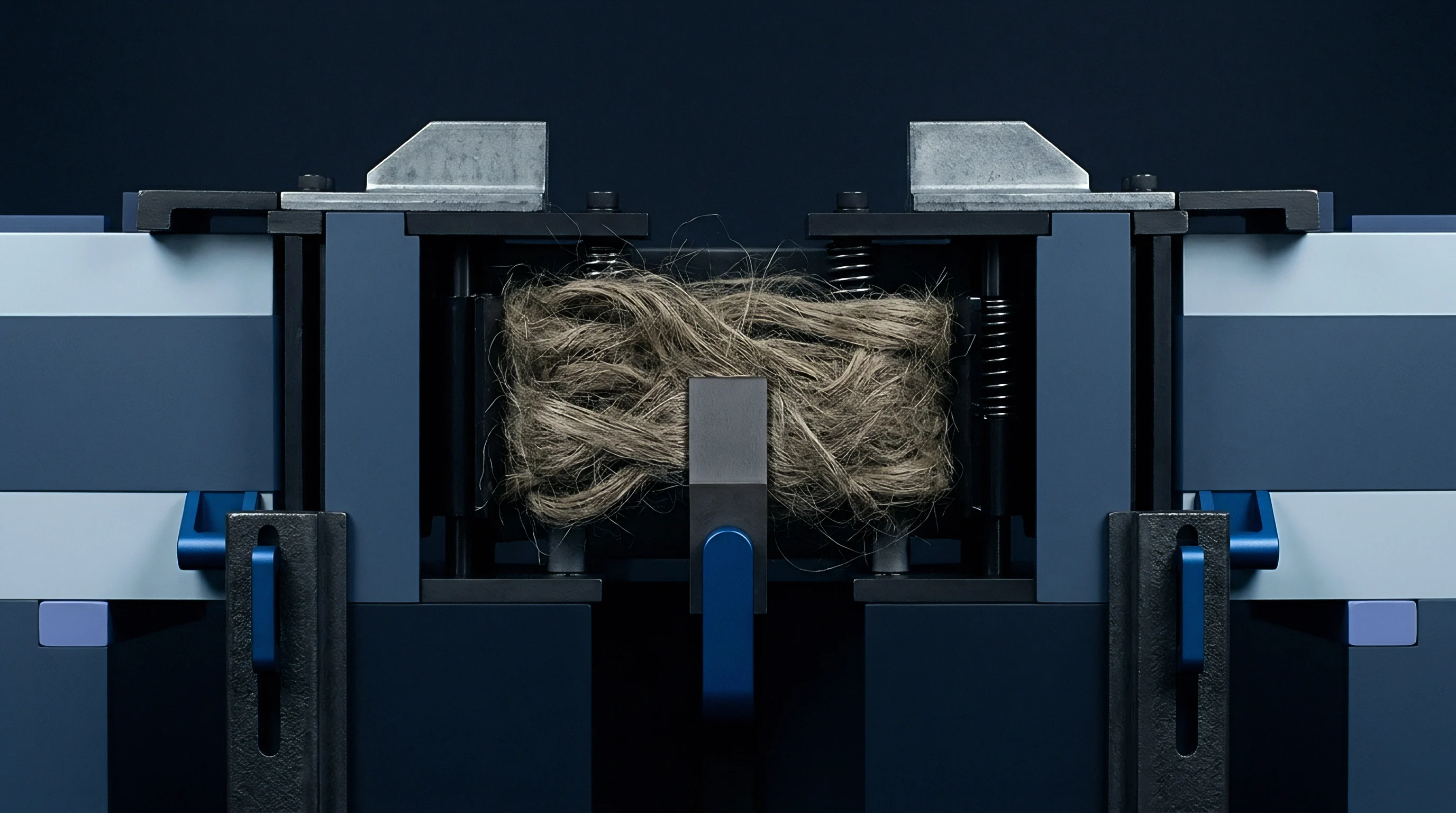
Physical distribution of flax fibers within a blend yarn or fabric directly impacts the accuracy of quantitative laboratory analysis. Flax fiber ( Linum usitatissimum ) presents inherent structural variability due to its bundle-like cellular arrangement, thick cell walls, and irregular lumen dimensions. Unlike uniform extruded synthetic filaments or relatively standardized cotton fibers, flax strands undergo mechanical carding, combing, and drafting that yield variable fiber lengths ranging from long line flax to short tow fibers.
Intimate blending occurs early in processing when flax slivers combine with polyester or viscose slivers on the draw frame. Uneven drafting at the sliver stage introduces localized mass fluctuations along the length of the spun yarn, causing two samples cut from the same bolt of fabric to yield differing fiber ratios under chemical analysis.
Selection of testing methods dictates the reliability of blend verification. Standard quantitative analysis follows ISO 1833 procedures, employing selective chemical dissolution to isolate individual fiber components. For flax and cotton mixtures, chemical separation presents severe technical obstacles because both fibers consist primarily of alpha-cellulose.
Solvents capable of dissolving cotton will also degrade flax cell walls, leading to mass loss errors if dissolution temperature and exposure duration drift outside tight tolerances. Laboratory technicians utilize physical fiber counting via optical microscopy or polarized light microscopy when chemical separation risks compromising accuracy. Microscopical analysis requires counting thousands of individual cross-sections, introducing statistical sampling variance into the declared blend percentage.
- Drafting Ratio Drift causes localized concentration of short tow fibers along the yarn axis, altering localized flax content by up to three mass percent across single weave repeats.
- Cellulosic Dissolution Degradation occurs during sulfuric acid or zincate testing under ISO 1833, where aggressive reagents dissolve fine flax fibrils alongside targeted cotton fibers.
- Size and Finish Retention inflates non-fiber mass measurements when warp sizing compounds fail to strip completely during pre-test boiling procedures.
- Non-Uniform Moisture Sorption creates mass determination errors during laboratory weighing if conditioning rooms deviate from standard atmospheric parameters of 20 degrees Celsius and 65 percent relative humidity.
Spinning mill recipe records frequently diverge from finished fabric test reports due to process waste losses. During scutching, hackling, and combing, short fibers and non-fibrous shive particles separate from the main fiber stream as waste. A mill charging a draw frame with a nominal blend recipe of 50 percent flax sliver and 50 percent polyester sliver will not yield a finished yarn containing an exact 50/50 mass distribution.
Flax fibers sustain higher mechanical breakage rates during high-speed rotor or ring spinning than synthetic filaments, driving flax waste generation above synthetic waste levels. The resulting spun yarn routinely displays a lower net flax mass percentage than the initial raw bale formulation indicated.
Contractual blend specifications defined at the fiber bale stage systematically decay during spinning and finishing operations due to differential mechanical fiber waste.
Fabric wet processing introduces further quantitative shifts. Scouring, bleaching, mercerizing, and caustic weight-reduction treatments strip natural pectins, waxes, and hemicellulose from raw flax fibers. Raw flax contains between 8 and 12 percent non-cellulosic impurities by mass.
Severe caustic scouring dissolves these natural compounds, reducing the absolute mass of the flax component while leaving synthetic fibers virtually untouched. An unbleached greige fabric containing 51 percent flax by mass easily drops to 48 percent flax by mass following aggressive industrial bleaching and dyeing. Customs audits perform testing on the imported finished fabric, completely indifferent to original yarn spinning formulations or greige fabric production notes.
Discrepancies between declared invoices and customs test results expose a recurring conflict between commercial convention and customs law: mill floor recipe sheets serve as trade descriptions within the spinning industry, but customs authorities reject them as proof of classification, relying exclusively on physical sampling of the imported bolt at the border.
Arithmetic
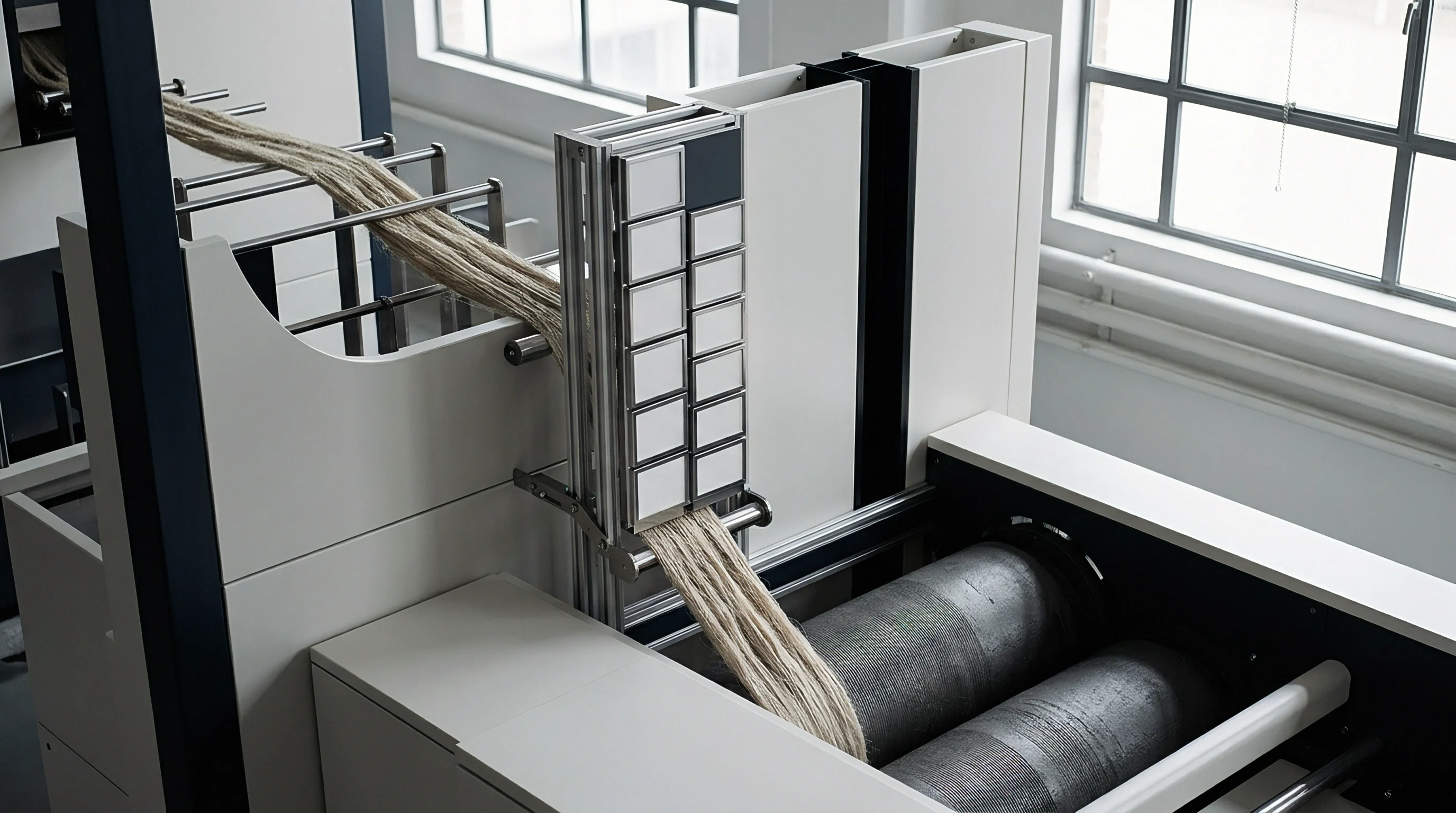
Determining tariff classification under Section XI Note 2 requires precise mathematical conversion from dry laboratory weights to statutory commercial mass. Laboratory test reports prepared under ISO 1833 provide the oven-dry mass of each extracted fiber component after removing sizing materials and non-fibrous matter. Applying official moisture regain rates to these dry values alters the relative mass proportions, directly determining whether a blend clears the 50 percent threshold for primary heading classification.
Consider a woven apparel fabric imported under a nominal commercial description of a 50 percent flax and 50 percent viscose blend. A customs laboratory extracts sample swatches, dries them to constant mass in a drying oven at 105 degrees Celsius, and performs chemical separation according to ISO 1833-3. The oven-dry test yields the following clean mass measurements:
Clean oven-dry mass of extracted flax fiber = 48.20 grams. Clean oven-dry mass of extracted viscose fiber = 51.80 grams. Total clean oven-dry mass of fabric sample = 100.00 grams.
Evaluating raw dry mass suggests viscose predominates with 51.80 percent of total weight, which would classify the fabric under Chapter 55 heading 5516 for woven fabrics of artificial staple fibers. However, Section XI Note 2 mandates calculation based on commercial mass using statutory moisture regain rates. The official regain rate for flax equals 12.00 percent.
The official regain rate for viscose equals 13.00 percent. Commercial mass for each fiber component calculates via the standard formula where commercial mass equals dry mass multiplied by one plus the regain rate expressed as a decimal:
Commercial mass of flax = 48.20 (1 + 0.1200) = 48.20 1.1200 = 53.984 grams. Commercial mass of viscose = 51.80 (1 + 0.1300) = 51.80 1.1300 = 58.534 grams. Total commercial mass of blend sample = 53.984 + 58.534 = 112.518 grams.
Calculating commercial mass fractions yields:
Commercial percentage of flax = (53.984 / 112.518) 100 = 47.98 percent. Commercial percentage of viscose = (58.534 / 112.518) 100 = 52.02 percent.
Under statutory commercial mass rules, viscose maintains predominance at 52.02 percent, confirming classification under heading 5516. Now consider a second scenario involving a complex three-fiber intimate blend composed of flax, cotton, and polyester. The laboratory reports the following oven-dry extracted masses from a 100.00 gram dry sample:
Oven-dry flax mass = 39.50 grams (Regain rate = 12.00 percent). Oven-dry cotton mass = 38.00 grams (Regain rate = 8.50 percent). Oven-dry polyester mass = 22.50 grams (Regain rate = 1.50 percent).
- Multiply dry flax mass by 1.1200 to obtain flax commercial mass: 39.50 1.1200 = 44.240 grams.
- Multiply dry cotton mass by 1.0850 to obtain cotton commercial mass: 38.00 1.0850 = 41.230 grams.
- Multiply dry polyester mass by 1.0150 to obtain polyester commercial mass: 22.50 1.0150 = 22.838 grams.
- Sum individual commercial masses to calculate total specimen commercial mass: 44.240 + 41.230 + 22.838 = 108.308 grams.
- Divide flax commercial mass by total commercial mass and multiply by 100 to determine final flax percentage: (44.240 / 108.308) 100 = 40.85 percent.
- Divide cotton commercial mass by total commercial mass and multiply by 100 to determine final cotton percentage: (41.230 / 108.308) 100 = 38.07 percent.
- Divide polyester commercial mass by total commercial mass and multiply by 100 to determine final polyester percentage: (22.838 / 108.308) 100 = 21.08 percent.
Flax achieves single material predominance at 40.85 percent of total commercial mass, despite natural vegetable fibers (flax plus cotton) totaling 78.92 percent. Because flax represents the largest single component mass, the product classifies under Chapter 53, heading 5309 for woven fabrics of flax.
| Nominal Fiber Recipe Ratio | Laboratory Dry Mass Ratio (%) | Statutory Regain Rates Applied (%) | Final Commercial Mass Fraction (%) | Section XI Classification Heading |
|---|---|---|---|---|
| 50 Flax / 50 Cotton | 49.10 Flax / 50.90 Cotton | Flax 12.0 / Cotton 8.5 | 49.88 Flax / 50.12 Cotton | Heading 5209 or 5211 (Cotton) |
| 50 Flax / 50 Cotton | 49.30 Flax / 50.70 Cotton | Flax 12.0 / Cotton 8.5 | 50.08 Flax / 49.92 Cotton | Heading 5309 (Flax) |
| 45 Flax / 55 Polyester | 46.00 Flax / 54.00 Polyester | Flax 12.0 / Polyester 1.5 | 48.51 Flax / 51.49 Polyester | Heading 5515 (Polyester) |
| 45 Flax / 55 Polyester | 48.00 Flax / 52.00 Polyester | Flax 12.0 / Polyester 1.5 | 50.53 Flax / 49.47 Polyester | Heading 5309 (Flax) |
Minor variations in raw dry weight cross major classification thresholds when moisture regain calculations apply. As demonstrated in the table, a flax/cotton blend measuring 49.30 percent dry flax transforms into a 50.08 percent commercial flax majority due to the 3.5 percentage point regain advantage flax holds over cotton. The arithmetic shift alters the governing chapter from Chapter 52 to Chapter 53.
Statutory regain calculations systematically favor high-regain natural bast fibers over low-regain synthetic filaments in boundary-threshold classifications.
Failing to perform commercial regain conversions prior to customs filing results in incorrect tariff chapter selection, triggering retroactive duty assessments, penalty interest, and delayed port clearances.


Manifest
Validating customs declarations for flax fiber blends requires an uninterrupted documentary chain linking field-level origin certificates down to bolt-level shipping manifests. Customs auditors scrutinize clearance dossiers to ensure declared fiber content matches physical mill consumption records. A complete provenance file contains chain-of-custody documentation spanning every manufacturing phase, eliminating gaps where lower-value fibers could enter the production stream without declaration.

How Do Laboratory Moisture Regains Alter Blend Calculations?
Laboratory test reports issued under ISO 17025 accreditation serve as the ultimate technical evidence during customs audits. Test certificates must explicitly state whether reported fiber percentages represent unadjusted dry mass or official commercial mass calculated under Section XI standards. When a laboratory report delivers raw dry mass numbers without applying statutory regain percentages, the customs broker must perform the arithmetic adjustment prior to submitting entry documentation to border enforcement agencies.
Chain of custody verification relies on reconciling mass balance inputs against physical output weights. A mill producing certified European Flax blends must maintain bale stores records detailing incoming fiber lot numbers, scutcher production logs, and spinning lot allocations. Auditors track total kilogram intake of certified long flax fiber against total linear meters of finished blended cloth dispatched under transaction certificates.
- Scope Certificate Integrity validates that the processing facility holds active certification under recognized schemes like European Flax or Masters of Linen covering the specific processing dates.
- Transaction Certificate Alignment links individual fabric shipments directly to specific raw material lots cleared through spinning and weaving facilities.
- Bale Tag Lot Traceability anchors physical yarn packages and fabric rolls back to original raw flax scutching batches and warehouse receiving tickets.
- ISO 17025 Test Report Scope verifies that the testing laboratory maintains specific accreditation for ISO 1833 quantitative chemical analysis methods.
Discrepancies between commercial invoices and packing lists often arise when suppliers quote nominal trade names rather than precise technical fiber breakdowns. An invoice listing fabric as Linen Blend soft finish fails to satisfy customs requirements for specific percentage declarations. Border authorities require exact percentage listings for every constituent fiber on the formal customs invoice.
Transaction certificates verify facility eligibility during manufacturing windows but do not replace batch-specific physical laboratory testing for tariff entry declarations.
Importers managing cross-border supply chains incorporate explicit technical warranty clauses into mill procurement agreements. Standard purchase terms establish clear financial liability when mill-supplied goods fail border authority validation testing.
Contracts specify that seller warrants declared fiber composition matches ISO 1833 commercial mass testing within a tolerance of plus or minus one percent, and seller assumes all financial liability for duty adjustments, storage charges, and administrative fines resulting from erroneous blend classification.

Tariff
Tariff classification outcomes derived from Section XI Note 2 dictate applicable ad valorem duty rates, quota restrictions, and trade remedy exposures across international borders. Differential duty rates between natural bast fiber fabrics under Chapter 53 and synthetic or cotton fabrics under Chapters 52, 54, and 55 create substantial financial stakes during customs entry clearance. A two percent shift in declared flax content can alter duty liability dramatically depending on destination market tariff schedules.
| HS Heading | Product Description Scope | Base EU Most Favored Nation Duty (%) | Base US Most Favored Nation Duty (%) | Non-Preferential Origin Rule Standard |
|---|---|---|---|---|
| 5309.11 | Woven flax fabrics, containing 85% or more flax by mass, unbleached | 5.80 | 1.20 to 3.00 | Spinning of staple fibers or fabric formation |
| 5309.29 | Woven flax fabrics, containing less than 85% flax, dyed or printed | 5.80 | 8.40 to 11.40 | Weaving accompanied by printing or finishing |
| 5209.11 | Woven cotton fabrics, containing 85% or more cotton, plain weave | 8.00 | 7.20 to 8.90 | Yarn-forward rule of origin requirement |
| 5516.12 | Woven fabrics of artificial staple fibers, containing 85% or more, dyed | 8.00 | 12.00 to 14.90 | Chemical fiber extrusion plus fabric weaving |
Non-preferential rules of origin introduce additional legal complexity when evaluating flax blends. Origin rules determine the nationality of imported goods for tariff quota allocation, anti-dumping duties, and trade enforcement measures. Under Union Customs Code provisions and United States Customs regulations, origin determination for blended fabrics often relies on specific manufacturing operations rather than simple fiber predominance.
For multi-fiber blends, substantial transformation generally requires yarn spinning accompanied by fabric weaving in a single country, or a change in tariff heading from yarn to fabric.
Where raw European flax fiber ships to a third country for intimate blending with locally produced viscose and subsequent weaving into fabric, the finished fabric must be evaluated under specific country-of-origin rules. If the product classifies under heading 5516 due to viscose predominance under Note 2, the applicable origin rule may mandate that chemical staple fiber production occur within the origin-claiming territory. If the same fabric classifies under heading 5309 due to flax predominance calculated via commercial regain arithmetic, the origin rule shifts to focus on flax spinning and weaving operations.
The classification decision reached under Section XI Note 2 directly dictates which origin rule applies, cascading into preferential trade agreement eligibility under frameworks like the EU-Vietnam Free Trade Agreement or USMCA.
Dispute resolution mechanisms for contested tariff entries begin with administrative protest filings accompanied by independent accredited laboratory re-testing. Importers challenging customs reclassification decisions present full mass-balance reconciliation files, raw fiber procurement records, and standardized regain calculations to demonstrate compliance with Note 2 statutory rules. When administrative protests fail, formal litigation proceeds before specialized international trade courts where technical laboratory methodology undergoes judicial review.
The extent to which commercial regain standardization under Section XI Note 2 aligns with emerging digital supply chain traceability mandates and automated customs clearance protocols remains an evolving regulatory question.