Identification of Line and Tow Flax in Ambiguous Commodity Quotes
Differentiating line from tow flax in ambiguous quotes requires verifying staple length over 500 mm, shive below 3%, and hackling yields above 50% by contract.


Tariff
Commodity quotations frequently lump distinct bast fibre fractions under broad headings such as raw flax, flax tow, or scutched flax without declaring staple lengths, processing methods, or drafting yields. A trading house offer listing unhackled water-retted or dew-retted material at a single flat price per metric ton obscures the divide separating continuous line stricks from tangled tow collections. Line flax consists of intact, parallel bast fibre bundles running the full length of the plant stem, typically spanning 600 to 900 millimetres.
Flax tow encompasses the residual, disordered, broken short fibres rejected during mechanical scutching or subsequent hackling operations, showing mean staple lengths between 30 and 120 millimetres. When a quote omits specific grade codes or processing definitions, buyers face substantial commercial exposure at the spinning frame.
International customs classifications offer initial clarity but remain vulnerable to exploitation by commercial intermediaries. The Harmonized Commodity Description and Coding System divides unworked or processed flax under heading 5301 into distinct subheadings: 5301.10 covers raw or retted flax; 5301.21 designates broken or scutched flax; 5301.29 encompasses hackled or otherwise processed long fibre; and 5301.30 isolates flax tow and waste, including pulled or garnetted rags. Unscrupulous shippers routinely misclassify coarse scutched tow under 5301.21 or 5301.29 to justify elevated prices, or conversely mislabel lower-grade scutched line as tow under 5301.30 to bypass targeted tariff thresholds.
Discrepancies in listed gross weights, declared moisture regain levels, and regional harvesting codes reveal deliberate attempts to bridge price spreads between line bundles and byproduct mass.
Under standard test atmosphere conditions of 20 degrees Celsius and 65 percent relative humidity, raw scutched long line contains less than 2.5 percent shive by weight while scutched tow frequently exceeds 12 percent.
European and Chinese domestic spot markets employ diverging nomenclature systems that further complicate quote evaluation. French and Belgian scutching operations grade scutched long line numerically, distinguishing lower-tier lots from premium water-retted inventory based on cleanliness, scutching uniformity, colour, and hackling yield expectations. Chinese domestic processors in Heilongjiang or Zhejiang grade dew-retted fibre through localized industrial standards, assigning Roman numerals from grade I down to grade VI based on bundle tenacity, metric count, and breaking force.
When a broker issues a quote citing Grade 3 flax without naming the governing national standard, the buyer cannot determine whether the quote covers medium-grade long line stricks or high-grade carded tow suitable only for coarse wet-spun or dry-spun yarns.
| Tariff Code | Declared Commodity Descriptor | Structural Morphology | Mean Fibre Length | Spinnable Yarn Limit |
|---|---|---|---|---|
| 5301.10 | Raw or retted straw | Intact unseparated stems | 700 to 1000 mm | Unspinnable straw |
| 5301.21 | Scutched flax | Parallel untangled stricks | 500 to 800 mm | Nm 24 to Nm 36 wet-spun |
| 5301.29 | Hackled flax line | Combed aligned sliver | 600 to 900 mm | Nm 36 to Nm 100 wet-spun |
| 5301.30 | Flax tow and waste | Disoriented entangled clump | 30 to 120 mm | Nm 8 to Nm 18 dry-spun |
Intermediaries frequently claim that regional scutching variations make precise length declarations impossible before container arrival.
Bale
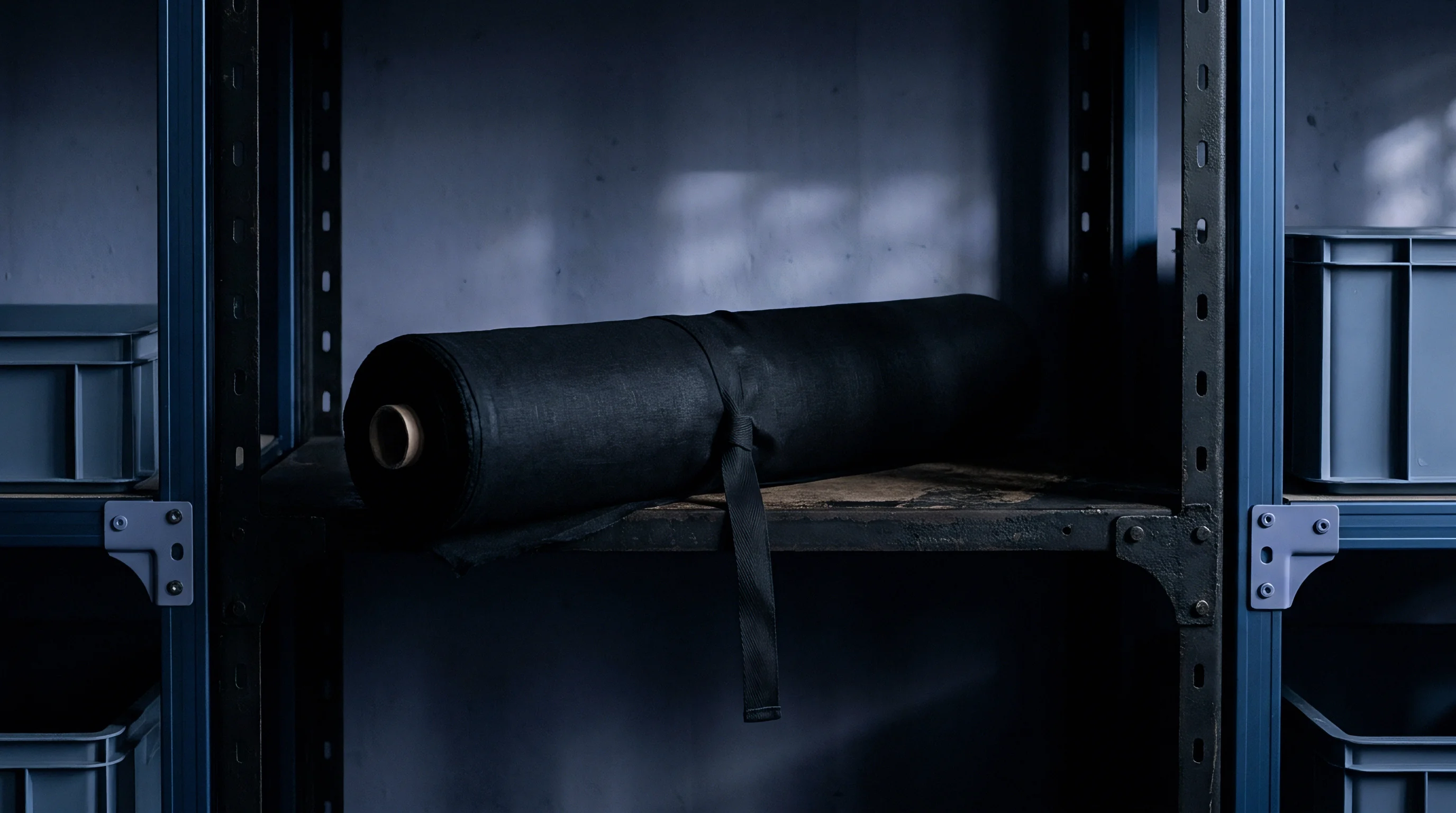
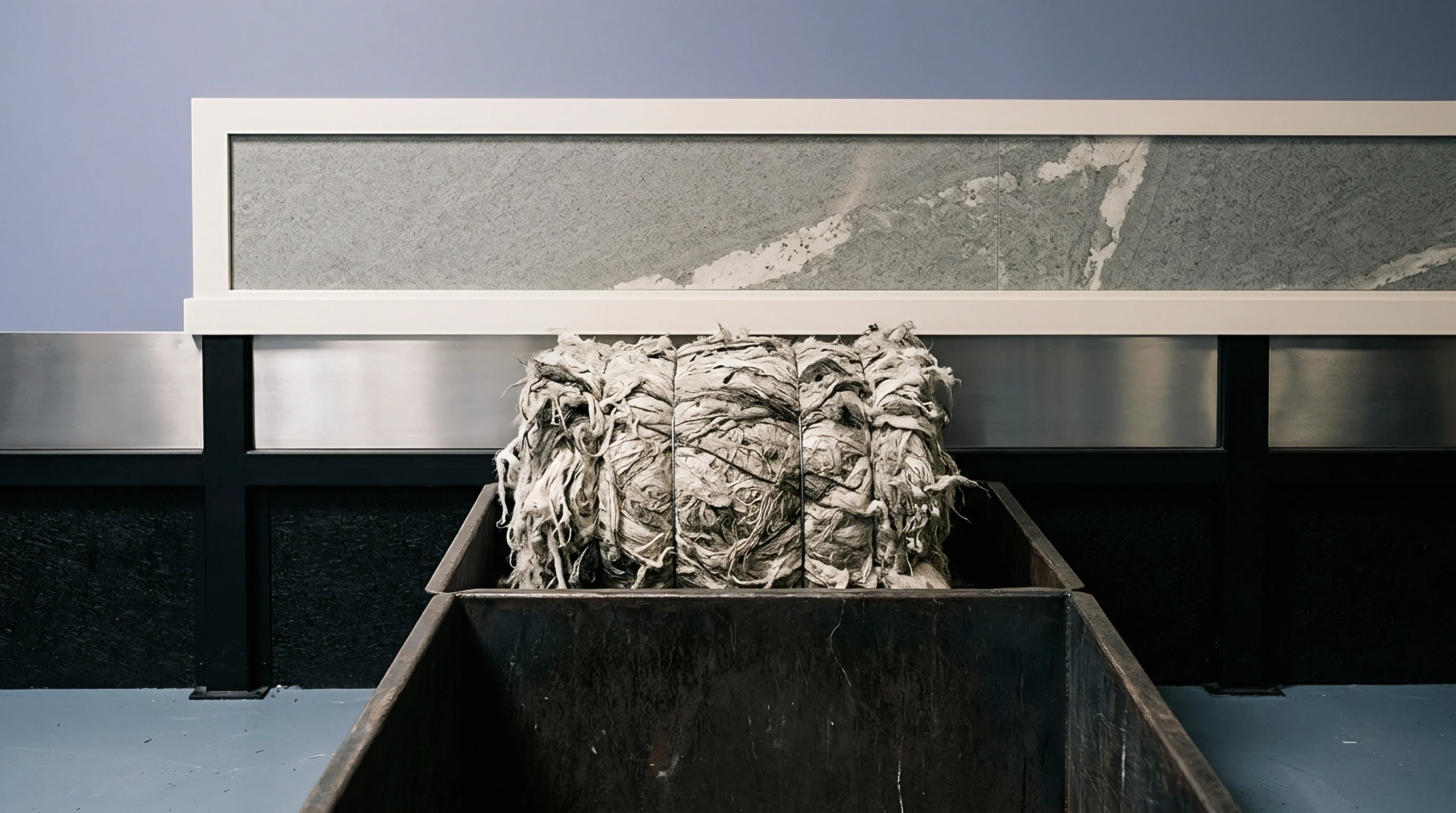
Physical receipt of containerized inventory provides the first opportunity to confirm whether shipped material matches contracted grade declarations. Unloading full container shipments requires immediate density checks across individual pressed units. Baled scutched long line presents organized, parallel bundles wrapped neatly within press cloths, displaying consistent strick orientation from head to root.
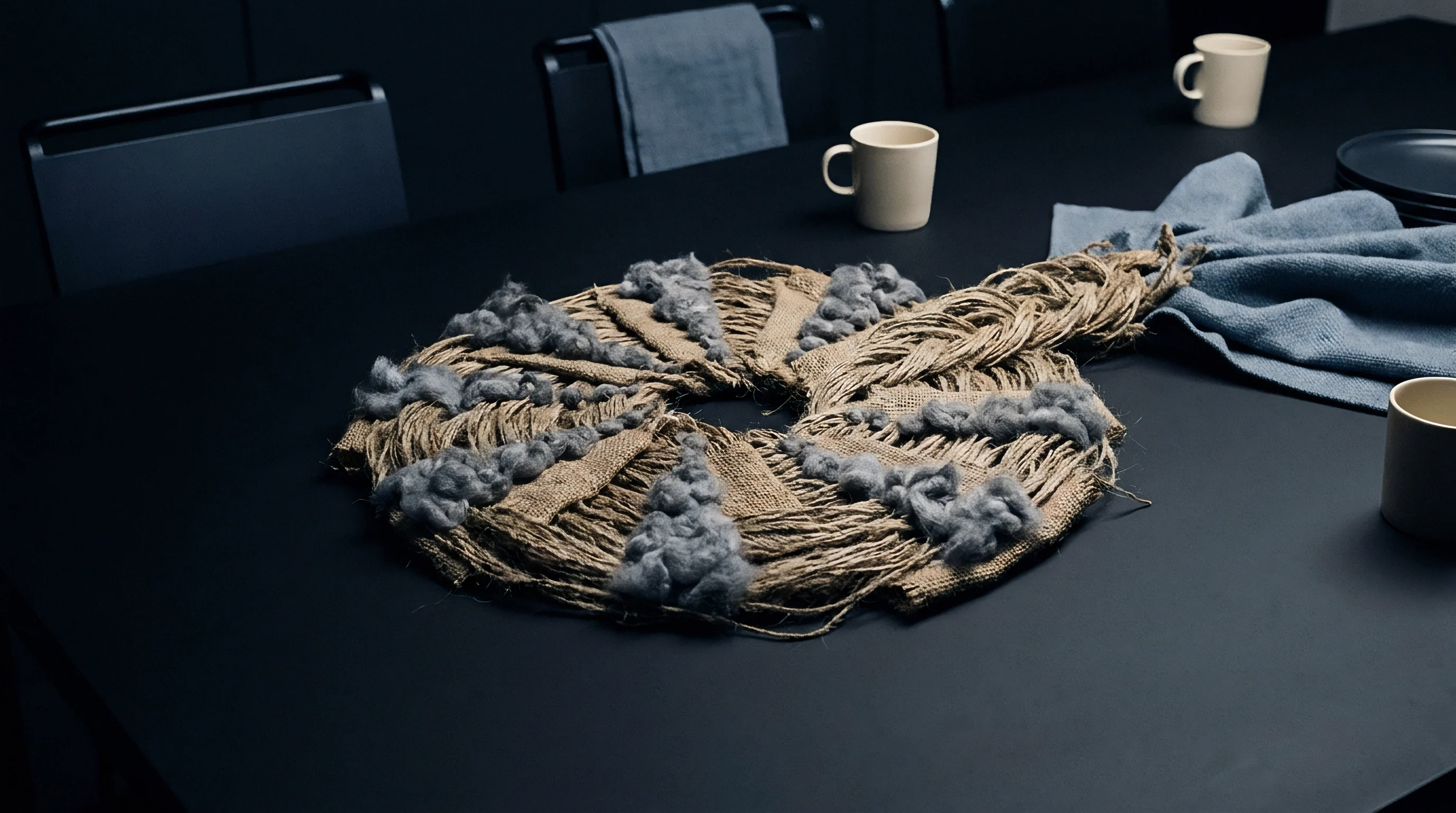
Line stricks exhibit firm parallel alignment, minimal mechanical entanglement, and an absence of cross-axial matting. Tow arrives as chaotic masses compressed under hydraulic rams into dense rectangular blocks, showing high internal disorder, high shive debris, and curled fibril bundles. Long fibres draft straight.
Does Bale Core Density Distinguish Scutched Line?
Internal density measurements taken with a hydraulic core penetration probe highlight clear mechanical differences between long line bundles and tow matrices. A line package pressed at normal hydraulic force registers an uneven axial resistance profile: high penetration resistance across transverse bundle directions, transitioning to smooth longitudinal compliance when the probe slips along aligned fibre axes. Tow blocks exhibit isotropic resistance across every axis, indicating complete orientation collapse.
When a core drill extracts a 50-millimetre plug from the heart of a suspect unit, the harvested fibres tell a definitive structural story. Tangled strands resist drawing.
Direct manual evaluation of the extracted stricks exposes subtle adulteration practices. Processors seeking to cut delivery costs occasionally fold loose scutching tow inside the core of a scutched line bundle, wrapping genuine long-staple stricks around the perimeter. Opening the bundle reveals the interior composition.
Dew retting changes fibre cohesion. If the interior mass pulls apart into short, unaligned clumps under slight manual tension, the consignment contains stratified tow packing rather than uniform long line.
Uniformity in bundle alignment across the entire package core confirms line integrity faster than testing laboratory reports.
Material defects that surface during unpackaging disrupt subsequent gill box drafting operations:
- Excessive shive agglomeration creates severe drafting choking when woody stem fragments wedge into pinned faller bars, generating mass spikes across delivered roving slivers.
- Decayed core cellulose results from improper bale storage under moisture levels above 14 percent, causing localized bacterial degradation that shatters bast fibrils into dust upon initial processing.
- Mechanical strick tangling occurs when aggressive baling equipment twists long fibre bundles, transforming genuine line inventory into unusable tangled nests that break pins during hackling.
- Heterogeneous retting bands produce variable bundle cohesion along individual stricks, triggering draft irregularities and uneven yarn count profiles on the spinning floor.
Shive content degrades count. Clean stricks feed gills smoothly. Bast fibres split under load.
Moisture shifts commercial mass calculations. A simple operational rule indicates that greasy, dark, high-odor fibres indicate incomplete dew field weathering that leaves bundles excessively coarse for fine wet drafting.


Metric
Laboratory quantification separates ambiguous commodity claims through standardized physical testing protocols. ISO 2370 establishes the definitive airflow permeability procedure for determining the fineness of flax fibres, expressing linear density through metric fibre number or bundle tex values. High-grade scutched line intended for fine wet spinning counts yields fineness ratings between Nm 350 and Nm 500, indicating thin, well-separated technical fibre bundles.
Coarse scutched tow rarely exceeds Nm 150 to Nm 220, reflecting incomplete bundle separation, thick cross-sections, and heavy encrustations of middle lamella pectin. Testing technician teams split sampled bundles by hand, remove extraneous epidermis, and measure linear mass across precise length segments.
Do Laboratory Sieve Tests Detect Short Fractions?
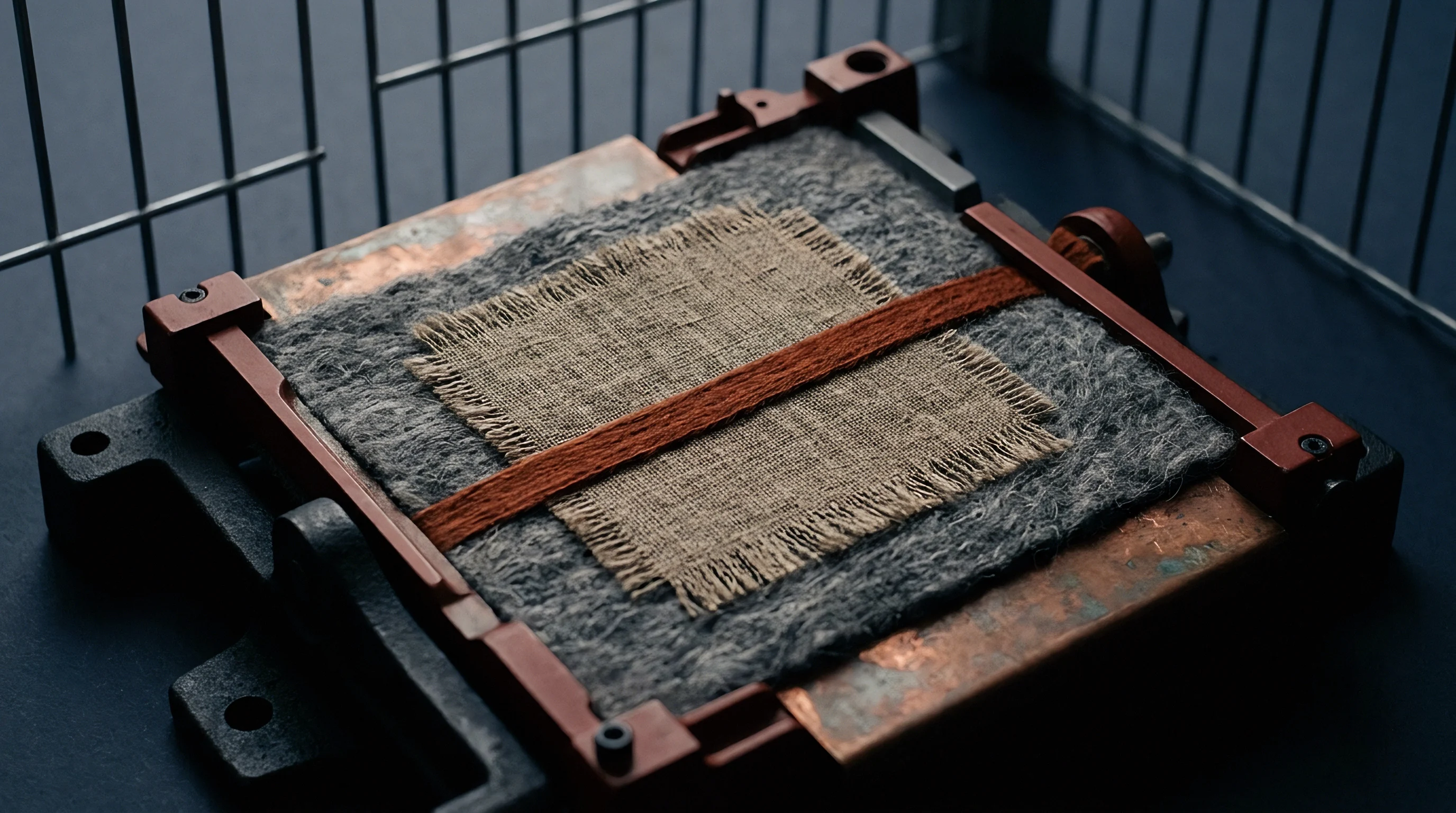
Dynamic mechanical sieving and comb sorter analysis map the length distribution across ambiguous lots, exposing concealed tow dilution. Operating a comb sorter according to bast fibre testing protocols produces a cumulative staple diagram showing exact percentages of long, intermediate, and residual fibres. A genuine scutched line lot exhibits a steep, right-shifted staple curve where 75 percent or more of the fibre mass exceeds 450 millimetres in staple length.
A blended lot contaminated with tow shows a bimodal length profile with a secondary mass peak sitting between 40 and 90 millimetres. High variation increases yarn defects.
| Testing Parameter | Governing Standard | Scutched Long Line | Scutched Tow | Combed Line Slivers |
|---|---|---|---|---|
| Linear Fineness (Nm) | ISO 2370 Airflow | 300 to 450 | 120 to 220 | 450 to 650 |
| Bundle Tenacity (cN/tex) | ISO 1973 / ISO 2062 | 28.0 to 42.0 | 14.0 to 24.0 | 38.0 to 52.0 |
| Mean Staple Length (mm) | Comb Sorter Method | 500 to 750 | 45 to 110 | 550 to 800 |
| Residual Shive Content (%) | Gravimetric Separation | 1.2 to 2.8 | 8.5 to 16.0 | 0.3 to 0.8 |
| Moisture Content (%) | ISO 6741 Oven Drying | 10.5 to 12.5 | 11.0 to 14.0 | 10.0 to 12.0 |
Coarse bundles jam drafting aprons. Sieve screens separate loose shive. Evaluating mechanical performance across long bundles demands strict environmental control during preparation.
Bundle tenacity measurements run on constant-rate-of-extension tensile testers highlight the structural difference: long line bundles reliably exceed 32 centinewtons per tex under standard ambient conditions, whereas tow bundles break below 22 centinewtons per tex due to mechanical damage suffered during intensive scutching cylinder beating. The question of how to reconcile contradictory fineness numbers derived from airflow methods against microscopic cross-sectional image analysis remains open among industrial test houses.

Margin
Financial calculations underlying spinning operations depend directly on raw fibre conversion yields. Converting scutched long line into spinnable roving requires passing stricks through heavy industrial hackling machines equipped with graded pins. A typical industrial hackling line yields between 50 and 60 percent hackled line sliver, with the remaining 40 to 50 percent dropping out as machine hackling tow, shive dust, and terminal waste.
When an ambiguous quote marked as scutched flax contains concealed tow fractions, hackling yield collapses. Processing a lot containing 25 percent tow cuts clean hackled line recovery to less than 38 percent, immediately driving the effective price of usable sliver beyond commercial viability.
What Margin Deterioration Follows Unplanned Tow Substitution?
Evaluating an operational cost model shows how slight fiber classification errors destroy spinning profitability. Assume a mill purchases a 40-metric-ton consignment of raw material billed ambiguously as scutched flax at 4.20 US dollars per kilogram landed at the factory gate, intending to spin a Nm 36 wet-spun yarn for weaving fine shirting fabrics. Under normal operating conditions using genuine scutched line, the mill achieves a 54 percent hackled line yield, generating 21.6 tons of clean combed sliver, 15.2 tons of usable hackling tow valued at 1.80 US dollars per kilogram, and 3.2 tons of unrecoverable waste.
The effective cost of the hackled line sliver equals 5.89 US dollars per kilogram of clean material before processing labor and spinning overheads.
A drop of five percent in hackling yield increases the effective cost of combed line sliver by more than eight percent before spinning begins.
Wet spinning demands length. When the delivered consignment contains 20 percent disguised tow, hackling yield drops from 54 percent to 41 percent. Clean sliver output falls to 16.4 tons, while lower-value waste fractions surge.
Hackled line sliver cost escalates to 7.71 US dollars per kilogram. For a finished plain weave cloth weighing 150 grams per square metre with warp and weft spun from this yarn, the fibre component of the fabric jumps from 1.06 US dollars per square metre to 1.39 US dollars per square metre. Mill invoices reflect total recovery.
This variance of 0.33 US dollars per metre entirely eliminates the spinner’s net margin, transforming a projected profit into an acute operational deficit.
| Delivered Lot Quality | Hackling Yield (%) | Usable Sliver Cost ($/kg) | Nm 36 Yarn Cost ($/kg) | Finished Fabric Cost ($/m²) |
|---|---|---|---|---|
| Pure Scutched Line | 56.0 | 5.68 | 9.10 | 2.45 |
| Standard Scutched Line | 52.0 | 6.12 | 9.80 | 2.62 |
| 10% Tow Dilution | 46.0 | 6.91 | 11.05 | 2.92 |
| 20% Tow Dilution | 40.0 | 7.95 | 12.72 | 3.34 |
| 30% Tow Dilution | 34.0 | 9.35 | 14.96 | 3.90 |
Dry frames tolerate short fibres. Substituting dry-spun tow into a line specification causes immediate end-break surges on wet spinning frames. Running coarse tow bundles through a wet-spinning water bath set to 60 degrees Celsius fails to achieve proper drafting attenuation.
Pectins dissolve unevenly, thick bundle fragments jam drafting rollers, and broken ends multiply across ring rails. Operators spend shifts piecing ends rather than monitoring output. Rejection of entire yarn lots due to thick-and-thin slubs, excessive hairiness, and low single-end breaking strength forces the enterprise to absorb severe inventory write-downs and client penalties.
Recourse
Commercial protection against ambiguous commodity quotations requires rigid contractual drafting prior to issuing purchase orders. Procuring teams must never rely on broad descriptions such as scutched flax or line flax without attaching measurable physical parameters and accepted test procedures to the commercial agreement. Clear terms delineate line from tow by establishing minimum hackling yield baselines, strict staple length limits, maximum allowable shive content, and certified moisture regain percentages.
Writing specific arbitration frameworks into the contract ensures actionable legal protection when incoming shipments fail initial dockside quality checks.
- Receipt inspection teams draw representative composite core samples from 10 percent of unloaded bales across the shipping container immediately upon container seal breakage.
- Testing staff divide samples for gravimetric shive measurement, comb sorter staple length distribution analysis, and airflow linear density evaluation.
- The commercial buyer delivers formal written rejection within five business days if the mean staple length drops below 500 millimetres or shive debris exceeds 3.5 percent.
- The warehouse seals non-conforming cargo, moves lots to segregated bonded storage, and logs container numbers on official rejection dockets.
- The dispute advances to arbitration under designated bast trade association rules for financial settlement or cargo return at shipper expense.
Contract terms that omit specific test methods surrender commercial rights before the container departs the loading port.
Specific contract clauses resolve ambiguities before vessels depart origin ports. Inserting a binding clause stating that any consignment billed under tariff heading 5301.21 exhibiting a comb-sorter short-fibre fraction under 100 millimetres exceeding 15 percent by weight constitutes non-conforming goods permits the buyer to cancel letters of credit without penalty.