Dynamic Tension Control and Dobby Shedding Parameters for Flax Warps
Active tension control and asymmetrical dobby dwell minimize stress spikes on low-stretch flax warps to prevent end breaks and starting marks.
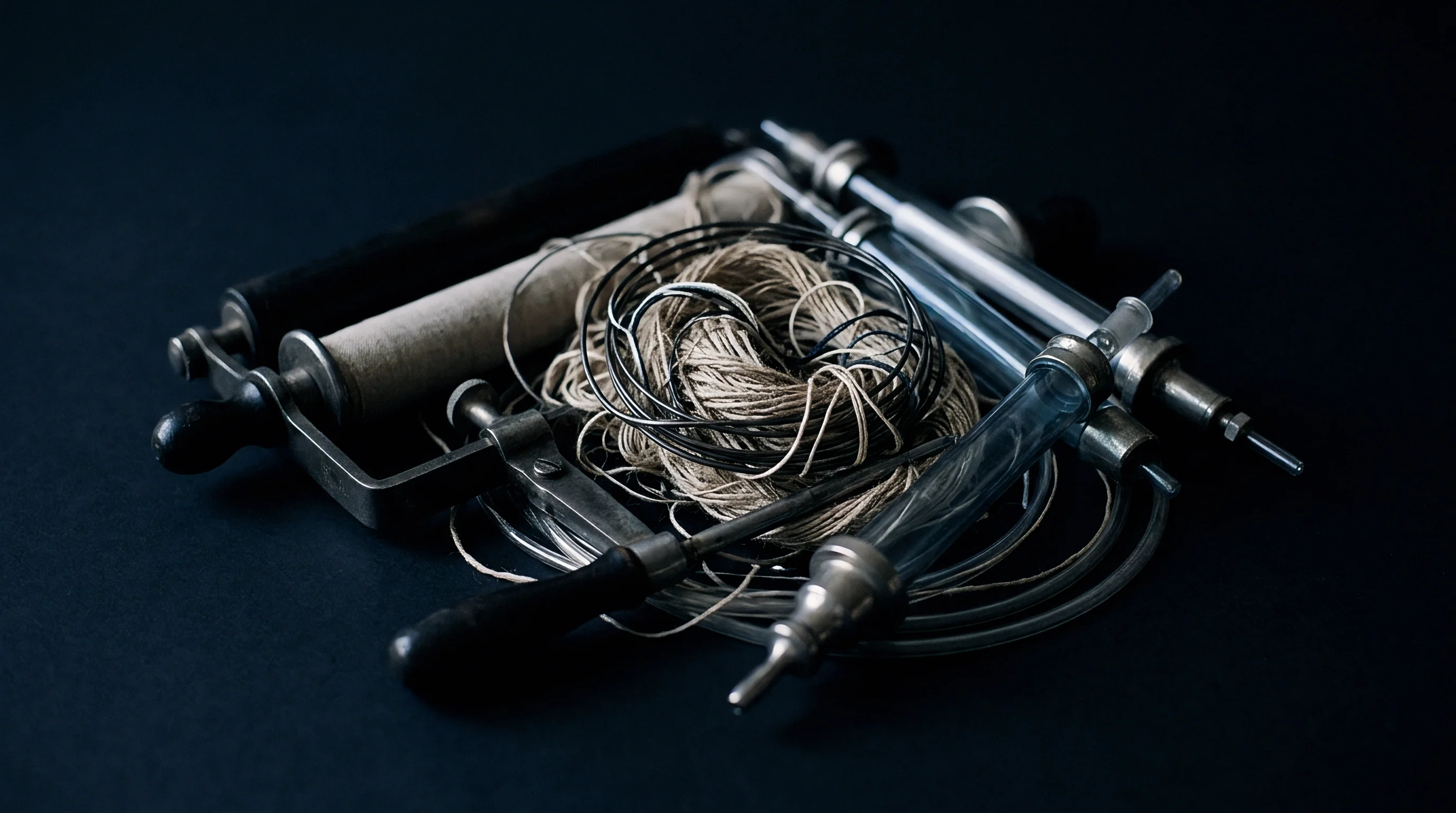
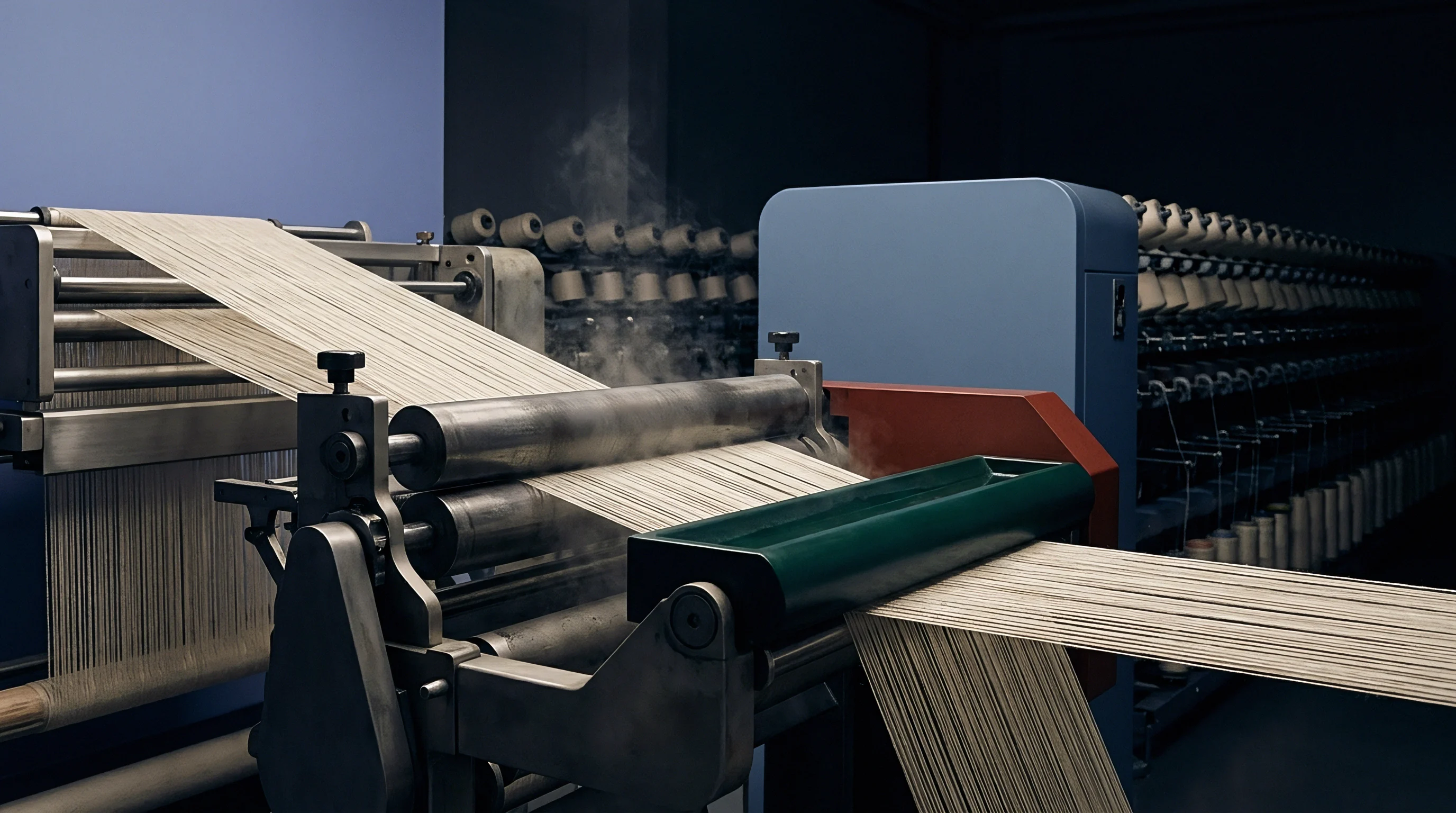
Modulus
Flax fibers exhibit a steep load-elongation curve, with breaking extension values rarely exceeding three percent. Standard cotton yarns stretch up to eight percent before failure, providing a natural cushion against shedding strain, but bast yarns lack this elastic safety margin. When a high-speed dobby loom opens the shed, geometric path elongation translates immediately into sharp tension spikes.
Uncompensated peak loads easily exceed the yield point of wet-spun flax, creating micro-fractures in the cellulosic bundle before the yarn breaks. Precise mechanical tension control is the primary defense against systemic end breaks during high-speed insertion.
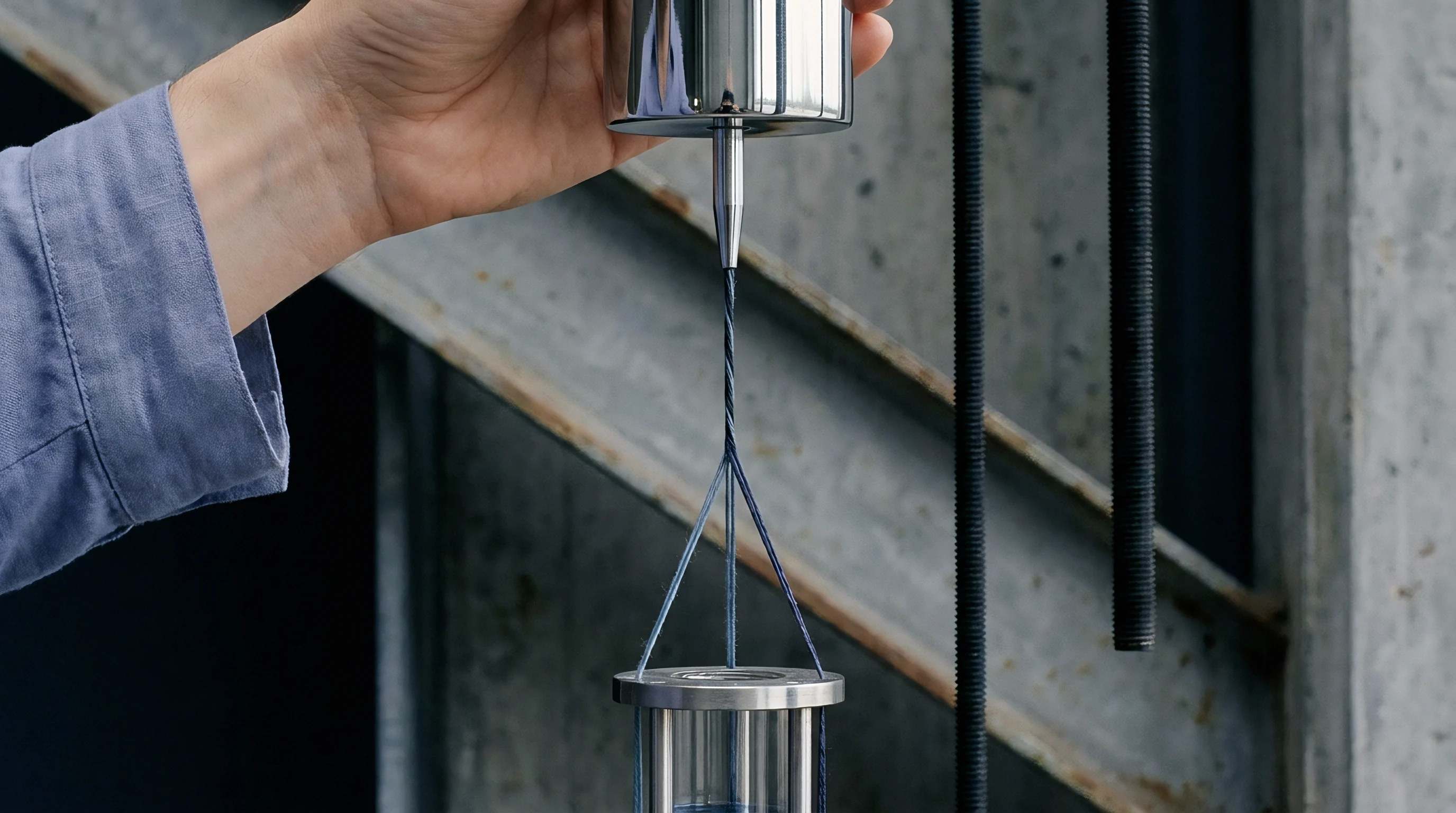
Mechanical Fiber Behavior in High Speed Weaving
The stiff crystalline structure of bast fibers leaves little room for stretch during shed opening. While molecular alignment along the fiber axis creates exceptional tensile strength, it also leaves the yarn brittle under transient loads. Cotton stretches under sudden tension jumps, but flax absorbs that kinetic energy through localized stress concentration, failing almost instantaneously once peak tension reaches the ultimate breaking load.
Long ultimate fibers bonded by pectin nodes also leave flax vulnerable to repetitive cyclic fatigue. Applying static tension profiles calibrated for synthetic or cotton warps to pure linen beams causes immediate shedding failure.
| Yarn Type | Linear Density (tex) | Tenacity (cN/tex) | Elongation at Break (%) | Yield Stress Threshold (cN/tex) |
|---|---|---|---|---|
| Wet-Spun Flax | 42 | 28.5 | 2.4 | 18.2 |
| Combed Cotton | 20 | 16.8 | 7.2 | 10.5 |
| Viscose Filament | 16 | 22.0 | 18.5 | 12.0 |
Flax behaves elastically up to roughly seventy percent of its breaking strength. Past this threshold, bonds within the pectin matrix break permanently, so subsequent stress cycles cause premature yarn failure at lower loads. Machine vibration and eccentric warp beam rotation compound this vulnerability by sending high-frequency tension ripples across the warp sheet.

Tensile Load Limits across Yarn Count Ranges
Yarn linear density sets the allowable tension threshold before microscopic filament fractures begin. Fine linen yarns rated at twenty-eight lea require static warp tension settings below fifteen centinewtons per end, whereas heavy yarns at ten lea tolerate static loads up to forty centinewtons per end without immediate failure. Even so, baseline static tension represents only forty percent of the peak tension generated during shed opening, leaving bast yarns exposed to sudden snaps.
A slack warp creates muddy shedding clearance while an overly tight warp snaps bast ends before beat-up completes.
Sizing applications increase tenacity by locking loose surface fibers into the yarn core, but size film flexibility remains limited. Excessively rigid formulations restrict internal fiber movement, increasing stiffness and lowering impact resistance. Proper sizing for flax warps balances film tenacity with bending flexibility, protecting ends during shedding without altering baseline modulus.
Setting warp tension by hand feel across varying relative humidity conditions produces inconsistent cloth density and recurring machine stops.

Dwell
Dobby shedding mechanisms govern harness frame acceleration and lift, establishing the clearance gap for pick insertion. Standard symmetrical dobby cams divide crank rotation into equal phases for lifting, dwelling, and closing, but flax warps require specialized asymmetric profiles that alter these kinetic ratios. Minimizing the duration of maximum shed opening reduces continuous static stress on highly tensioned bast ends, while extending the crossover timing softens harness transitions and lowers friction between adjacent warp ends.

Shed Geometry and Frame Kinematics
Proper alignment of the loom warp line prevents excessive friction between adjacent ends. Shed geometry depends on three critical dimensions: backrest height relative to the breast beam, harness frame stroke distance, and drop wire angle. Raising the backrest roller slightly creates an asymmetric shed where the upper sheet carries less tension than the lower sheet, shielding fragile ends during the cycle.
Symmetrical sheds distribute tension equally, but increase yarn-to-yarn abrasion during shed crossover. Lowering the harness stroke distance reduces total warp movement, keeping peak tension within safe limits for low-stretch flax.
- Shedding Mispicks occur when insufficient frame height prevents clean rapier passage, forcing the insertion element to split warp ends.
- Fuzz Ball Accumulation arises from repeated heddle eye abrasion against unyielding bast fibers during premature shed closure.
- Warp End Snapback develops when excessive harness lift stresses flax filaments past their yield point during maximum shed opening.
- Reed Mark Separation results from uneven harness frame leveling that displaces adjacent ends within the same reed dent.
Harness frame acceleration curves must follow modified sinusoidal paths rather than simple harmonic motion. Linear acceleration profiles generate abrupt force peaks at the start and finish of frame movement, whereas modified sine profiles distribute those forces evenly across the crank cycle to curb mechanical vibration in the dobby head. That damping translates directly into uniform shed openings across wide reed widths.
Asymmetric Lift Cycles and Rapier Clearance
Rapier insertion demands a clean shed angle of at least thirty degrees across the full reed width. Asymmetric dobby cams maintain that full clearance across seventy degrees of crank angle while accelerating closure through the remainder of the cycle. Running with excessively sharp shed angles frays the yarn, a problem sizing cannot remedy.
Balancing harness lift height against insertion velocity protects delicate linen warps from mechanical damage.
Standard ISO 7211 compliance testing rejects greige rolls exhibiting pattern distortion caused by inaccurate harness frame height calibration.
Feeler gauge verifications of harness frame height take place during static loom setup. Technicians adjust harness drive levers to establish exact clearance gaps between warp sheets and rapier guides, as deviations greater than zero point five millimeters cause clean shed clearance to collapse during high-speed production runs.
Incorrect shed clearance geometry accelerates heddle eye wear, degrades size coatings, and increases greige mill reject rates across high-speed weaving runs.
Load
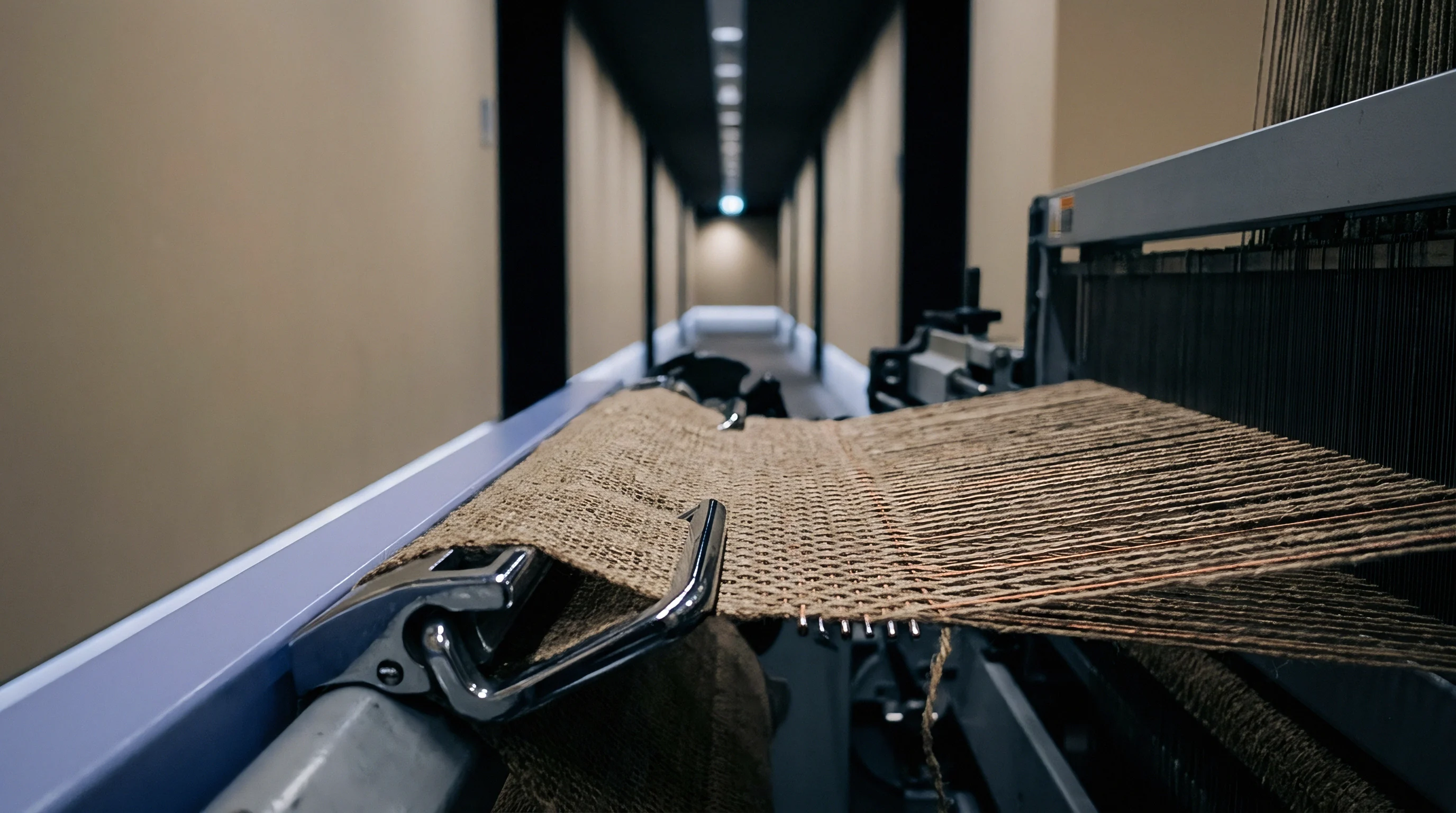
Active tension regulation relies on electronic backrest sensors paired with servomotor-driven warp let-off systems. Mechanical whip rolls using counterweights or springs respond too sluggishly to rapid tension changes on fast looms because of their own mechanical inertia. Electronic load cells beneath the backrest roller measure instantaneous warp tension at millisecond intervals, feeding signals directly to the control computer to continuously recalculate let-off speed.
These real-time adjustments eliminate tension drift as the warp beam decreases in diameter from full beam to core.

Active Backrest Dampening Mechanisms
Modern active backrest systems incorporate hydraulic or pneumatic dampers alongside calibrated steel torsion springs to absorb sudden peak stresses created during harness movement. Pneumatic systems adjust dampening resistance against real-time loom speed and yarn linear density. When the dobby opens the shed, the active backrest eases forward toward the harness frames to relieve tension; as the shed closes, it returns to its baseline position, maintaining uniform yarn tension through pick beat-up.
| Loom Speed (ppm) | Static Tension (cN/end) | Peak Shed Tension (cN/end) | Beat-up Tension (cN/end) | Tension Spike Variance (%) |
|---|---|---|---|---|
| 220 | 18.0 | 24.5 | 21.0 | 36.1 |
| 280 | 18.0 | 27.8 | 23.5 | 54.4 |
| 340 | 18.0 | 32.2 | 26.8 | 78.8 |
| 400 | 18.0 | 38.5 | 31.0 | 113.8 |
Consider a practical weaving scenario involving a 100 percent flax warp with a linear density of 30 tex, operating on a 190 cm rapier loom at 320 picks per minute. Static tension is established at 20 cN/end across 3,800 total warp ends, producing a total baseline warp load of 760 Newtons. Symmetrical shedding without active dampening causes peak loads to rise to 1,420 Newtons at 180 degrees crank angle.
Introducing active pneumatic backrest dampening reduces peak warp load to 950 Newtons under identical operating conditions, preserving yarn integrity and stabilizing beat-up forces.

Servomotor Integration and Let off Algorithms
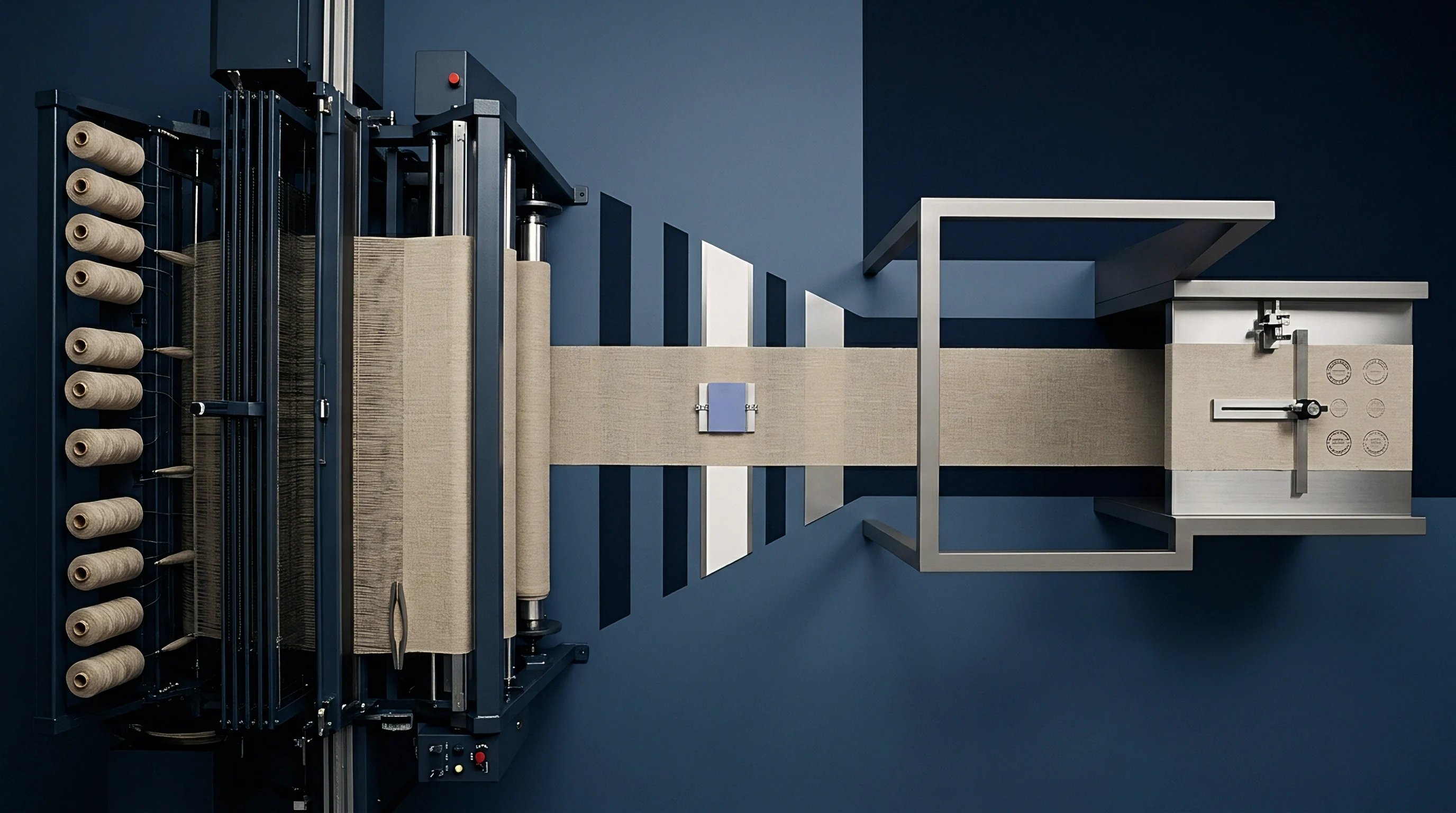
Electronic continuous let-off drives process real-time force sensor data to continuously adjust warp feed speed. Control algorithms calculate beam diameter changes using beam rotation encoders paired with pick counter data, enabling the servomotor to adjust rotation speed every pick insertion cycle. These instantaneous corrections prevent warp tightness on outer beam layers and avoid slackness near the beam barrel.
Maintaining peak warp tension below twenty-two centinewtons per end at three hundred picks per minute keeps flax breakage rates below one stop per machine hour.
Integration between dobby drive controls and let-off electronics provides predictive tension adjustment. The main loom computer anticipates harness frame movements based on pattern dobby cards. When a complex pattern section lifts eight harness frames simultaneously, the control unit signals the let-off servomotor to feed a precise increment of extra warp yarn before shed opening completes.
Weaving mills often attribute edge breaks to poor yarn spinning quality rather than investigating uncalibrated whip roll spring constants.

Defect
Uncontrolled stress peaks during high-speed loom operation produce distinctive physical damage in grey linen cloth. Structural defects manifest as broken warp ends, yarn fuzzing, shedding mispicks, starting marks, and temple cuts. Every fault mode traces back to specific imbalances between harness drive kinematics and active let-off responsiveness.
Analyzing greige fabric faults under magnification reveals whether yarn breakage stems from tensile overload, cyclic friction abrasion, or uneven warp density distribution across the reed.

Surface Abrasion and End Breakage Dynamics
Friction against heddle eyes strips away the protective size film of flax threads, exposing loose fibers that entangle with adjacent warp ends into fuzz balls. These clusters obstruct clean shed opening, causing rapier heads to catch and break multiple ends during pick insertion.
- Release manual whip roll locking clamps to disengage static spring tension before machine inspection.
- Advance the warp beam by two pick insertions using the electronic let-off interface to relieve relaxed yarn segments.
- Realign the harness frame crossover point to coincide exactly with reed dwell positions.
- Verify load cell baseline readings on the main control unit prior to restarting loom drive motors.
- Initiate slow-speed inching cycles for three picks to confirm uniform shed opening before engaging production speed.
Warp end breaks force immediate loom stops that cut into overall weaving efficiency. High break counts leave visible knot defects and repair tails in the finished fabric, lowering commercial fabric grading scores under ASTM D5430 guidelines.

What Triggers Starting Marks during Extended Mill Stops?
Machine shutdowns allow tensioned warp threads to undergo irreversible stress relaxation. Static strain causes flax fibers to lengthen permanently while sitting on a stopped loom, and upon restarting, the relaxed section produces a band of lower pick density known as a thin mark. Conversely, structural creep in mechanical backrest springs causes excessive yarn contraction during stops, producing the dense band known as a thick mark.
Bast fibers retain mechanical deformation permanently when held under continuous static load during shift changes.
Preventing starting marks requires automated stop-mark elimination sequences programmed into the loom control software. Upon receiving a stop signal, the main drive stops the reed behind the cloth fell while the electronic let-off relieves warp tension by a pre-programmed distance. Before the main drive restarts, the servomotor re-applies exact operational tension to align the cloth fell precisely with the reed beat-up position.
Whether real-time humidity monitoring inside the dobby enclosure can systematically eliminate transient tension spikes during winter cold starts remains an open question for mill managers.
Audit
Commercial loom booking rates directly track machine speed tolerances and warp breakage counts per hundred thousand picks. Purchasing managers buying linen fabrics buy loom hours rather than linear metres, as high warp breakage rates increase labor overhead per machine and reduce overall mill capacity. Establishing strict dynamic tension tolerances inside weaving contracts protects buyers from receiving fabric woven on uncalibrated, low-efficiency looms.

Quantitative Loom Efficiency Benchmarks
Production outputs decline sharply whenever yarn failure rates exceed two stops per loom hour. Standard industrial benchmarks for wet-spun flax warps target machine efficiency levels between eighty-two and eighty-eight percent at three hundred picks per minute. Operating below eighty percent efficiency increases fixed overhead allocation per metre, driving up landed cloth costs.
| Target Speed (ppm) | Breakage Rate (stops/hr) | Loom Efficiency (%) | Daily Yield (metres) | Net Landed Cost (EUR/m) |
|---|---|---|---|---|
| 260 | 0.8 | 88.5 | 185.2 | 4.15 |
| 300 | 1.4 | 84.2 | 203.5 | 3.92 |
| 340 | 2.8 | 76.0 | 208.1 | 4.28 |
| 380 | 5.2 | 62.4 | 191.6 | 4.85 |
Evaluating a 5,000-metre production order of 220 gsm plain weave linen demonstrates the direct financial impact of loom efficiency. Pushing loom speed from 300 ppm to 380 ppm without adjusting active backrest dampening increases breakage rates from 1.4 to 5.2 stops per hour, collapsing operating efficiency from 84.2 percent to 62.4 percent. Total daily output drops despite the higher machine speed, and net landed manufacturing cost rises by 0.93 EUR per linear metre due to increased operator intervention and machine downtime.

Financial Yield Arithmetic and Capacity Booking
Calculating the landed cost per woven metre requires factoring in set-up charges alongside machine speed. Fixed beam warping charges, harness drafting costs, and dobby card programming fees total approximately 850 EUR per warp setup, so spreading fixed setup expenses over short warp runs significantly increases unit costs.
- Tension Log Certification mandates continuous electronic backrest sensor recordings for every beam processed.
- Breakage Threshold Cap establishes a maximum limit of one point five warp stops per hundred thousand picks before price renegotiation.
- Shed Calibration Verification requires documented feeler gauge checks of harness frame height prior to contract signing.
- Humidity Control Guarantee binds the supplier to maintain shedding zone relative humidity between sixty-five and seventy percent.
Quality assurance protocols require mill managers to provide verified machine log files alongside delivered greige fabric lots. Automated weaving logs record actual operating speeds, total warp stops, average tension readings, and humidity levels for every production hour. Discrepancies between contractual setup parameters and recorded mill data provide clear grounds for price adjustments or fabric rejection.
Standard procurement contracts incorporate an efficiency penalty clause that deducts two percent of the metre price for every five percent drop in scheduled loom efficiency caused by uncalibrated warp tension parameters.