Mechanical Scutching Parameters and Fiber Separation Mechanics
Mechanical scutching parameters govern flax fiber separation efficiency, yield ratios, customs origin transformation, and commercial batch verification.

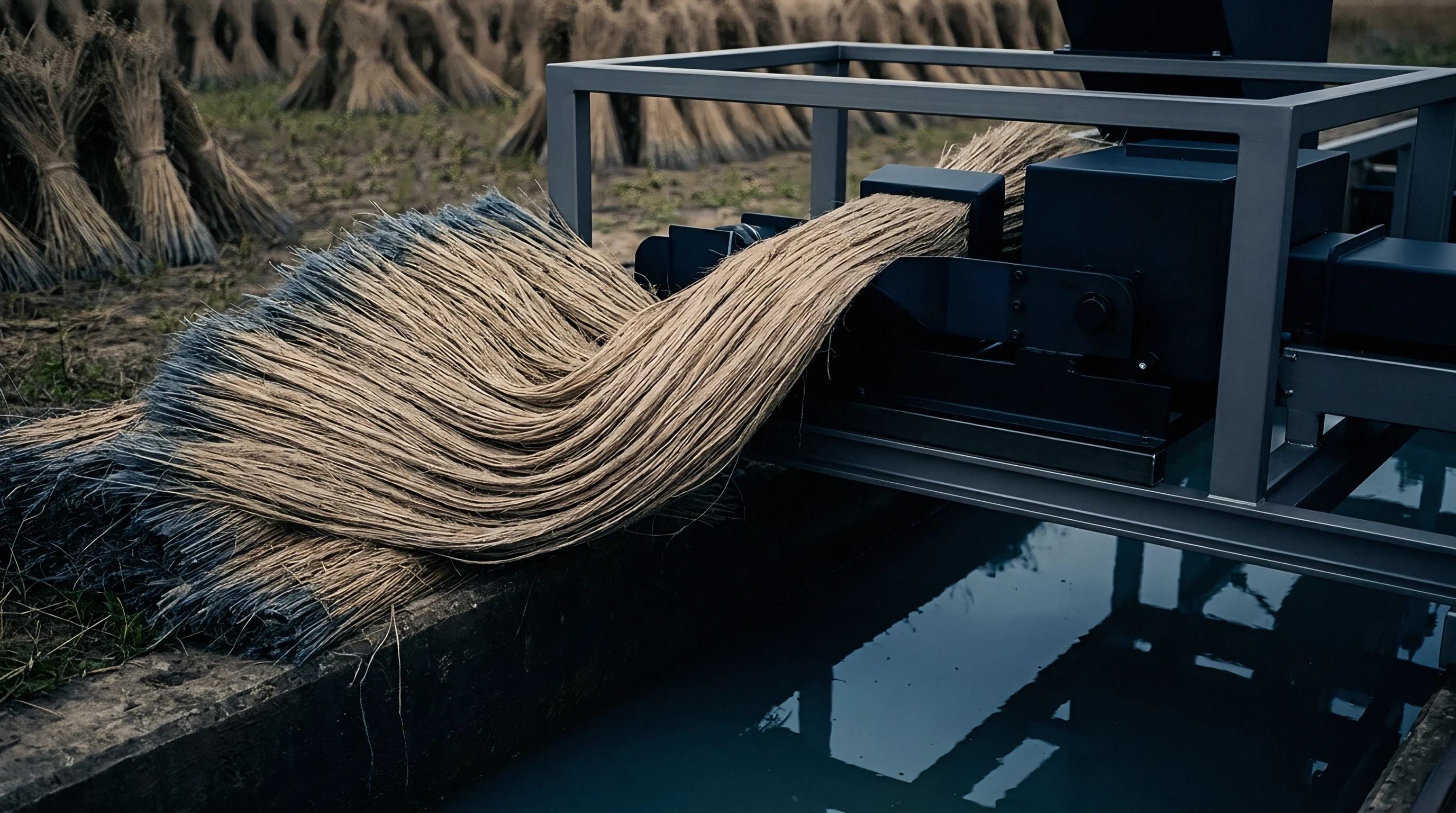
Flute
Decortication starts as parallel stems pass through intermeshing rollers that crimp the woody core inside. This mechanical action breaks the stiff xylem straw into short fragments while keeping the surrounding bast fiber ribbons intact. Tooth height, roller speed, and clamping pressure together dictate how thoroughly the core fractures.
Un-retted straw resists this bending, whereas retted straw yields under moderate pressure because field exposure has already broken down the pectin bonds between the fibers and the core.

De-Wooding Stress Dynamics
Initial bending forces shatter the rigid xylem core into fragments called shive. How deeply the rollers engage controls the flexural strain placed on incoming stalks: deeper engagement strips away wood faster, but overdoing it snaps bast fiber bundles and cuts down long-fiber yield later on.
Stem elasticity during processing depends heavily on moisture content. Below 10 percent moisture, stalks shatter unpredictably in the break rollers and develop microscopic fiber fractures. Above 16 percent, they flatten rather than snap, leaving coarse shive clinging to the fiber ribbon.
Keeping straw moisture between 12 and 14 percent yields the most consistent decortication.
Crush rolls use targeted tooth geometries to break down retted stalks efficiently.
| Roller Speed (RPM) | Flute Pitch (mm) | Nip Pressure (N/mm) | Straw Moisture (%) | Shive Separation (%) | Fiber Damage Index |
|---|---|---|---|---|---|
| 180 | 8.5 | 45 | 11.0 | 68.2 | 0.14 |
| 220 | 8.5 | 55 | 13.0 | 76.5 | 0.08 |
| 260 | 6.0 | 65 | 13.5 | 82.1 | 0.11 |
| 300 | 6.0 | 75 | 15.5 | 62.4 | 0.22 |
| Data measured across standard dual-pass breaker lines using Western European retted flax straw under ISO 139 atmosphere. | |||||
Breaker roll settings set the baseline for potential fiber yield before the straw moves into primary turbine decortication.
- Align retted straw stalks parallel to one another and perpendicular to the feed roll axis.
- Adjust initial fluted roll clearance to 1.2 times the average stalk diameter.
- Calibrate pneumatic nip pressure based on moisture readings from incoming straw bales.
- Monitor shive particle size distribution in the collection hopper beneath the first breaker unit.
- Increase roll speed incrementally until the core fractures without tearing the bast ribbon.
Decortication of flax straw at 12 percent moisture content yields long fiber extraction rates between 18 and 22 percent by dry weight.
Poor breaker roll calibration causes permanent damage before turbine extraction even begins. Excessive nip pressure crushes bast fiber walls, which degrades yarn tensile strength at the spinning mill and leads to financial penalties during final lot settlement.

Blade
Striking elements on twin scutching drums strike the material at high velocity, pulling cortical tissue clear of the bast fiber strands. The process relies on kinetic energy to strip shive from long fibers secured in continuous rubber clamps, with the gap between drum beaters and fixed counter-grids setting the force of each impact.
Rotational Shear and Pectin Separation
As the drums spin, kinetic energy transfers directly into the straw, rupturing middle lamella structures. Beater speed determines peripheral impact velocity, running between 25 and 35 meters per second on modern European scutching lines. Higher velocities quickly throw remaining shive fragments out through screen openings beneath the drums.
Fiber bundles undergo severe tensile spikes with every blade stroke. Because rotor speed dictates impact energy, pushing velocity beyond what degraded bast bundles can withstand snaps long fibers into short tow. Balancing peripheral speed against retting quality is essential to maintain fiber length while hitting high purity targets.

Mechanical Damage Modes in Scutched Bast Fiber
Excessive tangential impact speeds create transverse micro-cracks along technical fiber assemblies. These structural defects ultimately reduce usable fiber length during hackling and wet spinning.
- Transverse Kink Bands occur when mechanical impact velocity exceeds the elastic deformation limit of the bundle, weakening longitudinal strength.
- Fiber Splitting arises from insufficient grid clearance, causing individual elementary fibers to break away from technical bundles too early.
- Tip Rupture stems from uneven clamping tension, which lets stalk ends whip violently against the turbine housing during rotation.
- Shive Imbedding happens when low impact energy fails to dislodge bark, driving shive deeper into the fiber ribbons.
Higher rotor impact velocity increases shive ejection at the expense of fiber bundle length.
Low long-fiber output often stems from inconsistent field retting rather than improper turbine drum clearance adjustments. High shive content in delivered fiber bales routinely triggers formal commercial disputes between primary processors and spinning mills.

Yield
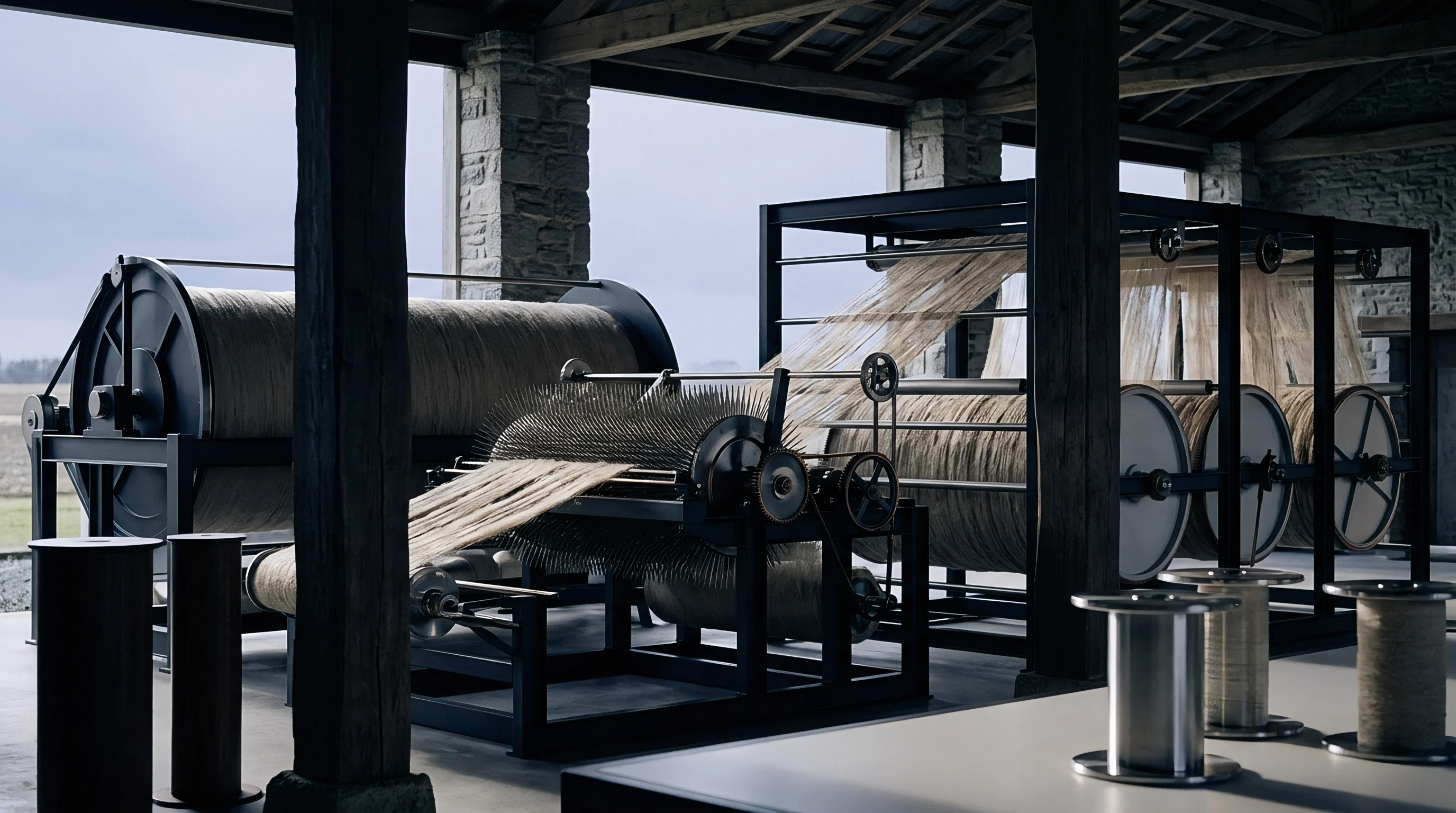
Mass conservation applies to every stage of mechanical extraction. Incoming straw weight splits into three primary output streams: long scutched fiber, short scutched tow, and unrecoverable shive dust. Long scutched fiber represents the main value driver for flax processing facilities.
Mass Balance across Scutching Lines
Input moisture directly shifts the output ratio between long flax strands and short tow. Because field-retted straw enters the scutching line with varying moisture levels, processing audits require constant mass adjustments.
Take a primary scutching line processing a 20,000 kilogram lot of retted flax straw at 13.0 percent moisture. Under ideal separation conditions, laboratory testing shows a dry-matter breakdown of 22 percent potential long fiber, 12 percent tow, 50 percent shive, and 16 percent moisture/dust loss.
Running at excessive rotor speeds drops long fiber extraction to 17.5 percent while pushing tow production up to 16.5 percent. On a 20,000 kilogram batch, long fiber yield falls from 4,400 kilograms to 3,500 kilograms. At wholesale prices of 4.20 Euros per kilogram for long fiber and 1.30 Euros per kilogram for tow, the loss on long fiber comes to 3,780 Euros, offset by an extra 1,170 Euros in tow revenue.
That leaves a net loss of 2,610 Euros per 20-tonne straw batch.
Mass balance accounting highlights where volume is lost during processing.
- Moisture Equalization measures dry matter mass before straw enters the scutching line to establish baseline output targets.
- Shive Mass Collection continuously weighs lower hopper outputs to verify core extraction efficiency during production runs.
- Tow Yield Tracking compares tow recovery against long fiber volume to detect bundle degradation caused by aggressive settings.
- Bale Mass Reconciliation matches total output weighbridge figures against incoming straw lot documentation.
European Flax certification rules void the chain of custody when uncertified straw lots are processed on shared scutching lines without physical segregation.
Yield losses quickly shrink gross margins. What precise variance between theoretical dry-matter fiber yield and actual weighbridge output signals intentional straw blending at the scutching mill?
Audit
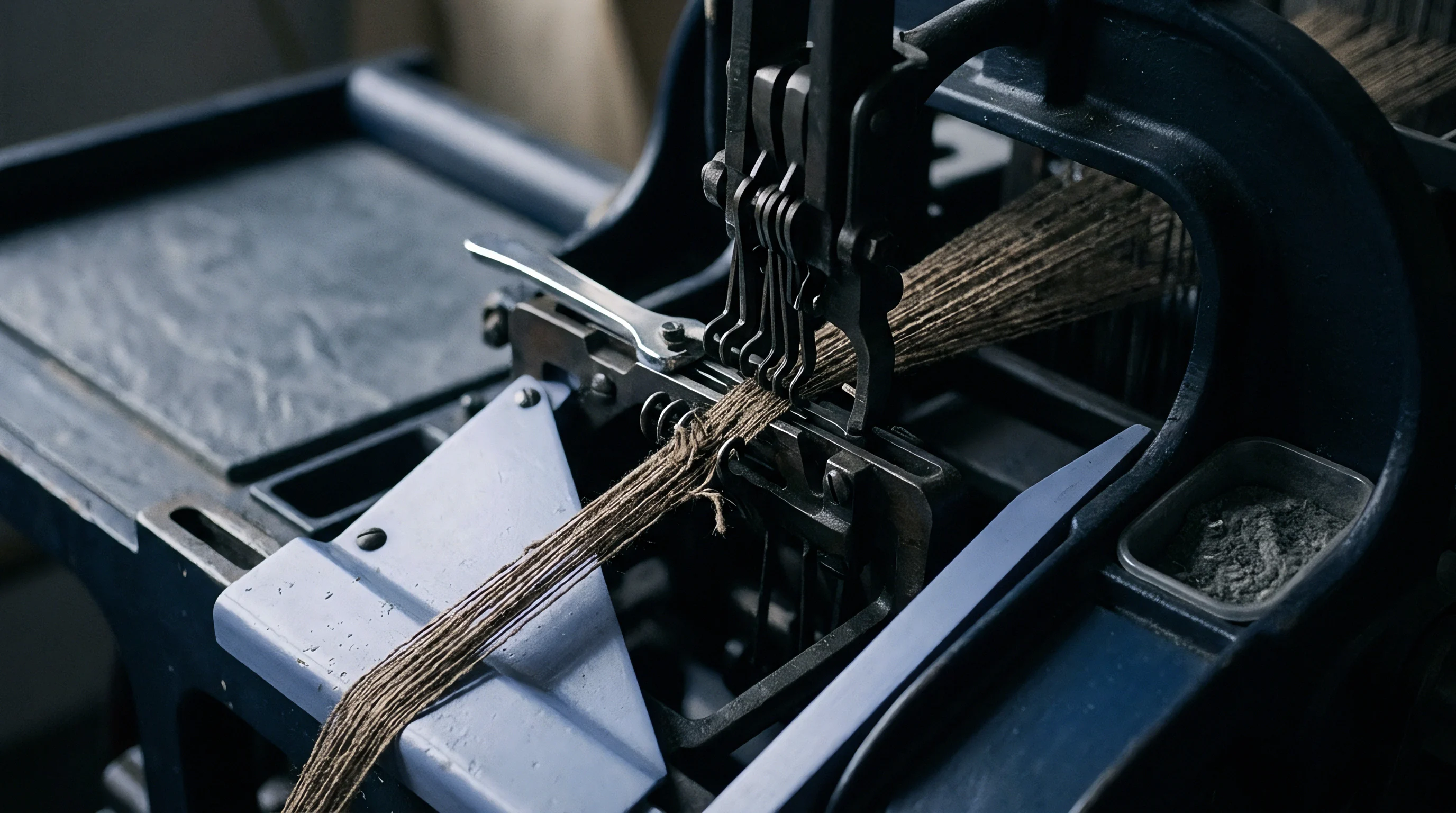
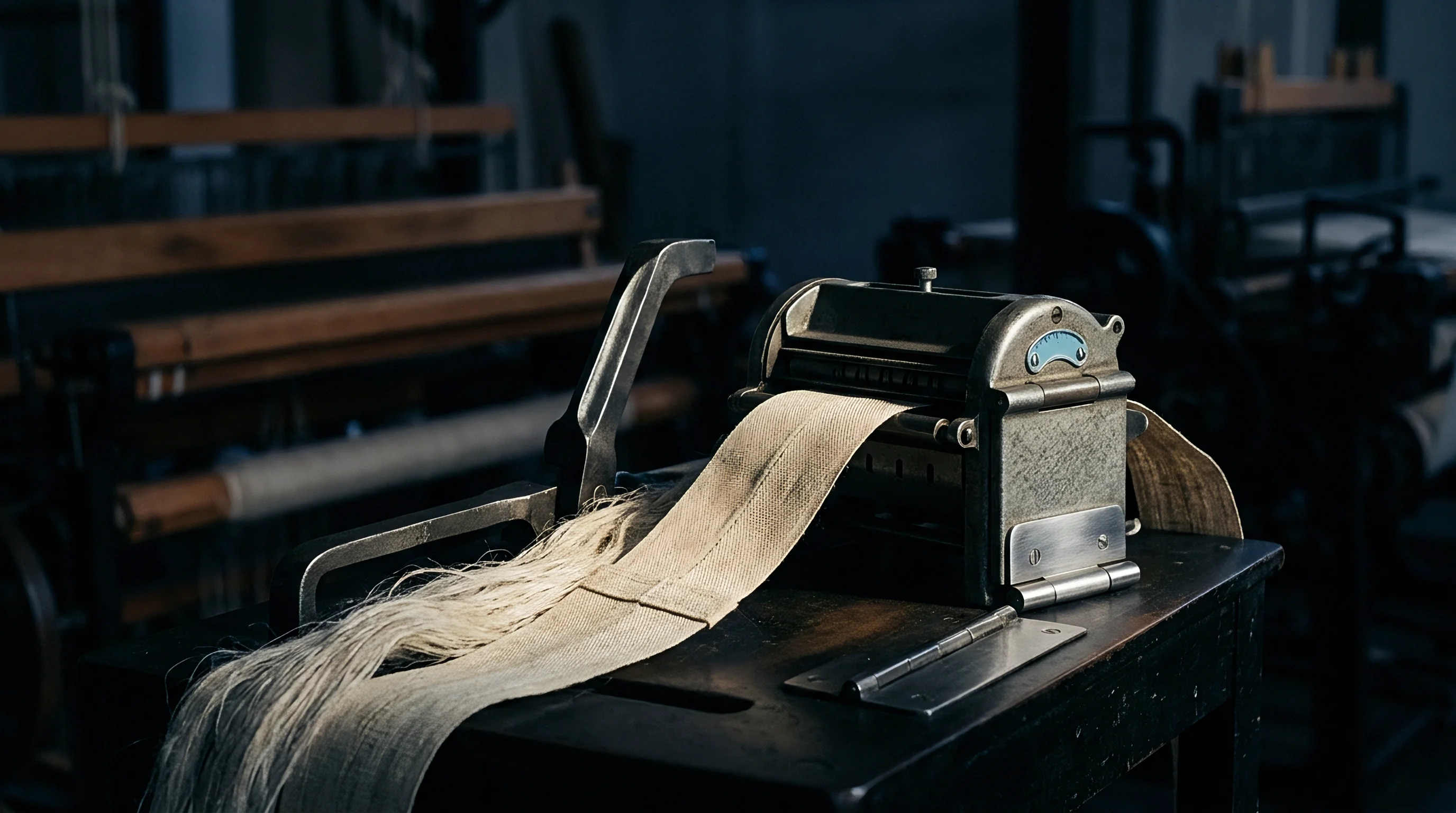
Auditing a scutching facility requires strict reconciliation between field delivery logs and outgoing bale tags to confirm that incoming straw volume matches certified acreage. Mills keep detailed batch records tracking stalk intake through decortication lines and into final bale storage.

Chain of Custody and Traceability Documentation
European Flax certification protocols require physical batch segregation whenever non-certified straw enters processing lines. Scutching mill logs track shift throughput, downtime, and lot transitions to prevent certified and uncertified fibers from mixing.
Tracing certified fiber from field to scutched bale requires continuous documentary evidence across four critical control points.
- Harvest Delivery Slip records field parcel identification numbers, agricultural lot codes, wet bale weight, and harvest date.
- Scutching Intake Log documents bale moisture content, initial dry weight, storage shed location, and assigned production lot numbers.
- Line Production Sheet tracks turbine operating hours, break roll clearance logs, output bale count, and gross weight per batch.
- Outgoing Transaction Certificate links unique bale identifier numbers directly to the verified European Flax scope certificate held by the processor.
Third-party assessors cross-check total certified output volume against regional yield benchmarks. Any primary facility reporting long fiber recovery rates above 26 percent on standard Western European straw triggers mandatory secondary audits, where inspectors scrutinize power consumption logs and weighbridge records for undocumented straw inputs.
Under European Flax Standard Section 4.2, an unidentified mass discrepancy exceeding three percent between straw input records and total scutched output triggers immediate suspension of the processor’s scope certificate.

Coding
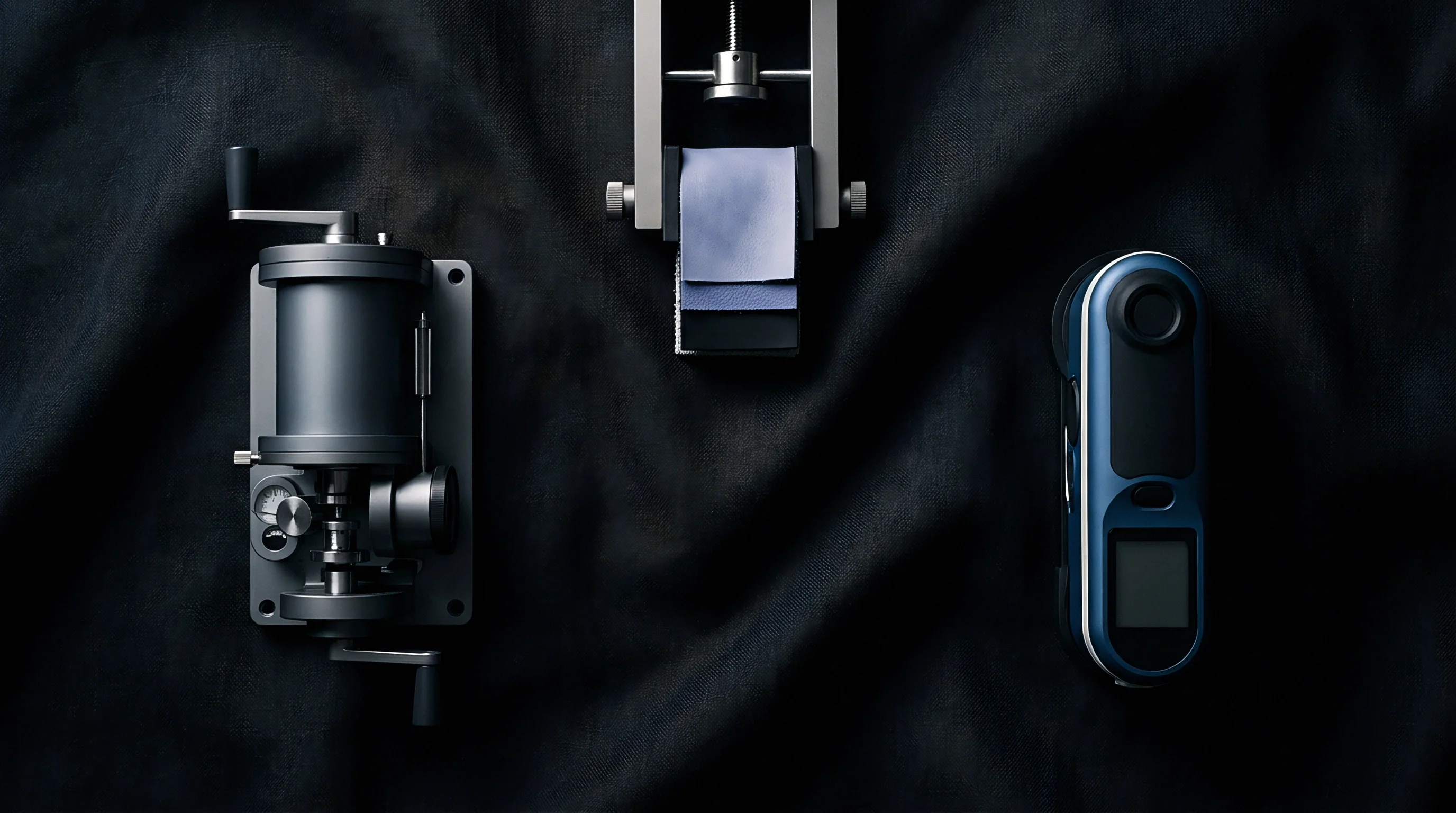
Customs authorities classify unspun flax based on its mechanical state and level of decortication. Tariff schedules separate raw or retted flax straw from fully scutched fiber bundles, and proper Harmonized System classification determines applicable duty rates and non-preferential origin rules.

Where Does Non-Preferential Origin Shift during Scutching?
Under standard international trade rules, raw straw harvested in one country acquires origin where scutching converts it into scutched flax. Mechanically separating the bast fiber ribbon from the woody core constitutes a substantial transformation, shifting classification from HS 5301.10 to HS 5301.21.
| HS Code | Product Description | Processing State | Transformation Requirement |
|---|---|---|---|
| 5301.10 | Flax, raw or retted | Unscutched straw stalks | Base agricultural output |
| 5301.21 | Flax, scutched | Decorticated long fibers | Substantial mechanical scutching |
| 5301.29 | Flax, broken or hackled | Combed long fiber / hackled tow | Secondary mechanical carding or hackling |
| 5301.30 | Flax tow and waste | Short fiber waste / shive mixtures | Byproduct of scutching or hackling |
Because un-retted straw resists separation, customs entries mandate physical proof. Primary processors shipping scutched flax must provide mill extraction certificates confirming that mechanical decortication took place within the declared country of origin. Simple breaking or rebaling of imported straw without full turbine scutching fails the substantial transformation test.
As a rule of thumb, the presence of unbroken xylem cores within delivered fiber indicates incomplete mechanical processing under standard customs origin definitions.

Clause
Commercial purchase agreements for raw scutched flax transfer technical risk by setting explicit tolerances for moisture, yield, and purity. These contracts establish non-conformance penalties based on lab testing of representative bale samples upon arrival at the destination port or spinning mill.
Contractual Allocation of Extraction Variance
Sourcing contracts protect buyers against inflated yield figures by tying price adjustments directly to certified lab results. These agreements incorporate specific technical thresholds for shive content, moisture regain, and bundle strength.
Standard commercial supply agreements specify that delivered scutched flax lot moisture must not exceed 12.0 percent under ISO 6741 testing protocols. Shive content must remain below 1.5 percent by weight for first-grade long scutched fiber; if it exceeds 2.5 percent, buyers apply a 3.0 percent invoice discount for every additional percentage point of contamination.
Contracts specify arbitration procedures for origin and certification disputes. If laboratory testing confirms uncertified fiber mixing within European Flax designated shipments, the seller absorbs all re-testing fees, dockage penalties, and customs clearance adjustments.
Guaranteed technical parameters ensure predictable performance during hackling and wet spinning. Processors accept full financial liability for batch rejections caused by mechanical damage from excessive turbine drum impact speeds.